Retail News CRM

Tag: calls

  • Indian Boycotts Challenge U.S. Giants: A Push For ‘made In India’ Amid Tariff Tensions

    Indian Boycotts Challenge U.S. Giants: A Push For ‘made In India’ Amid Tariff Tensions

    American multinational corporations, including household names such as McDonald’s, Coca-Cola, Amazon, and Apple, are feeling the pressure of increasing calls for boycotts in India. This sentiment has been fueled by business leaders and supporters of Prime Minister Narendra Modi as a form of protest against U.S. tariffs.

    India, known as the world’s most populous nation, presents a significant market for these American brands. With a rapidly expanding base of affluent consumers who view international brands as symbols of societal advancement, many American companies have found success in India.

    For instance, Meta’s WhatsApp counts India as its largest user base and Domino’s boasts more restaurants in India than in any other country. Similarly, beverages such as Pepsi and Coca-Cola often take up prime real estate on store shelves, and there is typically a significant buzz when a new Apple store opens or Starbucks offers discounts.

    Recently, however, there has been growing support for choosing local products over American goods, both on social media and offline. This shift in consumer behavior has been catalyzed by a 50% tariff on Indian goods imposed by former U.S. President Donald Trump, which has unsettled exporters and strained relations between New Delhi and Washington.

    Indian Business Leaders Advocate for ‘Made in India’

    Manish Chowdhary, co-founder of India’s Wow Skin Science, has taken to LinkedIn to voice his support for Indian farmers and start-ups. His goal is to transform ‘Made in India’ into a ‘global obsession’, learning from countries like South Korea, which boasts globally renowned food and beauty products.

    Similarly, Rahm Shastry, CEO of DriveU, an Indian car driver service, wrote on LinkedIn that India should develop its own versions of popular platforms like Twitter, Google, YouTube, WhatsApp, and Facebook, much like China.

    Indian retail companies offer stiff competition to foreign brands like Starbucks in the domestic market, but global expansion remains a challenge. However, Indian IT services firms, such as TCS and Infosys, have integrated deeply into the global economy, providing software solutions to clients around the world.

    In a recent address in Bengaluru, Prime Minister Modi made a “special appeal” for increased self-reliance. He urged Indian technology companies, who have been producing products for global consumption, to prioritize India’s needs.

    Consumer Opinions Differ

    Despite the ongoing anti-American sentiment, the American electric vehicle and clean energy company Tesla recently opened its second showroom in India. The opening event in New Delhi was attended by Indian commerce ministry officials and US embassy officials.

    Simultaneously, the Swadeshi Jagran Manch group, which is associated with Modi’s Bharatiya Janata Party, organized small public rallies across India, encouraging people to boycott American brands.

    However, not all Indian consumers share this sentiment. For instance, a customer named Rajat Gupta, who was dining at a McDonald’s in Lucknow, expressed that he was not concerned with the tariff protests and simply enjoyed the value for money he received from his 49-rupee coffee.

    Questions & Answers

    What has led to the calls for a boycott of American products in India?

    These calls for boycotts have been fueled by the imposition of a 50% tariff on goods from India by former U.S. President Donald Trump, which has created unrest among exporters and strained diplomatic ties between New Delhi and Washington.

    How are Indian business leaders responding to this situation?

    Leaders such as Manish Chowdhary, co-founder of Wow Skin Science, and Rahm Shastry, CEO of DriveU, have been advocating for a focus on “Made in India” products and services, and the development of home-grown alternatives to popular platforms like Twitter, Google, YouTube, WhatsApp, and Facebook.

    Are all Indian consumers supportive of the boycotts?

    No, consumer opinions on the boycotts vary. Some consumers, such as Rajat Gupta, a McDonald’s customer in Lucknow, are not concerned by the tariff protests and continue to enjoy the products and services offered by American brands.

  • Viber launches a unique Business Calls service

    Viber launches a unique Business Calls service

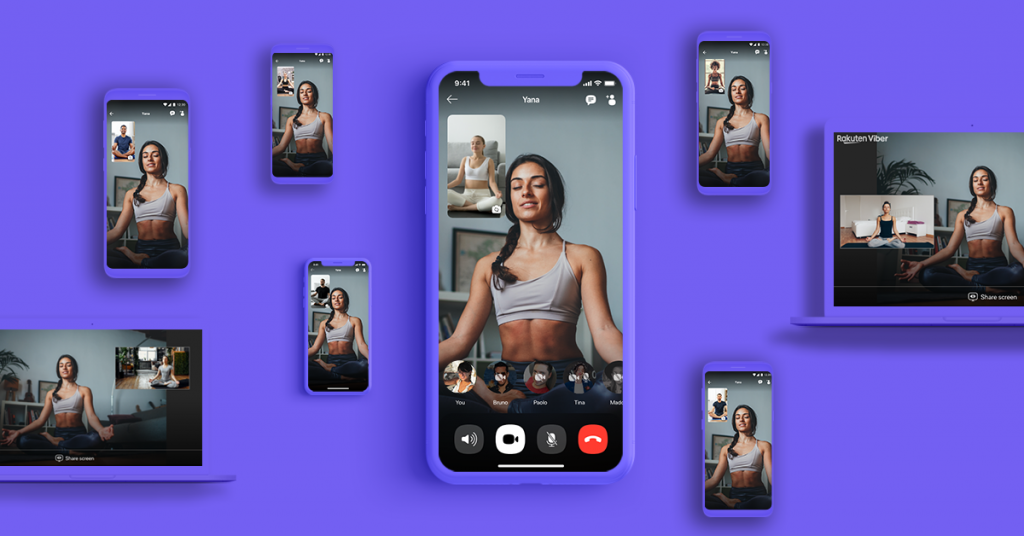
    Viber announced a unique service that allows users to make free international calls to landline numbers directly through its Business Calls app. The new tool makes it easier for Viber users to track their orders, get support in the retail and delivery sectors, or simply assist them with product inquiries.

    Specifically designed for businesses, the new service allows early adopters to create searchable business accounts with an embedded Viber Business Call button or add the tool to their existing accounts in the app.

    “Nine years ago, Rakuten Viber was the first messaging app to offer business messaging, revolutionizing how businesses communicate with their customers. Since then, we have developed a robust business messaging ecosystem and are now taking a significant step forward by introducing in-app Business Calls, a distinctive offering in the market,” says Cristina Constandache, Chief Revenue Officer at Rakuten Viber.

    Additionally, users can initiate a call directly from a chat with a business. At the same time, brands can include a Viber call link on their websites to make it easier for customers to get in touch with them.

    More importantly, all business calls will be free for customers, regardless of where they’re calling from. It’s also important to add that businesses can designate a specific number for Viber or continue using their regular call center number.

    According to Viber, the new Business Calls service is now available globally. If you’re a business, you’re advised to contact the Viber team to learn how to get started.

  • Australia and Singapore to Jointly Fight Against Scam Calls and Messages

    Australia and Singapore to Jointly Fight Against Scam Calls and Messages

    Australia and Singapore will unite in the fight against unsolicited telemarketing, spam and scams, following an agreement between the Australian Communications and Media Authority (ACMA) and the Info-communications Media Development Authority of Singapore (IMDA).

    The new strategic agreement will promote further engagement and information-sharing between the two agencies and assist with both investigations and compliance with telecommunications laws in both countries.

    This memorandum of understanding (MOU) complements the 2020 Australia-Singapore Digital Economy Agreement to expand trade and economic ties in our region. It follows similar agreements the ACMA has made with its regulatory counterparts in the USA, Canada and New Zealand.

    Research conducted by the ACMA in 2021 found that 98% of Australians received some form of unsolicited communication. Scam calls were the most prevalent type of unwanted communication, with 4 in 10 Australians receiving them at least weekly.

    ACMA Chair Nerida O’Loughlin said she was pleased to further strengthen the ACMA’s strong working relationship with the IMDA.

    “Almost every Australian is impacted by unwanted calls, SMS and emails, and we know that many of our international colleagues are dealing with the same issues,” O’Loughlin said. “This agreement will see us building stronger ties with our Singaporean counterparts to crack down on unsolicited calls and messages, particularly when cross-border issues are involved.”

    Lew Chuen Hong, Chief Executive of IMDA said, “Scams is [sic] a global issue that do not respect geographical boundaries. This MOU is an important step for the international community to join forces and tackle this issue decisively. I am happy to join in this partnership with our Australian counterparts and together, the MOU will benefit the citizens of our both countries and increase trust in our telecommunication systems.”

  • Truecaller drops the biggest update in a while

    Truecaller drops the biggest update in a while

    Truecaller, one of the older messaging apps for mobile has just received major update that significantly enhances the calling experience. Although the app is available on both iOS and Android platforms, this specific update is aimed at those who use smartphones running Google’s operating system.

    The highlight of the update is the addition of Video Caller ID, which allows users to set up Truecaller to show a video to their contacts whenever they call them. Additionally, the team behind the app announced that Call Recording is making a comeback. More importantly, the feature is now available for free to everyone using Android devices.

    Since users have been asking for it, Truecaller is bringing back separate Calls and Messages tabs in the latest version of the app. Another interesting new feature is reserved to Premium users: the ability to announce your calls. It will allow Truecaller to automatically check whether a call is from a friend or a scammer.

    Last but not least, Truecaller Ghost Call is another feature for Premium users, which allows them to schedule a time for a call. Simply open the Premium tab and choose the Ghost call setting option. Then, set a name and number you want to appear on the screen along with the time.

    Also, you’ll be able to choose an existing contact in your phonebook using the “pick a contact” option. Finally, tap the “schedule call” and at the set time, your phone will ring and show the usual calling screen on your phone. The feature is meant to get you out from weird situations, or you can use it for fun.

  • Google Fi is fi-nally getting end-to-end encryption for phone calls

    Google Fi is fi-nally getting end-to-end encryption for phone calls

    If you’re concerned about the privacy of your voice communications, Google has a new way to guarantee that no one can snoop in on your calls anymore.
    Of course, there’s only so much the search giant can control, so the newly announced end-to-end encryption feature will merely work on the company’s own Fi MVNO (mobile virtual network operator) starting sometime “in the coming weeks.”

    Both the caller and the callee will need to be Google Fi subscribers and use Android phones for everything to work as advertised, at least to begin with. There’s not a lot to the technology that Big G plans to deploy before long, and all you have to know is that everything discussed during fully encrypted one-to-one voice calls will stay between you and the person you’re talking to.

    To avoid potential confusion or misunderstandings, a bunch of new “audio and visual cues” will make it crystal clear both before engaging in and during end-to-end encrypted calls that you’re wholly and entirely protected from spying ears.

    Namely, look for a lock symbol and straightforward “Encrypted by Google Fi” text on your phone’s screen or be aware of a “unique ringing tone” to make sure the functionality is indeed up and running. Obviously, the feature itself is hardly groundbreaking, as Google points out by highlighting that end-to-end encryption has become an “industry standard” in recent years for messaging apps.

    Slowly but surely, things are moving in the right direction from a privacy and security perspective as far as voice services are concerned as well, thanks to the likes of Facebook and now Google. The search giant’s Duo app actually launched with built-in end-to-end encryption for audio and video calls all the way back in 2016, so if anything, we’re surprised it took so long to implement this for Fi users.

  • End-to-end encryption now covers Messenger video and audio calls

    End-to-end encryption now covers Messenger video and audio calls

    In this era where privacy reigns, end-to-end encryption (E2EE) is an important feature because it keeps messages private and only the sender and the recipient know what it says. It prevents law enforcement, employees of the platform being used, and others from reading something that was not meant for their eyes. Facebook Messenger has offered end-to-end encryption for messages since 2016 and Facebook has announced in a blog post that it is now extending this privacy protection to both Messenger voice and video calls.

    As Facebook pointed out on Friday, 150 million video calls a day are handled by Messenger, and voice calls are now being added to this chat mode to protect both video and audio calls with the same encryption protection. Facebook states that “End-to-end encryption is already widely used by apps like WhatsApp to keep personal conversations safe from hackers and criminals. It’s becoming the industry standard and works like a lock and key, where just you and the people in the chat or call have access to the conversation.

    The content of your messages and calls in an end-to-end encrypted conversation is protected from the moment it leaves your device to the moment it reaches the receiver’s device. This means that nobody else, including Facebook, can see or listen to what’s sent or said. Keep in mind, you can report an end-to-end encrypted message to us if something’s wrong.”

    Facebook also announced that it updated its disappearing messages feature within its E2EE chats. With the newly updated controls, users will be given more options as to when they want their messages to disappear. The new range runs from just five seconds to as long as 24 hours. Not only will these messages be encrypted, they could also be set to fall off of the platform by the time five seconds can be counted.

    Over the next few weeks, Facebook will test end-to-end encrypted group chats and calls in Messenger. This includes both video and voice calls for family members that have an existing chat thread or are already connected. As noted by Facebook, “We’ll also begin a test for your delivery controls to work with your end-to-end encrypted chats. That way, you can prevent unwanted interactions by deciding who can reach your chats list, who goes to your requests folder, and who can’t message you at all.”

    Instagram users will also share in this bid to expand end-to-end encryption. In certain countries, adult Instagram users will be allowed to opt-in to end-to-end encrypted messages and calls for one-on-one conversations. You will need to have an existing chat or be following each other to start an encrypted DM (the same conditions needed to start an end-to-end encrypted voice or video call in Messenger).

    Facebook points out that you can always block someone that you don’t want to DM with. The option to make video and voice calls end-to-end encrypted on Messenger, along with updated controls for disappearing messages, will start rolling out today. “People expect their messaging apps to be secure and private, and with these new features, we’re giving them more control over how private they want their calls and chats to be,” Facebook says.
    The U.S. Justice Department under William Barr in 2020 issued a statement along with Australia, Canada, New Zealand, and the United Kingdom in favor of strong encryption. A statement issued by this group, called the Five Eyes, said that end-to-end encryption “plays a crucial role in protecting personal data, privacy, intellectual property, trade secrets and cybersecurity…and also serves a vital purpose in repressive states to protect journalists, human rights defenders and other vulnerable people.”

    Yet just the year before, the Trump administration reportedly weighed the idea of outlawing end-to-end encryption, and there was talk about the DOJ asking Apple to add a backdoor to the iPhone that would allow law enforcement to read certain messages related to investigations of drug trafficking, terrorism, and child pornography. Ironically, Apple itself plans on scanning iPhones seeking images that could be considered child abuse including child porn.

  • 40% of Android phones have modem vulnerability allowing an attacker to listen in to your calls

    40% of Android phones have modem vulnerability allowing an attacker to listen in to your calls

    A vulnerability discovered by security firm Check Point Research could allow a malicious app to skip the usual security features giving it access to call and text history. It also gives an attacker the ability to record conversations. The Qualcomm Modem Interface (QMI) software is normally impossible for third-party apps to access, but if key aspects of Android are hacked, the QMI vulnerability can be used to listen in and record an active phone call, and as we already pointed out, steal call and SMS records.

    QMI is used on as much as 40% of Android handsets including those made by Google, Samsung, OnePlus, LG, Xiaomi, and more. Check Point kept certain information out of its report to make sure that the attack can not be easily copied. There is no indication that the attack has been used by a malicious hacker.

    Check Point revealed all of this to Qualcomm last October calling it a high-rated vulnerability. The chipmaker told the phone manufacturers that use Qualcomm’s modem chips. So far, the vulnerability has not been fixed and we can only hope that Qualcomm and Google will patch this in a future security update.

    However, Qualcomm says that it did make fixes available to “many” Android phone manufacturers last December and that these firms passed along security updates to end-users. The vulnerability will be part of the June Android bulletin.

    Qualcomm issued a statement today that said, “Providing technologies that support robust security and privacy is a priority for Qualcomm. We commend the security researchers from Check Point for using industry-standard coordinated disclosure practices. Qualcomm Technologies has already made fixes available to OEMs in December 2020, and we encourage end-users to update their devices as patches become available.”

  • AIS, Dtac enable cross-network VoLTE calls

    AIS, Dtac enable cross-network VoLTE calls

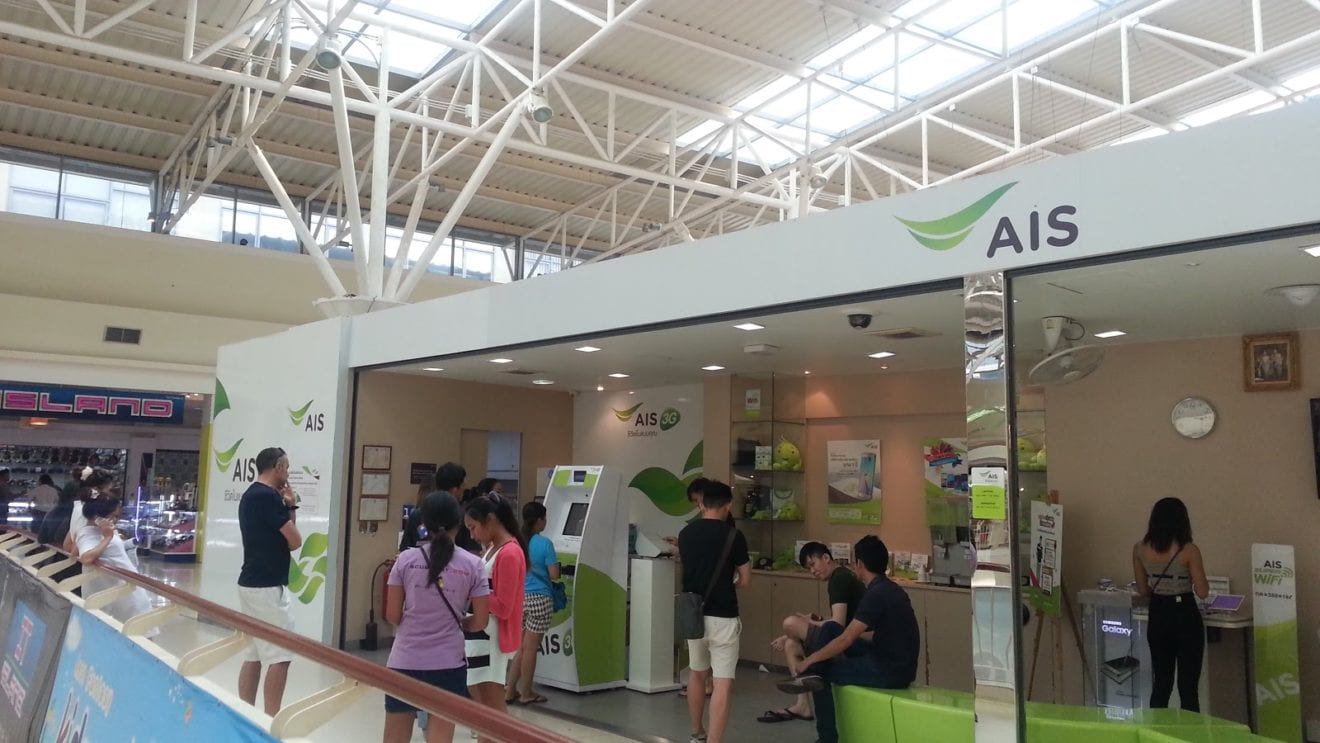
    In a first for the Asean region, Thai operators AIS and Dtac have teamed up to facilitate cross-network VoLTE calls.

    The operators enabled AIS-Dtac VoLTE calls last week and plans to implement cross-network 4G video calls from Tuesday.

    Cross-network VoLTE calls are being made available to both prepaid and postpaid customers at no additional cost.

    While each of Thailand’s top three mobile operators – AIS, Dtac and True Corp – recently launched VoLTE, the functionality had previously only been available for within-network calls.

    Industry watchers believe the move may be an attempt by market leaders AIS and Dtac to fend off competition from fast-growing challenger True Corp. But the Nation quotes True Corp’s chief commercial officer Kittinut Tikawan as stating that the company is confident it can negotiate simila deals with both AIS and Dtac.

    The move will also pave the way for the launch of the iPhone 7 and iPhone 7 Plus in Thailand later this month.

  • Lower Prices for International Calls to Indonesia with TeleponIndonesia.com

    Lower Prices for International Calls to Indonesia with TeleponIndonesia.com

    TeleponIndonesia.com has great news for everyone making calls to Indonesia! The international calling website now offers more affordable rates for Voice Credit calls to mobiles and landlines in this country. With TeleponIndonesia.com, calls to Indonesia are now as low as 4.5¢/min.

    Voice Credit rates have never been lower! Calling a landline in Indonesia used to cost 4.9¢/min, but this price now dropped to 4.5¢/min. As far as mobiles are concerned, their rate decrease is even more spectacular, as it went from 6.9¢/min to 4.5¢/min.

    In order to benefit from this great calling rates, customers who want to call Indonesia have to buy Voice Credit. They can try the service for as little as $2, or buy $10 that will now offer them 222 min to landlines or mobiles in Indonesia.

    TeleponIndonesia.com offers a wide variety of calling options, to suit every need. Customers can call from:

    • any phone, through the use of local or toll free access numbers;
    • any computer, through the Web Call application;
    • any smartphone, as TeleponIndonesia.com offers a free app, for both iOS and Android devices, called KeepCalling.

    Beside Voice Credit, TeleponIndonesia.com also offers Mobile Recharge, a service through which customers can recharge mobile phones anywhere in the world. The process is fast and secure and the credit reaches its destination instantly. The mobile operators available for recharges to Indonesia are Telkomsel, Indosat, Axis, Ceria, Smartfren, Esia Bakrie Telecom, Three, and XL Axiata.

    TeleponIndonesia.com runs a policy focused on integrating superior customer service, while maintaining the highest quality standards at affordable rates. That is why TeleponIndonesia.com is the best solution for international calls.

    What makes the service even more reliable are the 100% transaction security, the 24/7 Customer Service available by phone, chat, and email in both English and Spanish, and the comprehensive Help Center.