Tag: Calvin Klein

  • Calvin Klein unveils new campaign featuring Gerber siblings

    Calvin Klein unveils new campaign featuring Gerber siblings

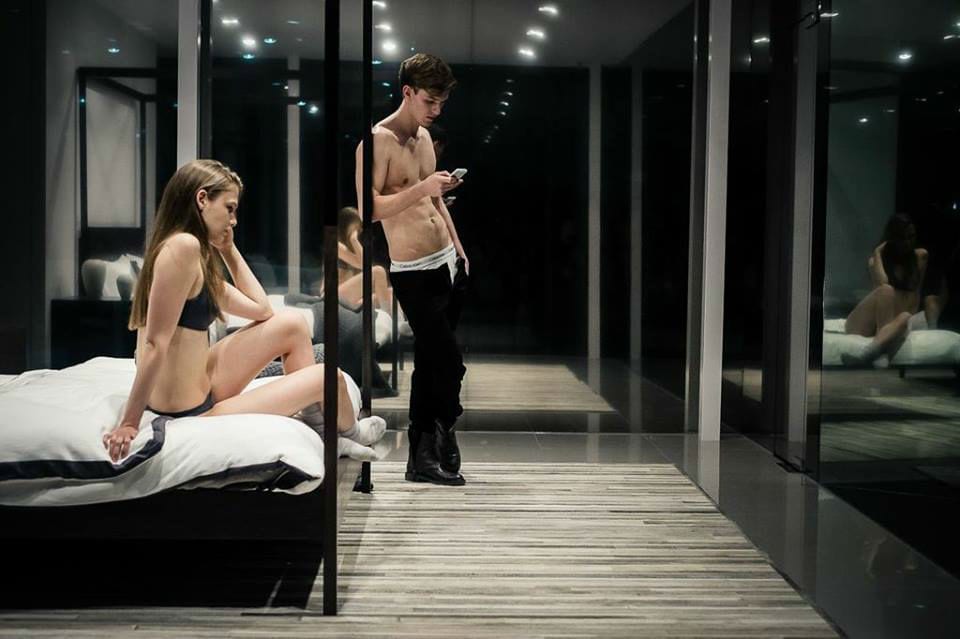
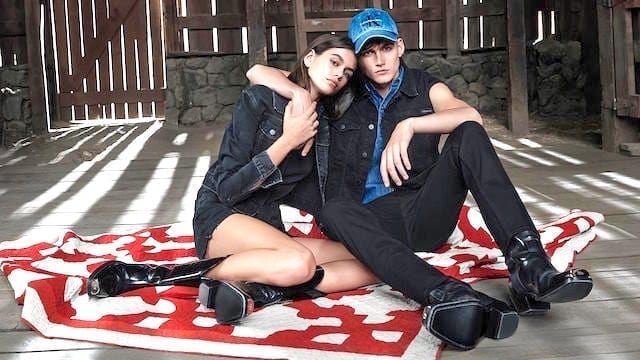
    Calvin Klein has unveiled a global advertising campaign featuring sibling models Kaia and Presley Gerber.

    The multimedia Calvin Klein campaign will have a heavy social media component in what the fashion label describes as “the latest iteration of the evolution in the brand’s globally recognised call to action: Our Family”.

    Shot by photographer Willy Vanderperre, the campaign features the Gerbers wearing core styles of Calvin Klein Jeans available in stores and online already.

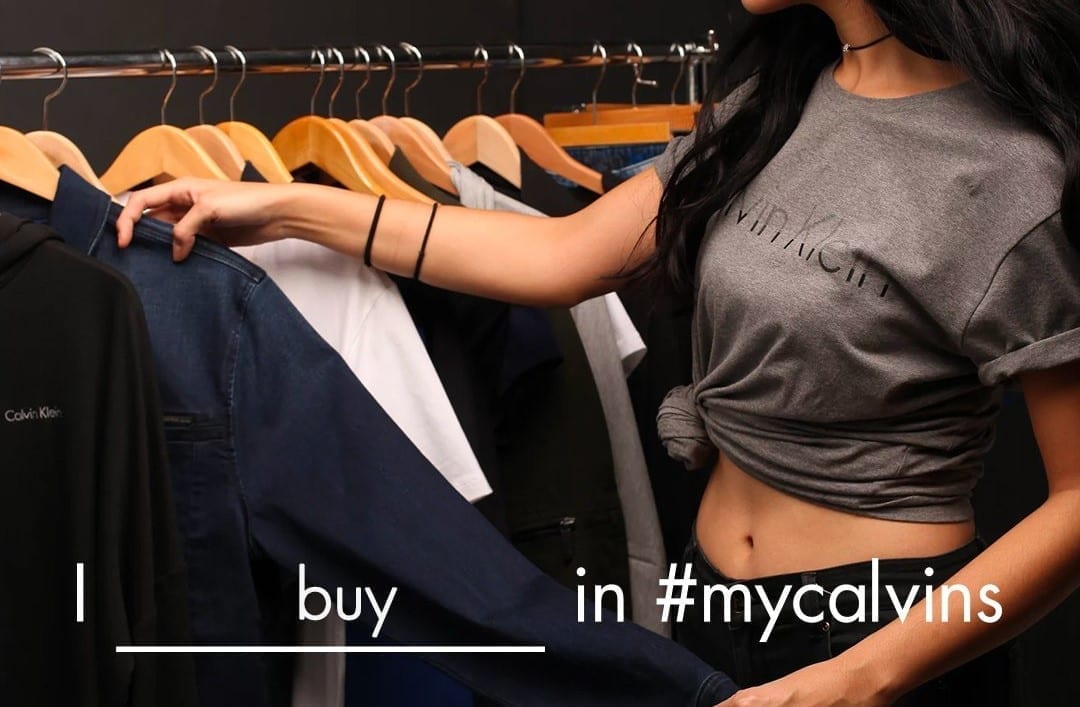
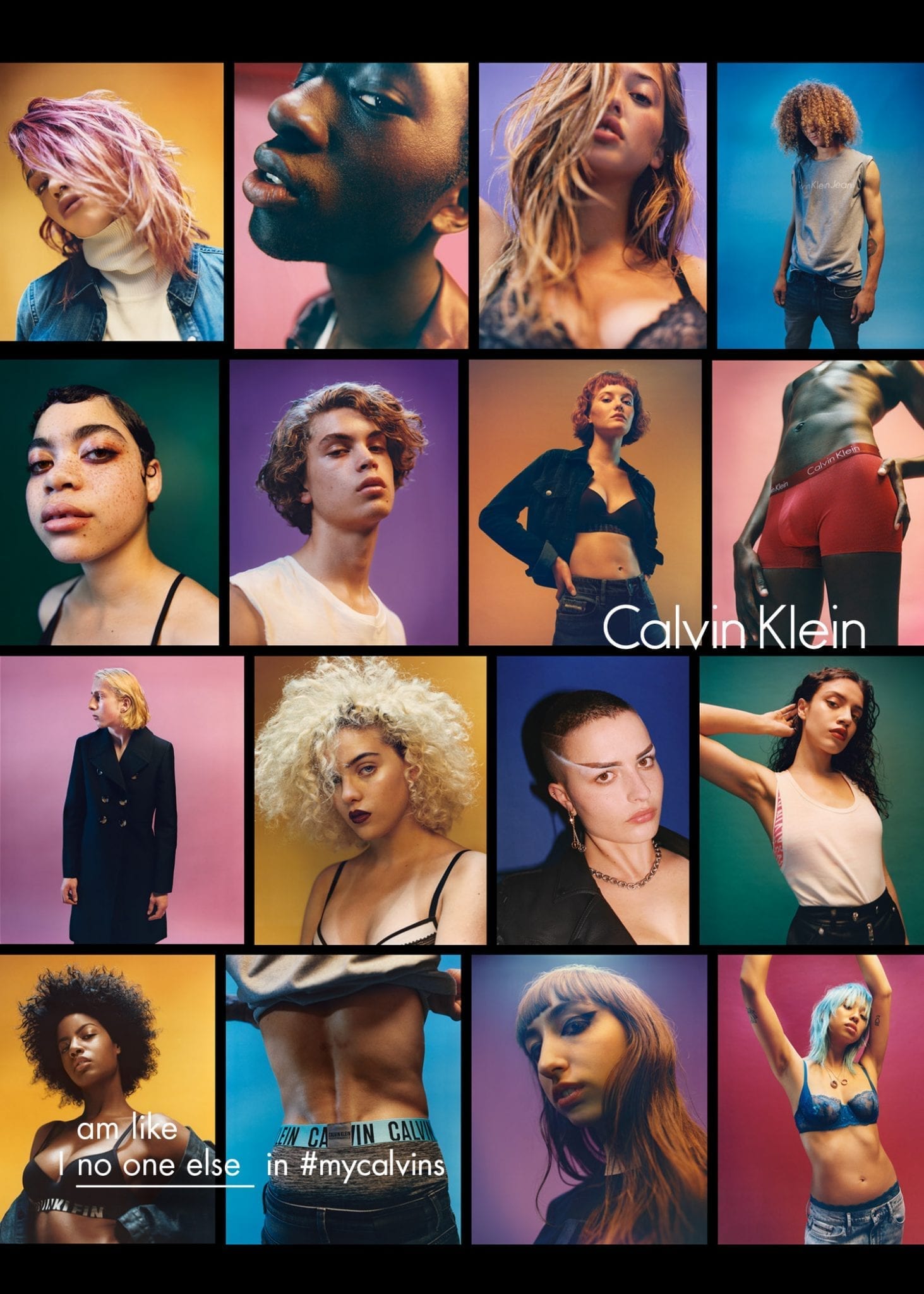
    “The Our Family. #MYCALVINS campaign embraces a digital first, socially powered mindset in communicating the evolution of the globally successful #MYCALVINS campaign originally launched in 2014,” the company says in a statement

    “The #MYCALVINS campaign leverages influencers’ and existing consumer behavior to express themselves, and maximises the cultural ‘selfie’ and viral image-sharing phenomenon. With dedicated digital support in 12 countries and high impact outdoor in several key markets, the Our Family. #MYCALVINS initiative will be communicated to a global audience.”

    At the core of the concept is family – “a display of unity between strong individuals, further emphasised by the symbolism of the traditional American quilt”.

    “This campaign captures these bonds and brings to life different ways we can inspire families – both born and made – to connect with one another, and celebrate the things that unite us.”

    The new campaign follows on from one launched in November featuring an array of musicians.

  • Calvin Klein Underwear Shops in Hong Kong finally Opens

    Calvin Klein Underwear Shops in Hong Kong finally Opens

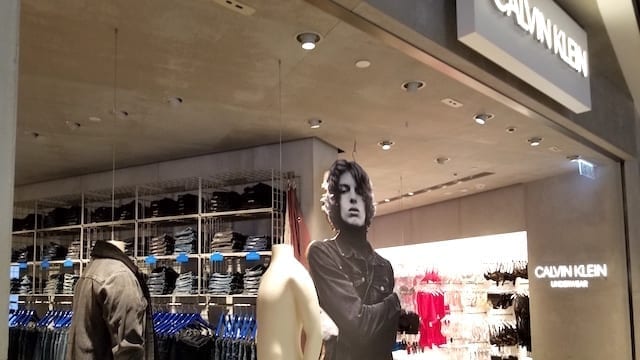
    Calvin Klein Hong Kong has opened a new store in IFC Mall showcasing its underwear collection.

    The 1700sqft (160sqm) store’s minimalist-style design features concrete floors with concrete-style ceilings and walls giving it an edgy, urban feel. The service counter is placed on a scarlet red rug which creates a stark contrast to the grey look.

    Calvin Klein store - IFC

    Stock is displayed on walls which defy traditional square-box store layouts. Mannequins hang from the ceiling without touching the floor and there is a bold wall-mounted LED display creating a focal point towards the front of the space.

    Besides men’s and women’s undergarments, the store sells denim jeans, jackets, accessories, sunglasses and fragrances.

    The company says the interior design is aimed at creating a unique setting to convey the brand’s “sexy, seductive and modern identity”.

  • Amazon secret recipe to save the physical store

    Amazon secret recipe to save the physical store

    The Amazon-Calvin Klein pop-up stores in New York City and Los Angeles may be just what brick-and-mortar retailers need to bring online shoppers back to the real world, Morgan Stanley’s Brian Nowak said.

    Amazon is banking on its loyalty with consumers who rely on the company for the best prices, Nowak said. When it comes to brick-and-mortar, that transparency “could encourage more people to shop in store rather than online,” he said.

    The key way it does this is by having consumers experience dynamic pricing while at the shop, prompting shoppers to scan the barcodes of items in order to see the ever-changing prices. The prices will match what’s on Amazon.com, which is often the lowest price, Nowak said.

    The Amazon-Calvin Klein pop-up also offers free personalization and customization of basic items, such as underwear, the mainstay of Calvin Klein’s brand. It is also offering exclusive merchandise, which can only be found in the store or at the ‘My Calvins’ online brand store on Amazon.com.

    “This phone scanning and dynamic pricing combination is another example of Amazon’s attempt to change consumer behavior/expectations in the offline world in a way to build trust with consumers that they are always getting the lowest price,” Nowak wrote in a note.

    Amazon’s outsized influence as an ecommerce giant has retailers scrambling to stay relevant as it eats away at brick-and-mortars’ market share, particularly in-store sales. When Amazon announced a partnership with Nike in June, it hit Dick’s, Under Armour, Foot Locker and other competitors with many retailers reporting dismal third-quarter earnings.

    The company’s attempts at providing a different shopping experience in brick-and-mortar stores may be what saves the retail industry and brings shoppers back to physical stores.

    Amazon’s stock is trading at $1,133.97 a share and was up 50.39% up for the year. PVH Corp, the parent of Calvin Klein, is trading at $134.28 a share and is up 47.64% for the year.

  • Calvin Klein watch showcase will be in Suria KLCC

    Calvin Klein watch showcase will be in Suria KLCC

    Calvin Klein Watches + Jewelry has opened its largest kiosk for Malaysia in Suria KLCC, featuring timepieces and accessories.

    Attended the launch were Swatch Group Malaysia and Singapore president Jose de Cardoso, Calvin Klein Watches + Jewelry regional sales manager Pascal Scherer, brand manager Kenny Lim sales and marketing manager Florence Loke. Special guests included actress Siti Saleha and TV presenter Reem Shahwa.

    Since his debut, new Calvin Klein chief creative officer Raf Simon has been providing a singular global creative vision for the brand, as reported. The Belgian fashion designer has been taking the founder’s legacy of modern, simple and sharp aesthetic coupled with provocative imagery to greater heights. This encompasses Calvin Klein Watches + Jewelry, developed in the 1990s in partnership with Swatch Group.

  • Calvin Klein Vietnam opens Hanoi store

    Calvin Klein Vietnam opens Hanoi store

    Fashion house Calvin Klein Vietnam has opened a store in Vincom Ba Trieu, Hanoi.

    The store is located on level two of the shopping centre, and offers items from latest collections including jeans, underwear and accessories for women and men.

    Calvin Klein store Ha Noi Vietnam

    Inside the 147sqm shop, the interior is designed with neutral colors and “Simply as possible” spirit of the brand.

    Calvin Klein was brought to Vietnam in 2009 by IPP’s subsidiary ACFC.

    It now has 20 stores nationwide.

  • Dutch chain Topshelf to close down

    Dutch chain Topshelf to close down

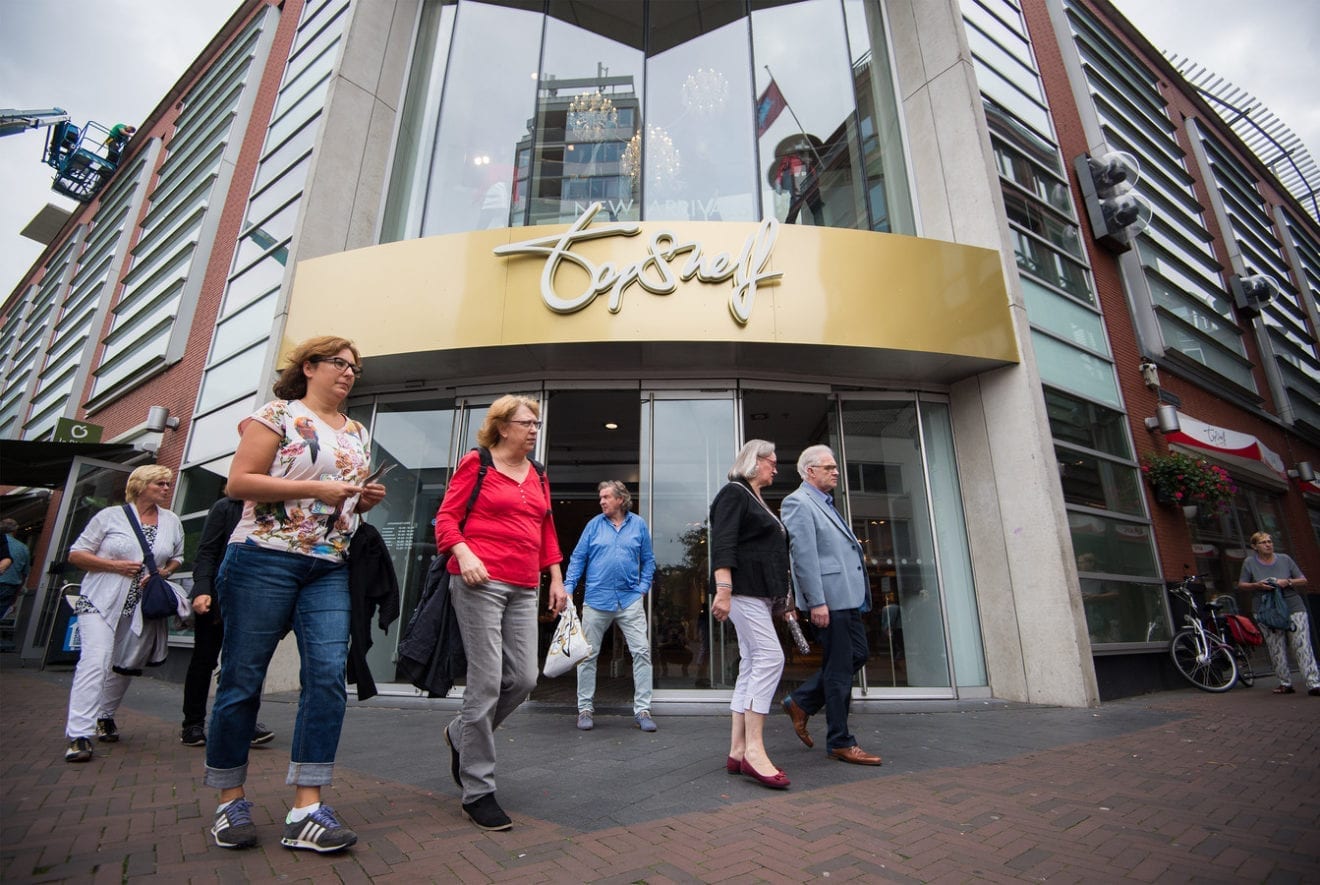
    Dutch department store operator Topshelf appears to be closing down.

    The company has announced its last store in Alkmaar will close in mid-January, following the shuttering of stores in Arnhem, Nijmegen and Groningen.

    The company has not filed for bankruptcy and it says it will continue to employ existing staff as it quits remaining stock. Disappointing sales were cited as the reason for the closure.

    Topshelf – no relation to the UK-headquartered Topshop and Topman retail brands – was launched in 1995 as a megastore, focusing on sports and outdoors wear, called Sportsworld. At the end of 2015, it opened stores in premises occupied by collapsed department store chain V&D, expanding further in April last year into Arnhem and Nijmegen en Groningen.

    With sales remaining weak last December, the company decided to convert the city stores – Arnhem, Nijmegen, Groningen and Alkmaar – to Topshelf, continuing to operate other branches in Beuningen, Leerdam and Cruquius, outside the city, as Sportsworld.

    The Topshelf stores stocked luxury gifts, fashion and homewares and ranged products from brands including Versace, Guess, McGregor, Superdry, Lacoste, Tommy Hilfiger, Speedo, Calvin Klein, Ray Ban, O’Neill and Atomic.

  • Calvin Klein China opens lifestyle store in Shanghai

    Calvin Klein China opens lifestyle store in Shanghai

    Calvin Klein China has opened a multibrand lifestyle store in Raffles City Shanghai.

    A wholly owned subsidiary of PVH, Calvin Klein has simultaneously opened a similar store in Düsseldorf, Germany.

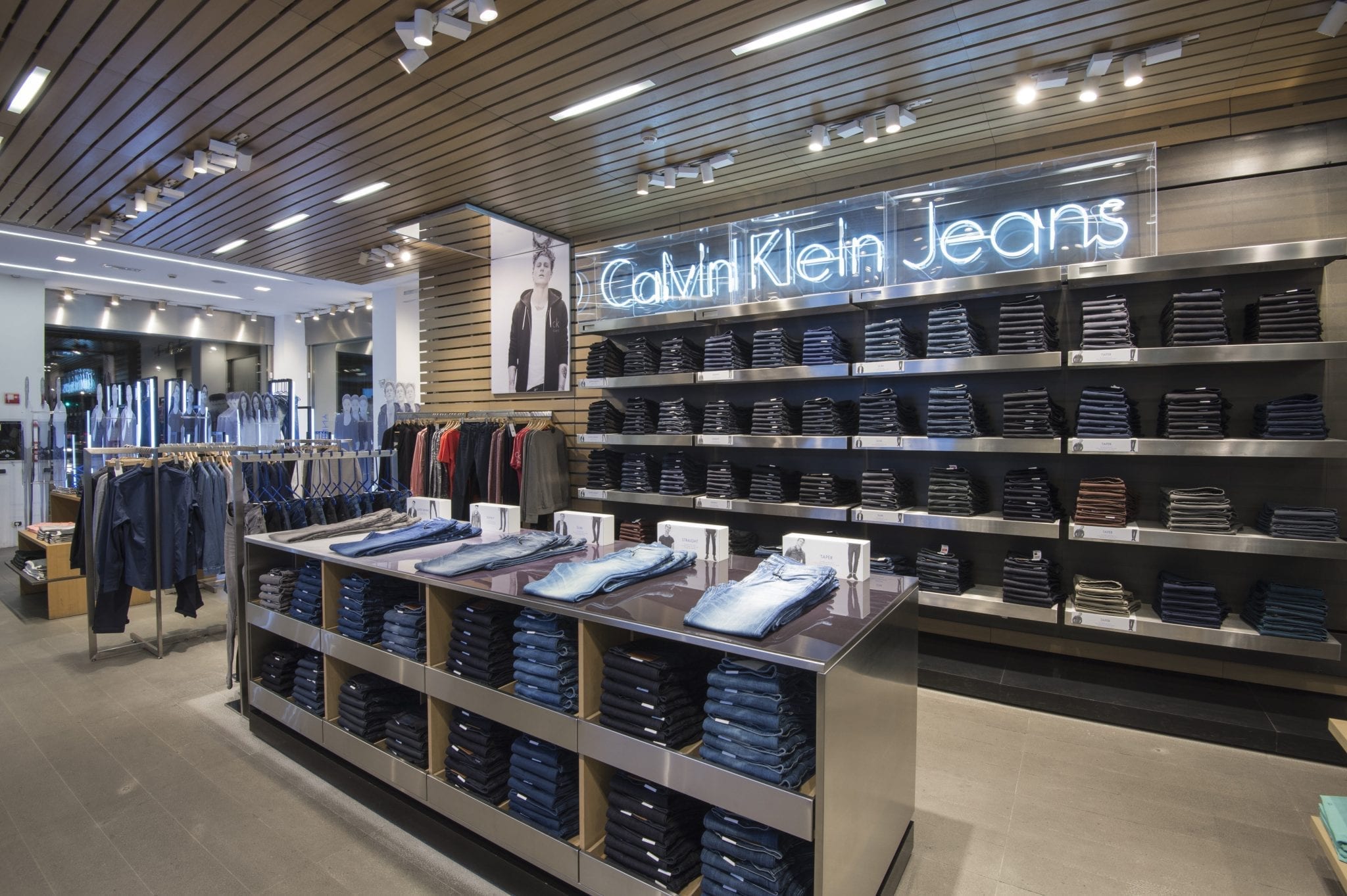
    Shanghai’s two-storey store offers men’s and women’s CK Calvin Klein, Calvin Klein Jeans, Calvin Klein Underwear and Calvin Klein Performance apparel and accessories.

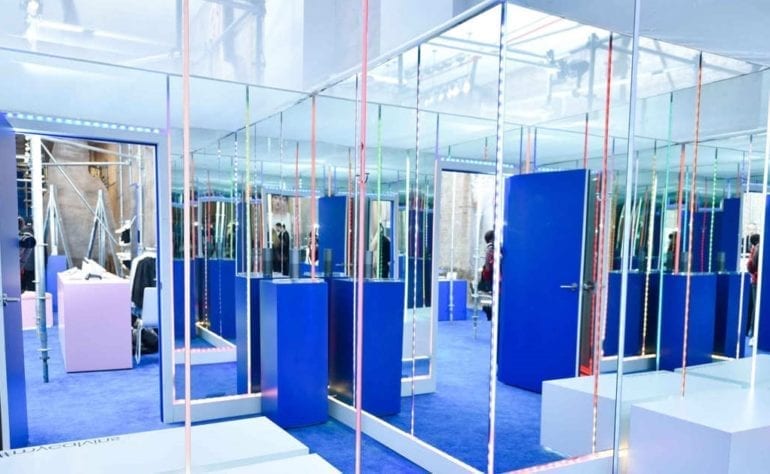
    Its design concept communicates the brand’s minimal, modern aesthetic with added colour and sumptuous materials to enhance the consumer experience, says the company. Cobalt-blue curtains frame the entrance, while geometric rugs in soft pink offset the grey concrete. Kvadrat/Raf Simons fabric is used throughout as well as Utrecht chairs by Gerrit Thomas Rietveld.

    Oversized silhouette cut-out images of models in the brand’s latest styles hang from the ceiling.

    Digital technology offers a personalised shopping experience. Interactive video and denim-fit guide walls enable customers to browse and try on items featured in the brand’s current campaign.

    An interactive video table invites customers to explore the brand on a deeper level via newspaper, magazine and online articles about the brand, key milestones, runway show videos and events, as well as the official Calvin Klein social-media platforms.

    “As we continue to focus on expanding Calvin Klein’s global footprint, it is our objective to bring a best-in-class retail experience to key markets and shopping destinations,” says CEO Steve Shiffman.

    Founded in 1968 by the designer and his business partner Barry Schwartz, the brand’s global retail sales exceeded $8 billion in more than 110 countries last year.

    Owner PVH also has such brands as Speedo, Tommy Hilfiger, Van Heusen and Warner’s in its portfolio.

  • Solid growth for Calvin Klein and Tommy Hilfiger in China

    Solid growth for Calvin Klein and Tommy Hilfiger in China

    Strong performances by Calvin Klein and Tommy Hilfiger in China helped propel solid half-year and second-quarter sales and profit growth for parent PVH Corporation.

    Chairman and CEO Emanuel Chirico said “better than expected” second-quarter results reflect the continued momentum and ongoing operating efficiencies across the company’s diversified business model.

    “Our results reflect a planned increase of approximately $25 million of marketing compared to the prior year related to Calvin Klein and Tommy Hilfiger, which we believe will continue to drive market share gains and allow us to capitalise on the brands’ significant international expansion opportunities over the next several years.”

    Global revenue from the Calvin Klein business for the second quarter increased 8 per cent year-on-year to $786 million. But Calvin Klein’s non-US sales soared 20 per cent thanks to an “outstanding performance” in the wholesale business in Europe and China, and solid growth in the retail business, the latter due to a 6 per cent increase in international comparable-store sales and square footage expansion in company-operated stores.

    Calvin Klein North America revenue decreased 1 per cent.

    Tommy Hilfiger revenue rose 4 per cent to $892 million, with international revenue up 9 per cent to $492 million, again driven by strong performances in Europe and Asia. But Tommy Hilfiger North America revenue was down 2 per cent to $400 million compared to the prior year period.

    Consolidated group revenue was $2.1 billion, up 7 per cent year-on-year.

    For the first half year, Calvin Klein sales rose 6 per cent, Tommy Hilfiger by 5 per cent and total group revenue by 5 per cent  to $4.1 billion.

    Earnings before interest and taxes for the first six months of 2017 was $392 million, inclusive of a $17 million negative impact due to foreign currency exchange rates, compared to $371 million in the prior year period.

  • Calvin Klein operator ups stake in struggling retailer

    Calvin Klein operator ups stake in struggling retailer

    Apparel supplier and retailer, Gazal Corporation, has upped its stake in struggling luxury handbag retailer, Oroton, confirmed in an announcement yesterday.

    Gazal – which jointly owns and manages PVH Brands Australia, a joint venture company in partnership with PVH Corp – confirmed it has acquired a 7.35 per cent shareholding in Oroton at $1.00 per share.

    The apparel operator said it noted the current strategic process in place for the ailing handbag retailer, which is negotiating with Westpac the terms of a $35 million facility that is due to expire in 2018, will receive up to $3 million credit support from its major shareholder and former director James Vicars, who holds an 18.2 per cent share.

    “Gazal has no proposal to put to Oroton but may consider opportunities arising from the strategic process as well as other opportunities as they arise,” the company said in its statement to the ASX.

    The company holds the licenses and operates PVH’s brands including Calvin Klein and Tommy Hilfiger as well as other licensed and JV owned brand names such as Van Heusen, Pierre Cardin, Bracks, Nancy Ganz, Spanx and Hold Me Tight. It also operates the Bisley Workwear brand.

  • Fashion house Calvin Klein rebranding

    Fashion house Calvin Klein rebranding

    Fashion house Calvin Klein, a wholly owned subsidiary of PVH, plans to rebrand its men’s and women’s contemporary apparel and accessories business.

    It is changing from Calvin Klein Platinum to CK Calvin Klein, with a global roll-out of the new branding to start this month.

    In Asia and Japan, in coordination with licensing partners Club21 and Onward Kashiyama respectively, the CK Calvin Klein rebranding will be introduced with this year’s spring season. Freestanding stores opening this year in Asia will feature the new branding, while existing stores will be transitioned on a rolling basis.

    Founded in the US in 1968 by Calvin Klein and his business partner Barry Schwartz, the company had global retail sales exceeding US$8 billion in 2015 with distribution in more than 110 countries. Calvin Klein employs more than 10,000 people globally, and was acquired by PVH in 2003.

    With a history of more than 130 years, PVH is an apparel company with a presence in more than 40 countries and more than $8 billion in revenues. As well as Calvin Klein it owns the Arrow, Izod, Olga, Speedo, Tommy Hilfiger, Van Heusen and Warner’s brands.

  • Closing shop on China’s e-commerce platforms

    Closing shop on China’s e-commerce platforms

    The closures of a number of retail and luxury brand giants on China’s e-commerce platforms indicate that retail competition is no less fierce online than offline.

    It is old news that the Chinese market is highly competitive and unlike any other market in the world. What may sell on the high street in London is not guaranteed to sell in China. The rainbow-lensed promises of e-commerce seem to be an easy way to access China’s 770.4 million working population, 0.2 per cent or over 1.5 million of which have an average income of US$500,000.

    Political concerns and falling sales: Lotte

    In 2015, Lotte Group Retail opened a Tmall store, hoping to widen its reach in China, where over 60 per cent of its overseas stores are located. The large South Korean multinational conglomerate has had a presence in China for over 20 years, with 115 supermarkets and five shopping malls.

    But on January 12 this year, Lotte closed its Tmall store – along with three brick-and-mortar stores in Beijing – after rising political tension between China and South Korea. In December, Lotte’s China headquarters admitted that the company was facing investigations for tax, fire control and safety issues. However, the closure of its Tmall store seems to have stemmed also from the fact that China is Lotte’s only international market where growth is stymying. Sales fell during the last three months of 2016, year-on-year.

    While Lotte remains in the market through its physical shopping malls and supermarkets, and on the JD.com website, the company has not announced whether it will be reopening its Tmall store at any future date.

    Heavy local competition: Asos

    Asos, the UK’s largest online fashion retailer, entered China in 2013 with high expectations. The company announced it was investing RMB 100 million (US$14.5 million) towards the market, importing British styles and developing a sales force. Its business model relied exclusively on e-commerce, with its own website, as well as a Tmall store.

    However, Asos failed to attract enough customers and was running a loss of GBP 4 million (US$5 million) by April of 2016, when it announced that it was shutting down its China operations.

    Asos faced a number of problems in the Chinese market, from operations to marketing. When it first started, the company encountered issues with shipping though China Post, with customers paying import taxes on clothes. Eventually, Asos obtained a local warehouse, but then it encountered complex clothing trade regulations in China, particularly in regards to correct labelling. As a result, Asos had to spend additional funds on restitching to comply with local code, contributing to higher than expected start-up costs.

    Effective marketing was also a major issue for Asos, with the company failing to distinguish itself from local, more affordable brands. While it may be a major player in the US and Europe, Asos was relatively unknown to Chinese millennials, its target consumer base.

    Tmall concerns for luxury brands: Coach

    Coach was one of the first US luxury handbag brands to launch a Tmall store, creating a pop-up store from December 2011 to January 2012, and then an official one in 2015. However, citing a shifting operational strategy, Coach announced that it was leaving the platform just one year later in September 2016.

    China is a critical market for luxury goods, as sales in the US and Europe steadily decline. Many brands see e-commerce as a way to directly access customers and receive greater exposure, which is why many have moved onto online platforms en masse. Despite this, online platforms have always been a concern for luxury brands, who fear appearing too mass market. Moreover, Alibaba has been criticised by brands for not doing enough to remove fake goods, despite a counterfeit removal program. In 2016, Gucci and Michael Kors quit the anti-counterfeit coalition as protest against the program’s inefficacy.

    Coach still remains in the Chinese market through its WeChat account, an avenue that is growing in popularity amongst luxury brands. Cartier, Longchamp, and Montblanc all have WeChat shops with WePay functions. Some companies believe that WeChat offers a more personalised shopping experience, as well as greater control over its brand.

    For many luxury brands, online platforms are more for marketing and building brand image, rather than sales. However, official Tmall flagship stores do not receive priority listing on searches. In fact, according to a 2016 study by L2, only 12 per cent of first page Tmall search results were through the official Coach shop. The only luxury brands that controlled more than 80 per cent of first page search results were Ports 1961, Burberry, Tommy Hilfiger, Calvin Klein, and Tumi.

    Key Takeaways

    E-commerce is a high-growth sector, with online retail sales totaling US$581.61 billion in 2015, and it is estimated to grow 20 per cent annually by 2020. China is now the biggest online retail market in the world, and Chinese consumers make up almost half of all online sales globally.

    Companies looking to take advantage of China’s market size and sell to Chinese consumers often mistakenly believe that e-commerce offers a shortcut to success. While a misconception, this idea is understandable. There are fewer licensing requirements to operate through e-commerce, and customs clearance is faster.

    However, as has been demonstrated through high-profile store closures in 2016, e-commerce requires extensive pre-entry knowledge of current regulations, a realistic logistics plan, and a local marketing strategy. Those who enter the market blindly do so at the risk of expensive learning curves and wasted efforts.

    • This article was first published on dezshira.com.  Since its establishment in 1992, Dezan Shira & Associates has been guiding foreign clients through Asia’s complex regulatory environment and assisting them with all aspects of legal, accounting, tax, internal control, HR, payroll, and audit matters. For inquiries, email info@dezshira.com.
  • Zalora partners with Calvin Klein Asia

    Zalora partners with Calvin Klein Asia

    Zalora has partnered with Calvin Klein Asia to launch Calvin Klein Jeans, Calvin Klein Underwear and Calvin Klein Performance at Zalora.com.

    The partnership significantly expands the distribution of Calvin Klein presence in five key markets including Singapore, Hong Kong, the Philippines, Taiwan and Malaysia.

    Zalora will launch the Fall 2016 season, offering more than 300 assorted products spanning womenswear, menswear, underwear, bags and small leather goods.

    Parker Gundersen, CEO of Zalora Group said Calvin Klein enjoys tremendous appeal across Asia.

    “With strong partners like Calvin Klein, we remain well ahead of the competition in terms of product assortment and ability to serve the millions of consumers throughout Asia seeking trusted and convenient access to fashion online,” he said.

    The shop has its own dedicated address and the products are also available on Zalora’s app.

  • Iconic Global Brand, Calvin Klein, Debuts on ZALORA

    Iconic Global Brand, Calvin Klein, Debuts on ZALORA

    ZALORA, Asia’s online fashion destination, today announced a partnership with iconic global lifestyle brand Calvin Klein to launch Calvin Klein Jeans, Calvin Klein Underwear and Calvin Klein Performance at ZALORA.com across the Asia region. This partnership significantly expands the distribution of Calvin Klein presence in five key markets including Singapore, Hong Kong, Taiwan, Malaysia and Philippines. Fashion-conscious customers from these countries can now buy their favourite Calvin Klein products on-the-go and at the comfort of their home at ZALORA website and Calvin Klein owned online store.

    ZALORA will launch the Fall 2016 season with Calvin Klein Jeans – the original designer jeans that exemplifies sexy, provocative and youthfulness; Calvin Klein Underwear – the first designer underwear that is modern, body conscious and sensuous; and Calvin Klein Performance – a contemporary and stylish athleisure wear. Offering over 300 assortment of product from womenswear, menswear, underwear, bags and small leather goods, ZALORA.com is a comprehensive one-stop online shopping destination for Calvin Klein fans.

    “We are thrilled to be launching Calvin Klein across all of our markets in Asia,” said Parker Gundersen, Chief Executive Officer of ZALORA Group. “Calvin Klein enjoys tremendous appeal across Asia and this launch will be an exciting enhancement to our brand portfolio. With strong partners like Calvin Klein, we remain well ahead of the competition in terms of product assortment and ability to serve the millions of consumers throughout Asia seeking trusted and convenient access to fashion online.”

  • Singapore Website Shutdown After Selling Fake Calvin Klein Products from Taobao

    Singapore Website Shutdown After Selling Fake Calvin Klein Products from Taobao

    Website SGbuy4u was found selling fake Calvin Klein goods after investigators successfully purchased imitation wallets and underwear from the website.

    Calvin Klein’s case against Singapore-based Global PSM marked the first reported suit that involved a summary judgment against a firm selling fake goods online in Singapore.

    Global PSM however, claimed that their business model was customer-to-customer service.

    2

    Users can search for and buy a variety of goods on the website and after a payment for an item has been made, Global PSM then passes on the order to Chinese shopping website Taobao. After the company has transferred payment, and the item has been delivered in China, it will then be shipped to the customer in Singapore.

    Calvin Klein filed cases and asked for summary judgment against Global PSM, freight forwarding company HS International and a Mr. Jeffrey Tan, the owner of the two firms, after two successful purchases.

    “The crux of the dispute lies in the proper characterization of the business and the involvement of each of the defendants in those business activities,” said Justice Chan Seng Onn was quoted as saying.

    Global PSM’s argument claimed that the company merely served as a courier, pointing the blame for the trademark breaches to original sellers on Taobao.

    Prosecution lawyers, however, countered that the SGbuy4u business does more than courier services as it collects payments, buys the fake goods on Taobao and has them delivered to their warehouse.

    While Justice Chan had expressed willingness to hold Global PSM accountable for trademark infringement, he ruled that some issues were needed to be clarified in relation to the involvement of the other defendants.

    “There is a pressing need for intellectual property law to keep up with technological advances in order to ensure that the law continues to protect intellectual property and rights owners in real and relevant ways,”the judge said.

  • Calvin Klein Opens First Accessories Store in Hong Kong at IFC Mall

    Calvin Klein Opens First Accessories Store in Hong Kong at IFC Mall

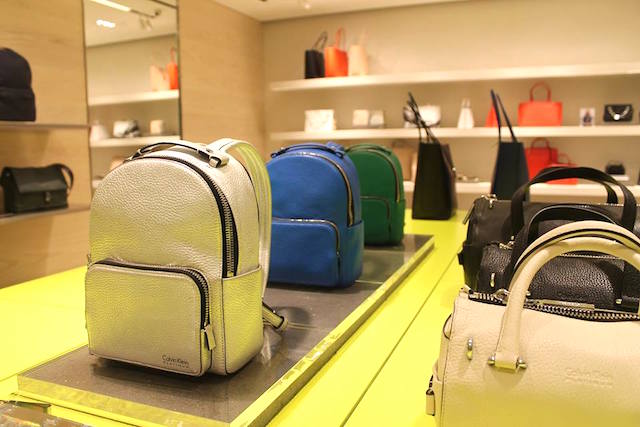
    Calvin Klein, Inc., a wholly owned subsidiary of PVH today announced the opening of the first Calvin Klein accessories store in Hong Kong at ifc mall at Central Waterfront.

    Considered one of the country’s iconic world-class shopping malls, ifc mall is the destination for an extraordinary shopping, dining and entertainment experience. The new Calvin Klein accessories store is located on level 1, and offers both men’s and women’s Calvin Klein Platinum accessories and leather goods.

     The new store’s interior is marked by simple geometric forms that create a strong but neutral framework for product display. The crispness of the store’s geometry contrasts with the muted palette of oiled wood, lustrous rose-toned metal, honed stone and concrete. 

    Calvin Klein, Inc. is one of the leading fashion design and marketing studios in the world. It designs and markets women’s and men’s designer collection apparel and a range of other products that are manufactured and marketed through an extensive network of licensing agreements and other arrangements worldwide. Product lines under the various Calvin Klein brands include women’s dresses and suits, men’s dress furnishings and tailored clothing, men’s and women’s sportswear and bridge and collection apparel, golf apparel, jeanswear, underwear, fragrances, eyewear, women’s performance apparel, hosiery, socks, footwear, swimwear, jewelry, watches, outerwear, handbags, small leather goods, and home furnishings (including furniture). For more information, please visit calvinklein.com. 

    With a heritage going back over 130 years, PVH Corp. has excelled at growing brands and businesses with rich American heritages, becoming one of the largest apparel companies in the world. We have over 30,000 associates operating in over 40 countries with over $8 billion in 2015 revenues. We own the iconic Calvin Klein, Tommy Hilfiger, Van Heusen, IZOD, ARROW, Speedo*, Warner’s and Olga brands and market a variety of goods under these and other nationally and internationally known owned and licensed brands.