Tag: Campbell’s

  • Florida Family Files Worm Contamination Suit against Campbells and Walmart over SpaghettiOs

    Florida Family Files Worm Contamination Suit against Campbells and Walmart over SpaghettiOs

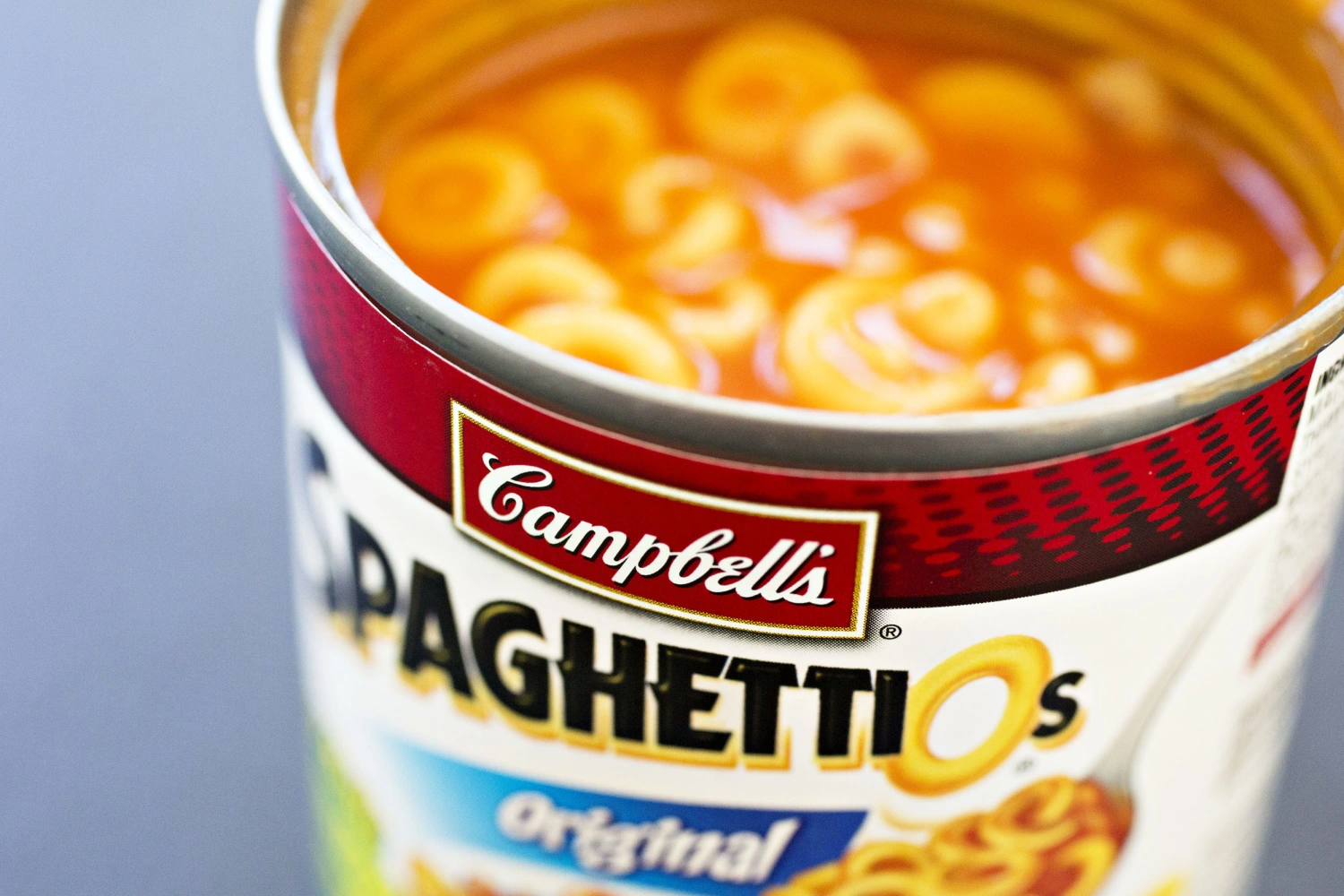
    A lawsuit has been filed against Campbell’s and Walmart by a Florida-based mother and her daughter, alleging that they consumed SpaghettiOs tainted with parasites or worms, rendering the product unfit for consumption.

    Accusations of Food Contamination

    In the legal complaint lodged on Tuesday, Mary Hubbard stated that she became aware of the alleged contamination on June 6, 2024, when they started eating the SpaghettiOs at their residence in Okeechobee County. It was mentioned that “worms or parasites appeared to be actively moving within the food.” In substantiation of this claim, Hubbard made videos that apparently portrayed worm-like organisms moving in the food item.

    According to her, the pasta product was purchased at Walmart, which is also named in the lawsuit. The plaintiffs, Hubbard and her daughter identified as PL, argue that they experienced parasitic infections after eating the SpaghettiOs, leading to various health issues. Hubbard suffered from a gastrointestinal illness and sepsis, while her daughter encountered nausea and vomiting.

    Companies Respond and Lawsuit Details

    In response to the allegations, Campbell’s, headquartered in Camden, New Jersey, dismissed the plaintiffs’ claims as baseless and expressed its intention to strongly refute them. Walmart, located in Bentonville, Arkansas, stated that it would respond to the allegations in court, underscoring that its customers’ health and safety are of paramount importance.

    The lawsuit seeks unspecified damages amounting to a minimum of US$75,000 from both Campbell’s and Walmart, citing alleged negligence and violation of federal food safety regulations. The father of young PL is also a plaintiff in the case, but lawyers representing the plaintiffs did not provide additional details when asked.

    Introduced to the market in 1965, SpaghettiOs was touted as “the world’s first spoonable spaghetti.” It is not uncommon for food manufacturers to face legal action over alleged contamination, often precipitated by lab tests, product recalls, or health alerts. For example, in April 2025, a public health alert was issued by the US Department of Agriculture’s Food Safety and Inspection Service for 12 varieties of soup, including four Campbell’s brand soups, on grounds of potential contamination with wood present in a federally regulated ingredient, cilantro.

    The lawsuit was filed in a federal court in Fort Pierce, Florida, and has been assigned to US District Judge Aileen Cannon.

    Questions & Answers

    What is the alleged contamination of Campbell’s SpaghettiOs about?
    The mother and daughter, Mary Hubbard and PL, claim they discovered worms or parasites in the SpaghettiOs they had purchased from Walmart. This allegedly led to parasitic infections and various illnesses.

    What are the companies’ response to this accusation?
    Both Campbell’s and Walmart have refuted the claims and intend to defend vigorously against the allegations. Walmart also highlighted that it considers customers’ health and safety a top priority.

    What compensation are the plaintiffs seeking with their lawsuit?
    They are seeking unspecified damages of at least US$75,000 from Campbell’s and Walmart, citing negligence and violation of federal food safety laws.

  • Campbell’s Dismisses Executive for False Claims about 3D-Printed Chickens and Offensive Remarks

    Campbell’s Dismisses Executive for False Claims about 3D-Printed Chickens and Offensive Remarks

    Campbell’s, a renowned canned soup brand, recently terminated a high-ranking executive following the emergence of a recording in which he made racially insensitive statements and alleged that the company uses 3D-printed chickens. Martin Bally, a vice president in Campbell’s information security department, was the subject of a recent lawsuit filed by former employee Robert Garza, who alleges his termination on January 30 was a consequence of reporting Bally’s offensive comments to a superior.

    Misconduct in Michigan

    The legal action was initiated in Michigan, the home state of both Garza and Bally, though Campbell’s headquarters are situated in Camden, New Jersey.

    Garza reports that he met with Bally in November 2024 to negotiate his salary. During the meeting, which Garza claims to have recorded, Bally allegedly characterized Campbell’s products as highly processed food intended for low-income consumers.

    Bally is also accused of making racially offensive remarks about Indian employees, whom he referred to as inept. Additionally, Garza claims Bally admitted to frequently coming to work under the influence of cannabis edibles.

    Company Reaction

    Campbell’s disclosed on Wednesday that it first became aware of Garza’s lawsuit the previous week. After reviewing snippets of the recorded conversation, the company concluded that the voice likely belonged to Bally, leading to his dismissal on Tuesday.

    Campbell’s issued an apology for the harmful comments, emphasizing that such behavior contradicts the company’s values and culture. The company pledged zero tolerance for any form of offensive language under any circumstances.

    Unhealthy Claims

    In the contentious recording, Bally reportedly criticized Campbell’s products, labeling them as unhealthy and expressing his aversion to consuming 3D-printed chicken.

    In response, Campbell’s defended the quality of its chicken on Wednesday, stating that it sources from trusted U.S. suppliers, is raised without antibiotics, and meets stringent quality standards. The company dismissed Bally’s comments as not just erroneous but ludicrous.

    Repercussions and Response

    Larry Kopp, founder and chairman of a strategic communications and public relations firm, believes Campbell’s should have terminated Bally and reached an agreement with Garza immediately upon learning of the incident. He warned that such damaging recordings should never be made public.

    Garza is pursuing financial compensation from Campbell’s, Bally, and his previous supervisor, J.D. Aupperle. He alleges that he informed Aupperle about his encounter with Bally shortly before his termination.

    Campbell’s confirmed on Wednesday that Aupperle is still employed by the company.

    Questions & Answers

    What are the allegations against Campbell’s executive Martin Bally?
    Bally allegedly made racially offensive remarks and claimed Campbell’s uses 3D-printed chickens. He also reportedly referred to the company’s food as highly processed and geared towards low-income individuals.

    How has Campbell’s responded to the accusations?
    Campbell’s has dismissed Bally from his position. The company has also issued an apology for the offensive comments and affirmed its commitment to a respectful and inclusive work environment.

    What is the objective of Robert Garza’s lawsuit?
    Garza is seeking financial damages from Campbell’s, Bally, and his former manager, J.D. Aupperle. He asserts that his termination resulted from reporting Bally’s inappropriate comments to a supervisor.

  • World’s biggest brands put on notice over 5,000,000-tonne laminate packaging problem

    World’s biggest brands put on notice over 5,000,000-tonne laminate packaging problem

    Big brands have been put on notice about their inaction over the world’s growing 5,000,000-tonne problem of plastic aluminium laminate waste.

    Following revelations about the scale of the problem in the UK and internationally, the CEO of the company behind the world’s only solution for recycling laminates – food pouches, pet food pouches, toothpaste tubes, sachets – has called on the world’s biggest FMCG companies to support investment in new processing capacity.

    Enval CEO Dr Carlos Ludlow-Palafox has written an open letter addressed to the CEOs of companies that benefit from laminate packaging, such as Unilever, Kraft, Nestlé Mars, Colgate, Campbell’s, GSK and Hain-Celestial to get behind efforts to process post-consumer waste.

    Across Europe and the US, billions of plastic aluminium laminate pouches, tubes and sachets are being discarded and sent to landfill or incineration while consumers are often misled into thinking that they are recycled, as reported.

    In the UK alone more than 10 billion laminate packaging items are sold annually but fewer than 1 in 20,000 is recycled. Of the remainder two thirds go to landfill and the rest are incinerated. This recycling rate is 50 times worse than that of disposable coffee cups, which has received great attention from media and politicians alike.

    Because the material contains bonded plastic and aluminium, the packages cannot be treated either as plastic or as aluminium. Only the Enval process can deal with them, however currently there are no major initiatives in place in the UK or the world to collect and sort post-consumer packages and genuinely recycle them.

    To process the waste, Enval has developed the world’s only commercial scale plant to deal with the material, which uses a microwave heating method to recover the aluminium into reusable ingots and process the plastic into reclaimed oil.

    Manufacturers and waste companies have undertaken successful trials with the Enval plant but have failed to support wider collection and processing efforts due to a reluctance to make the initial investment required.

    Enval CEO Dr Ludlow-Palafox said the lack of involvement by the FMCG brand owners and the risk-averse nature of the waste handling sector has meant the Huntingdon plant is still the only one in operation.

    “We believe the time for complacency is over. FMCG brands are using laminate packaging because of its exceptional characteristics and cost and environmental benefits. Yet the fact remains that more than 10 billion pouches, tubes and sachets end up being thrown away in the UK alone. This is inexcusable now that we have an environmentally sustainable and economically viable solution. These same companies boast about their environmental credentials: it is time for some action.

    “Consumers are buying laminate packaging in good faith – often either thinking it can be recycled or because there is no other choice. Big brands have reaped the benefits of advancements in packaging technology while delivering no certainty to consumers.

    “The problem of single-use laminates dwarfs that of coffee cups. Brands and regulators now need to put their money where their mouth is and ensure that laminates can be genuinely reprocessed and these materials brought into a circular economy that benefits both the market and the planet.”

    Independent studies commissioned by WRAP UK and the UK’s Department for Environment, Food and Rural Affairs (DEFRA) have shown that laminates can be readily separated from waste streams using conventional sorting technology. These studies also proved that a majority of householders, when asked, sort laminates for recycling for collection as they do with other materials.