Tag: cancer

  • J&J’s Talc-Cancer Lawsuits: 69,000 Cases at Risk of Dismissal as Judge Demands Stronger Evidence

    J&J’s Talc-Cancer Lawsuits: 69,000 Cases at Risk of Dismissal as Judge Demands Stronger Evidence

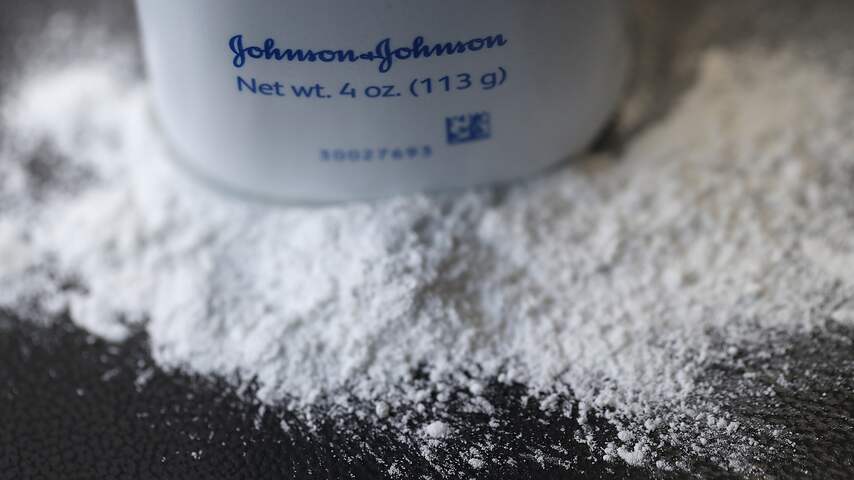
    A U.S. federal judge on Wednesday expressed skepticism regarding the accusations of roughly 69,000 individuals who assert that Johnson & Johnson’s baby powder and other talc-related products led to ovarian cancer. The judge stated that the plaintiffs must offer more definitive evidence or face the possibility of their lawsuits being dismissed.

    Doubts Over Evidence

    US Magistrate Judge Rukhsanah Singh, based in Trenton, New Jersey, noted that recent testimonies from two expert witnesses representing the plaintiffs raised questions about the validity of their claims. The experts had testified that talcum powder usage specifically caused the plaintiffs’ ovarian cancer. These expert testimonies were part of a preparation for a set of six pivotal, or ‘bellwether’, trials aimed at assessing the potential worth of the remaining claims and guiding settlement discussions.

    The experts in question, Judith Wolf and Daniel Clarke-Pearson, delivered their testimonies in May. Despite their involvement, they were unable to conclusively rule out other potential causes for the plaintiffs’ ovarian cancer, leading to further doubts about the lawsuits.

    Johnson & Johnson’s Stance

    Johnson & Johnson has consistently refuted the allegations that its talc products cause cancer. The company maintains its stand that talc is safe and asbestos-free. Erik Haas, Johnson & Johnson’s VP of litigation, stated that the recent decision edges these cases closer to a fair and suitable outcome – the complete dismissal of the talc lawsuits. At the time of writing, both a spokesperson for Johnson & Johnson and a lead attorney for the plaintiffs had not responded to requests for comments.

    Despite the concerns raised, Judge Singh stated that the ongoing debate over causation would not lead to an immediate dismissal of the consolidated federal lawsuits. Instead, the plaintiffs have been given until November 19 to provide a response and a reason why their case should not be dismissed due to the failure to provide an admissible expert opinion that Johnson & Johnson’s talc caused their specific cancer.

    In addition to these federal cases, Johnson & Johnson also faces lawsuits in state courts across the US. The company has seen victories in some recent trials, but large verdicts have also been awarded to plaintiffs in other cases. The litigation process resumed in March 2025 after being paused for over three years due to unsuccessful attempts by Johnson & Johnson to resolve the lawsuits through a shell company’s bankruptcy.

    As a response to the ongoing controversy, Johnson & Johnson ceased sales of talc-based baby powder in the US in 2020, opting instead for a cornstarch product.

    Questions & Answers

    What was the recent decision made by the US Magistrate Judge Rukhsanah Singh about?
    The decision expressed skepticism about the accusations made by individuals who assert that Johnson & Johnson’s talc products caused their ovarian cancer. The judge noted that the plaintiffs must provide more definitive evidence or risk their lawsuits being dismissed.

    What impact did the expert testimonies have on the case?
    The expert witnesses, Judith Wolf and Daniel Clarke-Pearson, were unable to rule out other potential causes for the plaintiffs’ ovarian cancer. This uncertainty has raised further questions about the validity of the lawsuits against Johnson & Johnson.

    What is Johnson & Johnson’s stance on the allegations about their talc products?
    Johnson & Johnson has consistently refuted the allegations, maintaining that their talc products are safe and asbestos-free. The company believes that a fair and suitable outcome would be the complete dismissal of the talc lawsuits.
  • Johnson & Johnson Slapped with $40M Verdict in Landmark Talc-Ovarian Cancer Case

    Johnson & Johnson Slapped with $40M Verdict in Landmark Talc-Ovarian Cancer Case

    A California court has awarded $40 million to two women who claimed their ovarian cancer was a result of prolonged usage of Johnson & Johnson’s talcum-based baby powder. The Los Angeles Superior Court jury distributed the payout, allotting $18 million to Monica Kent and $22 million to both Deborah Schultz and her husband. This decision was made following the conclusion that Johnson & Johnson was aware of the potential harm their products could cause for several years, yet failed to notify consumers.

    Erik Haas, the current vice president of litigation at Johnson & Johnson on a global scale, announced the company’s intention to appeal the ruling. He expressed confidence that they would eventually emerge victorious, as they typically do in similar cases of adverse verdicts.

    Monica Kent received her ovarian cancer diagnosis in 2014, while Schultz got hers in 2018. Both women, residents of California, reported regular usage of Johnson & Johnson’s baby powder post-bath for around four decades. The pair also testified that their treatments for ovarian cancer included significant surgeries and multiple rounds of chemotherapy.

    According to Andy Birchfield, the women’s attorney, Johnson & Johnson knew as early as the 1960s that their product was potentially carcinogenic. He accused the company of actively trying to suppress this information from public knowledge.

    In response, Allison Brown, Johnson & Johnson’s attorney, insisted that the only people to link the women’s cancers to talc were their legal representatives. Brown argued the alleged connection lacks the support of any significant US health authority and no study exists to prove talc can move from the exterior of the body to reproductive organs.

    Currently, the company faces over 67,000 lawsuits from plaintiffs alleging that they developed cancer following the usage of Johnson & Johnson’s baby powder and other talc products. Despite this, the corporation maintains that its products are safe, asbestos-free, and do not cause cancer. In 2020, Johnson & Johnson ceased the sale of talc-based baby powder in the US, instead opting for a cornstarch product.

    Johnson & Johnson also attempted to address the litigation via bankruptcy. However, this approach has been dismissed thrice by federal courts, most recently in April. Prior to these bankruptcy attempts, Johnson & Johnson had a mixed track record in talc trials, with some verdicts reaching as high as $4.69 billion awarded to women claiming the baby powder caused their ovarian cancer.

    Most of the lawsuits Johnson & Johnson faces are related to ovarian cancer claims. A smaller segment of the claims alleges that talc caused a rare and lethal cancer known as mesothelioma. Over the past year, the company has seen multiple substantial verdicts in mesothelioma cases, including a verdict exceeding $900 million in Los Angeles last October.

    Questions & Answers

    What was the amount awarded to the women claiming Johnson & Johnson’s baby powder caused their ovarian cancer?
    The Los Angeles Superior Court jury awarded a total of $40 million to the two women; $18 million to Monica Kent and $22 million to Deborah Schultz.

    What is Johnson & Johnson’s stance on the issue?
    Johnson & Johnson maintains the position that their products are safe, free from asbestos, and do not cause cancer. They have every intention to appeal the recent verdict.

    What other lawsuits is Johnson & Johnson facing related to its talc products?
    Johnson & Johnson is currently facing over 67,000 similar lawsuits from plaintiffs who claim their cancers were caused by the use of the company’s baby powder and other talc-based products.

  • LG Chem signs deal to distribute cancer drug

    LG Chem signs deal to distribute cancer drug

    LG Chem has partnered with U.S. bio company Cue Biopharma to develop immunotherapy drugs to treat cancer, the local company announced Monday. Immunotherapy drugs help patients fight diseases like cancer by enhancing their immune system. It is a relatively unusual form of cancer therapy that differs from the conventional approach of using medication to directly fight the cancer cells inside the human body.

    Based in Boston, Cue Biopharma is a Nasdaq-listed company that specializes in developing biologics for immunotherapy. The companies will co-develop and distribute three immunotherapy drugs which were previously developed by Cue Biopharma: its lead product CUE-101, currently in the preclinical stage, and two other cancer antigens that are at an earlier stage of development.

    Cue Biopharma’s core technology is the Immuno-STAT platform that inserts information about a specific cancer cell into a T cell, a white blood cell that will then find and attack the disease. Before the platform existed, T cells had to be pulled out of the human body to have the information injected into them, but Cue Biopharma’s technology allows the process to happen internally.

    Under the agreement, LG Chem will obtain exclusive distribution rights for the three treatments in Asia once they are fully developed. Cue Biopharma will take charge of distribution in other regions.

    LG will offer a maximum of $400 million to the U.S. bio company including milestone payments given at each stage of clinical testing in the development process. Once the treatments are commercialized, Cue Biopharma will additionally receive license fees proportional to sales in the Asia region while LG, in return, will receive royalties from the Asia sales.

    This is the first time in its three decades of history in the bio pharmaceuticals industry that LG Chem has partnered with another company to work on a new drug.

    “We are very pleased to enter this strategic collaboration with Cue Biopharma; it is more than a licensing deal, it is a partnership with a shared vision and great strategic fit,” said Dr. Son Jee-woong, president of LG Chem Life Sciences.

    For Cue Biopharma, the advantage of working with LG is its experience in developing and manufacturing bio pharmaceuticals in the past as well as its business know-how in the Asia region.

    Under the partnership, LG will also conduct development in mass production and quality control methods for the immunotherapy drugs.

  • Korea’s Yuhan licenses lung cancer drug

    Korea’s Yuhan licenses lung cancer drug

    Yuhan Corporation announced on Monday that it has entered into a licensing agreement with Janssen Biotech, a subsidiary of Johnson & Johnson, to develop Lazertinib, a treatment for non-small cell lung cancer (Nsclc) that is undergoing clinical trials in Korea.

    Under the agreement, Yuhan will receive an upfront payment of $50 million and is eligible for double-digit royalties on future sales.

    It is also eligible for up to $1.255 billion in payments according to development phases.

    Going forward, Janssen will be responsible for developing the drug, manufacturing and commercialization with exclusive worldwide rights to Lazertinib excluding Korea, where the rights belong to Yuhan.

    The companies will work together on global clinical trials evaluating Lazertinib.

    Trials are expected to begin in 2019.

    “We are excited to start this collaboration and dive into advancing this treatment regimen with a focus on improving the lives of people who suffer from lung cancer,” said Lee Jung-hee, president and CEO of Yuhan, in a statement.

    The combined $1.255 billion Yuhan is set to receive from Janssen is the second-largest export contract for a single pharmaceutical product from Korea, according to people in the industry.

    Lazertinib is a potent, mutant-selective, irreversible, brain-penetrant and orally-active third-generation inhibitor for Nsclc, with the potential to be a first-line therapy.

    The compound is in a Phase 1/2 clinical trial in Korea. Interim results showed that Lazertinib inhibited robust disease activity in patients with Nsclc.

    Established in 1926, Yuhan is one of the top pharmaceutical companies in Korea in terms of market capitalization and revenue.

    Its core business consists of primary and specialty care, dietary supplements, household and animal care, and contract manufacturing of active pharmaceutical ingredients.

    On the news of the agreement with Janssen Biotech, shares of Yuhan spiked 29.78 percent to close at 231,000 won ($205) Monday.