Retail News CRM

Tag: Candy

  • Mondelez Injects $8M into Melbourne Candy Plant for Technological Boost: Celebrating 50 Years of Sweet Success

    Mondelez Injects $8M into Melbourne Candy Plant for Technological Boost: Celebrating 50 Years of Sweet Success

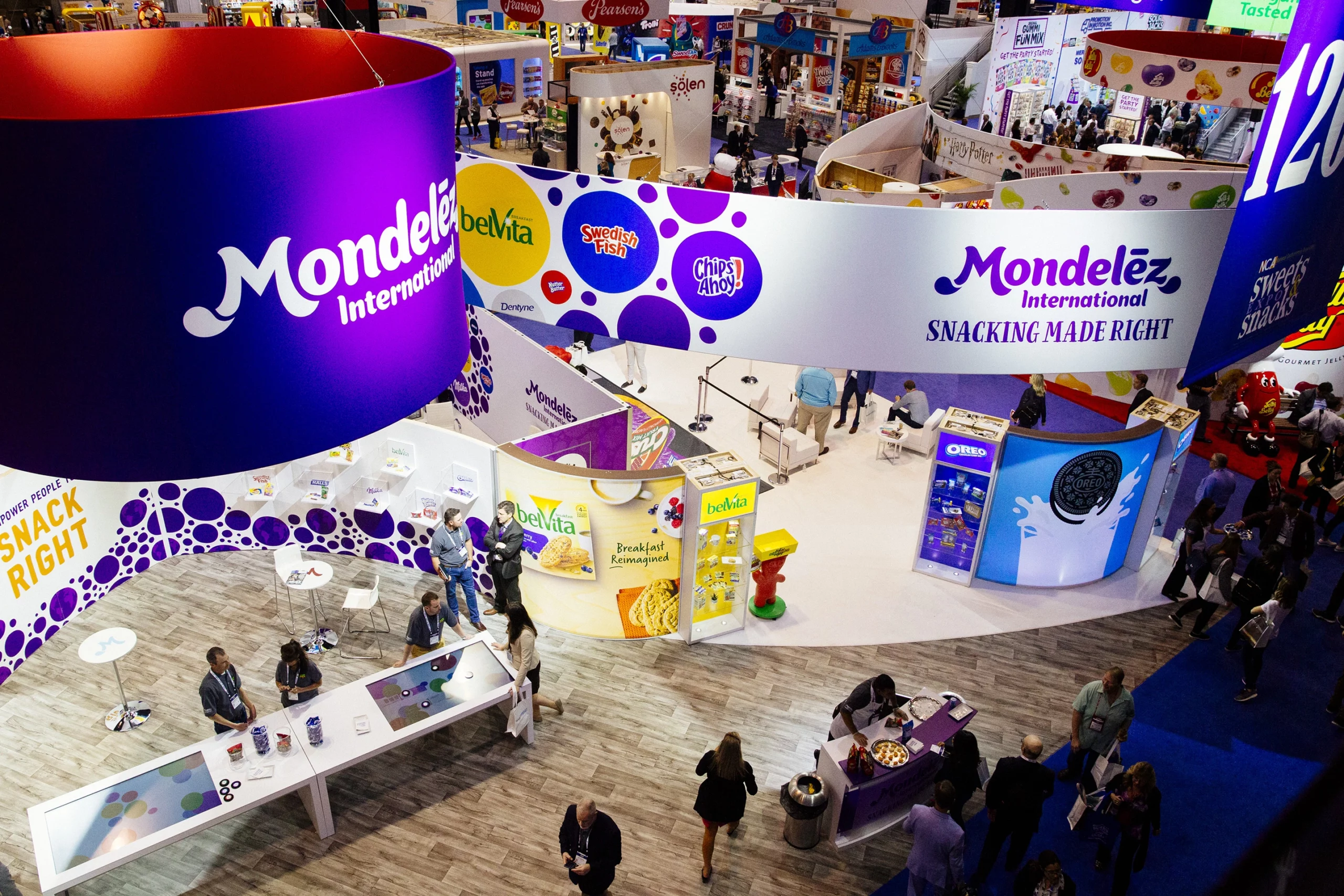
    Mondelez International recently commemorated the 50th anniversary of its Scoresby confectionery factory in Melbourne’s east, coinciding with a $8 million investment in new packaging technology. This crucial advancement will bolster the production of over 120 products, including snack-sized bags from brands like Cadbury Pascall Clinkers, Sour Patch Kids, and The Natural Confectionery Company.

    This new funding takes the total investments in the Scoresby location to $30 million since 2022. The company has clarified that this financial boost is specifically aimed at sparking regional innovation across various aspects like product flavours, range, and packaging. It will also enable the plant to accommodate ever-evolving consumer trends.

    A Commitment to Local Production

    Toby Smith, the president of Mondelez International for Australia, New Zealand, and Japan, highlighted the strategic importance of the packaging upgrade. He stated that it lay the groundwork for securing the future production at the local facility.

    This move falls in line with the company’s long-term growth projections. By 2035, Mondelez International anticipates an equal split in business growth between chocolate and non-chocolate products.

    Smith expressed immense pride in the Scoresby factory’s 50-year manufacturing history and the numerous employment opportunities it has created for Victorians in Melbourne’s east.

    Mondelez International currently employs over 1200 individuals across its operations in Victoria. Their reach extends to locations in South Melbourne, Ringwood, Scoresby, Dandenong South, and a national distribution centre in Truganina.

    Of note is the Scoresby plant’s commitment to sustainable operations, running on 100% renewable electricity. The plant is responsible for manufacturing jelly candies such as Snakes and Party Mix.

    Earlier this year, Mondelez International reintroduced its In A Biskit Crispy Potato flavour in the Australian market, a product that initially gained popularity in the 1990s.

    Questions & Answers

    What was the purpose of the $8 million investment by Mondelez International?
    It was directed towards new packaging technology, with the intention of enhancing the production of over 120 products and to adapt to changing consumer trends.

    What is the future business growth expectation for Mondelez International?
    By 2035, Mondelez International expects to see an equal split in business growth between chocolate and non-chocolate products.

    What is significant about the Scoresby plant’s operations?
    The Scoresby plant, which manufactures various jelly candies, operates on 100% renewable electricity, underlining the company’s commitment to sustainability.

  • Cadbury Australia Recalls Marvellous Creations Candy Due To Plastic Contamination Risk

    Cadbury Australia Recalls Marvellous Creations Candy Due To Plastic Contamination Risk

    Cadbury Australia has recently announced a countrywide recall of a popular product, the Marvellous Creations Jelly Popping Candy Beanies. The recall is due to the discovery of plastic fragments within the treats.

    Product Details

    The products impacted by the recall are those with an expiration date of May 21, 2026. They have been distributed and sold across the country by various outlets, including Coles, Woolworths, Drakes, The Reject Shop, IGA, and several independent retailers.

    Consumer Warning

    Food safety bodies have cautioned against consuming products containing plastic, stating that they may lead to potential health risks such as illness or injury.

    Advice to Consumers

    Customers who have purchased the affected product are strongly advised not to consume it. They are encouraged to return the product to the store of purchase where they will receive a full refund.

    For those who have already consumed the product and are worried about their health, it is recommended to seek immediate medical advice.

    Questions & Answers

    What should I do if I have purchased the recalled product?
    You should not consume it. Instead, return it to the store from where it was purchased for a full refund.

    What if I have already consumed the product?
    If you have already consumed the product and are feeling unwell or concerned about your health, it is strongly recommended to seek immediate medical attention.

    Are other Cadbury products affected by this recall?
    No. This recall is specific to the Marvellous Creations Jelly Popping Candy Beanies with an expiration date of May 21, 2026. Other Cadbury products are not affected.

  • Funday Sweets launches new low-sugar sour cola gummies

    Funday Sweets launches new low-sugar sour cola gummies

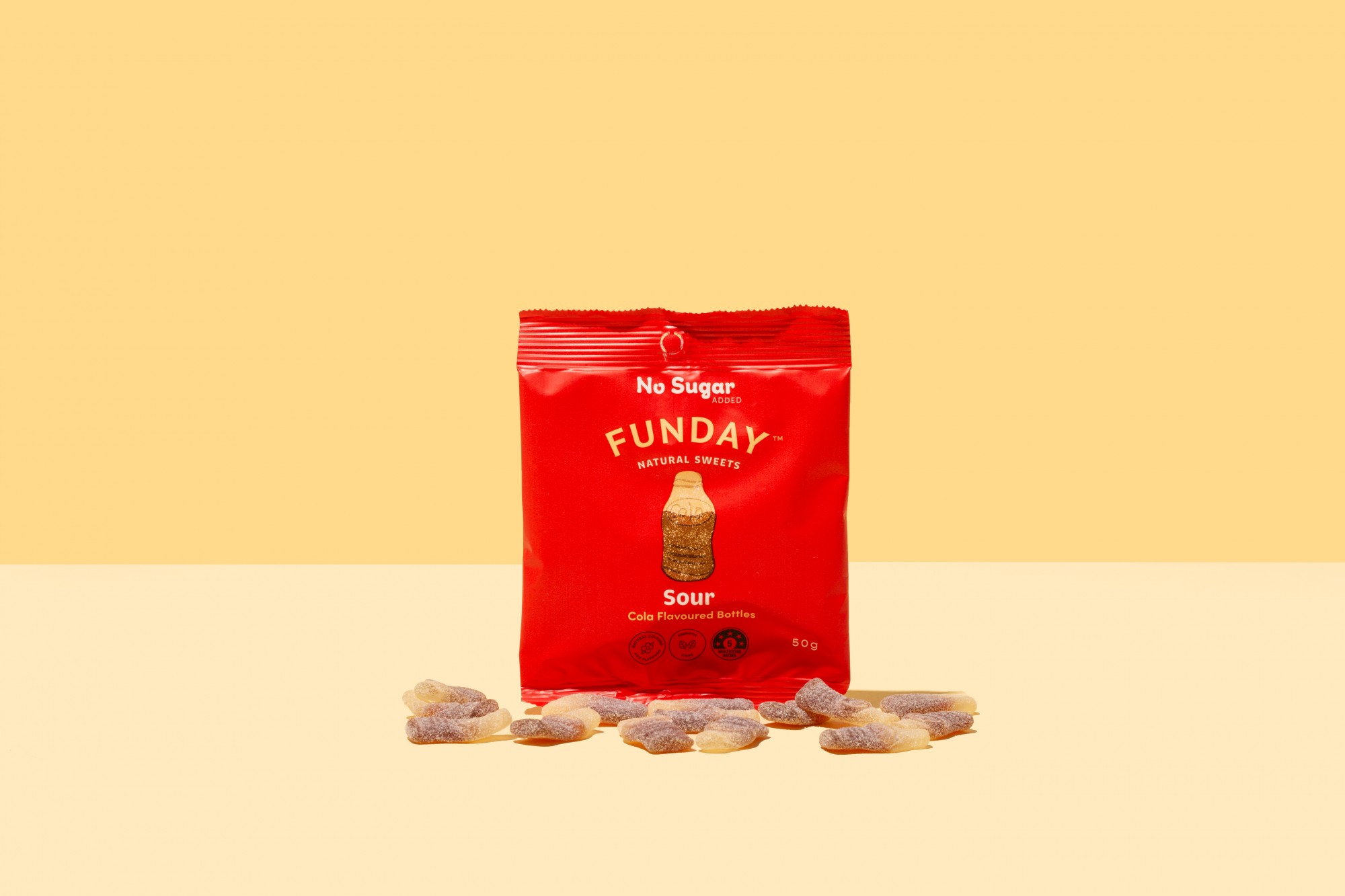
    Funday Natural Sweets has announced Sour Cola Gummies as the latest addition to its line-up of better-for-you confectionery.

    In line with the rest of the Funday Natural Sweets range, the Sour Cola Gummies have no sugar added, no sugar alcohols, and only natural colours and flavours, and each bag contains seven grams of prebiotic fibre.

    The launch will be backed by more than 200 influencers, with a reach of more than 13 million followers, in a combined marketing attempt to reach more Australians who are looking for a healthier confectionery alternative.

    Funday Natural Sweets’ Sour Cola Gummies launch today through Woolworths, Ampol Foodary, Chemist Warehouse, Harris Farms, and health food and independent supermarkets across Australia. They will also be available at Chemist Warehouse in New Zealand, as well as in the Asian and Middle Eastern markets.

    And in news that will help Funday Natural Sweets to push further into the petrol and convenience channel, the brand has announced that it has just signed up with Australia’s leading national confectionery distributor, The Distributors.

    Founder Daniel Kitay says that in the two years since the company has launched, he has observed that the appetite in Australia for better-for-you confectionery has been steadily growing.

    “Our goal is to continue to surprise our existing fanbase with new, exciting flavours and to win over people who haven’t tried our range yet. People are always surprised by how amazing natural lollies can taste once they try them,” he says.

  • Cookie Dough range can be baked or eaten raw

    Cookie Dough range can be baked or eaten raw

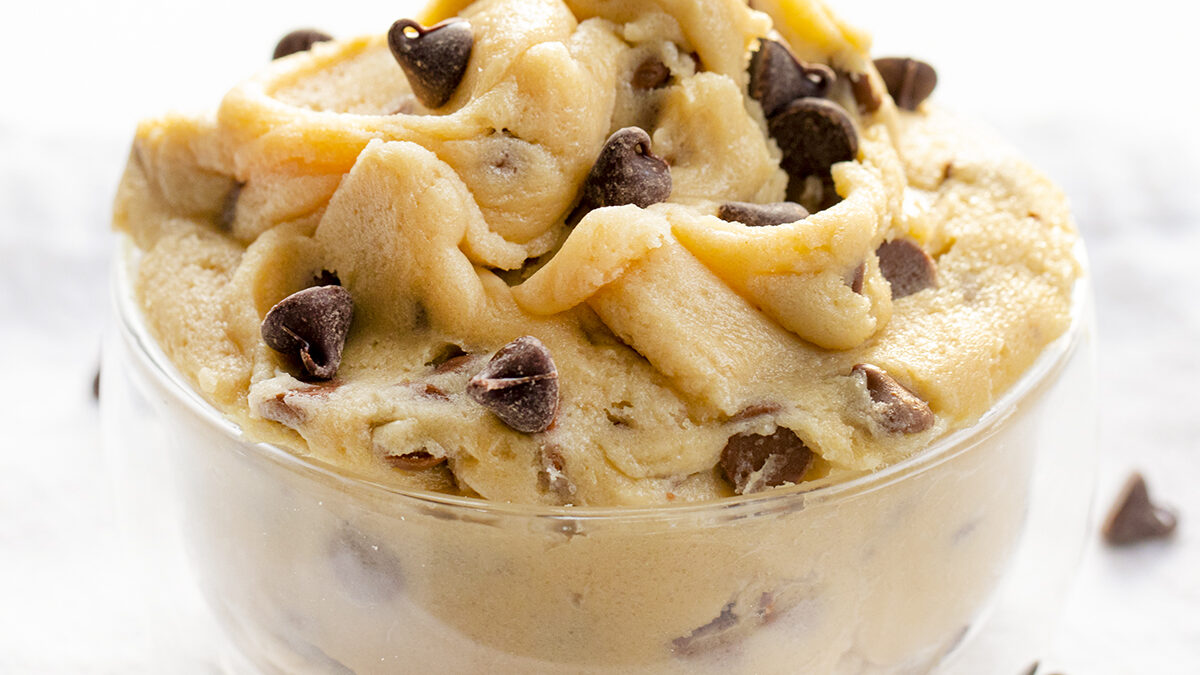
    Snacking on raw cookie dough is a lot like watching reality TV: You know it’s bad for you, you know other people will judge you if you admit to it, but it just feels so good. Well, if you’re someone who likes munching on break-and-bake cookie dough while bingeing Love Is Blind (that sounds AMAZING right now), I have great news for you. Pillsbury has been swapping out its traditional cookie dough recipe for dough that you can safely eat raw!

    We first spotted this news on the Instagram @Candyhunting, who posted a photo of some new packaging that boasted Pillsbury Chocolate Chunk & Chip cookie dough was safe to eat raw or baked.

    This content is imported from Instagram. You may be able to find the same content in another format, or you may be able to find more information, at their web site.

    Not only that, Candyhunting said that this would soon be the case for ALL Pillsbury cookie dough thanks to using “heat-treated flour and pasteurized eggs to kill off possible foodborne pathogens.”

    That might sound way too good to be true, but it is, in fact, true! Pillsbury confirmed to Delish that it is transitioning all its refrigerated cookie doughs to be safe to eat raw or baked by the end of summer 2020. Not only that, but also all of its refrigerated brownie dough will be safe to eat raw or baked too!

    They also clarified that this recipe will just be tweaked to use ingredients to make it safe to be eaten raw—it will still taste like the classic cookies you know and love.

    If you follow the world of food closely though, you might know that it can take a while for products to be swapped in though, so for now and always, you should be checking to make sure you see the “safe to eat raw” seal on packaging before going to town. If you see that though, well, fire up The Bachelor and get to snacking!

  • Allen’s celebrates 130th anniversary with Party Fave mix

    Allen’s celebrates 130th anniversary with Party Fave mix

    Allen’s has kicked off its 130th birthday celebrations with the launch of two new party-inspired lolly packs, Allen’s Party Faves and Allen’s Piñata Party.

    The team at Allen’s has created more than 1,000 different types of lolly over the last 130 years – lovingly made in Victoria since 1891. Some of the more unusual lollies included a jelly tongue and a giant jelly rat.

    Australians’ favorite Allen’s lollies are Snakes Alive and Party Mix. Around 240 million Snakes Alive are made in a year and if you lined them up head to tail, they’d stretch 36,000km – enough to wrap around the moon three times or right around the world at least once.

    The new Allen’s Party Faves pack is filled with lolly flavors including chocolate cupcake, strawberry fairy floss, and green apple icy pole – all inspired by favorite party moments.

    Meanwhile, the new Allen’s Piñata Party is filled with fruity-flavored piñata animals, including blackberry llama, strawberry flamingo, and lemon dinosaurs.

    Nestlé Head of Marketing Confectionery, Joyce Tan says Allen’s lollies are the perfect addition to celebrations big or small.

    “Making Aussies smile has been our passion for the last 130 years, thanks to our great-tasting and much-loved lollies. Many Australians have a special Allen’s story and favorite lolly, so we can’t wait to see the smiles on Australians’ faces when they discover these creations for our 130th birthday celebration.”

    Allen’s Party Faves will be available through the petrol and convenience channel from September. Piñata Party is exclusive to Coles.

    The Allen’s 130th Birthday celebrations will continue over the coming months with more iconic collaborations on the horizon.

  • Vietnam’s candy market experiences shakeup

    Vietnam’s candy market experiences shakeup

    In late March, four individual investors spent tens of millions of dollars acquiring major stakes Huu Nghi and Hai Ha. This comes after their parent company, the state-owned Vietnam Tobacco Corporation (Vinataba), registered to exit from the firms.

    Two individual investors, Vu Hai and Nguyen Thi Duyen, became the new major shareholders of Hai Ha Confectionery JSC, with respective ownership stakes of 23.7% and 50.9%. Meanwhile two others, Nguyen Van Dung and Luu Thanh Tam, acquired a 20% and 10% stake in Huu Nghi Food JSC. The participation of individual shareholders could now create favourable conditions for the two firms.

    Sweeping changes on the horizon

    In 2014, Kinh Do JSC, a major player in the domestic food scene, was acquired by US-based Mondelez International. The duration of the power transfer process was considered an opportunity for smaller local players such as Huu Nghi, Hai Ha, Bibica, Trang An, or Pham Nguyen to take their chance in the market.

    As state-owned enterprises, these firms were given an opportunity to shorten the development gap with market number one, Kinh Do. However, none of them were able to, least of all Hai Ha and Huu Nghi.

    When Vinataba unveiled its plan to fully divest from the two confectionery producers, local giants such as Vingroup, Masan, and Hoa Phat expressed interest. They later withdrew interest however, opening the door for individual private investors to take on the major share.

    Huu Nghi Food chairman, Trinh Trung Hieu recalls that rigid state mechanisms had hindered the company’s operation. “If owned by a private investor, Huu Nghi could have capital to invest in brand building to reach a higher market position,” Hieu told his employees.

    With the recent move, Huu Nghi is now completely in the hands of individual investors. A company representative said, “We had to set out year-by-year growth, following the state mechanism. The company paid taxes and contributed to the state budget every year, leaving little money for reinvestment. The space is now wide open. There will surely be changes in our growth strategy in the future, focusing on market expansion.”

    “The participation of private investors is important to make use of new development opportunities after the state capital divestment. We are eager to take on the opportunity and have made preparations for future changes,” the source unveiled.

    Present in the market for more than two decades, Huu Nghi is well known for its assortment of quality confectionery products, including mid-autumn cakes.

    In terms of revenue, the company lies just behind Kinh Do, with revenue reaching VND1.44 trillion (US$65.7 million) in 2016. After Mondelez International bought Kinh Do, Huu Nghi took the lead in revenue among domestic firms, claiming an 8% market share.

    The company’s goal is to solidify its position in the local confectionery market behind Kinh Do, and maintain pole position among local firms.

    A disadvantage is that Huu Nghi has, until now, mainly served the southern market. A company representative recently admitted that winning the northern market has been very challenging due to a different consumption culture. However, it invested in building a modern confectionery plant in the southern province of Binh Duong several years ago.

    Huu Nghi is also reported to be making sauces (fish sauce, soy sauce and chilli sauce) now. The company has built a sauce production plant in the northern province of Bac Ninh.

    Huu Nghi is also accelerating exports to China, which generates VND300 billion (US$13.6 million) in annual revenue for the company. The firm is also looking to expand to other ASEAN countries, the Republic of Korea, Japan, the US, and India.

    Meanwhile, Hai Ha enjoys strong brand recognition and boasts a 60-year track record. Having been on the verge of going bankrupt several times in its history, the company is now operating well, particularly in the northern market.

    Despite having established branch offices in the central and southern regions, the company’s key market is the north, and some candy products, such as Jelly and Chewy candies have witnessed fast growth rates and become the company’s major income earners.

    To its rivals, Hai Ha is a confectionary heavyweight. However, the company has lagged behind in recent years because it lacked a strong sales network and the human resources required to work towards market expansion.

    Market analyses also show that Hai Ha has applied copying tactics in the past, trying to make its own versions of successful products. After time, these products disappeared from the market as it reached saturation however.

    The company is now working to improve its product lines, focusing on high-grade products to boost its market share. Last year, pie products made up 48.7% of production and the candy line consumed the remaining 51.3%. The company plans to balance these products out in upcoming years.

    Hai Ha also produces food supplements, teaming up with several large pharmaceutical firms.

    Growing pressure from imports

    Vietnam is now home to about 20 large-scale confectionery businesses, and several hundred small enterprises, with some major importers and distribution companies also joining the market.

    Established brands such as Mondelez, Kinh Do, Bibica, Hai Ha, Huu Nghi, Trang An, Hanobaco, and Pham Nguyen currently hold a 60-65% market share.

    There are also several foreign businesses operating in the field, such as Kraft, Meiji, Glico, Orion, and Lotte.

    Since January 1, 2015, imported confectionery from ASEAN countries enjoyed a zero percent tax rate in the Vietnamese market, under the ASEAN-India Free Trade Agreement (AIFTA). The products from Thailand, Indonesia, Malaysia, and Singapore have therefore inundated the domestic market.

    According to the market observers, Vietnam’s confectionery market still remains very lucrative to foreign players. Mergers and acquisitions (M&A) are expected to take place more frequently in the future, putting significant pressure on local firms like Hai Ha and Huu Nghi.
  • Vietnam confectionery booming

    Vietnam confectionery booming

    Market observers see a positive outlook in the long term for Vietnamese confectionery exports.

    Their optimism is based on a steady double-digit growth in export value for several years and an upward tick in investment and production expansion by local firms.

    According to the Business Monitor International (BMI), the nation’s confectionery sector has experienced a relatively high and stable growth rate and it is forecast to earn revenues of VNĐ40 trillion (US$1.8 billion) in 2018.

    China, the United States and Cambodia were the top three importers of Vietnamese confectionery last year, followed by Japan and South Korea. China is set to maintain its leading position this year, with import growth estimated at over 40 per cent.

    Confectionery exports went up 15 per cent year-on-year in 2016 with an export value of $532 million, the Ministry of Industry and Trade (MoIT) estimates. The export value in 2015 was $463 million.

    The growth in exports and better prospects seen have spurred investment in the industry, the MoIT has said.

    To promote co-operation between Vietnamese enterprises and experienced international confectioners, the German Bakers’ Confederation and the organising committee of the international trade fair for bakery, confectionery and snacks (IBA 2018) are treating Vietnamese enterprises as significant partners, according to the Đầu Tư (Investment) newspaper.

    The IBA has been a rendezvous for experts in the bakery, pastries, and snack industries since 1949. It is a platform for innovation and provides a complete overview of all novelties in the market. IBA 2018 will take place from September 15-20 in Munich, Germany.

    Nguyễn Trung Chính, representative of the GHM Company in Việt Nam, an affiliate of Munich-based GHM Gesellschaft für Handwerksmessen mbH, said Vietnamese confectionery products are capturing the attention of foreign investors.

    “In early April, GHM General Director Diether Dohr will come to Việt Nam to meet with local confectionery companies, and introduce them to German manufacturers and importers,” Chính said.

    Foreign rivals

    With improved quality, modern packaging and a more diverse range of products, the Vietnamese confectionery industry is developing strongly, especially in the premium segment.

    Statistics compiled by the MoIT show that imported confectionery now accounts for 30 per cent of the market share. In 2016, Việt Nam’s confectionery imports reached over $250 million, up 20 per cent year-on-year.

    A representative of the Phú Hưng Securities Corporation told Đầu Tư that the confectionery industry is not just looking at huge export potential, but also a surge in import earnings.

    “With a large and young population, Việt Nam’s average confectionery consumption is currently about 2 kilogrammes per person per year (lower than the world average of 3 kilogrammes per person per year). Confectionery consumption among the 65 per cent of the population that live in rural areas, which means that that there are plenty of market opportunities for both confectionery makers and traders, ” he said.

    Confectioners like Bibica Corporation, which has popular brands like Hura, Choco Bella, Orienko, Zoo, are trying to maintain and strengthen their market position.

    Besides building a new plant in Hưng Yên province, Bibica is preparing to operate its $12 million cupcake production line.

    The company has also implemented a $3.3 million project to produce the Hifat soft candy and has another project worth over $670,000 to produce round cakes.

    The Hải Hà Confectionery Joint Stock Company, another well-known firm, is building a new factory with a daily capacity of about 62 tonnes a day in Bắc Ninh Province.

    Vũ Quốc Tuấn, deputy manager of external relations and internal communications department with confectioner Mondelez Kinh Đô Việt Nam, said that imported candy has triggered fierce competition in the country’s confectionery market.

    He said: “This is the necessary motivation for local manufacturers to invest more in new production technology, improve product variety and enhance product quality, serving the diverse demands of demand of domestic and international consumers.”

  • Biggest M&M store in travel retail opens at Hong Kong International Airport

    Biggest M&M store in travel retail opens at Hong Kong International Airport

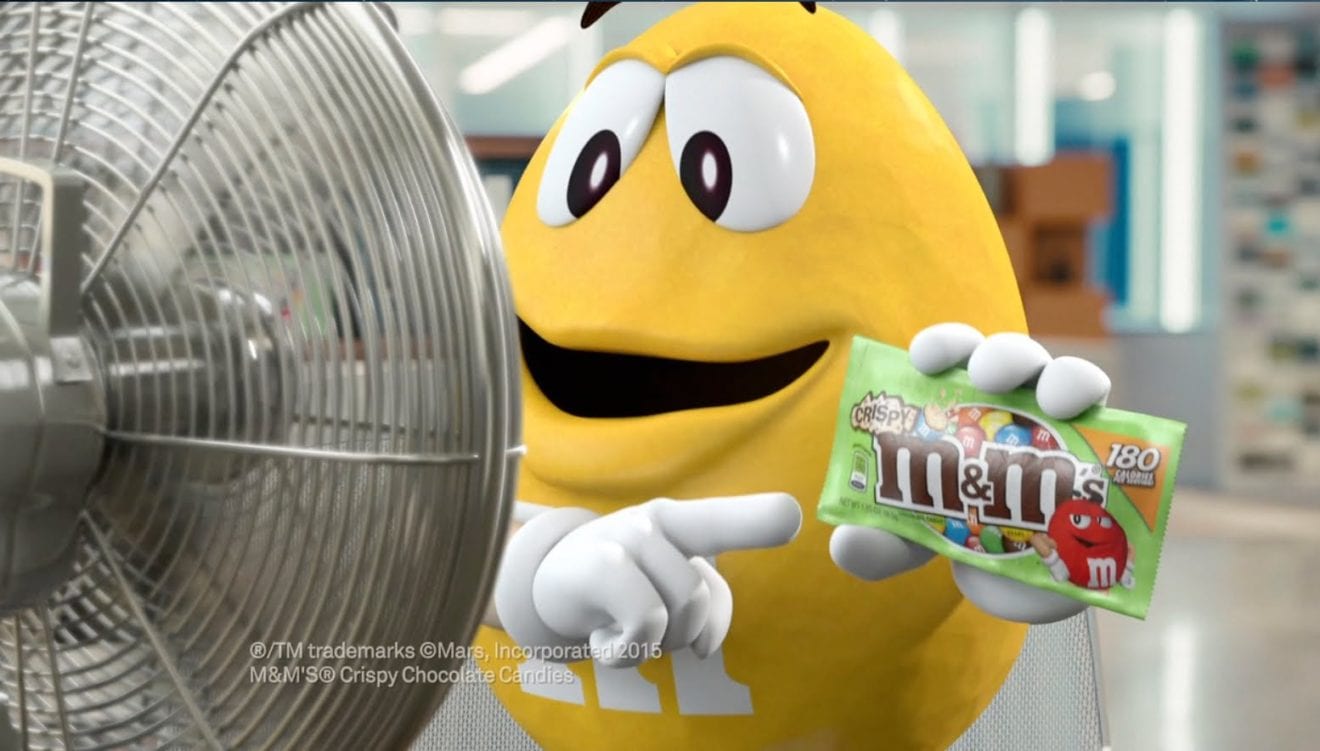
    International Travel Retail in partnership with DFS Group today opened the largest M&M’S outlet in travel retail at Hong Kong International Airport.

    The 35sqm store is located in Terminal 1 and, according to DFS, is designed to offer “chocolate lovers a unique, entertaining and fun travel experience, driving travellers into the store”.

    Biggest M&M's store in travel retail opens at Hong Kong International Airport
    With interactive retail theatre and a focus on fun, it reveals that the M&M’S shop-in-shop is personalised and unique to Hong Kong.

    It states: “The atmosphere of this vibrant city is brought to life inside the store with a replica of one of Hong Kong’s iconic dragon boats on display, along with localized artwork incorporating the brand’s world famous Red and Yellow characters.”
    Dragon boat
    Additionally, the offer will include items that meet the consumer demand for destination merchandise with “Hong Kong Travel Collection” packs of Snickers, Mars and Twix along with a Hong Kong themed M&M’Sbox featuring the iconic dragon boat.

    While the key focus of the store is on M&M’S,  products from core brands Snickers, Mars, Celebrations and Twix are also offered based on the company’s ‘Laws of Growth’ belief in ensuring that consumers are offered best-selling SKUs at all times.

    Commenting on the opening, Mars International Travel Retail’s regional sales director, Christophe Bouye, says: “By offering passengers outstanding retail experiences that first and foremost will make them smile, we are confident it will increase shopper engagement and encourage conversion.

    “Through placing consumers in a smiling frame of mind, we believe that this will not only benefit the confectionery category, but all sectors of the travel retail offer here in Hong Kong.”

    The new outlet is located close to Gate N28 on the central concourse.

  • Suntory to expand Ribena candy in Asia

    Suntory to expand Ribena candy in Asia

    Suntory Beverage & Food plans to increase distribution of Ribena branded confectionery and drink products in Hong Kong, Malaysia and Singapore.

    Suntory took control of the Ribena brand in 2013 and the company said it now plans to build Ribena’s presence in Asian retail channels.

    As part of this drive, Suntory has reached an agreement with DKSH that will see the market expansion services group provide distribution, logistics, field marketing and credit and collection services to the Ribena brand across retail channels.

    “We aim to leverage on DKSH’s solid organisation and strong capabilities along the value chain, most notably its supply chain and commercial strengths. The collaboration is a next step in further enhancing the availability and visibility of our products in the retail channels,” said Kosuke Fujishima, head of regional corporate planning and director, Suntory Beverage & Food Malaysia.”

    “Suntory’s commitment to the people in Malaysia, Singapore and Hong Kong remains steadfast, especially in providing even better products and services through improved delivery time and communication,” Fujishima added.