Tag: capital group

  • Singapore Equity Funds Attract Record $2.2 Billion on Bank Dividends

    Singapore Equity Funds Attract Record $2.2 Billion on Bank Dividends

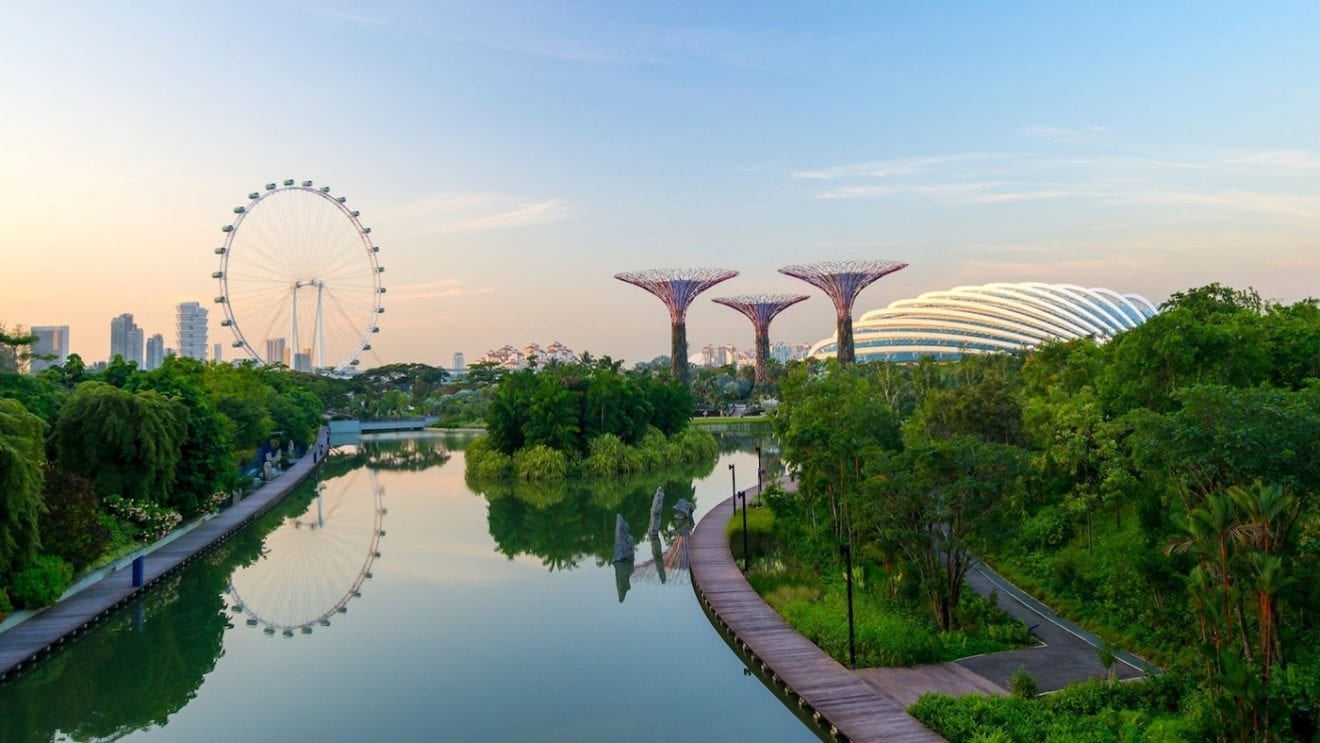
    Singapore-focused equity funds drew a record $2.2 billion in net inflows during the third quarter of 2026, driven by higher bank dividends and regulatory market reforms. The quarterly figure more than doubled the previous quarter’s total and expanded nearly fivefold from the $450 million recorded in the third quarter of 2025.

    Cash returned to shareholders provided the catalyst. Singapore-listed corporations paid US$7.6 billion in dividends over the three-month period, up 2.5 per cent year on year, according to data from Capital Group. Stripping out currency swings, special payouts, and calendar shifts, underlying dividend growth reached 9.6 per cent, outrunning the global corporate average of 7.5 per cent.

    Lenders Power Shareholder Returns

    Local banking groups generated the bulk of the market payout expansion. Lenders DBS and OCBC led the disbursement surge, offsetting contracting net interest margins through higher client volumes and wealth advisory fees.

    DBS drew on record fee income and buoyant wealth management activity to return surplus capital to shareholders. OCBC posted record non-interest income alongside higher trading and private banking revenues. These earnings buffers allowed both institutions to accelerate regular capital returns without drawing down regulatory liquidity reserves.

    Equities Gain as Fixed Income Slumps

    Fund performance tracking by Morningstar showed that institutional and retail investors directed capital toward domestic stock funds at the direct expense of fixed income. Bond vehicles registered $1.04 billion in net outflows during the third quarter, extending their losing streak to three consecutive quarters and reversing the $3.36 billion in net inflows recorded during the same period in 2025.

    Rising yields across benchmark debt instruments eroded secondary market bond prices, prompting investors to seek cash yields in high-dividend equities instead. Multi-asset allocation funds, which split exposure across regional shares and credit, absorbed $2.45 billion over the quarter, up from $1.83 billion in the second quarter and $1.49 billion in the first.

    “The EQDP measures and strong market performance have put Singapore equities back in the spotlight, with Singapore-focused equity funds becoming increasingly popular among investors,”

    Arvind Subramanian, senior analyst and research manager at Morningstar, pointed to structural regulatory incentives alongside bank balance sheets for the sustained equity appetite.

    Concentration Risks for Corporate Capital

    For institutional investors and regional asset allocators, the surge exposes an ongoing structural imbalance across the Singapore exchange. While the benchmark Straits Times Index offers yields that outpace regional peers, that return profile relies almost entirely on three domestic banking groups and a handful of real estate investment trusts. Non-financial corporate issuers and consumer conglomerates have yet to match the dividend momentum generated by DBS and OCBC.

    Commercial operators face a bifurcated capital market. Companies outside the banking sector must compete for equity attention against lenders throwing off record cash distributions. Unless the broader roster of listed industrial, tech, and retail firms boosts profitability, fund managers will continue channelling the bulk of equity allocations into financial blue chips rather than growth assets.

    Reforms Reverse Years of Capital Outflows

    The sustained inflows follow the introduction of the Equity Market Development Programme, or EQDP, first announced in the fourth quarter of 2024. Singapore equity funds have recorded positive net contributions in every single quarter since the framework took effect.

    Individual fund vehicles absorbed historic volumes during the quarter. The LionGlobal Singapore Trust led the market with roughly $1.05 billion in net new cash, followed by the Amova Singapore Dividend Equity Fund at $530 million and the Amova Singapore STI ETF at $280 million. By contrast, PIMCO GIS Income Fund saw withdrawals of roughly $790 million as fixed-income allocations shrank.

    Market watchers are tracking fourth-quarter earnings reports from DBS and OCBC to determine whether loan book repricing and sustained wealth management fees can support another round of baseline dividend increases.

  • Capital Group Teams Up With UBS

    Capital Group Teams Up With UBS

    Capital Group sees new investment opportunities in fixed-income bonds and is entering into a partnership with the asset management division of UBS to that end.

    Fund manager Capital Group is entering into a partnership with the asset management division of UBS. According to a statement Tuesday, the investment firm has launched the Capital Group multi-sector income fund (MSI) through an exclusive distribution partnership with UBS Global Wealth Management (GWM) for investors in Europe and Asia.

    MSI combines four fixed-income sectors: investment-grade and high-yield corporate bonds, emerging market bonds, and securitized credit into a single portfolio.

    The Luxembourg-domiciled fund is based on and managed by the same investment team as the US-based MSI strategy launched in 2019. In line with Capital Group’s investment approach, MSI is managed by five portfolio managers with an average investment experience of 23 years.

    According to Mike Gitlin, head of fixed income at Capital Group, the partnership will make Capital Group’s fixed-income business available to UBS investors globally.

    Capital Group is one of the world’s largest and most experienced investment firms with active investment strategies, with more than $2.1 trillion in assets under management.

    Founded in Los Angeles in 1931, Capital Group opened its first foreign office in Geneva in 1962 and added a Zurich office in 2015. In Switzerland, the firm employs about 130 people, 11 of them in Zurich, the majority in sales.

    Organized as a partnership, Capital Group is not listed on stock exchanges. Another distinctive feature is the relatively few strategies it offers, around 50, compared to other large asset managers. In addition, around 60 percent of the investments are held for over five years.

  • Capital Group, Samsung Asset Management form strategic partnership in Korea

    Capital Group, Samsung Asset Management form strategic partnership in Korea

    Capital Group and Seoul-based Samsung Asset Management on Wednesday announced a strategic partnership to cooperate on developing active investment strategies for institutional and retail investors in Korea.

    Capital Group, with $1.4 trillion in assets under management, and Samsung Asset Management, Korea’s top manager with $166 billion in AUM, “will work together to co-develop retirement solutions and asset allocation products and enhance SAM’s active investment capability,” a news release said.

    Under the agreement, Capital Group will help its Korean partner become familiar with “Capital-style active management,” and work to provide management know-how in areas such as business management and client management.

    A Seoul-based spokesman for Samsung Asset Management said the partnership with Capital Group would be a cornerstone of the firm’s goal of becoming one of Asia’s top three home-grown asset management companies by 2020.

    Sung-hoon Koo, SAM’s CEO, said in the release that the partnership will pave the way for his firm to “upgrade its active equity investment capability and implement life cycle asset allocation product strategies.”

    The news release also quoted Tim Armour, chairman of the Capital Group, saying the “broader plan is to co-design investment solutions to fulfill the savings, retirement and insurance-linked needs of Korean investors.”

    The Samsung spokesman, in a telephone interview, and Tom Joyce, Capital’s head of global media relations, in an e-mail, said details of the economics of the relationship — specifically how co-developed products would be distributed and revenues shared — had yet to be worked out. “It is too early to say what the pricing and structures will be,” noted Mr. Joyce, adding “the economics will be worked through.”

    Separately, the news release said the partnership will include selecting and using “appropriate Capital Group products and services across multiple Samsung distribution channels.”

    Mr. Joyce didn’t respond directly to a question about whether this was the first time Capital Group had entered into such a partnership. Instead, he cited Samsung’s interest in learning more about Capital’s system and “way of investing,” while noting Capital’s interest in learning “how Samsung markets and distributes products to Korean investors.”

    According to data provider eVestment, Capital Group listed roughly $275 million in AUM managed on behalf of Korean investors.

  • Money increase for iprice comparability idea

    Money increase for iprice comparability idea

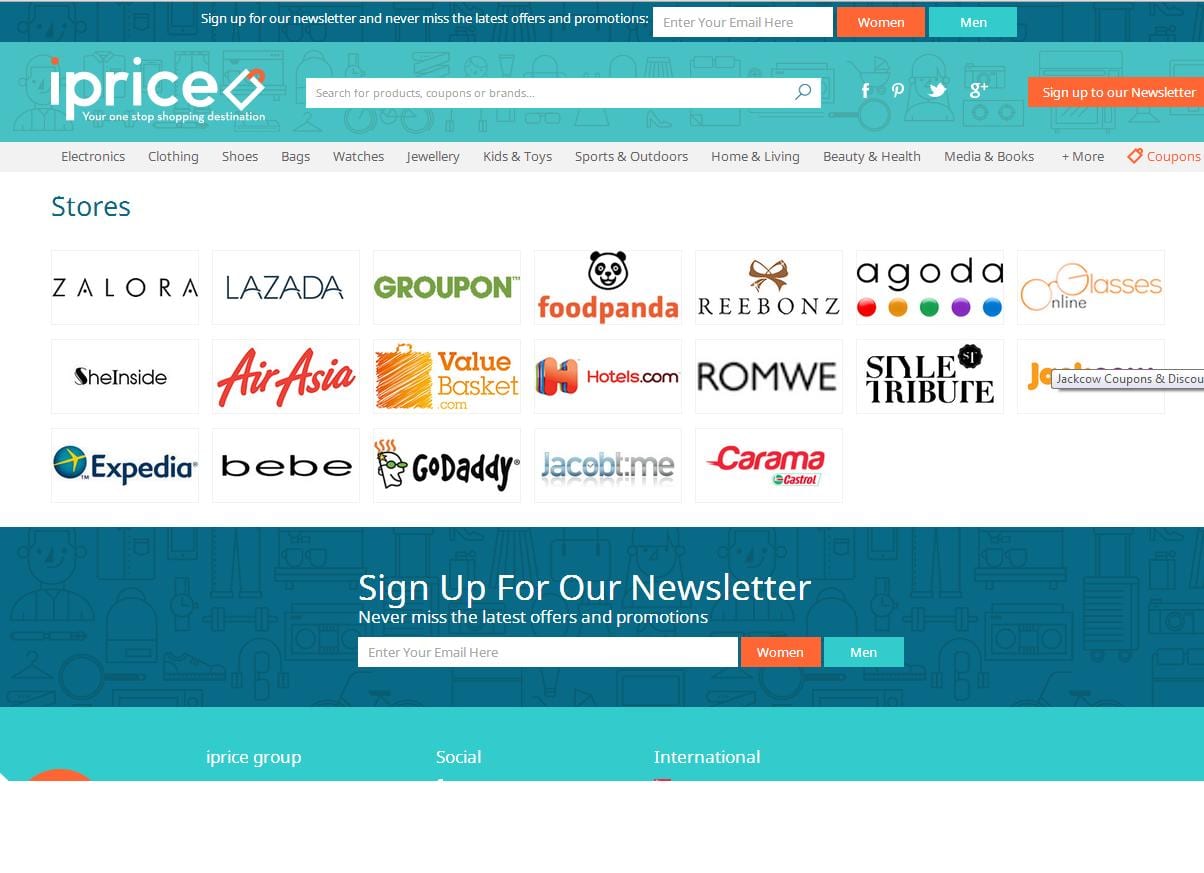
    Iprice Group, a Malaysia-based on-line worth comparability service for consumers, has acquired a $550,000 money funding from an angel investor enterprise capital group.

    Based solely final October, the enterprise is already lively in its residence base Malaysia, together with Hong Kong, Singapore, the Philippines, Thailand, Indonesia and Vietnam. The corporate says its on-line visitors is greater than doubling each month.

    The US$550,000 in funding was invested by from Asia Enterprise Group, a Malaysia-based angel investor, which needs to assist Iprice create “the most important on-line buying group in Southeast Asia”.

    Iprice co-founder Heinrich Wendel says the thought of the web site is to create “a pleasant on-line purchasing expertise” by giving buyers an intuitive and visible option to uncover merchandise.

    “Whereas different websites within the area are all about evaluating costs, we give attention to narrowing down the huge quantity of merchandise to your private choice. Regardless of you’re on the lookout for a blue and black gown, three-inch excessive heels, a strong backpack or a basic Chesterfield couch, we’ll present you the place you will get one of the best supply.”

    Because the younger Web inhabitants within the area is rising by greater than 50 per cent inside the subsequent three years – based on a report by UBS – it can drive eCommerce quantity no less than five-fold by 2020. Tapping into this potential, the web site already provides greater than three million merchandise from over 10,000 native and worldwide manufacturers, sourced by way of trusted on-line shops.

    Consumers flick through the hundreds of thousands of merchandise by classes, manufacturers, fashions and hues, amongst different attributes, to get inspiration. All merchandise are mechanically linked to particular promotions and coupons which might be provided by the respective eCommerce shops. Sooner or later, the corporate says it’ll double down on its machine studying algorithms to additional enhance the “sensible search” and supply particular person suggestions in response to the consumer’s searching behaviour.

    Working from its Kuala Lumpur headquarters, the corporate employs expertise from throughout Southeast Asia, enabling them to deal with the wants of every native market individually.

    For eCommerce shops, iprice supplies invaluable experience in on-line advertising, serving to them to increase their attain to new markets and develop their buyer base. Tito Costa, Zalora Group MD, says he recognises iprice as a robust affiliate associate.

    “Iprice helps internet buyers to seek out what they’ve been on the lookout for and to find new merchandise. They ship excessive changing visitors to Zalora throughout the Southeast Asia area and drive our income considerably,” he stated.