
Tag: capitaland mall

  • CapitaLand to manage La Botanica mall

    CapitaLand to manage La Botanica mall

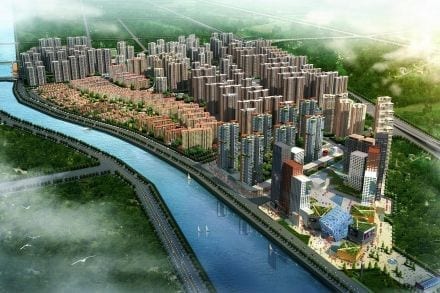
    CapitaLand Mall Asia has signed its second management contract within five months, to manage the shopping mall in La Botanica, a township in Xi’an’s Chan-Ba Ecological District.

    The mall is being developed by (Xi’an) Property Development, a JV between CapitaLand and Hong Kong-based Henderson Land.

    The deal follow CapitaLand’s announcement in August that it is managing the retail component of Fortune Finance Center in Changsha, China, for Changsha Pilot Investment Holdings. It also follows the acquisition of CapitaMall Xinnan (formerly Galleria, Chengdu) by CapitaLand Retail China Trust in September.
    “We are fast-tracking the growth of our shopping-mall network in western China to capitalise on the region’s favourable economic prospects, which have been boosted by the Chinese government’s Western China development program One Belt, One Road economic initiative as well as the Sino-Singapore Chongqing Connectivity Initiative,” says CapitaLand Mall Asia CEO Jason Leow.

    “CapitaLand’s asset-light expansion strategy through management contracts will continue to gather momentum with this deal in Xi’an, and complement our core strategy of developing, owning and managing malls.”

    Under the contract, CapitaLand will oversee asset planning, pre-opening and retail management for a five-storey mall – four levels above ground and a basement level – with a gross floor area (GFA), excluding car park, of about 50,000 sqm.

    Expected to open in 2019, the mall will double CapitaLand’s retail presence in Xi’an, where it owns and manages CapitaMall Xindicheng, a 60,000 sqm one-stop shopping mall, about 10km south of La Botanica.

    Flagship developments

    Including the mall in La Botanica, CapitaLand manages a portfolio of 14 malls in western China with a combined retail GFA of about 1.13 million sqm. The region is also home to two CapitaLand flagship Raffles City integrated developments – Raffles City Chengdu, which opened in 2012; and Raffles City Chongqing, Singapore’s single largest investment in China at RMB24 billion (about US$3.4 billion) that will be opening in phases from next year.

    Leow says CapitaLand is preparing to open eight more malls this year, six of which will be in China. “As we continue to enhance our retail scale and network through acquisitions and management contracts, we will also look at reconstituting our portfolio to achieve an optimal asset mix to provide us with stability and a strong recurring income stream. ”

    CapitaLand-Henderson (Xi’an) Property Development GM Wu Xianyue says La Botanica is envisioned as a world-class garden city. It is in the heart of Chan-Ba Ecological District, a planned urban area integrating ecological, commercial, residential and cultural components. Targeted for completion in 2023, the township spans 3 million sqm, of which about 87 per cent is pegged for residential use. There is a commercial zone of more than 310,000 sqm, plus a 50,000 sqm central park, seven community schools and a general hospital.

    The shopping mall is at the heart of La Botanica’s commercial zone and will be served by arterial roads, 20 bus routes and a metro line. It is expected to serve an estimated 600,000 residents and working professionals living within a 5km radius. The population catchment is projected to reach about 1 million in the next four years.
  • Are These Retail REITs Trading For Less Than What They’re Worth?

    Are These Retail REITs Trading For Less Than What They’re Worth?

    The price-to-book (PB) ratio is a popular way to value a real estate investment trust (REIT).

    The P/B ratio is calculated by dividing the market capitalisation of a REIT with its book value, or net asset value. Theoretically, having a P/B ratio that is less than 1 means that a REIT is trading for less than what it’s worth – an investor who buys the REIT could liquidate all its assets, settle all its obligations, and still end up with a profit.

    A recent report indicated that the average P/B ratio for Singapore’s REIT universe (the local stock market has 27 REITs and six stapled trusts) was 0.9. The list of 33 trusts included eight Retail REITs, as defined by the Global Industry Classification Standard.

    Here’re five quick highlights from the report on the eight Retail REITs (figures as of 8 June 2016, unless otherwise stated):

    1. Lippo Malls Indonesia Retail Trust (SGX: D5IU) has a P/B ratio of 0.9. The REIT is home to 19 retail malls and seven retail spaces in Indonesia and offers a distribution yield of 9.9%. While the REIT’s yield looks high, it’s worth noting that its total returns over the past three years have been a negative 15%.
    2. CapitaLand Retail China Trust (SGX: AU8U) also has a P/B ratio of 0.9. The REIT offers a distribution yield of 6.7% and has recorded a total return of 19.1% over the past three years. It is focused on the ownership of retail malls in China and currently has stakes in 10 shopping malls across six Chinese cities.
    3. Meanwhile, Starhill Global Real Estate Investment Trust (SGX: P40U) is yet another REIT with a P/B ratio of 0.9. The REIT has stakes in Wisma Atria and Ngee Ann City in Singapore. In all, the REIT owns commercial as well as retail properties in four other countries, namely Australia, China, Japan, and Malaysia. Over the past three years, Starhill Global REIT has delivered total returns of 4.9%. The REIT offers a 6.5% distribution yield.
    4. Not all retail REITs are trading below their book values. SPH REIT (SGX: SK6U), whose portfolio only has two properties right now (the retail malls Paragon and Clementi Mall in Singapore), trades at its book value. The REIT offers a distribution yield of 6.0% and has recorded a negative total return of 5.8% over the past year.
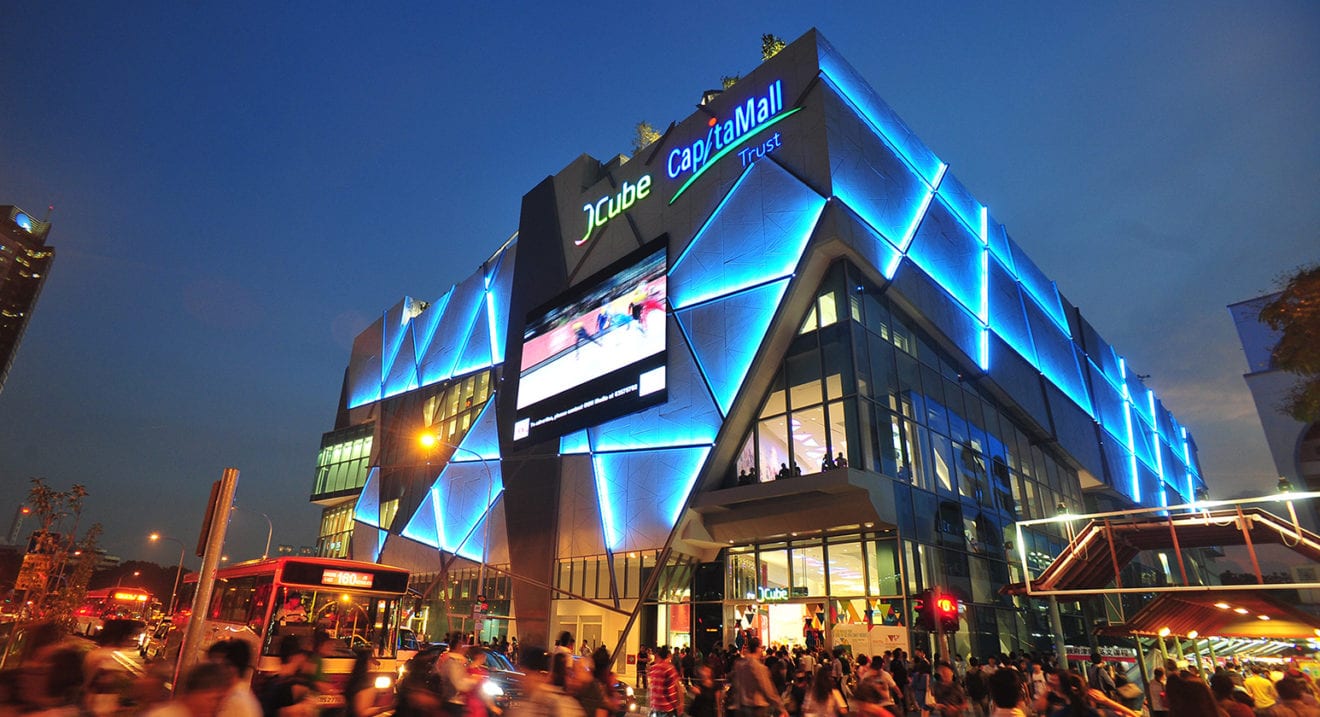
    5. CapitaLand Mall Trust (SGX: C38U) is one REIT that has a P/B ratio of over 1 – more specifically, the REIT has a P/B ratio of 1.1. CapitaLand Mall Trust, which owns 16 retail malls here, is the Singapore stock market’s first and oldest REIT. It offers a 5.3% distribution yield and has total returns of 14% over the past three year.

    The P/B ratio represents a starting point for investors who are looking for REITs that may be undervalued. Valuation, though, has to be complemented by understanding a REIT’s asset quality, the performance of the REIT’s portfolio in the past, and its future prospects, among other important things.

  • What’s In Store For CapitaLand Mall Trust’s Funan DigitaLife Mall?

    What’s In Store For CapitaLand Mall Trust’s Funan DigitaLife Mall?

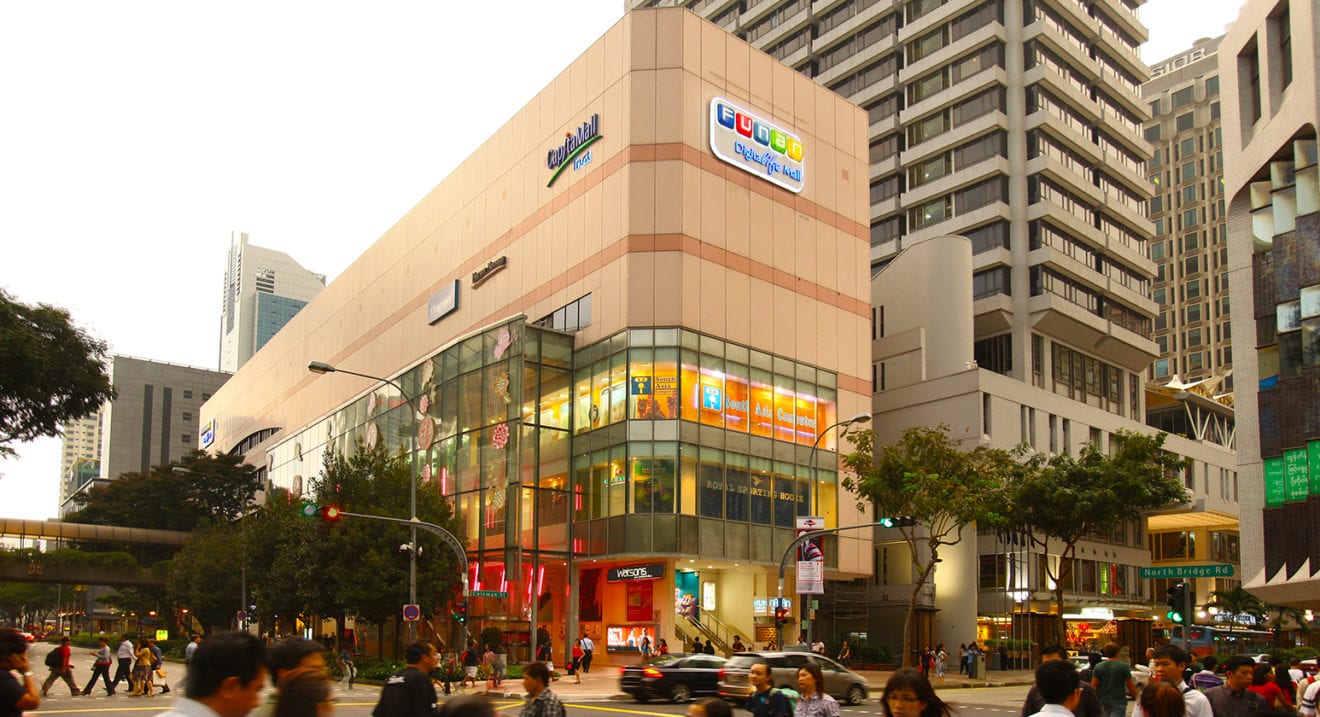
    The iconic Funan DigitaLife Mall, which belongs to CapitaLand Mall Trust, will be closed officially on 1 July 2016 for redevelopment works that is expected to last for three years.

    The redevelopment will add about 388,000 square feet (sq ft) of space to the mall’s current gross floor area of 482,000 sq ft, leading to a total area of 870,000 sq ft. For perspective, that is almost the size of ION Orchard, one of the newer malls along the Orchard Road shopping belt.

    Currently, Funan DigitaLife Mall is well-known for its focus on the retail of IT products. In its new incarnation, it will become an integrated development.

    Although the redevelopment of properties is a common thing in Singapore, what’s interesting here is that CapitaLand Limited, the manager of CapitaLand Mall Trust, is seeking input from the public to find new concepts for the redevelopment of Funan DigitaLife Mall along the theme of “Play.Create.Live.”

    CapitaLand, together with The Straits Times, are inviting members of the public to submit ideas for their vision of the new Funan DigtaLife Mall to the #BeyondIT digital platform. The idea is to transform the property into a “creative hub” that will include a ‘mall of the future’ that will bring experiential retail to a whole new level in Singapore. The window for submissions will remain open until 31 May 2016.

    Funan DigitaLife Mall is an important asset for CapitaLand Mall Trust, contributing 4.3% of total gross revenue in 2015. As such, the closure of the property for the next three years might have some negative impact on the trust’s revenue stream.

    But, the transformation of Funan DigitaLife Mall is essential given the growing importance of e-commerce among consumers. That might also be the reason why CapitaLand is interested to upgrade Funan DigtaLife Mall into an integrated development that (1) allows people to work, play, and live, and (2) help set a new benchmark for experiential retail in the Garden City.

    Summary

    Will the redevelopment of Funan DigitaLife Mall start a new era for the retail industry in Singapore? And would an increase of more than 80% in floor space for the mall help boost future rental revenue in a significant manner for CapitaLand Mall Trust? These are interesting questions to ponder.

    But, first things first, with the public competition ending on 31 May, we might be able to get our first glimpse of the future of retail in Singapore soon.