Retail News CRM

Tag: CapitaLand Retail China Trust

  • Tenant reshuffles bring good revenue for CapitaLand Retail China

    Tenant reshuffles bring good revenue for CapitaLand Retail China

    CapitaLand Retail China boosted its distributable income by 9.4 per cent last year on the back of a new acquisition and improved performance of multi-tenanted malls. CapitaLand Retail China Trust Management (CRCTML), the manager of CapitaLand Retail China Trust (CRCT), reported a distributable income of S$99.7 million (US$73.5 billion) for the year.

    “CRCT delivered a resilient set of results in FY2018 on the back of strong operating performance,” said CRCTML CEO Tan Tze Wooi.

    Portfolio occupancy as at December 31 was 97.5 per cent and rental reversion was 10.9 per cent. Tenants’ sales at its multi-tenanted malls grew by 18.8 per cent year on year, while shopper traffic was up by 19.4 per cent.

    With the addition of Rock Square in the full-year figures for the first time, CRCT’s investment property value rose by 17.8 per cent to RMB13.993 billion (US$2.07 billion) as at the end of the year.

    CRCTML chairman Soh Kim Soon said China’s retail sales rose by 9 per cent last year.

    “China’s more moderate pace of growth is reflective of an economy undergoing transition and its long-term fundamentals remain positive. We are confident that CRCT’s quality family-oriented shopping malls will continue to benefit from China’s growing middle class and policies implemented to stimulate the economy,” he said.

    Highlights of the year included:

      • CapitaMall Wangjing posted a rental reversion of 15.7 per cent after converting 4700sqm of anchor tenant space on Level 4 to specialty stores. The mall’s Level 8 rental income will rise by around 50 per cent after transforming 500sqm of common area into leasable space for coworking operator Ucommune.
      • CapitaMall Xinnan netted 17.9 per cent in rental reversion by reconfiguring its Basement 1 space to accommodate more popular brands.
      • Since acquisition, Rock Square has achieved four consecutive quarters of rental reversions above 20 per cent and a double-digit year-on-year increase in average sales per square metre for specialty stores.

    Wooi said that in order to further optimise the portfolio, CRCT has entered into a bundle deal in Hohhot with unrelated third parties to divest CapitaMall Saihan and acquire a new mall that is double in size and has “a longer balance tenure”.

    “Given the new mall’s higher growth potential, CRCT will be in an even stronger position to tap Hohhot’s promising retail growth. The deal is structured to minimise income disruption as the closure and divestment of CapitaMall Saihan will take place after the new mall is operational in the second half of the 2020 [financial year]. Supported by CRCT’s strong financial position, we will continue to explore suitable acquisition opportunities to grow and rejuvenate our portfolio,” Wooi concluded .

  • Reits: An attractive alternative form of property investment

    Reits: An attractive alternative form of property investment

    In just 14 years, the real estate investment trust (Reit) industry in Singapore has drastically transformed the country’s investment property landscape, making it one of the most admired in the Asia Pacific.

    The Singapore Reit industry now ranks third in size in the region, behind Japan and Australia. S-Reits have been actively contributing to the improvement of properties in Singapore, practically in all sectors of the rental market: retail, office, and industrial.

    As landlords, Reits are committed to maintaining and improving their properties and have consistently demonstrated this commitment by investing in extensive asset enhancement initiatives to refurbish and upgrade older properties in their portfolios, including introducing eco- technology into their properties.

    Such improvements have led to improved offerings for tenants and raised the quality of real estate in Singapore as a whole.

    The motive for Reits to continually upgrade their investment assets is driven by commercial interest doubtlessly, to generate return on investment for unitholders.

    But the resultant benefit is not confined to Reits, or else the progress could not be sustained.

    The other three key players in the game are tenants, consumers, and the Singapore economy at large.

    Unfortunately, this aspect of the impact of Reits has tended to be overlooked; instead, fingers have been pointed at Reits as the culprit causing the plight of tenants, especially the smaller enterprises, who bow out of the business citing rising high rent as a key reason.

    This has in fact caused the resurgence of the classic landlord/ peasant conflict.

    There will continue to be murmurings, especially from the quarter that has been ousted from their comfortable rented nests of many years until rentals made it untenable for them to continue with their business.

    Their lamentation is that Reits which appear to have taken over “most” of the rental properties in the country, have been regularly raising rental rates to maximise their yields and keep up with their distribution per unit (DPU) growth.

    Look at the big picture

    To be objective, one needs to look at the big picture.

    Many rental buildings here (both office and retail) have remained in the same state for 20-30 years and maybe even longer.

    Fortunately, many of the tired-looking buildings have also been rejuvenated and given a new lease of life after they were acquired by Reits.

    Someone once told me Singapore needs Reits to transform the investment property market the way the Urban Redevelopment Authority (URA) did the Singapore landscape over the last few decades; the difference is that Reits will have to do it on a fully commercial basis.

    The benefits of developing the Reit industry to the economy is perhaps more obvious in that it enables developers to recycle their capital for other investments, creates specialist professional jobs, generates high-value supporting services, etc.

    The best evidence of this are the aggressive measures many of our neighbours are taking to develop their own Reit industry.

    S-Reits are here to stay. S-Reits are celebrating their 14th anniversary since the first Reit, CMT, was listed in Singapore in 2002. Today, Singapore has succeeded in having 38 Reits listed on our stock exchange, with a total market capitalisation of S$74 billion.

    What is interesting is that, according to estimates, about 25 per cent of the shares of Reits are in the hands of retail investors. (The sponsor groups and controlling shareholders are estimated to hold some 35 per cent, while institutional investors own 40 per cent.)

    Assuming most of these retail investors are Singaporeans, the 25 per cent translates to a whopping S$18 billion in investment money.

    The government has put in measures to regularly improve the operating and regulatory environment for Reits, so that they can continue to grow, and at the same time operate under good corporate governance, and embrace best industry practices.

    We are fortunate that the listed Reits here are under the prudent supervision of the regulatory authorities, which should instil confidence among investors, both here and overseas.

    A stable and transparent tax infrastructure to support S-Reits helps to advance the goal of establishing Singapore as a fund management and asset management hub, and continue to fuel demand for expertise in these high-value financial areas.

    Specifically, it will allow S-Reits to maintain their competitive advantage over other regional markets and allow the Republic to position itself as the pre-eminent global hub for the listing of S-Reits.

    It will also allow Singapore to attract foreign capital and investment in S-Reits.

    Many Singaporeans are eager to find investment alternatives that give higher returns than banks’ fixed deposits or their CPF ordinary accounts. Reits are perhaps one such alternative.

    Some investors may have discovered that it is possible to turn Reits into personal ATMs that they can “withdraw” money from regularly.

    This is what Reits are in a nutshell: giving the investors a stable income on a regular basis (every three or six months), with potential upside that their price will go up over time.

    The ability to enter and exit Reits easily is another big contrast to direct investment in physical assets. Another benefit is the affordability of Reits, with outlay as low as a few hundred dollars.

    Perhaps the next exciting phase in Reit development here is brewing.

    This is the rising use of CPF and Supplementary Retirement Scheme (SRS) money for Reit investments – something that may significantly affect the growth of the Reits industry over the next few years.

    Looking at CPF statistics, as at March 31, 2016, Singaporeans had about S$308 billion in their CPF.

    This is after deducting the S$190 billion drawn down for housing purchases.

    Of the S$308 billion, S$113 billion is in the Ordinary Account, S$78 billion in the Special Account, and the rest is in Medisave and Retirement accounts.

    If we focus just on the Ordinary Account which CPF rules currently allow to be used for investments after setting aside S$20,000, the investible amount is estimated to be about S$73 billion. Since the rules allow up to 35 per cent of the investible money for share investment, this means a potential pool of S$25 billion available for investing in shares, including Reits.

    This is an enormous sum of money which is looking for higher returns than the 2.5 per cent that CPF gives.

    Over time, as people become more aware of the relative attractiveness of Reits, more of such CPF monies will flow into Reits.

    And that will be interesting because it will mean that more Singaporeans will be owners of investment properties both here and overseas.

    Even investing abroad

    Singaporeans, like most Asians, traditionally prefer to invest in brick-and-mortar assets.

    Some even venture to buy overseas properties.

    Reits present a new form of investment tool to meet such aspirations of Singaporeans to own investment properties with regular rental income, without having to deal with all the problems associated with investing directly in a property, especially in unfamiliar overseas markets.

    It is interesting that, currently, CPF rules do not allow Singaporeans to use their CPF money to buy overseas properties directly.

    But with Reits, one can effectively do that.

    For example, one can invest in German office buildings by buying IReit Global shares.

    One can own a stake in shopping malls or hospitals in Indonesia through Lippo Mall Trust and First Reit respectively.

    For exposure to China and Hong Kong properties, there are Mapletree Greater China Commercial Trust, EC World Reit, CapitaLand Retail China Trust and BHG Retail Trust to choose from.

    One can also access the US, India and Japan markets through Reits listed here.

    Today, some 30 per cent of the Reits’ assets are outside Singapore.

    Effectively, this means that the Reits are bringing properties from all over the world to the doorstep of Singaporeans for them to pick and invest in, with the added comfort that these overseas assets are owned and managed by Reits which are under the regulatory oversight of our government authorities.

    We may therefore see a stronger trend of Singaporeans sinking more of their excess investment money (including CPF and SRS money) into Reits, instead of pursuing the traditional approach of buying a physical property asset for investment.

    Best of all, one gets to keep 100 per cent of the dividends received from Reits without having to worry about the taxman’s share.

     

  • CapitaLand Retail China Trust to buy shopping mall in Chengdu for 1.5b yuan

    CapitaLand Retail China Trust to buy shopping mall in Chengdu for 1.5b yuan

    CapitaLand Retail China Trust (CRCT) is acquiring a shopping mall in Chengdu for 1.5 billion yuan (S$303 million).

    Galleria is located in the Xinnan Tiandi retail precinct of Gaoxin District in the south of Chengdu, a major shopping belt in the city.

    The mall has been valued at 1.52 billion yuan by Savills Valuation & Professional Services as at July 26. Including acquisition-related expenses, the total investment cost for the mall is expected to be about 1.527 billion yuan. CRCT plans to finance the purchase with a mix of existing cash and additional debt.

    When the transaction is completed, the acquisition will enlarge CRCT’s portfolio size by about 14 per cent to 12.55 billion yuan. The mall has a current net property income yield of about 5.4 per cent and the acquisition is expected to be distribution per unit-accretive for CRCT.

    Tony Tan, chief executive of the manager of CRCT, said: “The proposed acquisition will diversify CRCT’s income and strengthen the resilience of our portfolio to deliver sustainable growth. With the opportunity to tap on CapitaLand’s network of five existing malls in Chengdu, the proposed acquisition is aligned with CRCT’s investment strategy to expand our footprint by leveraging on our sponsor’s strong presence in key Chinese cities where it has a competitive edge.”

    Leases accounting for about two-thirds of the mall’s total rent are up for renewal by 2018, which will give it an opportunity to boost rental income by adjusting the tenant mix, he added.

    The six-storey mall, which opened its doors in 2010, has a gross floor area, excluding car park, of about 53,619 square metres and 900 car park spaces. As at end-May, it was fully occupied.

  • CapitaLand Retail China Trust property income rises

    CapitaLand Retail China Trust property income rises

    CapitaLand’s China retail venture has had a strong half year, despite the tepid retail sector.

    CapitaLand Retail China Trust Management, which manages CapitaLand Retail China Trust , has achieved net property income of RMB339.3 million (US$50.92 million) for the six months to June 30, up 4.6 per cent from the same period last year.

    Chairman Victor Liew says that with China’s steady growth spurring domestic economic activities, “we continue to be positive on China’s long-term retail growth prospects”.

    CEO Tony Tan says occupancy was steady at 94.9 per cent for the group’s malls for the half-year.

    “We continued to enhance our malls by introducing popular brands and keeping abreast of consumer trends,” he says, citing the opening of the Famiku VR experience centre in CapitaMall Qibao.

    Danish jewellery brand Pandora will soon be opening at CapitaMall Xizhimen, and new F&B brands include Xiao Niu Niu in CapitaMall Xizhimen and Xing Yang Hainanese Chicken Rice in CapitaMall Qibao.

    Meanwhile, CapitaMall Saihan has had its facade upgraded, with similar work almost complete on CapitaMall Wangjing and CapitaMall Qibao to be similarly upgraded this year.

  • Are These Retail REITs Trading For Less Than What They’re Worth?

    Are These Retail REITs Trading For Less Than What They’re Worth?

    The price-to-book (PB) ratio is a popular way to value a real estate investment trust (REIT).

    The P/B ratio is calculated by dividing the market capitalisation of a REIT with its book value, or net asset value. Theoretically, having a P/B ratio that is less than 1 means that a REIT is trading for less than what it’s worth – an investor who buys the REIT could liquidate all its assets, settle all its obligations, and still end up with a profit.

    A recent report indicated that the average P/B ratio for Singapore’s REIT universe (the local stock market has 27 REITs and six stapled trusts) was 0.9. The list of 33 trusts included eight Retail REITs, as defined by the Global Industry Classification Standard.

    Here’re five quick highlights from the report on the eight Retail REITs (figures as of 8 June 2016, unless otherwise stated):

    1. Lippo Malls Indonesia Retail Trust (SGX: D5IU) has a P/B ratio of 0.9. The REIT is home to 19 retail malls and seven retail spaces in Indonesia and offers a distribution yield of 9.9%. While the REIT’s yield looks high, it’s worth noting that its total returns over the past three years have been a negative 15%.
    2. CapitaLand Retail China Trust (SGX: AU8U) also has a P/B ratio of 0.9. The REIT offers a distribution yield of 6.7% and has recorded a total return of 19.1% over the past three years. It is focused on the ownership of retail malls in China and currently has stakes in 10 shopping malls across six Chinese cities.
    3. Meanwhile, Starhill Global Real Estate Investment Trust (SGX: P40U) is yet another REIT with a P/B ratio of 0.9. The REIT has stakes in Wisma Atria and Ngee Ann City in Singapore. In all, the REIT owns commercial as well as retail properties in four other countries, namely Australia, China, Japan, and Malaysia. Over the past three years, Starhill Global REIT has delivered total returns of 4.9%. The REIT offers a 6.5% distribution yield.
    4. Not all retail REITs are trading below their book values. SPH REIT (SGX: SK6U), whose portfolio only has two properties right now (the retail malls Paragon and Clementi Mall in Singapore), trades at its book value. The REIT offers a distribution yield of 6.0% and has recorded a negative total return of 5.8% over the past year.
    5. CapitaLand Mall Trust (SGX: C38U) is one REIT that has a P/B ratio of over 1 – more specifically, the REIT has a P/B ratio of 1.1. CapitaLand Mall Trust, which owns 16 retail malls here, is the Singapore stock market’s first and oldest REIT. It offers a 5.3% distribution yield and has total returns of 14% over the past three year.

    The P/B ratio represents a starting point for investors who are looking for REITs that may be undervalued. Valuation, though, has to be complemented by understanding a REIT’s asset quality, the performance of the REIT’s portfolio in the past, and its future prospects, among other important things.

  • REITs set to outperform equities as investors go in search of yields

    REITs set to outperform equities as investors go in search of yields

    The Stock Exchange of Thailand continues to stay in positive territory, gaining around 7 per cent year to date, despite the sluggishness over the last two weeks. Nevertheless, the SET Index still failed to breach the psychological 1,400 level.

    Month-to-date, the market leaders were PTT, PTT Global Chemical, Siam Cement, Charoen Pokphand Foods and CP All. The laggards were Bumrungrad Hospital, Advanced Info Service, U City, Banpu and Minor International.

    Foreign investors bought Bt11.7 billion worth of Thai shares from March 1-17, leaving the year-to-date net-buying position at Bt3.6 billion.

    Since the beginning of the year, the performance of real estate investment trusts (REITs) has been well ahead of equities. We believe the trend will continue as global investors seek yields amid negative interest rates in both Europe and Japan, coupled with low rates elsewhere (including Thailand).

    On average, equity returns in developed markets remain in the red to the tune of minus 3 per cent year to date. In contrast, emerging-market stocks outperformed their developed-market peers with a year-to-date gain of around 3 per cent.

    Interestingly, global REIT prices have surged on the back of investors seeking yields and the US Federal Reserve’s decision to delay its rate increases in 2016. The S&P Global REIT, which is a benchmark of publicly traded equity REITs listed in both developed and emerging markets, has risen by almost 6 per cent since the beginning of the year.

    Going forward, REITs remain appealing on a selective basis given their high yields and resilient revenue streams.

    The top 5 REITs recommended by the DBS REIT team in Singapore are (1) Mapletree Greater China Commercial Trust; (2) Frasers Centerpoint Trust; (3) Ascendas REIT; (4) CapitaLand Retail China Trust; and (5) Mapletree Logistics Trust.

    These REITs are expected to pay regular dividends, with potential for further growth arising from the expansion of their asset portfolios. Their yields range from 6 to 8.4 per cent.

    Investing in REITs comes with risks, and we advise investors to study our research reports on REITs before making any investment decision.

    Tisco Securities

    The Stock Exchange of Thailand may soon re-test the 1,400 points resistance level after the US Federal Open Market Committee left interest rates unchanged, as expected, but cut the number of planned increases this year to two from four previously.

    The Fed’s dovish stance weakened the dollar |but helped boost appetite for risk assets including Asian currencies and equities. Also positive for the |Thai market is the recent strong rally in global oil prices.

    Nonetheless, we remain cautious on the SET’s |outlook this year and anticipate heavy profit-taking above 1,400 points. Foreign-investor positioning remains very underweight (at 29 per cent, an 11-year low).

    The key concerns of clients, expressed during |our trip to Europe last week, were the same: slow |economic recovery, high household debt and low industrial capacity utilisation. These factors, coupled with persistently weak exports and worse-than-expected drought, are likely to lead to a downgrade of the 2016 GDP growth forecast when the Bank of Thailand’s Monetary Policy Committee meets on Wednesday.

    We continue to favour tourism plays such as AOT (Airports of Thailand), AAV (Asia Aviation) and BA (Bangkok Airways) after February data showing a 16 per cent year-on-year rise in foreign tourists to a new monthly record of 3.1 million. Chinese tourists led the way, with 23 per cent year-on-year growth, but the most interesting part of the data was the 14.3 per cent year-on-year jump in arrivals from Russia – the first positive figure in nearly two years.

    In the banking sector, TCAP (Thanachart Capital) remains a mid-term “buy” on recovery of legacy non-performing loans and auto-loan quality, NIM (net interest margin) expansion, tax shields to improve RoE (return on equity) and capital/LLR (loan loss reserve) buffers from the second half of 2015 to the first half of 2018 and superior dividend yield.

    We also have a “buy” rating on TMB due to its solid growth prospects and lower cost of funds backed by its increasing penetration of the SME (small and medium-sized enterprises) segment.

    Elsewhere, we have revised up our target price for ROBINS (Robinson Department Store) by 8 per cent to Bt52 after its chief executive officer’s surprise announcement that the retailer is on track to achieve 4 per cent SSSg (same-store sales growth) in the first quarter of 2016.

    This is mainly due to its flexible product-mix strategy and strong performance of its Lifestyle Centres. With the expansion of Lifestyle Centres (two more were opened in the fourth quarter of 2015), ROBINS now derives 45 per cent of its net profit from rental space.

  • CapitaLand China growth outpaces economy

    CapitaLand China growth outpaces economy

    Singapore-based shopping mall investment company CapitaLand Retail China Trust (CRCT) grew its income last year by 10.3 per cent to S$89.2 million ($63 million) from S$80.9 million.

    With China’s economy growing 6.9 per cent last year, the company’s retail sales drew 10.7 per cent of RMB30.1 trillion ($4.58 trillion), reports CRCTML chairman Victor Liew (CRCTML manages CRCT).

    “China’s slower growth is reflective of an economy undergoing transition, but it is expanding from a much larger base now and its growth is still considerably faster than those of most other economies,” says Liew. “CRCT’s family-oriented shopping malls are well-placed to benefit from China’s growing urban population and rising retail sales as domestic consumption becomes the country’s new growth engine.”

    It was the first time CapitaLand China’s gross revenue had crossed the RMB1-billion mark, says CRCTML CEO Tony Tan. “Portfolio occupancy remained high at 95.1 per cent  as at December 31, while rental reversion for the full year was 8.1 per cent.

    “Annual tenants’ sales increased 11.6 per cent and shopper traffic rose 1.8 per cent year-on-year.

    “We continually refresh our mall offerings to stay relevant to our shoppers’ evolving preferences and needs. For example, CapitaMall Xizhimen (pictured) brought in the popular Jing Ge Steamboat to increase the variety of its F&B offerings, while CapitaMall Qibao introduced a water park.

    “To improve sustainability and the shopping experience, CapitaMall Grand Canyon installed energy-saving LED lights in common areas and upgraded its car park with new flooring.

    “CapitaMall Wangjing is carrying out renovation work to rejuvenate its façade, and is on track to unveil its new look by June.

    “We will continue to strengthen our malls’ tenant mix and uplift the shopping experience through continual asset enhancement initiatives.”

    Gross revenue for the year increased RMB17.5 million, or 1.8 per cent, over the previous year. This was attributed mainly to rental growth from the multi-tenanted malls, partially offset by lower revenue fromCapitaMall Minzhongleyuan, which was impacted by road closure for the building of a subway line, and from CapitaMall Wuhu, where tenancy adjustments are being introduced to achieve stronger positioning and better trade mix.

    CRCT is the first China shopping mall real estate investment trust (REIT) in Singapore, with a portfolio of 10 malls. Listed in Singapore in 2006, its objective is to establish long-term investments in a diversified portfolio of real estate used primarily for retail in China, Hong Kong and Macau.

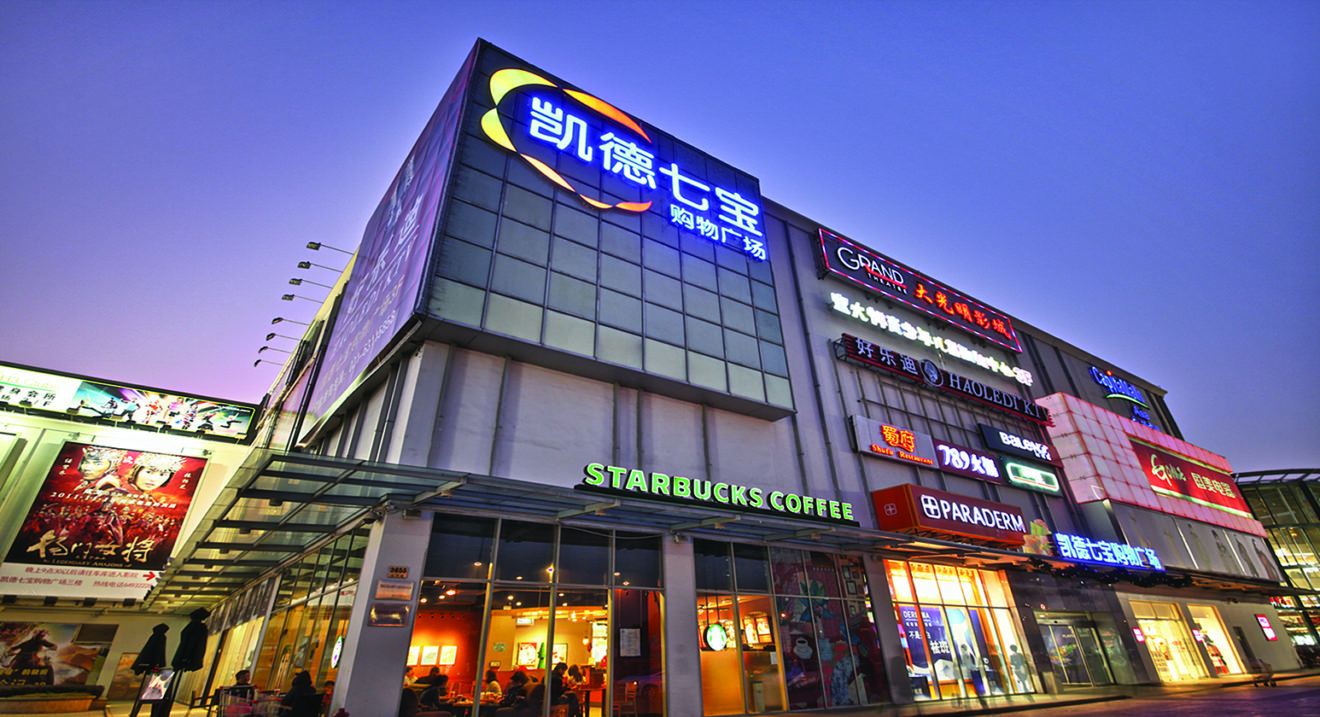
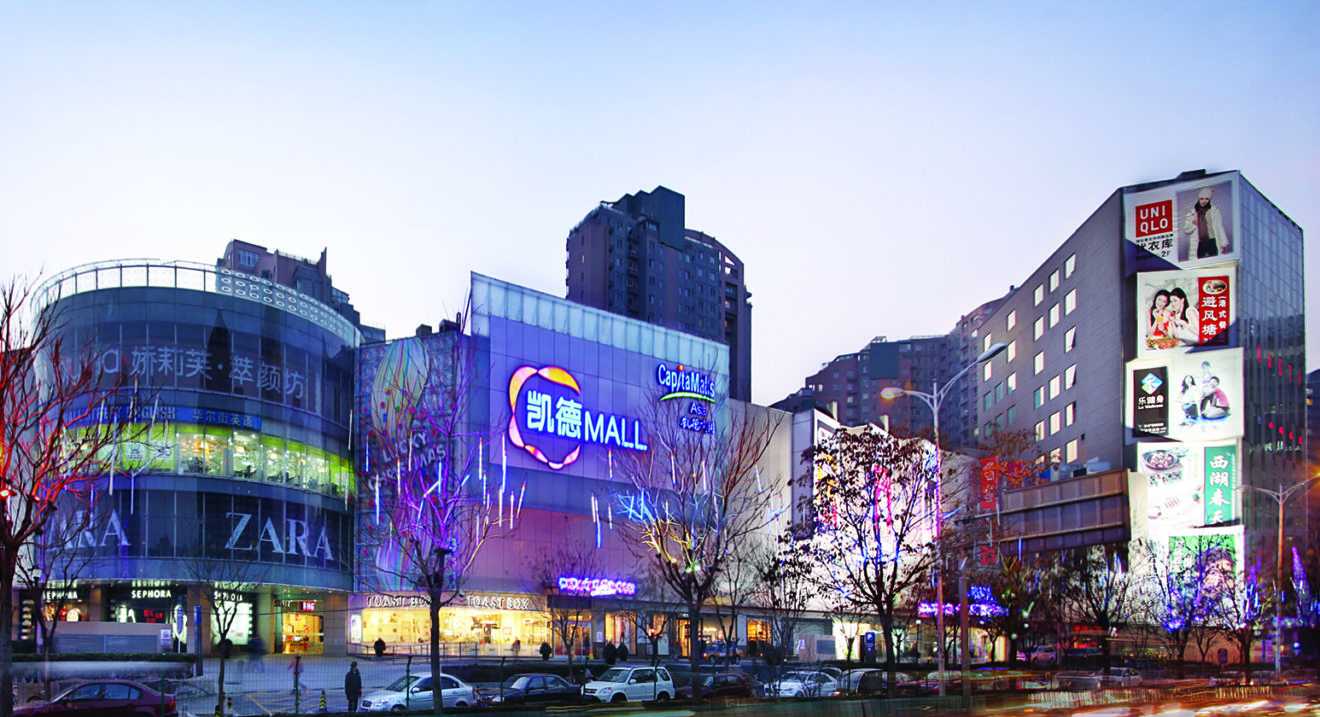
    A significant portion of CapitaLand China’s properties’ tenancies comprises major international and domestic retailers such as the Beijing Hualian Group, Carrefour and Wal-Mart. The anchor tenants are complemented by specialty brands such as BreadTalk, Innisfree, KFC, Nanjing Impressions, Nike,Sephora, Starbucks, Uniqlo, Watsons and Zara.

  • CapitaLand Retail China reports bumper quarter

    CapitaLand Retail China reports bumper quarter

    CapitaLand Retail China Trust has had a bumper quarter to September, its distributable income rising 14.2 per cent year on year.

    CRCT is the only China shopping mall Real Estate Investment Trust (REIT) based in Singapore, with a portfolio of 10 shopping malls located in Mainland China.

    CapitaLand Retail China Trust Management, which manages CRCT, says it achieved a distributable income of S$22.3 million for the period. Distribution per unit (DPU) was 2.64 cents, an increase of 12.3 per cent over a year ago.

    Chairman Victor Liew said China’s economy expanded 6.9 per cent year on year in both the third quarter and the first nine months of 2015, while retail sales in the first nine months of 2015 increased 10.5 per cent to RMB21.6 trillion.

    “With the Chinese government reiterating its commitment to rebalance its economy by driving domestic consumption, CRCT remains upbeat about China’s retail growth prospects.”

    CEO Tony Tan, CEO of CRCTML, said that during the quarter, the trust’s portfolio of malls registered 9.1 per cent growth in net property income as it benefitted from a favourable exchange rate.

    “Rental reversion for the quarter continued to be strong at 10.9 per cent, with the majority of our malls registering double digit growth. Portfolio occupancy as at 30 September 2015 was 94.8 per cent, while tenants’ sales and shopper traffic for the quarter increased 12.7 per cent and 2.4 per cent respectively year-on year.”

    The trust’s malls are CapitaMall Xizhimen, CapitaMall Wangjing, CapitaMall Grand Canyon, CapitaMall Shuangjing and CapitaMall Anzhen in Beijing; CapitaMall Qibao in Shanghai; CapitaMall Erqi in Zhengzhou, Henan Province; CapitaMall Saihan in Huhhot, Inner Mongolia; CapitaMall Wuhu in Wuhu, Anhui Province; and CapitaMall Minzhongleyuan in Wuhan, Hubei Province.

    “We continue to refresh and improve the trade mix within our multi-tenanted malls,” said Tan.

    “CapitaMall Xizhimen is adding more children-related products and services to cater to growing demand from young families with children. A section of the mall’s Level 3 will be reconfigured into a vibrant kids’ zone and new tenants catering to the varied needs of children, such as apparel stores and enrichment schools, will be added.

    “On the asset enhancement front, CapitaMall Wangjing will be commencing upgrading works to its façade in the coming months, and CapitaMall Grand Canyon is currently undertaking renovation works to improve its common amenities. All these initiatives will further enhance the overall appeal and shopping experience at our malls.”