Tag: car dealerships

  • Leapmotor Launches A10 SUV in Thailand with 30 Outlets Planned

    Leapmotor Launches A10 SUV in Thailand with 30 Outlets Planned

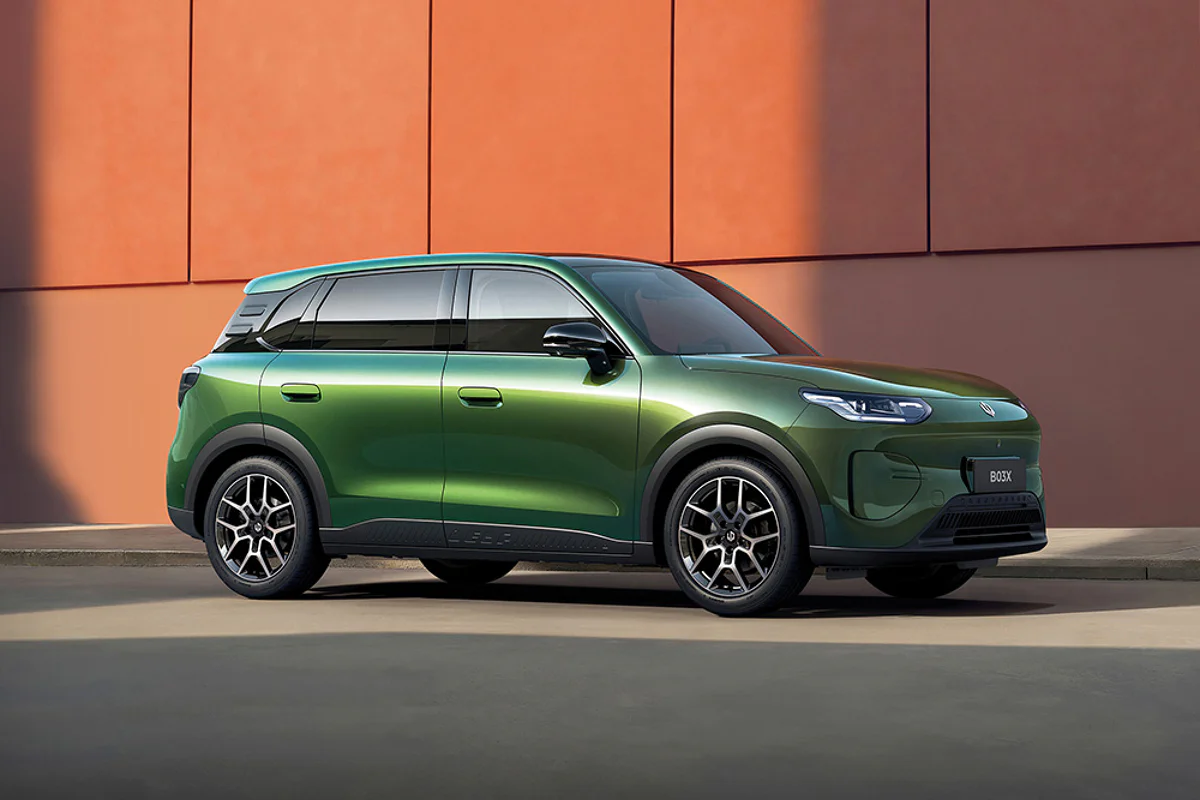
    Leapmotor launched its A10 compact electric sport utility vehicle in Thailand on Friday, sending the model to 19 local showrooms as it chases export volume across Southeast Asia.

    The carmaker plans to expand that sales and service footprint to 30 locations nationwide before the end of the year.

    Showroom rollout and vehicle specs

    Known internationally as the B03X, the small SUV features a long-range battery rated for 450 kilometers under NEDC testing standards. It accepts direct-current fast charging up to 133 kW, filling the battery from 30 percent to 80 percent in 16 minutes under test conditions.

    Cabin hardware includes a 14.6-inch 2.5K central display screen compatible with Apple CarPlay and Android Auto. Practical features focus on urban buyers, adding semi-autonomous driver aids alongside a 106-liter washable cargo bin fitted under the rear floorboards. Leapmotor did not release retail pricing or a delivery schedule during the Bangkok presentation.

    Dealership network and parts supply

    Expanding dealership coverage forms the core of the Thai strategy. Alongside the push to reach 30 retail points, the carmaker is building a dedicated regional parts distribution hub and a technical support depot to speed up repair turnaround.

    Chinese brands entering Southeast Asia regularly encounter resistance around replacement component delays and depreciating resale values. Setting up physical maintenance hubs alongside new showrooms addresses that dealer friction directly. It gives fleet operators and individual motorists a clearer operational backing than independent importers can provide.

    The export joint venture

    International distribution runs through Leapmotor International, an operating venture owned 51 percent by Stellantis NV. The European automotive group holds exclusive manufacturing and distribution rights for all Leapmotor vehicles sold outside Greater China.

    That corporate partnership provides instant scale, allowing the Chinese marque to bypass the slow, expensive process of constructing solo distribution networks across developing markets. It also gives the brand an established logistics apparatus to ship right-hand-drive vehicles across ASEAN ports without building regional factories first.

    Expanding product cadence

    Friday’s launch extends a product rollout that began when Leapmotor brought the larger C10 SUV to Thailand in 2024. The carmaker followed that introduction by rolling out the B10 electric SUV in October 2025.

    Deliveries outside China have become central to Leapmotor’s balance sheet. The automaker exported 27,454 vehicles in September, representing a 298.58 percent rise year-on-year and a 50.39 percent lift from August. Over the first nine months of the year, outbound shipments reached 159,572 units, climbing 322.46 percent year-on-year. Global deliveries across domestic and foreign operations reached 105,656 vehicles in September, pushing nine-month output to 666,539 cars.

    Thai retail pricing remains the immediate figure to watch, followed by the planned commercial debut of the refreshed C10 SUV in 2026.
  • China NEV Retail Sales Forecast at 1.07 Million in October

    China NEV Retail Sales Forecast at 1.07 Million in October

    China new energy vehicle retail sales are expected to reach roughly 1.07 million units in October, down 16.5 per cent year-on-year, according to a report released on Friday by the China Passenger Car Association. The decline extends a prolonged cooling period in the automotive market.

    Total passenger car retail volume across the country is projected to drop 28.9 per cent to 1.6 million units over the same period, deepening an annual slide from September’s 28.0 per cent fall. While new energy vehicle retail penetration remains high at an estimated 66.9 per cent, market share dipped by 0.1 percentage points from the record 67.0 per cent achieved in September.

    CPCA analysts noted that traditional seasonal sales boosts have weakened significantly, leaving overall demand sluggish despite high adoption rates for electric and hybrid models.

    Holiday Traffic Fails to Sustain Dealership Momentum

    Showroom traffic rose briefly during the National Day holiday in early October before dropping sharply across major dealership networks. Accumulated holiday orders lifted average daily retail sales to 58,000 units during the second week of the month, but daily volume slumped to 47,000 units by the third week.

    The association projected average daily sales to stabilize around 49,000 units in the fourth week as third-quarter vehicle launches clear delivery backlogs. A final month-end push is expected to lift daily transactions to 79,000 units in the fifth week.

    Between October 1 and October 18, actual passenger NEV retail sales reached 520,000 units, reflecting a 13 per cent drop compared to the same period in 2025 and a 2 per cent decline from September.

    Target Shortfalls and Price Discipline

    An early October survey of automotive manufacturers found that most leading brands achieved less than 60 per cent of their annual sales targets during the first three quarters of 2026. Automakers have grown increasingly cautious regarding final-quarter volume growth.

    Dealer profitability concerns and industry efforts to prevent excessive discounting have restricted further price reductions. Retailers are turning to defensive inventory strategies rather than using heavy dealer-subsidized promotions to generate turnover.

    High pump prices continue to drag on traditional gasoline vehicle sales, keeping consumer preference tilted toward electric and plug-in hybrid alternatives. Even with sustained consumer interest, longer stretches between product debuts, order books, and physical deliveries have stretched purchase cycles.

    Slowing Momentum Across the Sector

    The October forecast reflects a retail market struggling to generate organic foot traffic after aggressive promotional cycles in earlier quarters. Electric vehicle adoption in China has largely stabilized at two-thirds of all passenger retail sales, leaving volume expansion dependent on overall car market recovery rather than pure conversion from combustion engines.

    Retail operators face margin compression as showroom overhead persists while unit sales drop across combustion and electric formats alike. Automotive distribution groups that borrowed heavily to expand exclusive EV brand showrooms must now navigate lower throughput without relying on steep factory-backed consumer rebates.

    Nine Months of Contraction

    Retail sales for NEVs slipped 16.7 per cent year-on-year in September, marking the ninth straight monthly drop. Across the first nine months of 2026, cumulative NEV retail sales stood at 7.758 million units, down 12.8 per cent from the previous year.

    Year-to-date monthly data shows volume peaks in September at 1.084 million units and June at 1.007 million units, compared to much stronger monthly highs above 1.28 million units seen during late 2025.

    Car manufacturers now look to November delivery schedules and year-end showroom clearances to salvage annual volume commitments.

  • Xpeng Begins Mona L03 European Deliveries with First Handover in France

    Xpeng Begins Mona L03 European Deliveries with First Handover in France

    Xpeng handed over its first Mona L03 in Paris, opening European customer deliveries for an electric crossover priced at 35,600 euros. Chairman and chief executive He Xiaopeng presented the keys personally on October 13 before meeting with local dealer partners.

    The Paris handover tests whether European drivers will pay 35,600 euros, or roughly 40,030 dollars, for a Chinese electric vehicle whose base version sells in China for 123,800 yuan, or about 18,420 dollars. European specifications include battery-electric power and the integration of Google Maps Auto SDK for real-time traffic and route planning, whereas domestic buyers also have access to an extended-range electric powertrain option.

    Pricing and the dealer network

    Local dealership partners will manage customer distribution in France, though Xpeng did not reveal how many orders the Mona L03 has accumulated across the country. European dealer groups have embraced Chinese brands to offset slowing consumer demand for domestic European electric models, yet retailer margins remain tightly squeezed by distribution costs and regional tariffs.

    He discussed long-term supply schedules with French dealership executives following the handover. The unnamed first French customer selected the vehicle primarily for its proprietary driver-assistance software suite, according to company statements that omitted the specific trim level delivered.

    Export volumes and showroom strategy

    Chinese electric vehicle makers are accelerating overseas rollouts to escape brutal price discounting across their home market. BYD and Geely have flooded continental showrooms with compact sport-utility vehicles, while Xpeng is betting that driver-assist software and competitive sticker prices will win over mid-tier buyers. The Mona L03 represents Xpeng’s bid to transition from premium niche exporter to high-volume player across 64 planned overseas territories.

    Selling a mass-market badge in Western Europe carries real channel risks. Distributors face established Japanese and European competitors with dense servicing operations, while buyers remain cautious about the resale values of newer Chinese automotive imports. Establishing local fleet and retail networks across France requires steady component shipments and heavy showroom subsidies that will test the Guangzhou-based manufacturer’s operating balance sheet.

    Expanding the overseas footprint

    Munich served as the launchpad for the Mona L03 on July 16, when the crossover became Xpeng’s first product to debut simultaneously in Europe and China. On October 11, the company introduced the model to Australia and New Zealand, making it the third vehicle in those markets alongside the G6 crossover and X9 multi-purpose vehicle.

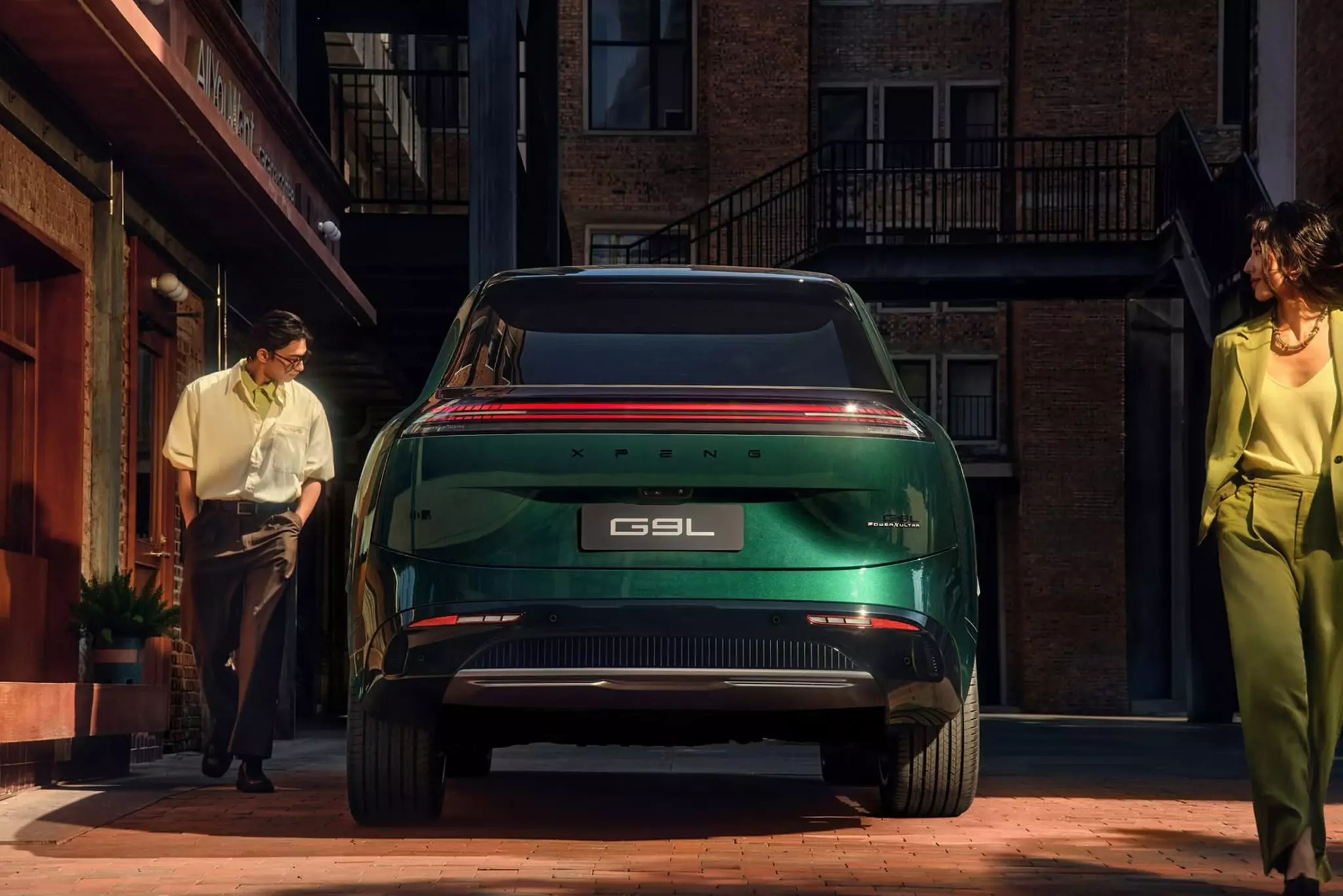
    Global demand helped push Xpeng’s monthly export deliveries past 10,000 units for the first time in September. That overseas surge reflects wider territory gains, including the Middle East where recent GX shipments passed 3,000 units, alongside the European introduction of the larger G9L sport-utility vehicle on October 12.

    The long-term sales targets

    Senior management has set a public target of selling 1 million vehicles annually by 2030, expecting European showrooms to supply half of that total volume. Delivering 500,000 cars a year in Europe requires vast scale across right-hand and left-hand drive territories, backed by dependable service logistics.

    Showroom momentum now shifts to the newer Mona L05, which opened customer pre-sales on October 15 to reinforce fourth-quarter deliveries. The carmaker’s next operational test will be the release of full European delivery figures for the final quarter, showing whether the Paris handover was an isolated photo opportunity or the start of sustained volume.

  • China August NEV Retail Sales Hit 1.04 Million as Market Share Reaches 65.8%

    China August NEV Retail Sales Hit 1.04 Million as Market Share Reaches 65.8%

    China’s passenger new energy vehicle retail sales will reach approximately 1.04 million units in August, rising 9.4 per cent from July, the China Passenger Car Association said on Friday.

    The projected rebound lifts new energy vehicle retail penetration to a record 65.8 per cent, up from 65.1 per cent the previous month. Total passenger vehicle retail deliveries are expected to reach 1.58 million units for the month, an 8.1 per cent month-on-month rise that still represents a 21.7 per cent drop compared with August 2025.

    Chengdu Auto Show Drives Volume

    Extreme weather and planned summer plant maintenance slowed showroom traffic in early August, pulling average daily retail volume down to 35,000 units during the first week. Deliveries recovered as typhoons cleared coastal provinces and carmakers rolled out new product campaigns ahead of the Chengdu Auto Show. Daily transactions are projected to reach 77,000 units in the final week of August.

    The divergent performance between powertrains widened through the summer. Retail sales of petrol-powered passenger vehicles fell 40.5 per cent year on year in July to 510,000 units, while electrified models fell 3.9 per cent to 951,000 units over the same period.

    Big-Ticket Spending Faces Drag

    Automotive retail remains the heaviest drag on Chinese consumer spending. Total retail sales of consumer goods across China rose 2.6 per cent year on year during the first seven months of 2026, yet automotive retail revenue shrank 13.2 per cent over the same period.

    For retailers and dealership groups across the region, these numbers confirm that volume growth is now entirely hostage to electrification and replacement subsidies. Pure internal combustion inventory has become a liability on dealer balance sheets, forcing legacy showroom networks into aggressive discounting or outright closure as floor space pivots toward plug-in hybrids and battery-electric models.

    Automakers now face the September-October peak buying season with fresh order books opened at Chengdu, where full-month delivery tallies will show whether state trade-in incentives can offset persistent consumer caution.