Tag: car maker

  • Vietnam’s car imports down 20 pct in 2018

    Vietnam’s car imports down 20 pct in 2018

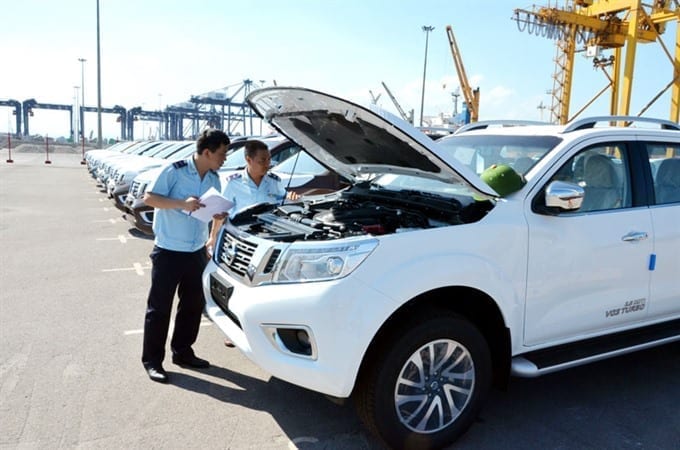
    Vietnam imported 72,650 cars this year, down nearly 20 percent over 2017, according to the Vietnam Customs. The import value of cars exceeded $1.64 billion this year, up 21 percent year-on-year, the agency said. Thailand and Indonesia remain major suppliers of Vietnam’s imported cars. From Thailand alone, Vietnam has imported more than 52,170 vehicles worth a combined $1.04 billion since the beginning of the year.

    According to customs data, from December 7-13, car imports slowed down by 701 units from the previous week, totaling 2,833 vehicles. Total import value is reported to be $67 million.

    Vietnam’s population is around 93 million, larger than South Korea, but car consumption is only around 300,000 units a year, Mike Dunne, an independent industry analyst who has spent more than three decades in Asia, told U.S. television channel CNBC recently.

    Most cars sold in Vietnam are foreign brands assembled in the country from kits. But a series of free trade agreements have reduced import duties and are opening up the market. A 30 percent import tax on cars from other Association of Southeast Asian Nations (ASEAN) countries was scrapped this year.

    There are only 358 businesses in the auto industry in Vietnam compared to 2,500 in Thailand, according to the Ministry of Industry and Trade. The ministry also said that Vietnam imports over 90 percent of auto parts.

  • Nissan terminates contract with Vietnamese distributor

    Nissan terminates contract with Vietnamese distributor

    Japanese carmaker Nissan announced it has ended its tie-up with its distributor in Vietnam, Tan Chong, without disclosing the reason. Malaysian-owned Tan Chong Motor Holdings Bhd, said it would stop importing and distributing Nissan vehicles and parts in Vietnam from September 10 next year.

    Tan Chong said it “remains open to further discussion with Nissan to explore alternative solutions and business opportunities for mutual benefit in Vietnam.”

    Nissan said: “The termination of the joint venture with Tan Chong will not affect the sales of Nissan cars in Vietnam.”

    Its business operations would remain unchanged in the near future, it said. It is set to debut its seven-seat SUV Terra in Vietnam on December 18.

    Tan Chong, a multinational corporation based in Malaysia, is not only the official distributor of Nissan in Malaysia and Vietnam, but also in Laos, Cambodia and Myanmar.

    In Malaysia, it also distributes cars by Opel, Renault and Foton. Its subsidiary, Motor Image, also owns the rights to produce and distribute Subaru vehicles in Southeast Asia, including Vietnam.

  • Hyundai forms joint venture for Algerian assembly plant

    Hyundai forms joint venture for Algerian assembly plant

    Hyundai Motor and Algerian car maker Global Group signed a deal on Monday to establish a joint venture to produce commercial cars in Algeria. The joint venture will operate a factory that assembles knock down kits in Batna, Algeria. The assembly facility is scheduled to start operations in 2020.

    In the early stage, the factory will assemble 6,500 cars a year and gradually increase production. Medium and large trucks like the Mighty and Xcient, as well as the Hyundai County bus, will be assembled at the facility.

    According to the Korean automaker, the commercial vehicle market in Algeria has been expanding. Last year demand for commercial cars in the country was around 8,000 units, but that has increased to 12,000 units this year. By 2025, the automaker projects demand will reach 22,000.

  • Genesis starts by-the-month car subscriptions

    Genesis starts by-the-month car subscriptions

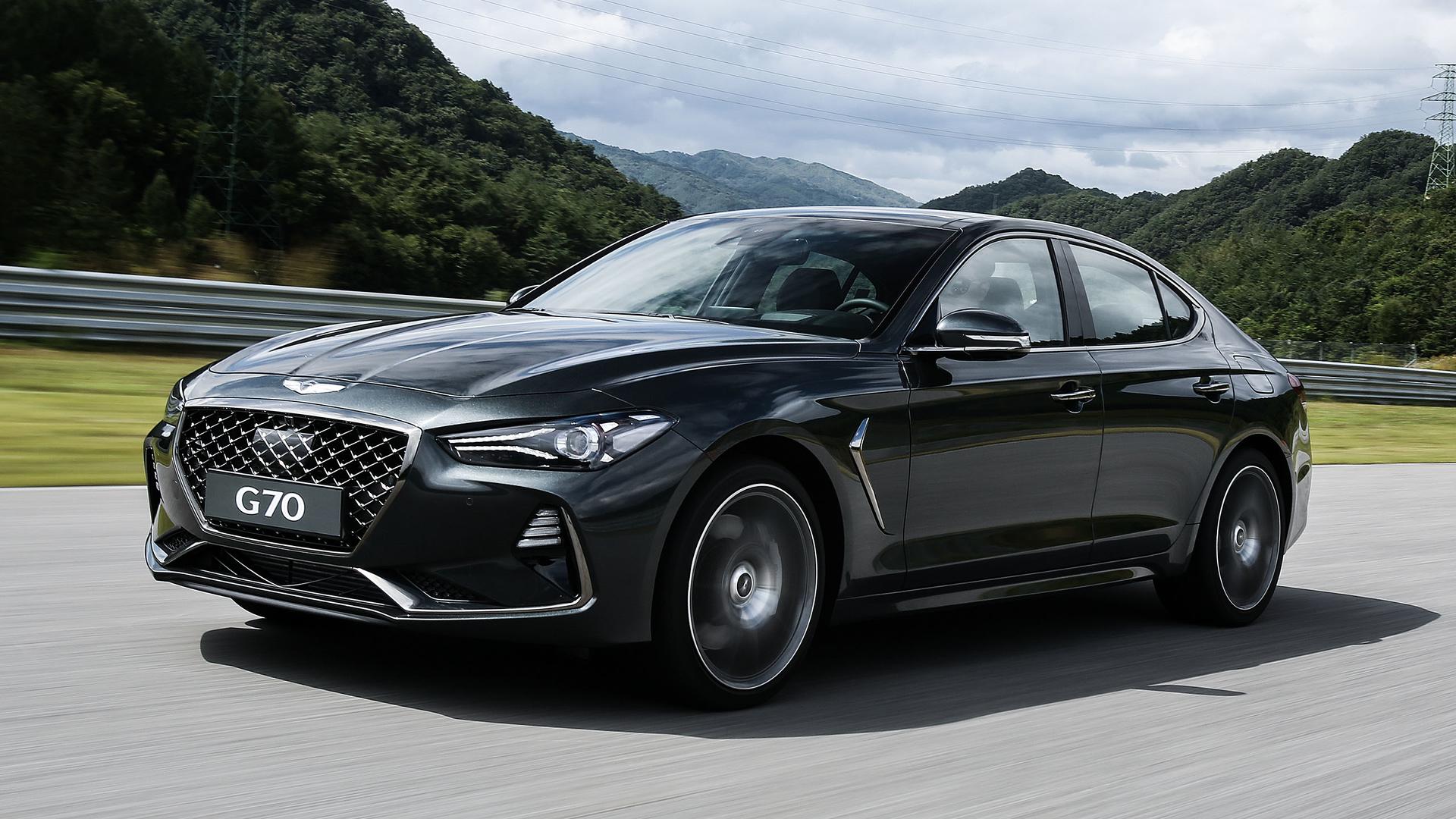
    Hyundai Motor luxury brand Genesis is starting a car subscription service, the first such effort by a domestic automaker in Korea. The company Thursday announced its Genesis Spectrum program. Under the program, subscribers can drive Genesis vehicles – including the G70, G80, G80 Sport and G90 – for 1.49 million won ($1,330) per month. The service is in collaboration with domestic rental-car companies and Hyundai Capital’s Deal Car.

    The fleet of available cars includes the 2018 G70 3.3 Sports Supreme, the G80 3.3 Premium Luxury, the 2019 G80 Sports 3.3T Premium Luxury and G90 3.8 Premium Luxury. The provided cars are relatively new, with fewer than 10,000 kilometers (6,213 miles) of accumulated driving, according to the carmaker. For those using the G70, G80 and G80 vehicles, cars can be switched twice a month. The G90 is available to subscribers only for test driving 48 hours a month.

    Subscribers will not have to pay any maintenance costs, including after-sales service and the purchase of replacement parts. They will have to renew their subscription every month, but no fee is charged for early termination of membership. The program offers pick-up and delivery in Seoul as long as the vehicles are reserved three days in advance.

    “Genesis has been researching opportunities our brand could offer customers,” an official at Genesis said. “One of the results of the survey is a subscription program, which is globally emerging as trend.”

    Genesis added that the subscription service will allow the brand to collect data about its customers and drivers, such as preferred models for certain age groups and car replacement cycles.

    While subscription services for cars are a global phenomenon, as fewer people opt for ownership, the concept hasn’t taken off in Korea yet.

    Hyundai Motor’s finance affiliate Hyundai Capital America has already launched a subscription service in the United States called Hyundai PLUS, where subscribers can use the Sonata, Tucson, Santa Fe and other models for a monthly fee. Other carmakers have been offering subscriptions in certain markets. Porsche runs Porsche Passport, Mercedes-Benz has Benz Collection and BMW has Access by BMW.

    Swedish carmaker Volvo recently started Care By Volvo, and has rolled out its “Don’t Buy This Car” campaign to promote the new service.

    “Subscription services are suitable especially for younger people who want to enjoy a diverse range of driving experiences while avoiding the financial burden of buying the car and then maintaining it,” said Kim Pil-soo, an automotive engineering professor at Daelim University.

    The Mini brand launched a subscription service in partnership with connected-car platform Epikar last month in Korea. Its membership fee is 1.79 million won, but it charges more depending on which model the customer wants to drive.

    The Genesis service started Thursday and will run for 10 months.

  • Korea’s auto exports on the rise, but local industry still struggling

    Korea’s auto exports on the rise, but local industry still struggling

    Attractive prices and returns have seen the number of Chinese customers buying high-end apartments in HCMC soar this year. Duong Thuy Dung, senior director of real estate market research firm CBRE Vietnam, said at a recent forum that 31 percent of high-end apartment buyers in HCMC in the first nine months were Chinese. This figure increased from only 2 percent in 2016 and 4 percent last year.

    In the last two years, Chinese were sixth among all buyers, but this year, they have surpassed Vietnamese to rank first.

    Only 24 percent of high-end home buyers are Vietnamese, CBRE data shows.

    Stephen Wyatt, country head of property service firm JLL Vietnam, said the number of Chinese buyers has been increasing because Vietnam has an attractive price compared to other markets like Hong Kong, Japan, Singapore, South Korea and Taiwan.

    Chinese people often compare prices in Vietnam with Shanghai when they buy properties, he said, adding that they hope to gain profit from higher property prices in Vietnam in the future.

    A high-end apartment in the city costs around $5,000 per square meter, but the same one in Hong Kong could cost four times, said Nguyen Khanh Duy, director of residential sales at real estate service provider Savills HCMC.

    Nguyen Hoang, director of research and development at real estate firm DKRA, said that the number of Chinese and South Korean buyers in HCMC started to increase last year.

    Chinese from Shanghai and Hong Kong are buying properties as investments (not to stay in). “Most projects that foreigners bought in the last two years are under construction,” he said.

    Other industry insiders said that the high returns that HCMC high-end apartments offer is attracting many foreign buyers.

    The rate of return is 5-6.5 percent in Thao Dien ward and Thu Thiem Peninsula in District 2, while in other Asian countries, this rate is only 3.7-5.2 percent, Duy said.

    CBRE senior director Dung added that it was not just Chinese, but foreign buyers in general who are showing an increasing interest in HCMC real estate.

    Dung said that each foreigner group has a different preference for high-end apartments. Customers from mainland China, Hong Kong and Taiwan prefer large-scale projects near the downtown HCMC.

    South Koreans like to buy apartments in the southern District 7 that hosts a large community of South Koreans, while Western buyers often look for a quieter lifestyle in eastern District 2.

    Dung said HCMC is estimated to receive 40,000 new apartments in the 2018-2020 period, 60-70 percent of these in the high-end segment.

    In the last three years 35,000 luxury apartments have come into the market, CBRE said.

    This is a major increase from 2012-2014 when fewer than 10,000 units were on offer, CBRE said.

  • KDB to pay GM Korea by the end of the month

    KDB to pay GM Korea by the end of the month

    The state-run Korea Development Bank (KDB) said Thursday it will complete its injection of $750 million into the Korean unit of General Motors later this month, ending a controversy over GM Korea’s plan to spin off its research unit. The KDB and GM signed a deal in May on the rescue package for GM Korea.

    Under the agreement, the KDB pledged to inject $750 million, while GM agreed to provide $3.6 billion in fresh loans to keep GM Korea afloat.

    The condition to the additional investment was that GM would keep its Korean operation open for a minimum of 10 years.

    In June, the KDB injected $375 million into GM Korea, but the bank said the remaining half may not be provided amid concerns that the U.S. carmaker may keep only its research facility in Korea and eventually shut down its manufacturing facilities here.

    KDB Chairman Lee Dong-gull in October told lawmakers that the remaining investment may not be executed, depending on policy decision.

    The KDB’s decision came after GM Korea submitted details of its spin-off plan to the bank, the second-largest shareholder of GM Korea.

    The KDB has a 17-percent stake in GM Korea.

    The KDB said it will buy about 11.9 million preferred shares of GM Korea for 404.5 billion won ($360 million), or 33,932 won per share.

    The transaction will be made on Dec. 26, the KDB said.

    The May agreement prohibits GM from selling any stake in GM Korea over the next five years and limits GM’s right to sell shares or assets in GM Korea for 10 years.

  • Hyundai sets aside 1.67 trillion won to support its suppliers

    Hyundai sets aside 1.67 trillion won to support its suppliers

    Hyundai Motor Group has introduced a 1.67 trillion won ($1.49 billion) support program for small and midsized auto parts suppliers, the company said Thursday. As auto parts suppliers in Korea tend to be highly dependent on the performance of carmakers, the sluggish performance of Korea’s largest auto group by sales this year has been a major blow to their earnings.

    A report published by the Economic Research Institute run by the Industrial Bank of Korea earlier this year showed that 48 percent of domestic auto parts suppliers supply parts to a single carmaker and their business growth is highly dependent on the growth of that carmaker. Also, while carmakers have extra capital to respond to ups and downs in their earnings, small-sized parts suppliers are more vulnerable to changes in the market.

    Hyundai Motor Group said it will first create a 140 billion won fund for its suppliers and subcontractors. Suppliers will be able to borrow money at low interest rates and use it to stabilize their business or invest in research and development.

    Considering many suppliers lack liquidity due to the massive investment and costs incurred in early stage R&D and parts manufacturing, the group also said it will pay forward some of the cost incurred in those activities. For instance, part of the cost incurred to develop parts used in Hyundai cars will be paid by the carmaker at the beginning of development rather than after the finished product is designed. The auto group estimates its suppliers and subcontractors will receive roughly 1.46 trillion won in investment upfront over the next five years.

    Hyundai Motor, Kia Motors and auto parts affiliate Hyundai Mobis are also creating a 15 billion won fund to provide emergency aid to suppliers.

    There is a special program for suppliers expanding facilities to support the mass production of Nexo, Hyundai’s fuel-cell powered vehicle. The group is planning on injecting up to 44 billion won into suppliers and subcontractors that expand investment into facilities for parts used in the Nexo next year.

  • Hyundai to offer connected cars in Europe

    Hyundai to offer connected cars in Europe

    Hyundai Motor is introducing its connected-car system in Europe in partnership with Vodafone next year. The carmaker and affiliate Kia Motors signed a memorandum of understanding with Vodafone at the company’s British headquarters on Monday to roll out the service, Hyundai Motor said.

    Its Blue Link connected-car platform will be available in cars launching in Europe in the latter half of next year. The system will utilize Vodafone’s network. Kia’s Uvo connected-car system will be available in new cars sold in Europe in the first half of 2019.

    The connected-car service will offer real-time traffic information as well as information about nearby parking lots. It will also enable the remote detection of the car’s location as well as anti-theft features.

    Voice-recognition will be available in partnership with Nuance, a U.S. company. In Korea, that service is available in partnership with Kakao.

    Vodafone is one of the leading telecom companies in Europe, with 120 million users on the continent. It is established in 51 countries globally.

    The Blue Link service offered in collaboration with Vodafone will be available in eight European countries, including Britain, Germany, France and Spain. Ultimately, it will be available in 32 European countries.

    Europe is the fifth region where Hyundai Motor has introduced its connected-car service. It is already available in Korea, the United States, Canada and China.

    In July, Hyundai Motor partnered with Chinese IT firm Baidu for the introduction of connected-car services. In the United States, it is working with AT&T, and in Canada it utilizes the Bell network.

    “The latest collaboration will enable European customers to use the high-tech service,” said Suh Jung-sik, senior vice president of Hyundai Motor’s ICT department in a written statement. “The connected-car service will launch from early next year and be expanded in the future.”

  • Why did Dyson pick S’pore for electric car?

    Why did Dyson pick S’pore for electric car?

    When James Dyson, the billionaire British inventor of the bagless vacuum cleaner, unveiled a plan to build an electric car plant in Singapore, it raised a few eyebrows.

    Not only does the land-starved city state have some of the highest average salaries in the world, but it has been nearly 40 years since Ford closed its factory in Singapore, effectively ending car production there.

    “It is a bit of a surprise because of the cost base and no other car manufacturing plant being here,” said Shantanu Majumdar, a regional director at consultancy JD Power.

    Dyson said on Tuesday the decision was based on supply chains, access to markets and the availability of expertise, which offset the cost factor.

    But what other factors could have influenced the decision?

    Why not head straight to the biggest electric vehicle market in the world, China, like rival Tesla?

    Here’s a look at some of the less obvious pros and cons:

    1. High Costs vs Generous Incentives
    Compared with other global cities, Singapore has some of the highest average salaries in the world after tax, according to studies by Deutsche Bank. Land available for industrial use is scarce and expensive, and it ranks highly in general cost-of-living indexes.

    But aside from its skilled engineers and scientists, for a high-tech firm like Dyson, Singapore offers generous incentive schemes. Some schemes include tax breaks for five years, which can be extended, and grants that can cover up to 30% of the cost of projects to improve business efficiency.
    Singapore declined to comment on whether Dyson benefited from any such schemes.

    To shore up productivity in its manufacturing sector, which makes up less than quarter of its output, Singapore has focused efforts on attracting high-end manufacturers and those who adopt automated production processes.

    2. Small Market vs China Gateway
    Dyson may have decided to make electric cars in Singapore, but few are likely to be driven here or anywhere in Southeast Asia for that matter.

    The number of privately owned electric vehicles in Singapore is in single digits, and Tesla CEO Elon Musk has criticised Singapore for not being supportive of electric vehicles.

    Singapore is one of the world’s most expensive places to own a car because the government strictly controls the vehicle population by charging owners a variable rate for the right to own and use a vehicle for a limited number of years.

    In Southeast Asia, only 142 electric vehicles are forecast to be sold this year, data from consultant LMC Automotive shows. By contrast, sales in China are forecast to almost reach 700,000 vehicles this year, more than double the combined sales from the United States and Europe.

    But with one of the world’s busiest ports on its doorstep, Dyson can roll a car off the production line in Singapore and within the hour it can be on its way to China or other sizeable electric vehicle markets like South Korea or Japan.

    Dyson products – which include bladeless fans, air purifiers and hair dryers – are becoming a premium brand in China and other Asian markets. Asia accounted for over 70% of its growth last year, the firm said.

    3. Familiarity vs New Frontier
    Dyson’s history with Singapore probably also played a role. It already employs 1,100 people in Singapore, making 21 million digital electric motors a year. It also has manufacturing hubs in Malaysia – connected to Singapore via two road bridges – and the Philippines.

    “This is obviously a surprise but since Singapore is at the heart of Southeast Asia, Dyson would be best placed to source many components from neighbouring countries and, locally, assemble and manufacture the high-tech car here,” said a corporate banker who deals with multinational firms in the region.
  • Hyundai brings wearable robotics to factories

    Hyundai brings wearable robotics to factories

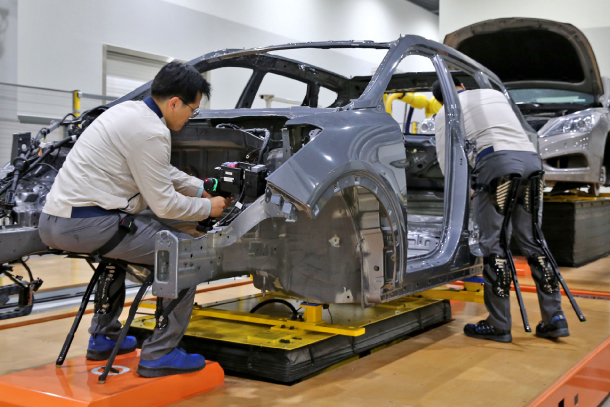
    The Hyundai Motor Group will expand the use of wearable robots at its facilities as it works to make robotics a major source of revenue, the company said Monday. Since September, Korea’s largest automaker has been testing the Hyundai Chairless Exoskeleton (H-CEX) at its North American factory. The H-CEX is an assistive robot for workers who have to stay in a seated position throughout the day. By the end of this year, the carmaker will introduce the Hyundai Vest Exoskeleton (H-VEX) at the same facility.

    The H-CEX, the first wearable developed by Hyundai for use at production sites, reduces the use of waist and lower body muscles by 80 percent, reducing the fatigue that results from being in the same seated position for a long period of time, Hyundai said in statement. The soon-to-be introduced H-VEX exoskeleton is for workers in jobs that require a lot of arm lifting. The machine vest will support the upper body and protect neck and shoulder muscles.

    “By expanding test applications, we hope to prove the technological effectiveness of our wearable robots,” Hyundai said in statement.

    The two exoskeletons were developed by Hyundai’s robotics team, established in May after the company named robotics as one of its five pillars for the future.

    The team is preparing to launch other robots focusing on three main areas: wearables, service robots and mobility robots.

    Hyundai is gearing up to test a hotel robot capable of providing room service and guiding guests. It will be introduced at the Haevichi Hotel & Resort on Jeju Island and at the Rolling Hills Hotel in Hwaseong, Gyeonggi, from the end of this year.

    A car-selling robot with natural language conversation capabilities and artificial intelligence will be prototyped by early next year. By 2020, the automaker plans to introduce a robot that can autonomously charge electric vehicles at charging stations.

    “We believe that robotics could be a solution not only for mobility but also for production in areas suffering from population decline,” a spokesperson for Hyundai said. “We plan to make notable achievements in robotics using technological data we have accumulated while developing autonomous cars.”

    Hyundai is not the only automobile maker bringing exoskeletons to assembly lines. U.S. automaker Ford has tested EksoVest, an upper-body assisting wearable jointly developed with Ekso Bionics. It was introduced at two U.S. factories in November last year. Ford announced in August a plan to bring the robot to 15 plants globally.

    German automakers BMW and Audi are also developing wearable aids for factory workers.

    According to market tracker BIS, the world’s wearable robot market is due to grow by 50 times from $96 million in 2016 to $4.65 billion by 2026.