Tag: carbon

  • DBS Exec to Lead Carbon Credits Exchange

    DBS Exec to Lead Carbon Credits Exchange

    He was most recently DBS’ group chief sustainability officer, responsible for developing the bank’s sustainability framework and driving sustainability initiatives.

    Climate Impact X (CIX) has announced the appointment of Mikkel Larsen as chief executive officer, effective immediately, according to an announcement on Wednesday.

    Larsen has been interim CEO of the platform, a joint venture between DBS Bank, Singapore Exchange (SGX), Standard Chartered, and Temasek, since May 2021.

    Before his nine years at DBS, Larsen spent over seven years at UBS, leaving as CFO of Asia-Pacific, and previously held roles at Citibank in London, and KPMG.

    In his new role, Larsen will oversee all day-to-day operations for CIX, including collaborating with its ecosystem of technology partners to build up its Project Marketplace and Exchange platforms as well as curating a pipeline of high-quality carbon credit projects to feature on its platforms. He will also drive the company’s culture, values, and behavior while building up a high-performing team passionate about catalyzing scalable sustainable solutions.

    The carbon market is going through a transition. We have a unique opportunity to establish a trusted market that can both help preserve the crucially important existing carbon sinks whilst developing new ones, Larsen said.

    CIX said it completed a pilot auction in October of a curated portfolio of high-quality carbon credits, where it successfully cleared 170,000 tonnes of carbon credits from eight recognized NCS projects spanning across Africa, Asia, and Latin America.

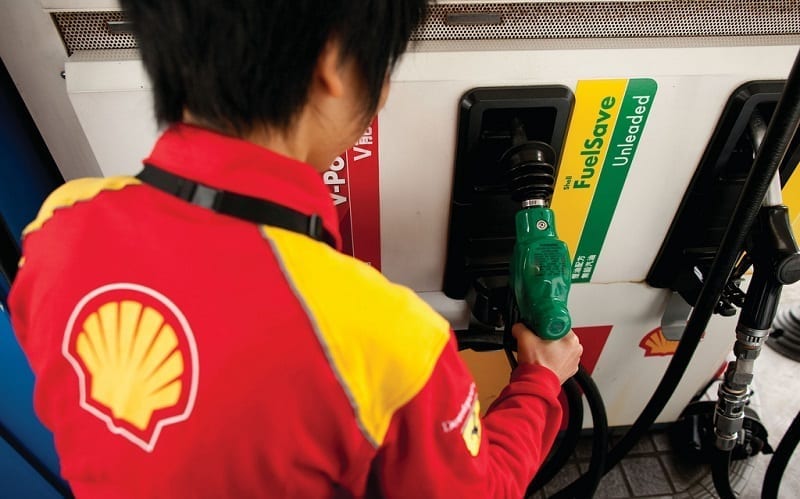
  • Shell’s 2020 Carbon Emissions Fall On The Back Of Fuel Sales Drop

    Shell’s 2020 Carbon Emissions Fall On The Back Of Fuel Sales Drop

    Royal Dutch Shell, owner of the world’s largest fuel retail network, said on Thursday its total greenhouse gas emissions dropped 16% in 2020 as oil and gas sales fell sharply due to the coronavirus pandemic. Shell said in its annual report that total emissions from its oil wells to forecourt fuel sales fell to 1.38 billion tonnes of carbon dioxide equivalent last year, from 1.65 billion in 2019.

    “One of the major causes of this larger than expected reduction in 2020 was lower demand for energy, especially for oil and gas,” it said.

    Shell said its total greenhouse gas emissions dropped 16% in 2020 as oil and gas sales fell sharply due to the coronavirus pandemic.

    Energy majors’ climate reporting differs in that some emissions data, for example, the data Shell released on Thursday, includes planet-warming gases from the combustion of fuels they produce themselves plus the oil products they sell but are produced by another company. Others, like BP, only cover the former: emissions from the combustion of fuels made from crude oil they produce themselves.

    Net carbon intensity, the main measure the Anglo-Dutch focuses on in its energy transition strategy, dropped last year to 75 grams of CO2 equivalent per megajoules, a 4% reduction from 2019, Shell said. Carbon energy intensity means a company can increase its fossil fuel output while offsetting its carbon emissions or adding renewable energy to its product mix.

    Shell has begun a major overhaul to shift away from oil and gas to low-carbon energy, power trading and retail in order to reduce its greenhouse gas emissions to net-zero by mid-century, including the use of offsets for residual emissions. Shell runs around 46,000 retail fuel stations. Its executives’ pay is linked to its success in reaching its climate targets.

  • Apple commits to reach carbon neutrality by latest 2030

    Apple commits to reach carbon neutrality by latest 2030

    Joining the growing list of businesses creating sustainable roadmaps to fuel future growth, technology giant Apple has committed to reaching carbon neutrality in its supply chain and production by 2030.

    Apple is already carbon neutral in its global corporate operations, but with this commitment, Apple will be removing 75 percent of its total carbon footprint while offsetting the remaining 25 percent with carbon removal solutions.

    “Businesses have a profound opportunity to help build a more sustainable future, one born of our common concern for the planet we share,” said Apple CEO Tim Cook.

    “Climate action can be the foundation for a new era of innovative potential, job creation, and durable economic growth. With our commitment to carbon neutrality, we hope to be a ripple in the pond that creates a much larger change.”

    Moving forward, Apple will lower its emissions through a number of initiatives, including a low carbon product design, investments in expanding energy efficiency, a continued focus on utilizing renewable energy, process, and material innovations, and the removal of carbon emissions.

    “We’re proud of our environmental journey and the ambitious roadmap we have set for the future,” said Apple’s VP of environment, policy, and social initiatives Lisa Jackson.

    The shift will be supported by Apple’s $100 million Racial Equity and Justice Initiative, which focuses on addressing education, economic equality, and criminal justice reform.

    “Systemic racism and climate change are not separate issues, and they will not abide by separate solutions,” Jackson said.

    “We have a generational opportunity to help build a greener and more just economy, one where we develop whole new industries in the pursuit of giving the next generation a planet worth calling home.”

    Apple’s ten-year commitment mirrors that of many of its contemporaries, with Microsoft announcing in January not only would it be carbon negative by 2030, but it would retroactively remove all carbon it had emitted since the business’ founding in 1975 by 2050.

    Swedish furniture firm Ikea, as well, is looking to become climate positive, or carbon-neutral, by 2030. The end goal is for all Ikea products to become 100 percent circular, using renewables and recycled materials.

    “That means we will reduce more greenhouse gas emissions than our value chain emits while growing the Ikea business,” Ikea said.

    “Our responsibility stretches across the entire value chain of our business: from the materials we use, manufacturing and transporting of products, our stores, customer travel and home deliveries, product use in customers’ homes and product end-of-life.

    “By taking a scientific approach and working together with our partners, suppliers, and customers around the world, we will make it happen!”

    And just last week, global retail marketplace and tech business Amazon announced a partnership with the We Mean Business coalition to further the Climate Pledge – an Amazon co-founder.

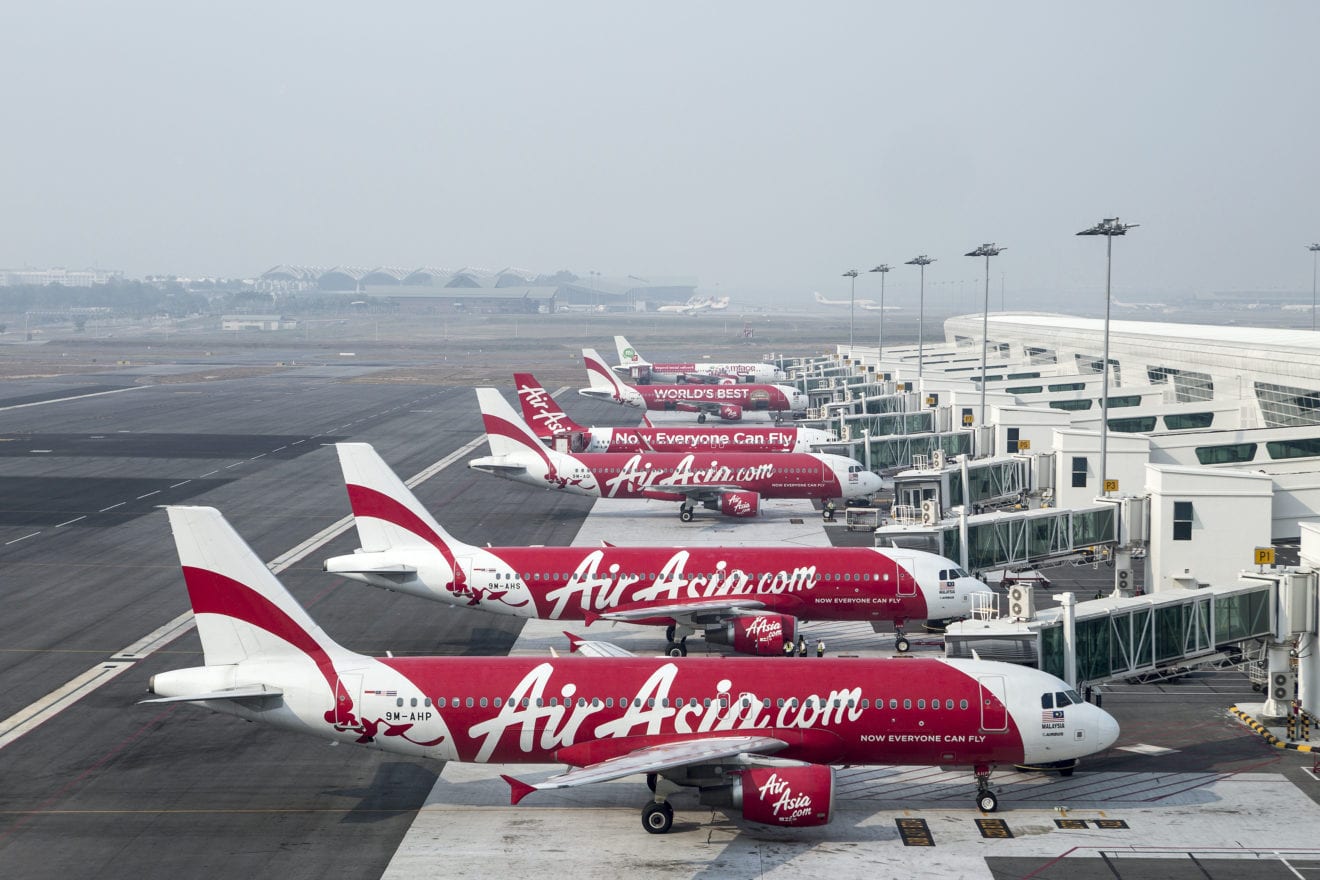
  • AirAsia shaves carbon footprint

    AirAsia shaves carbon footprint

    AirAsia will implement digital solutions to improve fuel efficiency and reducing carbon emissions.

    Developed by the Paris-based Safety Line, OptiFlight-In-flight guidance is a unique suite of digital solutions that optimize all flight phases.

    Following extensive validation tests, AirAsia has implemented OptiClimb which will save up to 3%  of its climb fuel, potentially representing a fleetwide carbon footprint reduction of at least 73,000 tons of CO2 per year.

    By introducing new digital initiatives to its flight operations, AirAsia is not only offsetting its carbon emissions but also pro-actively reducing them at the source whilst also further reducing costs for the benefit of its customers.

    AirAsia Group chief operations officer Javed Malik said: “AirAsia is making every effort to improve its operational efficiency and become a digital airline in all aspects of our business including flight operations, and OptiFlight will allow us to leverage vast amounts of flight data with the aim of reducing CO2 emissions.”

    In addition to implementing OptiClimb, AirAsia joined the OptiFlight Innovation Partnership in September 2019, which provides further flight optimization opportunities that will be explored in all flight phases. The airline will be the first in Asia to trial OptiDirect, a solution that recommends some adjustments to pilots based on historical tracks flown and forecasted weather on the route.

  • New Zealand introduces groundbreaking zero carbon bill

    New Zealand introduces groundbreaking zero carbon bill

    New Zealand’s long-awaited zero carbon bill will create sweeping changes to the management of emissions, setting a global benchmark with ambitious reduction targets for all major greenhouse gases.

    The bill includes two separate targets – one for the long-lived greenhouse gases carbon dioxide and nitrous oxide, and another target specifically for biogenic methane, produced by livestock and landfill waste.

    Launching the bill, Prime Minister Jacinda Ardern said, “carbon dioxide is the most important thing we need to tackle – that’s why we’ve taken a net zero carbon approach. Agriculture is incredibly important to New Zealand, but it also needs to be part of the solution. That is why we have listened to science and also heard the industry and created a specific target for biogenic methane.”

    The Climate Change Response (Zero Carbon) Amendment Bill will:

    • Create a target of reducing all greenhouse gases, except biogenic methane, to net zero by 2050
    • Create a separate target to reduce emissions of biogenic methane by 10% by 2030, and 24-47% by 2050 (relative to 2017 levels)
    • Establish a new, independent climate commission to provide emissions budgets, expert advice, and monitoring to help keep successive governments on track
    • Require the government to implement policies for climate change risk assessment, a national adaptation plan, and progress reporting on the implementation of the plan.

    Bringing in agriculture

    Preparing the bill has been a lengthy process. The government was committed to working with its coalition partners and also with the opposition National Party, to ensure the bill’s long-term viability. A consultation process in 2018 yielded 15,000 submissions, more than 90% of which asked for an advisory, independent climate commission, provision for adapting to the effects of climate change and a target of net zero by 2050 for all gasses.

    Throughout this period there has been a discussion of the role and responsibility of agriculture, which contributes 48% of New Zealand’s total greenhouse gas emissions. This is an important issue not just for New Zealand and all agricultural nations, but for world food supply.

    Ministry for the Environment, CC BY-ND
    Another critical question involved forestry. Pathways to net zero involve planting a lot of trees, but this is a short-term solution with only partly understood consequences. Recently, the Parliamentary Commissioner for the Environment suggested an approach in which forestry could offset only agricultural, non-fossil emissions.

    Now we know how the government has threaded its way between these difficult choices.

    Separate targets for different gases

    In signing the Paris Agreement, New Zealand agreed to hold the increase in the global average temperature to well below 2°C and to make efforts to limit it to 1.5°C. The bill is guided by the latest Intergovernmental Panel on Climate Change (IPCC) report, which details three pathways to limit warming to 1.5°C. All of them involve significant reductions in agricultural methane (by 23%-69% by 2050).

    Farmers will be pleased with the “two baskets” approach, in which biogenic methane is treated differently from other gasses. But the bill does require total biogenic emissions to fall. They cannot be offset by planting trees. The climate commission, once established, and the minister will have to come up with policies that actually reduce emissions.

    In the short term, that will likely involve decisions about livestock stocking rates: retiring the least profitable sheep and beef farms, and improving efficiency in the dairy industry with fewer animals but increased productivity on the remaining land. Longer-term options include methane inhibitors, selective breeding, and a possible methane vaccine.

    Net zero by 2050 on all other gasses, including offsetting by forestry, is still an ambitious target. New Zealand’s emissions rose sharply in 2017 and effective mechanisms to phase out fossil fuels are not yet in place. It is likely that with protests in Auckland over a local 10 cents a liter fuel tax – albeit brought in to fund public transport and not as a carbon tax per se – the government may be feeling they have to tread delicately here.

    But the bill requires real action. The first carbon budget will cover 2022-2025. Work to strengthen New Zealand’s Emissions Trading Scheme is already underway and will likely involve a falling cap on emissions that will raise the carbon price, currently capped at NZ$25.

    In an initial reaction to the bill, the National Party welcomed all aspects of it except the 24-47% reduction target for methane, which they believe should have been left to the climate commission. Coalition partner New Zealand First is talking up their contribution and how they had the agriculture sector’s interests at heart.

    While climate activist groups welcomed the bill, Greenpeace criticized the bill for not being legally enforceable and described the 10% cut in methane as “miserly”. The youth action group Generation Zero, one of the first to call for zero carbon legislation, is understandably delighted. Even so, they say the law does not match the urgency of the crisis. And it’s true that since the bill was first mooted, we have seen a stronger sense of urgency, from the Extinction Rebellion to Greta Thunberg to the UK parliament’s declaration of a climate emergency.

    New Zealand’s bill is a pioneering effort to respond in detail to the 1.5ºC target and to base a national plan around the science reported by the IPCC.

    Many other countries are in the process of setting and strengthening targets. Ireland’s Parliamentary Joint Committee on Climate recently recommended adopting a target of net zero for all gasses by 2050. Scotland will strengthen its target to net zero carbon dioxide and methane by 2040 and net-zero all gasses by 2045. Less than a week after this announcement, the Scottish government dropped plans to cut air departure fees.

    One country that has set specific goals for agricultural methane is Uruguay, with a target of reducing emissions per kilogram of beef by 33%-46% by 2030. In the countries mentioned above, not so different from New Zealand, agriculture produces 35%, 23%, and 55% of emissions, respectively.

    New Zealand has learned from processes that have worked elsewhere, notably the UK’s Climate Change Commission, which attempts to balance science, public involvement and the sovereignty of parliament. Perhaps our present experience in balancing the demands of different interest groups and economic sectors, with diverse mitigation opportunities and costs, can now help others.

  • Nike global warehouses goes carbon neutral

    Nike global warehouses goes carbon neutral

    A Nike warehouse in Melbourne’s Altona North suburb has become the first facility in Australia to receive a ‘whole-of-building’ carbon-neutral certification from the National Carbon Offset Standard.

    The certification is the latest recognition for the site, which has also received a Green Star Performance rating and was named the ‘Best Industrial Project’ at the National Energy Efficiency Awards in 2017.

    The 18,000sqm warehouse, which is owned by the Stockland property group and was custom-built for Nike by Toll, was designed with environmental efficiency in mind.

    Some of the site’s unique features include translucent roof sheeting to maximise daylight so warehouse lighting can be switched off when ambient light is sufficient, roof insulation to assist with temperature control and an optimised conveyor system, which was rewired and reprogrammed to operate in relation to product volumes, eliminating unnecessary movement.

    The retrofitting of 1300 light fixtures with high-efficiency LEDs also helped the site to halve its total electricity consumption, exceeding the greenhouse reductions required by NCOS.

    Toll and Nike offset the remaining greenhouse emissions generated by the building by investing in forest conservation projects in Tasmania as well as in an energy recovery waste water treatment plant in Thailand. These projects protect local biodiversity and native species support jobs in local communities and reduce greenhouse gas emissions, according to a statement from the comp

    Nike’s operations director Marie Varrasso said the success of the facility reflects its commitment to reducing its carbon footprint whilst delivering efficient solutions and savings which can be passed on to its customers directly.

    “Through this collaboration, continuous improvements have been introduced into the supply chain, which ultimately benefits Nike’s footwear, apparel and equipment customers. It’s a unique relationship, with innovation at the heart of everything we do,” she said.

    Stockland’s general manager of logistics and business parks Tony D’Addona said the project has has been a worthwhile education process for the property group’s warehousing and logistics business and helped to improve its management approach to sustainability.