Tag: cargof

  • Cosco Shipping Sets Sights on Southeast Asia: Plans Expansion in Vietnam and Indonesia Amid Growing Trade Demand

    Cosco Shipping Sets Sights on Southeast Asia: Plans Expansion in Vietnam and Indonesia Amid Growing Trade Demand

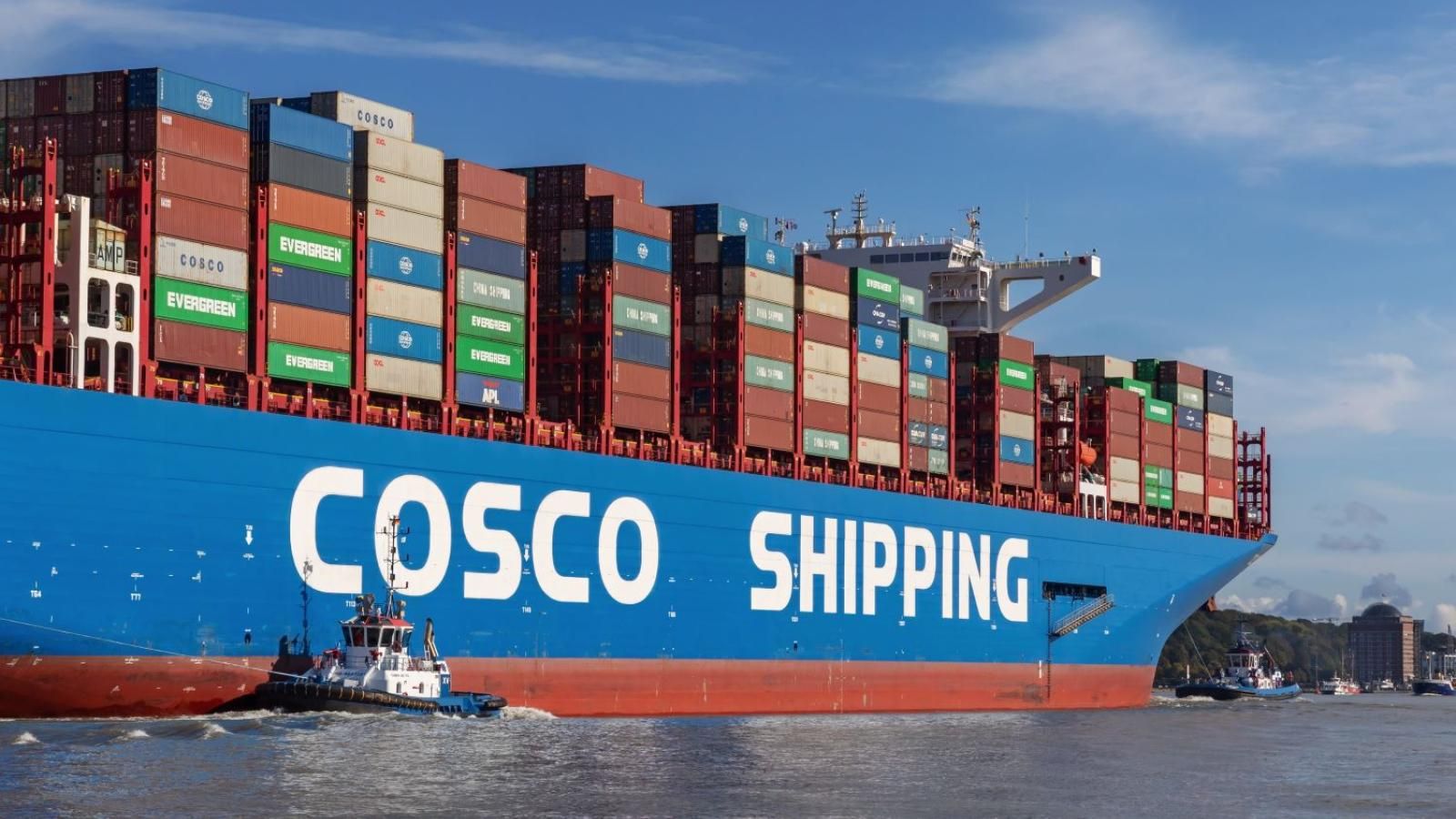
    Cosco Shipping International (Singapore) is setting sights on increased investment in Vietnam, Malaysia, and Indonesia within the next three to five years, in anticipation of a surge in Southeast Asian trade. The firm’s president, Jiang Kai, expresses a robust sense of assurance in the potential of the Southeast Asian market.

    Cosco Shipping International, the logistic subsidiary of the Chinese state-owned maritime behemoth China Cosco Shipping Corporation, is currently listed in Singapore. The company generates its consolidated revenue primarily from its operations in Singapore and Malaysia, with the city-state contributing to approximately 87% of the total. The firm also has a vested interest in logistical enterprises in Indonesia and Vietnam, along with a share in a dry-bulk shipping associate that operates throughout the region. These affiliated firms provide about one-fourth of the group’s pre-tax profit, as witnessed in the latest financial results for the first half of 2026.

    Resilience Amid Global Trade Uncertainties

    Global trade has witnessed a few turbulent years, with factors such as U.S. tariffs and geopolitical instabilities in Ukraine and Iran causing disruptions in shipping routes and supply chains. However, manufacturing activities continue to show resilience in Southeast Asia, notes Jiang. There is also an observed revival in the region’s dry-bulk shipping market, which deals in the transportation of industrial raw materials like coal and iron ore, as manufacturing activities gain traction.

    The demand for specialized cargo shipping, catering to industrial machinery, vehicles, and new energy equipment, is also on the rise, mirroring the region’s progression. “The expansion in Southeast Asia’s shipping industry has resulted in a steady surge in logistics demand,” says Jiang. He adds that many Chinese manufacturing firms, when exploring overseas markets, often consider Southeast Asia as a preferred manufacturing base, a trend that spells long-term benefits for Cosco.

    In the first half of the year, Cosco Shipping International recorded a 6% rise in revenue to SGD96.8 million (US$76 million), propelled by increased contributions from logistics, ship repair, and marine engineering. The company is also expanding its footprint in Singapore. One of its prominent ongoing projects is the Jurong Island Logistics Hub Phase II.

    This project, the company’s most significant investment in Singapore, promises enhanced integrated logistics services and is projected to be completed in the fourth quarter of this year.

    Questions & Answers

    What is Cosco Shipping International’s plan over the next three to five years?
    They are planning to increase investment in Vietnam, Malaysia, and Indonesia in anticipation of a surge in Southeast Asian trade.

    What is the primary source of Cosco Shipping International’s consolidated revenue?
    The majority of the company’s consolidated revenue comes from operations in Singapore and Malaysia, with Singapore contributing about 87%.

    What trends are observed in the Southeast Asian dry-bulk shipping market?
    There is a recovery observed in Southeast Asia’s dry-bulk shipping market, with increasing demand for the transportation of industrial inputs such as coal and iron ore, as manufacturing activity strengthens.


  • Lalamove raises US$100m in series-C funding

    Lalamove raises US$100m in series-C funding

    Same-day delivery and logistics provider Lalamove has completed a US$100 million series-C funding round.

    Aside from market expansion, the cash injection will also be used to invest into talent across the organisation, to add product features and to allow businesses more direct access to Lalamove’s fleet of drivers. One example is new integration technology to help SMEs include the company’s on-demand delivery as part of their own business services.

    “We foresee strong growth in last-mile delivery, and this has been reflected in Lalamove’s growth and performance,” says partner Cheng Tian of venture capital firm ShunWei Capital, which led the round..

    “In only a couple years, Lalamove’s standardisation, speed of service, lean operations and execution strategies have all drastically improved efficiency, lending to its excellent reputation across Asia.”

    “Delivery of information takes seconds, but delivering physical goods is still relatively slow,” says Lalamove founder/CEO Shing Chow. “We want to change that, and want delivery to be measured in minutes, not days. Our average order-to-delivery time is very quick at 46 minutes, but we want to achieve even more.”

    In July, the Hong Kong-based company added its 100th city for deliveries. It has more than 15 million users and is supported by more than 2 million drivers while continuing to expand across China and Southeast Asia.

    It currently operates in Hong Kong, Thailand, Singapore, the Philippines and Vietnam.

  • 40% of logistics respondents view FaaS as key transformational trend

    40% of logistics respondents view FaaS as key transformational trend

    In a recent B2B technology survey of 455 U.S.-based companies across nine verticals, ABI Research finds 41% of logistics respondents view Freight as a Service (FaaS) as a key transformative technology trend. The rapid growth of e-commerce requires new transport modes such as delivery drones and robots, direct-to-car, and direct-to-home deliveries. FaaS will represent 30% or more than US$900 billion of total goods transportation revenues by 2030. Turning freight transport into a service allows cargo capacity to be ordered seamlessly and spontaneously in open marketplaces which will optimise capacity utilisation and reduce costs.

    “Only 2% of logistics respondents appear to comprehend the disruptive capabilities of ETE Supply Chain Visibility states Susan Beardslee, senior analyst at ABI Research “However transparency across multiple modes and suppliers drive material ROI through reduced inventory, lead-time, and losses, as well as enhanced service levels through responses to demand surges and external variables.”

    ABI Research found logistics firms are adding wearable technologies such as Apple watches, GoPro’s and Google Glasses, with 61% adopting as part of their technology innovation strategy. AI platforms are beginning to enjoy growing adoption rates. Data analytics is starting to “cross the chasm” along with the traditional role of monitoring with both leveraging the emerging capabilities of AI. Real time analytics of vast, evolving, and unstructured data are beginning to transform the supply chain.

    Key survey findings concerning attitudes towards and perceived benefits of key technologies include:
    Legacy systems: 42% of logistics respondents consider alignment with their existing legacy framework as the largest barrier preventing adoption. This highlights the importance of open systems and integration support to drive scalable interest and implementation.

    Co-opetition: Over a quarter of respondents expect to keep their data closed for internal use. This appears to be a trend as evidenced by only 6% highly considering sharing operational data with industry peers and only 12% with key partners.

    Robotics: Warehouse solutions, such as Kiva systems at Amazon, support advanced visioning, mobility, autonomous navigation, complex manipulation, and motion control. This reduces costs, increases productivity, and improves quality for material handling tasks. Nearly a quarter of respondents see this poised for a high level of disruption.

    Indoor-location and asset tracking: The value of goods tracking increases exponentially when it can be integrated into a comprehensive digital strategy with adjacencies like manufacturing, storage, and transportation; increasing potential revenues and reducing loss, and human investment. 58% of respondents in total prioritized the value of integration, TTD, and operational cost savings.

    These findings are from ABI Research’s Industry Survey: Transformative Technology Adoption and Attitude – Logistics report. This report is part of the company’s Intelligent Transportation & eFreight research service, which includes research, data, and analyst insights.

  • Chain.io unveils supply chain open access integration platform

    Chain.io unveils supply chain open access integration platform

    Chain.io, a cloud-based supply chain integration provider, announces the exclusive beta release of their open access Chain.io Platform. The technology is a cloud-native supply chain integration and intelligence service that helps shippers, logistics service providers and logistics software providers share data more efficiently and dramatically reduce the cost of connectivity.

    “We’re really excited to bring the supply chain community a platform that will be able to make so many people’s jobs easier and more effective,” said Brian Glick, CEO of Chain.io. “This platform is the culmination of decades of combined work across the team. Leveraging open APIs, a collaborative data model, a pay-for-what-you-use pricing structure, Chain.io will transform the way that the logistics industry collaborates.”

    Chain.io fills the gap in the industry where one-on-one software integration has become too complex and costly. Via the company’s technology, clients will be able to develop a one-time connection to the platform and instantly be connected to other partners in the supply chain. Unlike legacy VANs, the cloud native platform allows for self-service and a significantly lower total cost of ownership.

    “Connectivity began with a bi-directional, costly, EDI integration between only two trading partners. Each new partner came with the same costly, bi-directional connectivity,” Glick continues. “Today, we reduce the development time and expense by allowing a company to create a single connection to Chain.io. From here, any other company can do the same, allowing for a nexus of interconnected parties as the platform continues to grow and add users.”

    While Chain.io was officially launched earlier this year by a group of industry experts, its technology has been in the works for some time already. The company leverages modern, cloud-based technologies like Functions as a Service, NoSQL, and Data Streams which allows the platform to deliver lightning fast performance while maintaining the highest levels of scalability, reliability and security.

  • XPO Logistics awarded contract by Fujitsu

    XPO Logistics awarded contract by Fujitsu

    XPO Logistics has been awarded a new contract by Fujitsu General Air Conditioning (UK) to provide supply chain and specialist transport services across the UK for Fujitsu’s commercial air conditioning units.

    One-man and two-man crews will deliver the units to offices and industrial buildings both as direct orders and via distributors. In securing the contract, XPO worked in collaboration with Fujitsu to design an optimal solution for the company and its customers. XPO will accommodate 4,000 pallets of air conditioning units on site at its warehouse in Aylesford, Kent, using bespoke technology to track shipments inbound from non-UK markets. XPO will flex its transport and logistics resources to accommodate seasonality, transporting an estimated 11,000 pallets annually using its warehouse management technology to manage flows, control stock levels and report on performance.

    Ian Carroll, sales director of Fujitsu General Air Conditioning (UK), said: “XPO Logistics have enabled us to go above and beyond what we’ve previously been able to do.” He continued: “By offering online tracking of shipments, a mobile app for our customers and considerable transport capability we are able to fulfil client orders more efficiently and accurately, with clear visibility as to shipment progress, which leaves us free to focus on growing our business.”

    Operating from ten depots with an extensive network of fleets and drivers, XPO’s specialist delivery network covers mainland UK and is supported by a central customer service team in its Birmingham hub.

    Dave Finnie, business unit director at XPO Logistics, said: “We share Fujitsu’s commitment to superior customer service and productivity. Our teams have brought together their industrial expertise in value-added warehousing, inventory management and specialist transport to create a bespoke solution for Fujitsu. These complex deliveries will be facilitated by our leading IT solutions, including mobile applications that manage flexible and timed deliveries for the best possible customer experience.”