Tag: Carlyle Group

  • McDonald’s China and Hong Kong deal formally announced

    McDonald’s China and Hong Kong deal formally announced

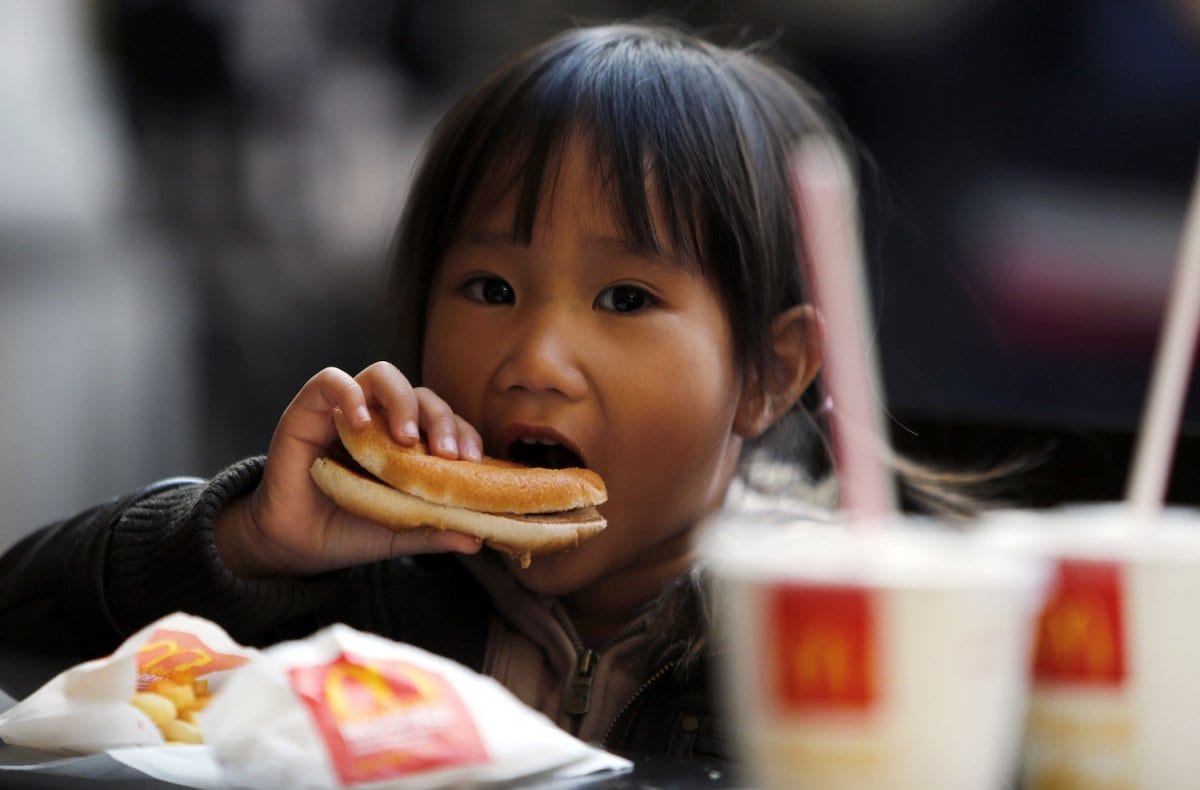
    McDonald’s has confirmed the sale of its China and Hong Kong operations to an investment consortium for US$2.08 billion (HK$16.14 billion).

    Under the deal, the purchasers, Citic Limited, Citic Capital and The Carlyle Group, will open 1500 new outlets.

    Phyllis Cheung, CEO of McDonald’s China, says the Beijing-based Citic companies will together hold a majority 52 per cent stake in the spun-off business and US-based Carlyle and McDonald’s will hold 28 per cent and 20 per cent, respectively. The consortium will run the business for 20 years.

    McDonald’s says it will now re-franchise all its 2600+ stores in Mainland China and Hong Kong to improve sales performances, part of a global effort to cut costs.

    Cheung told China Daily the new company will use its Citic’s strategic relationship with SF Express and Tencent Group Holdings (the owner of WeChat) to facilitate delivery, enhance restaurant convenience and boost its “retail digital leadership and menu innovation”.

    “China and Hong Kong represent an enormous growth opportunity for McDonald’s,” said McDonald’s CEO Steve Easterbrook in a statement confirming the deal, which has been an open secret for some weeks.

    “This new partnership will combine one of the world’s most powerful brands and our unparalleled quality standards with partners who have an unmatched understanding of the local markets and bring enhanced capabilities and new partnerships, all with a proven record of success,” he said.

    The deal will be finalised in mid-2017.

  • Changed deal as McDonald’s Corp sells

    Changed deal as McDonald’s Corp sells

    While finalising a buyer for its China and Hong Kong stores, McDonald’s Corp has decided to keep a “significant” minority stake.

    The US fast-food chain has picked a consortium led by private-equity firm Carlyle Group and Chinese conglomerate Citic Group to buy the stores.

    Its decision to retain the minority stake lowered the price tag from the $3 billion reportedly sought. An insider says McDonald’s decided to keep a slice of the business as it wants exposure to future growth in the world’s second-largest economy.

    Meantime, the company will also keep its stores in South Korea, which it previously also wanted to sell, Reuters reports.

    Early this year McDonald’s said it was reorganising its business in the region, seeking strategic partners in China, Hong Kong and South Korea as it switches to a less capital-intensive franchise model.

  • McDonald’s China deal done

    McDonald’s China deal done

    A private-equity led consortium has been chosen to buy 20-year franchise rights for McDonald’s China and Hong Kong, Reuters is reporting.

    The successful bidder is a consortium led by private-equity firm Carlyle Group and Chinese conglomerate Citic Group, who will pay up to US$3 billion, according to an unidentified source who spoke with Reuters.

    A contract will likely be signed before Christmas.

    As reported in September, consortiums led by private equity firms Carlyle Group and TPG Capital were shortlisted as the bidding process narrowed the field. TPG had teamed with Beijing Capital Agribusiness Group, McDonald’s current China partner.

    Another private equity group, Bain Capital, had already dropped out.

    McDonald’s had previously said it was looking for long-term partners rather than private equity firms, which typically cash out after a few years.

    The deal covers some 2400 restaurants in China and Hong Kong. The 20 year franchise rights come with a 10-year renewal option.

  • McDonald’s Korea sale collapses

    McDonald’s Korea sale collapses

    And in the simultaneous divestment process for the 20-year McDonald’s China franchise rights, TPG Capital has reportedly withdrawn leaving two rival private equity firms in the race – Bain Capital and Carlyle Group – competing with two Chinese companies previously reported to be in the negotiations: retailer Wumart Stores and Sanpower Group.

    With Maeil Dairies Industry Co dropping out of the running for McDonald’s Korea, that sale process seems at best stalled.

    McDonald’s, which directly manages about 400 stores in South Korea, has been looking for local partners to run the Korean outlets as franchise stores that pay annual commissions instead. The deal initially drew interests from several investors, including CJ and NHN Entertainment, but they have nixed their plans.

    Maeil Dairies had formed a consortium with Carlyle Group, but pulled out after failing to agree on terms of contract, industry sources familiar with the matter told the Yonhap news agency.

    “We can’t verify the specific details as McDonald’s headquarters office is in charge of the bidding process, but the sales process is still under way,” an official at McDonald’s Korea said, without elaborating on the deal.

    Meanwhile, in China, TPG’s withdrawal was confirmed overnight by unidentified sources close to the matter and reported by several news networks.

    Carlyle Group has partnered with Citic Group and Bain with GreenTree Hospitality, a hotel group.

    McDonald’s is seeking as much as $3 billion for the China rights, which come with a 10-year expansion option.

    There are about 2400 McDonald’s restaurants in China and Hong Kong and the US company wants its master franchisee to expand that network rapidly to compete with rival Yum! China’s expansion plans.

    The ongoing presence of private equity bidders in the process is surprising, because McDonald’s has made it clear it is seeking a long-term partner rather than private equity firms, which typically cash out after a few years.

  • New contenders for McDonald’s China and Hong Kong

    New contenders for McDonald’s China and Hong Kong

    Private equity firms Carlyle Group and TPG Capital have teamed up with two different Chinese state companies to bid for the McDonald’s China and Hong Kong franchise licences.

    The deal is said to be worth between US$2 billion and US$3 billion, reports the Straits Times.
    McDonald’s has previously said it is looking for long-term partners rather than private equity firms, which typically cash out after a few years.

    Carlyle is working with Chinese state conglomerate Citic Group and TPG has joined with Beijing Capital Agribusiness Group to place binding bids ahead of this month’s deadline. Beijing Capital Agribusiness is McDonald’s current China partner.

    Reuters says the US fast-food giant, hit by food-supply scandals in China, has hired Morgan Stanley to run the sale of about 2800 restaurants in China, Hong Kong and South Korea.

    The two private equity-backed groups are bidding only for China and Hong Kong outlets, going up against Beijing Tourism Group, China Cinda Asset Management and private Chinese technology and real-estate firm Sanpower Group.

    China and Hong Kong account for more than 85 per cent of the 2800 outlets on the block.
    Meanwhile, South Korea’s Maeil Dairy Industry Co says it is considering bidding for McDonald’s Korean outlets, which are expected to fetch about $268 million. Interest has already been shown by CJ Corp and NHN Entertainment Corp.

    Changing to a less capital-intensive franchise model, McDonald’s is offering a 20-year franchise to buyers, with a 10-year extension option.

  • Bidding disappoints McDonald’s Corporation

    Bidding disappoints McDonald’s Corporation

    McDonald’s Corporation says it is struggling to attract the calibre of bidders it envisioned when it put its China and Hong Kong franchise up for tender.

    The restaurant group is offering a 20-year master franchisees for its markets in China, Hong Kong and South Korea. Bidding has gone into its second round and predictions are the deal could be worth US$2 billion to $3 billion.

    Conditions include McDonald’s keeping management intact for two years, with a limitation on taking the franchise public. Other restrictions have reportedly discouraged many private-equity firms from participating in the bidding.

    Global buyout firms such as Bain Capital, Carlyle Group and TPG Capital have put up their hands with the aim of teaming up with some of the Chinese strategic bidders.

    Bidders asked to submit for the second round of the tender include dairy company Beijing Sanyuan Foods, Beijing Tourism Group, ChemChina, state-owned China Cinda Asset Management and Sanpower.

    McDonald’s share price has surged more than 23 per cent since CEO Steve Easterbrook launched a turnaround effort. The plan for Asia comprises one or more local partners taking over the China and Hong Kong franchise of 2800 stores for 20 years while paying royalties to the corporation.

    However, many investors are anxious following the food scandal that hit McDonald’s sales in 2014, reports BFN.

    Meanwhile, McDonald’s last year announced plans to sell its business in Taiwan plus a substantial ownership stake in Japan, but as yet investors have yet to be secured. “We are making solid progress as we look for long-term strategic partners with local relevance who have complementary skills and expertise,” says a company spokesperson.

  • Global Logistics Properties sets up US$7 billion China-focused fund

    Global Logistics Properties sets up US$7 billion China-focused fund

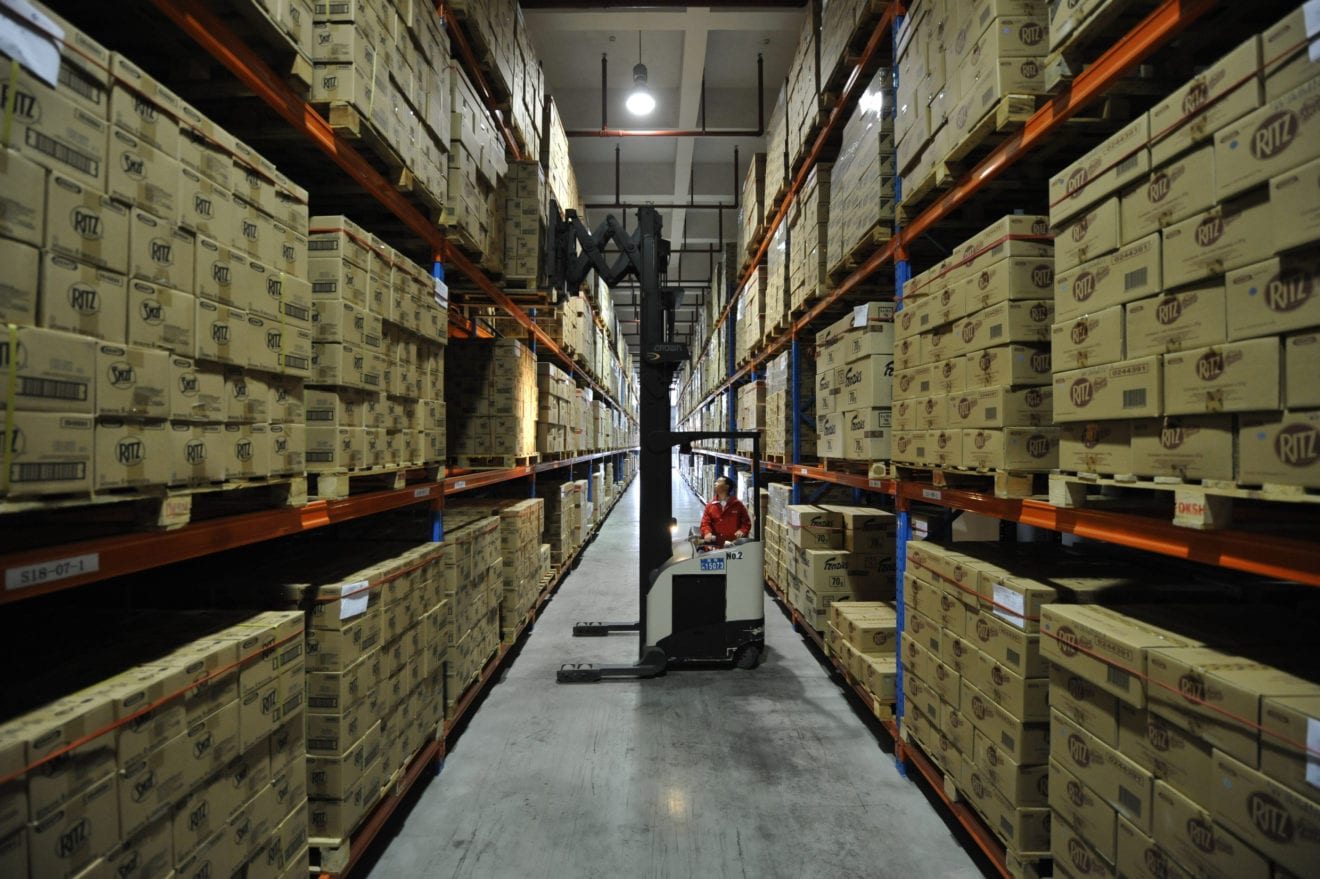
    Singapore-listed GLP has secured US$3.7 billion in equity commitments from seven unnamed investors, six of them national pension or sovereign wealth funds, for the CLF II fund. The largest China-focused logistics infrastructure fund so far, it will have an investment capacity of US$7 billion after adding leverage.

    “We continue to see strong demand from China,” GLP chief executive Ming Z. Mei said. “Despite the recent headlines about the GDP growth slowdown, 7 per cent is by definition a healthy rate anywhere in the world. Retail consumption, which is more relevant to logistics demand, maintains a double-digit growth rate.”

    Retail consumption, which is more relevant to logistics demand, maintains a double-digit growth rate

    Ming Z. Mei, GLP chief executive

    CLF II is an add-on to the US$3 billion CLF I, whose capital was fully allocated more than two years ahead of the planned investment horizon. GLP, created from a spin-off of US industrial property developer Prologis, dominates industrial property markets in China, Japan and Brazil. It is 36 per cent controlled by Singapore’s sovereign wealth fund GIC.

    The US$7 billion in funds will be channelled to develop 13 million square metres of warehouses in four years. GLP, the fund manager, holds a 56 per cent stake.

    China’s burgeoning industrial property market has lured investors from around the world – most recently Carlyle Group, Glodman Sachs and RRJ Capital – who believe a shifting economic pattern has created vast demand for modern warehouses, where courier firms, e-commerce outlets and third-party logistics service providers store, distribute and process goods.

    “Over the last few years, many people make noises about raising capital. Actually raising capital is not the hard part. Executing on the ground is,” Mei said. “As the market gets heated up, it requires deeper knowledge of logistics patterns.”

    As capital flocked in, oversupply had started to surface in certain locations, he said.

    “The market is no longer the way it used to be five, six years ago,” Mei said. “Supply and demand is more balanced now, with some markets oversupplied in the short term.”

    CLSA senior analyst Yew Kiang Wong said: “The big question mark here is demand. These investments are in anticipation of future demand. Third-party logistics companies represent large demand potential and are GLP’s bread and butter. But there’s also some cannibalisation from e-commerce companies which are now trying to develop their own warehouses, such as Alibaba. So there’s some risk in that respect.”

    GLP’s top tenants in China include e-commerce powerhouses JD.com and Amazon, and logistics firms Sinortans and Best Logistics.

    Mei said it was getting harder to source new land. Due to lower tax and employment contributions, local governments are less willing to release land for logistics use.

    In order to gain better access to land reserves and customers, GLP last year sold a 34 per cent stake in its China portfolio for US$2.5 billion to a consortium of state-owned investors including China Life Insurance, China Development Bank and Bank of China.