Retail News CRM

Tag: carmakers

  • European Carmakers Restart Production As Coronavirus Lockdowns Ease

    European Carmakers Restart Production As Coronavirus Lockdowns Ease

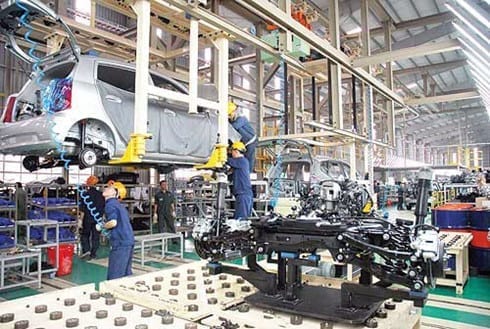
    Volkswagen will restart production at its Wolfsburg factory in Germany on Monday, the latest of a fleet of European carmakers to take advantage of eased coronavirus lockdown rules to resume manufacturing. VW, the world’s largest car manufacturer, is celebrating the reopening of its biggest plant, in Wolfsburg, by projecting a cartoon of a VW logo squashing coronaviruses.

    Encouraged by a fall in infection rates, Germany has allowed small retail stores to reopen, provided they adhere to strict distancing and hygiene rules. Now large corporations are following suit.

    BMW, Daimler and VW are banking on Germany’s ability to trace and contain the new coronavirus, and a healthcare system capable of extensive testing to identify possible carriers of the disease.

    This stands in stark contrast to the United States, where the head of the United Auto Workers union said on Thursday it was “too soon and too risky” to reopen auto plants in early May, citing insufficient coronavirus testing. German carmakers like BMW, Daimler and VW are banking on Germany’s ability to trace and contain the new coronavirus. European factories have changed work patterns, to incorporate more rigorous hygiene and cleaning intervals as well as more generous spacing between workers.

    As part of Volkswagen’s cartoon, the VW logo celebrates with a “thumbs-up” after defeating the virus.

    “On Monday, the German auto industry is back. We at Volkswagen have used the five-week pause to prepare ourselves for restarting production,” said VW works council chief Bernd Osterloh.

    BMW says it is cranking up engine manufacturing starting this Monday. BMW wants to reopen its British plant in Goodwood and its Spartanburg, South Carolina on May 4, followed by Dingolfing, Germany and San Luis Potosi in Mexico on May 11, depending on market demand, the carmaker said.

    Other plants in Leipzig, Regensburg, and Rosslyn South Africa will open after May 18, starting with a one-shift system the carmaker said. BMW’s factory in Shenyang, China has been producing since Feb. 17.

    Little relief for Europe’s carmakers Monday as BMW says sales have plunged and Peugeot-owner PSA says it’s raising new funds to help it see out the crisis.

    Workers need to wear masks and keep a distance to one another. The seating order on BMW factory buses has been changed, as has the process for entering and exiting the bus.

    Workers need to come to the plant already wearing their factory clothes, to avoid time stuck in changing rooms, and designated pathways in the plant have been altered to ensure there is “one-way” traffic only, BMW said.

    European factories have changed work patterns, to incorporate more rigorous hygiene and cleaning intervals

    Mercedes-Benz plants in Sindelfingen and Bremen are also making preparations to ramp up production.

    Unlike Italy and Spain, Germany never banned car production, though factories came to a standstill after authorities restricted the movement of people and ordered the closure of car dealerships, hitting demand.

    FiatChrysler will open its Sevel plant in central Italy on Monday, with plans to resume production at a rate of between 70%-80%.

    In France, Toyota this week restarted an assembly plant in Valenciennes and Renault began producing engines at its factory in Cleon, west of Paris. It will be followed by Renault’s Flins plant, west of Paris, where only 25% of the workforce is due to resume work.

    Sweden’s Volvo Cars reopened its Torslanda factory this week after overhauling its production processes.

    “The economy has come to a halt in Europe. A vaccine will take a long long time. It is important to restart in a safe way. Hopefully we can contribute to a normalization,” Volvo cars Chief Executive Hakan Samuelsson told Reuters.
  • Honda BR-V Facelift Unveiled In Indonesia

    Honda BR-V Facelift Unveiled In Indonesia

    Honda has revealed the updated BR-V at the 2019 Indonesia International Motor Show. The BR-V has not been doing great in terms of sales in India. The company has been selling close to 500 cars on an average and a facelift might just help in lifting those sales figures. However, we don’t yet know if this facelift will make to India yet as there’s no confirmation from the company. The BR-V does look prettier than before and the revised front grille and even the new bumper add to the design of the car. It looks bolder and the chrome that’s spread around the fog lamps, and even the slat on the front grille, adds to the premiumness of the BR-V.

    There’s a trapezoidal air dam and a silver scuff plate too. From what we can see, the facelift of the BR-V gets projector headlamps with L-shaped daytime running lights. The company has also tweaked the rear bumper slightly, so the BR-V still has the muscles and the character lines make sure that the car still oozes that SUV-ness. The BR-V facelift also gets 16-inch dual tone alloy wheels.

    There aren’t many changes made to the cabin of the BR-V as it retains the all-black dashboard and the touchscreen infotainment system. While the car launched the Indonesia is a 1.5-litre petrol, the one available in India is a 1.5-litre diesel as also a 1.5-litre petrol. With the new regulations coming into the country, carmakers are making sure that the line-up it brings to the market will be sustainable as also will boost its sales in the market. We wait to see what the company retains for the Indian market

  • Isuzu To Increase Prices Of The D-Max

    Isuzu To Increase Prices Of The D-Max

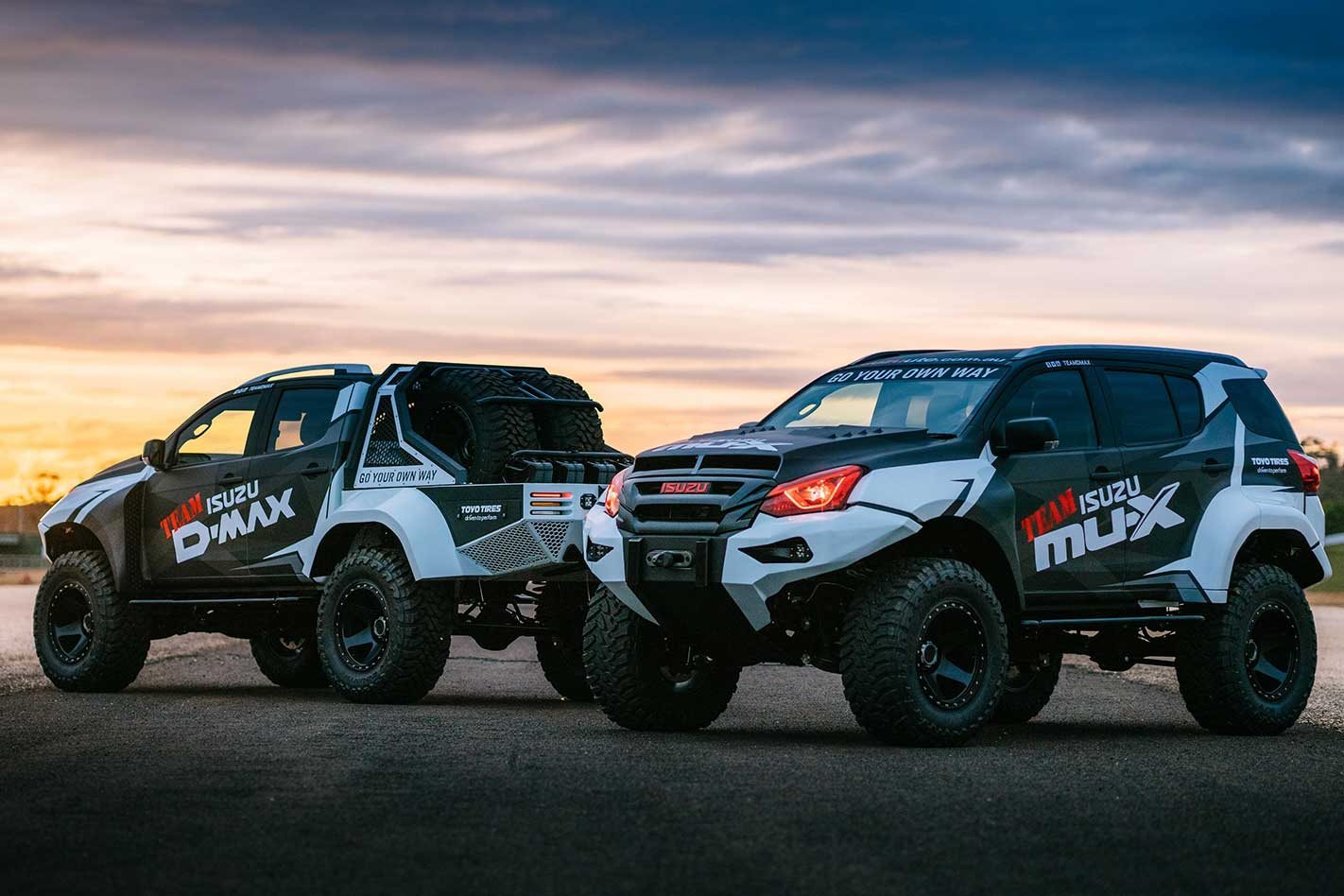
    Isuzu Motors India has announced to increase the prices of its commercial pick-up range- the D-Max Regular Cab and the D-Max S-Cab. The company has decided to increase the prices by 2 per cent which will be effective from April 1. Following a series of price hike by carmakers like Mahindra, Tata Motors, Renault and Nissan, even Isuzu has made the price hike announcement citing similar reasons. The company has cited rising input costs and distribution costs as the reason for the increase in prices.

    It has become a common practice for automakers to adjust prices of select models at the beginning of a financial year in a bid to sustain their margin. Isuzu has increased the prices of its commercial range which means only the D-Max pick-up trucks will get more expensive. The Isuzu D-Max V-Cross which is more of a lifestyle vehicle will see no change in the prices.

    The D-Max Regular Cab and the S-Cab are priced at ₹ 7.40 lakh and ₹ 8.89 Lakh, respectively (all prices ex-showroom, Delhi). Both the pick-up trucks are powered by a 2.5-litre, four-cylinder, turbocharged engine which churns out 78 bhp and 176 Nm of peak torque and is mated to a five-speed manual gearbox as standard.

  • Carmakers agree to update software of 600,000 diesel cars

    Carmakers agree to update software of 600,000 diesel cars

    Austria’s Transport Minister Joerg Leichtfried said on Tuesday he had agreed with carmakers to update the software of 600,000 diesel cars to reduce pollution following a similar deal struck in Germany after a large-scale emissions scandal.

    Leichtfried said the deal also included extra payments to buyers of more environmentally friendly cars. He said that for potential buyers of electric cars all available financial help could add up to around 10,000 euros ($11,750) per vehicle.

    The exact amount of incentives, which will come in addition to existing government sweeteners for e-car buyers, will be decided and paid by the carmakers depending on the model of the vehicle exchanged for an old car, the spokesman of Austrian car importers association Guenther Kerle said.

    The Transport Ministry said representatives of Mercedes-Benz, BMW, Kia, Ford, Renault, Porsche, Volkswagen, Audi, Seat, Skoda, Hyundai, Mitsubishi Motors and Opel attended the meeting.

    VW, Mercedes, Renault and possibly BMW will undertake the software updates, and the others will just take part in the incentives programme, the ministry said.

    German politicians and car bosses agreed earlier this month to overhaul engine software on 5.3 million diesel cars to try to repair the industry’s battered reputation.

    However, environmentalists said the plan – almost two years after Volkswagen admitted to cheating U.S. diesel emissions tests – was too little, too late.

    The Austrian software update, which would take until spring next year and which carmakers say can reduce toxic nitrogen oxides (NOx) emissions by 25-30 percent, is the same as in Germany, Kerle said.

    Critics of the German plan have said software updates would only result in a cut of about 2-3 percent of emissions.

    Leichtfried and Kerle said there was no agreement on hardware updates, but that this would be discussed at future meetings.