Tag: carriers

  • European carriers seek to block one key iPhone privacy feature

    European carriers seek to block one key iPhone privacy feature

    Last year Apple announced one new key privacy feature for iOS called Private Relay. This new feature is currently in beta in iOS 15, iPadOS 15, and macOS Monterey, and it is available only for users enrolled in the Apple beta software program.

    Even though the feature is still in beta, some major European telecom operators have signed an open letter to protest its future rollout. Carriers including Vodafone, Telefonica, and T-Mobile have voiced concerns that “Private Relay cuts off networks and servers from accessing vital network data and metadata” thus having “significant consequences in terms of undermining European digital sovereignty”.

    The open letter has raised more than a couple of eyebrows since its publication, mainly because Private Relay is a feature not much different from a regular VPN, and those have been around for ages. But let’s see what Private Relay is in more detail.

    When you browse the internet some information can be seen and recorded by your network provider – this includes DNS records, IP addresses, and more. Normally this information is used to build a profile of your browsing activity to be potentially used at a later date (usually for advertising purposes).

    The Private Relay feature is designed to hide all this information from third parties when you browse the net on your Apple device (you must use Safari browser for the feature to work, though). According to Apple, no single party – not even Apple itself – can see both your IP address and the sites that you’re visiting.

    This is done by using two internet relays – the first encrypts your DNS records (the sites you’re visiting), and the second generates a temporary IP address to connect you to the site you want to see. The first relay doesn’t have your DNS records, and the second relay doesn’t have your IP address.

    By using such a method Apple is able to effectively protect users’ privacy from third parties while still managing to offer a fast browsing experience. At the moment, you need to be enrolled in the Apple Beta Program to be able to use this feature. Follow the instructions on the site in order to participate. If you’re already a beta member, you can turn on Privacy Relay by following the next steps.

    How to turn on Private relay on iPhone, iPad, or iPod touch

    • Go to Settings
    • Tap on [your username]
    • Select iCloud
    • Then tap Private Relay.

    Private Relay is off by default in all beta releases so far but Apple has officially announced that when the feature reaches the final rollout phase it will be switched on by default. You can always turn off the Private Relay feature for specific networks by following the next steps: on you iPhone or iPad, go to Settings > Wi-Fi, then tap the More Info button next to the Wi-Fi network, then tap on “Turn off Private Relay.”

    The Telegraph says that telecom operators in the UK also support the open letter, with O2 filing official complaints to regulators in the country. Private Relay is highly dependent on local laws and regulations, and Apple has already restricted the availability of the feature.

    Private Relay won’t be offered in China, Belarus, Colombia, Egypt, Kazakhstan, Saudi Arabia, South Africa, Turkmenistan, Uganda, and the Philippines. It remains unclear whether any European countries will be added to this list.

  • Vietnam Airlines cleared for 12 repatriation flights from US

    Vietnam Airlines cleared for 12 repatriation flights from US

    National flag carrier Vietnam Airlines has received permission from U.S. authorities to conduct 12 repatriation flights this year, the first of which is scheduled for this month.

    The first flight will leave Hanoi on June 22 for Washington D.C. with a stop in Alaska before returning to Vietnam on June 24.

    The airline will use its biggest wide-body aircraft – the Boeing 787 or the Airbus A350 for these flights.

    It remains the only Vietnamese carrier to receive flight permits from the U.S. Transportation Security Administration (TSA), which is said to have stringent requirements. The examination process for the 12 flights took one month.

    Vietnam Airlines expects the flights to help evaluate the possibility of conducting regular flights between the two countries after the Covid-19 pandemic has been contained.

    Last year, it conducted 20 flights between Vietnam and the U.S. to serve Vietnamese citizens and U.S. experts, and to transport goods.

  • Carriers to account for 20% of digital content sales

    Carriers to account for 20% of digital content sales

    The proportion of worldwide digital content paid for via carrier billing is expected to nearly double over the next 5 years, said Juniper Research.

    The study, Direct Carrier Billing: Forecasts, Player Strategies & Emerging Opportunities 2019-2024, revealed that with most leading app stores and content providers now seeking to enable carrier billing as an option, consumer spend via the mechanism is expected to rise from $28 billion last year to nearly $90 billion by 2024.

    It claimed that carrier billing deployments would benefit both operators and content publishers; allowing the former to generate a revenue stream from content while enabling the latter to gain subscribers by using carrier marketing channels.

    Juniper claimed that the convenience and growing availability of carrier billing would see it increasingly used for content subscriptions as well as impulse purchases.

  • Carriers take M&A route to woo enterprise cloud business

    Carriers take M&A route to woo enterprise cloud business

    Revenue growth for carriers will be of critical importance in 2018, according to Craig Wigginton, global telecommunications sector leader for Deloitte.

    “Revenue yield on data services (revenue per bit consumed) continues to decline as consumers use more and more data, with static or declining monthly bills. Hence it is critical to identify rapid investment opportunities across the telecom portfolio—including 5G, IoT, and cross-industry partnerships (such as mHealth and mPayments), as well as a host of other growth opportunities,” Wigginton said.

    One avenue that many operators are pursuing with interest is enterprise cloud. Given that enterprises are a demanding lot,  operators are ramping up on infrastructure to support demand for cloud services.

    The Technology Business Research (TBR) 4Q17 Carrier Cloud Benchmark revealed a 15.7% year-to-year growth in 4Q17 is largely due to strategic acquisitions and alliances, investments in new data centers, and portfolio expansion in growth segments such as SaaS and hybrid cloud.

    Cloud revenue growth is being limited, however, due to pricing pressures and growing demand for solutions from webscale cloud providers such as Amazon Web Services (AWS). Carriers are cognizant of these trends and are becoming more focused on supporting hybrid and multi-cloud environments by launching new orchestration platforms.


    “All benchmarked companies sustained year-to-year Cloud as a Service revenue growth in 4Q17 as significant opportunity remains for carriers to target businesses seeking greater cost savings, scalability and efficiency by migrating traditional infrastructure and applications to the cloud,” said Steve Vachon, an analyst in TBR’s Telecom Practice.

    “Though cloud revenue growth is being limited by pricing pressures from webscale providers, carriers are relying on the value proposition and convenience offered by the bundling of their cloud solutions with other network offerings, such as SD-WAN, security and mobility services, to attract customers.”

    Operators are revamping their go-to-market strategies to counter disruption from webscale providers such as AWS, Google and Microsoft. Competition will intensify over the next several years as webscales seek to play a larger role within the European and Asian cloud markets by investing in additional data centers in those regions.

    Amid demand for solutions from webscales in the cloud market, most carriers are offering access to these companies to complement their existing cloud portfolios and to support hybrid and multi-cloud environments. Carriers are also integrating webscale cloud platforms to enhance adjacent portfolio segments such as Internet of Things and unified communications.

  • Millennials still like traditional carriers, says CSG study

    Millennials still like traditional carriers, says CSG study

    More than one third of millennials – young people reaching adulthood in the 21stcentury – interviewed in a four country survey say that in five years’ time they will choose mobile services offered through a traditional carrier.

    This is one of the findings of a research study on the digital opinions of almost 1000 millenials in Australia, Brazil, the UK and the US conducted by BSS solutions provider CSG International, and released at Mobile World Congress in Barcelona.

    According to the research, 35% of respondents say they expect they will choose traditional carriers in 2022, while a lesser 33% believe they will choose a non-traditional player such as Google, Amazon, or a company yet to be identified.

    “So much of the industry talk is about the move away from traditional carriers to new entrants,” says CSG’s Ian Watterson.

    “The research gives encouragement to carriers that there is loyalty there from millennials, which is something of a surprise.”

    Watterson said CSG had conducted the study because the telecoms industry was continually anticipating the digital consumption patterns and tastes of millennials, and yet there was a lack of detailed research on this.

    Asking respondents to look five years into the future also gave some indication on where the industry might be heading.

    In other findings, the industry move to personal assistants was validated, with 53% of respondents saying they would pay more for a mobile service which included an assistant.

    49% of millennials say they will want their mobile phone service to become a more intuitive personal assistant with the ability to anticipate needs and take actions, such as automatically checking-in a for a flight, 24-hours before flight time

    The survey also showed a clear willingness to give providers access to providers if that resulted in more personalised services.

    More than seven out of ten millennials said they were likely to provide their data in exchange for personalised recommendations on entertainment services and small conveniences.

    In good news for telco revenues, 59% of millennials are likely to spend more for a service specifically customized to their usage patterns across voice, data, entertainment and other personalized services.

  • Telstra, Ericsson achieve five-carrier LTE aggregation

    Telstra, Ericsson achieve five-carrier LTE aggregation

    Telstra and its technology supplier Ericsson claim to have achieved a world-first with a test that used four separate radio frequency spectrum bands with five carriers for very high long term evolution-advanced (LTE-A) bit rates.

    The trial at an undisclosed location used Telstra’s production network, with a Cobham Aeroflex TM500 4G network testing device as the receiver.

    It used 20 MHz each in the 700 MHz, 1800 MHz and 2100 MHz ranges, as well as two 20MHz bands in the 2600 MHz frequency range, for a total of 100MHz aggregated bandwidth.

    Five carriers and 100MHz are the maximum under the current LTE-A specification.

    Ericsson utilised high encoding rate 256 quadrature amplitude modulation (QAM) for the signal to provide better peak data speeds.

    Using the stateless user datagram protocol (UDP), the trial achived 950Mbps downlink speeds.

    With the more commonly used transmission control protocol (TCP), Ericsson and Telstra hit 843Mbps against the Speedtest website, the two telcos said. They declined to reveal the latency of the connection or the distance over the air for the signal.

    Telstra operations managing director of networks Mike Wright said that was “a widely accepted view that 4G should achieve peak speeds in the range of 1Gbps”.

    In reaching such high speeds, Wright said it could be argued that LTE technology was finally moving beyond the 4G barrier.

    “The demonstration of 1Gbps end to end capability shows the advanced state of these standards and our ability to rapidly bring them into commercial service in order to deliver increased capacity in our network to meet growing demand,” he said.

    “In addition to Telstra consumer customers, we are preparing our networks for growth in business use, as well as emerging technologies, which rely on our ability to deliver high capacity and low-latency solutions.”

    There are currently no handsets or devices capable of working with the combined five carrier LTE signal, and Telstra would not say when or whether it is planning on launching commercial services.

  • AirAsia, budget carrier set to soar in Asean open skies

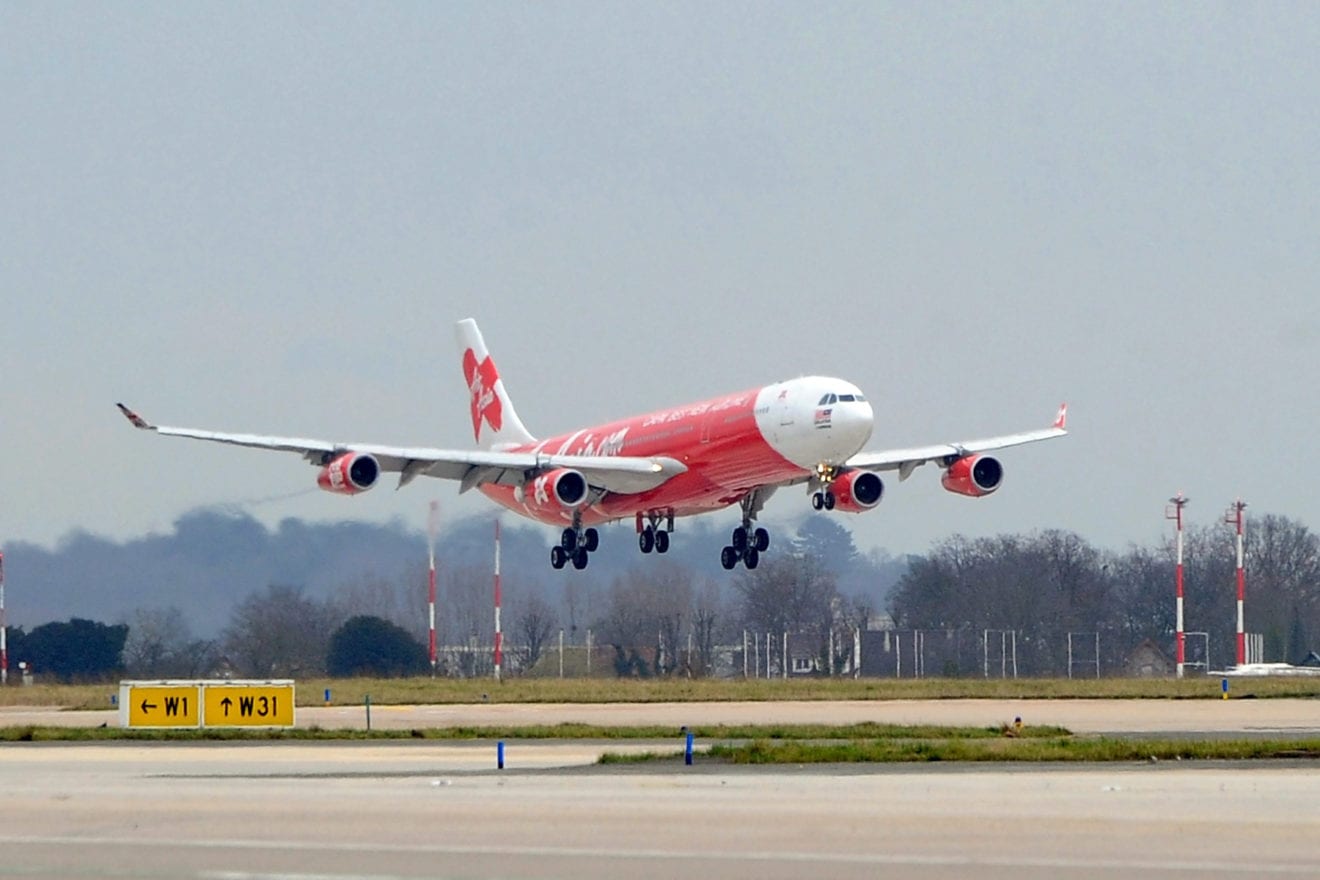
    AirAsia, budget carrier set to soar in Asean open skies

    Low-cost airline groups and manufacturers of smaller passenger aircraft will be among the main winners after Southeast Asia’s open skies agreement finally came into effect last month, although airport capacity constraints could limit the benefits.

    Ratification of the Association of Southeast Asian Nations (ASEAN) open skies agreements by Indonesia and Laos in April lifts restrictions on capacity and competition, allowing airlines to launch unlimited flights from their home to any point in the region subject to airport slot availability.

    Hubs like Singapore, which have a clear expansion plan, could gain from an increase in air services, as will budget carriers which are ideal for a region where no two points are more than a few hours apart, say analysts.

    “Airlines can launch any number of international flights as the market can support,” said Alan Tan, an aviation law professor at the National University of Singapore. “Travellers can thus look forward to more flights at more competitive prices.”

    Dominant low-cost airlines like Malaysia’s AirAsia , Indonesia’s Lion Air, and Philippine carrier Cebu Pacific plan to do just that.

    AirAsia, for example, wants more international flights from the Philippines and Indonesia, a spokeswoman said. This will help its affiliates, which have found it tough to break into the domestic market in those countries.

    “Improved connectivity in the region will be a boon to tourism and strengthen ASEAN as an economic union,” the spokeswoman said.

    Full service airlines like Thai Airways, Garuda Indonesia and Philippine Airlines, which have lost market share to budget carriers over the last decade, say they plan to use their long-haul network to connect passengers to their Southeast Asia services.

    The Singapore Airlines group has an additional advantage, given its ability to operate services using two premium brands and two low-fare subsidiaries, analysts say.

    The opening up of regional destinations can also boost manufacturers of 70-130 seater aircraft, like Brazil’s Embraer , Canada’s Bombardier and ATR, a joint venture between Airbus and Italy’s Finmeccanica.

    These planes can serve some routes more profitably than the larger Airbus A320s and Boeing 737s, they say.

    “Many of the region’s airlines are beginning to recognise the potential advantage of right-sizing and the ratification of ASEAN open skies, we feel, will simply accelerate the process,” said Mark Dunnachie, who leads Embraer’s aircraft sales in the Asia-Pacific.

    HUBS LIMIT GROWTH

    While there will clearly be winners from the open skies deal, the full gains could be limited by airport constraints.

    Bangkok’s Suvarnabhumi Airport, Ninoy Aquino International Airport in Manila, and Jakarta’s Soekarno-Hatta International Airport serve Southeast Asia’s three biggest domestic markets of Thailand, the Philippines and Indonesia respectively.

    All have reached full capacity with congestion and delays the norm, creating spillover problems for smaller airports in those countries as well.

    “Unlimited flight capacity is meaningless if airport and slot congestion remains unaddressed by governments,” Tan said.

    Singapore’s Changi Airport is the exception. Despite having relatively little domestic traffic, it has three terminals which can handle 66 million passengers and served 55 million in 2015, the most in Southeast Asia. Work has begun on two more terminals.

    Such long-term national aviation policies are needed due to the lengthy gestation period for terminals and runways, said Vinoop Goel, Asia Pacific director for airports at the International Air Transport Association (IATA), a global airline trade body.

    IATA estimates that ASEAN countries can add almost 25 million jobs and $298 billion to the region’s GDP by 2035 if they invest in aviation infrastructure. This is up from 11.6 million jobs and $144.4 billion to GDP in 2014.

    “Clearly, failing to tackle airport infrastructure will have an economic cost,” Goel said.