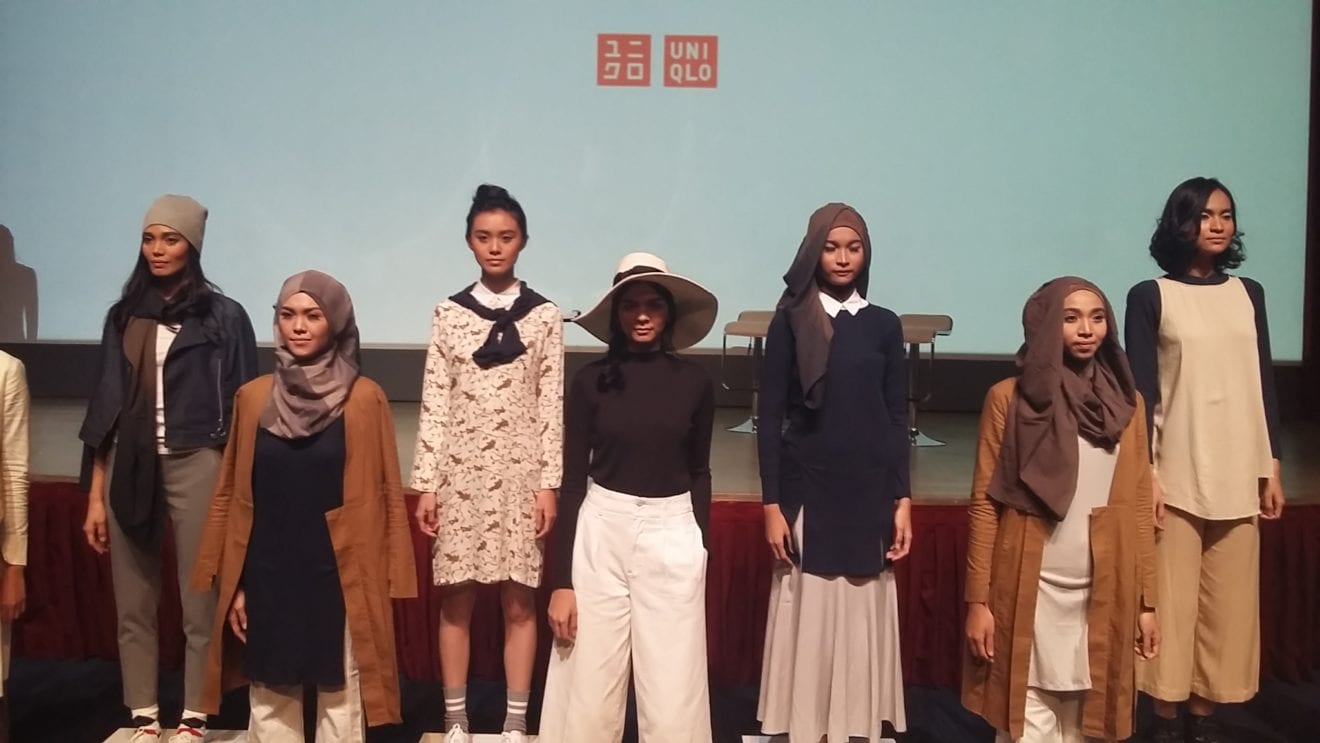
Amid the rows of blue jeans lining the walls of apparel chain Uniqlo are headscarves, baju kurung and kebaya — part of the Japanese retailer’s new section in Singapore that caters mainly to Muslim shoppers.
While these garments are usually sold at niche stores in Geylang Serai and Kampong Glam, they can now be found at Uniqlo stores in town or at neighborhood centers.
Uniqlo is one of the first mainstream retailers in Singapore to turn its focus to the Muslim market.
The current selection is the second collection launched by Uniqlo following a successful initial run last July. The range is carried at five of its outlets — 313@Somerset, Causeway Point, Jem, One KM and Suntec City Mall — and its website.
Another retailer that has jumped on the bandwagon is Singapore-based online store Zalora. Each month, it introduces about 50 to 60 products such as long and flowy tops and dresses under its “Zalia” collection. Managing director Dione Song described these as “trendy yet modest” pieces.
The budding trend here mirrors the global boom in Islamic fashion in recent years. Muslims across the globe spent SG$266 billion (US$188.77 billion) on clothing in 2013 — more than the combined spending in Japan and Italy on fashion. This is set to almost double to SG$484 billion by 2019.
Observers say the market potential in Singapore is large, with 15 percent of the resident population being Muslims. Also, unlike certain ethnic or cultural wear that is seasonal, such as the cheongsam, this clothing is everyday wear for a substantial proportion of Muslim women.
Uniqlo said that it is discussing expansion plans for upcoming fashion seasons. It “acknowledges that there is a need among the markets where we are present for stylish and comfortable modest wear.”
The collection is also retailing in Malaysia, Indonesia and Thailand.
There is yet to be a major international clothing brand for Muslim wear, but over the past two years brands such as DKNY, Tommy Hilfiger, Zara and Mango have started to offer Muslim-oriented collections in their Middle Eastern stores.
Major retailers here like H&M, Topshop, Topman and Dorothy Perkins say they have not rolled out any cultural or religious products.
Although many here have welcomed the greater diversity of choice for consumers, a handful of netizens have voiced their displeasure about Uniqlo’s sale of religious and ethnic wear.
Associate professor Ang Swee Hoon of the National University of Singapore’s business school said a secular chain offering religious wear could raise eyebrows.
But Ustaz Firdaus Yahya, manager of an Islamic learning center, said it “reflects their acknowledgement of diversity, and those who do not welcome it may be ignorant or have their own personal bias.”