Tag: CB Bank

  • CB Bank pursues self-service banking in Myanmar

    CB Bank pursues self-service banking in Myanmar

    Cash remains the primary payment method in many parts of Southeast Asia. In Myanmar, competition to provide cash services is intense.

    Vikram Kumar, country manager for Myanmar at the International Finance Corporation, the private arm of the World Bank Group, recently told that domestic banks in Myanmar are under pressure “to prepare themselves to cope with the demands placed on them by the expected pace of economic growth. As a consequence, most banks have upgraded or are in the process of upgrading their technology capacity.”

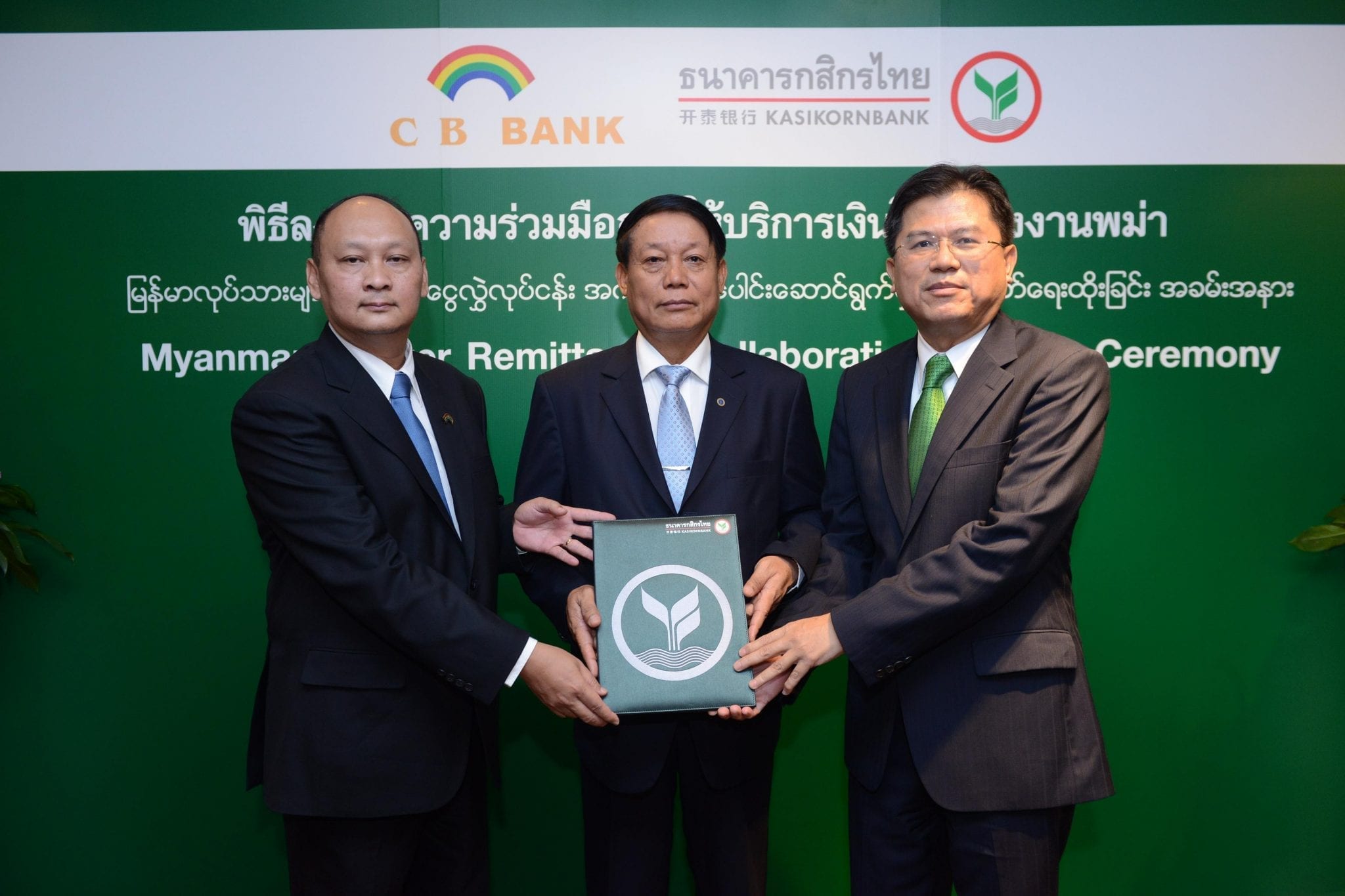
    Myanmar’s Co-Operative Bank Limited (CB Bank) is the latest to upgrade its banking infrastructure. Sometime earlier the bank upgraded all its existing ATMs to more secure EMV chip card technology and obtain EMV certification with both VISA and MasterCard.

    More recently, the bank ordered 500 new ATMs and cash recyclers as part of a more extensive contract for systems, software and services to expand its self-service cash offerings beyond the country’s main commercial hub Yangon.

    Diebold Nixdorf is also assisting CB Bank with the implementation of cardless cash withdrawals at ATMs. Bank customers will be able to use their mobile devices to generate a one-time PIN to activate a withdrawal at an ATM either for themselves or for a third party without requiring a bankcard.

    The technology provides an innovative person-to-person payment service to consumers especially in developing markets, and underscores Diebold Nixdorf’s commitment to drive connected commerce and help bridge the digital and physical worlds.

    CB Bank has grander ambitions beyond just upgrading its infrastructure. According to U Kyaw Lynn, CEO and Executive Vice Chairman, at CB Bank, the bank aims to become one of Myanmar’s top banks offering secure, innovative and convenient cash services across our branch, online and mobile channels.

    The rollout will mean a total of 1,000 advanced cash systems across a network of 180 CB Bank branches. Completion is expected to be by the end of 2017.
  • CB Bank in Myanmar rolls out cardless cash withdrawal and P2P payment services

    CB Bank in Myanmar rolls out cardless cash withdrawal and P2P payment services

    Recently, Diebold Nixdorf helped CB Bank migrate all its ATMs to more secure EMV chip card technology and obtain EMV certification with both VISA and MasterCard. EMV is a technical standard for smart payment cards introduced by Europay, Mastercard and VISA.

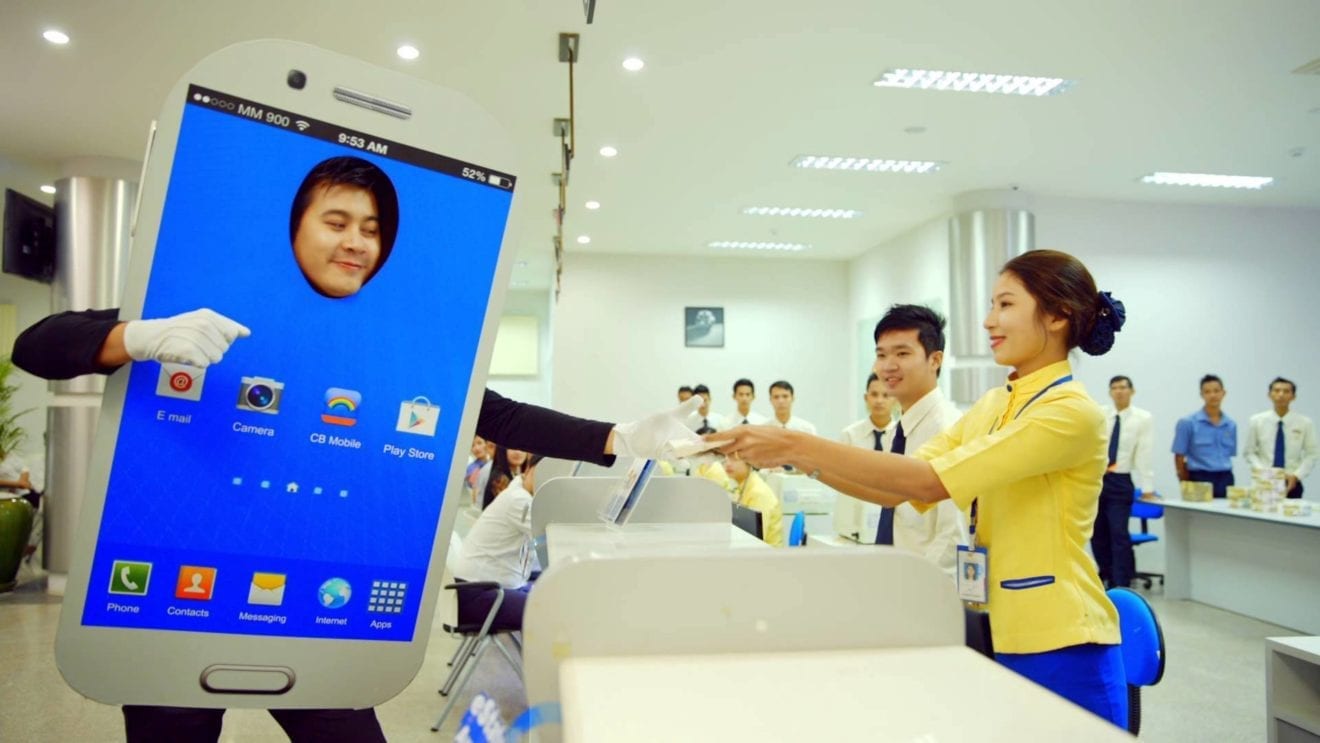
    Diebold Nixdorf is also assisting CB Bank with the implementation of cardless cash withdrawals at ATMs. The solution allows bank customers to use their mobile devices to generate a one-time PIN to activate a withdrawal at an ATM either for themselves or for a third party without requiring a bankcard. The technology provides an innovative person-to-person payment service to consumers especially in developing markets, and underscores Diebold Nixdorf’s commitment to drive connected commerce and help bridge the digital and physical worlds.

    “Diebold Nixdorf was awarded the contract due to its superior product quality, flexible software and ability to offer field service for both hardware and software within the country,” said U Kyaw Lynn, CEO and Executive Vice Chairman, at CB Bank. “With the help of their advanced technology and services provided, we aim to become one of Myanmar’s top banks offering secure, innovative and convenient cash services across our branch, online and mobile channels.”

    Diebold Nixdorf’s Myanmar partner, Kaytumadi iSolutions, will localize product features and begin installing the new systems at the start of next year. The rollout is scheduled for completion by the end of 2017.

    Diebold Nixdorf will service the entire 1,000-strong fleet of advanced cash systems in CB Bank’s network of 180 branches.

    “Together with our local partner, we are enabling CB Bank to extend the reach of its self-service offerings and win a greater share of Myanmar’s growing market for cash services,” said Neil Emerson, Senior Vice President & Managing Director, Asia Pacific, at Diebold Nixdorf.

    Demand for cash is strong in Myanmar. Cash is the main mode of payment in the southeastern Asia country of more than 53 million people. Competition to provide cash services is also fierce. CB Bank already operates one of the largest ATM networks in the country and aims to expand its market position even further by doubling the number of terminals in its self-service network.

    CB Bank benefits from its IT partner’s wealth of local experience in Myanmar. Diebold Nixdorf, which has been delivering solutions to CB Bank since 2012, is a major supplier of cash-handling technology and services to all major banks in the country and across the Asia-Pacific region.

  • Avid Myanmar Travelers Can Now Pay with Mastercard and CB Bank Credit

    Avid Myanmar Travelers Can Now Pay with Mastercard and CB Bank Credit

    As Myanmar continues to see positive economic growth projections[1], its people are increasingly seeking overseas destinations. The latest Mastercard research revealed that Myanmar is the fastest growing outbound travel market in Asia Pacific with a growth projection of 10.6% for the next five years.

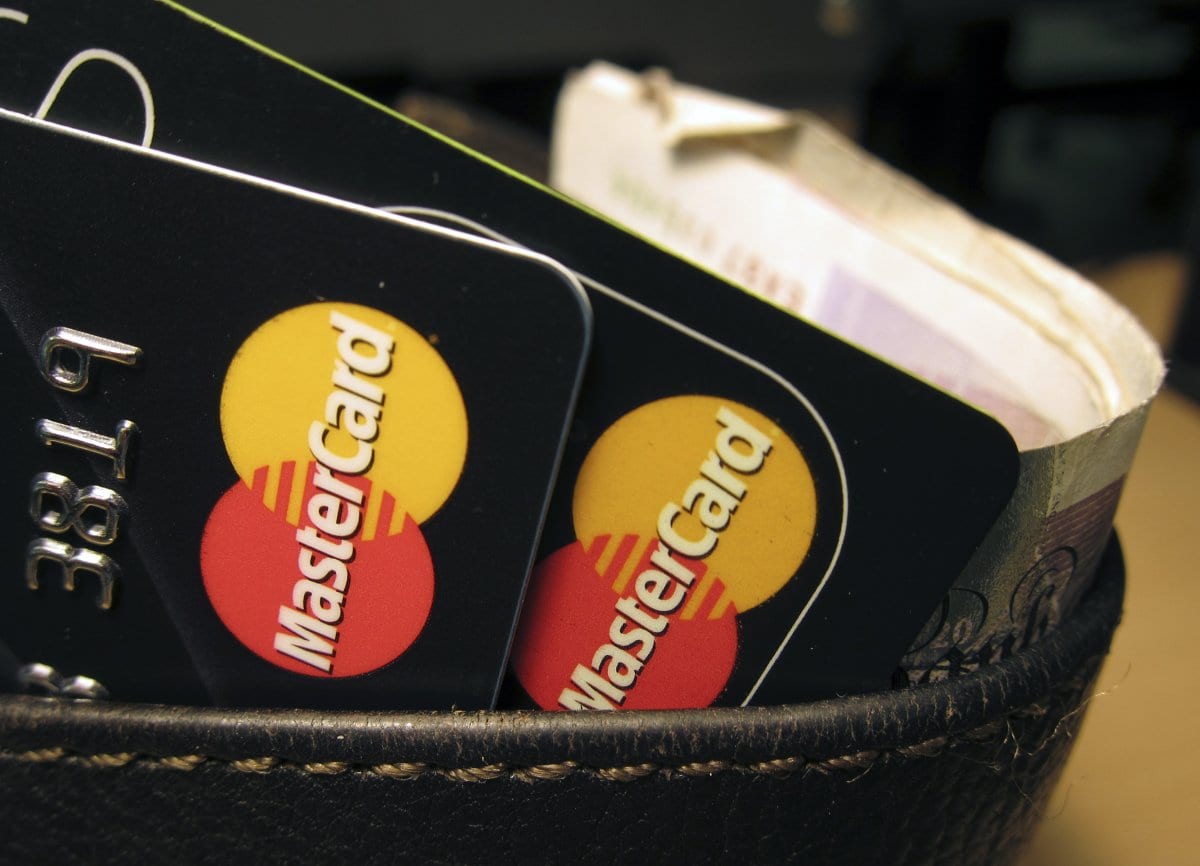
    In light of this, Mastercard has once again partnered Co-operative Bank Ltd (CB Bank) to launch Classic, Gold and Platinum Mastercard cards, which will be made available to Myanmar residents and citizens when traveling abroad. 

    Mr. Kyaw Lynn, Executive Vice Chairman and CEO of CB Bank said: “As more Myanmar residents and citizens travel abroad, it is crucial to have convenient and secure access to their funds wherever they are. A cashless society is an important goal for CB Bank. Although still a work in progress, we are working hard with like-minded partners such as Mastercard to achieve that goal by expanding the payment options, increasing usage of ATMs, POS terminals and enhancing e-commerce capabilities. For starters, we are already seeing a great shift from cash to electronic payments. And on average, there are 9,000 transactions being made monthly via electronic payment at the point-of-sale.”

    Mr. Antonio Corro, country manager, Thailand and Myanmar, Mastercard, said: “For a country that had only opened its doors not too long ago, Myanmar’s economic and outbound travel projections are very encouraging. To meet the increasing demands for travel, we have deepened our partnership with CB Bank to launch our first credit card in the country. This signifies a big step towards the greater development of the electronic payments infrastructure and it also means that consumers are able to make more secure and convenient payments for their purchases when travelling abroad.” 

    Supporting Myanmar in Its Journey to Greater Inclusion

    Since entering the market in 2012, Mastercard has strived to assist Myanmar in its nascent journey towards financial inclusion. In October 2013, Mastercard and CB Bank had launched Myanmar’s first ever payment product, a prepaid travel card for locals called the CB Bank EASI Travel Prepaid Mastercard card, which has seen a healthy take-up rate. Approximately seventy new card applications on average are received every day, according to Mr. Kyaw Lynn. The latest of their efforts include the launch of Mastercard’s first contactless card in Myanmar. 

    With less than 10% of the population holding bank accounts, there is still so much that needs to be done to bring more citizens into the financial system and it is widely acknowledged that the journey to financial inclusion in Myanmar will not be a smooth one.

    In a report by The Fletcher School, Tufts University – conducted with the support of Mastercard and the Myanmar Development Resource Institute’s Center for Economic and Social Development (MDRI-CESD) – one of six key findings point to trust playing a key role in increasing adoption of financial services.

    This means there a stronger impetus and opportunity for Mastercard to assist in rebuilding the financial sector and bringing greater financial access to the population. 

    “Building consumer trust in electronic payments is crucial. In line with our financial inclusion strategy in Myanmar, we will continue to provide support in educating locals on the benefits of electronic payments and increasing access and acceptance to financial services and infrastructure,” Mr. Corro added. 

    The number of ATMs in Myanmar which accept Mastercard has been growing at an astounding rate, from over 140 ATMs in 2013 to almost 1,800 ATMs in just three years, marking a near 13-fold increase. The number of point-of-sale (POS) acceptance terminals grew from 72 to over 3,800 in the same period, which signify a strong adoption of cashless payments. At present, more than 3,200 restaurants, retail outlets and hotels in Myanmar accept payment cards.

  • MasterCard Myanmar issues travel card

    MasterCard Myanmar issues travel card

    MasterCard Myanmar and CB Bank have announced their first payment product, a prepaid travel card.

    The CB Bank Easi Travel Prepaid MasterCard is reloadable and is designed for Myanmar residents travelling outside of the country. It is the first such card product for Myanmar and is part of its evolving electronic payments ecosystem.

    CB Bank executive vice-chairman/CEO Kyaw Lynn says the bank continues to pioneer the electronic payments sector in Myanmar.

    Mastercard Southeast Asia president Matthew Driver says that part of the allure of a frontier market like Myanmar is in seeing the vital steps of financial inclusion play out. “By far, most people in Myanmar remain unbanked and don’t have access to financial services, but the payments infrastructure is rapidly developing with ATMs, POS terminals and now prepaid cards.”

    It is expected that more than 500 restaurants, retail outlets and hotels in Myanmar will be accepting payment cards by the end of the year.

    Overall consumer optimism is high in Myanmar (96 points on the latest MasterCard Index of Consumer Confidence). A MasterCard survey has shown that nearly two-thirds of people who have travelled abroad intend to do so again within the next 12 months.

  • Mastercard launches credit card in Myanmar

    Mastercard launches credit card in Myanmar

    MasterCard and CB Bank have announced their first payment product in the country – a prepaid travel card for locals called the CB Bank EASI Travel Prepaid MasterCard card.

    The reloadable prepaid card will be made available to Myanmar residents for when they travel outside of the country. It is the first such card product to be launched in Myanmar and is yet another stage in the evolution of the electronic payments ecosystem.

    MasterCard has been working very closely to enable CB Bank (which it licensed in September last year) to roll out its very first prepaid MasterCard card. CB Bank is already certified and has undergone full system testing as part of its efforts to be connected to the global payments network.

    Mr. Kyaw Lynn, Executive Vice Chairman and CEO of CB Bank said, “CB Bank continues to be first in the electronic payments sector in Myanmar and we are pleased to be able to collaborate with MasterCard to launch this travel prepaid card. Just as our country is opening up to the world, at the same time, the world is opening up to our countrymen and we’re seeing more and more locals travel abroad. We are so glad to introduce this travel prepaid MasterCard card to help make their travels safe and hassle-free without the worries of carrying large amounts of cash.”

    According to Matthew Driver, president, Southeast Asia, MasterCard, “Part of the allure of operating in such a frontier market is in seeing the vital steps of financial inclusion play out: a vast majority of people in Myanmar remain unbanked and don’t have access to financial services. But the payments infrastructure is rapidly developing – from the rollout of ATMs, point-of-sale terminals, and now the introduction of prepaid cards.”

    “This presents an alternative option for the growing number of locals who’ve had to carry wads of cash when they leave the country for business or leisure travel. It offers them a safe and secure payment method while abroad.”

    Overall consumer optimism is at an extreme high in Myanmar (96.0 Index points according to the latest MasterCard IndexTM of Consumer Confidence). According to the MasterCard survey of Consumer Purchasing Priorities, nearly two-thirds of people who have traveled abroad intend to do so again within the next 12 months, making the introduction of a prepaid travel card timely for the market.

    “Part of our financial inclusion strategy in Myanmar is to educate the local population about the value of electronic payments – we would like to help them understand the benefits of doing away with cash,” Driver added.

    The launch of a new prepaid card marks another vital step forward in the country’s reform of its banking and financial system. MasterCard was the first international payments network to issue a license to a Myanmar bank in September last year, paving the way international payment cards to be accepted in the country for the first time. In November, MasterCard and Co-operative Bank Ltd (CB Bank) teamed up to launch the first ATM transaction at one of the bank’s Yangon ATMs.

    It is expected that more than 500 restaurants, retail outlets and hotels in Myanmar will be accepting payment cards by the end of the year, following the rollout of Point-of-Sale (POS) terminals in March this year with CB Bank.