
Tag: CBRE Research

  • Probe of millennial consumers’ shopping preferences

    Probe of millennial consumers’ shopping preferences

    While Asia Pacific millennial consumers shop online, only physical stores and particularly shopping centres give them the experiences and social elements they want, says a new report.

    Millennials shop online an average of 4.7 days a month, but visit shopping centres an average of three days a month for other reasons apart from buying, such as dining out, banking and visiting exhibitions.

    However, slower economic growth and a desire to save money for buying a home may inhibit spending on leisure activities, suggests research by commercial property adviser CBRE Research. Its inaugural Asia Pacific Millennials: Shaping the Future of Real Estate report says this emerging “superclass” demographic actually has similar long-term lifestyle priorities with other generations despite being more likely to spend their time and money on leisure activities and experiences like travel, entertainment and dining than previous generations.

    “In order to leverage on millennials’ spending habits, retailers are recommended to increase the experience-based element of their offering and focus on providing an environment for visitors to socialise and relax,” says CBRE Asia Pacific head of research Dr Henry Chin.

    As well as increasing F&B, cinema and entertainment elements in their shopping malls, retail landlords should consider organising more live events to attract millennials, he says, warning that they should also carefully manage their tenant mix to ensure they still cater to other generations.

    The millennials report is based on a global survey by CBRE Research last December. It covered 13,000 people between 22 and 29 years old to examine how they live, work and play, and what this means for real estate.

    For the Asia Pacific region, the report involved 5000 respondents evenly representing Australia, China, Hong Kong, India and Japan. The survey also explored differences between millennials of different gender, employment status, marital status, education and income.

    Inaccurate perceptions

    It found that perceptions of millennials as preferring informal employment, changing jobs regularly and avoiding financial responsibility are inaccurate in the region. Consistent with previous generations, most millennials were found to be spending prudently in order to save money to buy a home.

    While this demographic aspires to carve out a stable career, the report finds that it does take into account factors such as office design when choosing an employer, with 71 per cent of respondents willing to give up other benefits for a better office environment.

    Millennials are also increasingly demanding the freedom to work anywhere, anytime—more than 60 per cent in Asia Pacific want flexibility and mobility for their career.

    Job loyalty is also stronger than perceived, with two-thirds expecting to work for the same company, or for a small number of companies, throughout their career.

    Almost two-thirds of the region’s millennials still live with their family because of both cultural practices and financial factors. In most major markets surveyed, the high cost of residential property is providing challenges for millennials.

    While 65 per cent of respondents said they plan to buy property in the future, 63 per cent said they are forced into renting as they are unable to buy.

    “The millennial demographic in Asia Pacific is a game-changer for businesses across the board. Their life, work and play priorities and habits will shape economics, redefine opinions on workplace design and functionality, and drive new attitudes toward consumption and experience for the foreseeable future, ” says CBRE Asia Pacific CEO Steve Swerdlow.

  • CBRE Research urges landlords to engage

    CBRE Research urges landlords to engage

    Online and offline retailing in Southeast Asia is expected to merge further, according to a new study by CBRE Research Singapore.

    Its report It’s All About Place-making urges landlords to play their part to stay ahead in a fast-changing retail landscape where consumers transit seamlessly from physical to digital platforms.

    CBRE Research projects that nearly 4 million sqm of city retail stock across Malaysia, Singapore, Thailand and Vietnam will be completed in the next three to five years. CBRE studied retail stock in Bangkok, Hanoi, Ho Chi Minh City, Jakarta, Kuala Lumpur and Singapore.

    “Some retail developments across these six cities have had to shut down in the face of high vacancy rates and low footfall as they failed to capture consumers and retain tenants,” says the report. “One suggestion is for landlords to acquire eCommerce platforms or set up logistics networks to give consumers the fully integrated omnichannel experience.”

    Established shopping centres with online platforms that provide “click-and-collect” or “store-to-door” services give consumers a higher sense of reliability and earn trust as well, says the report.

    “Both physical and online-only retailers are also more inclined to expand their footprint in these shopping centres in their bid to incorporate an omnichannel strategy.”

    Wave of change

    Combining both online and offline channels is one of five strategies CBRE Research recommends to landlords as Southeast Asian economies cope with structural shifts in the face of disruptive technologies.

    This wave of change has affected retail sales across the markets, with CBRE Research using the PLACE acronym…

    Place-making: Conceptualising shopping developments with the consumer’s experience at the forefront. A good social experience makes a strong positive association on the consumer and is tougher to replicate on the digital platform, says the company.

    Leveraging technology: Landlords should take advantage of the high internet and smartphone penetration among SEA consumers to improve the offline shopping experience. Technology can provide consumer insights and interaction while helping boost foot traffic and sales.

    Actively engaging: Forging personal connections with consumers is imperative for landlords to stand out from the competition and gain loyalty. Tenant engagement, and landlords need to find ways to show support.

    Combining channels: Landlords can break down the silos between online and offline by helping tenants incorporate an omnichannel strategy through vertical and horizontal integration, such as acquiring an eCommerce platform or setting up a logistics network to fulfil delivery needs.

    Engaging digital tenants: Landlords should seek to lease space to up-and-coming eCommerce retailers as they are likely to be more savvy about digital marketing and in tune with modern consumer needs.

    New needs

    “The onus of ensuring that stores in shopping centres remain an important and relevant touch point for consumers should not lie with retailers solely,” says CBRE Research Singapore/Southeast Asia head Desmond Sim. “The roles of the asset manager, landlord and shopping centre need to evolve to cater to the new needs of retailers and consumers amid stiff competition.

    “This task is all the more urgent as the market is anticipating a surge in internet use among developing countries, particularly Indonesia and Vietnam where mobile phone use has the greatest potential to increase.”

    Store-based retailing will stay the key point of purchase among SEA consumers in the next five to 10 years and account for at least 90 per cent of total sales value, says CBRE Research. However, landlords will face increasing pressure to make every visit to the shopping mall a memorable experience.

    With its headquarters in Los Angeles, CBRE Group is a commercial real-estate services and investment firm with more than 400 offices worldwide.

  • Singapore retail rents: tenants’ market

    Singapore retail rents: tenants’ market

    With continuing restructuring in the Singapore retail sector it is a tenants’ market, but while rents are generally under pressure, well-located, well-managed suburban malls are in a strong position.

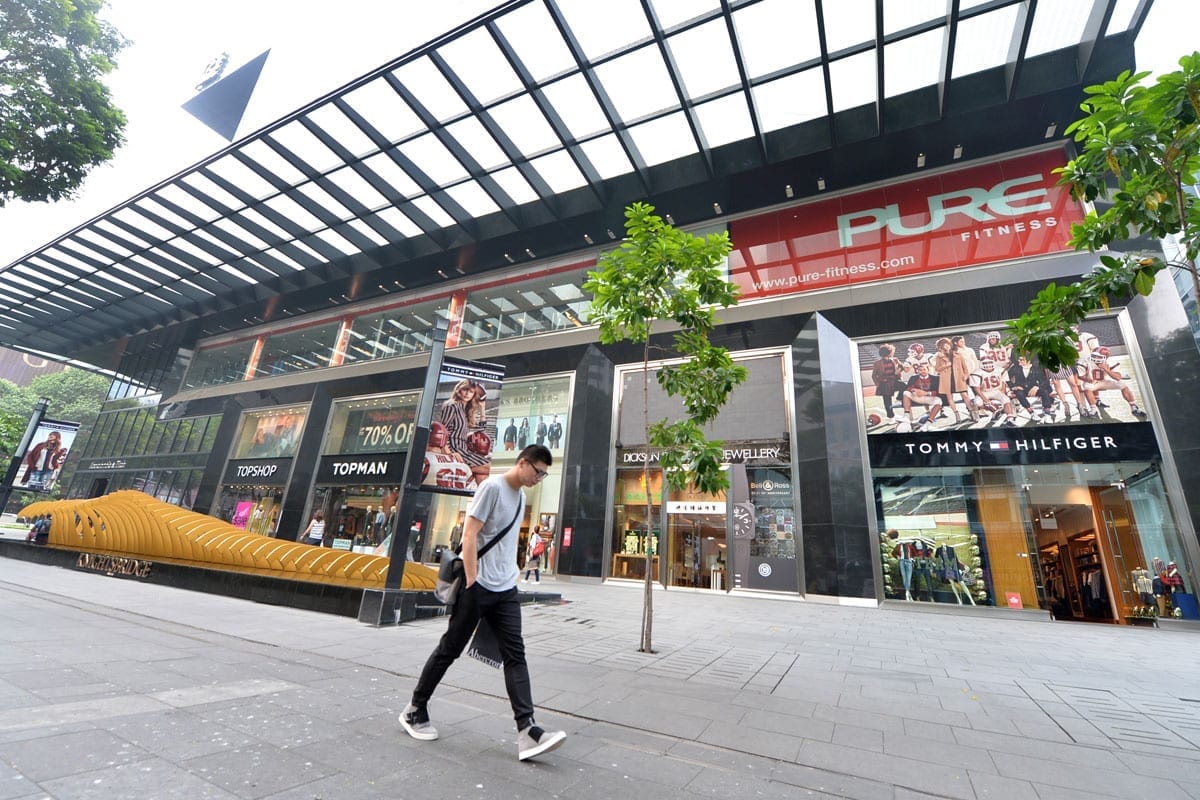
    Meanwhile, average prime retail rents in Orchard Rd and suburban areas continued to fall in the second quarter of this year, reports CBRE.

    “Our research shows a clear reduction of rentals, and it would not be accurate to report otherwise,” says CBRE SIngapore/Southeast Asia head of research Desmond Sim.

    Average prime Orchard Rd rents stand at S$32.50 (US$24) psf/mth, down 1.1 per cent from the first quarter – the sixth consecutive quarter of decline for the precinct.

    Average prime rent for the suburban submarket fell 0.7 per cent to $29.45 psf/mth from the first quarter. There rents began to fall only in the last quarter of last year.

    “There are still sparks of activity, particularly around well-located and well-managed suburban malls that have a strong positioning tilted toward families and the immediate catchment,” says Sim, citing Compass One, which has reported 90 per cent precommitment. “With the positive momentum continuing, I would not be surprised if Compass One achieves full occupancy ahead of its opening.”

    Compass One is about to reopen after an asset-enhancement exercise. It has seen a strong showing from returning tenants, attracted to its concept of a family mall.

    Malls near transport nodes with a good tenant mix and the guarantee of a day and night catchment will continue to be more resilient in terms of rents and occupancy under the current market climate, says the CBRE report.

    While general vacancy has been rising and more retail stock can be expected, the availability of prime space in good locations is scarce. This has deterred the expansion and entry of some retail brands as location, visibility and high foot-fall have become even more important factors than ever because of intense competition within the market.

    With no foreseeable new supply in Orchard Rd and Marina Centre in the next few years, at least until 2019, this should provide some support for prime rents in Orchard Rd for the next half of the year, says the report.

    F&B brands continued to be active in Singapore this quarter. Most new foreign cafes and restaurants that have opened or leased space in Singapore originate from the Asia Pacific region, such as Honolulu Cafe and the food-hall concept Itadakimasu by Parco.

    Cosmetics, streetwear and footwear are seeing signs of more activity, and flagship stores are also trending in tandem with the growth of eCommerce.

    “The market is particularly challenged by a mismatch of demand and supply at this point in the cycle. While most of the limits to expansion stem from consolidation activity, some retailers are constrained by the shortage of quality space,” says Sim.