Tag: cebu pacific

  • Cebu Pacific offers cross-bookings to Maldives, Berlin and Athens

    Cebu Pacific offers cross-bookings to Maldives, Berlin and Athens

    Cebu Pacific and 7 other allied low-cost carriers relaunched their website on Wednesday, with the Filipino airline offering a seat sale to Athens, Berlin and Male in the Maldives.

    The Value Alliance website offers cross-sales among its members including Cebu Pacific, Cebgo, Jeju Air, Nok Air, NokScoot, Vanilla Air, Tigerair Australia, Scoot and Tigerair Singapore, the airline group said in a joint statement with the Philippines’ largest airline.

    Passengers who book through the website get re-accommodation in case of flight cancellations. Those affected by flight disruptions can also book hotels through the website for up to a certain amount, according to a joint statement by Cebu Pacific and the airline group.

    “This will not only give our customers access to the best deals, but will also allow them to enjoy ease of booking paired with seamless connectivity,” said Value Alliance chairman and Cebu Pacific chief executive adviser Mike Szucs.

    A special seat sale for Athens, Berlin and Male for as low as P7,472 will run from Wednesday until Thursday, according to the statement.

    A check on the Cebu Pacific website showed that flights to the three destinations could be booked without leaving the portal. For flights to Athens and Male, passengers need to fly to Singapore where they will take a connecting flight on Scoot.

    Value Alliance is the fourth largest airline alliance in the world according to the joint statement, with a combined fleet of 180 aircraft and 50 million annual passengers.
  • Cebu Pacific Air deepens Japan presence with first branch office

    Cebu Pacific Air deepens Japan presence with first branch office

    Cebu Pacific Air has opened its first branch office in Japan to serve as the hub for all its activities and business transactions in the country.

    Heading the office in Chou-ku Tokyo is Tomohiko Matsumoto, who was appointed country manager for Japan in December 2017. A veteran in the travel and aviation industries with over 25 years’ experience, he served as country manager and international air cargo manager for Qatar Airways and more recently, as sales and marketing manager for Japan for Tigerair Taiwan.

    The airline’s first Japan branch office has an address in Chuo-ku, Tokyo

    Mike Szcus, chief executive adviser at Cebu Pacific Air, commented that the airline’s new branch office in Japan will bring the airline into the “next stage of growth” in the market, which is today “one of the most important across our network”.

    “In 2017, we flew over 435,000 passengers between the Philippines and Japan. Compared to the (size of the Japan outbound market), there is much room to grow,” noted Alex Reyes, vice president for cargo at Cebu Pacific Air.

    Now on its 10th year of operations in Japan, Cebu Pacific Air operates a total of 70 flights a week between Japan and the Philippines. Cebu Pacific Air flies between Manila and Narita, Osaka, Nagoya and Fukuoka, as well as between Cebu and Narita, utilising its fleet of Airbus A330 and A320 aircraft for these routes.

    Aside from B2B and B2C transactions such as group reservation services, ticket sales and customer support, the Japan brance office will also drive marketing strategies and promotional activities of Cebu Pacific Air in the country.

  • Cebu Pacific to expand footprint in Japan with new office

    Cebu Pacific to expand footprint in Japan with new office

     Cebu Pacific opened an office in Japan, as the budget airline continues to expand in Asia Pacific and boost its presence in the Japanese market.

    Located in Chuo-ku, Tokyo, the airline’s Japan office will serve as the hub for Cebu Pacific’s activities and business transactions in Japan.

     “Our very own branch office in Japan symbolizes the next stage of growth into the Japanese market which has become one of the most important across our network,” Cebu Pacific chief executive adviser Mike Szcus said in a statement on Wednesday, May 16.

    Cebu Pacific offers flights to 37 domestic and 26 international destinations across Asia, Australia, the Middle East, and the United States (Guam).

    With the new office, Szcus said passengers can easily connect to top tourist islands in the Philippines, or to other cities around Southeast Asia, Guam, or Australia via Manila or Cebu.

    Tomohiko Matsumoto was appointed as the airline’s country manager for Japan in December last year. 

    Before joining Cebu Pacific, Matsumoto served as country manager and international air cargo manager for Qatar Airways. He was also Tiger Air Taiwan’s sales and marketing manager for Japan.

    “There is much opportunity for trade and tourism between Japan and the Philippines. Our vision is to bridge the gap between the Japanese market and Cebu Pacific Air,” Matsumoto said.

    “Cebu Pacific, with year-round low-cost fares, gives Japanese travelers more options and more choices. We look forward to enticing more Japanese to visit the Philippines and fly with Cebu Pacific,” he added.

    Now on its 10th year of operations in Japan, Cebu Pacific mounts about 70 flights a week between Japan and the Philippines.

    Cebu Pacific flies between Manila and Narita, Osaka, Nagoya, and Fukuoka, as well as between Cebu and Narita, using its fleet of Airbus A330 and A320 aircraft.

    “In 2017, we flew over 435,000 passengers between the Philippines and Japan. Compared to the number of Japanese travelers, there is much room to grow,” said Alex Reyes, vice president for cargo at Cebu Pacific.

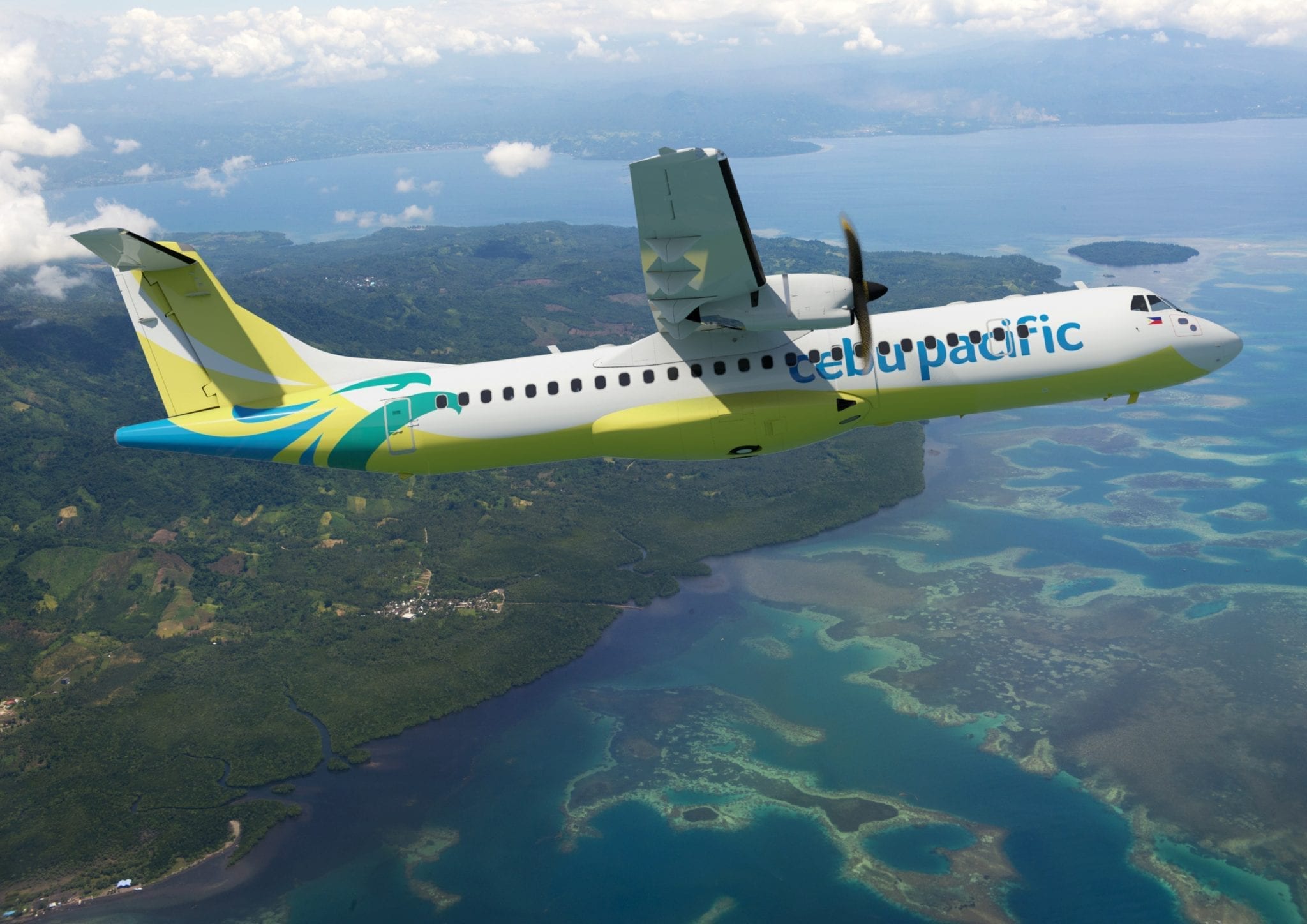
    The airline’s 65-strong fleet includes 4 Airbus A321ceo, 36 Airbus A320, 8 Airbus A330, 8 ATR 72-500, and 9 ATR 72-600 aircraft.

    Between 2018 and 2022, Cebu Pacific expects delivery of 4 more A321ceo, 32 Airbus A321neo, and 7 ATR 72-600 aircraft.

    The Gokongwei-led airline saw its net income increase by 12% to P1.437 billion in the 1st 3 months of the year, despite the rise in global oil prices and the weakening of the Philippine peso against the US dollar.

  • Cebu Pacific pushes fleet modernization

    Cebu Pacific pushes fleet modernization

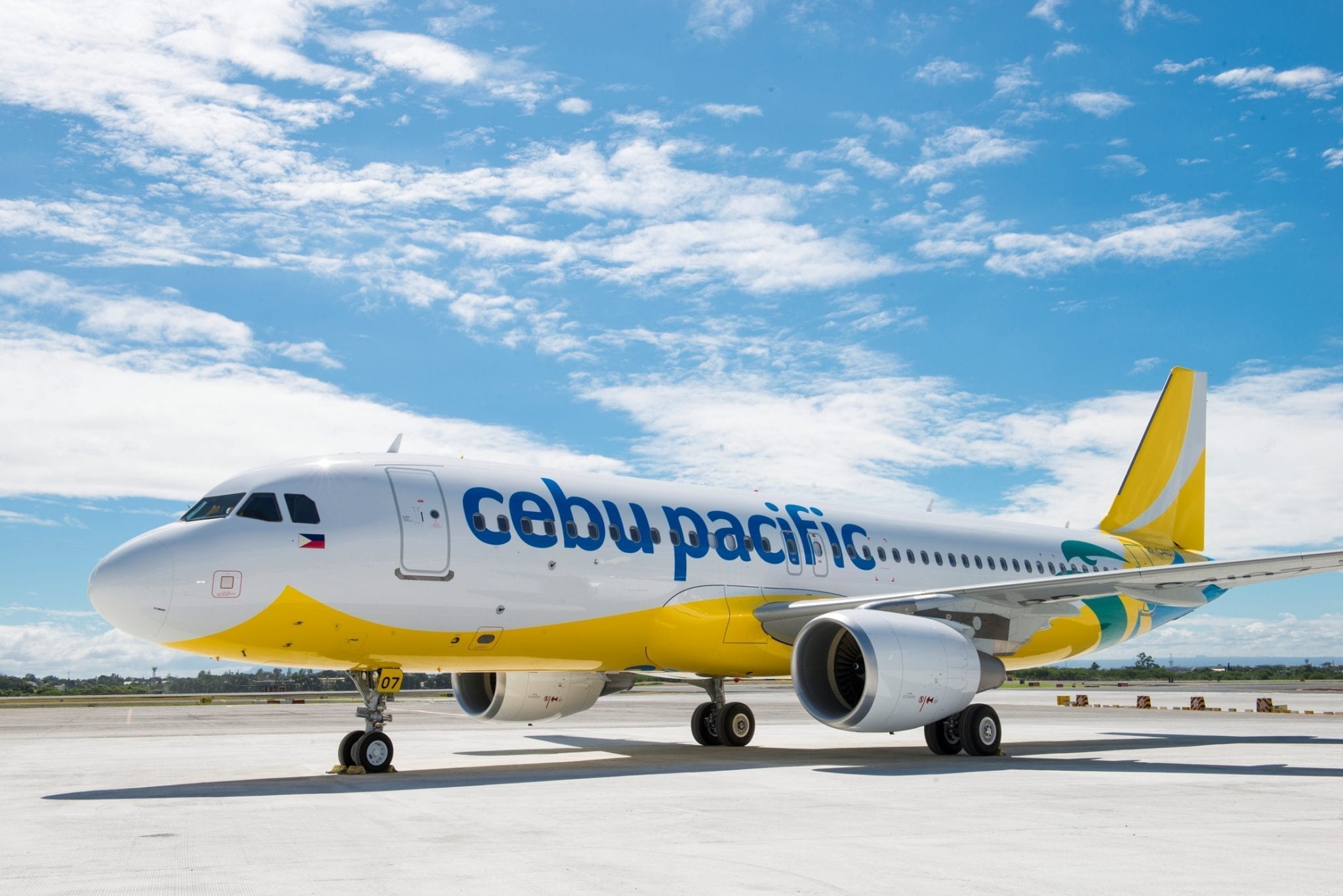
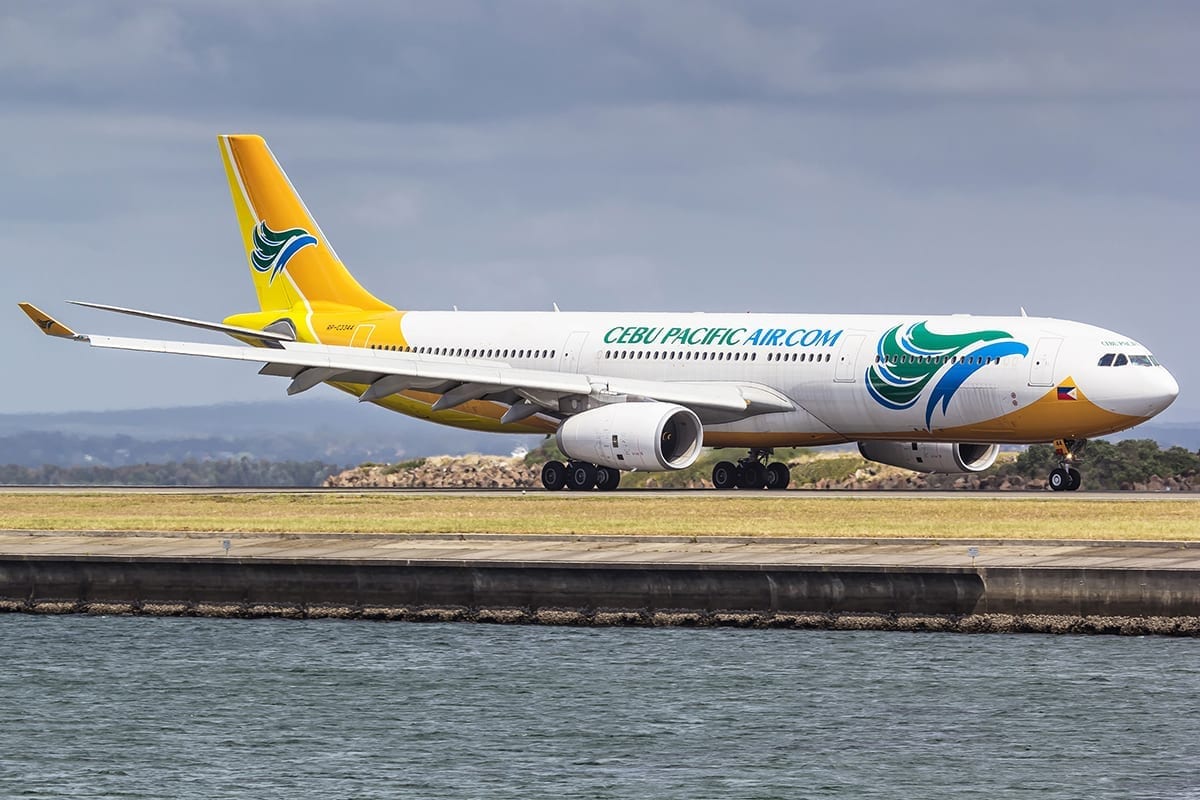
    The Philippines’ leading carrier, Cebu Pacific Air (PSE: CEB), is beefing up its fleet with the arrival of three additional brand new Airbus A321CEO (Current Engine Option) aircraft. With these deliveries, the CEB fleet is now comprised of 65 aircraft, specifically four Airbus A321CEO, 36 Airbus A320, eight Airbus A330, eight ATR 72-500 and nine ATR 72-600.

    Cebu Pacific invested US$ 4.9 billion for its new A321 fleet, with deliveries of additional three A321CEOs and 32 A321NEOs (New Engine Option) spread from this year until 2022. These new aircraft support Cebu Pacific’s expansion plans across the region, further boosting a network that now spans over 100 routes on 37 domestic and 26 international destinations.

    The new A321CEOs can accommodate 50 more passengers, with a total seating capacity of 230 seats. Coupled with investments in avionics, this will enable CEB to operate more efficiently, and offer even lower fares to its customers.

    Cebu Pacific operates one of the youngest and most modern aircraft fleets in the world, with an average age of 4.86 years.

  • Cebu Pacific eyes 22 million passengers in 2018

    Cebu Pacific eyes 22 million passengers in 2018

    Gokongwei-led Cebu Pacific set a high target for passengers this year despite the 6-month closure of Boracay, one of the country’s top tourist draws.

    “Cebu Pacific aims to fly 22 million passengers in 2018, aligned with the increase in domestic and international inbound tourists. The target is 12% over the actual number of passengers flown in 2017,” the airline said in a statement on Thursday, April 26.

    “The target takes into account the Boracay closure which we hope will be offset by redeployment of capacity to other domestic routes, additional frequency for Dubai for their summer travel season, our Batanes route, and the start of our Melbourne route,” Cebu Pacific corporate communications director Charo Logarta-Lagamon told Rappler in a text message on the same day.

    Earlier this month, Cebu Pacific announced it would cancel majority of its flights to and from Boracay due to the closure of the island, which began also on Thursday. The airline said it would maintain only 6 flights to and from Boracay for residents.

    For full-year 2017, Cebu Pacific flew 19.7 million passengers, up 3% year-on-year.

    The airline noted that “growth in domestic travel was relatively flat,” but this was offset by the “number of international passengers expanding by almost 8% in 2017, with strong performance in key markets like Sydney, Dubai, Hong Kong, Narita, Taipei, and Incheon.”

    Cebu Pacific reported a net income of P7.9 billion in 2017, with passenger revenues up 7% and ancillary revenues – including baggage allowance, seat selection, and pre-ordered meals – up 15% year-on-year.

    This came as fuel costs were 20% higher in 2017, while the average fare was up 4%, according to the airline.

    Cebu Pacific also said it was expecting delivery of another 3 new Airbus A321ceos (current engine option) in the coming days to add to its current fleet of 62 aircraft.

    The carrier has invested $4.9 billion for a total of 7 Airbus A321ceos and 32 Airbus A321neos (new engine option), with deliveries starting this year until 2022

  • No baggage theft by staff of Cebu Pacific

    No baggage theft by staff of Cebu Pacific

    Budget airline Cebu Pacific has cleared its staff of any wrongdoing in the alleged pilferage incident on its 5J 113 flight.

    Airline authorities conducted its own investigation on the matter and ruled that its staff could not be held liable for negligence or any criminal activities over the reported lost valuables of a female passenger.

    In a statement issued on Tuesday, Cebu Pacific said the package of the woman who flew from Hong Kong to Manila last Sunday was not tampered with while it was with the said airline.

    “After a thorough investigation, which included inquiries with the ground staff, viewing body cam and fixed CCTV footage, we found that there were no discrepancies nor indications of tampering in the baggage of the concerned passenger under the care and custody of Cebu Pacific,” the company said.

    All of the reports and footage would be submitted to the Manila International Airport Authority, Cebu Pacific said.

    Last Sunday, a video of a woman complaining after seeing her package opened and valuable items lost at the baggage carousel went viral on Facebook.

    According to a previous statement from Cebu Pacific, the female passenger flew with a different airline from London en route to Hong Kong, before boarding their plane to Manila.

    “CCTV security footage showed that the baggage container arrived (in) Manila intact, with the passenger’s baggage inside,” the company said.  “CCTV footage further showed ground personnel loading the baggage on the carousel with the lock still in place.”

  • Cebu Pacific targets 12% passenger growth with A321 deliveries

    Cebu Pacific targets 12% passenger growth with A321 deliveries

    Cebu Pacific is targeting for passenger numbers to hit 22 million in 2018, a 12% increase from the year before.

    Last year, the Philippine low-cost carrier handled 19.7 million passengers, a 3% year-on-year increase, largely driven by an 8% growth in the number of international passengers. Performance was strong in its key markets of Sydney, Dubai, Hong Kong, Tokyo Narita, Taipei, and Seoul.

    “To reach our goal of flying 22 million passengers this year, we remain committed to offering a compelling route network where we can meet rising demand and sustain our year-round low fare proposition,” says JR Mantaring, the airline’s vice-president for corporate affairs.

    He adds that despite the higher fuel price, the weakening of the Philippine peso against the US dollar, security concerns and travel advisories, the carrier has “remained relatively resilient”.

    This year, the carrier is scheduled to add seven A321s from March through September, before its first Pratt & Whitney PW1100G-powered A321neo is delivered in November. These large narrowbodies will add capacity and also free up some A330s that are used on short-haul services to go further afield.

    Two of these A321s have already been delivered, while another three are scheduled to arrive “in the coming days”.

    Last year, operating profit slipped 17.3% to Ps10.1 billion ($194 million), as the growth in expenses outpaced that of revenue. Net profit fell 18.9% to Ps7.91 billion.

  • Aguilas ink pact with Cebu Pacific

    Aguilas ink pact with Cebu Pacific

    THE Davao FC Aguilas travel a lot. With the 2018 season of the Philippine Football League already under way, the Aguilas having a national carrier as one of their sponsors is a blessing indeed.

    General Manager Michael Shaw said the team is very grateful after Cebu Pacific came forward to help as their main sponsor in their coming home-and-away games.

    “In terms of the PFL format, the matches are home and away and definitely signing a sponsorship agreement with Cebu Pacific helps,” said Shaw after a signing an agreement with Candice Iyog, Vice President for Marketing and Distribution at the Cebu Pacific’s head office (8007 Domestic Rd in Pasay City).

    The Aguilas currently have a 2-2-2 win-draw-loss record and they are close to making it to the AFC Cup Group Stage.

    They have games set in Bacolod, Tagum City, Cebu City, Marikina City, Iloilo City and Binan City.

    “It’s a privilege to partner with a team that represents Davao. We’ve always been associated with Cebu. And it’s important that we spread our wings and sponsor teams that are from other parts of the country,” said Iyog.

    The team’s players include Phil and James Younghusband, goalie Nick O’Donnell, Ronilo Bayan Jr., Matthew Hartmann, Simone Rota, Brad McDonaldo and Jason de Jong.

    They also have James Younghusband, Angel Guirado.Harry Sawyer, Phil Youghusband, Takashi Odawara, Jorrel Aristorenas, Josh Grommen, Omar Khan and James Hall, among others.

    Ceres of Cebu currently leads the standings with three straight wins.

  • Cebu Pacific passes IATA safety audit

    Cebu Pacific passes IATA safety audit

    For the first time, Gokongwei-led Cebu Pacific passed the globally recognized safety audit of the International Air Transport Association (IATA).

    “Cebu Pacific has achieved full compliance with IATA’s Operational Safety Audit (IOSA), joining a roster of 429 airlines worldwide that have strictly complied with the most stringent of international standards governing aviation safety,” the airline said in a statement on Thursday, April 12.

    Though Cebu Pacific is not a member of IATA, which represents some 280 airlines comprising 83% of global air traffic, it is now listed in the IOSA Registry, which lists those who have met the benchmark for airline safety management.

    The IOSA, which is conducted for each airline every two years, is described by IATA as “an internationally recognized and accepted evaluation system designed to assess the operational management and control systems of an airline.”

    “We are committed to upholding the highest possible standards for the benefit of our passengers. Hence, we chose to undergo the rigorous and stringent audit requirements for IOSA,” said Cebu Pacific president Lance Gokongwei.

    “Since it is considered the internationally recognized and accepted benchmark for airline safety, we wanted to be sure that our protocols and regulations meet IOSA standards,” he added.

    Gokongwei also said Cebu Pacific “invested in safety technology over the past several months… to better manage safety risks.”

    These include the on-board Runway Overrun Prevention System (ROPS) cockpit technology for its Airbus fleet, which monitors runway conditions before landing and calculates where the aircraft can safely stop, as well as Area Navigation (RNAV) data for more accurate navigation and approaches to various airports.

    It also invested in a Fatigue Risk Management System for pilots to minimize safety risks and ensure they are at adequate levels of alertness.

    Philippine Airlines and its subsidiary PAL Express are also included in the IOSA Registry, with the latter passing its latest audit back in March.

  • Cebu Pacific Less Profitable in 2017

    Cebu Pacific Less Profitable in 2017

    Cebu Air operator of the country’s largest carrier Cebu Pacific, said net income in 2017 dropped by 18.9 percent to P7.91 billion from P9.75 billion in 2016 due to higher fuel prices and operating expenses.

    Operating expenses swelled by 16.6 percent to P57.90 billion in 2017 from the P49.65 billion recorded in the previous year.

    “The increase was primarily due to the rise in fuel prices in 2017 coupled with the weakening of the Philippine Peso against the US Dollar,” the company said in a disclosure.

    Cebu Air Inc is the parent company of airline brands Cebu Pacific and Cebgo.

    Cebu Air said that the Philippine peso ended 2017 at an average of P50.40 per US dollar compared to the previous year’s P47.50 per US dollar.

    “The growth in the airline’s seat capacity from the acquisition of new aircraft also contributed to the increase in expenses,” Cebu Air added.

    The airline company said revenues went up by 9.9 percent from P61.90 billion in 2016 to P68.03 billion in 2017, as passenger revenues increased by 7.2 percent to P49.931 billion.

    “This was mainly attributable to the 3.2 percent growth in passenger volume to 19.7 million from 19.1 million last year, driven by the increase in number of flights by 3.6 percent in 2017 as the Group added more aircraft to its fleet,” the company said.

    Cargo revenues reached P4.60 billion, increasing by 29.2 percent from the previous year, while ancillary revenues went up by 14.9 percent to P13.49 billion.

  • Cebu Pacific cancels Indonesia flights due to volcano eruption

    Cebu Pacific cancels Indonesia flights due to volcano eruption

    Cebu Pacific has announced the cancellation of its flights to and from Bali, Indonesia on Tuesday, Nov. 28.

    The statement was issued due to the eruption of Mount Agung volcano and the closure of the Ngurah Rai International airport in Denpasar.

    The affected flights are:

    • 5J 279 (Manila-Denpasar) ETD 350am / ETA 750am

    • 5J 280 (Denpasar-Manila) ETD 835am / ETA 1240pm

    “We sincerely apologize for any inconvenience this may cause,” the airline said.

    The company said guests with confirmed bookingswill be moved to the next available Cebu Pacific flight.

    The guests may also opt to rebook their flights within the next 30 days, or place the cost of the ticket in a Travel Fund for future use.

  • Cebu Pacific looks to grow further in Australia in 2018 with Melbourne

    Cebu Pacific looks to grow further in Australia in 2018 with Melbourne

    Cebu Pacific is looking at launching services to Melbourne in 2018, further strengthening the Philippine low cost carrier’s position in Australia following the upcoming upgrade of Sydney to daily.

    Cebu Pacific has served Sydney for three years and has talked about the possibility of adding service to Melbourne since launching Sydney in late 2014. Talk about Melbourne has escalated over the last year as the performance on Manila-Sydney has improved, prompting the decision to upgrade Sydney to daily for the peak summer season. Sydney has until now been served with four to five weekly frequencies depending on the time of year.

    Cebu Pacific will operate seven weekly frequencies to Sydney in Dec-2017 and Jan-2018, compared to five weekly frequencies for the same period last year. Cebu Pacific for now has loaded a schedule of five weekly frequencies on Manila-Sydney from early Feb-2018. Cebu Pacific CEO Advisor Mike Szucs told CAPA on the sidelines of the 8-Nov-2017 CAPA Asia Aviation Summit that the airline plans to initially operate five or six frequencies during the non-peak and shoulder months but aims to eventually serve Sydney with a daily year-round schedule.

    “Australia is working well because it is selling well on both ends,” Cebu Pacific CEO Advisor Mike Szucs said. “Australia is a very good market for us.”

    Mr Szucs also said Cebu Pacific is now looking at launching services to Melbourne in 2018. “Australia is doing really well for us. We’ve grown the Manila-Sydney market phenomenally. We are the number one player in terms of passenger traffic on Manila-Sydney. We are increasing Sydney to daily frequencies from this December,” he said. “Melbourne is on the agenda for some time next year. We are not there yet – we need to go and finalise the numbers but Melbourne is looking interesting.”

    Philippine Airlines (PAL) is currently the only airline operating the Manila-Melbourne route, while Manila-Sydney has three nonstop competitors including PAL, Qantas and Cebu Pacific. PAL serves Sydney daily and Melbourne with three weekly flights, while Qantas has five to six frequencies on Sydney-Manila (depending on the time of year).

    Cebu Pacific has a fleet of eight A330-300s but has been using its widebody fleet mainly on short haul routes since suspending three Middle East services in mid-2017. Sydney and Dubai, which is served daily most of the year, are the only remaining long haul routes in Cebu Pacific’s network and use the equivalent of two aircraft.

    Mr Szucs said Cebu Pacific will have the opportunity to resume long haul growth in 2018 as A321s enter the fleet. Cebu Pacific mainly plans to use the new A321 fleet to up-gauge short haul routes from A320s but has the flexibility to use some of the A321s to replace A330s on short haul routes, freeing up A330s for new long haul routes. “As the A321s come in next year we will be able to start redeploying A330s again into some targeted long haul markets,” Mr Szucs explained.

    Under this scenario, Melbourne is on the top of the list as Cebu Pacific is not interested for now in resuming expansion in the Middle East, due to what it considers irrational competition in the Philippines-Middle East market. Cebu Pacific is also not interested, for now, in launching Manila-Honolulu, which originally was in its long haul network plan, as this market is highly competitive and unbalanced, consisting mainly of ethnic or VFR traffic.

    Manila-Melbourne is a less competitive route and the Australia-Philippines is a more balanced market. In the Sydney market, Cebu Pacific has been able to generate a relatively even mix of outbound and inbound traffic, covering the leisure, ethnic or VFR and business segments. For the latter, Cebu Pacific mainly targets SMEs as it does not have a premium product.

    “Australia is working well because it is selling well on both ends,” Mr Szucs said. “Australia is a very good market for us.”

  • Cebu Pacific shelves plans to fly to Honolulu

    Cebu Pacific shelves plans to fly to Honolulu

    Cebu Pacific Air is rethinking its long-haul strategy, shelving—for now—plans to fly to Honolulu in the United States.

    The low cost carrier, controlled by the Gokongwei family’s JG Summit Holdings, is instead keen on expanding operations within the Philippines and neighboring areas in Asia, CEO Lance Gokongwei said in a recent interview.

    It was also keeping alive the possibility of flying to Melbourne, its second destination in Australia after Sydney.

    “We would rather focus our resources on meeting existing demand for regional and domestic flights,” Gokongwei said.

    Cebu Pacific earlier announced a significant cutback in its Middle East operations. From June to July, it suspended operations to Kuwait, Doha and Riyadh. It still flies to Dubai in the United Arab Emirates.

    Gokongwei acknowledged that Cebu Pacific was suffering “immense losses” on those Middle East routes.

    Those flights, once a key part of Cebu Pacific’s long-haul strategy, were launched between 2014 and 2015. The budget airline briefly operated flights between Manila and Dammam before suspending the service in early 2015.

    “The other airlines, we believe, are perhaps benefiting from some subsidies from their governments,” Gokongwei adding, likely referring to state-owned Gulf carriers— Cebu Pacific’s main rivals on those routes.

    “Privately owned airlines like ourselves really could not sustain the operations,” he said.

    Gokongwei said its fleet of Airbus A330s had since been redeployed to cater to high demand destinations like Hong Kong, Korea, Japan, Davao and Cebu.

    “We’ve seen increasing demand more for international and short-haul traffic,” he noted, adding that Cebu Pacific was still targeting to carry around 20 million passengers this year, about a tenth better than 2016.

    Gokongwei said its pipeline of plane orders would likewise remain unchanged.

    Its fleet of aircraft includes one Airbus A319, 35 Airbus A320s and eight Airbus A330s while the Cebgo fleet is composed of eight ATR 72-500s and seven ATR 72-600 aircraft.

    Between 2017 and 2022, Cebu Pacific expects delivery of seven new Airbus A321ceo and 32 Airbus A321neo aircraft.

    Cebu Pacific’s route network spans 25 international and 37 domestic destinations.

  • Cebu Pacific launches program to train future Filipino pilots in Australia

    Cebu Pacific launches program to train future Filipino pilots in Australia

    Gokongwei-led budget carrier Cebu Pacific Air launched a new program to train would-be pilots in Australia.

    Dubbed the Cebu Pacific Cadet Pilot Program, it seeks to address the airline’s expansion requirements over the next 5 years. The training will be conducted in partnership with Australia’s Flight Training Adelaide (FTA).

    The aim is to train 250 Filipinos who will subsequently join the corps of pilots of Cebu Pacific.

    “Over the next 5 years, Cebu Pacific will be investing $25 million to train 250 cadet pilots to become full-fledged First Officers and eventually Captains. The program will allow us to train homegrown Filipino pilots with best-in-class international standards,” Cebu Pacific chief executive officer Lance Gokongwei said during the launch of the program on Tuesday, October 24.

    Cadet pilots will undergo a 56-week program that features integrated flying training, flight theory, and education courses.

    After completion of the program, the cadet pilots will become First Officers at Cebu Pacific, flying both domestic and international routes.

    The airline will initially shoulder the cost of the training, with payments amortized through salary deductions over a maximum period of 10 years.

    Changing the pilots’ game

    One major reason for the program is to address the need of Cebu Pacific, and the overall aviation industry, for more trained pilots.

    Cebu Pacific vice president for flight operations Sam Avila noted that there are around 290,000 commercial pilots globally this year, while around 440,000 will be needed in 2027.

    Of the estimated 440,000, around 180,000 need to be captains, and some 220,000 expected to be flying have not yet begun training due to prohibitive costs.

    “It’s expensive to become a pilot and there’s no timeline for a return on investment because employment is not guaranteed, which limits the pool of pilots available,” Avila explained.

    He estimated the cost to be around P2 million to P3.8 million for a 12-month course which does not yet include license and certification expenses.

    “This program changes the game in that it is company-sponsored so it broadens the selection pool to provide equal opportunities to qualified Filipinos of all financial means,” Avila added.

    Cebu Pacific said 16 candidates will be chosen per batch, with 3 batches of cadet pilots to be sent to Australia per year.

    The application process begins with an online screening, followed by an on-site screening for core skills and pilot aptitude tests, among other examinations, where a fee of AU$425 or around P17,000 will be charged. Cebu Pacific and FTA will jointly select the final candidates.

    The program is open to all Filipinos who are college graduates, proficient in English, and hold passports valid for at least two years prior to the start of the program.

    The program will start by the beginning of 2018, with the first batch of 16 cadet pilots aimed to be selected by December this year.

  • Cebu Pacific seeks Hong Kong, Bali entitlements

    Cebu Pacific seeks Hong Kong, Bali entitlements

    The operator of budget carrier Cebu Pacific is seeking entitlements to Hong Kong as well as Bali in Indonesia.

    Cebu Air Inc. filed an application with the Civil Aeronautics Board (CAB) for the allocation and re-allocation of entitlements on the Manila to Hong Kong route.

     The entitlements being requested are under a confidential memorandum of understanding between the Philippines and the Hong Kong Special Administrative Region in 2014.

    Aside from Hong Kong, Cebu Air has also filed an application with the CAB to get additional entitlements to fly to Denpasar, the capital of Bali.

    Cebu Air is seeking additional entitlements to Bali under the Association of Southeast Asian Nations Multilateral Agreement on the Full Liberalization of Passenger Air Services (Asean-MAFLPAS).

    The Asean-MAFLPAS removes third, fourth and fifth freedom restrictions among Asean cities except capital cities.

    At present, Cebu Pacific serves 25 international and 37 domestic destinations.

    Cebu Pacific is utilizing a fleet of aircraft which includes one Airbus A319, 35 Airbus A320s and eight Airbus A330s for its flights.

    Cebu Pacific’s wholly-owned subsidiary Cebgo meanwhile, has a fleet composed of eight ATR 72-500s and seven ATR 72-600s.

    From this year until 2022, the group expects the delivery of seven more brand-new Airbus A321ceos and 32 Airbus A321neo aircraft.

    The group recently designated Laguindingan Airport which caters to Cagayan de Oro City and neighboring areas Iligan City, Marawi City, and Bukidnon province, as its seventh hub as part of efforts to strengthen its domestic network.

    Aside from the Laguindingan Airport, the group’s other hubs are located in Manila, Cebu, Clark, Davao, Kalibo and Iloilo.