Tag: Celine

  • Celine pop up store in Shanghai at Plaza 66

    Celine pop up store in Shanghai at Plaza 66

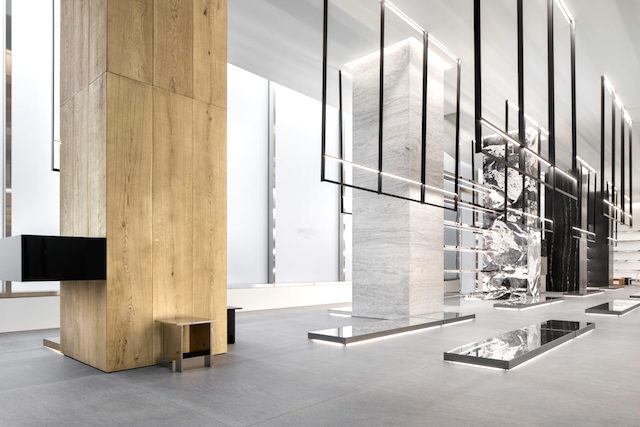
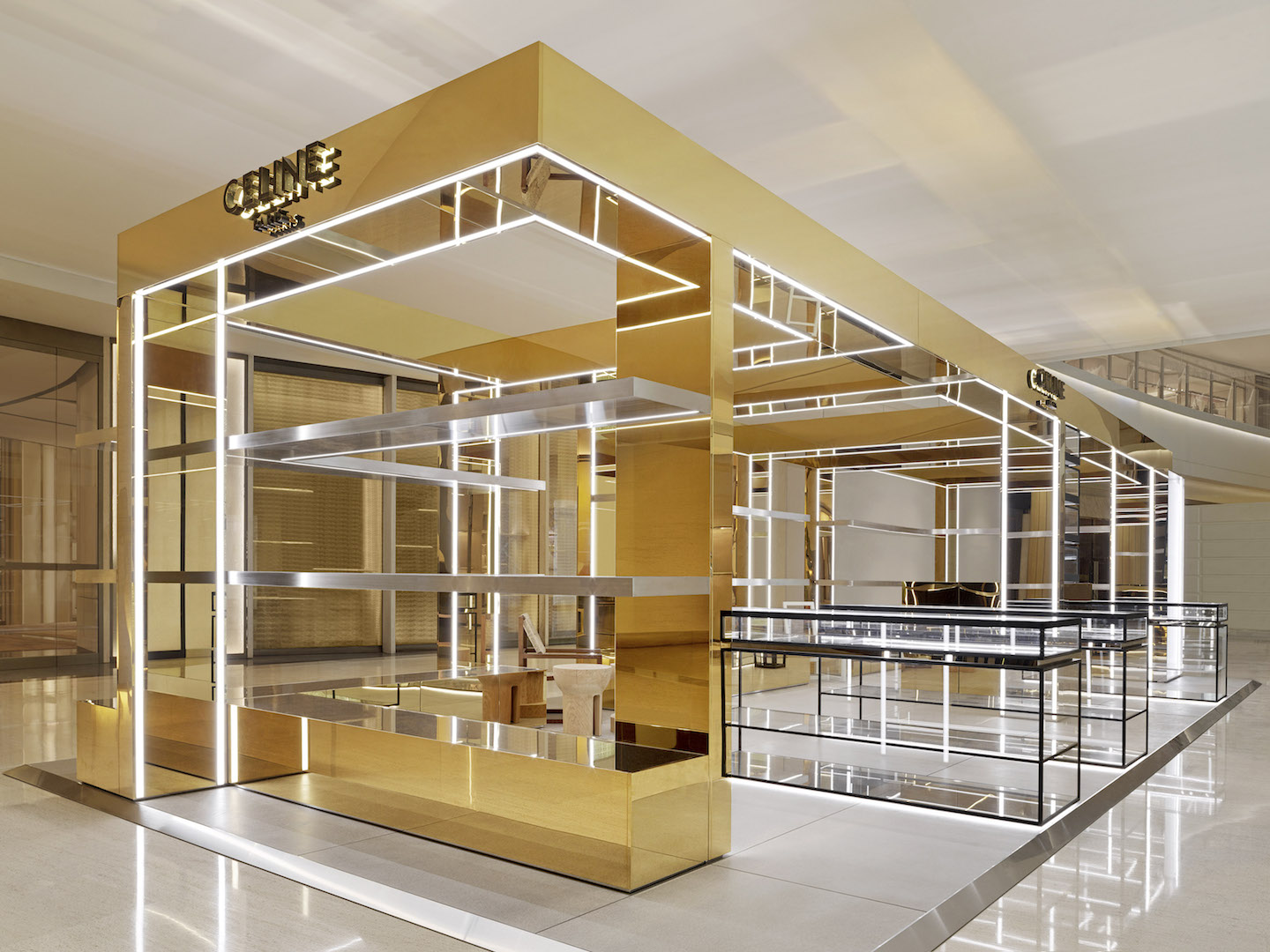
    French luxury fashion brand CELINE has opened a new concept pop-up store in Shanghai at thePlaza 66 Mall. The store which has been entirely designed by Creative Director, Hedi Slimane, features women’s footwear, handbags and other leather accessories.

    There is also a selection of Celine’s fragrances. Even the furniture was personally designed by Hedi Slimane. CELINE is fully owned by LVMH, which is also the owner of Plaza 66 Mall, one of the most prestigious in China.

    CELINE new pop-up store in Shanghai at Plaza 66 Mall


  • New Celine store design was made for Asia

    New Celine store design was made for Asia

    The new Celine store design unveiled in New York City is destined for China and Japan in the early stages of a global rollout. The white and grey dominated, minimalist design illustrated here in official photographs released by the luxury fashion brand, was conceived by the label’s creative director Hedi Slimane. The first store, which has opened at 650 Madison Avenue, takes up 5000sqft, making it Celine’s largest store yet anywhere in the world.

    According to company sources, the new look will be implemented next in Los Angeles, Paris and Milan before being launched in Shanghai, Beijing and Tokyo.

    Slimane uses natural materials as a contrast to stark white walls and polished railings.

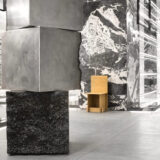
    He used natural stones like basaltina on the floors and ginger and cream-streaked black granite on walls and some shelving together with a combination of marbles and grey travertine.

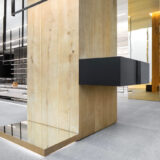
    Contrasting yet complementing the stone, reclaimed oak, polished stainless steel, brass, gold, and concrete are used and in the case of the Madison Avenue store, a large rock creates a focal point in the store.

    Celine says future stores will feature commissioned artworks relevant to the locations. Commissioned artists include Jose Davila, Oscar Tuazon, Elaine Cameron Weir and James Balmforth.

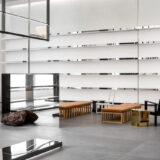
    The stores will also feature furniture designed by Slimane, such as wooden benches, tanned leather chairs and brass side table.

    The timeline for the rollout of the new Celine store design has not yet been released.

  • Record results for LVMH in 2018

    Record results for LVMH in 2018

    The world’s largest luxury retailer LVMH shrugged off broader market pessimism overnight reporting record revenue of €46.8 billion last year, up 10 per cent over 2017. Excluding the closure of the unprofitable Hong Kong airport duty-free business in December 2017, the group’s organic growth was 12 per cent. Every business division delivered what the company described as “excellent performances”.

    Group profit rose a staggering 21 per cent to €10 billion with operating margin reaching 21.4 per cent, an increase of 1.9 percentage points.

    “LVMH had another record year, both in terms of revenue and results,” said chairman and CEO Bernard Arnault. “The desirability of our brands, the creativity and quality of our products, the unique experience offered to our customers, and the talent and the commitment of our teams are the group’s strengths and have once again made the difference.”

    Arnault said this year the company would continue to innovate and target investments combining tradition and modernity.

    “In an environment that remains uncertain, we can count on the appeal of our brands and the agility of our teams to strengthen, once again, our leadership in the universe of high-quality products.”

    The company’s flagship Louis Vuitton business was a standout for the group, contributing much of the 15 per cent organic sales growth of the fashion and leather goods business division where profit from recurring operations was up 21 per cent.

    “Christian Dior had an excellent first full year within LVMH thanks to the creativity of Maria Grazia Chiuri for the women’s collections and to the arrival of Kim Jones, the new artistic director of Dior Homme,” the company said in its earnings statement.

    “Fendi and Loro Piana continued to assert their know-how throughout their collections. Celine entered a new and ambitious stage of its development with the arrival of Hedi Slimane as artistic, creative and image director of the brand.”

    Givenchy, Loewe and Kenzo “progressed well” while the other brands, Berluti and Rimowa continued to gain momentum.

    Watches and jewellery profit soars

    LVMH’s watches and jewellery business recorded organic revenue growth of 12 per cent – and a stunning 37 per cent increase in profit from recurring operations.

    “Bulgari performed very well and gained market share. Its iconic jewellery and watchmaking lines Serpenti, Diva’s Dream, B.Zero1, Lvcea and Octo grew strongly.”

    Chaumet’s growth was driven by the success of the Liens and Joséphine collections, particularly in Asia.

    In the watchmaking sector, Tag Heuer continued to expand its range and Hublot enjoyed strong growth, partly due to high visibility as the FIFA World Cup official timekeeper.

    DFS returns to profit

    A return to profitability for the travel-retail business DFS after it exited its Hong Kong airport concessions at the end of 2017 was a highlight of LVMH’s ‘selective retailing’ business unit last year. The business group achieved a 12 per cent improvement in organic revenue growth (excluding the airport business from the 2017 base comparison) and a 29 per cent improvement in profit.

    “DFS progressed strongly thanks to a particularly good performance in Hong Kong and Macau. The recently opened Gallerias in Cambodia and Italy also grew rapidly,” said LVMH.

    Sephora enjoyed unspecified growth in sales and market share, with strong online sales growth in Asia and North America. About 100 new stores opened worldwide, including the new Nanjing Road store in Shanghai and the first Sephora-branded stores in Russia.

    Scents of success

    The perfumes and cosmetics business division achieved organic revenue growth of 14 per cent, driven by the performance of its flagship brands, with profit from recurring operations up 13 per cent.

    “Parfums Christian Dior experienced remarkable growth and increased its market share in all regions of the world. The launch of its new perfume Joy and the exceptional worldwide success of Sauvage and the other iconic perfumes J’adore and Miss Dior are behind the strong growth of the Maison,” said LVMH.

    “Makeup and skincare also grew rapidly. Guerlain progressed well, driven in particular by the success of Abeille Royale in skincare and Rouge G in makeup. Benefit strengthened its leading position in the eyebrow segment and Parfums Givenchy accelerated its performance, thanks in particular to makeup and its new perfume L’interdit. Fresh and Fenty Beauty by Rihanna continued their exceptional growth.”

    Strong spirits

    The wines and spirits business group achieved organic revenue growth of 5 per cent and profit from recurring operations also increased by 5 per cent.

    “The business group reaffirmed its leadership position by pursuing its value strategy and balanced geographic development.”

    The Hennessy business enjoyed “strong momentum” in Mainland China, LVMH said.
  • Celine and Givenchy joins Paris menswear show schedule

    Celine and Givenchy joins Paris menswear show schedule

    After Hedi Slimane premiered Celine menswear via a co-ed catwalk show on September 28, the brand has announced that it will join the Paris menswear calendar in January 2019. Celine is currently negotiating a show date with the Fédération de la Haute Couture et de la Mode, and it is not yet known whether the brand will present solely menswear, or whether Slimane will pepper the offering with womenswear as per his debut.

    The move is indicative of the fact that Celine’s parent company LVMH has got its sights set on the burgeoning menswear market.

    When Slimane took the helm in February 2018, it was made clear that the new category will be a key sales driver, along with leather goods, accessories and fragrances.

    “The objective with him is to reach at least two billion to three billion euros, and perhaps more, within five years,” LVMH chairman and CEO Bernard Arnault said of Slimane’s appointment.

    In the last year, LVMH has appointed new head designers at Berluti, as well as the menswear divisions of Louis Vuitton and Dior. And, just weeks ago, Givenchy, another brand within the French conglomerate’s stable, announced that it will rejoin the menswear calendar for the autumn/winter 2019 season.

    As a growing number of brands, including Maison Margiela, Stella McCartney, Balenciaga, Haider Ackermann and Sonia Rykiel, merge their menswear and womenswear for the sake of presentations, LVMH is making great strides to make a splash on both schedules and to take a hold of both markets.

  • Gucci powers Kering third quarter sales

    Gucci powers Kering third quarter sales

    Kering sales growth significantly outpaced its rivals during the third quarter, up 27.6 per cent as reported and 27.5 per cent on a comparable basis, to €3.402 billion. In Kering-operated stores, Asia Pacific sales rose 33.3 per cent on a comparable basis, bettered only by North America’s 36.1 per cent increase. Growth in online sales exceeded 80 per cent and wholesale sales rose 27 per cent.

    “We are extraordinarily proud of the remarkable performances Kering delivers quarter after quarter,” said chairman and CEO Francois-Henri Pinault. “Our growth, whose pace is unprecedented in the luxury sector, is sound, well balanced and sustained across all regions and distribution channels.”

    Pinault said the company’s enduring success comes down to the talent of each of its brands in “creating strong emotional ties with its customers, conceiving a bold, generous creative universe, and reinventing its codes”.

    “Beyond short-term developments, we know that the secular growth of the luxury market, but particularly our solid fundamentals and the discipline with which we implement our strategy, will continue to support our operating and financial outperformance.”

    Gucci led Kering sales growth during the quarter, with sales up 35.1 percent and strong performance across all distribution channels, regions and product categories. Gucci Asia-Pacific sales soared 41.9 per cent.

    Yves Saint Laurent sales rose 16.1 per cent, driven by the strong performance of iconic lines and the success of new collections.

    While Bottega Veneta sales were down 8.4 per cent on a comparable basis, the label is in a transitional phase led by recently appointed creative director Daniel Lee (ex Celine). His first full collection will go on sale early next year.

    Kering’s other houses (labels) achieved a 32.3 per cent increase in sales, driven by  “exceptional momentum” at Balenciaga and ongoing growth at Alexander McQueen. New collections and extended iconic lines from Boucheron, Pomellato and Qeelin were “very well received”.

    The watches and jewellery categories delivered what the company described as “solid performances”.

  • Strong growth for LVMH Moet Hennessy Louis Vuitton

    Strong growth for LVMH Moet Hennessy Louis Vuitton

    LVMH Moet Hennessy Louis Vuitton boosted revenues by 10 per cent to €33.1 billion in the first nine months of this year.

    Organic sales grew 11 per cent compared to the same period last year and by 13 per cent after excluding the impact of the closed DFS concessions at Hong Kong International Airport at the end of the year. Every geographic market performed well, the company said. Third quarter revenue was up 10 per cent.

    The wines & spirits business group recorded organic revenue growth of 7 per cent during the first nine months, with Champagne volumes stable and Hennessy cognac volumes increased by 4 per cent, led by the US and Chinese markets.

    The fashion & leather goods business group achieved organic revenue growth of 14 per cent and 20 per cent reported, with the flagship Louis Vuitton brand the standout performer.

    “Ready-to-wear and shoes, in particular, experienced strong momentum with an excellent reception of the last two fashion shows of womenswear and menswear,” the company said in a statement.  “A new communication for Louis Vuitton perfumes was unveiled, marking the launch of the brand’s latest perfume creation. Christian Dior, consolidated since the second half of last year, enjoyed an excellent performance.

    Celine made progress and began a new chapter in its history with the first runway show of Hedi Slimane, which was a great success and created enormous resonance. Fendi and Loro Piana continued to grow. The other brands continued to strengthen,” the company said.

    LVMH Moet Hennessy Louis Vuitton’s perfumes & cosmetics business group recorded organic revenue growth of 14 per cent, driven in particular by the performance of its star brands Christian Dior, Guerlain and Givenchy.

    The watches & jewellery business group achieved organic revenue growth of 14 per cent, with Bulgari delivering “an excellent performance and gaining market share”.

    The selective retailing business group achieved organic revenue growth of 8 per cent in the first nine months of 2018, and 14 per cent excluding the airport concession closures in Hong Kong.

    Sephora’s organic revenue growth was strong, particularly in North America and Asia. The expansion and renovation of its distribution network is continuing with a new store concept in China and the first Sephora-branded store in Russia.

    “DFS performed well, especially in Hong Kong and Macao. The recent openings of T Galleria in Cambodia and Italy progressed well.”

    The company said that in an “uncertain geopolitical and monetary context, LVMH will continue to be vigilant” in the months ahead.

  • Céline changes name to ‘Celine’

    Céline changes name to ‘Celine’

    Céline is no more ‘Céline’. The French luxury house has lost its acute accent on the ‘e’ in its original name, rebranding as the simpler ‘Celine’.

    The new logo comes with a teaser shot of a look from the Paris label’s upcoming collection, which has been created with its new creative director Hedi Slimane at the design helm.

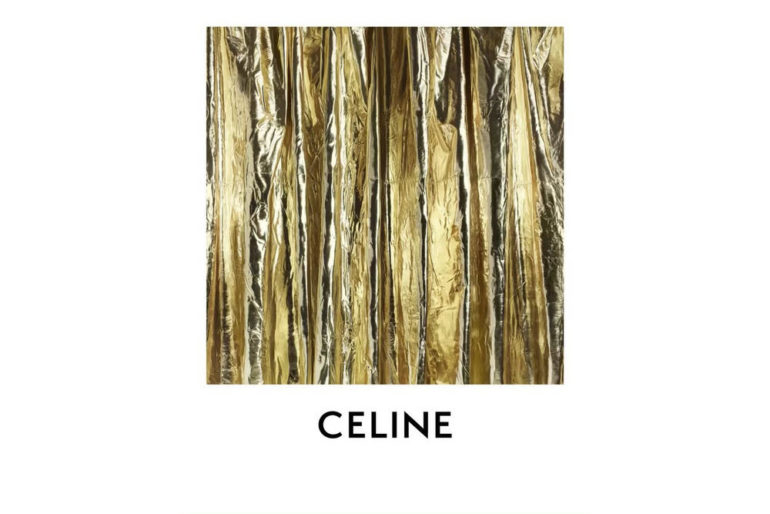
    Celine’s entire social media presence has been deleted and its Instagram has been left with just one image: a gold-coloured curtain, with the name “Celine” in black capital letters on a white background, the first ‘e’ with no acute accent.

    The LVMH group’s luxury label explained the newest look and logo, following Slimane’s appointment at the label in January, to head up womenswear, the future menswear line, haute couture and fragrances.

    “The new logo is inspired by the historic logo of the 1960s, featuring a modernist lettering dating back to the 1930s. The accent on the first ‘e’ is gone, signalling a focus on pared-down purity, as in the collections of the 1960s,” explained the label in the Instagram post.

    In the same week, Celine has unofficially enlisted Lady Gaga as brand ambassador. The pop star was snapped in the street modelling its first item designed by Hedi Slimane, a new handbag model.

    Celine’s first Hedi Slimane catwalk show is scheduled in Paris on the evening of Friday September 28.

  • Céline to open first standalone Melbourne store

    Céline to open first standalone Melbourne store

    Paris fashion maison Céline has announced the opening of its first standalone Australian boutique in Melbourne.

    While it is the third official store for Céline Australia, the new Melbourne location will be the first localized store to bow outside the walls of a shopping mall or department store.

    Located in Melbourne’s city centre, the French luxury brand has signed a lease for 13 Collins Street – a 57-level office tower owned by the Commonwealth Superannuation Corporation.

    The specific Céline store will replace the retail lodgings of Cose Ipamena, a mixed-brand retailer that recently closed after 25 years. It will open alongside fellow international heavyweights Fendi, Cartier, Gucci, Versace and Bottega Veneta.

    Céline currently has a flagship within Melbourne shopping mall Chadstone, as well as a store in Sydney’s Westfield. The high-end brand also has concessions at luxury Australian department stores David Jones in specific locations such as Pacific Fair Gold Coast, Melbourne CBD and Sydney CBD.

    The news comes as global luxury brands continue to explore Australia’s retail landscape for profitable locations to set up shop.

    A CBRE leasing director said Melbourne CBD, particularly Collins Street, has attracted huge interest from major retailers resulting in leasing deals.

    Some of the names rumoured to be opening at the top end of Collins Street — and Exhibition and Russel streets — include YSL, Balenciaga, Hublot, Ferragamo, Chloe and Loewe.

  • Here’s Why Pre-Owned Luxury Fashion Are Growing In Asia

    Here’s Why Pre-Owned Luxury Fashion Are Growing In Asia

    Asia’s pre-owned luxury fashion market is continuing to grow, with shoes and t-shirts gaining ground, according to multichannel retailer Reebonz.

    Although bags continued to dominate, with an average of 77 per cent of total transactions in 2016 and 2017, both shoes and apparel achieved steep sales growth throughout the region, according to Reebonz’s now annual Asia Luxury Index.

    In Hong Kong, for example, sales of used branded sneakers rose 48 per cent last year, while “luxury t-shirt” sales soared six-fold.

    The report is based on Reebonz’s own trading data across Australia, China, Hong Kong, Indonesia, Malaysia, New Zealand and Singapore, along with unspecified “industry reports”.

    Reebonz says millennials are driving the sector’s growth, “tilting the scales in favour of a pre-owned luxury market that continues its growth trajectory”.

    Chanel, the most-purchased pre-owned brand by millennials, recorded more than double the total sales value on Reebonz last year over 2016.

    The report said the changing perceptions towards pre-owned luxury have altered the state of resale and how consumers shop today, contributing to 40 per cent sales growth in the pre-owned category at Reebonz.

    “The growing demands of buying from the resale market cleverly gives rise to a community of individual sellers, injecting the luxury ecosystem with products that meet these needs,” said Reebonz cofounder Daniel Lim.

    Louis Vuitton, Hermes and Chanel were the three top-selling brands on Reebonz last year, fetching resale values as high as 125 per cent of their original retail price in the secondary market. Gucci, Celine and Dior were also among the top 10.

  • Phoebe Philo Steps Down from Céline with No Plans to Join Another Brand

    Phoebe Philo Steps Down from Céline with No Plans to Join Another Brand

    Celine creative director Phoebe Philo has told her team she is leaving the French luxury leather brand after its autumn presentation.

    There were reports she could join her former chief executive Marco Gobbetti at Burberry when chief creative officer Christopher Bailey leaves at the end of March, but market sources say she has no plans to move immediately to another house and may simply take a break from fashion, reports BOF.

    “Working with Celine has been an exceptional experience for me these past 10 years,” says Philo.

    Bernard Arnault, chairman and CEO of LVMH, Celine’s parent company, describes Philo’s accomplishments as a “key chapter” for the brand with her minimalist designs and emphasis on tailoring. She was behind many of Celine’s hit bags, including the Phantom, Trapeze and Trio.

    The London-born designer won British Designer of the Year at the British Fashion Awards in 2010 for the second time, and the following year received the International Award at the CFDA Fashion Awards.

    Over the past decade, Celine’s annual sales grew from €200 million (US$236 million) to more than €700 million, analysts say (LVMH does not break out figures for the label).

    Philo studied with Stella McCartney at Central Saint Martins in the late 1990s, following the designer when she took over from Karl Lagerfeld as creative director at Chloe in 1997. After McCartney left to set up her own label, Philo was appointed as her replacement.

  • LVMH and Céline to launch e-commerce venture

    LVMH and Céline to launch e-commerce venture

    Céline, the only LVMH-owned fashion label without its own e-commerce business, will start offering online sales from a new website next week, two sources close to the matter said.

    The French brand joins a growing line of luxury goods players belatedly pushing into e-commerce, shrugging off long-held concerns such an avenue would hurt their image.

    Artistic director Phoebe Philo’s minimalist, avant-garde designs have turned Céline into one of fashion’s most sought-after labels over the past 10 years.

    Céline will test the water with its clothing collections, shoes and leather “it-bags” usually costing well over $2,000, one of the sources said.

    “The website will launch in France over the course of the coming week,” the source said, adding that the e-commerce business would then be rolled out to the rest of Europe and the United States in 2018.

    Owner LVMH, the world’s biggest luxury goods conglomerate, does not break down sales of individual brands, but analysts estimate Céline’s annual revenue at 700 million to 800 million euros (705.1 million pounds).

    Online sales of luxury goods are set to grow 24 percent in 2017 and make up close to 10 percent of the market, according to consultancy Bain. It forecasts they will represent 25 percent of all luxury sales by 2025.

    Online sales have helped fuel revenue growth at brands such as Kering-owned Gucci.

    Gucci and rival Louis Vuitton, an LVMH brand, launched new sites in China in recent months, while leather handbag specialist Hermes has recently revamped its online business. LVMH set up a multi-brand e-commerce website earlier this year.

    But France’s privately owned Chanel remains a major outlier. The label said last week it had no immediate plans to try to sell its famed tweed jackets or quilted leather bags online.

    LVMH recently denied an October report that Philo may be close to leaving Céline, though the news has fuelled speculation that she could be one of the favourites to replace Burberry’s departing designer Christopher Bailey.

  • Céline opens in Sydney

    Céline opens in Sydney

    French maison Céline has opened its second Australian store in Sydney.

    Located on level four of Sydney’s Westfield Shopping Centre, the 186-square-metre store is designed with clean lines and pared-back simplicity, hallmarks of the brand’s creative director, Phoebe Philo.

    Raw materials such as onyx, fired terracotta, carved lime wood and industrial chipboard mix in with foliage, and bounce off black metal hanging rails, brought to life by a concrete floor in grey.

    A central sculpture wall divides each room, with bespoke furnishings – designed by Danish artist FOS – splattered throughout. Features include mirrors, a jewellery table, sunglasses and jewellery display casing, and a large seating area in ceramic and wood.
    The new Sydney flagship hosts Céline’s autumn/winter 2017 collection, as well as a range of ready-to-wear, shoes and accessories.

    The Sydney store is the brand’s 141st store globally. The first Australian flagship opened in Melbourne’s Chadstone shopping centre in 2016.

    Founded in 1945 by Céline Vipiana, the Paris house is today owned by global luxury conglomerate LVMH group.

  • LVMH sales soar as shoppers return to luxury

    LVMH sales soar as shoppers return to luxury

    LVMH sales surged 15 per cent in the latest quarter to €9.88 billion (US$10.477 billion).

    That was nearly €400 million more than analysts had been expecting, with the result driven across all of the luxury group’s business units.

    Fashion and leather goods, which account for more than half the company’s turnover, rose 15 per cent during the quarter. That compares with static growth the same quarter last year. Fendi and Louis Vuitton were singled out by analysts as strong performers, with Celine, Kenzo, Loewe and Berluti also showing progress.

    LVMH’s leather and fashion brands also include Dior, Emilio Pucci, Fendi, Givenchy, Louis Vuitton, Marc Jacobs, Moynat, Rimowa and Thomas Pink.

    ‘Selective retailing’,  the group’s second-largest division, had been dragged down by DFS in prior quarters, offsetting a strong performance by Sephora cosmetics chain, observed Deborah Aitken, an analyst with Bloomberg Intelligence. But the latest quarter it showed improvement of 11 per cent. Sephora continued to gain market share globally and recorded double-digit revenue and profit growth for the quarter.

    “This could be an important turnaround,” said Aitken.

    Liquor – including brands such as Cape Mentelle, Chandon, Cloudy Bay, Dom Pérignon, Glenmorangie, Hennessy, Krug, Moët & Chandon and Veuve Clicquot – was the second best performing sector, up 13 per cent organically. Hennessy was a star performer.

    Sales of watches and jewellery also rebounded, rising 11 per cent. Bulgari continued to gain market share and Tag Heuer successfully launched its new Connected Modular 45 watch.

    And the perfume and cosmetics business grew sales by 12 per cent.

    Fung Global Retail observed that Parfums Christian Dior reported good growth and Guerlain launched a new women’s fragrance called Mon Guerlain during the quarter. Parfums Givenchy benefited from the success of lipstick lines, which saw rapid development in Asia. In addition, the Kat Von D brand launched exclusively in January 2017 at Sephora in France.

    Managing expectations

    While the company was clearly pleased with its results it did warn shareholders to keep their expectations modest, pointing out the growth had come against a 2016 quarter when the industry was struggling with Paris terror attacks. It said such levels of growth should not be expected for the full year.

    LVMH shares rose to a record in Paris after the results were announced.

    The LVMH figures will set the standard for a raft of luxury retail earnings due to be released in the coming days. Prada reports results today and Kering, parent of Gucci, on April 25.

  • Celine Korea opens store in Seoul

    Celine Korea opens store in Seoul

    French luxury fashion house Celine Korea has opened a store in Seoul’s fashionable Cheongdam district.

    CELINE-new-store-Seoul-Cheongdam-district-3

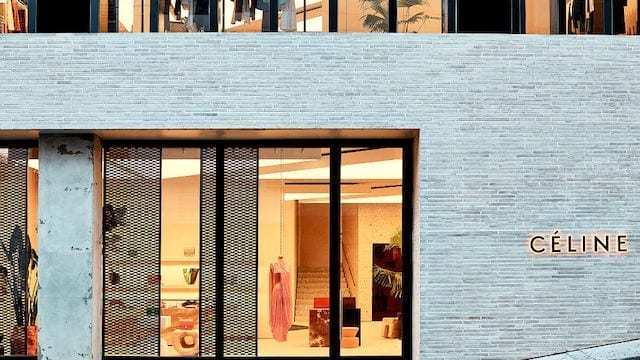
    In a double-storey building with a perforated brick facade, the shop has an interior furnished with bespoke ware designed by Danish artist Fos (Thomas Poulsen).

    CELINE-new-store-Seoul-Cheongdam-district-4

    CELINE-new-store-Seoul-Cheongdam-district-1


    Celine’s small leather goods and bags are featured on the first floor, while the second floor is devoted to the brand’s shoes and ready-to-wear collection.

    CELINE-new-store-Seoul-Cheongdam-district-2

  • LVMH will expand to eyewear business

    LVMH will expand to eyewear business

    Luxury brand group LVMH is thinking about taking its eyewear business in-house.

    This could be a further blow for Italian eyewear group Safilo, which lost the Armani licence in 2013 and those for the Kering Group labels (Alexander McQueen, Bottega Veneta, Gucci and Saint Laurent) at the end of 2014, reports CPP-Luxury.com.

    Italian investment bank Mediobanca has published a report about Safilo, owned by Dutch investment fund Hal, focussing on its announcement that its licence agreement with Celine has been terminated while its contract with Christian Dior has been extended until 2020. The licence for Celine’s eyeglass collections – the LVMH label joined Safilo’s portfolio in 2012 – ends on December 31.

    While the licence agreement for the design, production and distribution of eyeglasses and sunglasses for Dior and Dior Homme, also part of LVMH’s galaxy, has been extended until the end of 2020, Mediobanca says the extension is for three years only, not for seven years as was the case for the previous contract, renewed in September 2010.

    The bank’s analysts noted that the standard renewable licence contract is for five years.

    “We believe markets are much more volatile than in the past, and renegotiating contracts on a more frequent basis may be to the advantage of both parties,” says the bank. “But we think this could also signal a change in LVMH’s approach as the group has the financial strength to internalise its eyewear business, as Kering did a few years ago.”

    LVMH has been managing the eyewear collections for its leading brand, Louis Vuitton, internally for several years.

    Mediobanca estimates the sales for Celine and Dior eyeglasses collections are worth respectively €40 million (US$41 million) and €200 million. As well as these, there are the sales for the eyewear lines of Fendi, Givenchy and Marc Jacobs, all licensed to Safilo. Altogether, LVMH brands are worth €350 million in annual revenue for the eyewear group, equivalent to nearly 30 per cent of its total revenue, which Mediobanca pegs at €1.2 billion.

    The bank report also highlighted the Safilo portfolio’s “marked reliance on one single client”, plus the weakness of its own brands.