Tag: cellco

  • Operators stepping up preparations for 5G

    Operators stepping up preparations for 5G

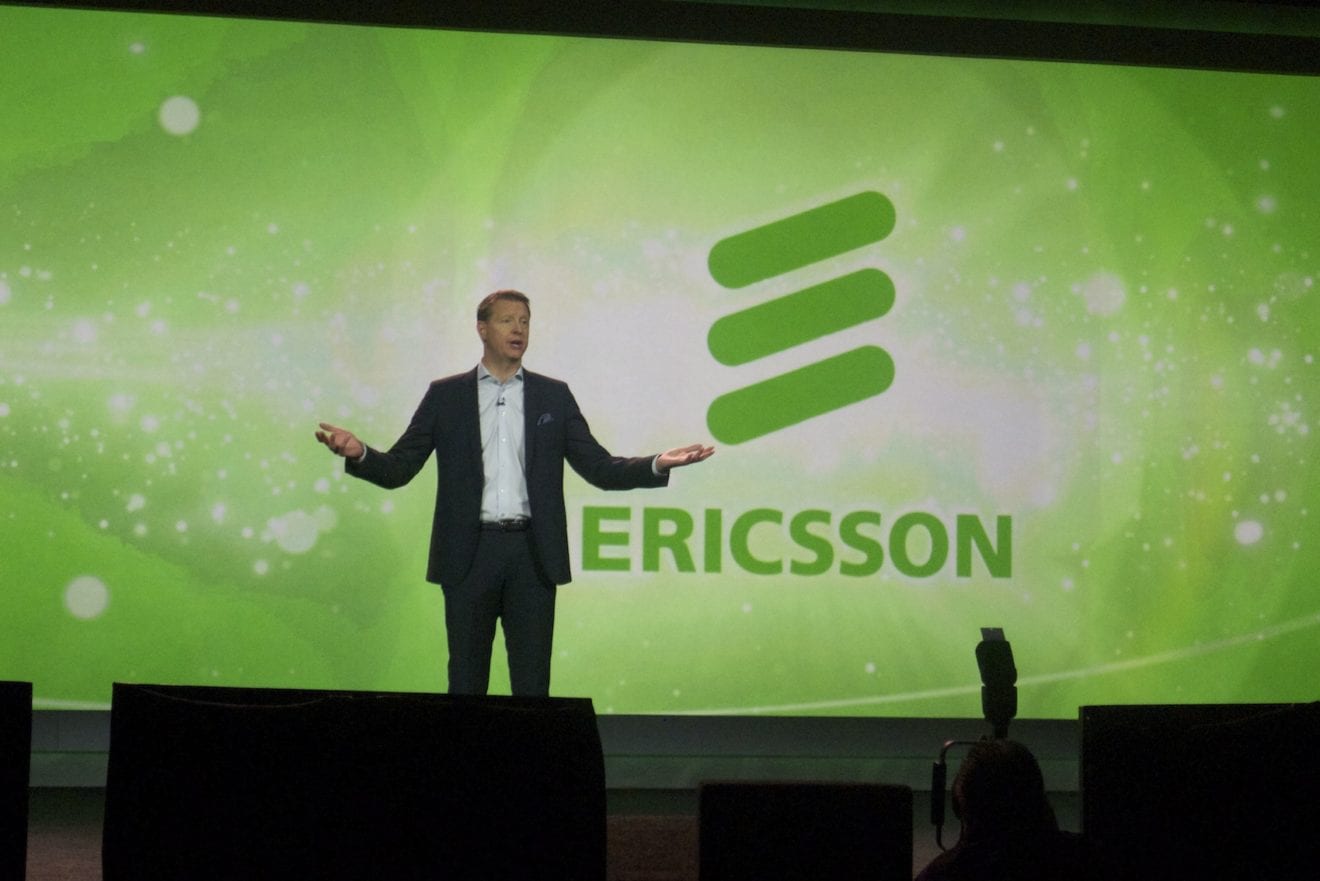
    Many operators have accelerated preparations for the arrival of 5G, and are increasingly looking to the enterprise as well as the consumer market as potential customers, research from Ericsson indicates.

    A survey of operators that have publicly announced intentions to deploy 5G shows that 78% are conducting 5G trials, up from just 32% during a similar survey last year.

    In addition, 28% of the respondents plan to deploy 5G next year. Operators have meanwhile further evolved their business strategies for 5G services to extend beyond the consumer market.

    “In the 2016 survey, 90% of the respondents pointed to consumers as the main segment in their 5G business planning,” Ericsson head of 5G commercialization Thomas Noren explained.

    “This year, it is an even split between three segments and operators have identified business opportunities not only in the consumer segment but also with enterprise users and specialized industries.”

    With operators considering the consumer market to be becoming saturated, 5G planning has been more evenly distributed across specialized industry segments (58%), business users (56%), and consumers (52%).

    The industry segments considered to have the most potential include media and entertainment, automotive and public transport, with energy and utilities as well as healthcare being considered other attractive potential markets.

    The survey also found that a clear majority of operators believe that the IoT will play an important role in the 5G ecosystem.
  • RCom-Aircel merger deal collapses

    RCom-Aircel merger deal collapses

    India’s Reliance Communications (RCom) has called off a planned merger of its wireless business with rival Aircel as a result of regulatory uncertainty and opposition from some creditors.

    RCom had been planning to merge its wireless business with Aircel to create a 50:50 joint venture with Aircel parent company Maxis, in a deal aimed at reducing its debt burden by around $3 billion.

    But the company announced on Sunday that its merger agreement with Aircel has now “lapsed by mutual consent” due to “legal uncertainties” and “interventions by vested interests” – referring to creditors to the company.

    RCom will now have to pursue alternative methods of reducing its substantial debt burden of around 450 billion rupees ($6.8 billion).

    LiveMint reports that the operator now plans a fire sale of assets ranging from spectrum to real estate as part of a plan to reduce its debt by around 250 billion rupees. This will partly involve adopting a 4G focus to allow it to monitize its existing 2G and 3G spectrum.

    RCom is also planning to sell its tower business and had been seeking to fetch around 110 billion rupees from the sale, but this will need to be revised now that Aircel’s tenancies will no longer be included in the deal.

  • China Unicom’s mixed ownership pilot approved

    China Unicom’s mixed ownership pilot approved

    China’s National Development and Reform Commission (NDRC) has given approval for a pilot program involving opening investment in China Unicom to the private sector, to evaluate transitioning to a mixed ownership model for the market’s state-owned operators.

    In an announcement, Unicom confirmed that the NDRC has given in-principle approval for the pilot program.

    But the details of the pilot – such as the identities of the private investors, pricing terms and percentage of shareholding to be allocated – will still require approval from various ministries.

    While media outlets are reporting that Alibaba and Tencent are expected to lead the private investment in China Unicom, the operator stressed that the company has not entered any legally binding agreement with any potential investors. But the company did not explicitly deny that negotiations with the internet giants are underway.

    “[Unicom’s controlling shareholder] is not aware of the source of  information in those media reports and has not entered into any legally binding documents, including framework agreement or subscription agreement, with any potential investor,” the company said.

    The Chinese government is conducting the pilot as part of plans to evaluate opening China’s telecoms sector up to private investment to reform the ownership structure and competitiveness of Unicom as well as rivals China Mobile and China Telecom.

    Unicom was selected for the pilot because it is the least profitable of China’s big three operators.

  • Taiwan cellcos switch off 2G networks

    Taiwan cellcos switch off 2G networks

    Taiwan’s mobile operators have completed the switch-off of their respective 2G networks.

    The switch-off on Saturday has left the nation’s remaining 2G holdouts unable to place any calls except for emergency calls, or send or receive text messages or use data serices.

    At the time of the shutdown there were an estimated 60,000 2G holdouts on Chunghwa Telecom, 20,000 on Taiwan Mobile and 8,000 on Far EasTone, the report states.

    Remaining 2G customers’ numbers will be reserved until the end of December if they choose to upgrade to 4G.

    Taiwan Mobile is meanwhile redirecting customers attempting to place a call to a customer service center and will agree to temporary restart phone services if customers commit to upgrading to 4G. This redirection will last until July 7.

    With the move, Taiwan has become the latest APAC nation to transition away from 2G services to free up spectrum for 4G and other mobile services. The shutdown was prompted by the expiration of all existing 2G licenses.

  • New Zealand cellcos propose joint rural expansion program

    New Zealand cellcos propose joint rural expansion program

    New Zealand’s mobile operators Spark, Vodafone New Zealand and 2degrees have submitted a joint proposal to improve rural broadband and mobile infrastructure under two government programs.

    The operators have applied to be selected for the Rural Broadband Initiative Extension and Mobile Black Spot Fund programs.

    If selected, the companies have committed to investing “hundreds of millions of dollars” in the project, including NZ$75 million to deploy the infrastructure, as well as opex costs, spectrum and other resources.

    The operators said their proposed expenditure would more than match the government’s own planned NZ$150 million ($104.6 million) contribution to the program, which would come from the Telecommunications Development Levy.

    Under the proposal, the partners would roll out around 500 new cell sites providing a 25% increase in land coverage across New Zealand, providing access to fast broadband for thousands of rural households and businesses and extending mobile coverage to more than 1,200km of state highways.

    “Rural New Zealand is a key driver of our country’s economic growth and productivity and for these sectors to remain competitive they need fast broadband and mobile coverage – not just in offices, but on farms, in schools, and on the roads,” Vodafone NZ CEO Russell Stanners said.

    “The combination of the Government’s RBI funding and this investment by the three mobile network operators presents a once in a generation opportunity to deliver both competitive ultra-fast broadband and world class 4G mobile infrastructure to areas of New Zealand that today have neither.”

  • Vodafone India, Idea to merge into India’s top cellco

    Vodafone India, Idea to merge into India’s top cellco

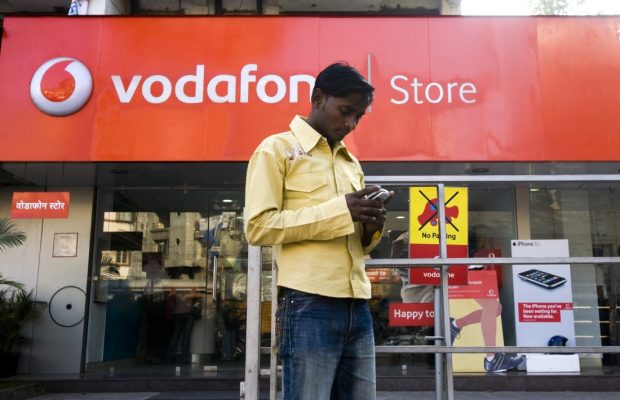
    India’s second and third ranked mobile operators, Vodafone India and Idea Cellular, have revealed plans to merge to create the India’s largest operator by market share.

    The companies have announced that Vodafone will combine its Vodafone India subsidiary with Idea Cellular in a deal worth around $23 billion.

    The combined company will have around nearly 400 million subscribers and is expected to have a revenue market share of around 40%, propelling it ahead of current market leader Bharti Airtel.

    Under the terms of the agreement, Vodafone will take a 45.1% stake in the combined company while the owner of the Idea brand – the Aditya Birla Group – will have about 26%.

    Vodafone will transfer a stake of around 4.9% of the company for around 39 billion rupees ($579 million) as part of this transaction, and there will be a mechanism in place designed to equalise the shareholdings within four to nine years. Until this takes place, the voting rights will be equalised.

    The marger excludes Vodafone’s 42% stake in Indus Towers, the joint venture established between the Bharti Group, Vodafone India and Idea Cellular to manage the operators’ tower infrastructure.

    “The combination of Vodafone India and Idea will create a new champion of Digital India founded with a long-term commitment and vision to bring world-class 4G networks to villages, towns and cities across India,” Vodafone Group CEO Vittorio Colao commented.

    “The combined company will have the scale required to ensure sustainable consumer choice in a competitive market and to expand new technologies – such as mobile money services – that have the potential to transform daily life for every Indian. We look forward to working with the Aditya Birla Group to create value for all stakeholders.”

    Meanwhile fellow Indian operators Reliance Communications (RCom) and Aircel are one step closer to executing their planned merger.

    RCom announced in a regulatory filing that it has secured approval from the Competition Commission of India for the proposed merger, which was announced in September last year.

    The companies have already secured approval from the Securities and Exchange Board of India as well as the BSE and NSE stock exchanges, but still requires the go-ahead from the National Company Law Tribunal.

    Under the terms of the planned merger, RCom and Aircel parent Maxis Communications will each hold 50% of the combined company.

  • Globe launches 4CC LTE-A

    Globe launches 4CC LTE-A

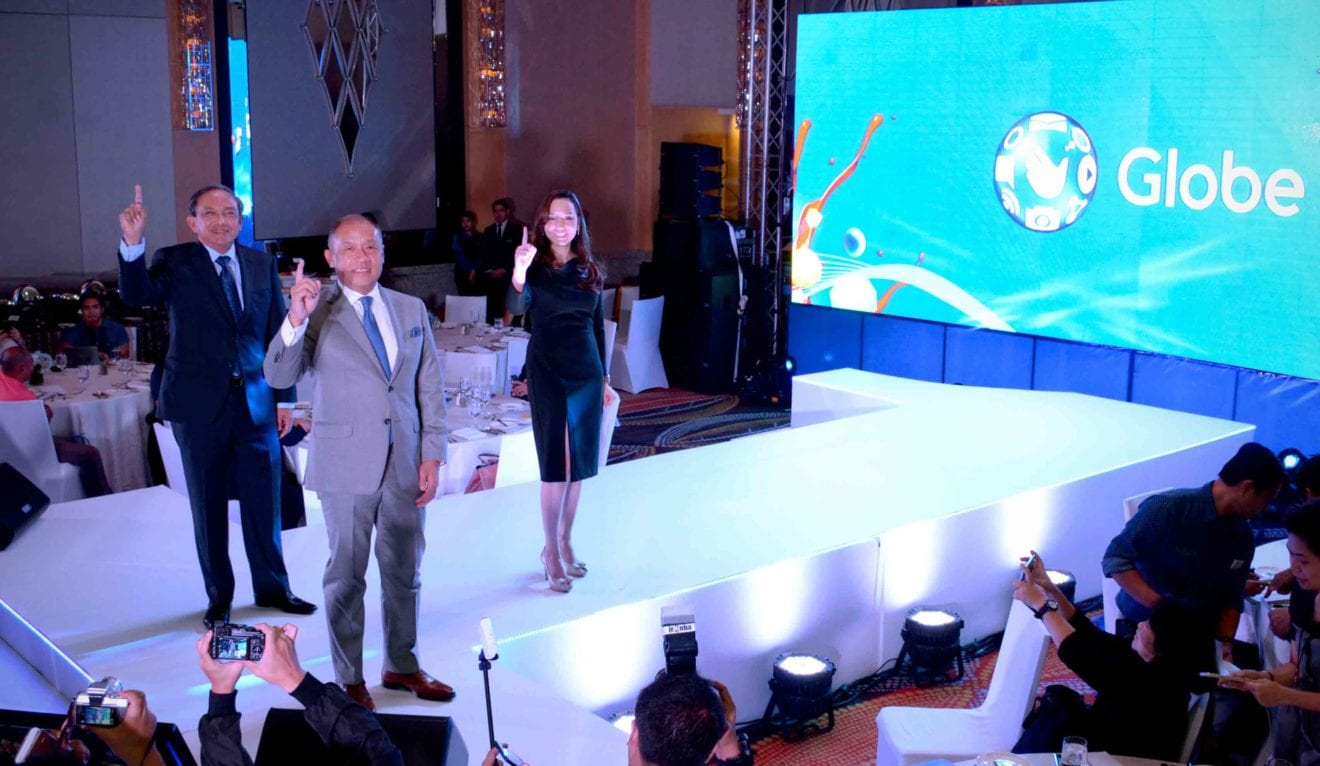
    The Philippines’ Globe Telecom announced it has become the first operator in the nation to implement 4-component-carrier aggregation LTE-Advanced using the 2600-MHz band.

    The upgrade effectively doubles LTE capacity in areas covered by the deployment, the company said, and will be capable of generating speeds of up to 400 Mpbs once compatible devices hit the market.

    So far Globe has implemented the upgrade at 110 sites mostly in Metro Manila, including most areas in Makati and certain areas in Quezon City, Marikina, Antipolo, and San Mateo.

    The operator aims to deploy the technology in more than 500 sites this year across more of Metro Manila as well as key areas of North Luzon and South Luzon.

    Globe is using its new 2600-MHz band spectrum allocation acquired through its joint purchase with rival PLDT of conglomerate San Miguel Corporation’s telecommunications assets last year.

    Since acquiring the spectrum, the company has also deployed around 1,200 2600-MHz LTE sites mostly in Visayas and Mindanao.

    “This is the first time that a telco operator in the Philippines is making use of this 4-component carrier spectrum LTE-Advanced technology and we are maximizing the potential of the new spectrum assigned to us for the benefit of our customers,” Globe SVP for program governance Joel Agustin said.

    “This technology milestone significantly improves customer experience as smartphone penetration in the country continues to increase.”

  • Ericsson launches telco security automation tool

    Ericsson launches telco security automation tool

    Ericsson has launched a new telecoms security product designed to enable automated security orchestration across multiple ICT domains.

    The Ericsson Security Manager supports out-of-the-box security for telco cloud operations, physical and virtual networks and digital support solutions, as well as enterprise networking applications.

    It is designed to provide real-time, contextual security management using a customizable, adaptive policy engine.

    The new product will comprise part of the Ericsson Digital Support System, and will enable customers to set and enforce security policies to protect important assets. It supports continuous monitoring of threats, vulnerabilities and compliance with the capability for automated remediation

    “In today’s ICT landscape, security is of the utmost importance for organizations across all domains,” Ericsson head of IT and cloud products Anders Lindblad said.

    “Ericsson Security Manager leverages our leadership and expertise across a wide array of ICT domains to bring to the market an innovative, adaptive and contextual security automation solution for telecom networks as well as cloud, IoT and enterprises.”

    Ericsson plans to showcase the new suite at Mobile World Congress 2017 in Barcelona later this month.

  • Energia Communications to deploy G.fast nationwide

    Energia Communications to deploy G.fast nationwide

    Japan’s Energia Communications has signed a partnership and reseller agreement covering Nokia’s G.fast technology.

    Energia Communications plans to offer G.fast nationwide across Japan as part of an initiative to expand its utility service provider operations.

    G.fast is designed to squeeze fiber-like speeds from copper cable over last-mile connections such as apartment buildings with no fiber wiring. Energia Communications will use G.fast to replace the use of traditional VDSL2 technology.

    Energia Communications last year became Nokia’s first G.fast customer in Japan and one of its first customers for the technology worldwide, according to Energia Communications CEO Satoshi Kumagai.

    “We have been very happy with the service and have complete trust in Nokia’s capability and strengths of its fixed access business, which is why we decided to take the relationship forward as a successful business partnership/reseller model,” he said.

    Nokia’s Bell Labs holds the current world speed record for a single copper pair, having demonstrated speeds of 10Gbps using its XG-FAST technology in 2014.

    “This strategic partnership with EneCom will increase G.fast deployments in Japan, providing real benefits to subscribers who might otherwise be unable to enjoy ultra-broadband speeds. Japan is a very important market to us, and we look forward to a successful venture that will boost local economies,” Nokia Japan head Jae Won added.

  • Nokia launches a digital assistant for telcos

    Nokia launches a digital assistant for telcos

    Nokia has announced the launch of MIKA, the first digital assistant customized for the telecommunications industry.

    MIKA (multi-purpose intuitive knowledge assistant) is designed to provide voice-activated access to information for telecoms engineers, to reduce the time needed to find essential information needed to maintain complex multi-technology network environments.

    MIKA is powered by the Nokia AVA cognitive services platform, and provides access to the AVA knowledge library of best practice gathered from Nokia’s network projecs around the world.

    The platform combines augmented intelligence with automated machine learning based on Bell Labs learning algorithms.

    “Finding the right information is a daily challenge for telco engineers tasked with boosting network quality,” Nokia head of global services Igor Leprince said.

    “MIKA taps into the power of the Nokia AVA platform to provide quick and accurate answers, avoiding time wasted on fruitless searches. MIKA is customized to support the specific needs of telecoms, and can deliver recommendations based on experience from networks around the world.”

    Nokia also introduced a new predictive repair service, which will enable operators to reduce costs by predicting hardware failures and recommending replacements up to 14 days in advance. The vendor said the service can achieve up to 95% accuracy.

    Predictive repair will be available to operators using Nokia’s 3G and 4G equipment.

  • Globe sets 2017 capex budget at $750m

    Globe sets 2017 capex budget at $750m

    The Philippines’ Globe Telecom has allocated a capex budget for 2017 of around $750 million as the operator invests to expand its data network.

    The operator will spend the majority of its capex budget for the year on data network expansion, including investing towards its target of providing ultra-fast fiber broadband to 2 million homes by 2020.

    Globe also plans to take advantage of the spectrum it acquired from the joint purchase of San Miguel Corporation’s telecoms assets last year by investing heavily in LTE.

    But the $750 million figure marks a significant planned reduction from the operator’s roughly $1 billion in capital expenditures last year.

    The report cites Globe CEO Ernest Cu as stating that the reduction marks a rebalancing from 2016, when the company needed to borrow money to fund its network spending.

    Cu told BusinessWorld Online that the operator’s priority with its capital investments will be revenue generation, which the company plans to achieve by focusing on high-value customers in order to improve ARPU.

    This will be important in light of the agreement Globe and rival PLDT signed with the government late last year to reduce their fixed and mobile voice interconnection rates.

  • China Mobile taps Brocade software for SDN cloud rollout

    China Mobile taps Brocade software for SDN cloud rollout

    China Mobile will deploy NFV software from Brocade at several of its key data centers as part of its first SDN-based commercial public cloud rollout.

    The operator is deploying virtual traffic management technology from the networking vendor, initially at its Southern Base and Northern Base data centers.

    The deployment will be conducted in conjunction with China Mobile’s strategic SDN and NFV supplier Nokia. Brocade’s software will run within the Nuage Networks virtual service platform, which is being implemented by Nokia as part of a project announced last week.

    China Mobile is playing a major role in the Chinese government’s Internet Plus initiative to support the development of new business models enabled by ICT, such as fixed and mobile internet connectivity, cloud, big data and the IoT.

    As part of this effort, China Mobile has taken on the role of a large-scale cloud service provider for major enterprise and government customers, and is deploying SDN-based cloud services to support these operations.

    “The promise of network functions virtualization is the ability to scale services on demand. When it comes to service providers, they don’t come much bigger than China Mobile in terms of potential scale,” Brocade China country manager Henry Zhu said.

    “We’re naturally delighted that Brocade’s advanced NFV appliance technology has been selected by China Mobile. This is a groundbreaking project within China’s service provider landscape and we are fully committed to ensuring it results in complete success.”

  • Indosat Ooredoo ready to launch 4.5G technology

    Indosat Ooredoo ready to launch 4.5G technology

    PT Indosat Ooredoo is ready to launch its 4.5G technology in 2017 that is two times faster than its 4G predecessor, said a company spokesman.

    “We have been developing the 4.5G technology since 2012 and we are ready to launch this year, starting with the introduction of new technological infrastructures such as modernized BTS (Base Transceiver Station) in several regions,” according to its Group Head of Network Strategy and Solution, Yune Marketatmo, on Wednesday.

    Singapore and Malaysia are already ahead of Indonesia in launching the 4.5G technology, along with some European and Middle Eastern countries.

    Marketatmo also noted that in order to prepare for its introduction, the company has been working to place 4.5G data centers in several areas around Java since 2016, while the headquarters will be in Jakarta.

    “The data centers will be built in strategic locations close to customers so they can communicate easily and take advantage of this new technology,” he added.

    Marketatmo further explained that existing customers who are currently using 4G would be automatically upgraded to 4.5G. This will also apply to mobile devices that are compatible with the 4.5G technology.

    Indosat Ooredoo currently has 81.6 million customers and the company saw an increase of their data usage by 114.2 percent compared to previous years.

  • Myanmar’s fourth cellco to use the brand name Mytel

    Myanmar’s fourth cellco to use the brand name Mytel

    Myanmar’s newly-licensed fourth mobile operator will use the brand name Mytel, and will aim to differentiate by targeting rural areas and competing on price.

    The joint venture between Vietnam’s Viettel, the consortium of local ICT companies that make up Myanmar National Telecom Holding Public and Star High Public Company was awarded a telecoms license last week.

    The new company’s external relations officer as stating that Mytel will make use of the telecoms assets used by Star High Public Company’s state-owned parent company Myanmar Economic Corporation (MEC). MEC owns MECtel, a state operator with access to extensive tower and fiber assets.

    Mytel also plans to utilize capacity on the Asia-Africa-Europe 1 (AAE-1) subsea cable, which lands in Myanmar. According to the report, state operator MPT acts as a co-landing party for the connection but does not participate directly in the project.

    The operator plans to offer 2G, 3G and 4G services with a focus on extending coverage in rural areas, and offering services at a lower price than rivals Telenor Myanmar, Uninor Myanmar and the joint venture between MPT and KDDI.

  • TPG wins auction to be Singapore’s fourth cellco

    TPG wins auction to be Singapore’s fourth cellco

    Australian fixed line operator TPG Telecom has won the new entrant spectrum auction to become Singapore’s fourth mobile network operator.

    TPG submitted the winning bid of S$105 million ($72.8 million) for a provisional allocation of 60 MHz of spectrum in the 900-MHz and 2.3-GHz spectrum bands.

    TPG outbid MyRepublic to secure the new license and spectrum.

    Final allocation of the spectrum will require payment of the relevant spectrum fees, and the commencement date of spectrum rights will be scheduled after the planned general spectrum auction to be held in the first quarter.

    Regulator IMDA said the new spectrum rights are expected to commence on April 1 at the earliest. TPG will also be eligible to compete in the general spectrum auction if the operator so chooses.

    As a condition of its bid, TPG will need to provide nationwide street level 4G coverage within 18 months of the new spectrum rights commencing, road tunnels and in-building coverage within 30 months and coverage of MRT underground stations and lines within 54 months.

    Singapore MVNO Circles.Life, which launched earlier this year as the market’s fourth postpaid mobile service provider, has welcomed the move.

    “Circles.Life welcomes IMDA’s on-going efforts to support competition and look forward to TPG Telecom’s entry into the telco space in Singapore… We hope TPG Telecom will continue to support our ambition to bring more innovation and choice to the market,” the company’s co-founder and director Rameez Ansar said.

    “In the short-term, the impact may be limited until TPG Telecom enters the market in about two years from now after building the required infrastructure. Meanwhile, we are focusing on targeting the data savvy segment.”