Tag: cement

  • Thai cement giant buys 7th packaging firm in Vietnam

    Thai cement giant buys 7th packaging firm in Vietnam

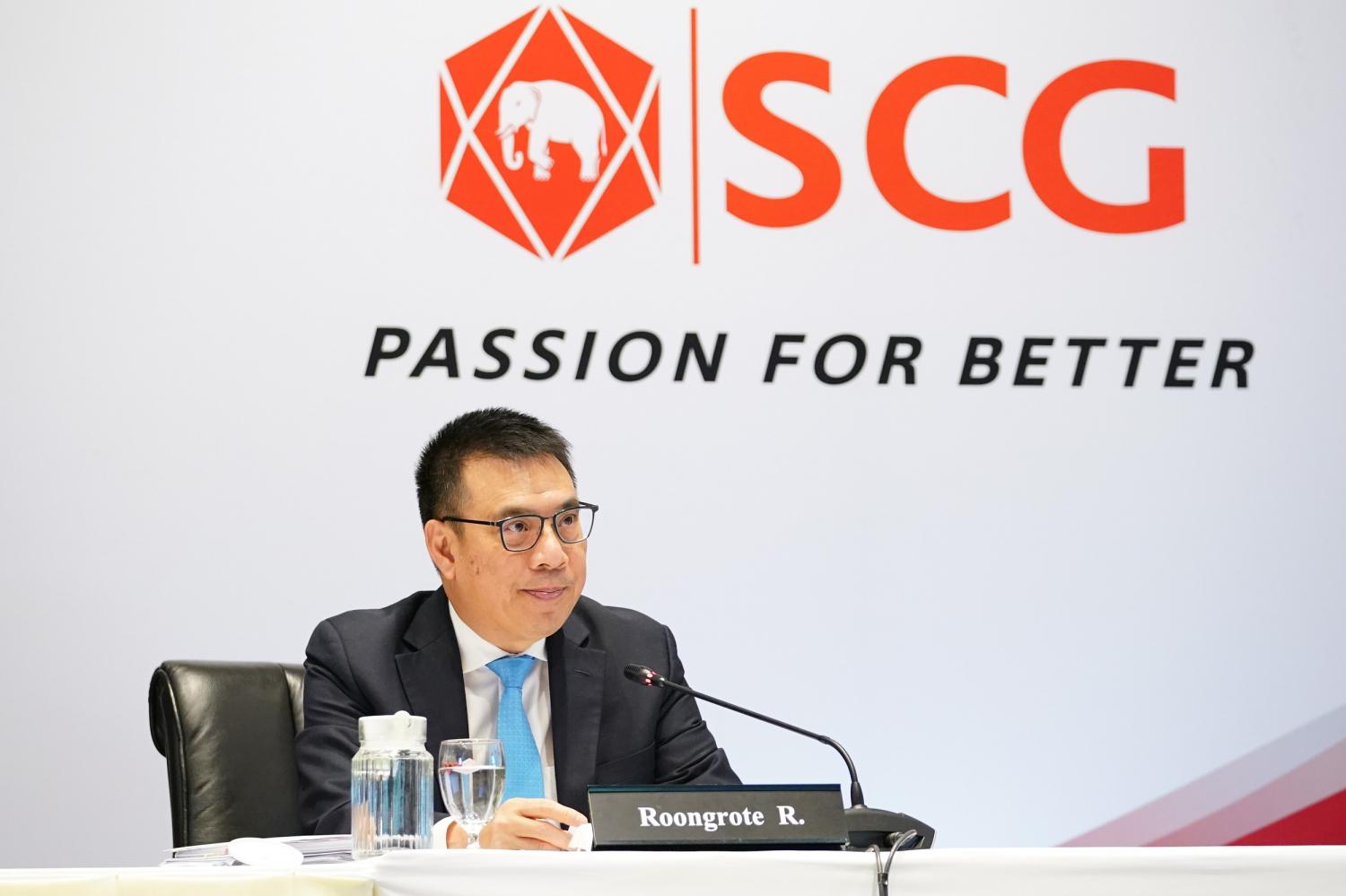
    Thai cement giant SCG Group has acquired its seventh packaging company in Vietnam, Bien Hoa Packaging, at a cost of VND2.07 trillion ($89 million).

    The company owns a 94.11 percent stake in the company through its subsidiary Thai Containers Group Company Ltd, according to a recent statement.

    It paid VND171,450 ($7.38) for each share of Bien Hoa Packaging, 84 percent higher than the current market price.

    Bien Hoa’s clients are mainly high-growth consumer brands that are multinationals, the statement said.

    Its three manufacturing facilities in southern Vietnam will enlarge SCG’s customer base in the food, beverage and fast-moving consumer goods segments, it added.

    One of the six companies SCG acquired earlier is the largest in the country, Kraft Vina, a joint venture with Japanese packaging firm Rengo.

    SCG was one of the earliest foreign investors in Vietnam, coming as it did in the 1990s.

    Over the last decade it has been pouring money to acquire major companies, including one of the largest plastic producers, Binh Minh Plastics.

  • Semen Indonesia Snaps Up LafargeHolcim Unit to Bolster Market Lead

    Semen Indonesia Snaps Up LafargeHolcim Unit to Bolster Market Lead

    Cement maker Semen Indonesia is buying the local unit of Swiss rival LafargeHolcim for around $917 million, as it seeks to extend its dominant position in Southeast Asia’s largest market. Semen Indonesia said in a statement it had signed a deal to acquire LafargeHolcim’s 80.6 percent stake in Holcim Indonesia, which is the third-biggest cement producer in the country.

    A fully owned subsidiary of the state firm would launch a mandatory offer for the remaining shares owned by public shareholders, it said.

    “In the competitive environment of the national cement industry, the combination between Semen Indonesia and Holcim will be stronger and larger,” Semen Indonesia president director Hendi Prio Santoso said.

    The company said the acquisition will boost its total cement capacity to 53 metric tons per annum. Analysts say this will give the combined entity a total capacity share of about 50 percent, in a market that has 15 companies.

    Sources familiar with the matter said Malaysian infrastructure company YTL Corp and privately owned Chinese firm Hongshi Cement had also been among the final bidders but the strategic fit with Semen Indonesia helped LafargeHolcim’s Indonesian unit to win the auction.

    The initial round of the auction drew interest from about a dozen companies, including from Japan, the Philippines and other countries, the sources said.

    YTL and Hongshi declined to comment.

    A spokeswoman for LafargeHolcim said it had received strong interest from bidders for its Indonesian business but declined to give details on the parties involved.

    Though President Joko “Jokowi” Widodo’s infrastructure push has fueled a boom in the building of airports, roads and housing projects, an aggressive expansion in the industry and entry of newer players such as Anhui Conch has created excess capacity and a price war in the last few years, analysts say.

    Semen Indonesia has secured financing from local, regional and international banks such as BNP Paribas, said the sources, who declined to be named as complete details of the deal have not been announced.

    “This secures Semen Indonesia’s position as a market leader for many years. Cement prices are improving and there is significantly less new capacity coming,” one source said.

    In an August report on potential consolidation in the Indonesian cement industry, Deutsche Bank analysts said: “A bull-case scenario would be that domestic consolidation reduces the number of players competing in the overcapacity market, supporting higher ASP [average selling prices] and a profitability recovery.”

    “A bear-case scenario would be a prolonged condition in which the industry loses its pricing power due to the new players’ strategy to overtake market share,” the report said.

    Semen Indonesia said the acquisition would give it significantly larger capacity and broader product portfolio and geographical footprint, while LafargeHolcim, the world’s largest cement maker, said in a separate statement that it was selling the business as it reviews its portfolio to improve its financial strength.

    LafargeHolcim’s local unit has four cement plants with a capacity of 14.8 metric tons per annum and 30 ready-mix plants, Semen Indonesia said.

    It was advised by BNP Paribas, while LafargeHolcim was advised by Citigroup.
  • Vietnam cement consumption on the rise

    Vietnam cement consumption on the rise

    The country’s cement consumption in the first two months of the year posted a year-on-year increase of 85 per cent to reach 18.55 million tonnes.

    According to statistics of the Department of Building Materials under the Ministry of Construction, cement consumption in the period had surged both in local and export markets. The department attributed this to a halt in cement production in China.

    In February alone, cement consumption reached 7.62 million tonnes, increasing by 38 per cent compared to the same period last year and meeting 23 per cent of the annual target.

    Cement sold in the domestic market rose by 11 per cent over the corresponding period last year to 5.02 million tonnes. The country exported 2.6 million tonnes of cement in February, increasing 30 per cent from last year.

    Cement exports in the first two months of the year reached 5.5 million tonnes, representing a year-on-year increase of 121 per cent.

    Cement prices were stable last month.


  • Semen Indonesia records 10 percent growth in sales

    Semen Indonesia records 10 percent growth in sales

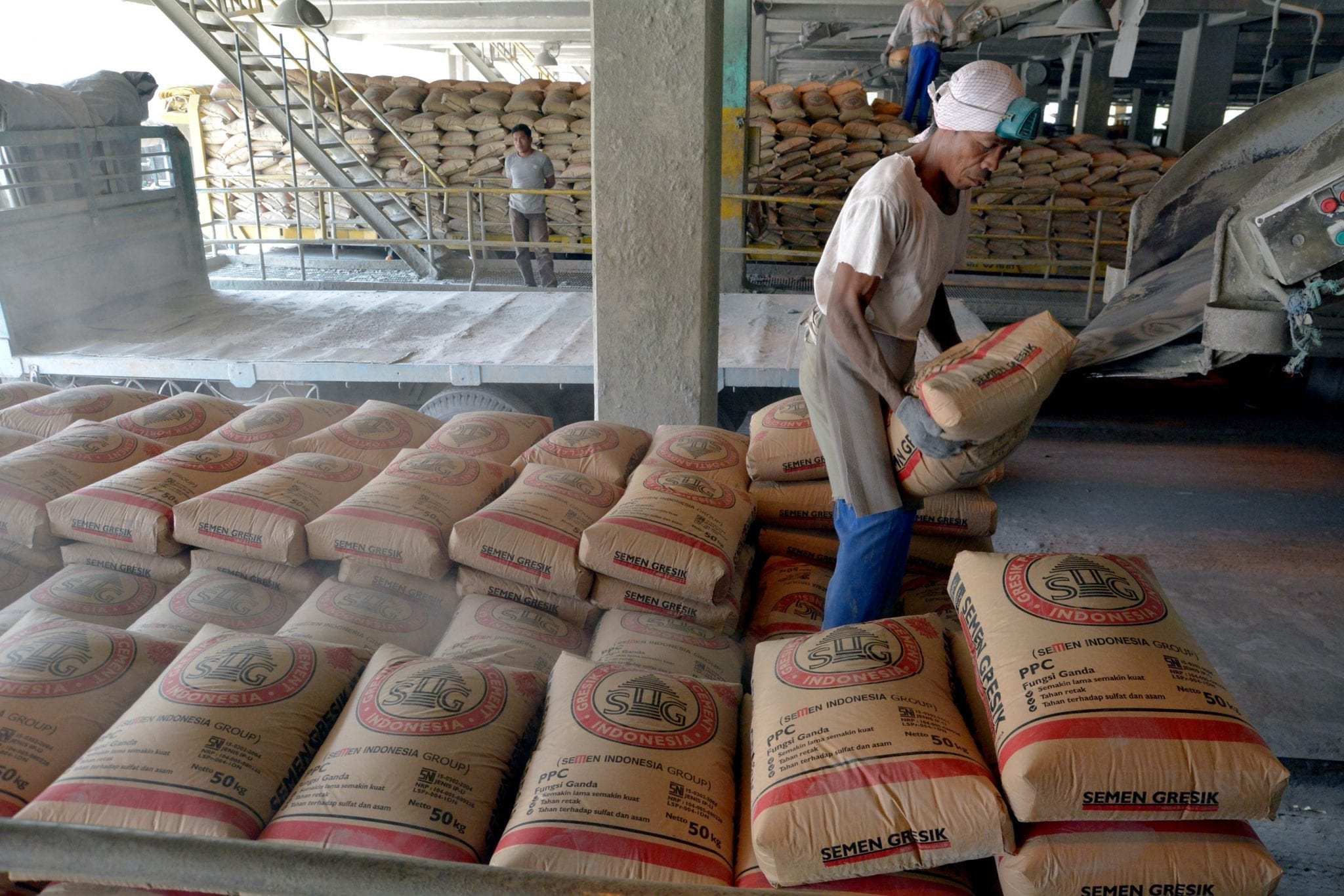
    Cement company PT Semen Indonesia is still able to record an increase of up to 10 percent in sales in the midst of current tight competition and growth of infrastructure projects which has not been as expected.

    “Sales in the period from January to May 2017 were up 10 percent from last year,” the companys head of communication bureau, Sigit Wahono, said here on Friday.

    He said sales in May were recorded at 2.9 million tons to make the total in the first five months of this year to reach 11.5 million tons.

    He admitted that although the cement market has been over supplied due to the increasing number of players including foreign industries, Semen Indonesia is still able to record significant growth.

    Regarding Semen Indonesias control of around 43 percent market share, he said that it has been relatively the same in the past five years.

    On market absorption, Sigit said that in general it was still the same as last year which was dominated by retail (bag) sales for household market segment and housing development.

    “In the first semester you see there were not many big projects nationwide including from the government. So sales are still dominated by retail sales,” he said.

    Regarding the cement factory in Rembang, Central Java, whose progress is still hampered, Sigit said that it did not affect much as it was not included in the Cost Budget and Work Plan.

    He said however that Semen Indonesia has set a target of contribution from the factory at 1.1 million tons out of its capacity which is up to 1.5 million tons.

    “Indeed the factory in Rembang has not been included in the production or sales plan. However, we are optimistic it will contribute 1.1 million tons as its capacity is 1.5 million tons. That will be the target for the second semester this year,” he said.

    Sigit said Semen Indonesia would abide by the decision by not conducting development in the factory area pending the result of the second round of environmental study.

  • Indonesia to Overtake Vietnam as Asia’s Largest Cement Producer

    Indonesia to Overtake Vietnam as Asia’s Largest Cement Producer

    The Indonesian Cement Association is optimistic that Indonesia could grow into Asia’s largest cement producer by 2017, as eight new production plants with a combined capacity of 24 million tonnes are set to begin operations in the next two years.

    After meeting with President Joko Widodo, the Chairman of the Indonesian Cement Association, Widodo Santoso, explained that sales of cement is expected to grow by two percent to 61,08 million tonnes in 2015 – up from 2014 sales figures that stood at 59,9 million tonnes.

    “I am sure that demand will continue to rise as many of the government’s large-scale infrastructure projects are set to commence in February next year – as such, a five percent increase is easily within reach,” said Santoso at the President’s Office on Monday, September 28.

    Santoso said that the growth in demand is accompanied by the increase of Indonesia’s national production output – it is known that Indonesia currently produces around 65 million tonnes of cement annually. In 2015, four new production plants are slated to commence their operations, while four others are set to begin churning out cement in 2016. Combined, all eight plants could produce an additional 24 million tonnes of cement per year.

    “By 2017, we are set to become Asia’s largest cement producer. Previously, the industry was dominated by Vietnam and Thailand – by next year, we should be able to cement Indonesia’s position as an industry leader,” said Santoso.

    The four plants that will begin operations in 2015 are owned by Bosowa Cement, Holcim, Merah Putih Cement, and Pan Asia Cement – all of these plants combined will add some 11-12 million tonnes of cement per year to the market.

    “This additional capacity will allow us to export a minimum of five million tonnes – quite a significant addition that could help Indonesia boost its’ trade balance,” said Santoso.