Tag: Central Bank

  • Central Banks Buy the Most Gold in Over 50 Years

    Central Banks Buy the Most Gold in Over 50 Years

    Gold kicked off the new year better than it has in a long time. The precious metal is benefitting from extraordinary trends.

    Demand for gold was stronger last year than it has been in more than a decade, the World Gold Council (WGC) said in its report on demand trends in the fourth quarter and the full year of 2022.

    On Tuesday, the WGC also celebrated the 30th anniversary of its study on gold demand trends, which examines the cornerstones of physical gold market demand.

    Overall, global gold demand, excluding OTC, rose 18 percent to 4,741 metric tons in 2022, almost the same amount as 2011, and the strong full-year result was supported by record demand of 1,337 tonnes in the fourth quarter.

    The exceptionally high demand was due to «massive» buying by central banks and supported by strong retail investor buying and slower outflows from exchange-traded funds, according to WGC.

    The second consecutive quarter of heavy central bank demand drove annual purchases in the sector to a 55-year high of 1,136 metric tons. In the year-end quarter, central banks bought 417 tons of gold, on top of the nearly 400 tons they acquired in the third quarter. As in the third quarter, most gold purchases were unreported.

    Private investors also contributed to the demand boom, with global demand for bars and coins rising to a nine-year high of 1,217 tonnes, up 2 percent from a year earlier.

    The second half of the year was particularly strong, with demand hovering around 340 tons for two consecutive quarters for the first time since 2013. The need for asset protection in a global inflationary environment remained a key motivator for purchasing gold, the report said.

    At the same time, gold exchange-traded fund (ETF) holdings declined less than they did a year, falling 110 tons compared to a drop of 189 tons. Total investment demand, not taking into account OTC activity, rose 10 percent last year to 1,107 tons.

    For the current year, the WGC sees improved ETF demand, especially since interest rate hikes are likely to be less of a problem. However, central bank purchases are unlikely to return to 2022 levels, the industry association added. Continued dollar weakness, rising recession risks, and increased geopolitical risks would support gold.

  • Hong Kong Explores Central Bank Digital Currency

    Hong Kong Explores Central Bank Digital Currency

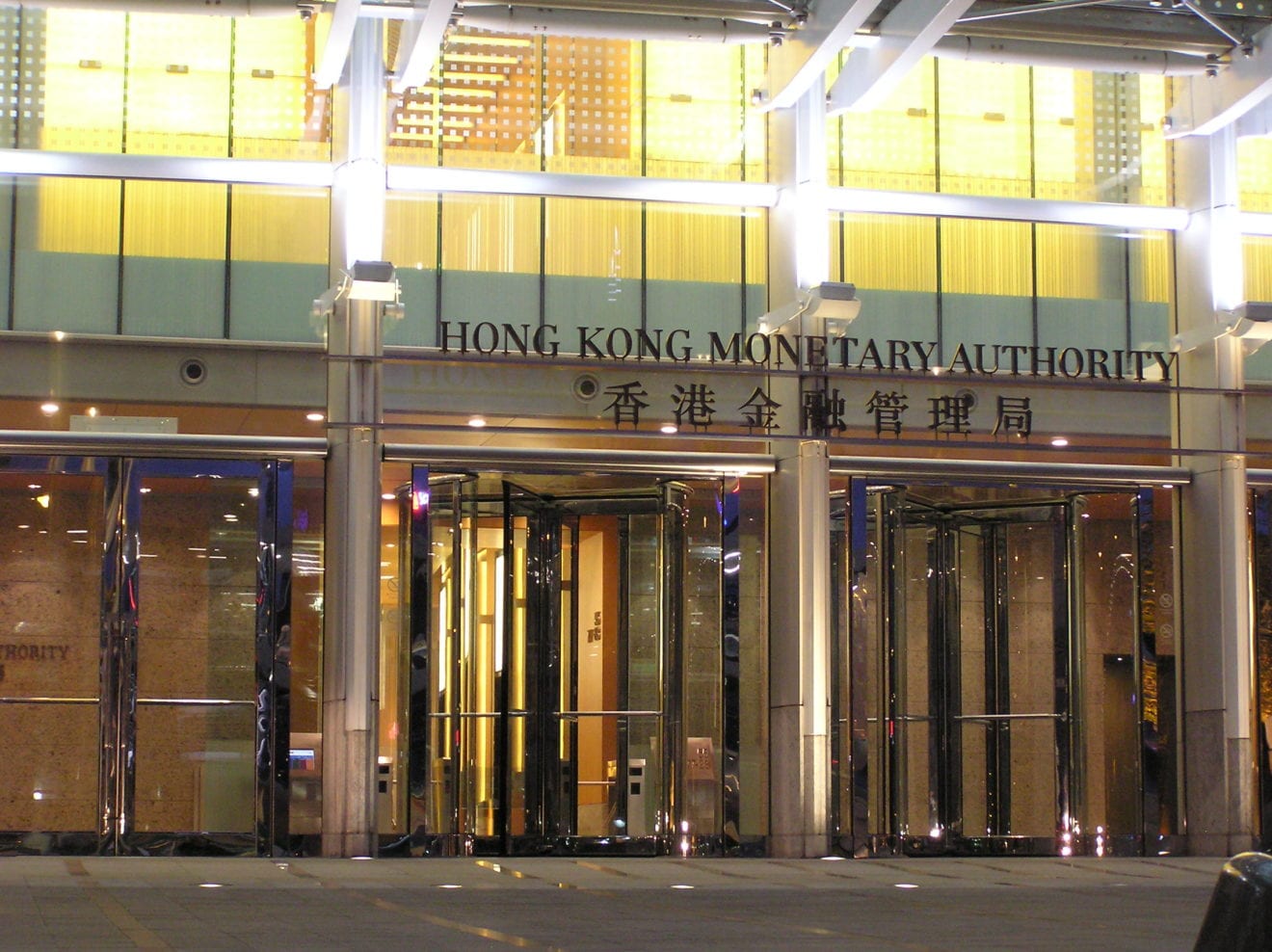
    The Hong Kong Monetary Authority is exploring the feasibility of issuing a digital currency for the city, joining central banking efforts worldwide to create electronic money.

    A paper exploring the feasibility of issuing a retail-focused central bank digital currency (CBDC) will be delivered within 12 months, according to the HKMA at a recent media briefing.

    Issues that will be considered in the paper include potential use cases, data privacy, anti-money laundering standards, and more.

    In addition, HKMA officials also announced a new trial to explore how Hong Kong residents can top up a digital yuan wallet using the city’s local payment system.

    People are now a lot more used to digital payments and if other central banks are exploring possible use cases for CBDCs you have to try out to see whether you can make it successful, said HKMA chief executive Eddie Yue at the briefing.

    This marks the second stage of e-CNY trials in Hong Kong following a smaller scale trial also focused on the usage of digital yuan wallets in Hong Kong.

  • China’s Central Bank Signals Break-Up Risk for Non-Bank Players

    China’s Central Bank Signals Break-Up Risk for Non-Bank Players

    The latest draft rules proposed by the People’s Bank of China signals even more regulatory tightening against the mainland fintech sector including the potential to even break up non-bank institutions deemed to hinder payment development.

    The People’s Bank of China (PBoC) proposed this week that it could advise the state council’s antitrust committee to take action should non-bank institutions severely hinder the healthy development of the payment service market.

    Actions suggested include the ability to break-up non-bank financial institutions that are deemed to be too dominant and abusive of their leading market positions.

    This spells more tightening for the likes of payment giants like Ant’s Alipay or Tencent’s Tenpay which own the majority of mainland China’s digital payment market share.

    According to guidelines released earlier this month, the PBoC defines a digital payments monopoly as any non-bank service provider with at least half of the market share for online transactions.

    Two non-bank providers with a combined market share of two-thirds or three providers with three-quarters will also qualify for antitrust investigations.

    Two or three firms having less than a 10 percent market share will not trigger investigations, the PBoC added.

    The new rules spell headwinds for China’s leading fintech giants whose dominance could at the very least potentially face supervision over capital adequacy requirements especially if they offer deposit products with interest rate payments, if not a full break up.

    While onlookers remain cautious, some have expressed optimism about limited intervention due the risk of such actions resulting in curbed innovation.

    Globally, regulations have actually intensified to rein in the dominance of big tech. In our view, this is meant to prevent market abuse, said UBS Global Wealth Management’s APAC CIO Min Lan Tan in a recent virtual roundtable. Regulators will be careful not to stifle innovation. Significant changes in business models or the breakup of companies, we think, is unlikely.

  • Thailand Cannot Push Digital Banking with Central Bank Alone

    Thailand Cannot Push Digital Banking with Central Bank Alone

    Thailand hopes to match the rapidly rising global standards in digital banking but Bank of Thailand’s governor notes that it will take more than just the efforts of the central bank.

    Veerathai Santiprabhob said the central bank will look to launch electronic lending and other financial services this year through a collaboration with various parties. Though he did not disclose details, the BoT governor stressed that collaboration between government agencies is critical, according to a report.

    It cannot be the central bank alone, he said.

    Digital banking in Thailand is feeling the tailwinds, despite the lack of independent virtual lenders seen emerging in neighboring financial hubs. UOB was the latest reported entrant into the country with the launch last year of its first mobile-only bank, TMRW. Local lenders, too, are making digitalization inroads with one player reportedly reaping the success of applying gamification in its business.

    Although Thailand has digital banking ambitions, Veerathai is cognizant of the gap between its market and other rival players in Asia. He highlighted data from non-financial sources, an electronic identification system and a suitable regulatory framework as three key pillars required to build virtual banks.

    At this stage, Thailand might not have the ecosystem ready like in Singapore or Hong Kong, where the digital banking system is in better shape, he said.

    When we talk about digital banking licenses, we want to have a new financial services provider that can serve the currently underserved, meaning that you have to be able to meet the needs of people on the street, people from far, far away, Veerathai said.

    Whilst access to the unbanked market is undoubtedly an attractive proposition, Veerathai acknowledged the challenges required to evaluate borrowers’ creditworthiness due to insufficient data available.

    This can come from when customers use mobile phones, the way they conduct their business using the digital footprint ecosystem, he added.

  • Central bank cuts compulsory reserve interest rates

    Central bank cuts compulsory reserve interest rates

    The State Bank of Vietnam (SBV) announced Monday it has lowered the interest rates on compulsory reserves at banks by 0.4 percentage points.

    The new compulsory reserve interest rate has been reduced to 0.8 percent per annum for dong deposits, down from 1.2 percent prior. This change came into effect on Sunday.

    A compulsory reserve is a minimum amount calculated on the ratio of total deposits that credit institutions must deposit with the SBV to ensure solvency and reduce risks in savings activities. In Vietnam, this ratio is 3 percent.

    The SBV will continue not paying any interest on dong deposits from banks that exceed the minimum 3 percent requirement.

    But all deposits by the Vietnam Development Bank (VDB) and Vietnam Bank for Social Policies (VBSP), both state-owned banks; People’s Credit Funds and microfinance institutions will receive the 0.8 percent interest.

    Conversely, for foreign currency deposits with the SBV, no interest is paid on minimum reserves, but anything in excess is now subject to 0.05 percent interest per annum, which has been slashed from 0.5 percent, according to the central bank statement.

    The reduction of compulsory reserve interest rates to 0.8 per year will not have a significant impact on the profits of banks by the end of the year because the required reserve ratio is currently at a low 3 percent, Dr. Can Van Luc, chief economist at BIDV, Vietnam’s biggest state-owned bank, told the local press.

    Banks also do not maintain reserves at the SBV higher than the minimum requirement, as it would be a waste of resources because investing or lending this money would bring more returns, he added.

    The reduction in compulsory reserve interest rates is most likely a move by the SBV to reduce the burden on the state budget because interest payments are taken from there. “But like the impact on profits of commercial banks, the savings will not amount to much,” Dr. Luc said.

    Last month, the SBV also lowered the interest rate cap on 6-month dong deposits from 5.5 percent to 5 percent, prompting many banks in the sector to cut deposit rates across various terms.

  • India central bank makes surprise interest rate cut

    India central bank makes surprise interest rate cut

    India’s central bank unexpectedly lowered interest rates and, as anticipated, shifted its stance to “neutral” from “calibrated tightening” to boost a slowing economy after a sharp fall in the inflation rate. The monetary policy committee (MPC) of the Reserve Bank of India cut the repo rate by 25 basis points to 6.25%, as predicted by only 21 of 65 analysts polled by Reuters. Most polled respondents expected the central bank to only change the stance, to neutral.

    Four of six members of the MPC voted to cut the rates, while all six voted for a change in the stance.

    “Investment activity is recovering but supported mainly by public spending on infrastructure,” the MPC said in a statement. “The need is to strengthen private investment activity and buttress private consumption.”

    Rupa Rege Nitsure, chief economist at L&T Financial Services, called the central bank moves “the perfect policy response in the current circumstances.”

    Indian shares pared gains while 10-year bond yields slid 5 basis points after the surprise rate cut.

    The Indian rupee weakened to 71.69 to the dollar immediately after the announced but strengthened soon after to 71.42.

    The NSE index was up 0.04% at 11068.05 while the 10-year benchmark government bond yield fell to 7.51% from Wednesday’s close of 7.56%.

    India’s last rate cut, to 6.00%, was in August 2017.

    Also, in Manila, the Philippine central bank kept its benchmark interest rate steady for a second straight meeting , saying inflation risk had fallen on lower crude oil and food prices.

    The Bangko Sentral ng Pilipinas kept the rate on its overnight reverse repurchase facility The central bank paused its tightening cycle in December to allow its five straight previous rate increases, totalling 175 basis points, to work their way into the economy.

    The rate increases appear to be having their desired effect as inflation has started to cool since it hit a near-decade peak of 6.7% in September and October last year.

    The decision to stay on hold was based on the central bank’s view that lower oil costs and stabilisation in food prices would bring inflation under control and could see it back on target as early as March, when it could fall to below 4%.

  • Indonesia December Inflation Cools, Stays Within Bank Indonesia Target

    Indonesia December Inflation Cools, Stays Within Bank Indonesia Target

    Indonesia’s December annual inflation rate eased, but the pace was quicker than expected, data from the Central Statistics Agency, or BPS, showed on Wednesday. The annual inflation rate in December was 3.13 percent, the agency said, lower than November’s 3.23 percent, but quicker than the median forecast of 2.98 percent. The December rate was well within Bank Indonesia’s target range of 2.5 percent to 4.5 percent for 2018.

    On a monthly basis, the consumer price index rose 0.62 percent due to rising food prices and transportation fares.

    The annual core inflation rate, which excludes government-controlled and volatile prices, was 3.07 percent, matching the poll’s prediction and representing a slight acceleration from November’s 3.03 percent.

    The central bank raised interest rates six times last year to defend the rupiah, which hit its lowest in 20 years in October. However, the currency pared some losses closer to the end of the year due to capital inflows

  • Central Bank of Vietnam cuts rates by 0.25-0.5 per cent

    Central Bank of Vietnam cuts rates by 0.25-0.5 per cent

    The State Bank of Viet Nam (SBV) has cut several interest rates for the first time since 2014 in order to support business and boost economic growth.

    According to the central bank’s statement, 0.25 percentage points have been shaved off the annual refinancing interest rate, rediscount interest rate, overnight interest rate applied to electronic inter-bank payments, and the rate of loans to offset capital shortage in clearing payments between the SBV and domestic banks. The new rates go into effect today.

    Specifically, the refinancing rate has been reduced from 6.5 per cent per year to 6.25; the rediscount rate from 4.5 per cent per year to 4.25; and other rates from 7.5 per cent to 7.25 annually.

    The maximum annual short-term interest rate for loans in Viet Nam dong to meet customer demand for capital in some sectors has also been cut by 0.5 percentage points.

    Businesses operating in agricultural, export and auxiliary industries; small and medium-sized enterprises (SMEs); and high-tech firms will now enjoy a short-term lending rate of 6.5 per cent per year, instead of 7 per cent.

    The maximum rate applied to loans supplied by the People’s Credit Fund and other micro-financial institutions has been lowered from 8 to 7.5 per cent.

    These adjustments are expected to help increase bank liquidity for loans, stabilise interest rates, the foreign exchange rate and the foreign currency market, thereby contributing to controling inflation and achieving sustainable economic growth.

    Move welcomed

    Many experts welcomed this move, saying the adjustment is a good sign for the economy and enterprises, especially given that business and production is facing many difficulties, including shortage of capical and high interest costs.

    The rate cut will help reduce costs for commercial banks seeking loans from the central bank, boosting lending to enterprises at lower interest rates, they said.

    Tran Hoang Ngan, a member of the National Assembly’s Economic Committee, said this decision would consolidate the confidence of the market as it proves that the bank system’s liquidity has stabilised after the bad debts resolution.

    Tran Du Lich, a member of the National Monetary and Financial Policy Advisory Council, said the cut was modest, proving a cautious decision and not signaling monetary policy loosening.

    Financial expert Phan Minh Ngoc said that with lower interest, credit growth might be speeded up in the coming months, but because the SBV still keeps the ceiling credit growth target at 18 per cent, commercial banks approaching the cap must be choosier in selecting customers.

    “Thus, the adjustment basically is not an action to loosen monetary policy, but to help restructure the loans of commercial banks,” Ngoc said, adding that it was unlikely to raise inflation

    The central bank will be able to maintain the new interest rates as long as inflation is controlled at low level. But if the US Fed continues raising its interest rates, which would put pressure on the VND/US$ exchange rate, SBV might have to amend its policy, the expert predicted

    Following moves

    The Bank for Investment and Development of Viet Nam (BIDV) today also announced that the bank would apply a maximum annual interest rate of 6 per cent for short-term dong loans to prioritised enterprises in accordance with the SBV’s decision.

    Start-ups, environmental firms and the bank’s regular customers for at least three years will be able to enjoy the preferential rate, too. Firms and households affected by floods in the central provinces will be offered a maximum rate of 5.5 per cent, according to the bank’s press release.

    In another development, VPBank has become the first private commercial bank to reduce its short-term interest rates by 0.5-1 percentage points for SMEs. The preferential rates will depend on the production sector of the borrowers, the length of the credit relations they established, as well as their record of debt payment.

    Vo Tan Hoang Van, general director of the Sai Gon Commercial Bank (SCB), told Phap Luat Tp Ho Chi Minh (HCM City Law) that in the next two weeks, SCB would lower interest rates by 0.5 percentage points for new credit contracts serving production in prioritised sectors or being signed by SMEs.

    Some other banks also plan a cut in lending interest rates, but say the cut rates must be calculated based on liquidity conditions and taking account other measures to save costs and improve business performance, the newspaper reported.

    Nguyen Van Duc, deputy director of the Dat Lanh Real Estate Company, said that the cut of 0.5 percentage points was not so big but it would have a positive impact on the market and business profits, especially for large firms with heavy loans, he said.

    Ly Thanh Sinh, general director of the Minh Long Hung Garment and Embroidery Joint Stock Company, said that beside reducing interest rates, it was important for SMEs to access capital to buy machines and production equipment.

    Curently, annual short-term interest rates range from 6.8-9 per cent for regular businesses, and 6-7 per cent for prioritised ones; while medium and long-term rates hover around 9-11 per cent for the former and 9-10 per cent for the latter.

  • Central Bank of Vietnam maintains flexible forex regime

    Central Bank of Vietnam maintains flexible forex regime

    According to the National Finance Supervision Committee, the deficit is likely to be 3.5% of exports. The trade deficit with China rose from US$3.7 billion in 2013 to US$28 billion last year. The US Federal Reserve (FED) is expected to increase the interest rate in June and continue to do so through 2019 to take the rate to 3 per cent.

    Analysts said this is causing downward pressure on the value of the đồng against the dollar.

    In mid-May, the US Dollar Index (DXY) rose significantly to 99.60.

    The State Bank of Vietnam (SBV) recently increased the đồng reference rate by VND9 after the greenback appreciated strongly to avoid possible shocks.

    SBV Governor Le Minh Hung said the international markets remain volatile due to the UK vote to leave the EU, US President Donald Trump’s policies and the US rate hikes.

    The volatility has had an impact on the đồng exchange rate and made it harder for the Government to keep things smooth on the forex front. Since the beginning of the year, the central bank has been very cautious. As a result, the đồng has only lost 1.1% against the dollar.

    The National Financial Supervisory Committee (NFSC) officials said the central bank is flexible and keeps a close eye on the exchange rate, regulating it on a daily basis.

    Analysts said Vietnam should not pay too much attention to the US interest rate hikes since they do not always affect the đồng.

    They pointed to the rate hike in March when the dollar actually declined against the đồng.

    One of the reasons for this is that foreign direct investment has been pouring into the country.

    In the first four months of the year, US$10.95 billion flowed in, representing a year-on-year increase of 40.5%.

    Though the big trade deficit with China is a factor in the đồng’s value, the Chinese Government is unlikely to depreciate the renminbi.

    This is because its policy is to develop the economy based on the domestic market in future instead of exports as the case used to be.

    Hung said since the Government would continue to pursue its de-dollarisation policy, the central bank would remain flexible with its exchange rate regulations to ensure exporters, importers, the Government and enterprises borrowing overseas and repaying foreign loans all benefit.

    Many analysts estimate the greenback will rise 2-3% against the đồng this year, saying the economy can easily absorb this.

    Foreign retailers crowd VN market

    Koji Takayanagi, president of Japan’s second largest convenience store chain FamilyMart, said the company is reviewing its loss-making operations in Indonesia, Thailand and Vietnam.

    “If we can get them to rally we will, but we cannot continue to pour in resources,” he told Reuters.

    The Japanese franchise has forecast operating profit to more than double to 1 trillion yen (US$8.79 billion) in four years from 412 billion yen in the current fiscal year.

    But while the business is profitable in China and Taiwan, it is not doing well elsewhere.

    FamilyMart came to Vietnam in 2010 and expected to open 300 stores in collaboration with local distributor Phu Thai Group, according to online newspaper VnExpress.

    But the partnership ended in 2013, with the distributor taking over 42 stores and turning them into B’s Mart in collaboration with Thailand’s Beri Jucker Plc.

    The brand made a comeback in July 2013 and now has 130 stores in HCM City, the nearby resort town of Vung Tau and Binh Duong Province, and aims to expand to 150 by the end of this year.

    Last December, Parkson, owned by Malaysian conglomerate Lion Group, closed its second store in Hanoi after eight years of operations, citing unsatisfactory results.

    The move marks the closure of the last store in Hanoi and third in Vietnam. In May 2016, Parkson Paragon in HCM City’s upscale Phu My Hung urban area closed after five years of operations, and in January 2015, Parkson Landmark 72 in Hanoi closed.

    The management had stuck a notice on the door of the latter store that it would only close for a few days “to take inventory”, but never opened again.

    Parkson’s recent results in the third quarter of 2016-17 showed its business in Vietnam remained mired in difficulties because the retail market was getting “more and more cramped”.

    Market observers offered explanations for the failure of some foreign retailers in Vietnam, with the decisive factor being the growing presence of giant global retailers, which is making competition in the sector fiercer.

    According to a report from the Ministry of Industry and Trade earlier this year, foreign enterprises now hold a 17% market share in the shopping centre and supermarket segment, 70% in convenience stores, 15% in minimarts and around 50% in online, TV and phone shopping.

    The percentages may not be too high but the looming presence of foreign retailers can be seen in many major cities.

    For instance, Thailand’s Central Group has bought the entire stake of France’s Casino Group in Big C Vietnam, while another Thai conglomerate, TCC Holding, has acquired Metro Cash and Carry Vietnam.

    Other foreign groups such as the Republic of Korea’s Lotte and Japan’s Aeon have been steadily expanding, and have plans to double or triple the number of stores in Vietnam in the coming years.

    In terms of growth, Vietnam’s retail market is among the top five in Southeast Asia and 11th globally, according to A.T. Kearney’s 2016 Global Retail Development Index.

    The trade ministry said retail sales of goods and services rose 10.2% to VND3,530 trillion (US$156.7 billion) last year.

    It has projected the market to hit US$179 billion by 2020.

    There is indeed a lot room for the retail sector to grow in Vietnam, where more than half the population of nearly 92 million is young and incomes are rising very fast, it said.

    Business-to-customer transactions are expected to double in value from the US$2.2 billion recorded in 2013.

    The ministry also expects the country to have 1,200-1,300 supermarket outlets by 2020, up 650 from 2011. The number of trade centres and malls are projected to increase to 180 and 175, respectively.

    Thời Báo Kinh Doanh newspaper (Business Times newspaper) quoted Akiihiko Maeda, CEO of Japan’s  Ministop 24-hour convenience store chain in Vietnam as saying competition is now the biggest challenge for his company.

    Ministop would need five to six years to break even, he said.

    But to achieve that, it would have to increase the number of stores by 80-100 a year and reach around 300.

    Analysts pointed out that this means Ministop — and other foreign retailers – would have to bring in lots of money.

    Where do domestic retailers stand?

    The swift expansion of foreign firms has also piled pressure on local retailers. Domestic goods suppliers are feeling the pinch as foreign retailers are developing their own brands for selling through their stores.

    Local retailers, at least many of them, cannot take on their foreign rivals, analysts fear.

    To compete, they need good management in all areas from brand building, ensuring product quality and marketing to human resources, training and establishing distribution networks, they said.

    But most are too weak and need to be immediately restructured, they said.

    Technology is also a problem for many Vietnamese retailers in a sector that is highly technology-intensive, they said.


  • Indonesia central bank seen cutting key rate again

    Indonesia central bank seen cutting key rate again

    Indonesia’s central bank, which kept its benchmark reference rate unchanged for nearly all of 2015, is expected to make its second cut this year on Thursday as it tries to bolster the country’s sluggish growth.

    South-East Asia’s largest economy grew 4.8% in 2015, the fifth straight year of slowing and the weakest pace since 2009. But growth picked up in the final quarter, showing some signs of recovery.

    Bank Indonesia (BI) trimmed its key rate by 25 basis points last month. Thirteen of 19 economists in a Reuters poll predict a same-size cut on Thursday, reducing the rate to 7%.

    Many economists believe BI is at the start of an easing cycle, as there’s room for monetary easing that there was not in 2015, when inflation sometimes topped 7% and anticipation of higher US interest rates pressured the fragile rupiah, which was emerging Asia’s second worst performing currency last year.

    The rupiah was not rattled by the Federal Reserve’s hike in December, and it has strengthened more than 2% against the dollar this year. BI deputy governor Perry Warjiyo said last week the rupiah is heading towards a level reflecting the country’s economic fundamentals.

    ROOM TO EASE?

    The rupiah’s appreciation gave “room for BI to ease its monetary policy even further. BI will make use of this opportunity to do just that, in a bid to help sustain the upward momentum in GDP growth,” said DBS’ economist Gundy Cahyadi.

    Low inflation and a deep slump in January exports and imports also support the argument for early rate cut, economists said.

    “Weak exports and capital goods imports mean further policy boost to aid economic recovery is warranted,” said Credit Suisse economist Santitarn Sathirathai.

    Not all agree. Six analysts surveyed by Reuters said the central bank will hold the benchmark at 7.25%.

    “BI is keen to avoid a repeat of the 2013 ‘Taper Tantrum’, which saw the central bank having to hike rates aggressively to support the struggling rupiah,” said Capital Economics in a note projecting no second rate cut until the second quarter.

    CIMB Niaga economist Winang Budoyo, who has pencilled in a hold this week, predicted that BI will lower the rate in March instead.

    BI has a policy meeting scheduled for March 17-18, right after the Fed’s next policy meeting on March 15-16.

  • Indonesia’s central bank forecasted 4.8% economic growth in 2015

    Indonesia’s central bank forecasted 4.8% economic growth in 2015

    Bank Indonesia (BI), Indonesias central bank, had estimated the economy to grow by 4.8 percent in 2015, slightly higher than the Finance Ministrys forecast of 4.74 percent.

    “The central bank had estimated a 4.8 percent growth throughout 2015,” BIs Deputy Governor, Perry Warjiyo, stated here on Friday.

    Despite last years economic growth being far from the revised budget assumption of 5.7 percent in 2015, the economy is believed to grow at a better pace in 2016, Perry affirmed.

    “This year, the economy could grow at 5.2 percent,” remarked Perry.

    Domestic economic growth is being supported by several factors, such as the global economic growth, which is believed to improve though not that strongly.

    Besides this, the government has implemented the fiscal stimulus in the first quarter of 2016 in addition to BI relaxing the macroprudential policy to boost liquidity, thereby helping banks in lending.

    “And finally, of course, yesterday, the central bank had given a signal of monetary easing by scaling down the BI rate by 25 basis points, which will give a positive perception to the business community to buy government securities,” Perry remarked.

    Currently, the BI rate is at the level of 7.25 percent, with the deposit facility rate at 5.25 percent and lending facility rate at 7.75 percent.

  • Inflation May Accelerate to 4.38% in January

    Inflation May Accelerate to 4.38% in January

    Supplies of shallots and chili, staple ingredients in Indonesian meals, are often low during the rainy season, propping up the prices index, said Sasmito Hadi Wibowo, the deputy of goods and services distribution at the Central Statistics Agency (BPS).

    Beef prices are also on the rise, increasing by 1 percent alone this month after the government slapped a 10 percent value added tax on beef trade and import in the beginning of this year. Officials reversed the policy on Friday.

    Bank Indonesia has targeted an inflation rate of between 3 percent and 5 percent this year.

    The central bank just cut its benchmark interest rate to 7.25 percent last week as it seeks to stimulate bank lending and boost growth, but an accelerating inflation would undermine its ability to trim the interest rate further.

    The government aims to expand Southeast Asia’s largest economy by 5.3 percent this year, rebounding from an estimated 4.7 percent last year, its slowest pace since 2009.

  • Myanmar central bank to grant new foreign bank licences

    Myanmar central bank to grant new foreign bank licences

    The Central Bank of Myanmar plans to initiate a second round of foreign bank licencing in early 2016, the monetary authority said.

    The aim is to licence banks from “additional neighbouring and important trading partner economies”, quoted the central bank as saying.

    “The main objective of the second round of licensing is to further promote existing economic cooperation.”

    Foreign banks headquartered in countries that successfully obtained a licence in the first round – namely Australia, China, Japan, Malaysia, Singapore and Thailand – will not be allowed to participate in the second round, the notice said.

    Foreign banks with representative offices in Myanmar or which are in the process of obtaining one will be permitted to participate.

    The licence will be for onshore wholesale banking through a branch, and a call for expressions of interest will be made in early 2016, the Central Bank said.

    In the last, hotly-contested bidding round, nine foreign banks won licences on October 1 last year, and winners were given a year to prepare operations to meet the approval of the Central Bank.

    All of the banks – Bangkok Bank, Australia’s ANZ, Japan’s the Bank of Tokyo-Mitsubishi UFJ, Mizuho Bank and Sumitomo Mitsui Banking Corporation, the Industrial and Commercial Bank of China (ICBC), Malaysia’s Maybank, and Singapore’s Oversea-Chinese Banking Corporation (OCBC) and United Overseas Bank (UOB) have now opened branches.

    The licences came with a number of restrictions – banks are only permitted to lend to foreign businesses and local banks. They may team up with local lenders to offer additional services, but are prohibited from involvement in retail operations.

    This marked the first time that foreign banks have operated in the country for more than 50 years – Myanmar had not allowed onshore banking by foreign institutions since 1963, when 14 foreign banks were nationalised.

  • Hong Kong Central Bank Lifts Key Rates

    Hong Kong Central Bank Lifts Key Rates

    “Instead of going into the property market, (capital flows) could go out and ease the property market, and that could strike consumers’ confidence and I think the economy next year may not perform so well”, said Paul Tang, chief economist at Bank of East Asia in Hong Kong. As Hong Kong’s currency is pegged to the United States dollar, the city’s monetary policy typically moves in line with the Fed.

    “The normalization of Hong Kong’s interest rate will begin with the outflow of funds from the Hong Kong dollar trigger by high interest rates of the U.S. dollar”.

    A company logo is displayed inside the HSBC headquarters in Hong Kong November 3, 2015.

    The rate hike followed the U.S. Federal Reserve’s decision to raise the range of its benchmark federal funds rate by a quarter of a percentage point to between 0.25 percent and 0.50 percent on Wednesday, its first move in almost a decade.

    “We have seen a relatively slow economic growth this year, which is to a large extent attributed to the weak performance in our foreign trade”.

    Meanwhile, rampant deflationary pressure worldwide, volatilities in the global financial landscape, the growth of regional trade agreements, as well as lingering geopolitical threats and increased terrorist concerns, are the major risks and challenges facing Hong Kong exporters. Data from retail banks, which account for about 90% of the total customers’ deposits in the banking sector, are used in the calculation.It should be noted that the composite interest rate represents only average interest expenses.