Retail News CRM

Tag: central group

  • Popular Vietnamese eCommerce site Lingo.vn closed down

    Popular Vietnamese eCommerce site Lingo.vn closed down

    Vietnamese eCommerce site Lingo.vn closed suddenly yesterday, without a word of goodbye to its legion of Vietnamese fans.

    The closing of Lingo.vn was clearly a sudden decision, especially as it had been running a promotion on its Facebook page, which was supposed to last until today, (August 3).

    According to an inside source, the company will permanently close the brand and site, and axe 160 of its 190 staff, leaving just 30 to work on another eCommerce site called Topmot.vn.

    The B2C site Lingo.vn was established in August 2011 by VMG Media  after the Japanese company NTT Docomo invested in the company. In 2014, Lingo.vn was separated into Lingo eCommerce, and received funds from Yellow Star Investment, with the expectation it would become the largest eCommerce website in Vietnam.


    However, after two years of trying, it seemed Lingo.vn could not achieve commercial viability.

    The exit of Lingo.vn illustrates the cut-throat nature of Vietnam’s eCommerce market. Last year saw the withdrawals of big names such as Deca.vn, mum and kids Beyeu.vn, with the same reason of “not enough investment”. Other sites were sold to foreign corporations: Lazada was sold to Alibaba, Zalora to Thailand’s Central Group, Foodpanda.vn was acquired by local rival Vietnammm.

    lingo

    From another perspective, it seems the investors of Lingo.vn were wise to stop pouring more and more money and resources into a failing business model.

    Meanwhile, Central Group and Lotte Mart have announced they will ramp up their eCommerce projects in Vietnam, hopefully overcoming the barriers that have trapped smaller players.

  • Thailand’s Central Retail to double Vietnam stores in 4 years

    Thailand’s Central Retail to double Vietnam stores in 4 years

    Thailand’s Central Retail plans to double more than the number of its stores in Vietnam from the current 340 to 710 by 2026 to capitalize on a growing market.

    The main retail arm of Thai conglomerate Central Group will spend 30 billion baht (US$790 million) for the expansion, which it hopes will make it Vietnam’s biggest food and property retail platform.

    “We always put ourselves in the center of consumers’ lives,” Olivier Langlet, CEO of Central Retail Vietnam, said.

    The company eyes sales of 100 billion baht following the expansion, up from the current 38.6 billion baht, he added.

    Central Retailed first came to Vietnam 10 years ago and now has ten retail brands, including Go! Mall, Nguyen Kim, SuperSports, and Top Market, which sell a range of products from food to electronics.

    Other foreign retailers who have announced plans to expand in Vietnam include Japan’s Aeon and South Korea’s Lotte.

    Aeon Mall, which has six outlets, plans to open 16 more, including three or four in Hanoi.

  • Thailand’s Central Retail Turns Around Bottom Line With Solid Fourth Quarter

    Thailand’s Central Retail Turns Around Bottom Line With Solid Fourth Quarter

    The listed retail arm of Thai conglomerate Central Group says revenue rose by 15 percent year-on-year to 58.77 billion Thai baht ($1.8 billion) and EBITDA was up 42 per cent to 8.03 billion baht in its latest quarter.

    Net profit for the company – which operates La Rinascente department stores in Italy and the Central and Robinson’s store networks in Thailand – soared 124 percent to 2.5 billion baht.

    The group did not break down the performance of its various business units, which also includes retail chains selling groceries, sportswear, stationery, and electronics across Thailand and Vietnam.

    Last year, Central Retail renovated three flagship Rinascente stores in Milan, Florence and Rome while the country was in a Covid-related lockdowns with the work completed before Italy reopened its international borders in mid-2021.

    “The spending power from domestic customers along with the return of European tourists boosted sales growth in the fourth quarter, matching 99 percent of sales during the pre-pandemic era,” the company said in a statement.

    Full-year sales in Italy grew by 30 percent year on year, driving a fourfold increase in EBITDA.

    Group-wide full-year sales reached close to $6 billion with net profit of $8.5 million.

    Central Retail chief executive Yol Phokasub said the company had endured “rigorous-resilience tests” last year due to the impact of Covid-19 on trading and was ready to focus on growth in the year ahead.

    Central Retail is one of several subsidiaries of Central Group, which last December agreed to pay $5.37 billion for the Selfridges department store business in the UK in partnership with Austrian real estate company Signa Group.

    Earlier this month, sister subsidiary Central Pattana, the Group’s property business, revealed plans to invest $3.7 billion over the next five years to build or upgrade shopping centres, hotels and office facilities in Thailand and Vietnam, including Central-branded malls which house its fashion-led department stores.

  • Central Group unveils US$825m Vietnam expansion plan

    Central Group unveils US$825m Vietnam expansion plan

    Alibaba’s grocery store chain Freshippo is searching for to boost funds at a valuation of about $6 billion, a lot decrease than a hoped-for valuation of as much as $10 billion earlier this 12 months, three individuals accustomed to the matter informed Reuters.

    The corporate needed to reduce its valuation expectations after China’s COVID-19 restrictions, specifically a draconian lockdown within the financial hub of Shanghai, badly dented enterprise, they stated.

    Traders are additionally sceptical about whether or not loss-making Freshippo can continue to grow and switch a revenue anytime quickly given the corporate’s bleak outlook because the world’s second-largest economic system continues to pursue a strict coverage of stamping out COVID-19 instances, stated two of the individuals.

    The grocery store chain, generally known as Hema in Chinese language, is aiming to boost $400 million to $500 million from outdoors buyers, two of the sources stated.

    The fundraising is much from being finalised and monetary phrases may change, cautioned two of the individuals and a separate fourth supply with information of the matter. The entire sources declined to be recognized as the data was confidential.

    The fourth supply stated Freshippo would welcome good buyers to assist it develop however added it had a wholesome money stream and was underneath no fast stress to boost recent funds.

    Alibaba and Freshippo didn’t reply to Reuters requests for remark.

    Freshippo’s lowered ambitions for its first impartial personal fundraising spherical come amid a drop-off in investor curiosity globally in tech ventures which have but to show a revenue.

    Highlighting tumbling valuations globally, Swedish funds agency Klarna Financial institution AB stated on Monday it had raised $800 million of funds at a valuation of $6.7 billion, down round 85% from the $46 billion valuation it attracted final 12 months.

    Personal fundraising in China has additionally slowed since final 12 months as a result of a sweeping regulatory crackdown on the tech, tutoring, gaming and different sectors.

    Regardless of indicators that Chinese language regulators could possibly be easing up on regulatory crackdowns, dealmakers do not anticipate to see any fast funding surge within the nation given a downbeat outlook for the economic system.

    Based in 2015 and wholly owned by e-commerce behemoth Alibaba, Freshippo has 300 shops in 27 cities that present grocery supply companies, based on its web site.

    Shanghai is its largest market with 73 shops. Though residents in Shanghai relied closely on supply companies through the metropolis’s two-month lockdown this 12 months, grocers like Freshippo struggled to fulfill demand as a result of COVID-19 restrictions and disruptions to the nation’s provide chain.

  • Central Group takes control of Bangkok’s Mega Bangna parent

    Central Group takes control of Bangkok’s Mega Bangna parent

    When Vietnamese Prime Minister Nguyen Xuan Phuc visited Thailand in August, a red carpet was rolled out for him at Central Group’s Central Ladprao, a shopping complex in downtown Bangkok.

    The premier had been invited to attend the opening ceremony of a Vietnamese trade fair. He was greeted by members of Central Group’s founding Chirathivat family, including Chief Executive Tos Chirathivat, who reminded his guest that he wanted to invest more in Vietnam, the group’s biggest market outside Thailand.

    Tos introduced the premier to his youngest son, who had just graduated from a U.S. university and will join the family business in the group’s online operations.

    “He doesn’t know anything about retail,” Tos, laughing, said. “But the young generation, they know a lot about digital technology.”

    International expansion and e-commerce are two challenges that Tos, a grandson of group founder Tiang Chirathivat, has been tackling as the traditional retail business faces slowing growth.

    Like many other family businesses in Thailand, the Chirathivats are ethnic Chinese.

    Founder Tiang emigrated from Hainan Island to Bangkok in 1925. While many other Chinese immigrants chose to start businesses in the city’s Chinatown, he set up his first shop in the Thonburi district on the outskirts of Bangkok and across the Chao Phraya River from the city center.

    His shop was close to a large temple built by the royal family, so Tiang sold refreshments and provided a boat parking service for visitors.

    He moved across the Chao Phraya River to a location near the grand Oriental Hotel (now the Mandarin Oriental), where he opened a store with his eldest son, Samrit, in 1947. In 1956, the family opened Thailand’s first department store in Chinatown.

    Today, the 70-year-old group has become a dominant player in Thailand’s retail sector, with more than 60 department stores and shopping malls. It also operates hotels and restaurants, with a total of 5,000 outlets.

    In 2016, annual sales amounted to 332.7 billion baht ($9.98 billion), up 17% from a year earlier, confirming its status as the largest retailer in Thailand. Its closest rival is The Mall Group, which operates such major Bangkok shopping malls as Siam Paragon and Emporium, with estimated annual revenue of 50 billion baht. Central Group is also larger than other major regional peers, such as the retail operations of SM Investments in the Philippines.

    The Chirathivat family is the third-richest family in Thailand, with an estimated worth of $12.3 billion, according to Forbes.

    Central’s growth has been supported by an expanding economy, a rising middle class and demand for new goods and services. It built malls and stores in competitive locations offering a wide range of products. But Thailand’s population is starting to age at a more rapid rate than neighboring countries, while they are spending more abroad. This is causing domestic demand to stagnate as competition intensifies and becomes more diversified.

    “There are so many things that are happening now that affect department stores,” which account for about 40% of group revenue, Tos said in a recent interview. “The retail market is so much bigger than just department stores,” referring to various forms of retail operations from malls to discount stores and specialty stores.

    The 52-year-old Tos said it is “pretty simple” for him to grasp industry trends given his long experience in the family business. “I’m good at looking at the big picture, investing and expert at finding money.”

    Tos, the youngest of Samrit’s eight children, studied finance at Columbia University in New York and initially wanted to be an investment banker. He worked for a year at Citibank in Thailand. But he decided to return to the family business and launched a hypermarket chain, Big C, in 1994.

    He also oversaw an expansion into rural areas, which now account for around half of the group’s retail sales, although a similar venture in China proved less successful.

    Because of his largely successful track record in leading the group’s diversification, the board of directors strongly backed the appointment of Tos as chief executive in 2013, although he said he was reluctant to take up the post because he was already “personally satisfied” with retail. “He had outstanding talent and everyone in the family knew that,” one family member said.

    He has since then spearheaded an international expansion drive by buying several European department stores, including Italy’s La Rinascente and Germany’s KaDeWe, as well as the local arm of Big C in Vietnam. International operations now account for roughly 30% of group revenue.

    ONLINE AMBITIONS

    But Tos expresses less confidence about his ability to keep up with online operations, in contrast to his deep knowledge about traditional brick-and-mortar businesses.

    “Digital and e-commerce is the only unknown for me, but it is also the future,” he admitted. “I’m not sure in terms of execution and how to bring in growth. But you can see everywhere now that if it works, the value is incredible and crazy.”

    Pressure is mounting. Although Southeast Asia’s e-commerce market is still relatively small with no dominant player, like Alibaba Group Holding in China or Amazon in the West, the market is growing rapidly. Amazon recently entered Singapore, while Alibaba has invested in Lazada, the largest e-retailer in Southeast Asia, and is planning to build a large logistics center in Thailand.

    Tos has responded by bringing in outside experts to help. Last year, the group started recruiting non-family executives into top management posts that resulted in a team dominated by outsiders for the first time. The new team, which reports directly to Tos, is aimed at strengthening the group’s shift to online operations.

    Nicolo Galante, an Italian and former McKinsey consultant who has revamped online operations and created new marketing channels for European retailers, became the group’s chief operating officer. He is initiating reforms by adding online shopping channels for each retail business from department stores to sports specialty outlets and attracting talent to new posts, such as chief technology officer.

    “In the next two to three years, the picture of e-commerce in Thailand will change dramatically,” Galante said. Unlike Europe, where the traditional retailers found themselves far behind Amazon by the time they decided to shift online, the developing e-commerce market in Southeast Asia means that “we are not yet late,” he said. “We have the unique opportunity to write the history for ourselves. But it is going to happen very fast and very soon.”

    Former bankers have also joined the group to provide financial expertise essential for supporting e-commerce. Yol Phokasub, former head of Siam Commercial Bank, was appointed to the newly created post of president. Prasarn Trairatvorakul, a former Bank of Thailand governor, is serving as a senior advisor.

    “Central has been aggressively adopting experts and foreigners as executives under Tos,” said Natenapha Wailerdsak, a lecturer at Thammasat Business School. This is a positive move, she said, since relying heavily on insiders could “restrict the businesses from expanding beyond the abilities of its family members.”

    FAMILY DOMINANCE

    Nonetheless, Central is often seen as one of the most family-dominated conglomerates in Thailand compared with other groups, such as Charoen Pokphand Group, the agribusiness-to-retail-to-telecoms empire led by Dhanin Chearavanont.

    Family members fill all of Central’s 15-member board of directors and seven-seat executive committee. Most of its group companies are private, with a few exceptions like development unit Central Pattana.

    In contrast, most of CP’s major assets are listed and its management includes non-family executives who head core listed subsidiaries such as Charoen Pokphand Foods and 7-Eleven operator CP All.

    “My grandfather and father, we wanted all the family members to be in the company if they wished,” Tos said. “But CP, they say they don’t want family members in the group. They are more aggressive and want the best professional people to run the business.”

    Dhanin said in his autobiography last year that just before he became president of CP Group when he was 30, he asked his relatives, including his older sisters and the wives of his brothers, to leave the company and he replaced them with young professionals.

    He also forbade hiring the children of family members for CP core businesses. “Bringing a son on board could also jeopardize the company’s future,” Dhanin said. “Not only would the company lose valuable [outsider] executives [who feel they will not be able to get a promotion], it would have trouble ensuring a smooth transition from one leadership to the next.”

    The Chirathivats share “a different philosophy,” Tos said. The group has a “stricter” management selection process that requires at least 75% approval from the family-dominant board. “They must have a trust in you, think that you are capable and good for the family,” he explained.

    The extensive Chirathivat family provides plenty of potential candidates. Founder Tiang had 26 children with three wives that resulted in roughly 220 Chirathivat offspring, of which 51 are involved in the business.

    To keep the family bonds strong and avoid disputes, Samrit Chirathivat, the founder’s son who built the foundation of the retail business, insisted that the family should live together. He built a house in Bangkok’s central Sala Daeng district that housed nearly 50 Chirathivats across three generations.

    “We were brought up together and interacted with each other a lot,” said Suthiphand Chirathivat, another of the founder’s sons and a group executive. The children worked in the group’s shops as clerks during school holidays.

    Although the central Chirathivat residence is now old and too small to hold many family members, some of them still live together in three main compounds in Bangkok.

    Family members also keep in touch through an online messaging group. Every year on July 10, the anniversary of the founder’s death, the family gathers at a temple near where the group had its first shop.

    A family council headed by Suthichai Chirathivat, another son of the founder who was the group’s first CEO and current chairman of the board, discusses issues such as marriage, education and the family budget that is financed by income from unlisted group companies. “We provide funds for those that aren’t involved in the business, too,” said Suthiphand Chirathivat.

    Central Group has put in place a succession plan to avoid internal disputes, which includes family and outside candidates. “The more pressing challenge for the Central Group when it comes to top management is how to transform it from a tightly family-dominated group to a more open and professional one,” said Pavida Pananond, associate professor at Thammasat Business School. “They need to address the strategic need to become a more regional and global player in retail.”

    Tos certainly recognizes that. “The company is growing faster than our babies,” he said. “To keep growing, we will need outsiders to take care of the group.”


  • Thailand’s Central Group acquires OfficeMate

    Thailand’s Central Group acquires OfficeMate

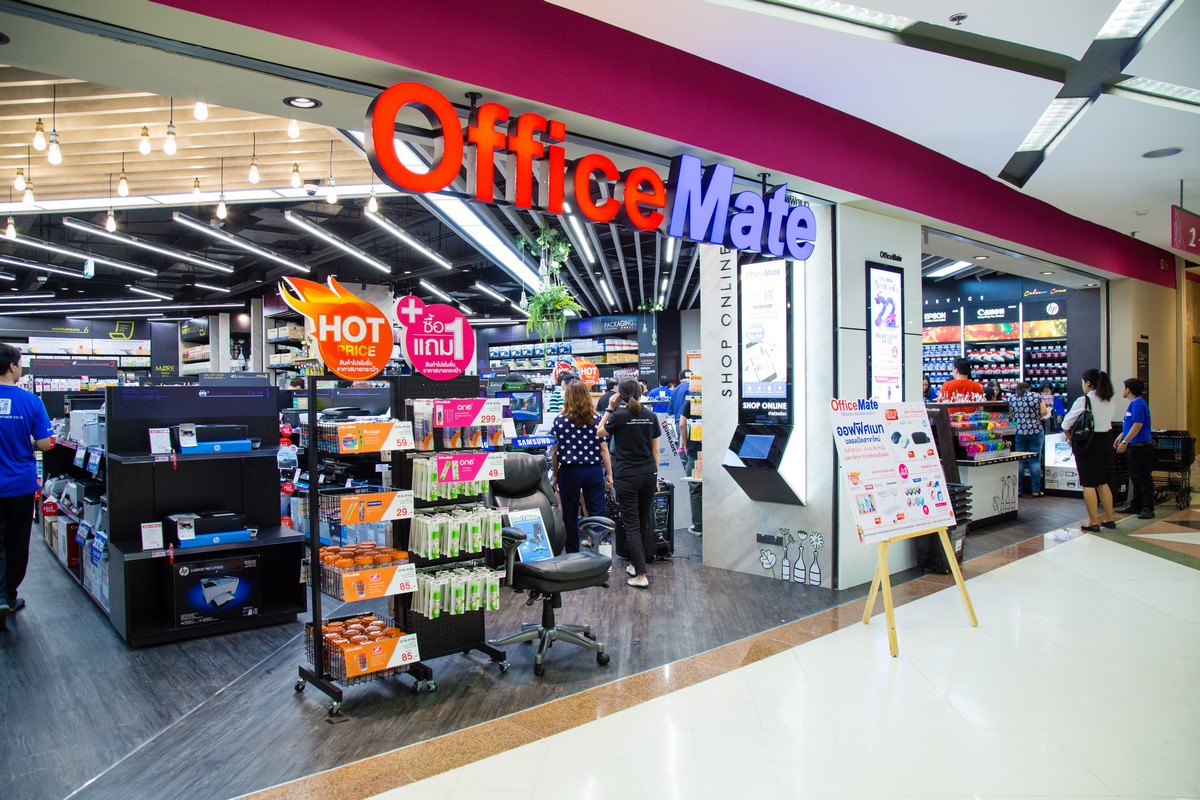
    Central Retail (CRC) is to buy out COL Public Company, the parent company of Thai retail chains OfficeMate, B2S, and Meb E-Books.

    The deal with COL, which is estimated at US$390 million, will add the three brands to CRC’s existing retail portfolio and “strengthen Central Retail’s hardlines group” the company said in a statement. The move is part of the group’s strategy to expand its range of retail product categories, formats, and channels domestically and globally.

    COL is one of Southeast Asia’s largest office supplies, books, entertainment media, lifestyle products, and e-books retail business. The company’s board on Monday approved the terms of the takeover proposal which will now be put to a shareholders’ meeting. Once endorsed the company will be delisted from the Thai stock exchange.

    The company was incorporated in February 1994 by the Ounjai Family which had more than 40 years of experience in selling stationery and office equipment.

    “We are supremely confident that this plan to buy out the business and all the shares of COL will be mutually beneficial,” said Yo Phkasub, CEO of Central Retail. “It will enable both businesses to grow sustainably, and upgrade Thai retail for long-term national economic growth.”

    According to Central Retail, the deal will help the company to expand its customer base into new groups, particularly B2B and the younger customer segment. On the other hand, COL will enjoy greater exposure for its products through CRC’s omnichannel platform.

    The acquisition of 640 million COL shares is still subject to regulatory approval and expected to complete within the first quarter of next year, according to Yo.

  • Thailand’s Central Group commits space to communities

    Thailand’s Central Group commits space to communities

    Thai retail conglomerate Central Group is reducing and pegging the price of more than 3000 essential consumer products, as well as reducing prices at 87 foodcourts by 20 percent to help citizens impacted by the Covid-19 pandemic.

    The move is in response to government-led initiatives to assist national economic recovery in establishing and implementing a broad-ranging social responsibility plan.

    Central Group has also committed to measures to assist 74,000 staff across its various business units, pledging to maintain their employment terms and to provide them with Covid-19 insurance.

    The firm has also inaugurated new projects this year aimed at stimulating local economies and generating income by donating 90,000sqm of rent-free space to small local traders and growers in 100 shopping malls across 44 provinces; buying produce directly from growers and community enterprises; and promoting product development and local tourism.

    The group says its existing social-responsibility project is being rapidly expanded to create occupations by means such as giving knowledge on agriculture and product development, reducing social inequality by supporting the creation of occupations for people with disabilities, and developing communities as tourist attractions. It is also creating a crowdfunding platform for entrepreneurs starting a new business but lacking capital, as well as supporting students, schools, hospitals and research work, with the target of raising more than THB100 million (US$3 million).

    Thailand’s Central Group aims to boost health by creating new standards for safe business to prevent the spread of infection – including implementing measures of hygiene and safety in tenants’ stores – and donate medical equipment for staff fighting Covid-19 at 30 hospitals nationwide through the Thai Medical Association.

  • Central Group to take stake in Globus

    Central Group to take stake in Globus

    Thai retail and mall conglomerate Central Group is partnering with an Austrian property developer to buy Swiss department store chain Globus.

    According to the Sonntagszeitung, a Swiss newspaper, both companies will take an equal 50-per-cent share in the business.

    Globus reportedly has significant property assets making it an attractive target for Austrian property investor Rene Benko. Benko’s Signa Holding already owns the Germany department store Galeria Kaufhof.

    Central Group, on the other hand, has already enjoyed success investing in department stores in Europe, its network now including the Rinascente Turin and a share in Germany’s KaDeWe Group, which also owns the Oberpollinger and Alsterhaus stores in Munich and Hamburg. It has another luxury department store under construction in Vienna.

    Globus is valued at about US$1 billion and has a flagship store on the main street of Zurich.

    The deal has not yet been officially confirmed with final details under negotiation, but current owner Migros-Genossenschafts-Bund has confirmed a sale is proceeding according to plan.

  • Thailand’s Central Group invests in EU expansion

    Thailand’s Central Group invests in EU expansion

    Thailand’s Central Group has made three major overseas investments totaling US$662.7 million to build its presence in world-leading tourist destinations.

    The new investment properties are located in Vienna, Osaka and Turin.

    “Central Group continues to embark on our strategy to ride on the global tourism trend by developing high-quality flagship projects in major tourist cities,” said Central Group executive chairman and CEO Tos Chirathivat. “Our most recent investment of over 20 billion baht comprises three landmark projects: an iconic innovative luxury retail and hotel complex in Vienna; Centara’s first Centara Grand Hotel Osaka in Japan; and the relaunch of a completely refurbished Rinascente Department Store in Turin, Italy.”

    The 58,000sqm development in Vienna comprises a luxury department store, a luxury hotel with 150-165 keys, retail shops and upscale restaurants with a publicly accessible roof park.

    Design group OMA won an international design competition with its design concept “The Link”, which seamlessly connects the new building complex with the city surroundings via a series of public and commercial spaces. The project is a joint venture between Central and Austria’s Signa Group, and is due to open in 2023.

    Centara Grand Hotel Osaka is the first Centara-branded property in Japan, which will occupy a prime site in Osaka’s Namba district, the center of leisure tourism for the city and the wider Kansai region.

    The property will be built as a flagship five-star hotel located at the city center, with 515 rooms occupying a new 34-story tower overlooking Namba Parks. The top floors will include a lounge along with customizable space for meetings and events, plus a rooftop restaurant sky bar providing panoramic 360-degree views of Osaka.

    Centara Grand Hotel Osaka is a partnership between Centara Hotels & Resorts, Taisei Corporation and Kanden Realty & Development, and is scheduled to open in 2023.

    Thailand’s Central Group bought Rinascente Turin in 2017 and is now refurbishing and upgrading the store, nearly doubling the net selling space. A highlight of the renovation is the new accessories area featuring new collections by luxury brands such as Bottega Venetta, Burberry, Alexander McQueen and Marni.

    Central’s international investment and growth can be partly attributed to the strong Thai baht, which has appreciated substantially against most major currencies over the last few years. Last year, Central Group’s international operations – primarily in Vietnam, Europe and the Maldives – contributed around 30 percent of the group’s revenue. This share is expected to grow in the next five years with the new projects in the pipeline.

    “Thailand has a huge opportunity to drive domestic spending and tourism growth by lowering import duties and optimizing the foreign exchange rate,” said Tos. “Today, Thai import duties on major lifestyle categories are the highest in Asia, putting the country at a disadvantage as a shopping destination. If Thai baht depreciates and import duties are lowered, it will be more attractive for tourists to visit and shop here, and there will be less incentive for Thais to shop overseas.

    “Given the significant contribution to the country’s employment and GDP, a vibrant and thriving tourism and retail sector is key to driving Thailand’s healthy and sustainable economic growth overall,” he said.

  • Central Group has plans to spin off the retail division

    Central Group has plans to spin off the retail division

    Thai mall operator Central Group will list its Central Retail Corporation unit, combining retail businesses in Thailand, Vietnam and Italy.

    The listing is scheduled to take place before the end of this year and the company expects it will raise between US$1 billion and $2 billion.

    “We are reaching customers in new ways through physical and digital platforms,” said Central Group president Yol Phokasub. “The platforms are especially focused on personalisation, based on data from our 27 million customers worldwide.”

    Central operates almost 2000 stores in Thailand. It runs 134 outlets in Vietnam under a variety of banners, and nine in Italy, trading as “Rinascente”.

    The move follows the group’s acquisition of Zalora Thailand, as well as a joint venture with Chinese e-tailer JD and an investment in ride-hailing business Grab.

    Central will also delist its Robinson Pcl subsidiary with a tender offer.

  • Central Group closes Robins Vietnam online store

    Central Group closes Robins Vietnam online store

    Central Group has closed its Robins Vietnam online fashion store to concentrate on its physical stores. On its website, Robins Vietnam announced the end of online business from this week, referring customers to its two Robins department stores, at Vincom Royal City in Hanoi and Ho Chi Minh City’s Crescent Mall.

    A Central Group representative said the group “plans to restructure its Vietnamese businesses”, including its fashion operation.

    Central Group launched Robins.vn, which was merged with Rocket Internet’s Zalora.vn, in May 2017.

    The Thai retail giant entered Vietnam in 2011, and now owns several businesses there, including Big C supermarkets, electronics chain Nguyen Kim, Lan Chi Mart, Robins Department Stores, and stationery chain LookKool.

    Mobile World group recently closed its online grocer vuivui.com after two years of operation.

    Vietnam’s e-commerce industry is expected to grow 30 per cent to reach US$13billion by 2020 by Vecom. The market is now dominated by Shopee, Lazada, and Tiki, with major investment from foreign firms including JD, Alibaba.

  • King Power duty free monopoly ending soon

    King Power duty free monopoly ending soon

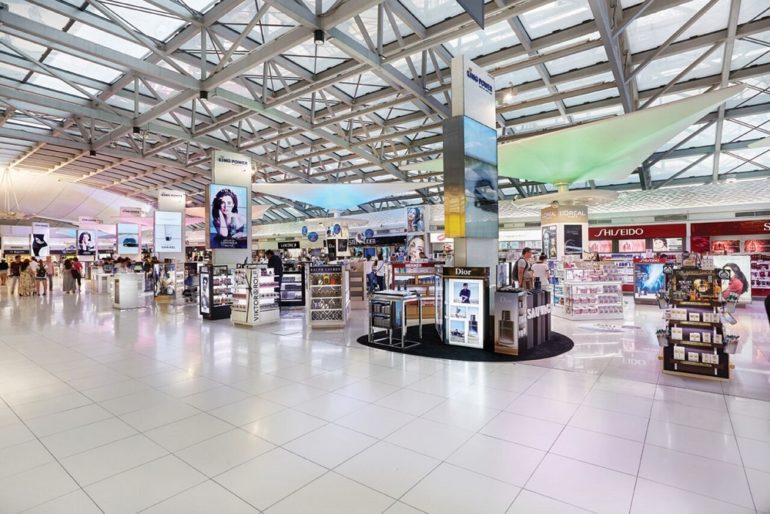
    Thailand’s much-maligned airport duty-free monopoly appears set to be nearing an end. For years, major Thai retailers have complained that incumbent operator King Power has controlled the retail offer – and prices – at Thailand’s largest airports, especially Suvarnabhumi outside Bangkok. Frequent travellers often comment that airport ‘duty-free’ prices are higher than at other airports in the region, including Singapore and Hong Kong.

    On Wednesday, state-owned Airports of Thailand (AOT) approved guidelines for concessions for duty-free and commercial activities at its airports, the first step in opening up retail spaces to other companies.

    According to Reuters, AOT will offer three retail licences at an upcoming auction, clearing the way for Thai retail giants Central Group and The Mall Group, along with South Korea’s Hotel Shilla, to enter the fray.

    King Power’s current licence ends next year.

    AOT says contracts will cover duty-free retail, commercial businesses such as food and beverage outlets and pick-up counters for shoppers who buy goods in town and collect them at the airport after clearing customs and immigration.

  • Some Insights about Central Group – Thailand

    Some Insights about Central Group – Thailand

    The Central Group, first opened as a small family-run shop by Mr. Chirathivat, in the city of Bangkok during the early 1950s. Expanded later on in 1956 by his son, Smarit Chirathivat, establishing the first Central Department Store in Bangkok.  They were the first to import international cosmetic brands; the first to focus on impeccable customer services; and the first to implement innovative marketing communications.

    One of the smartest tactics of the Central Group is that its work consists of a variety of diverse investments in various corporations, each of which has become the leader in the retail, property development, brand management, hospitality and food and beverage industries. What brings complimentary businesses to the Central Group and strengthen their position in the marketplace, both domestically and internationally.

    Central Group Operational Highlights:

    • 2016 Total Sales – US$ 10.4 billion
    • 2016 Investment – US$ 1.2 billion
    • Store Network – More than 4,400 locations/branches
    • Employees – Over 80,000 employees

    The last two years of 2016 and 2017 were significant for Central Group with the following changes:

    2016:

    1. Central Group and Nguyen Kim Group officially announced the acquisition of Big C Vietnam.
    2. Took over Zalora Thailand and Vietnam.

    2017:

    1. Launched Park Hyatt Bangkok Hotel
    2. Launched Rinascente Rome
    3. Central Group and JD.com form a joint Venture.
    4. Launch of Tops Plaza.

    Central Group is counting on online growth to help drive sales. The company first announced its $500 million joint venture with JD in September, teaming up with China’s second-largest e-commerce operator. Central Group announced a new strategy in March 2018, a strategy called “New Central, New E-conomy” with which Central is aiming to become the first Market Leader in Digi-Lifestyle Platform. The company is aiming to become the first Market Leader in Digi-Lifestyle Platform.

    Along with this strategy, the company also partnered with leading global companies to strengthen its business and has developed people and communities to grow sustainably with Central Group.

    According to the Executive Chairman and CEO of Central Group, Tos Chirathivat, the three strategic Foundations used by Central Group to operate its business for many years are:

    1. Be Retail Leader in Lifestyle and Services.
    2. Expand Businesses beyond Thailand.
    3. Strengthen Businesses by Merger & Acquisition.

    This strategy has served Central Group for years and helped achieve a significant average growth of 11% over the last five years from 2013-2017, while the revenue mix of 2017 beaks down to 72% in Thailand, 15% in Europe and 13% in Vietnam.

    For continued strong growth, Central Group President Yol Phokasub has emphasized a new 5-year strategy for 2018- 2022 to make a New Central, New E-conomy. The group will be the first Digi-Lifestyle Platform leader in Thailand delivering superior customer experiences to inspire lifetime loyalty. The Digi-Lifestyle Platform will be developed as a best in class common e-Commerce platform across businesses, as well as assisting the creation of new businesses through three Building Blocks:

    1. Data: Put all extended data from all business units into a Data lake on the Cloud to create a single view of customer for deep insight into customer behaviour, able to give a superior experience to customers.
      2. Loyalty & Personalized experience: Through The1 New Lifestyle Platform to tighten customer relationships, which are more deeply personalized.
      3. Omni channel Platform: Developing Central Group’s businesses with a true Omni channel Platform to seamlessly connect offline and online shopping, anywhere, any time.

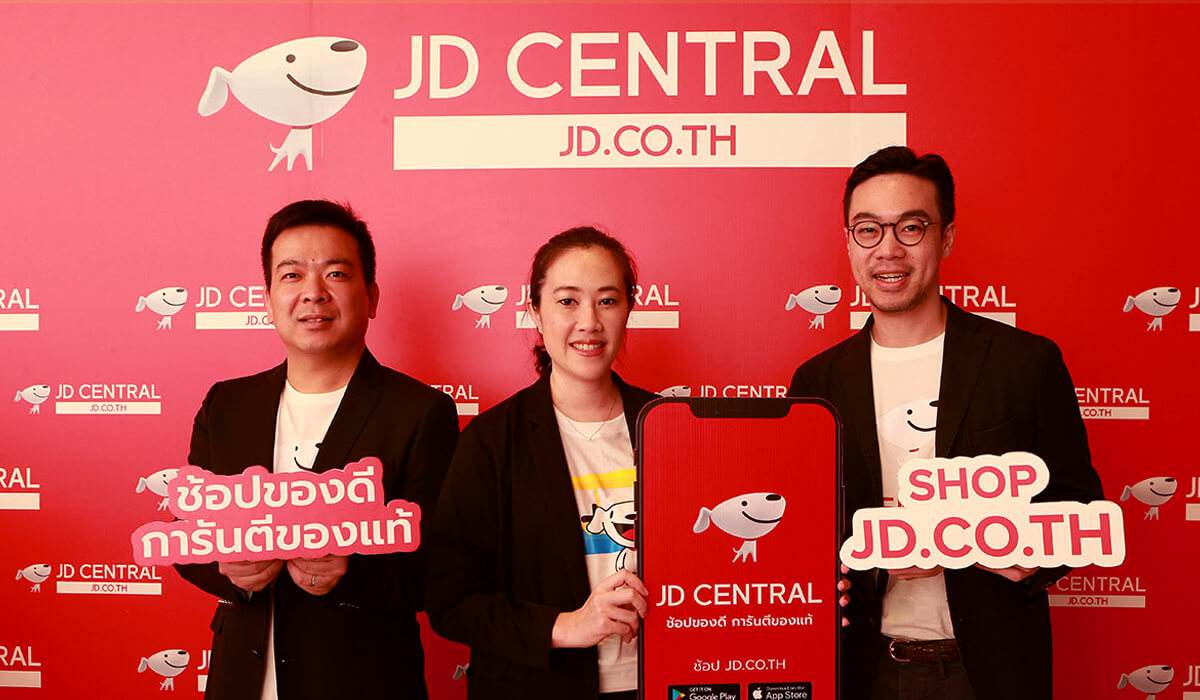
    Central Group has also formed a joint venture with Chinese e-commerce giant JD.Com to establish JD Central. The new Marketplace at JD.co.th is a new shopping channel for Central Group’s customers to facilitate Digi-Lifestyle platform more quickly and comprehensively. The website JD.th.com will be ready to provide service in May, as a platform to bring Thai products and SMEs to the World.

    To develop the Digi-Lifestyle platform, Central Group gives priority to four main components to and achieve the target of the New Central:

    1. Alliance: Central Group has partnered with world-leading companies such as Dusit Thani, JD.com, Hongkong Bank, Ikea and many other leading partners in the near future.
      2. Technology: Central Group aims to become a top Technology Company, led by technology in every aspect to serve customers and stimulate the national economy.
      3. People: Central Group is the largest job creator in Thailand, generating over-220,000 jobs including over 700 disabled people. The company promotes talent and ability to fuel its digital ambitions. Leadership and culture are rebooted with programs like Life Reimagined to support “No Hierarchy”, Coaching and Reverse Coaching, where ambition never sleeps, creating inspiration and good experiences at work, and redesigning workspaces for work-life harmony to thrive.
      4. Community: Central Group gives priority to Creating Shared Value (CSV) under the project CENTRAL Tham that has four main pillars of people, communities, Environment, Peace and culture.

    This year, the company has a sales target of 397,308 MB, representing growth of 14% on 2017, and plans investment of 47,500 MB (27.8% growth from 2017), to expand investment in both Thailand and overseas. The company will develop its new business model to meet every customer demand, with plans to open new shopping malls and hotels.
    Central Group has also achieved success with strategic partnerships with world class partners who have trusted Central Group, such as Dusit Thani with the mixed-use project on Rama IV Road and JD.com.

    The plan of expansion of the Central Group for the next five is mainly concentrated around expansion of the business locally, and globally with a high focus on Europe.

    In recent years, Central opened and acquired new operations in Indonesia, Vietnam and Malaysia. Among the most important activities currently ongoing in Southeast Asia within the business of Central Group is their recent joint venture with JD. Which is not only a major merging for the market but also a notable change as the two giants are focusing on the e-commerce world. JD is China’s leading  e-commerce operator. Central Group is the number one retail brand in Thailand. Its subsidiaries own shopping malls, department stores, hotels, supermarkets and restaurants. The partnership will deliver a new online shopping platform JD.co.th.

    Central Group will open multiple flagship stores on the platform. The partnership with JD is intended to help Central Group compete in Southeast Asia’s booming e-commerce market and also open business opportunities in China.

  • JD Central plans unmanned retail shop debut in 2020 for Thailand

    JD Central plans unmanned retail shop debut in 2020 for Thailand

    JD Central – the new joint venture between Chinese online specialist JD and Thailand’s Central Group – has revealed plans to open automated stores, starting next year in Bangkok.

    Vincent Yang, JD Central’s CEO, said the company is evaluating a location where it could test an unmanned store format. Customers would enter the store and transact using facial recognition software.

    The move would be one of several initiatives the company is evaluating using new-generation technology. Another is the use of autonomous warehouse robots to replace humans in warehouses to reduce overheads.

    “We need to get approval to use robots and autonomous delivery vehicles in Thailand,” Yang said.
    Speaking after the official launch of JD Central, which has been operating in pre-launch mode for three months, Yang said the company plans to be Thailand’s largest online retailer by 2020.

    “E-commerce in Thailand will increase to 10 per cent of the total retail market in three years, up from 3-5 per cent today, thanks to competition and user experience,” he said.

    During the three-month trial, orders on the new platform increased 15-fold. Yang claims just 2 per cent of orders were returned and there was a 50 per cent repurchase rate by customers. Four out of every five customers accessed the site via mobile.

    JD Central offers products from 4000 brands, the most popular to date being mobile phones, food, home accessories and apparel.

    The company also has a strong focus on authenticity, guaranteeing no fake goods are on sale on its platform.

    “We are positioned to be the most trusted online platform brand by focusing on customer experience with authentic products. If customers find any fake products on our website, they will be refunded three times the original price,” he said.

  • Massive expansion for Central Group Vietnam

    Massive expansion for Central Group Vietnam

    Thai retail conglomerate Central Group is planning to triple its Vietnamese businesses in the next five years.

    With the planned investment of US$500 million, the retailer is expanding its stores and shopping malls in the country to as many as 750, along with new retail formats.

    “We are very strong in Vietnam in food business which is the primary need of consumers, but we are also preparing for the future, for the needs consumers are going to have [beyond] food,” Central Group Vietnam CEO Philippe Broianigo said in Bangkok this week.

    Central has already tested the market with its cosmetics retail concept Hello Beauty, DIY store Home Mart, and LookKool gift shop which has already expanded to 26 stores.

    New shops will open within its Big C-anchored malls to draw in grocery shoppers, and will soon expand to other venues, according to Broianigo.

    Established in July 2011, Central Group Vietnam has built its portfolio via acquisitions of electronics retailer Nguyen Kim, supermarket chain Big C and fashion e-commerce platform Zalora which was converted into Robins online.

    Last year, sales grew by double digits, reaching $1.3 billion.