Tag: certification

  • StarHub Earns Cisco Certifications, Boosts Tech Leadership

    StarHub Earns Cisco Certifications, Boosts Tech Leadership

    These accomplishments showcase StarHub’s ability to provide secure, scalable IT and customer engagement solutions with extensive expertise and a strong service delivery record. With Cisco‘s enhanced technologies, StarHub is better prepared to assist businesses in modernizing their operations and improving customer connections.

    Tan Kit Yong, Head of Enterprise Business Group at StarHub, stated, “This recognition goes beyond technical excellence; it confirms our dedication to enabling significant transformation for our customers. As technology becomes increasingly crucial for business success, we are committed to delivering intelligent, future-ready solutions that help our customers operate more efficiently, work smarter, and lead confidently.”

    The Cisco Premier Provider Certification is given to partners who consistently offer high-quality managed services with proven technical skills. Additionally, the Cisco Powered Webex Contact Center Specialization acknowledges StarHub’s ability to provide advanced, artificial intelligence (AI)-powered contact center solutions on a large scale.

    Jamie Romanin, Director of Webex Customer Experience at Cisco Systems, Asia Pacific, Japan, and China, expressed, “At Cisco, partnership is central to our operations. We are thrilled to collaborate with StarHub as a valued Premier Provider Partner and congratulate them on achieving the Cisco Powered Services Webex Contact Center Specialization. This accomplishment demonstrates their deep understanding of our contact center solutions and their proven ability to effectively deliver managed solutions. Together, we will empower more businesses to utilize Webex Contact Center and Webex AI Agent to transform customer engagement and achieve meaningful business results.”

    For businesses, this means quicker solution implementation, streamlined support processes, and consistent service quality, all supported by StarHub’s team of certified experts and Cisco lifecycle services. As customer and IT requirements evolve, StarHub remains committed to keeping technology simple, reliable, and designed to deliver tangible results.

  • Telin Singapore secures OSPAR certification

    Telin Singapore secures OSPAR certification

    Indonesia’s PT Telkom has announced that its subsidiary in Singapore has secured certification that will allow it to serve a wider range of clients in the financial sector.

    Telin Singapore has completed an Outsourced Service Provider Audit Review (OSPAR) report signifying its compliance with the Association of Banks In Singapore (ABS) guidelines.

    The certification will allow the company to increase its client base in the financial sector, as local financial sector companies require technology service providers to be in compliance with ABS guidelines.

    An independent audit is a part of this certification process, and OSPAR meets this requirement.

    In addition, Telin Singapore has achieved Payment Card Industry Data Security Standard Compliance (PCI DSS) for companies that handle branded credit cards from the major providers.

    “The OSPAR proves that our controls and processes are secure and robust. Through obtaining OSPAR, our financial services clients could rest assured that their data is securely stored according to the highest security standards in our data centers,” Telin Singapore CEO Andreuw Th.A.F said.

    “A loss or breach of customer confidential data and disruption to banking services will result in reputational and financial damage to the financial institutions.”

  • Bolloré Logistics’ Osaka Office Certified CEIV Pharma by IATA at Kansai Int’l Airport

    Bolloré Logistics’ Osaka Office Certified CEIV Pharma by IATA at Kansai Int’l Airport

    On March 31st, 2019, Bolloré Logistics Japan was successfully certified by the International Air Transport Association (IATA) as Center of Excellence for Independent Validators in Pharmaceutical Logistics (CEIV Pharma) at its platform located in the Kansai International Airport (KIX), in Osaka. The certification is a globally recognized and standardized certification for healthcare airfreight shipments. Bolloré Logistics Japan began the certification process according to the IATA CEIV Pharma standards in the second quarter of 2017. The CEIV Pharma certification will allow Bolloré Logistics Japan to have a strategic advantage in the healthcare logistics market with a stronger, more competitive and enhanced air cargo service.

    “Earning the CEIV Pharma certification demonstrates our ability to successfully build and deploy a team of experts who are fully capable to offer end-to-end logistics solution for the pharmaceutical related temperature sensitive products through the Kansai International Airport (KIX). In the near future, we are also keen to acquire the same certification in Haneda Airport (Tokyo) in order for us to expand the expertise nationwide,” said Goro UMEZAWA, Sales Manager at Bolloré Logistics Japan.

    This new success shows our commitment to achieve the highest international quality standard in the global pharmaceutical supply chain for its customers, by continually improving our processes and infrastructures to be compliant with IATA CEIV Pharma standards. With Australia, Singapore, South Korea, China and now Japan certified, the aim of Bolloré Logistics is to deploy this action throughout its global network with on-going certifications on other sites in the Asia-Pacific region
    such as China Hong Kong.

    In Europe, Bolloré Logistics has already received the IATA CEIV Pharma certification for its Paris Roissy CDG platform (France) as well as its sites in Brussels (Belgium), Frankfurt (Germany) and Lisbon (Portugal). The International Air Transport Association (IATA) created Center of Excellence for Independent Validators in Pharmaceutical Logistics (CEIV Pharma) in 2014. It aims to set the industrial standard for air cargo supply chain in pharmaceutical handling excellence. It addresses industry’s need for more safety, security, compliance and efficiency, by the creation of a globally consistent and recognized pharmaceutical product handling certification. CEIV Pharma encompasses, or even supersedes, many of the existing pharmaceutical standards and guidelines, such as IATA Temperature Control Regulations (TCR), European Union Good Distribution Practices (EU GDP), World Health Organization Annex 5, United States Pharmacopeia Standards.

  • Indonesia floats idea of Oz wine requiring halal certification

    Indonesia floats idea of Oz wine requiring halal certification

    Trade Minister Enggartiasto “Enggar” Lukita has floated the idea of requiring Australian wine sold in Indonesia to pass halal certification and use plain packaging in retaliation for the neighboring country “undermining” the selling of Indonesian tobacco and paper.

    Enggar said he recently that he had voiced his resentment to Australian Minister for Trade, Tourism and Investment Steven Ciobo after Australia mandated in 2012 that cigarettes sold in the country must use plain packaging and levied anti-dumping duties on imported A4 paper from Indonesia in April.

    “We facilitate imports of Australian beef. But I am devastated by the barriers slapped on our tobacco and A4 paper,” said Enggar at a gathering late on Thursday.

    “I told Steve that I would consider requiring Australian wine sold in Indonesia to also have plain packaging and pass halal certification, but I deliver it in a light way though, and it was just an expression of my resentment,” he said.

    Indonesia and other tobacco-producing countries, such as Cuba, the Dominican Republic and Honduras, filed a complaint with the World Trade Organization (WTO) against Australia for what they consider illegal trade barriers by mandating plain packaging.

  • Malaysia puts high hopes on one halal certification with Indonesia

    Malaysia puts high hopes on one halal certification with Indonesia

    Malaysia is putting high hopes on the planned unified halal certification with Indonesia, the country with the world’s largest Muslim population, in a bid to strengthen halal trade relations between the two countries.

    At present, Indonesia only directly accepts Malaysian halal certificates for industrial goods, such as palm oil.

    However, Malaysian end-user products must undergo various tests to obtain another halal certificate from the Indonesian Ulema Council (MUI) and halal logo from the Food and Drug Monitoring Agency (BPOM) before being marketed in Indonesia.

    To address the issue, Malaysian and Indonesian authorities are reviewing their halal certifications to avoid inefficient imports and exports in the long run.

    “We have been collaborating very closely because we want to sell more products to Indonesia and, of course, we also welcome Indonesian products in Malaysia,” Malaysian International Trade and Industry Minister Mustapa Mohamed told reporters on the sidelines of the 2017 Malaysia International Halal Showcase (Mihas) in Kuala Lumpur on Wednesday.

    “Some challenges have not been resolved. Indonesian authorities recognize our halal certification, but there are some additional tests that our people have to go through.”

    The MUI’s Food and Drug Analysis Agency (LPPOM) deputy director, Muti Arintawati , said her side had planned to simplify halal certification for Malaysian end-user products imported into Indonesia.

    “We may not need to conduct an audit at the production location. Instead, we can just audit the documents of those products. Nonetheless, this plan has yet to be officially agreed to,” Muti told The Jakarta Post over the phone on Friday.

    In August last year, Malaysian Prime Minister Najib Razak said he was committed to boosting trade between the two neighboring countries to US$30 billion in the near future.

    Total trade between Malaysia and Indonesia has seen a declining trend to $14.31 billion in 2016 from $24 billion in 2013 amid the global economic crisis, as shown by data from Indonesia’s Trade Ministry.

    “Indonesia is huge, of course. It’s a very big market. […] The issue here is that there are some technical issues in regard to the acceptance of halal,” Abu Bakar Koyakutty, senior director of the market access and international partnership division at the Malaysia External Trade Development Corporation (Matrade), told The Jakarta Post on Tuesday.

    “There are different standards on halal. If we can resolve the issue, we see there’s a huge potential.”

    According to a 2016 study published by Salaam Gateway, a business intelligence platform that is a joint effort between the Dubai Islamic Economy Development Center and intelligence and research agency Thomson Reuters, one of problems facing halal regulatory standards globally is that there is no unified standard.

    For instance, it states there is a significant variance between the standards of the Department of Standards Malaysia (DSM) applied in Malaysia and the standards of the Emirates Authority for Standardization and Metrology (ESMA) applied in the United Arab Emirates.

    “The cost of gaining multiple certifications to satisfy the needs of different markets adds complexity and could prohibit entry, resulting in unmet demand for halal food among Muslim consumers,” said the report.

    The report also notes the slow and limited uptake of halal accreditation programs, the process in which a third neutral party validates the certification.

    Compounding that problem, halal accreditation bodies have yet to sign specific mutual recognition agreements for halal certification and there is no forum or framework to ensure peer review.

    Halal accreditors operate independently of each other at present and, often times, there is limited clarity on the jurisdiction of the accreditors.

    Meanwhile, the State of Global Islamic Economy Report 2016/2017 — by Thomson Reuters and research and advisory firm DinarStandard puts the size of Islamic economy at an estimated $3 trillion by 2021, rising from $1.9 trillion in 2015.

    In 2015, Muslims’ spending on food and beverages stood at $1.1 trillion and there was $415 billion estimated revenues from halal-certified food and beverage products.

  • Halal certification for DB Schenker’s Kuala Lumpur Logistics Centre

    Halal certification for DB Schenker’s Kuala Lumpur Logistics Centre

    Schenker Logistics (Malaysia) announced that the Kuala Lumpur Logistics Centre 9 (KLC9) warehouse located in Shah Alam is officially accredited for their halal logistics operations under the international halal standard for logistics IHIAS 0100:2010. The accreditation covers both storage and transportation.

    The certificate was presented by IHI Alliance executive director Hj Rafek Saleh to Schenker Malaysia Logistics director Claus Kuhnert in Shah Alam.

    According to Kuhnert, this recognition is timely as halal supply chain management is an emerging requirement for FMCG brands. It is a new milestone for DB Schenker to be the first accredited multinational third party logistics service provider to receive this international halal logistics recognition.

    “Schenker Malaysia understands the importance of a halal value chain, and an unbroken halal supply chain for big brand owners serving Muslim markets in Southeast Asia. We feel that this need is not well served by the logistics industry and we at Schenker Malaysia see this as an opportunity to become one of the first fully certified international logistics service provider in Asia. We are gearing towards full compliance to serve the halal industry as the innovative integrated logistics service provider of choice,” he added.

    DB Schenker expects the halal logistics solutions offered by the company will allow their clients to achieve a total halal supply chains for food, cosmetics and pharmaceutical companies, and strengthening its position in the FMCG business.

    The accreditation will also enable DB Schenker to actively participate as the MNC logistics player in strengthening Malaysia’s position as a global halal hub.

  • Brazil Challenges Indonesia`s Halal Certification Policy

    Brazil Challenges Indonesia`s Halal Certification Policy

    Brazil has filed a complaint against Indonesia to the World Trade Organization (WTO), challenging Indonesia’s halal certification requirements for imported meat.

    The trade dispute has been registered in Indonesia-Measures Concerning the Importation of Chicken Meat and Chicken Products No. DS:484. The second substantive meeting was held on October 11-12 at the headquarters of the WTO in Geneva, Switzerland.

    Ahmad Firdaus Sukmono, head of Trade Advocacy Bureau, the Trade Ministry, said that the policy is implemented as part of the government’s consumer protection efforts. “The dispute is focused on Indonesia’s rights to ensure compliance with food safety and halal requirements,” he said on Friday.

    Brazil has also lodged claims against Indonesia for its import restrictions, namely the positive list, usage requirements, transportation modes in import and suspension of sanitation requirement approval. Brazil claims that such policies have hampered Brazil’s export to Indonesia.

    Being the world’s largest chicken exporter, Brazil sees that the access to Indonesian market has been shut down in the past seven years. Because Indonesia only allows exported halal whole chickens which are slaughtered individually in henhouses. “We suspect that Brazil has yet to implement it,” Firdaus said.

    Firdaus said Indonesia has responded to Brazil’s claims. “Indonesia has been very transparent in import regulations and requirements.”

    Malaysia had also filed complaints about the difficulty in obtaining halal certification in Indonesia even though Malaysia has got its products halal certified by Jabatan Kemajuan Islam Malaysia, according to Malaysia’s International Trade and Industry Minister Dato’ Sri Mustapa Mohamed. However, Indonesia requires imported products to be halal certified by the Indonesian Ulema Council.

  • Yusen Logistics Indonesia acquires highest standard of quality certification

    Yusen Logistics Indonesia acquires highest standard of quality certification

    PT Yusen Logistics Indonesia has become the first logistics business in Indonesia to acquire GDP certification, the industry standard of quality for the storage and transport of medical and pharmaceutical products.

    PT Yusen Logistics Indonesia has been handling pharmaceutical and medical devices more than 10 years, transferring high value, temperature sensitive products all over the world through Yusen Logistics’ European Pharma Network. With demand for advanced quality rising, the Company has invested in acquiring GDP(*) certification to verify the quality of its services to customers.

    Yusen Indonesia can now assure customers that transportation quality and shipment safety is being met through strict compliance with GDP guidelines; insured by regular inspections and systematic staff training.

    The Company’s Pharma shipping service employs company-owned vehicles with temperature control capability and real-time GPS tracking. Delivery routes are finalized after assessment of transportation risks, with implemented temperature mapping and monitoring. For air shipments, through using systematic cargo management techniques, Yusen Indonesia’s Customs clearance services are faster and more efficient; achieving greater service accuracy.

    As part of Yusen Logistics’ medium term business plan, “GO FORWARD, Yusen Logistics – Next Challenges”, the Company has taken measures to expand its healthcare logistics services across Europe, most recently opening a new GDP warehouse in Amsterdam(**) and expanding its global shipping network. Now that Yusen Logistics Indonesia has acquired GDP certification, the expertise Yusen Logistics has cultivated in Europe will be applied to Asia – providing safe, reliable and speedy services to its customers.

    (*)GDP: Good Distribution Practice
    (**)September 2015

  • Indonesia plans to implement certification to prevent fish laundering

    Indonesia plans to implement certification to prevent fish laundering

    Indonesia will implement a certification system to prevent fish laundering, Minister of Fisheries and Marine Resources Susi Pudjiastuti said here on Tuesday.

    “I will make sure that all imports of fish will require a catch certificate in order to prevent so-called fish laundering,” she stated.

    She admitted that Indonesia imported fish to meet the demand from the industrial sector such as certain restaurants which need salmon fish, a species not found in the country.

    The minister explained that she has allowed these imports because she believed it will not hurt the price of local fish.

    “Our fish imports have dropped,” she continued, adding, “Indonesia imported many kinds of fish, not only salmon, which are not found in the country.”

    Susi pointed out that skipjack tuna is not found all year round in Indonesia. In addition to the decreasing trend of fish imports, the fish culture in Indonesia has also helped reduce dependency on fish feed, she noted.

    She praised her offices program of distributing various types of fish feed machines to various regions as it seemed to have yielded results.

    The office has increased the number of auditors from 700 to 1,000 this year to certify good fish culture practice.

    “We want more counselors and auditors as the number of people involved in fish culture has also increased. Similarly, production, exports and fish consumption have also increased,” the director general of fish culture, Slamet Soebjakto, informed in Mataram on May 26.

  • Japanese noodle firm ready for halal certification

    Japanese noodle firm ready for halal certification

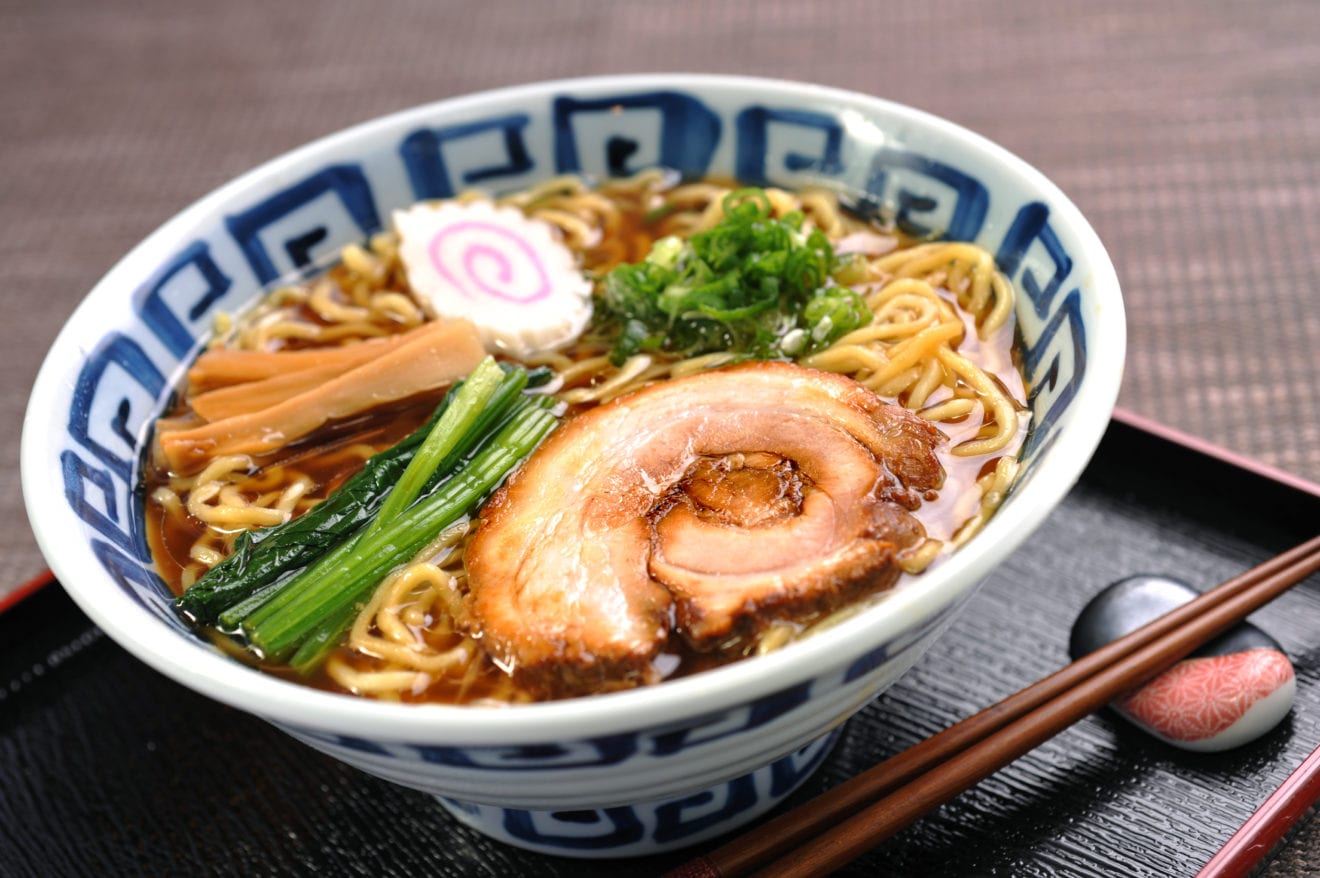
    A Japanese noodle firm in Hyogo Prefecture has expressed readiness to meet administrative requirements such as halal certification for its food products to be sold to Indonesian consumers.

    The Japanese company notified the representative office in Tokyo of the Indonesian Capital Investment Coordinating Board (BKPM) on its readiness to meet the halal certification for its noodle products.

    “I have received reports that several Japanese food companies are contemplating to enter Indonesia after observing the spurt in the number of Japanese restaurants and grocery stores in the country. This means that they already have market segments to sell their products in Indonesia,” Franky Sibarani, the BKPM head, noted in a press statement here on Wednesday.

    He affirmed that the Hyogo Prefecture was included in the areas covered by the Indonesian Consulate General in Osaka. It often conducted promotional activities in cooperation with the Tokyo office of the BKPM.

    Franky lauded the interest shown by the Japanese noodle firm to invest in Indonesia. He remarked that it was an interesting development as, so far, Japanese companies making investment in Indonesia were mostly doing business in the automotive and component industries.

    “This indicates that the interest of Japanese companies to invest in Indonesia is increasingly varying,” the BKPM chief pointed out.

    According to data at the representative office of the Japan External Trade Organization (Jetro), there were 1,199 students enrolled in Japanese schools in Jakarta in 2014. The institution also recorded that at the national level, there were 16 thousand Japanese expatriates living in Indonesia of which 10 thousand were in Jakarta.

    “Data on Japanese expatriates in Jakarta is the main factor that has led to new investment interest in Indonesia,” he claimed.

    Saribua Siahaan, the BKPM representative for investment promotion (IIPC) in Tokyo, stated that companies from Japan were so far mostly doing business in the electronics, automotive, and components sectors in addition to garment products.

    “Other fields of business that have attracted Japanese investors include semiconductor production and electrical appliances. The IIPC is ready to help the Japanese investor who came from Hyogo Prefecture,” Saribua remarked.

    In line with the implementation of the ASEAN Economic Community (AEC), the Japanese investors have begun showing interest to invest in the food sector in Indonesia.

    “The Japanese investors view this as an opportunity since over 40 percent of the ASEAN population resides in Indonesia,” noted Saribua.

    Based on the BKPM data, the realization of Japanese investment in Indonesia in 2015 increased by six percent compared to that in 2014.

    The Japanese investment realization in 2015 stood at US$2.87 billion, with 2,030 projects absorbing 115,400 workers.

    The manufacturing sector, particularly the automotive, electronics, machinery, chemical, and pharmacy sectors, constituted the main contributors to the Japanese investment in Indonesia.

    Japanese investment commitment in 2015 reached US$8.1 billion, up 95 percent from that in the previous year. Japan came third on the list of foreign countries having investment commitment in Indonesia.

    The countries topping the list of foreign investment above Japan were China, with US$22.2 billion, up 42 percent compared to the same period in the previous year, and Singapore, with investment increasing by 69 percent to US$16.3 billion.

    Following Japan was South Korea, which recorded an increased investment of 86 percent that reached US$4.8 billion.