Retail News CRM

Tag: chains

  • Chinese Dining Chains Spice Up South Korea’s Restaurant Scene with Explosive Growth

    Chinese Dining Chains Spice Up South Korea’s Restaurant Scene with Explosive Growth

    Chinese restaurant chains are accelerating their growth in South Korea, capturing customers in the major tourist regions of Seoul with genuine Chinese food. This development is fueled by a boost in sales.

    Emerging Leaders in the Industry

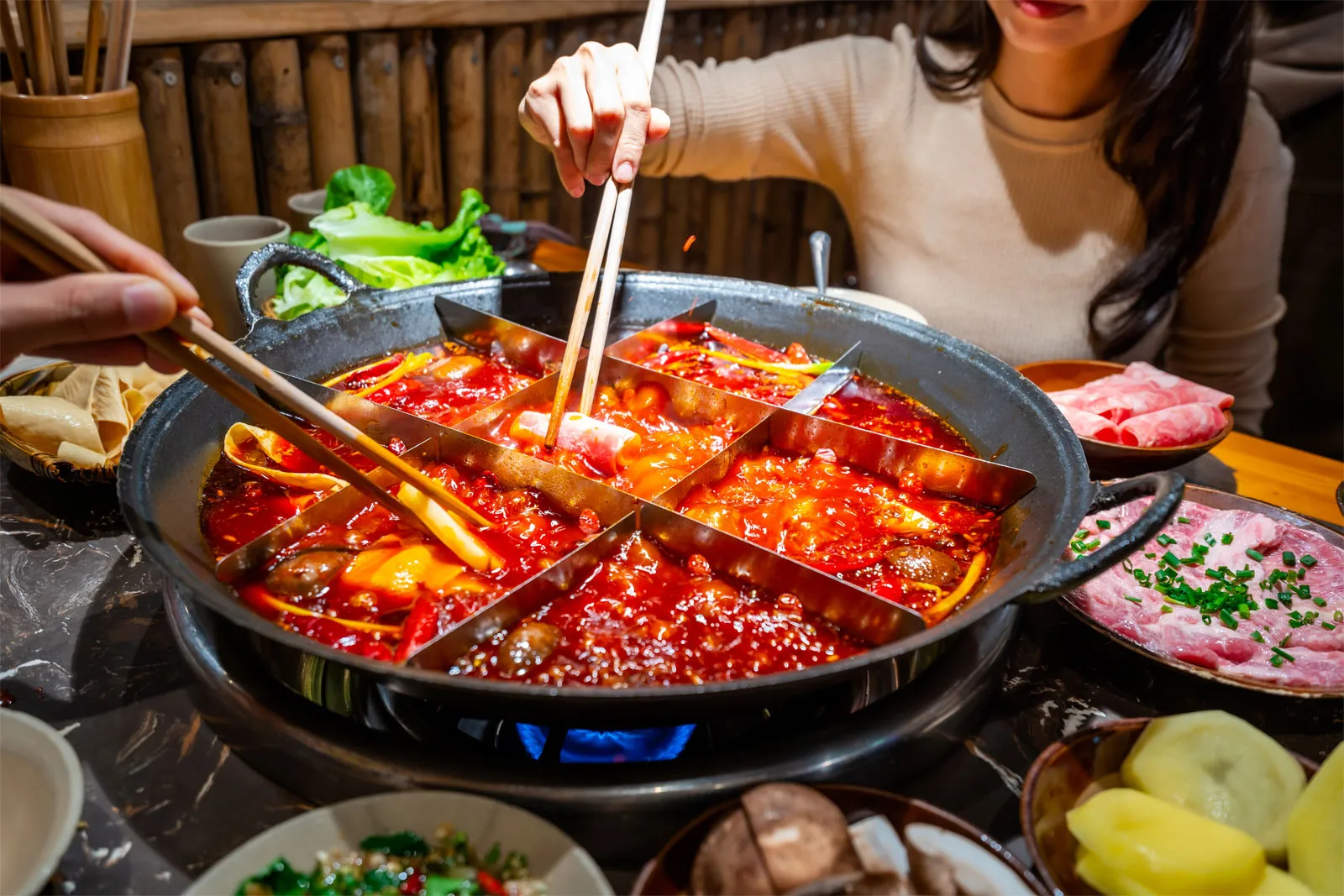
    Among the most rapidly developing contenders is the hot pot franchise Tanghuo Kungfu Malatang. Since the inauguration of its initial franchised store in Suwon in 2012, the chain has expanded exponentially, boasting over 560 locations in South Korea as of the end of March. These locations encompass both franchised and company-managed stores.

    Tanghuo Kungfu Korea reported an impressive KRW22.2 billion (US$14.7 million) in revenue in 2024, an increase of 21% from the previous year. The company’s operating profit skyrocketed elevenfold to KRW10.5 billion during the same timeframe.

    Now, the company’s establishments are primarily located in the main tourist hotspots of Seoul, such as Gangnam Station, Myeong-dong, Hongdae, Seongsu, and Daehangno.

    The company is also offering incentives for new partners by exempting franchise, training, and royalty fees and providing free serving bowls.

    A spokesperson for Tanghuo Kungfu Korea stated, “As the malatang market in Korea continues to grow, we aim to appeal to potential entrepreneurs and share with them our brand’s operational expertise and practical support benefits. We look forward to active involvement by local restaurant owners so we can jointly spearhead malatang’s market growth here.”

    Other Key Players

    Other Chinese brands are also on the rise. The hot pot chain Haidilao reported sales of over KRW100 billion last year, a significant increase compared to KRW78.1 billion in 2024. The brand, recognized for offering customers complimentary nail art services and entertainment shows, has grown to ten locations since its introduction into South Korea in 2024.

    Bantianyao Grilled Fish has established six outlets since it entered the market in 2020, while Haihai Kaochuan, a skewer barbecue chain managed by Haidilao, inaugurated its first Seoul outlet in Myeong-dong this past January.

    These restaurant chains are emulating the expansion strategy of major Chinese tea brands, which have demonstrated their success in China with thousands of stores. Their push into South Korea is a strategic move, given that China’s domestic market is nearing saturation.

    Milk tea brand Chagee announced plans to launch three outlets in Seoul by the end of June, marking its first expansion into East Asia outside China. Other brands, such as Chabaido, HeyTea, and Mixue, are also extending their reach in the country.

    Market Outlook

    Market analysts regard South Korea as a desirable entry point for global expansion, attributing its appeal to the country’s significant cultural influence through trends like K-pop, K-food, and K-beauty. This positions the country as an ideal testing ground for new brands prior to broader international deployment.

    Questions & Answers

    What are some Chinese restaurant chains expanding in South Korea?
    Some Chinese restaurant chains expanding in South Korea include Tanghuo Kungfu Malatang, Haidilao, Bantianyao Grilled Fish, and Haihai Kaochuan.

    What strategies are these chains employing for their expansion?
    These chains are waiving franchise, training, and royalty fees for new partners, providing complimentary offerings, and focusing on locations in major tourist areas. They are also following the successful expansion strategies of Chinese tea brands.

    Why is South Korea considered an attractive market for these expansions?
    South Korea is considered an attractive market due to its strong cultural influence and trends such as K-pop, K-food, and K-beauty. These aspects position the country as a potential testing ground for brands before broader international rollout.
  • Singapore: The Springboard For Chinese F&b Brands Eyeing Global Expansion Amid Domestic Challenges

    Singapore: The Springboard For Chinese F&b Brands Eyeing Global Expansion Amid Domestic Challenges

    In the last year, an unprecedented influx of Chinese restaurants and cafes has made their mark in Singapore. These establishments view the island as an ideal launchpad for their global expansion plans, largely spurred by lackluster consumer demand, fierce price competition, and extremely tight profit margins in their domestic market.

    Popular Chinese companies like Luckin Coffee and Mixue, a major bubble tea player, have joined a wave of hotpot and mala restaurants setting up shop overseas following the pandemic. They aim to leverage the international allure of the city-state, a trend that industry experts and executives predict will only gain momentum.

    Challenges in the Domestic Market

    According to Josie Zhou, the overseas general manager of Hunan cuisine restaurant Nong Geng Ji, the challenging business environment in China has prompted many brands to consider international expansion. Nong Geng Ji chose Singapore as the first stop in its global growth strategy.

    Persistent price wars have compelled Chinese food and beverage companies to seek new growth models abroad, says Joanna Jia, Singapore manager of bubble tea chain ChaPanda. The chain opened two franchisee tearooms in the city in July and is planning for more.

    Stagnant demand, exacerbated by a prolonged property market slump and US tariffs on Chinese goods, has hampered growth in China since the end of the Covid-19 lockdown nearly three years ago. This has intensified price wars across various sectors, leading to increasing deflationary pressure.

    Singapore: A Stepping Stone for Global Expansion

    Culturally similar Singapore has often served as a gateway for Chinese companies aiming to expand globally. As of August, about 85 Chinese food and beverage brands were operating approximately 405 outlets in Singapore, a considerable increase from the 32 brands that had 184 outlets in June of the previous year, according to data from consultancy firm Momentum Works.

    This rapid growth unfolds as local operators, including low-cost hawker stalls and Michelin-star restaurants, grapple with rising costs and lower consumer spending. However, Chinese brands remain optimistic about their prospects in Singapore, confident in their lean business models and supply chain management practices that allowed them to weather the storm in their home market.

    For example, tearoom chain Chagee can prepare a customized iced milk tea in just eight seconds using machines developed in-house, according to Jonathan Ng, Chagee’s director of government and public affairs for the Asia-Pacific region. This kind of agility has helped companies like Luckin and Mixue withstand the growth of Western competitors such as Starbucks in China.

    Backlash from Local Businesses

    These ready-made models have not been well received by all, however. Singapore Tenants United for Fairness, which represents 700 local business owners, stated in June that domestic companies struggle to compete with these larger Chinese entrants.

    “They are not even in the same stadium,” said the cooperative, implying the vast disparity between the resources of local SMEs and those of their Chinese counterparts.

    Gateway Singapore

    Singapore is often seen as a bridge between Eastern and Western cultures and is viewed as an attractive platform for expansion, especially given its 6.1 million predominantly Chinese population. Furthermore, Singapore’s reputation as a wealthy, fashionable location can significantly enhance a brand’s image.

    “If we can build up our brand in Singapore, the brand awareness can go to Malaysia and Vietnam, even Indonesia,” said ChaPanda’s Jia.

    Some smaller Chinese firms are often backed by deep-pocketed investors, giving them a competitive edge when it comes to securing prime locations. However, an influx of investment from large Chinese conglomerates has resulted in increased rents, especially in high-traffic areas, according to Ethan Hsu, head of retail for real estate firm Knight Frank.

    Questions & Answers

    Why are Chinese restaurants and cafes expanding to Singapore?
    A challenging business environment in China, characterized by fierce price competition and weak consumer demand, has prompted these businesses to explore new growth opportunities abroad. Singapore, with its cultural similarities to China and globally-oriented market, presents an attractive option for expansion.

    How are Chinese companies faring in the competitive Singaporean market?
    Despite the challenges faced by local operators, Chinese brands are optimistic about their prospects in Singapore. Their lean business models and robust supply chain management practices, which have been tested in their home market, provide them with a competitive edge.

    Is there any backlash against the influx of Chinese companies in Singapore?
    Yes, there has been some backlash, particularly from local businesses. Singapore Tenants United for Fairness, representing 700 business owners, has voiced concerns about the ability of local companies to compete effectively against their larger Chinese counterparts.

  • Apparel Giants Adidas And Uniqlo Grapple With Rising Tariffs On Asian Imports

    Apparel Giants Adidas And Uniqlo Grapple With Rising Tariffs On Asian Imports

    Adidas and Fast Retailing have joined the ranks of apparel magnates grappling with the reality of increased product costs in the United States due to new import tariffs levied on key Asian manufacturing nations.

    The Impact of Rising Tariffs

    The US has instigated reciprocal import duties of 20 per cent on Vietnam, 35 per cent on Bangladesh, 36 per cent on Cambodia, and 19 per cent on Indonesia and the Philippines. These tariffs target those countries that rule the roost in the worldwide apparel sourcing industry.

    Adidas CEO, Bjorn Gulden, has indicated that these tariffs could hike the company’s product costs in the US by a staggering US$218 million for the remainder of the year. “The tariffs will directly increase the cost of our products for the US,” Gulden commented. He added that Vietnam is Adidas’ chief production hub for the American market. The company has already felt the sting of tariff-related losses amounting to “double-digit euro millions” in the second quarter.

    Price Adjustments and Strategy

    Fast Retailing CFO, Takeshi Okazaki, confirmed that Uniqlo is set to raise prices to counteract escalating costs. “We will adjust prices flexibly, considering tariffs and other costs to strike a balance between price and value,” he stated. Fast Retailing oversees 74 Uniqlo stores in the US and sources extensively from Southeast Asia, including 60 factories in Vietnam, 27 in Bangladesh and 19 in Cambodia.

    Other world-class corporations are also bracing for the cost surge. Nike, which manufactures half its footwear in Vietnam and 27 per cent in Indonesia, previously announced its anticipation of an additional $1 billion in tariff-related costs and has already initiated price increases. Gap had previously forecasted $250 million to $300 million in extra costs, and H&M has hinted at contemplating price adjustments.

    The Apparel Trade Landscape

    According to the US International Trade Commission, apparel imports into the country amounted to $79.3 billion last year, equivalent to one-fifth of the global total. Vietnam was responsible for 18 per cent of the US market, followed by Bangladesh (9 per cent), India (6 per cent), and Indonesia (5 per cent).

    Questions & Answers

    What is the projected increase in Adidas’ product costs in the US due to the new tariffs?
    Adidas CEO, Bjorn Gulden, estimates that the tariffs could increase the company’s US product costs by up to US$218 million for the rest of the year.

    How is Fast Retailing planning to handle the rising costs due to tariffs?
    Fast Retailing CFO, Takeshi Okazaki, has confirmed that Uniqlo will raise prices to offset the rising costs. He stated that the company will adjust prices flexibly, considering tariffs and other costs to strike a balance between price and value.

    What is the value of apparel imports into the US according to the US International Trade Commission?
    The US International Trade Commission reports that the value of apparel imports into the country last year was $79.3 billion, which is equal to one fifth of the global total.