Retail News CRM

Tag: Chairman

  • Chairman Tang Steps Down as Shein Gears Up for Hong Kong IPO

    Chairman Tang Steps Down as Shein Gears Up for Hong Kong IPO

    Donald Tang, executive chairman of Shein, the global fast-fashion retailer, is preparing to step down as the company nears its public offering, according to sources with first-hand knowledge of the situation. Tang has been the public face of the company for the past three years, acting as a Western representative for Shein’s founder and CEO, Sky Xu.

    Tang’s Role and the Company’s Leadership Transition

    Tang, a Chinese American billionaire with a background in banking, has worked closely with Xu, interacting with politicians, regulators, and investors globally and representing the e-commerce giant at conferences and public events.

    As Tang steps down, CEO Sky Xu is set to assume the role of chairman and will spearhead the investor roadshow before Shein’s listing on the Hong Kong stock exchange. The company’s hearing with the exchange is scheduled for this Thursday.

    Tang will maintain a close relationship with the company’s leadership as a senior adviser for the foreseeable future, a source revealed. Despite his considerable contributions, Tang’s name will not appear in Shein’s public filing among the company’s top leadership, the sources noted.

    Previous Public Offering Attempts and Regulatory Challenges

    Initially, Tang aimed to list the company in New York and even relocated to Washington, D.C., to lobby politicians. However, as controversies surrounding Shein’s use of the ‘de minimis’ customs duty waiver grew, he voiced his support for removing the waiver in July 2023.

    Tang has also defended Shein against allegations linking its supply chain in China to forced labor, an issue strongly denied by Beijing. Shein maintains a zero-tolerance policy towards forced labor.

    Following the unsuccessful New York IPO attempt, Shein turned to London for a potential listing. Despite receiving approval from Britain’s Financial Conduct Authority, the plan fell through due to the China Securities Regulatory Commission withholding its approval. As a result, the company decided on a Hong Kong listing.

    Questions & Answers

    What has been Donald Tang’s role at Shein?
    Donald Tang has acted as the Western representative of Shein, liaising with global politicians, regulators, and investors, and representing the company at public events.

    Who will take over the role of chairman once Tang steps down?
    The current CEO of Shein, Sky Xu, will assume the role of chairman as Tang steps down.

    What were the challenges faced by Shein in their previous attempts at an IPO?
    Shein initially planned for an IPO in New York but faced criticism over its use of the ‘de minimis’ customs duty waiver. The company then pivoted to London, but the IPO was halted due to the China Securities Regulatory Commission withholding its approval. This led Shein to opt for a listing in Hong Kong.

  • Shinsegae Chairman Elevates to CEO Role, Spearheading Growth for E-Mart & Property Division

    Shinsegae Chairman Elevates to CEO Role, Spearheading Growth for E-Mart & Property Division

    Shinsegae Group’s chairman, Chung Yong-jin, is set to expand his role within the organization, assuming CEO positions at both E-mart and Shinsegae Property. This move by the South Korean retail heavyweight signals an aggressive push for growth in its primary sectors.

    Shifting Responsibility and Strategy

    Chung’s dual appointment marks a significant shift within the group, with the chairman now directly overseeing the operations of the nation’s largest retailer and its property development subsidiary. This decision comes at a crucial time when the company, faced with a challenging retail environment, is actively seeking new avenues for expansion. The decision underscores Chung’s resolve to shoulder a larger part of the company’s overall direction and performance.

    Chung appreciates the market’s expectations for clear accountability in the company’s management. As the newly appointed CEO, he is prepared to submit to the evaluation of the board of directors and shareholders.

    In his capacity at E-Mart, Chung will directly oversee the retailer’s operations and future growth strategies. The company believes this change mirrors his dedication to tackling current business hurdles and boosting shareholder value.

    Leadership Changes and Future Plans

    In his role at Shinsegae Property, Chung will supervise the group’s major development projects and support plans to secure locations for a proposed AI data centre that was announced earlier this year.

    This management shakeup follows a recent controversy at Starbucks Korea, where E-Mart is the majority shareholder. Since this incident, the retailer has committed to organizational reforms to bolster governance and operational supervision.

    Shinsegae Property executive Lee Hyung-cheon has been named as co-CEO and will continue to oversee the company’s regular operations and development activities. Shin Dong-woo has been nominated as the new CEO for Starbucks Korea. Shinsegae has stated that he will focus on reinforcing internal controls, enhancing operational systems, and restoring trust among clients and partners.

    Questions & Answers

    What new roles is Chung Yong-jin assuming at Shinsegae Group?
    Chung Yong-jin is taking on the dual roles of CEO at both E-mart and Shinsegae Property.

    What implications does this dual appointment have for the company?
    This move signals a significant shift in Shinsegae Group’s strategy, with Chung Yong-jin assuming more responsibility for the company’s overall performance and direction. It also demonstrates a commitment to tackling current business challenges and enhancing shareholder value.

    How will the roles be distributed among the leadership after these changes?
    Chung Yong-jin will oversee operations and future growth strategies at E-Mart and major development projects at Shinsegae Property. Lee Hyung-cheon will continue to oversee day-to-day operations and development activities at Shinsegae Property as co-CEO. Shin Dong-woo will focus on internal controls, operational systems and regaining trust as the CEO of Starbucks Korea.

  • Bamboo Airways Shuffles Top Management: Vice Chairman Bui Quang Dung Promoted to Helm

    Bamboo Airways Shuffles Top Management: Vice Chairman Bui Quang Dung Promoted to Helm

    Bui Quang Dung has been appointed as the new chairman of Bamboo Airways, replacing Le Thai Sam. The announcement was made on Thursday, confirming that the change would take effect from the preceding Wednesday. Dung simultaneously holds the position of deputy CEO at property development firm FLC Group, which is also the parent company of Bamboo Airways.

    A Wealth of Experience

    Dung brings with him a wealth of experience from several senior management roles at various firms including the investment management firm Colliers International, the multi-industry BIM Group, and property developer Empire Group. He is a proud alumnus of Southern Columbia University in the U.S., where he earned a master’s degree in business administration. With more than 15 years of experience in real estate investment management, Dung is set to contribute significantly to the airline’s growth. The airline confirmed that Sam, the outgoing chairman, would continue to serve as a member of the board.

    The History of Bamboo Airways

    Bamboo Airways was founded by FLC Group in 2017 and commenced operations in early 2019. It changed hands in May 2023 when it was fully sold to Sam, only to be repurchased by FLC Group in September of the same year.

    The recent reshuffle at the helm is part of a wider board restructuring initiated after the airline was reintegrated into the FLC Group. The company has witnessed several leadership changes, with Dung being the seventh chairman since 2022. The frequent changes were precipitated by the financial challenges faced by FLC Group.

    Plans for the Future

    Bamboo Airways has ambitious plans for the future, aiming to restructure its operations and expand its fleet and route network over the next five years. The airline has plans to add a new aircraft ahead of the peak travel season at the end of the year and another one before the Lunar New Year holidays in February 2026.

    At an extraordinary shareholders’ meeting held on Tuesday, Bui Hai Huyen, FLC’s CEO, announced that the company is currently in discussions with several local and international partners. The prospective collaborations would involve experience in aircraft leasing, purchasing, and financing.

    Questions & Answers

    Who is the new chairman of Bamboo Airways?
    Bui Quang Dung has been named as the new chairman of Bamboo Airways.

    What previous experience does Bui Quang Dung bring to his new role at Bamboo Airways?
    Dung has held senior management roles at several firms including Colliers International and the BIM Group. He also possesses over 15 years of experience in real estate investment management.

    What are Bamboo Airways’ plans for the future?
    Bamboo Airways intends to restructure its operations and expand its fleet and route network within the next five years. It also plans to add new aircraft to its fleet in the near future.

  • Esteé Lauder’s Visionary Leader Leonard A. Lauder Dies At 92: A Legacy Of Transformation And Philanthropy

    Esteé Lauder’s Visionary Leader Leonard A. Lauder Dies At 92: A Legacy Of Transformation And Philanthropy

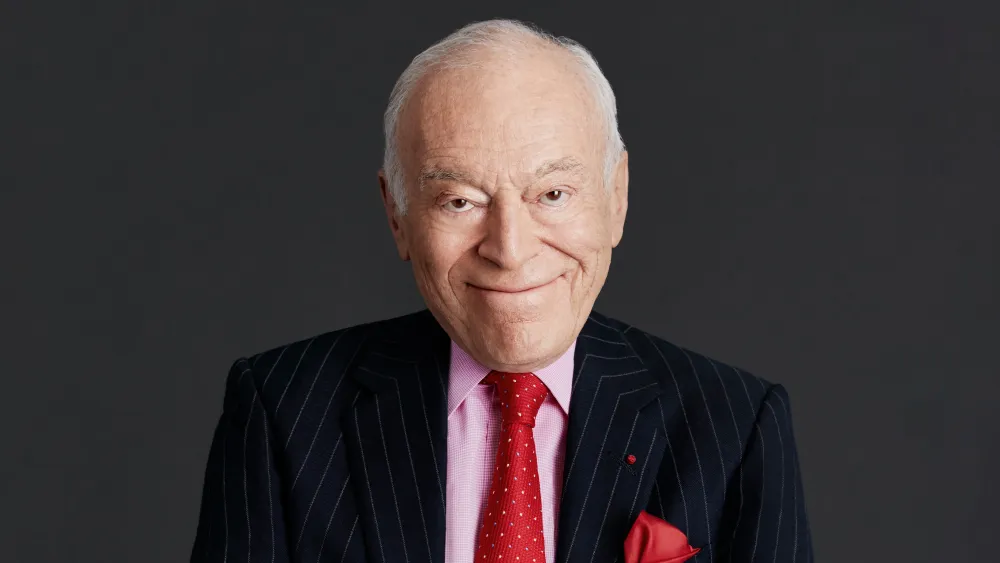
    The former chairman of Esteé Lauder, Leonard A Lauder, has sadly passed away at the age of 92.

    Loss of a Visionary

    Lauder’s death leaves a significant void in the company and the wider industry. His son, Gary M Lauder, who is also a member of the Esteé Lauder board of directors, expressed his sorrow at the loss. He emphasized the immeasurable impact of Lauder’s life, the significant contributions he made to the company, and the values of integrity, curiosity, and philanthropy that he instilled in the Esteé Lauder family. His presence will be sorely missed.

    A Tenacious Leader

    Lauder, the elder son of Esteé and Joseph H Lauder, joined the family business more than six decades ago. Armed with vision and tenacity, he played an instrumental role in the company’s transformation. Under his leadership, Esteé Lauder evolved from a single brand in the U.S. market to a global cosmetics giant boasting multiple illustrious brands.

    Before his tenure as chairman, Lauder held several leadership positions within the company, including serving as the president and CEO of Esteé Lauder from 1972 to 1999.

    Brand Expansion and Acquisitions

    Lauder was also instrumental in initiating the launch of various brands such as Aramis, Clinique, and Lab Series. His strategic vision extended to the company’s acquisition strategy, leading to the inclusion of prestigious brands like Aveda, Bobbi Brown, Jo Malone London, La Mer, and Mac under the Esteé Lauder umbrella.

    Stephane de La Faverie, current president and CEO of Esteé Lauder, recognized Lauder as an industry icon and pioneer who inspired employees and garnered respect worldwide for his visionary leadership.

    Philanthropy and Beyond

    Beyond his business ventures, Lauder dedicated his efforts to various fields, including medical research, particularly in the areas of cancer and Alzheimer’s, public education, art, foreign policy, and philanthropy. His varied contributions earned him several prestigious awards and accolades.

    Questions & Answers

    What role did Leonard A Lauder play in Esteé Lauder’s growth?
    Leonard A Lauder was instrumental in transforming Esteé Lauder from a single-brand company into a multi-brand cosmetics powerhouse with a global presence.

    What were some of the brands that Leonard A Lauder introduced?
    He initiated the launch of several brands, including Aramis, Clinique, and Lab Series, and contributed to the company’s acquisition of Aveda, Bobbi Brown, Jo Malone London, La Mer, and Mac.

    What contributions did Leonard A Lauder make outside of his business ventures?
    Lauder was heavily involved in various philanthropic activities, including cancer and Alzheimer’s research, public education, art, foreign policy, and philanthropy, earning him several prestigious awards.

  • Uniqlo Unveils Plan For Flagship Store In Shanghai: An Eco-friendly Fusion Of Innovation And Elegance

    Uniqlo Unveils Plan For Flagship Store In Shanghai: An Eco-friendly Fusion Of Innovation And Elegance

    In an exciting turn of events, Japanese clothing giant Uniqlo has unveiled plans for a brand-new store opening in the bustling heart of Shanghai, slated for early 2024. The store, strategically located in the iconic Jing’an district, aims to cater to the tastes of both local and international shoppers, promising a fresh blend of fashion innovation and classic elegance.

    Expanding Horizons

    Uniqlo’s parent company, Fast Retailing, is setting its sights on expanding its footprint in Asia’s dynamic retail landscape. The opening in Shanghai reflects the brand’s commitment to tapping into the vibrant lifestyle of one of China’s largest metropolises. This move comes on the heels of a surge in demand from consumers seeking quality, on-trend apparel that resonates with their daily lives.

    Additionally, the Shanghai store will showcase Uniqlo’s newest technology in retail design, featuring interactive displays and sustainable materials that align with modern consumer expectations. This new flagship store is not only about selling clothes; it’s about creating an immersive shopping experience.

    Eco-Friendly Endeavors

    With sustainability becoming a core value for consumers, Uniqlo is taking substantial steps towards eco-friendliness. The Shanghai site is set to incorporate energy-efficient systems and environmentally conscious practices. From recycled packaging to sustainable sourcing of materials, the brand is echoing its commitment to reducing its environmental impact while delivering stylish and functional apparel.

    Emphasizing local culture and community engagement, Uniqlo is also on the lookout for collaborations with local artists and designers to feature unique collections that resonate with the spirit of Shanghai. Shoppers can expect a delightful fusion of global trends infused with local flair, providing an ever-refreshing experience.

    A Fashionable Future

    As Uniqlo continues to innovate, the upcoming Shanghai store represents not just a new location, but a booming future for retail in the region. With a playful approach to fashion and a commitment to sustainability, Uniqlo aims to enchant both long-time customers and new visitors alike. Who knows, maybe this will be the place where consumers not only find their next outfit but also their fashion muse.

    Questions & Answers

    What will the new Uniqlo store in Shanghai feature?
    The new Shanghai store will showcase innovative retail design, interactive displays, and sustainable materials aimed at enhancing the shopping experience.

    When is the grand opening of the Shanghai store?
    The much-anticipated store is set to open its doors in early 2024, drawing both locals and tourists alike.

    How is Uniqlo addressing sustainability?
    Uniqlo is committing to eco-friendly practices, such as energy-efficient systems, recycled packaging, and sustainable sourcing methods to minimize its environmental impact.

  • Deutsche Bank Backs Nomination of Ex-Aegon Chief as Chairman

    Deutsche Bank Backs Nomination of Ex-Aegon Chief as Chairman

    Deutsche Bank’s supervisory board committee supported the nomination of a new chairman, formerly from Dutch insurance firm Aegon.

    The supervisory board committee fully backed the nomination of Alexander Wynaendts as the German lender’s new chairman and he now awaits the appointment to be confirmed by shareholder votes in May, according to a report citing an internal memo.

    If successful, Wynaendts will succeed current chairman Paul Achleitner, another former insurance executive from Allianz.

    Wynaendts has experience in the fields that always made Deutsche Bank stand out: strong expertise in retail, corporate, and capital markets business as well as in asset management – and a global network, said Deutsche Bank chief executive Christian Sewing in the memo.

    Wynaendts has over 30 years of experience in the financial sector, serving as CEO and chairman of Aegon from 2008 to 2020 after first joining the Hague-headquartered insurer in 1997.

    At Aegon, Wynaendts led the insurer through a 3 billion euro ($3.39 billion) state bailout and restructuring in the midst of the 2008 financial crisis.

    He began his financial services career with ABN AMRO in 1984, working in the Dutch lenders’ private banking and investment banking operations in Amsterdam and London.

  • General director of VietinBank appointed new chairman

    General director of VietinBank appointed new chairman

    Vietnam Bank for Industry and Trade (VietinBank) has elected General Director Tran Minh Binh as the bank’s new chairman for the 2019-2024 term.

    The appointment came Tuesday, two months after the bank’s former chairman, Le Duc Tho, was appointed secretary of Ben Tre Provincial Party Committee from July.

    Tran Minh Binh, 47, holds a Master’s degree in Business Administration from National Economics University – Belgium’s ULB University.

    Binh has more than 22 years of experience working at VietinBank, including 17 years as a professional manager at the head office and branches and eight years as a senior manager.

    On the same day, the bank also assigned Nguyen Hoang Dung, its deputy general director, as general director in charge of the executive board, replacing Tran Minh Binh.

    VietinBank, the third-largest lender by total assets in Vietnam, made a consolidated net profit of VND10.81 trillion ($473.69 million) in the second quarter of 2021, up 44.52 percent compared to the same figure in 2020, according to the bank’s financial report.

  • Huawei’s chairman says that sourcing chips is its biggest problem

    Huawei’s chairman says that sourcing chips is its biggest problem

    Let’s use our imagination a little, shall we? Had the U.S. not placed Huawei on the Entity List for security reasons in 2019 and followed that up exactly a year to the day by changing Export rules banning Huawei from receiving chips from certain foundries using American technology, the smartphone market “league tables” would be different. Huawei would not have sold sub-brand Honor and would most likely be the top handset manufacturer on this planet.

    But the truth brings a harsher reality to Huawei as the manufacturer is predicted to finish the year as the seventh-largest smartphone shipper with Honor right behind it. Still, the company’s current rotating chairman (the position rotates, not the actual executive) Guo Ping is determined that Huawei will never drop out of the smartphone industry. Citing the U.S., Guo says that the policies of individual countries have no impact on Huawei’s place in the world and the firm will never limit its business to selling in China only.

    This morning, Guo told new Huawei employees that “The U.S. has created many difficulties for Huawei but they are solvable. It is in the supply chain where the US has a big impact on Huawei. We need more investment and innovation to deal with the US sanctions. Huawei has established and helped its industrial chain partners to solve the problems of supply continuity and competitiveness.”

    The Chairman said that Huawei employees should have the attitude that “what does not kill me makes me stronger,” and added that “if every employee works diligently and effectively and makes achievements, Huawei will become better and the U.S. will not be able to beat us.” For those who believe that the company should give us its mobile phone business, ponder this statistic.

    After real estate and automobiles, the mobile phone sector is the third-largest “industrial sector” in the world. This calls to mind the famous quote from bank robber Willie Sutton who was once asked why he robbed banks. “Because that’s where the money is,” was his reply. Why should Huawei give up on making phones when it still is where plenty of money lies.

    While being placed on the Entity List makes it hard for Huawei to access the U.S. supply chain, Guo says that the major issue affecting Huawei is its inability to buy chips. The chairman says, “At present, the biggest difficulty for us is the mobile phone business. As we all know, chips for mobile phone need advanced technology as they are small and have low power consumption. Huawei can design its own chip but no one can manufacture it for us. That’s where we (are) stuck.”

    As a country, China has been hoping to become self-sufficient when it comes to manufacturing chips. This would prevent tech companies in the country from having to worry about having their businesses held hostage. “Technology should be used to give full play to its value. It is imperative to combine 5G with artificial intelligence, cloud and enterprise application scenarios to unleash the potential of Internet of Everything and Intelligence of Everything,” said Guo.

    “Huawei phones have a lot of unique technologies of their own. We are looking forward to the day when the core problem of chip manufacture will be completely solved in China,” Huawei’s current chairman states. Huawei’s Chairman is also thinking ahead about 6G. He sees 5G becoming the universal global network that most people envision it becoming. But as for 6G Guo, sees the next generation of wireless connectivity being used as a regional network for industrial use.

  • OCB shares ‘undervalued,’ says bank chairman

    OCB shares ‘undervalued,’ says bank chairman

    Shares of OCB are undervalued by 25 percent, its chairman Trinh Van Tuan said at the private lender’s annual general meeting Wednesday.

    He said his assertion was backed by many stock brokerages that have suggested a price of VND30,000 ($1.31) for the OCB ticker, currently trading on the Ho Chi Minh Stock Exchange (HoSE) at VND24,000.

    A private bank usually has a price to earnings (P/E) ratio of 11, while that of OCB is less than 7, he said. The P/E ratio reflects how much investors are willing to pay today for future growth expectations.

    OCB listed on the HoSE on January 28 when the market plunged, pulling it down by 20 percent in the first session. The ticker has since recovered by 27 percent.

    The bank plans to pay dividends by shares with each shareholder allowed to buy 20-25 more shares for every 100 shares owned.

    It also wants to issue 70 million shares via private placements and five million shares to its employees. Several foreign investors have expressed interest in the bank since last year, Tuan said.

    The bank’s charter capital is set to rise by 32 percent this year to VND14.45 trillion ($627 million).

    Last year, the bank’s pre-tax profit surged 37 percent year on year to VND4.42 trillion. It targets a 25 percent credit growth this year, pending approval from the central bank.

  • Nissan Appoints Guillaume Cartier Chairperson Of The AMIEO Region

    Nissan Appoints Guillaume Cartier Chairperson Of The AMIEO Region

    Nissan Motor announced Guillaume Cartier as its new Chairperson for the Africa, Middle East, India, Europe and Oceania (AMIEO) region. Effective April 1st, Cartier will lead all Nissan operations in the region, which covers more than 140 markets across four continents with a population of around 3.8 billion people, representing more than 30 percent of global vehicle sales.

    With over 25 years’ experience at Nissan and in the Alliance in global and regional leadership positions, Cartier will lead the new region as the Nissan NEXT transformation plan continues to gather pace and with key models in Europe including Qashqai and Ariya launching soon, and as the brand continues to grow in the AMIO markets, thanks to a powerful vehicle line-up ranging from the iconic Patrol to the recently launched Magnite in India.

    Cartier said: “I am thrilled to be leading this culturally rich and diverse region into a period of unprecedented change for the automotive industry and with a refreshed range of Nissan models and technologies coming to the market.”

    Currently Vice-Chairperson of the AMIEO region and AMI President, Cartier first joined Nissan in 1995 as after-sales manager and went on to hold a number of senior management positions in the Alliance, including AMI Chairperson, head of the Global Datsun Business Unit, Executive Officer and Senior Vice President for Mitsubishi Motors, and Senior Vice President for Sales and Marketing in Europe. Cartier will report to the vice-chief performance officer and chief quality officer, Christian Vandenhende. Cartier will replace Gianluca De Ficchy, who served for three years as Chairperson of Nissan Europe and latterly of the expanded AMIEO region.

  • Citi Appoints APAC Tech Vice Chair

    Citi Appoints APAC Tech Vice Chair

    Will McLane was named Asia Pacific vice chairman of technology at Citi, according to an internal memo, in addition to his existing role as vice chairman of the global financial institution’s group (FIG).

    We have asked McLane to assist the APAC technology team in covering clients for unique stations to help scale BCMA’s (banking, capital market advisory) innovative pitching efforts globally, the memo said, adding that he would continue to support FIG clients in Asia.

    According to the bank, McLane alongside other seniors in Asia, has applied innovative techniques for pitching such as videos, multimedia, props, and more in the last 18 months.

    This role is a natural extension for [McLane], as he has been instrumental in providing critical thought leadership and creativity in pitching, resulting in several landmark transactions, the memo continued.

    Scaling these innovative approaches and aligning them with our global relationships will help differentiate Citi, particularly in the current COVID-challenged operating environment.

  • BMW CEO Harald Krueger To Step Down From Board

    BMW CEO Harald Krueger To Step Down From Board

    The Chairman of the Board of Management of BMW AG, Harald Kruger, gave notice that he will not seek a second term of office. The Supervisory Board will address the matter of a successor during its next meeting on 18 July 2019. Until a decision has been made, Harald Kruger will hold his position as Chairman of the Board of Management. Harald Kruger assumed the position of Chairman of the Board of Management of BMW AG from Dr Norbert Reithofer on 13 May 2015.

    Under his leadership, the company put forward its new strategy which enabled the BMW Group to actively shape the transformation of the industry and the transition towards sustainable mobility of the future. With the largest model roll-out in the company’s history, vehicle deliveries reached new all-time highs, while at the same time the company systematically expanded its electromobility strategy. By 2023, the BMW Group will have 25 electrified models on the roads.

    As Chairman, Kruger further strengthened the significance of strategic partnerships – particularly in the area of breakthrough technologies such as highly automated driving. Additionally, the BMW Group has successfully merged its mobility services under a new entity. Moreover, the BMW Group significantly increased its role as a global player and, as the first international company, will be able to increase its share in its Chinese Joint Venture, BMW Brilliance Automotive, to 75%.

    Kruger said, “The BMW Group has been my professional home for more than 27 years. After more than ten years in the Board of Management, more than four of which as the CEO of the BMW Group, I would like to pursue new professional endeavours and leverage my diverse international experience for new projects and ventures. Over the last years, the automotive industry has been shaped by enormous changes, which have brought about more transformation than in the previous 30 years. This has demanded tremendous efforts from every employee within the company. For their outstanding commitment, I would like to personally thank each and every one of them. It has always been a true honour for me to work with this tremendous team and to set the BMW Group on a path towards a successful future during the most significant transformation of this industry.”

  • Vicinity Centres Selects new Board

    Vicinity Centres Selects new Board

    Shopping centre operator Vicinity Centres has revealed that non-executive director Peter Kahan will replace Peter Hay as chair when he retires in August.

    Hay, who has served as chairman since Vicinity was formed in a 2015 merger of Federation Centres and Novion, will retire from the board after the company’s annual results are released in August.

    “It has been a privilege to work with such an exceptional board and management team to navigate through the merger and Vicinity’s formation, to see it become the unified and stronger organisation it is today,” Hay said in a statement.

    Hay said he is delighted Kahan will be taking over as chairman.

    “Peter is a highly experienced and thoughtful director who has made an outstanding contribution to Vicinity’s board during my tenure,” Hay said.

    “His extensive and successful property funds management, financial and business background, complemented by his highly strategic approach and vision, position him to be an excellent chairman through Vicinity’s next chapter.”

    Kahan, who has been a non-executive director of Vicinity since June 2015, also served as chairman of Vicinity’s Remuneration and Human Resources Committee and is a member of Vicinity’s Audit Committee.

    Kahan’s prior roles include The Gandel Group’s executive deputy chair, CEO and finance director.

    “It is an honour to be asked to succeed Peter Hay as chairman of Vicinity,” he said. “I am looking forward to working with the board and management team to continue our relentless focus and commitment to long-term value creation for Vicinity’s security holders.”

  • OCBC Forms Committee to Ensure Responsible Banking

    OCBC Forms Committee to Ensure Responsible Banking

    The bank’s new ethics and conduct board committee wants to ensure that the group’s core values of trust and integrity continue to anchor the way it conducts its business.

    OCBC Bank has formed an ethics and conduct board committee, which is chaired by OCBC chairman Ooi Sang Kuang and includes directors Lee Tih Shih and Christina Ong, according to a news release on Thursday.

    While the industry is seeing ethics and compliance as an area of greater concern, the committee, which provides oversight of the group’s policies, guidelines, and programmes, is a first among Singapore banks.

    Laying Out Standards

    It held its first meeting on Wednesday, laying out expectations and standards for the group’s 29,000 employees as it aims to «sustain and grow a strong culture of responsible banking and fair dealing» and ensure that responsible banking is rigorously enforced across the whole OCBC group, the bank said.

    In the last decade, there have been several high-profile examples of questionable conduct by financial institutions. These examples span the globe and the misconduct ranges from extreme over-leveraging to violating international sanctions, tax fraud, and money laundering. The misconduct stems mostly from an imbalance between the pursuit of financial goals and responsible banking, Ooi said.

    Transforming Rapidly

    The banking industry is transforming rapidly due to technological advancements, and customers’ expectations have also changed. However, what has not changed is that our customers still expect us to be utterly worthy of their trust. That is why amid so much change in the banking industry, our underlying values of integrity and honesty must never change, Ooi added.

    The ethics committee also oversees a new culture and conduct committee, chaired by group chief executive Samuel Tsien. The committee will implement initiatives to enhance existing policies and programmes on ethics and conduct, as well as roll out new ones to strengthen these values among all the group’s employees.

  • Jack Ma steps down from Alibaba divisions

    Jack Ma steps down from Alibaba divisions

    Alibaba founder Jack Ma has stepped back from active roles in five subsidiary companies as he prepares to hand over executive chairmanship of the company in September.

    Management of Alibaba say the moves were intended to improve the firm’s governance and administrative transparency.

    Ma has exited Alibaba’s Technology, Education Technology, Taobao Software, Network Technology, and Software departments.

    Stepping away from the business divisions was signalled before Ma announced last September his intention to resign as executive chairman and officials say the latest move is normal industry practice.

    One commentator described the step as “goodwill” and encouraging transparency when he is no longer active in Alibaba on a day to day basis.

    In an interview last September, which Ma owns, he said relinquishing the executive chairmanship was “not about retiring, stepping away, or backing off”. “This is a systematic plan,” he said.