Tag: Challenge

  • Embrace the Digital Detox: Join KitKat’s Rawdog Your Commute Challenge for a Chance to Win a Weekend Escape

    Embrace the Digital Detox: Join KitKat’s Rawdog Your Commute Challenge for a Chance to Win a Weekend Escape

    KitKat, the renowned confectionery brand, is inviting Australians to embrace the growing trend of going entirely phone-free during their daily commute. This trend, aptly named ‘rawdogging’, has rapidly permeated everyday culture, with evidence of its popularity evident in the over 45 million posts on the social media platform, TikTok.

    KitKat ‘Rawdog your Commute’ Challenge

    In a bid to encourage individuals to take a break from their phones, KitKat has introduced the ‘Rawdog your Commute’ Challenge. This initiative involves a game that challenges commuters to see the length of time they can go without using their phones. Participants stand a chance to win one of 10 Unyoked 2-night weekend getaway e-gift cards, valued up to $626, which can be used anywhere in Australia. The longer the phone-free period, the higher the probability of winning.

    To participate in the game, individuals can scan a QR code on billboards positioned near commuting locations. Alternatively, they can visit the campaign’s website to start a timer that tracks the duration they can abstain from using their phone.

    Australians Crave a Break from Their Phones

    The launch of this campaign is timely as recent research commissioned by KitKat reveals that a significant 84% of Australians desire a break from their mobile devices. Additionally, 23% of respondents expressed that being phone-free would make their commute more enjoyable. Among those who have inadvertently been without their phones, 40% reported feeling happier, liberated, relieved, and more present.

    Shannon Wright, Nestlé Oceania’s Head of Marketing for Confectionery, commented on the campaign, stating, “KitKat has always been about aiding Australians in taking better breaks. However, disconnecting has become increasingly challenging in today’s digital age. This is why we’re encouraging commuters to rawdog their commutes via our new Phone Break game. We aim to make it achievable by rewarding those small, everyday moments that are transformed into a proper break.”

    KitKat asserts that this campaign is a contemporary take on its longstanding efforts to promote healthier breaks. It taps into the burgeoning consumer interest in digital well-being.

    Questions & Answers

    What is the aim of the KitKat ‘Rawdog your Commute’ Challenge?
    The challenge aims to encourage commuters to take a break from their phones during their daily journeys, making their commute more enjoyable and relaxing.

    How can one participate in the ‘Rawdog your Commute’ Challenge?
    Participants can join the challenge by scanning a QR code on billboards near commuting locations or by visiting the campaign’s website.

    What are the rewards for the challenge?
    Participants stand a chance to win one of 10 Unyoked 2-night weekend getaway e-gift cards, valued up to $626, to be used anywhere in Australia. The longer one goes without using their phone, the higher the probability of winning.


  • Gucci’s Rebranding Challenge: Kering CEO Maps Out Strategy for Sophisticated Chinese Luxury Market

    Gucci’s Rebranding Challenge: Kering CEO Maps Out Strategy for Sophisticated Chinese Luxury Market

    Kering’s flagship brand, Gucci, is focusing on rebuilding its market position in China following years of stagnation. The luxury company’s complacency resulted in an underwhelming retail experience and poorly situated stores, according to Kering CEO Luca de Meo.

    China: A Changed Landscape

    China has been a significant growth driver for the global luxury sector, worth approximately US$400 billion, for over a decade. Gucci, like many of its competitors, capitalized on this expanding market. However, the brand failed to take advantage of a brief shopping surge following the pandemic and couldn’t recover when Chinese consumer spending slowed.

    De Meo, speaking at Kering’s first investor day since he assumed his role in September, expressed that Gucci needs to reevaluate its strategy in China. He emphasized the necessity to cater to the discerning clientele with high-quality retail experiences and to move away from relying on off-price outlets offering goods at discounted rates.

    “Gucci needs a comeback,” de Meo asserted, criticizing the brand’s previous approach to China as an easy revenue source.

    The Evolving Chinese Consumer

    The retail landscape in China has transformed significantly over the years. De Meo noted that Chinese consumers are now motivated by quality, design, and experience rather than logo-driven purchases, a trend seen in markets like Japan, South Korea, and Europe.

    The CEO stressed the importance of a consistent brand message and an enhanced in-store experience to revive growth in China. Kering also revealed plans to acquire a minority stake in the Shanghai-based Icicle Fashion Group.

    Learning from the Auto Industry

    De Meo, who previously served as CEO of Renault, drew parallels between the luxury sector and the auto industry. He warned luxury brands not to underestimate domestic competition and acknowledged China’s innovative capabilities.

    Other brands in Kering’s luxury portfolio, such as Bottega Veneta and Saint Laurent, have already begun reaping the benefits of a more finely-tuned China strategy. However, he indicated that Gucci’s recovery would be a more prolonged process.

    “For Gucci, the verdict is still out. This transformation won’t be instantaneous, but we anticipate seeing measurable progress within the next few months to a year,” he stated.

    Questions & Answers

    What is Kering’s plan for Gucci in China?
    Kering plans to reinvent Gucci in China by focusing on higher quality retail experiences and catering to discerning clientele. The company is moving away from off-price outlets and is focusing on a consistent brand message and enhanced in-store experience.

    How has consumer behavior changed in China’s luxury market?
    Chinese consumers are now motivated by quality, design, and experience rather than logo-driven purchases. This shift mirrors trends seen in other markets such as Japan, South Korea, and Europe.

    How long will Gucci’s recovery take according to Kering’s CEO?
    Kering’s CEO, Luca de Meo, anticipates that Gucci’s recovery in China will be a prolonged process, with measurable progress expected within the next few months to a year.

  • Indian Telecom Giants Challenge New Spectrum Plan, Push for Greater 5G and 6G Allocation

    Indian Telecom Giants Challenge New Spectrum Plan, Push for Greater 5G and 6G Allocation

    The Department of Telecommunications (DoT) in India has formally introduced its National Frequency Allocation Plan 2025 (NFAP-2025), though it has encountered opposition from mobile operators who opine it does not sufficiently address the nation’s future connectivity requirements.

    The NFAP-2025 Policy

    The NFAP-2025, operational since December 30, 2025, outlines the management and allocation of the radio frequency spectrum throughout India. The DoT states that the policy’s objective is to synchronize the national spectrum policy with international standards, while also fostering emerging technologies and next-generation connectivity.

    In line with this plan, the spectrum ranging from 8.3 kHz to 3000 GHz is designated for assorted radio communication services. The government asserts this will facilitate the deployment of 5G, 5G-Advanced, prospective 6G networks, satellite broadband services, and vehicle-to-everything (V2X) communications.

    Contention Around the Upper 6 GHz Band

    Dissent, however, has surfaced over the earmarking of the upper 6 GHz band, particularly the 6425–7125 MHz range for International Mobile Telecommunications (IMT). While increasing the mid-band spectrum availability for mobile services, the Cellular Operators Association of India (COAI) contends it’s insufficient. The COAI has reasserted its established demand that the entire 6 GHz band, spanning 5925-7125 MHz, should be allocated for IMT usage.

    This disagreement partly arises from the government’s previous decision, declared in May 2025, to deregulate 500 MHz of spectrum in the lower 6 GHz band for indoor Wi-Fi use with low power. While expected to hasten the launch of Wi-Fi 6E and Wi-Fi 7, operators maintain it diminishes the spectrum available for wide-area mobile networks.

    Future Data Demand & Spectrum Allocation

    COAI’s Director-General, Dr. SP Kochhar, has cautioned that catering to future data demand will necessitate considerably larger, continuous blocks of mid-band spectrum. He projected that every operator will require a minimum of 400 MHz of such spectrum to provide affordable, high-quality 5G and future 6G services.

    In Dr. Kochhar’s view, next-generation networks will increasingly depend on large, uninterrupted spectrum blocks to support ultra-high data throughput, low latency, immersive digital services, applications driven by artificial intelligence, smart manufacturing, and intelligent mobility.

    As India propels its digital transformation, the debate on the optimal way to balance spectrum allocation between mobile networks, Wi-Fi services, and emerging technologies in the 6 GHz band is projected to escalate.

    Questions & Answers

    What is the main aim of India’s National Frequency Allocation Plan 2025 (NFAP-2025)?
    The primary objective of NFAP-2025 is to align national spectrum policy with global standards while supporting emerging technologies and next-generation connectivity across India.

    What is the contention within the Cellular Operators Association of India (COAI) regarding the NFAP-2025?
    The COAI argues that the allocation of the upper 6 GHz band for International Mobile Telecommunications (IMT) is insufficient. They demand that the entire 6 GHz band should be allocated for IMT usage.

    What future requirements of mobile operators does Dr. SP Kochhar highlight?
    Dr. Kochhar emphasizes the need for considerably large, uninterrupted blocks of mid-band spectrum to cater to future data demand, projecting a minimum requirement of 400 MHz per operator to deliver high-quality 5G and future 6G services.

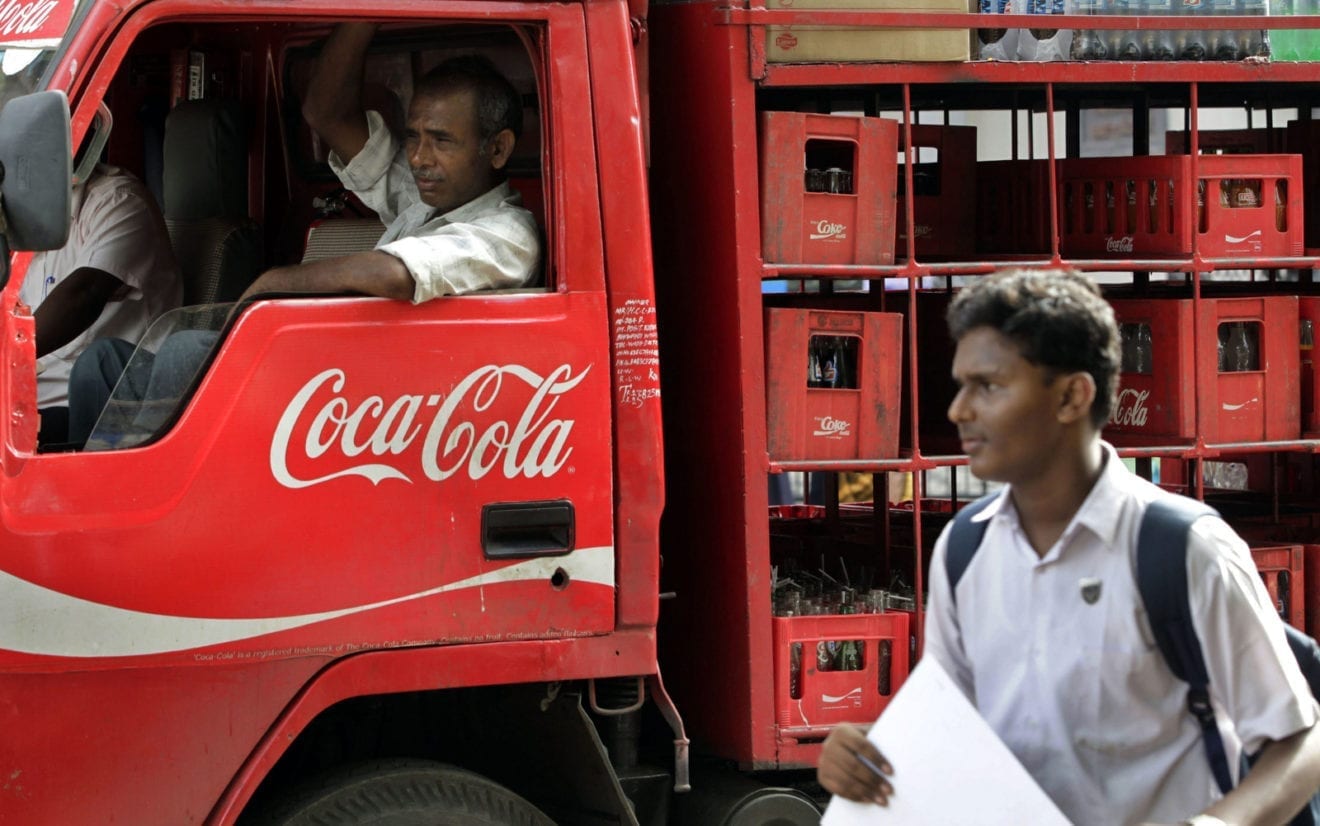
  • Coca-Cola Vietnam’s $31M Tax Challenge Shaken: Legal Appeal Loses Fizz

    Coca-Cola Vietnam’s $31M Tax Challenge Shaken: Legal Appeal Loses Fizz

    Despite its efforts to dispute a tax claim, Coca-Cola Vietnam has been ordered to pay VND821 billion ($31.1 million) in back taxes and penalties after losing a lawsuit. The lawsuit was dismissed by the HCMC People’s Court last Thursday. This judgment upholds the decision made by the General Department of Taxation on December 25, 2019.

    Incorrect Tax Filings

    The tax authorities began to question Coca-Cola Vietnam’s tax filings for the business period from 2007 to 2015. Subsequent investigations revealed that the company had made errors in its filings, leading to an order for it to pay VND471 billion in back taxes and VND288 billion as a penalty for late payment.

    In court documents, the tax department revealed that Coca-Cola Vietnam had consistently reported losses from 1994 to 2015, resulting in no payment of business income taxes for those years, excluding 2015 when it paid VND115 billion. However, a contrary trend was noticeable in its net revenues, which consistently rose during this period. The company’s net revenues had reached VND197 billion in 2001, VND1.13 trillion in 2008, and VND6.82 trillion in 2015.

    Audit Results and Legal Disputes

    An audit of Coca-Cola Vietnam’s tax filings for the years 2016-2017 was conducted by the tax authorities. The audit, which concluded in December 2019, found incorrect filings, leading to the company’s underpayment of taxes. Coca-Cola Vietnam lodged a complaint in 2020, requesting the removal of part of the order, but this was dismissed by the tax department. Consequently, the company initiated a lawsuit in 2022.

    During the lawsuit, Coca-Cola Vietnam acknowledged disagreements with some of the tax authorities’ conclusions but was unable to provide sufficient evidence to support its case. The tax department maintained that its audit and decisions were in accordance with the law, a position which the court validated.

    Despite the dismissal of its appeal, Coca-Cola Vietnam stated that it respects the court’s procedures and judgement, reiterating its commitment to full compliance with tax regulations. The company is currently contemplating its subsequent moves.

    Coca-Cola’s History in Vietnam

    Coca-Cola made its entry into the Vietnam market in 1994, becoming one of the first U.S. companies to invest in the country after diplomatic relations were normalized. In more recent years, the company invested $136 million to establish a new factory in the southeastern province of Tay Ninh, indicating its continued intent to contribute to Vietnam’s development.

    Questions & Answers

    What was the outcome of Coca-Cola Vietnam’s lawsuit?
    The company’s lawsuit was dismissed, and it was ordered to pay VND821 billion ($31.1 million) in back taxes and penalties.

    What accounting discrepancies were found by the tax authorities?
    The tax authorities found that Coca-Cola Vietnam had been reporting losses consistently from 1994 to 2015, resulting in no payment of business income taxes for those years, except for 2015. However, the company’s net revenues had been steadily rising during this same period.

    How has Coca-Cola reacted to the court’s decision?
    Coca-Cola Vietnam has expressed respect for the court’s procedures and judgement. The company maintains that it has always fully complied with tax regulations and is considering its next course of action.

  • UBS Set to Appeal Crucial Court Ruling on Credit Suisse AT1 Bonds: A Challenge to Ensure Credibility and Recovery

    UBS Set to Appeal Crucial Court Ruling on Credit Suisse AT1 Bonds: A Challenge to Ensure Credibility and Recovery

    The Swiss Federal Administrative Court’s partial ruling on October 13, 2025, sparked controversy over the legal legitimacy of deeming Credit Suisse’s AT1 bonds valueless. This occurred subsequent to an appeal lodged by Swiss financial regulator, Finma. Now, UBS has publicly announced its intention to file a similar appeal.

    UBS Announces Appeal

    UBS made a public announcement in tandem with the release of its third-quarter results for the year 2025. The bank expressed its decision to challenge the Federal Administrative Court’s partial ruling in the AT1 litigation. The bank stated that the appeal aims to ensure the court considers their perspective on the significant facts relating to the acquisition. Further, UBS conveyed that filing an appeal is necessary to maintain the credibility of AT1 instruments, given their crucial role in the resolution and recovery of banks.

    Crucial Component of the Rescue Package

    UBS underscored that writing off Credit Suisse’s AT1 instruments was a pivotal part of the rescue package. The bank expressed its belief that the write-off complied with the contractual terms of the AT1 instruments and the applicable law. UBS also maintained that Finma’s decision was within legal bounds.

    UBS further made reference to the conclusions drawn by the Parliamentary Inquiry Commission (PUK). PUK had declared that Credit Suisse would have been insolvent without the aid from the rescue package. They would have been incapable of continuing operations after Monday, March 20, 2023.

    Inadequate Ruling

    The Federal Administrative Court had concluded in October that the legal grounds for Finma’s decision to declare Credit Suisse’s AT1 bonds valueless were insufficient. Finma had already challenged the decision at the Federal Supreme Court, and UBS has now decided to do the same.

    Questions & Answers

    Why has UBS decided to appeal the partial ruling of the Federal Administrative Court?
    UBS intends to appeal the ruling to ensure that their viewpoint on the key facts concerning the acquisition is considered by the court. Additionally, they believe that an appeal is necessary to uphold the credibility of AT1 instruments, given the significant role they play in the recovery and resolution of banks.

    What was UBS’s stance on the write-down of Credit Suisse’s AT1 instruments?
    UBS has emphasized that the write-down of Credit Suisse’s AT1 instruments was a fundamental part of the rescue package. The bank believes that the write-down was in line with the contractual terms of the AT1 instruments and the law, asserting that Finma’s decision was lawful.

    What did the Parliamentary Inquiry Commission conclude about Credit Suisse’s situation?
    The Parliamentary Inquiry Commission concluded that without the rescue package, Credit Suisse would have become insolvent and would not have been able to continue operations beyond March 20, 2023.

  • Thai telcos bracing for a challenging 2017

    Thai telcos bracing for a challenging 2017

    After a rough 2016 there is no respite in sight for Thailand’s telecoms sector, with operators still dealing with heavy costs accrued from recent 4G auctions, strict competition and OTT challengers.

    AIS CEO Somchai Lertsuthivong as stating that he has never seen as challenging a year for the mobile sector as 2016, after nearly three decades of experience.

    AIS and DTAC, which together have a revenue market share of around 80%, have both cut their financial forecasts for 2016 as a result of these challenges.

    AIS expects to report an eibtda margin decline of between 37% and 38% in 2016 from 45.6% in 2015 due to the rising costs as well as one-off expenses related to the shutdown of its 2G network. Dtac expects its ebitda margin to decline to 27% to 30% compared to 31.8% in 2015.

    Operators expect 2017 to be just as challenging. As well as high spectrum costs, operators have had to grapple with a surge in operating costs as they offered heavy subsidies including free 4G handsets to lure customers.

    The sector will also have to deal with surging data consumption as 4G take-up increases. According to the report, Dtac plans to transition away from competing on price with heavy subsidies, and instead compete by offering a superior customer experience.

    AIS is meanwhile responding to the OTT threat by pursuing more digital partnerships with local content providers and businesses. Operators are also exploring partnering with cable providers to offer triple-play services bundling internet, telephone and TV.

  • Singapore students win FedEx challenge

    Singapore students win FedEx challenge

    A team of student entrepreneurs from Singapore have been crowned winners of the FedEx Express/Junior Achievement International Trade Challenge (FedEx/JA ITC) Asia Pacific Finals in Hong Kong.

    Challenged to come up with an idea for a travel security product or service for the U.K., team Kung Fu Pandas – made up of Colin Chee and Tan Jie Ying – impressed the judges with their product “RobStop”, a convertible bag with slash-proof body panels made of stainless steel mesh that can help to thwart pickpockets and protect all important personal belongings while travelling.

    In total, 48 students from eight Asia-Pacific markets (Hong Kong, Japan, Korea, Malaysia, the Philippines, Singapore, Thailand and Vietnam) took part in this year’s contest.

    “We came up with an idea that we thought would work and that we believed in, but some of the other team’s proposals were really outstanding, so we didn’t expect to be the winners,” said Colin Chee and Tan Jie Ying of Kung Fu Pandas.

    “Taking part in the contest has been a really eye-opening experience, and it’s made us realize that, with some planning, research and a good idea, it’s surprisingly easy to set up a business in real life.”

    Evelyn Tsui and Tanya Tam of team DOTS from Hong Kong took second place in the contest with their idea of “Secure Egg”, a compact portable device that helps elderly travelers in emergency situations by enabling them to connect to their families or even the police at the push of a button.

    Team LOHAS, also from Hong Kong, came third. Team members Michelle Ng and Vanessa Kwang devised “KidSafe”, a children’s backpack that tracks children’s whereabouts. Once the backpack leaves the “safety zone” set by parents, the parents receive an automatic alert.

    “Modern technology makes international markets more accessible to even the smallest business than ever before,” said Karen Reddington, president, FedEx Express Asia Pacific.

    “I’m delighted that, by supporting FedEx Express/Junior Achievement International Trade Challenge, we are helping to develop and inspire the next generation of entrepreneurs to recognize the opportunities for themselves. The program has grown considerably in both size and stature over the last 10 years, which is a testament of a huge success that FedEx is proud to be associated with.”

    “It is remarkable that FedEx/JA ITC has now been running for 10 years and we are very proud that it has not only endured, but actually grown considerably,” said Vivian Lau, president, JA Asia Pacific.

    “Our goal for the program was always to inspire young people to think big in what they can achieve in the world of business, and to enable them by equipping them with the necessary knowledge and skills through challenges that were as close to real life as possible. The feedback of previous years tells us that participants really benefited from the program, and we will work to ensure it remains equally valuable in the years to come.”