
Tag: Challenger

  • Business giants eye Singapore as springboard into South-east Asian e-commerce market

    Business giants eye Singapore as springboard into South-east Asian e-commerce market

    With South-east Asia’s Internet economy set to rocket to hundreds of billions of dollars by 2025, international business giants are eyeing Singapore’s strategic location to gain access into the region’s e-economy, in particular, e-commerce.

    In recent months, the Republic has seen several big names pump billions worth of investments into local e-commerce companies, including one investment by Chinese e-commerce giant Alibaba in Singapore online shopping website Lazada.

    This comes as brick-and-mortar retail giants pump up efforts to take their offerings online to ride the digital retail wave.

    The potential for growth, government assistance and Singapore as an entry point into South-east Asia make the Republic attractive, experts say.

    “If you compare the overall share of e-commerce in Singapore to its overall economic development level, it is quite low. (But) Singapore has the potential because it is a hub for the South-east Asian economy. (And) because there is market potential for Singapore, of course foreign companies will come here, either independently or in collaboration with local companies. They can acquire local companies, just like Alibaba did,” said e-commerce and online retail expert Chu Junhong, associate professor of marketing, National University of Singapore Business School.

    “E-commerce is a trend, (retailers) cannot avoid it. They must take advantage of this trend; it is good for them. The good news is that if retailers go online, they can open their market to the whole of South-east Asia. However, they have to be ready for the increased global competition when they go online,” Ms Chu added.

    According to a report by Internet giant Google and Singapore state investment firm Temasek Holdings in May, South-east Asia’s Internet economy is expected to surge to nearly US$200 billion (S$273 billion) by 2025, up from US$31 billion last year.

    The e-commerce segment alone is expected to make up almost half of the entire Internet economy in the region, with its value estimated to jump to US$88 billion by 2025, a 16-fold increase from US$5.5 billion last year.

    Filtering down to Singapore, the e-commerce market here is expected to grow more than five times to about US$5.4 billion, the report showed.

    Singapore has plans to increase that figure even further.

    Last month, at the launch of the retail industry transformation map (ITM), the Government said it would look at e-commerce as a key enabler for retail businesses to transform, with the aim of growing the e-commerce share of total retail receipts from the current 3 per cent to 10 per cent by 2020.

    Some brick-and-mortar retailers are embracing the digital wave in bold moves.

    Local tech retailer Challenger opened its online store hachi.tech in April, saying that the new portal would deliver 50 per cent of its revenue in just three to five years.

    It also set up a unit — Challenge Ventures — last year with a budget of S$20 million to invest in online companies and enable the firm to expand its e-commerce strategy.

    International companies are also investing or participating in Singapore’s local e-commerce platforms, as a means to tap into both the local and SEA markets.

    In April, Alibaba agreed to buy a controlling stake in privately owned Singapore company Lazada for US$1 billion. Lazada is a pioneer of e-commerce in many South-east Asian countries, with a presence in Indonesia, Malaysia, the Philippines, Singapore, Thailand and Vietnam.

    This month, Chinese gadgets company Lenovo launched an e-store on Qoo10, a Singapore-based e-commerce platform. With the opening of the e-store, customers will be able to browse Lenovo’s range of mobiles, tablets, PCs and accessories on Qoo10’s platform.

    Other than Singapore, Qoo10 has marketplaces in Indonesia, Malaysia, Hong Kong, Japan, Korea and China.

    Mr Max Bittner, CEO of Lazada Group said in an interview: “We believe that there are still significant opportunities for online shopping in South-east Asia and the six markets that we are in. Our focus remains on these six markets where we are raising the customer experience and becoming the leading one-stop online shopping and selling destination of choice for consumers.

    “Alibaba’s partnership is helping us in this goal by providing the know-how, systems and processes to enhance the online experience for our customers and sellers in these markets.”

    Mr Bittner added that the deal with Alibaba would help Lazada accelerate its goal of providing 560 million consumers in the region with access to the broadest and most unique assortment of products, bringing significant synergies that would enhance the online experience for both buyers and sellers.

    Mrs Kee Ai Nah, group director (industry & enterprise), Spring Singapore, said: “For both sellers and buyers, e-commerce has opened up options that were not possible in the physical world. To grow topline and stay competitive, businesses have to reach new customers through multiple channels. As e-commerce platforms allow businesses to internationalise without a physical footprint, and since this channel is already well-developed, Spring encourages all enterprises to explore the possibilities of selling online.”
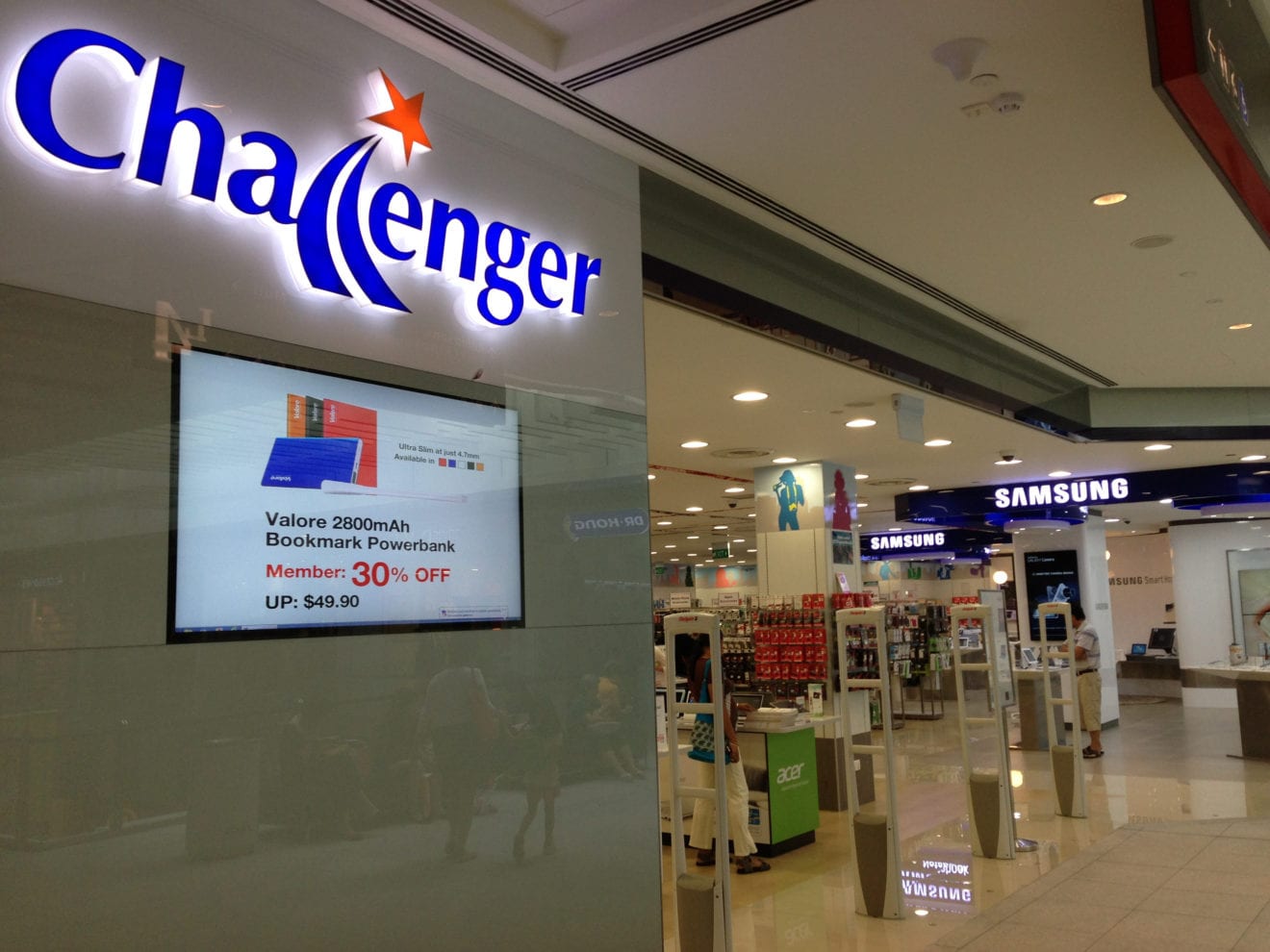
  • New Challenger subsidiary set-up in Malaysia

    New Challenger subsidiary set-up in Malaysia

    Singapore-based retailer Challenger Technologies has set up a new wholly-owned susbidiary in Malaysisa. The new subsidiary, which is called Hachi MY, has been set up by Challenger Technologies’ wholly-owned Challenge Ventures unit. Announing the incorporation of the new subsidiary, Challenger stated that its principal business would be trading, retail, distribution and online trading if IT and lifestyle products and services.

    Established in 1984 as an IT products retailer, Challenger Technologies now operates 40-plus stores consisting of superstores, mini stores, Valore concept stores and Musica stores across Singapore.

  • Challenger’s net profit in 2015 up 22%, plans to open new online store in April

    Challenger’s net profit in 2015 up 22%, plans to open new online store in April

    IT products and services provider Challenger will establish a new online store to maintain its relevance in the retail market.

    Known as Hachi.sg, the portal, which will be unveiled in April 2016, will boast more products, an improved shopper interface and an online sales platform, Challenger said in a statement on Tuesday (Feb 16).

    Chief executive Mr Loo Leong Thye said: “Our strong network of offline stores will complement the online business so our customers can enjoy a true shop-anywhere, offline-to-online and vice versa experience.”

    On Tuesday, the SGX Mainboard-listed technology company also announced net earnings of $18.3 million in 2015, a 22 per cent increase from the $15 million profit recorded the year before.

    The IT retailer attributed the higher net profits to higher government grants received and lower operating expenses from the closure of its Malaysia retail operations.

    In the final quarter of 2015, net profit also increased by 50 per cent, $7.5 million more than the previous year.

    Meanwhile, earnings per share rose by 1.01 cents, from 4.28 cents in 2014 to 5.29 cents in 2015.

    However, it recorded a one per cent dip in revenue over the year from $355.1 million in 2014 to $352.2 million, due to lower contribution from retail revenue in Singapore.

    Looking at the year ahead, Mr Loo observed that 2016 will continue to be a challenging year for the retail industry.

    “Weak market sentiment from last year will spill over into 2016. Hence, retailers like us have to keep innovating to retain existing customers and attract new ones. On top of that, we will continue to focus on other hygiene factors like keeping operating costs low with better cost management and increasing productivity,” he said.

    Mr Loo added that Challenger is looking to build up to a stronger position by investing resources and manpower for the next three to five years towards its online business.

    Currently, Challenger has a total of 48 stores in Singapore. But it revealed last December that it would be closing its flagship megastore in Funan DigitaLife Mall, after it was announced that the mall will shut down this year for redevelopment.


  • Singapore’s Challenger loses flagship store

    Singapore-listed Challenger Technologies, the state’s largest IT products and services provider says it will boost its push towards a digital retail ecosystem and advanced software development initiatives for continued growth.

    Its statement followed news revealed yesterday on Inside Retail Singapore that CapitaLand Mall Trust plans to demolish Funan DigitaLife Mall to build a new integrated development which will open three years later. The mall is home to Challenger’s 53,000 sqft (4924 sqm) flagship megastore.

    “The group is well-positioned to continue bringing value and relevance to its half a million members and established base of corporate customers,” Challenger said in a statement intended to reassure shareholders the store’s closure will not measurably impact on its trading.

    CEO Loo Leong Thye said that Funan’s redevelopment was first mooted by CMTL more than seven years ago. Challenger’s planning had also began then.

    “We relocated our entire back office operations from Funan to our Ubi Link corporate building in 2009,” he said. This was followed by rapid retail expansion, with a total store count at 47 as of 12 December 2015 and three new leases confirmed for the first half of 2016.

    Apart from restarting its retail eCommerce engine in 2014 with a mobile-first revamp coming in early 2016, the group also announced its foray into a digital lifestyle ecosystem by establishing Challenge Ventures earlier this year to invest in digital businesses and services.

    One such service is the group’s existing end-to-end integrated marketing solutions provider, inCall System, which has been injected into CVPL. Another business is eCommerce marketplace Andios, which provides customers a platform to buy or sell their smartphones online.

    “To create the next wave of business growth, CVPL will continue to invest in relevant businesses from outside of the group,” said Challenger.

    To cater for the rapid growth from its digital businesses, the group has plans to establish a logistics hub in Singapore for eCommerce warehousing and fulfilment.

    The group believes the impact from the closure of its megastore is significantly reduced due to the extensive planning efforts over the last seven years.

    “When we first listed on SGX in 2004, our Funan store contributed to 60 per cent of our total group revenue. As of the third quarter of 2015, this number is only about 20 per cent of our total group revenue,” Loo noted.

    “Over the last seven years, many of our members and even tourists have also begun shopping at our heartland mall stores because of proximity convenience. With our mobile-first revamp coming in early 2016, more Challenger customers will switch to shopping with us online. They will enjoy online-only member deals, always-on rebates credited to their eWallets and even same-day express delivery.”

    Loo says the concept of a destination specialist shopping mall is not as relevant as being able to provide a wider range of products for customers to browse on-the-go.

    “We can stock 10 times more products online than at our megastore, creating a mega mall effect for customers to browse and transact on their mobile devices. We need to go where the customers are,” he said.

    “Our physical retail stores will evolve to become more experiential, with our brand partners having better concepts to showcase their products’ capabilities. They will complement our online store, which will serve customers at their own time – not dictated by a mall’s operating hours.”

    The group will keep its physical store expansion options open.

    “Our retail strategy has always been and will continue to see us expanding at suitable locations with reasonable rentals,” Loo said. “We will continue to rationalise our retail store locations, including opening, closing and right-sizing our stores to improve operating performance.

    “I have a big sales target of $1 billion to be achieved in five years’ time,” Loo said. “This is entirely possible because we have scalable business plans to roll out progressively to regional markets.”


  • Challenger Singapore shrugs off retail gloom

    Challenger Singapore shrugs off retail gloom

    Listed IT chain Challenger Singapore plans to open new stores this year as sales increase despite the city’s retail malaise.

    Challenger currently operates 45 stores in Singapore, a flagship megastore, 22 superstores and 22 small format stores. The company says it will continue to expand its retail footprint with three new stores planned for the second half of this year. Some stores which are not performing up to expectation will be downsized or closed when their current leases expire.

    Challenger Technologies, Singapore’s largest retailer of IT products and services, has reported a three per cent increased in second quarter sales to $84.7 million.

    It says sales were buoyed mainly by an increase in trade show activities as well as full-year operations for retail stores opened since the second half of 2014.

    These were partially offset by loss of revenue that resulting from its exit from Malaysia in the first half of last year.

    Net profit jumped 21 per cent to $3.5 million, boosted by reduced rental and operating expenses that resulted from the Malaysia exit.

    CEO Loo Leong Thye said although the company had improved its net profit, the IT retail business in Singapore continues to be challenging due to weak consumer spending power.

    “We also face higher operational costs and difficulty in hiring more staff to serve our customers to an expected level of satisfaction.”