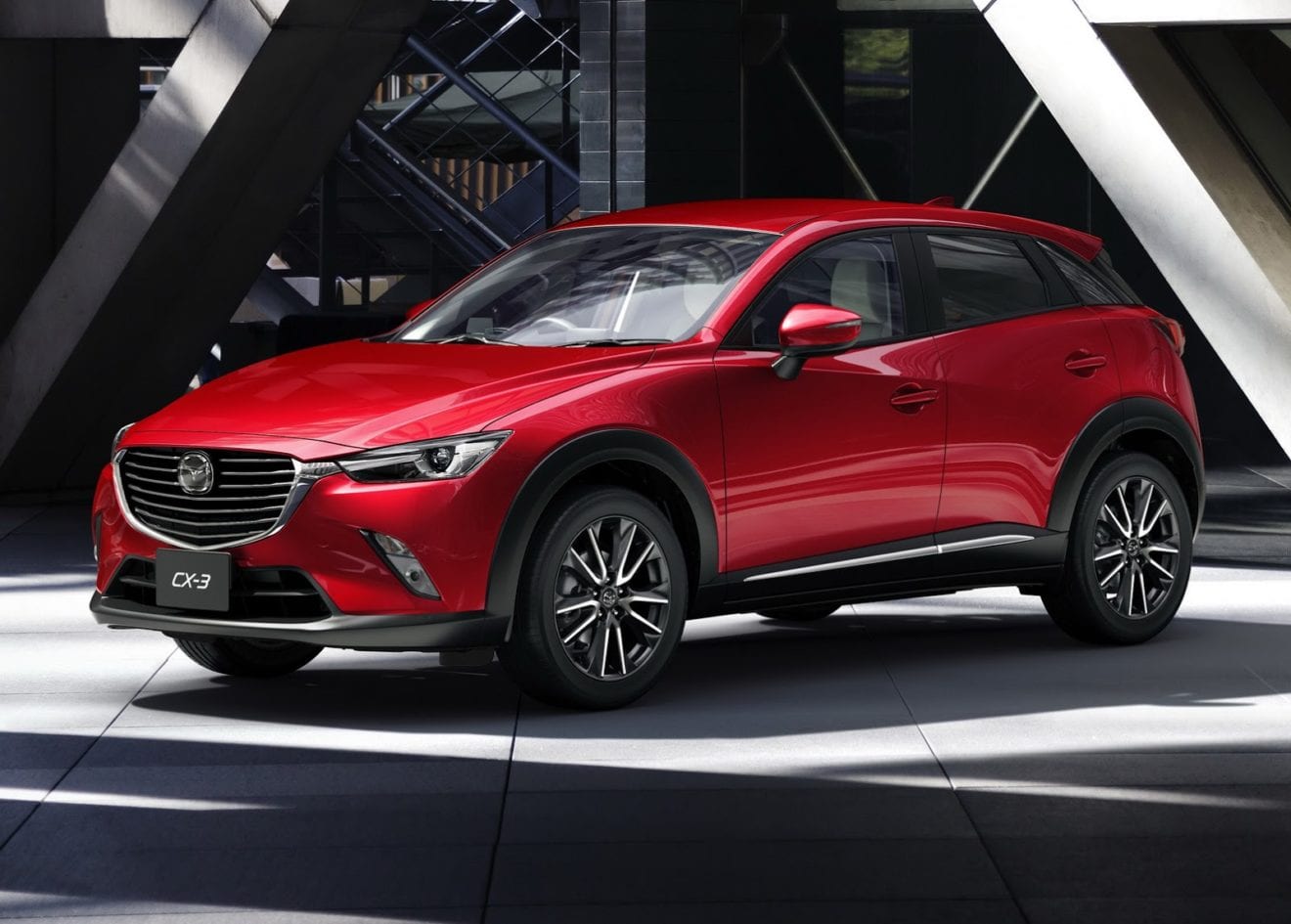
Changan Mazda launched its updated 2027 EZ-60 electric SUV in China on Saturday. Pricing starts at 113,900 yuan ($16,880) across four new LiDAR-equipped variants.
The roof-mounted sensor package sits on upper trims, lifting the top of the nine-model range to 172,900 yuan before a promotional 6,000 yuan discount across all configurations. The baseline official guide price holds steady at 119,900 yuan. That matches the entry level from the model’s debut.
Buyers pay a 12,000 yuan premium for the LiDAR options. The extended-range electric vehicle (EREV) Pro LiDAR variant costs 151,900 yuan, while the battery electric (BEV) Max LiDAR edition tops the lineup at 172,900 yuan. Dimensions stay unchanged. The SUV measures 4,850 mm long, 1,935 mm wide, and 1,620 mm tall on a 2,902 mm wheelbase.
Sensor Package and Driver Assistance Architecture
A single Hesai ATX LiDAR mounted on the roof line drives the driver assistance suite. The optical unit delivers a detection range of 200 meters. It works alongside three millimeter-wave radars, 11 high-definition cameras, and 12 ultrasonic sensors to scan forward past 250 meters.
Software runs on an end-to-end architecture that handles highway navigation assistance between 0 and 130 km/h. Urban navigation assist operates between 0 and 80 km/h. Automated parking supports more than 300 bay geometries. Features like memory parking will arrive via over-the-air updates alongside 25 active safety functions.
Powertrain Options and Battery Capacities
Powertrains carry over unchanged. EREV trims pair a 70 kW 1.5-liter range extender with a rear electric drive motor producing 190 kW (255 hp) and 290 Nm of torque. A 31.73-kWh battery pack provides 200 kilometers of pure electric driving range under the CLTC cycle.
Pure electric trims use a 77.94-kWh lithium iron phosphate pack with the same 190 kW rear-wheel-drive motor. That setup delivers a CLTC driving range of 600 kilometers per charge.
Joint-Venture Rivalry in China’s Electric Market
Legacy joint ventures face intense pricing pressure in China as domestic automakers make semi-autonomous driving standard in mass-market brackets. International brands have largely avoided putting LiDAR on mid-tier models to protect profit margins. That left their products exposed against high-specification Chinese rivals.
Putting Hesai LiDAR and end-to-end software below 180,000 yuan takes direct aim at rivals like the Buick Electra E7 and the Nissan NX8. Japanese and American joint ventures need this equipment bundling to protect showroom share in China’s tier-two and tier-three cities.
Global Export Track and Deployment Plans
The EZ-60 anchors Mazda’s electrification export program developed with Changan Automobile. It serves as the production base for the CX-6e, which debuted at the Brussels Motor Show in January. Retail shipments to European distributors are already underway.
Changan Mazda launched the original EZ-60 on September 26, 2025, bringing this refresh 12 months into the lifecycle. Other Japanese carmakers are also expanding electrified lineups in China. Nissan recently updated its N7 sedan, and Toyota plans to introduce localized extended-range models in April 2027.
Deliveries of the LiDAR-equipped EZ-60 trims begin at dealerships across China next month. The 6,000 yuan launch subsidy will run through the initial intake window.