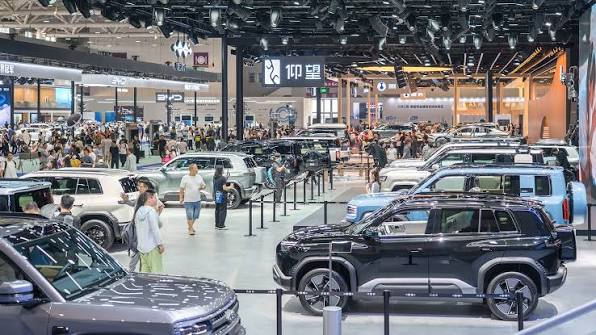
Tag: Changan

  • China Records 15 Million Cars with Navigation on Autopilot Features

    China Records 15 Million Cars with Navigation on Autopilot Features

    China counted approximately 15 million passenger cars equipped with Navigation on Autopilot software as of August 2026, according to government academy data released in Beijing.

    Those vehicles account for roughly 25 per cent of the 61 million passenger cars nationwide carrying Level 2 driver assistance systems, reflecting the operational fleet rather than showroom deliveries this year.

    The Fleet on the Road

    Data released at the 2026 World Intelligent Connected Vehicles Conference by the China Academy of Information and Communications Technology showed about 16 million passenger cars in China carried 5G communication terminals as of August, alongside 2 million vehicles with Cellular Vehicle-to-Everything equipment.

    The China Academy of Information and Communications Technology disclosed the operational figures during the conference in Beijing’s Yizhuang area. The Ministry of Industry and Information Technology, the Ministry of Transport, and the Beijing municipal government jointly organized the three-day gathering.

    Hardware installations across the domestic fleet have outpaced urban infrastructure upgrades. Automakers selling in China have turned automated highway driving and urban point-to-point navigation into standard consumer features to protect showroom pricing, forcing suppliers to absorb sensor costs across high production volumes.

    Rewriting Vehicle Standards

    Regulators are moving to codify how these operating systems behave once drivers take their hands off the controls. Guo Shougang, head of the equipment industry department at the Ministry of Industry and Information Technology, released a draft update to China’s connected-vehicle technical standards guidelines for public review on October 21.

    The regulatory framework covers more than 400 existing standards across intelligent vehicles, communications, traffic management, and fleet operations. The 2026 revisions seek to expand safety criteria for core components, standardize system architectures, and set binding rules for operating autonomous driving services commercially.

    For automotive brands and tier-one component makers, the revised rulebook narrows room for proprietary software workarounds. Safety compliance costs will fall heavily on domestic electric vehicle assemblers that have marketed assisted driving capabilities aggressively to private retail buyers.

    Preparing Level 3 Approvals

    Work on the second batch of Level 3 autonomous driving market access pilots is underway, Guo said during the conference. Regulators have not named the participating carmakers, the specific models involved, or the date when commercial sales permits will take effect.

    The current phase builds on early regulatory permissions granted late last year. The ministry awarded conditional Level 3 market access approval to models from state-owned automakers Changan and BAIC in December 2025.

    Those initial vehicles remain confined to designated public test roads and strict operating conditions rather than nationwide consumer use. Regulators will monitor testing outcomes from the first cohort before expanding operational permits to the next group of carmakers.
  • Chinese Automakers Double Paris Car Show Presence with 20 Brands

    Chinese Automakers Double Paris Car Show Presence with 20 Brands

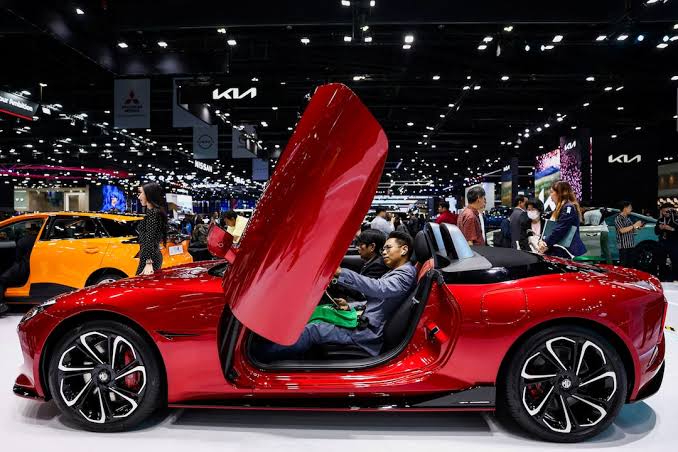
    Around 20 Chinese automotive brands unveiled new models at the Paris car show on Oct 12. They doubled their presence from 2024 to capture European market share.

    Passenger vehicle sales across China fell 20 percent in the first half of 2026. That drop forced domestic manufacturers to accelerate overseas distribution.

    Car manufacturers from China and Europe presented up to 60 new models at the event. Chinese participants included established exporters BYD, Chery, and SAIC’s MG brand, alongside newer entrants such as Aito. State-owned Changan debuted two separate marques, Nevo and Avatr, targeting retail buyers across Western Europe.

    Export pressure mounts as domestic sales drop

    The United States market is largely closed to Chinese automotive imports. That leaves Europe as the central battleground for manufacturers dealing with price competition at home. Chinese car companies have expanded their European market share steadily over the past three years, relying on aggressive retail pricing and rapid model cycles.

    For retailers and dealership groups across Europe, arriving Chinese marques offer wider inventory margins. But they also bring operational volatility. Multi-brand dealership networks in France and Germany face showroom floor adjustments as new brands compete directly against established European volume models.

    Regulatory headwinds and hybrid curbs

    Tightening trade barriers across the European Union now challenge this product rollout. A recent pact between Brussels and Beijing could cut Chinese hybrid vehicle shipments to the bloc by more than half. Detailed implementation mechanisms remain unpublished.

    Those curbs hit hybrid channels directly. Investment bank Jefferies reported in an Oct 11 client note that BYD, Chery, and SAIC’s MG accounted for 90 percent of all Chinese-brand hybrid vehicle sales in the European Union during the first eight months of 2026.

    Local assembly strategies take shape

    Trade friction has pushed Chinese original equipment manufacturers toward European industrial partnerships. The European Union imposed import tariffs on Chinese-assembled fully electric vehicles in October 2024. Meanwhile, policymakers are drafting minimum local-content thresholds under upcoming Made in Europe rules.

    Several groups are responding by moving production directly onto European soil. Geely Auto confirmed in July that it will manufacture electric sport utility vehicles at a Ford Motor plant in Spain. Geely chief executive Alex Nan met partners on Oct 11 in Paris to reinforce joint manufacturing and powertrain ventures with French carmaker Renault.

    Legacy automakers fight back

    European car manufacturers are defending their home territory with competing entry-level models. Stellantis revealed six production vehicles and nine concept cars in Paris. Its push was led by a low-cost electric Citroen 2CV aimed at halting Chinese market share gains.

    Volkswagen chief executive Oliver Blume stated on Oct 11 that European markets require equal operating conditions. He urged foreign manufacturers selling in Europe to generate domestic employment and industrial value.

    Brussels will trigger the next shift when the European Commission releases draft text for its Made in Europe local-content mandate. That measure will define factory sourcing requirements for electric vehicle sales across the bloc.

  • China’s Changan forms electric car JV with local startup Nio

    China’s Changan forms electric car JV with local startup Nio

    China’s fourth-largest automaker Chongqing Changan Automobile Co Ltd and Nio, an electric car startup formerly known as NextEV, will form a joint venture to cooperate on researching and selling electric cars, Nio said on Sunday.

    China is aggressively promoting electric cars to combat urban smog and push the industry to the forefront of automotive technology, loosening rules in recent years to allow startups like Nio to flood the industry and challenge established Chinese automakers.

    The Changan-Nio JV will focus on research, sales and service for green cars, although under a broader partnership the two sides will also share resources related to smart vehicle technology, manufacturing and other areas, according to a statement from Nio.

    Financial terms of the partnership were not disclosed.

    A Changan spokesman said the company had no further information to release regarding the partnership.

    Chinese tech giant Tencent Holdings Ltd was an early backer of Nio, and rival internet company Baidu Inc last month said it was leading a new round of investment into the startup.

    Nio has also partnered with Anhui Jianghuai Automobile Group Corp Ltd to produce electric vehicles on a contract basis.