
Tag: channelAdvisor

  • DHL partners with ChannelAdvisor to power global e-commerce for retailers and brands

    DHL partners with ChannelAdvisor to power global e-commerce for retailers and brands

    2 October, 2018 – DHL eCommerce, a division of the world’s leading logistics company Deutsche Post DHL Group (DPDHL), announced a strategic alliance with ChannelAdvisor, a leading provider of cloud-based e-commerce solutions. Through the partnership, brands and retailers can easily expand internationally by reaching foreign markets and delivering to customers around the world, with seamless connection to DHL eCommerce fulfillment and shipping.

    “We’re excited about this strategic alliance between DHL and ChannelAdvisor, which brings together two industry-leading companies to power the e-commerce opportunity for brands and retailers across the globe,” says Charles Brewer, CEO, DHL eCommerce. “By leveraging technology platforms, retailers and brands can accelerate their cross border e-commerce strategy by easily expanding to new regions and selling to anyone, anywhere. This is made even easier with a global e-commerce logistics partner like DHL to ensure a seamless order fulfillment and shipping process.”

    ChannelAdvisor enables retailers and brands to sell on marketplaces and improve their online performance by optimizing their operations. With a single product data feed, retailers and brands can sync with over 107 marketplaces. As orders and performance information flow back to the system, results are analysed and broken down to enable retailers/brands to optimize their e-commerce strategies.

    As a strategic partner, DHL eCommerce will bring their expertise in e-commerce logistics and access to a global fulfillment network for customers on the ChannelAdvisor platform. Customers can utilize the network of shared-use facilities at transactional prices to enable high-quality e-commerce order fulfillment with best-in-class operations and multiple shipping options.

    “ChannelAdvisor’s strategic alliance with DHL eCommerce gives us the opportunity to work with one of the largest global logistics providers,” says Paul Colucci, Vice President, Global Business Development, ChannelAdvisor. “By combining ChannelAdvisor’s industry-leading e-commerce platform with DHL’s leading logistics capabilities, DHL eCommerce customers will be able to reach new consumers on marketplaces, while continuing to offer the best-in-class fulfillment and shipping they expect. It’s essential that brands and retailers diversify their digital and multi-channel strategies to succeed in today’s evolving industry, and we are honored to be selected by DHL eCommerce to help its customers accelerate their sales strategies and meet demands.”

    Partnering up with ChannelAdvisor emphasizes Deutsche Post DHL Group’s objective to be the leading global provider in e-commerce logistics. DHL eCommerce is part of Deutsche Post DHL Group, established in 2014 as part of the Group’s growing focus in e-commerce logistics solutions. Along with its sister divisions DHL Express, DHL Supply Chain and DHL Global Forwarding, the Group offers end-to-end solutions for e-commerce retailers.
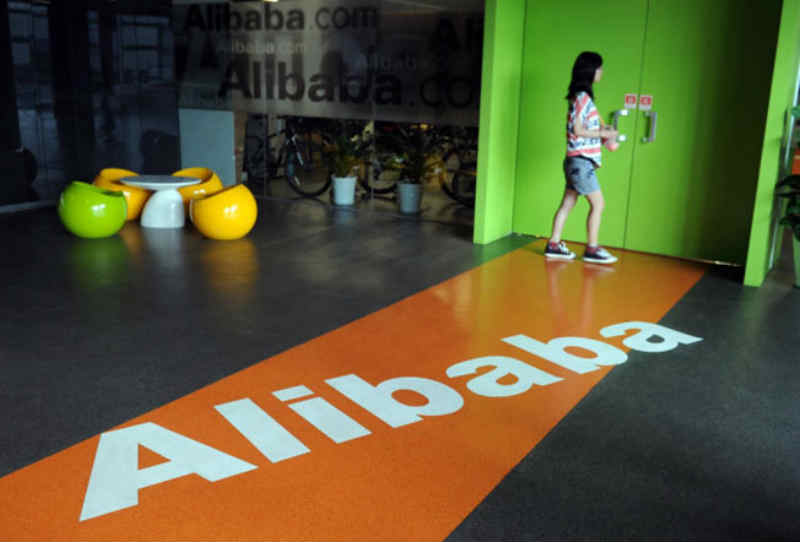
  • Alibaba chairman: No, seriously, we’re not competing in the US

    Alibaba chairman: No, seriously, we’re not competing in the US

    Ever since Wall Street’s interest in Chinese e-commerce giant Alibaba reached a fever pitch last year, investors and analysts have focused on one major question: When will the company expand into the US and take on Amazon and eBay?

    Jack Ma, Alibaba’s charismatic founder and executive chairman, visited New York this week to try to dispel that notion.

    “When are you going to come to invade America?” Ma joked, during a Tuesday speech before the historic Economic Club of New York at the Waldorf Astoria’s Grand Ballroom. Instead, he countered, “The strategy for us is helping small business in America go to China, sell their products to China.”

    While that pitch to help small businesses sounds positive and uncontroversial, US onlookers and competitors could be excused for not believing Ma. The US retail market remains the largest in the world — with China coming in second — so it’s not a stretch to think Alibaba’s long-term plans could eventually include coming to America. That means Amazon, eBay and others may someday be facing a major, new competitor on their shores and US consumers will get to know the name Alibaba.

    For now, the company has been positioning itself as a partner for US businesses, hoping it can act as a bridge for them to reach the Chinese market and become a more influential global retail player along the way. To do that, though, Alibaba needs to build trust with US retailers and not appear as a rival.

    “I think a lot of this is time frames,” said Scot Wingo, executive chairman of ChannelAdvisor, which provides research and other tools for online retailers. “I think right now [China is] definitely their priority. I think two years from now I’d be shocked if they didn’t have a more direct US presence.”

    Alibaba’s focus on small US businesses makes sense in the short-term, Wingo said, since many retailers using Alibaba’s websites have told his company they don’t have enough inventory of Western goods to meet the surging demand of their Chinese customers. ChannelAdvisor is a partner with Alibaba’s Tmall Global, which helps import products to China.

    Today, Alibaba makes nearly all its revenue in China and has little exposure to the US. The company opened online retail site 11 Main in the US last year and has a handful of investments in US businesses. While that’s not nearly enough to interest most US customers, Wall Street last year swooned for Alibaba — the largest e-commerce company in China — when the firm raised $25 billion on the New York Stock Exchange, pulling off the biggest initial public offering ever.

    Ma doesn’t plan to stop there, saying his goal is to make his company bigger than Walmart and eventually generate annual gross merchandise volume — the total value of goods sold on Alibaba’s websites — of $1 trillion. To get there, though, Ma and Alibaba will likely need more partners.

    “We did not come here to compete,” Ma said Tuesday. “We come here to bring the small business.”