Tag: charge

  • Transforming Ishikari into Japan’s Prime Data Center Hub: NTT and Allies Lead the Charge

    Transforming Ishikari into Japan’s Prime Data Center Hub: NTT and Allies Lead the Charge

    NTT East Corporation has entered into a partnership with a collection of data center, telecommunications, energy, and infrastructure businesses, with the aim of transforming Ishikari City in Hokkaido into a major data center hub.

    Building a Data Center Cluster

    The newly formed Ishikari Data Center Consortium will concentrate its efforts on enhancing the necessary infrastructure to facilitate data center development. This includes the improvement of power and telecommunications networks. In addition, working in collaboration with local government, the consortium will put in place incentives and other schemes to encourage further growth.

    The consortium comprises several industry-leading companies, such as Sakura Internet, Kyocera, Tokyu Land Corporation, Ishikari Renewable Energy Data Center No. 1 LLC, Flower Communications, Broadband Tower Inc., NTT ME Corporation, Ishikari Regional Energy LLC, Liene Inc., and Hokkaido Integrated Communications Network Co., Ltd.

    Ishikari, situated in Hokkaido’s Ishikari Subprefecture, is rapidly becoming a favored location for data centers. Thanks to the Ishikari Bay New Port area, the city has access to renewable energy sources and is relatively safe from natural disasters. The consortium’s goal is to boost Ishikari’s profile as a key domestic data center site and one of Japan’s premier data center clusters.

    NTT East has announced that the consortium will strive to ensure that local residents and businesses reap the societal benefits of data center development, while simultaneously boosting Ishikari’s national reputation as a data center cluster.

    Previous Data Center Developments

    Since 2011, Sakura Internet has been operating its data center in Ishikari. The company has since expanded the facility and has been deploying GPUs there. Meanwhile, Tokyu Land, Flower Communications, and Broadband Tower joined forces on a 15-MW data center project in Ishikari in 2024, which is set to launch in 2026.

    These ventures have added to Hokkaido’s data center landscape. Data Center Map currently lists nine data centers on the island, primarily positioned around Sapporo. Several major operators have data centers in Hokkaido, including SoftBank, Kyocera, HotNet, Sakura Internet, KDDI, and Rakuten.

    NTT East provides services from roughly 30 data center locations in Japan. These include facilities in Tokyo, Yokohama, Chiba, Saitama, Ibaraki, Tochigi, and Gunma.

    Questions & Answers

    What is the aim of the Ishikari Data Center Consortium?
    The consortium’s goal is to enhance the necessary infrastructure for data center development in Ishikari City, working with local government to put in place incentives that encourage growth in order to establish the city as a major data center hub in Japan.

    Who are the members of the Ishikari Data Center Consortium?
    The consortium is composed of several companies, including NTT East Corporation, Sakura Internet, Kyocera, Tokyu Land Corporation, Ishikari Renewable Energy Data Center No. 1 LLC, Flower Communications, Broadband Tower Inc., NTT ME Corporation, Ishikari Regional Energy LLC, Liene Inc., and Hokkaido Integrated Communications Network Co., Ltd.

    What makes Ishikari City an attractive location for data centers?
    Ishikari City has access to renewable energy sources and is relatively safe from natural disasters. Furthermore, with the support from the consortium, the city is developing the necessary infrastructure to facilitate data center operations.

  • Hermès Witnesses Stellar Growth in Asia, Japan Leads Charge with 11% Sales Increase

    Hermès Witnesses Stellar Growth in Asia, Japan Leads Charge with 11% Sales Increase

    Luxury goods retailer Hermès has reported a notable surge in sales for the first half of this fiscal year, with the Asian market, particularly Japan, demonstrating substantial performance.

    During the six-month period ending in June, the company garnered a revenue of €8.2 billion (US$9.39 billion), marking a growth of 6 per cent at constant exchange rates and 2 per cent at current exchange rates. The second quarter of the year witnessed a 7 per cent increase in sales at constant exchange rates, hitting €4.1 billion.

    Geographical Growth

    Although all regions exhibited growth, the Middle East was an exception, suffering the repercussions of ongoing turmoil. In Asia, Japan emerged as the region with the highest growth, witnessing an 11 per cent surge in sales in constant currency. This impressive performance was primarily backed by significant customer inflow and consistent customer loyalty. Following the expansion and renovation of Osaka’s Hilton Plaza East store in May, Hermès introduced its new store in Nagoya in June.

    Other Asian markets, including Greater China and South Korea, experienced a 2 per cent growth. In January, the company opened a store in Hanoi, subsequently launching the new Sanlitun store in Beijing and reopening the Hong Kong Elements and Taipei Sogo Fuxing stores in April.

    Sales in the Americas rose by 15 per cent, France saw a 2 per cent improvement, and Europe excluding France reported a 9 per cent growth. In contrast, the Middle East experienced a 4 per cent decline in sales. Despite the unstable geopolitical climate, Hermès noted that the market demonstrated resilience, with the second quarter showing signs of gradual recovery.

    Sales by Category

    In terms of product categories, both leather goods and textiles segments posted sales growth of 10 per cent. The ready-to-wear and accessories sector observed a modest 2 per cent increase, while perfume and beauty suffered a 4 per cent decline. Watch sales remained steady.

    From a financial perspective, the recurring operating income rose slightly to €3.4 billion, whereas the consolidated net profit remained steady at €2.2 billion.

    Looking ahead, Hermès confirmed its medium-term revenue growth outlook at constant exchange rates, despite the prevalent economic, geopolitical and monetary uncertainties.

    Questions & Answers

    What were Hermès’ first-half fiscal year sales results?
    For the first half of the fiscal year, Hermès reported strong sales growth, particularly in Asian markets, with revenue totalling €8.2 billion (US$9.39 billion).

    How did Hermès perform in different geographical markets?
    The company witnessed growth in all regions except the Middle East. The Americas reported a 15 per cent increase in sales, France a 2 per cent rise, and Europe excluding France a 9 per cent growth. Asian markets, particularly Japan, demonstrated significant performance.

    How did different product categories at Hermès perform?
    Leather goods and textiles witnessed a sales growth of 10 per cent, ready-to-wear and accessories experienced a slight 2 per cent increase, while perfume and beauty saw a 4 per cent decline. Watch sales remained stable.

  • Sears to be fined US$443 million

    Sears to be fined US$443 million

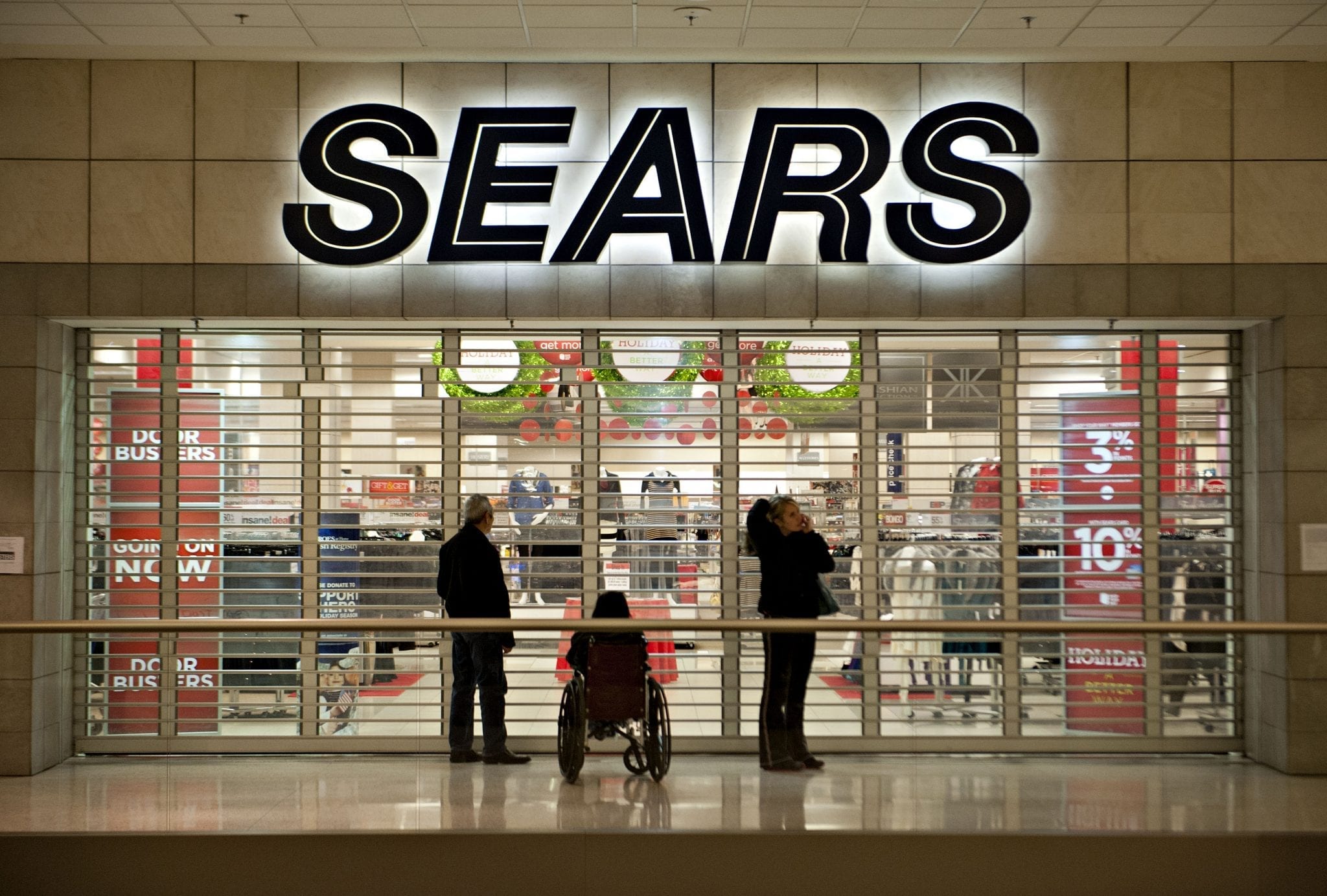
    Bankrupt U.S. retailer Sears has been hit with a charge of approximately US$443 million due to store closures. The charges relate to markdowns, severance costs and lease termination costs related to the business’ Chapter 11 bankruptcy, filed due to its inability to hit a debt payment deadline in October.

    The company said some of the charges, revealed in a regulatory filing, have already been incurred, with the remaining charges to be booked in the fourth quarter.

    At the time, Sears chairman Edward Lampert told investors that while the business had made progress, its plan had not delivered the desired results.

    “Addressing the Company’s immediate liquidity needs has impacted our efforts to become a profitable and more competitive retailer,” Lampert said.

    GlobalData Retail managing director Neil Saunders noted there was no clear path to success for the retailer.

    “The group has tried to shrink its way to profitability for years to no avail, so it is hard to see why pursuing the same strategy under the auspice of Chapter 11 would result in a different outcome,” Saunders said.

    Saunders said that several reasons have contributed to this outcome, but foremost among them is Sears management’s failure to evolve the store offering as retail modernised.

    “Ultimately, Sears needs not just to fix its financial problems. It also needs to repair the deficiencies in terms of retail strategy… only a complete change of management will bring this about.”