Retail News CRM

Tag: Charoen Pokphand

  • Thai food giant to list on Vietnam stock exchange

    Thai food giant to list on Vietnam stock exchange

    Thai food giant Charoen Pokphand Foods has green-lighted its Vietnam subsidiary’s plans to list its shares on the Ho Chi Minh Stock Exchange.

    CPF has made a filing with the Stock Exchange of Thailand, but details are unavailable about plans for an IPO and others.

    C.P. Vietnam gets around 70 percent of its revenues from processed and fresh pork and chicken products.

    It built its first processing plant in Vietnam in 1993 and now has nine around the country.

    Vietnam’s stock exchanges have eight foreign companies listed on them, and they account for 0.3 percent of their market capitalization.

    Another foreign firm, Japanese retailer Aeon, has announced its intention to list in Vietnam.

  • IconSiam Bangkok due to open November 9

    IconSiam Bangkok due to open November 9

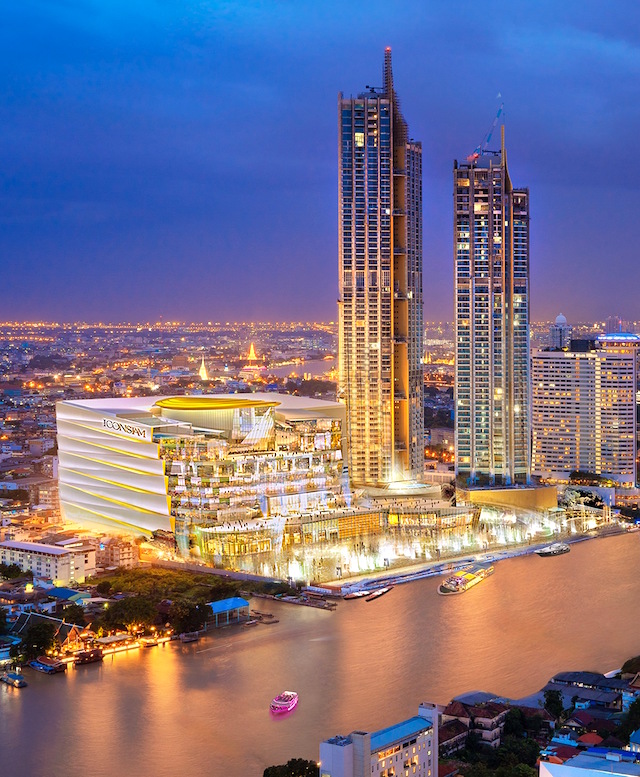
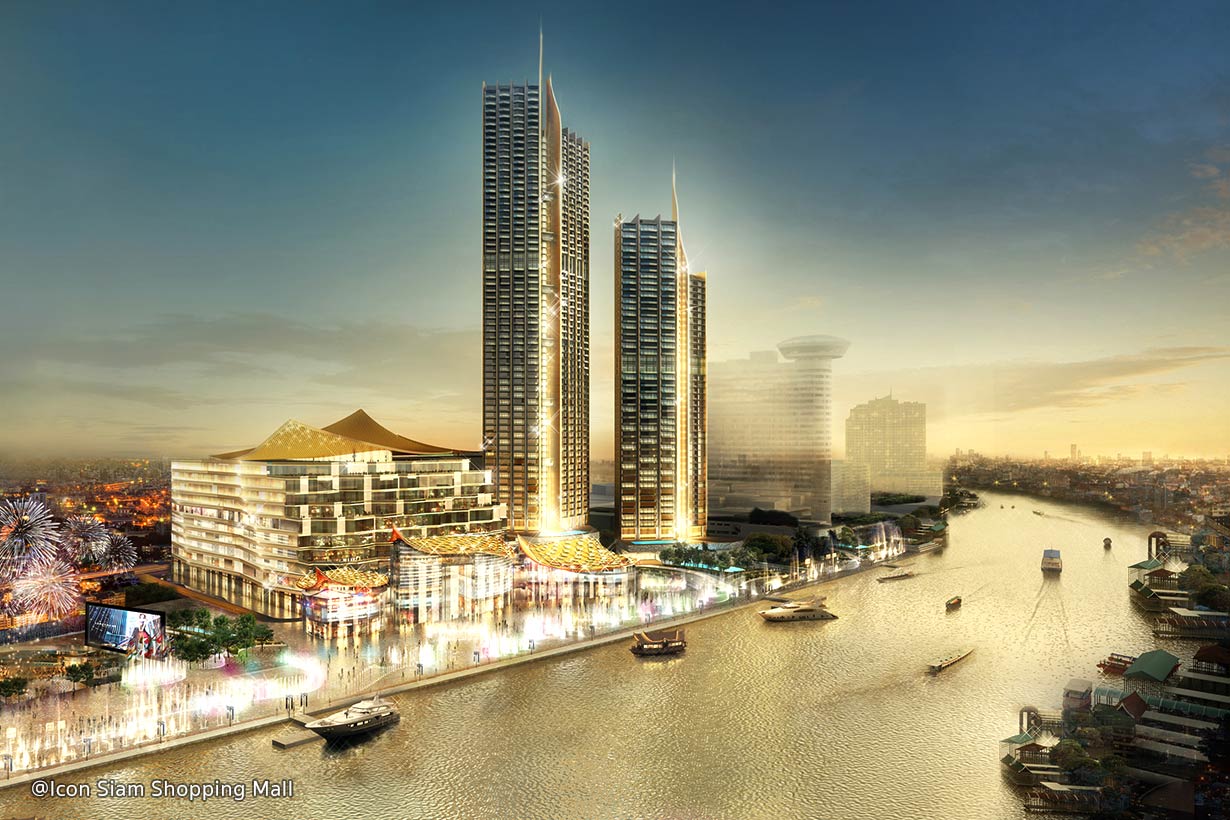
    Bangkok’s massive IconSiam development will open on November 9, its developers have confirmed.

    The US$1.67 billion complex being constructed on a 400-metre-long stretch of the Chao Phraya River will feature 14 flagship stores of internationally renowned brands, many of them taking space in the ultra-luxury 25,000sqm glass pavilion called IconLuxe, located next to the river and featuring the longest pillarless glass facade in the world.

    The development will be home to two shopping centres, whose tenants will include 188 brands and store concepts from around the world making their debut in Thailand, including duplex maisons for luxury brands.

    IconSiam CEO Supoj Chaiwatsirikul says IconSiam will represent “a completely new business model for destination development” in Thailand.

    “We are committed to making IconSiam a new national landmark and an exciting global destination. We have therefore placed particular emphasis on becoming the location of choice for the flagship stores of the world’s finest brands as well as introducing many firsts and innovations at the various outlets.”

    The development will comprise a 750,000sqm mega-destination featuring not only two shopping precincts, but theme parks, a museum, hotel and apartment towers.

    “IconSiam will excite visitors with a rich diversity of offerings, including art and culture, in addition to extraordinary dining and shopping possibilities,” said Chaiwatsirikul. “The project is co-designed and co-activated in collaboration with enterprises of all sizes and with people from all walks of life, and the benefits of the project are shared among all parties.

    “We have made every participant in IconSiam – whether they be outlets selling products, or designers and artists showcasing their creations, or even neighborhood communities helping in our operations – an inseparable part of our business model and they play a part in shaping our development.”
    Flagships line up

    Flagship stores at IconSiam will include the largest Adidas Original store in Asia, H&M-owned fashion label Cos, an Aland lifestyle concept store from Korea, and local accessories brand Naraya. H&M will open a three-level store.

    UK retailer JD Sports will open its first Thai store at the development and Nike’s store will be the first in Asia with a Kicks Lounge.

    The retail development is anchored by Thailand’s first Takashimaya department store from Japan which plans to introduce 170 brands into the market for the first time.

    Details have yet to be released about world-class restaurants and a rooftop bar planned for the complex. Besides those, IconSiam will feature seven food and beverage zones, each with a different atmosphere and concept. Tenants will include Singapore’s Jumbo seafood restaurant and Taiwan’s Harbour restaurant.

    Fitness First will open its largest Thai venue yet.

    Opening festival

    Chaiwatsirikul says IconSiam has budgeted THB1 billion (US$31 million) on an opening and launch festival, including extensive international communications.

    “Because IconSiam will be a showcase for the very best that Thailand has to offer and serve as a platform to propel Thai brands, products, artists, artisans and Thai culture onto the global stage, we are investing heavily to make IconSiam globally visible. We want IconSiam to be a magnet for the country, capable of drawing hundreds of thousands of international and local visitors a day, and to bring honour to Thailand,” he said.

    Meanwhile, the development’s two luxury residential towers remain under construction. The 70-floor, luxury Magnolia Waterfront Residences with 379 residential units is 90 per cent complete, while the 52-floor, super luxury The Residences at Mandarin Oriental Bangkok with 146 units is 80 per cent complete.

    IconSiam is being developed by three Thailand companies: shopping centre operator Siam Piwat, which owns Siam Center, Siam Paragon and Siam Discovery; residential developer Magnolia Quality Development Corporation; and multinational conglomerate Charoen Pokphand Group.

  • Japan’s Inagora inks agreement with Thailand’s CP

    Japan’s Inagora inks agreement with Thailand’s CP

    Japan-based e-commerce platform Inagora is teaming with Thailand’s CP (Charoen Pokphand) Group to boost its China business.

    The joint venture is also researching expansion into Southeast Asia.

    Inagora targets Chinese shoppers seeking Japanese goods. It boasts 4 million registered users and an inventory of about 40,000 SKUs, ranging from food and household goods through to more luxury items. Last year, its turnover totalled about US$98 million.

    Inagora opened a brick-and-mortar store in Zhengzhou this month as it broadens its market reach and eyes new markets. Japanese trading house Itochu and others invested about $68 million into the business last year to help fund expansion.

    By teaming with CP, whose operations include the 10,500-strong 7-Eleven convenience-store network in Thailand, Inagora hopes to start offering Chinese shoppers products from other markets. It may also look to sell Japanese and other Asian products to people living in Southeast Asia.

  • Siam Makro to open 15 stores in India

    Siam Makro to open 15 stores in India

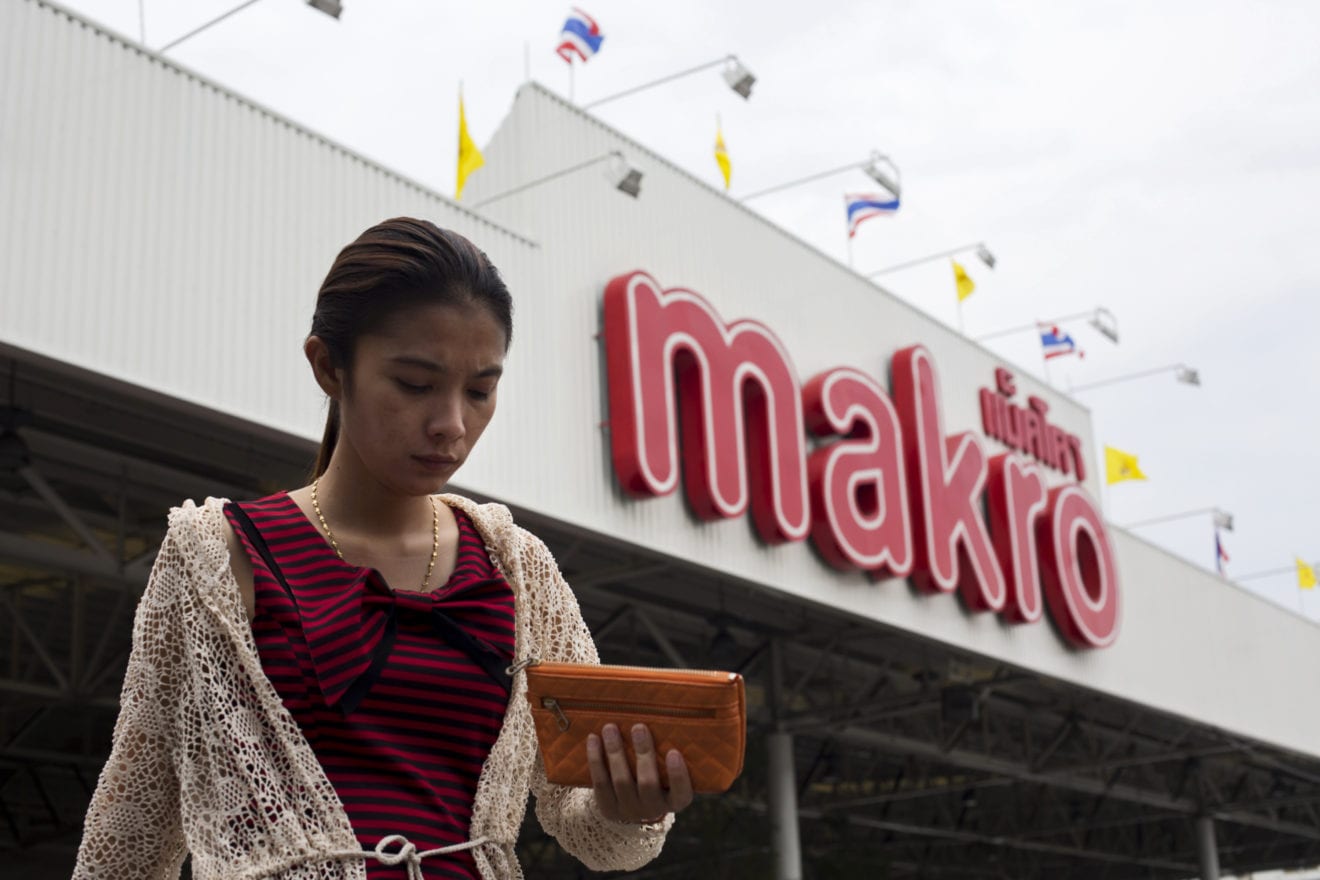
    Thailand conglomerate Charoen Pokphand (CP) Group plans to invest Rs1000 crore (US$157 million) over the next five years to open Siam Makro wholesale stores in India.

    Siam Makro, the company’s retail arm, will open 15 wholesale cash-and-carry stores in India, starting with Delhi-NCR, over the next three years under a new brand, Lots Wholesale Solutions.

    “India and the US are the two priority markets for us for future growth,” says MD Tanit Chearavanont of CP Wholesale India.

    The company hopes to open its first two stores, each covering more than 50,000sqft (4600sqm) in NCR by the end of the second quarter.

    CP Group has cash-and-carry businesses in Thailand, China, Cambodia and Myanmar. It has 123 Makro cash-and-carry outlets in Thailand, and 60 outlets in China under the brand Lotus.

    “We bring with us 28 years of experience in serving various business-to-business customers, such as hotels, restaurants and cafes, traders and service customers, through different cash-and-carry formats, large and small,” says Chearavanont. Hotels, restaurants and cafes, which account for about 28 per cent of the company’s business in Thailand, are seen as the largest segment in India as well.

    CP Group, which entered India in 2016 through CP Foods, its agro-industrial and food unit, is looking at making India its innovation hub for technology and digitisation, says Chearavanont.

    CP Wholesale India director (development and expansion) Sameer Singh says the company will look at competitive pricing to take on existing wholesalers in India. “We are also working on possible limited-period credit for customers. We are in discussions with banking institutions to finalise a strategy.” added Singh.

  • Siam Makro plans $258m expansion

    Siam Makro plans $258m expansion

    Thai cash-and-carry chain Siam Makro plans to invest up to 9 billion baht ($258 million) in opening stores this year in Thailand and overseas.

    Its parent company, CP All, which through its ownership of 7-Eleven Thailand is the country’s largest convenience store operator, plans to sell some of its 97 per cent stake in Siam Makro. It has appointed Siam Commercial Bank as financial advisor for a public share sale.

    It is reported CP All aims to keep a stake of more than 50 per cent in Siam Makro, whose main customers are hotels, restaurants and small convenience stores.

    Siam Makro plans to spend 6 billion baht to open 20 stores in Thailand this year, plus 3 billion baht to expand elsewhere in Southeast Asia. CFO Saowaluck Thitaphant says possible markets include Cambodia, Laos and Vietnam.

    She says the company is also interested in India, and plans a store for Myanmar once the political climate is clearer following elections.

    Siam Makro expects revenue to rise by less than 10 per cent this year.

    CP All, controlled by billionaire Dhanin Chearavanont’s Charoen Pokphand Group, says it will use proceeds of the share sale to repay debt.

  • Thai insider trading row lays bare governance concerns

    Thai insider trading row lays bare governance concerns

    An escalating row over insider share trading by executives at one of Thailand’s most high-profile groups has laid bare wider worries about corporate governance and regulatory enforcement in Asian emerging markets.

    Leading fund managers have vowed to freeze investments in CP All, part of the multinational Charoen Pokphand Group agribusiness, food and retail conglomerate, until it takes further action against three directors fined by the stock market regulator.

    The unusual public spat has highlighted what critics say are soft penalties for financial market wrongdoing in Thailand, which risk further hurting investor confidence already hit by domestic political turmoil and fears of global crises.

    Jamie Allen, secretary-general of the Asian Corporate Governance Association, a non-profit group that works with investors, companies and regulators, said of the CP All case: “This is unprecedented in Thai corporate governance. We have not seen domestic institutional investors show this level of public concern before about insider trading.”

    The case has also tapped into concerns about corporate governance in the broader Asian region, where many companies — such as CP Group — are still wholly or partly controlled by their founding families.

    Bandid Nijathaworn, chief executive of the Thai Institute of Directors, said the CP All dispute showed both companies and regulators still needed to improve compliance with market rules and norms, despite progress made since the 1990s Asian financial crisis.

    “This debate is a reflection of the heightened awareness and recognition of the importance of corporate governance,” he said. “We support the [regulator] to tighten up to make the punishments much tougher than we see.”

    This debate is a reflection of the heightened awareness and recognition of the importance of corporate governance– Bandid Nijathaworn, chief executive, Thai Institute of Directors

    Thai financial institutions managing more than $170bn in funds this week said they would boycott new investment in CP All, which is the operator of the 7-Eleven convenience store chain and is 42 per cent owned by CP Group companies. Among them were the Association of Investment Management Companies and Thailand’s two largest pension fund managers. They want CP All to impose unspecified further sanctions on executives who were among a group of six people fined a total of Bt33.3m ($930,000) for insider share trading in December, under a settlement with Thailand’s Securities and Exchange Commission.

    CP All’s shares tumbled 8.5 per cent between the regulatory announcement and the end of last week, more than three times the fall in the broader benchmark SET index. But the company’s stock rallied more than 5 per cent on Friday, in what some analysts suggested was relief that the fund managers stopped short of announcing they would cut their holdings.

    The SEC fined Korsak Chairasmisak, CP All’s executive chairman, along with fellow directors Piyawat Titasattavorakul and Pittaya Jearavisitkul, over purchases of shares in Siam Makro, the retailer, when CP All was in talks to take the company over in 2013. Mr Korsak, who accounted for more than 90 per cent of the fine, has acknowledged buying the shares, but said he did not mean to commit insider trading.

    CP All said in a stock exchange announcement this month that the directors had not intended wrongdoing, although they had acted with “imprudence” and “limited understanding” of the rules. The company said it would strengthen its corporate governance committee and formally admonish the executives, but would allow them to stay in their posts because they had settled the case quickly and had “track records of ethical practice”.

    The dispute has also raised questions about the enforcement of insider trading rules by the Thai authorities. The regulator’s notice of penalties for the case gave few details about how the offence was carried out or of the profit made by perpetrators, who in two instances were fined as little as Bt333,333 ($9,340).

    Critics say light penalties not only fail to deter wrongdoing, but actually encourage it by making it a risk worth taking. The SEC and the Stock Exchange of Thailand did not respond to requests for comment.

    Corporate governance at Asian companies slipped between 2010 and 2014 after steady improvement since the 1997-98 financial crisis, according to a report published in late 2014 by CLSA, the Asia-focused brokerage, and the Asian Corporate Governance Association. While some countries, including Thailand, had not fallen back, CLSA said the overall picture was still a “warning flag for investors”.