
Retail News CRM

Tag: charter

  • UBS Wins U.S. National Charter: Broadening Services for Wealth Management Clients

    UBS Wins U.S. National Charter: Broadening Services for Wealth Management Clients

    UBS is set to transform its U.S. entity, UBS Bank USA, into a nationally chartered bank following approval from U.S. regulatory bodies. The announcement was made via LinkedIn by Rob Karofsky, President of UBS Americas.

    A Significant Milestone for UBS

    Karofsky hailed this development as a significant achievement, reinforcing the bank’s enduring dedication to the U.S. market and its ongoing efforts to bolster the bank’s position as a global leader in wealth management.

    Expansion of Banking Services on The Horizon

    The new charter will empower UBS to broaden its banking services for its U.S. wealth management clientele. The bank plans to introduce payment services along with checking and savings accounts, among other offerings. The LinkedIn post emphasized that the new charter would reinforce the U.S. banking platform, improve client and financial advisor services, and put the bank in a favourable position for further expansion, all while upholding UBS’s high standards.

    The U.S. as a Crucial Market for Growth

    This move is part of a multi-year strategy by UBS to launch new products, systems, and technologies. The ambition is to create a state-of-the-art core banking platform with a focus on digitalization and artificial intelligence capabilities.

    UBS acknowledges the immense potential of the U.S. market. Despite U.S. clients having significant deposits, they often turn to other financial institutions for regular banking services. By enriching its service portfolio, UBS aims to deepen client relationships and fortify the position of its financial advisors.

    Questions & Answers

    What changes can UBS’s U.S. clients expect following this development?
    Clients can anticipate a wider array of banking services from UBS, including payment services and checking and saving accounts.

    What is UBS’s long-term goal with this transformation?
    UBS aims to fortify its position as a global wealth management leader, deepen client relationships, strengthen the role of its financial advisors, and establish a modern, digital, and AI-driven core banking platform.

    How does UBS view the U.S. market?
    UBS sees the U.S. market as crucial for its growth and plans to capitalize on its potential by expanding its service offerings to U.S. clients.

  • Crystal Bay Airlines Soars into Vietnam Market with $11.4M Charter Capital

    Crystal Bay Airlines Soars into Vietnam Market with $11.4M Charter Capital

    The Vietnamese aviation sector has welcomed a new contender, Crystal Bay Airlines, bringing an infusion of VND300 billion (approximately US$11.4 million) into the industry. Established on November 6, 2025, the airline has a diverse range of operations spanning 51 business sectors, but its primary focus is passenger transportation via air, as indicated in its company registration documents.

    Founding Members

    The initial stakeholders of Crystal Bay Airlines are noteworthy and include the Crystal Bay Tourism Group, which provided VND282 billion, constituting 94% of the airline’s charter capital. The chairman of the airline, Nguyen Duc Chi, and the general director, Bui Tuong Chi, accounted for 5% and 1% of the capital, respectively.

    The Crystal Bay Tourism Group has a broad operational scope, encompassing tourism, travel, resorts, and tourism real estate investment. Interestingly, prior to creating the airline, the group had no direct ownership or operational control of an aircraft fleet under the Crystal Bay label.

    International Charter Operations

    Despite not owning a fleet, since around 2022, the company has been facilitating international charter flights to bring tourists to Vietnam, specifically to popular destinations such as Cam Ranh Bay and Phu Quoc Island. These flights have been operated on a regular basis by other airlines, including Vietjet Air and Bamboo Airways. These collaborations have connected Vietnam with numerous markets, including Kazakhstan, Taiwan, Thailand, Mongolia, and Uzbekistan.

    Travel Business Expansion

    In 2023, Crystal Bay further expanded into the travel business by establishing Crystal Bay Tour Co Ltd. This subsidiary was set up to develop software for selling airline tickets and tours, along with executing marketing and communication campaigns – elements that are crucial for any travel business.

    The creation of its own airline is widely perceived as a logical progression for Crystal Bay, aimed to augment its tourism business and establish a comprehensive ecosystem.

    Questions & Answers

    Who are the founding shareholders of Crystal Bay Airlines?
    The founding shareholders include the Crystal Bay Tourism Group, which contributed 94% of the company’s charter capital, as well as the airline’s chairman Nguyen Duc Chi and general director Bui Tuong Chi, who accounted for 5% and 1%, respectively.

    What business sectors does Crystal Bay Airlines operate in?
    Crystal Bay Airlines operates in 51 business sectors with its primary focus being air passenger transportation.

    What is the significance of Crystal Bay Airlines for the Crystal Bay Tourism Group?
    The establishment of Crystal Bay Airlines is seen as a strategic move by the Crystal Bay Tourism Group to complete its ecosystem and enhance its tourism business.

  • Vietnam Airlines accumulated loss nears charter capital

    Vietnam Airlines accumulated loss nears charter capital

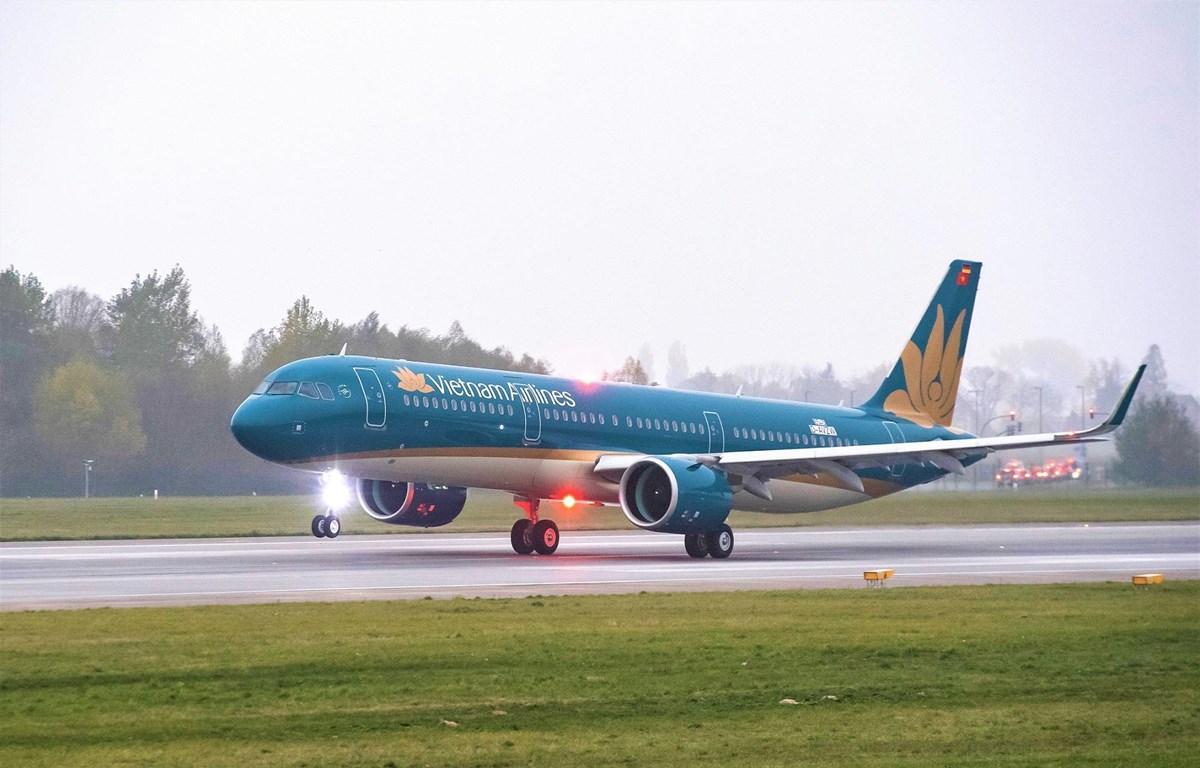
    The accumulated loss of national flag carrier Vietnam Airlines climbed to VND21.98 trillion ($928.39 million) last year, roughly the same as its charter capital.

    The airline was hit hard by the Covid-19 pandemic that saw borders closed and commercial flights suspended for two years.

    It posted a loss of VND13.02 trillion last year alone, with revenue dropping 31 percent year on year to VND28.09 trillion.

    The airline increased its charter capital by 56 percent to VND22.14 trillion last year by issuing 800 million shares, with the State Capital Investment Corporation (SCIC) contributing an additional VND6.89 trillion.

    The Commission for Management of State Capital at Enterprises (CMSC) now holds a 55.2 percent stake in the flag carrier, the SCIC 31.14 percent, and Japan’s ANA airline 5.62 percent.

    The airline has been increasing the number of flights it operates since the beginning of this year as the government began lifting restrictions based on rising vaccination rates.

    It operated 7,314 flights last month, up nearly 21 percent year-on-year.

    The airline has proposed that the government raises the price cap for domestic travel from April 1 and add a fuel surcharge for local routes as fuel prices have soared in recent months.

  • Green light for carrier KiteAir likely delayed until 2022

    Green light for carrier KiteAir likely delayed until 2022

    The Planning and Investment Ministry has suggested that the PM delays his approval to new carrier KiteAir’s investment proposal over Covid-19 impacts. The establishment of the new airline would add to the business woes wreaked on the local aviation industry by the pandemic, the ministry said in a document recently sent to Prime Minister Nguyen Xuan Phuc. “A suitable time for a new carrier would be 2022 when the market has recovered.”

    The ministry added that the current priority and focus should be the restoration of domestic and international aviation markets and support for existing carriers.

    Earlier, in July, the Transport Ministry (MoT) had also proposed that the government not license any new carrier, including KiteAir, till 2022, when the local aviation market is expected to recover.

    Based on the MoT’s proposal, Deputy PM Trinh Dinh Dung in July “agreed in principle” with the temporary suspension as proposed by the MoT. Dung, however, assigned the MPI, as an investment proposal appraisal agency, to report to the PM about the KiteAir investment proposal which was already submitted by hospitality group Thien Minh.

    The MPI had said earlier that KiteAir has a sufficient legal basis to have its investment proposal appraised. The MoT, meanwhile, had said the establishment of the new carrier was in line with the orientation and development plans of the industry.

    But in April, amid the Covid-19 pandemic, the PM requested ministries to review and consider the establishment of any new carrier, including KiteAir, given the new context.

    KiteAir, which planned to take off in the second quarter of 2020, was to be headquartered in the central province of Quang Nam with a charter capital of VND1 trillion ($43 million), invested in by Thien Minh, a leading Vietnamese hospitality group.

    It planned to operate six short-haul ATR-72 aircraft with a capacity of 78 seats in the first year of operation and expand the fleet to 30 jets by the fifth year, including 15 narrow-body Airbus A320/321 aircraft.

  • Adidas Test to Sell Shoes Made of Ocean Plastic was So Successful

    Adidas Test to Sell Shoes Made of Ocean Plastic was So Successful

    Adidas has spent the last four years curbing ocean pollution by recycling plastic beach waste into shoes – and because their customers have been so eager for the product, the company is kicking it up a notch. Adidas produced more than five million pairs of recycled plastic waste shoes in 2018, and they plan to incorporate the waste into at least 11 million this year.

    The upcycled plastic waste is made into a yarn which has since become a key component of the upper material of Adidas footwear. In addition to shoes, the company has also used it to make the first ever football jerseys made from recycled materials.

    The sporting goods manufacturer first started making the shoes in collaboration with environmental group Parley for the Oceans back in 2015. They developed the slick kicks using plastic waste intercepted on beaches, such as the Maldives, before it can reach the oceans. The Parley shoes are recreated from editions of their UltraBoost shoe, and a new version of their Adidas Originals shoe.

    And, in 2016, Adidas stores stopped using plastic bags.

    “We also continue to improve our environmental performance during the manufacturing,” said Gil Steyaert, who is responsible for global operations. “This includes the use of sustainable materials, the reduction of CO2 emissions and waste prevention.

    “In 2018 alone, we saved more than 40 tons of plastic waste in our offices, retail stores, warehouses and distribution centers worldwide and replaced it with more sustainable solutions.”

    Additionally, Adidas is committed to using only recycled polyester in every product and application where a solution exists by 2024. As a founding member of the Better Cotton Initiative, Adidas meanwhile sources only sustainably produced cotton.

    Recently, Adidas signed the Climate Protection Charter for the Fashion Industry at the UN Climate Change Conference in Katowice, Poland—and agreed to reduce greenhouse gas emissions by 30% before 2030.

  • Indonesian charter operator orders 30 Bell Jetranger X

    Indonesian charter operator orders 30 Bell Jetranger X

    The aircraft will be used for air taxi operations throughout Indonesia and its more than 14,000 islands.

    PT Whitesky Aviation is a Jakarta based company specialising in non-scheduled (charter) flight. The company currently operates a fleet of six Bell Helicopter aircraft, including three Bell 429s and three Bell 407s.

    “This signing is testament to the growing demand for the Bell 505, especially in the corporate and VIP sectors,” said Matt Hasik, executive vice president of commercial business for Bell Helicopters. “There are now more than 380 letters of intent around the globe, and more than 130 Bell 505 LOIs in the Asia Pacific Region alone.”

    The Bell 505 is the company’s long mooted Bell Jetranger 206 entry-level replacement. With a cruise speed of 125 knots (232 km/h), range of 360 nautical miles (667 km) and useful load of 1,500 pounds (608 kg), the Bell 505 is designed to be safe and easy to fly while remaining affordably priced.