Tag: Chemist Warehouse

  • Marketplaces Surpass Specialist Beauty Retailers in Australia as Online Market Nears $2.2B

    Marketplaces Surpass Specialist Beauty Retailers in Australia as Online Market Nears $2.2B

    Marketplaces outpaced Australia’s leading beauty chains online for the first time in late 2025, taking e-commerce sales past the combined total of Mecca, Sephora, Adore Beauty and Chemist Warehouse.

    The shift comes as Australia’s online beauty and personal care market heads toward 47 per cent growth to reach $2.2 billion by 2030, according to Pattern’s State of Beauty & Personal Care in Australian Ecommerce report.

    Amazon Expands Category Grip

    Online marketplaces generated roughly $200 million in Australian beauty sales during the fourth quarter of last year. That total cleared the $199.3 million recorded by Mecca, Sephora, Adore Beauty and Chemist Warehouse combined.

    Amazon drove much of the advance. Its local beauty and personal care turnover rose by $66.7 million year on year, lifting the marketplace operator to a 19.9 per cent share of Australia’s total online beauty spend.

    Shopper intent points to further gains. Pattern found 71 per cent of Australian digital beauty shoppers plan to purchase products on Amazon over the next twelve months, while 43 per cent say they will switch to an alternative brand if their first choice is out of stock.

    Consumers aren’t thinking about a brand’s distribution strategy. They simply expect beauty products to be available through the channels they use, and they’re willing to switch brands for that convenience.

    Fragmented Social Discovery Funnels

    Discovery patterns are pulling shoppers away from traditional storefront browsing. Nearly half of surveyed beauty shoppers reported buying items based on creator recommendations, compared to just 15 per cent across non-beauty retail sectors.

    Instagram and Facebook each shaped purchase intent for 47 per cent of beauty shoppers, followed closely by YouTube and TikTok. Yet discovering an item on social networks rarely results in a direct in-app checkout.

    Instead, 39 per cent of buyers who spot products on social feeds complete their transactions on standalone retailer or brand websites. Another 32 per cent head directly to Amazon to finish the order.

    Algorithmic Search and AI Assistants

    Artificial intelligence assistants are now actively routing consumer purchase paths. The data shows 38 per cent of Australian beauty shoppers use AI tools more frequently than they did last year to search for products online.

    Roughly 27 per cent of consumers have relied on ChatGPT or comparable conversational tools to research or buy cosmetics, and 55 per cent express confidence in AI-generated product advice. Global beauty conglomerates are taking notice: Estée Lauder Companies recently partnered with marketing startup Profound to optimize brand visibility across generative platforms including ChatGPT and Google Gemini.

    What the Shift Means for Specialty Retail

    For dedicated beauty retailers, the loss of market share to general merchandise marketplaces threatens the high-margin basket sizes that have long supported domestic store networks. Department stores and specialty chains can no longer rely on exclusive supplier arrangements to protect digital footfall when marketplace logistics offer faster shipping and lower barriers to checkout.

    Brand owners face an equally sharp operational trade-off. Direct-to-consumer storefronts carry heavier customer-acquisition costs as search engines and social platforms shift toward algorithmic discovery, forcing brands to list on Amazon or risk losing sales to competing formulations.

    The critical metric for retailers heading into 2027 will be whether specialist chains can defend their remaining 80 per cent market share as marketplace volume accelerates toward the $2.2 billion category ceiling.
  • Chemist Warehouse Cuts Delivery to 56 Minutes Across 550 Australian Stores

    Chemist Warehouse Cuts Delivery to 56 Minutes Across 550 Australian Stores

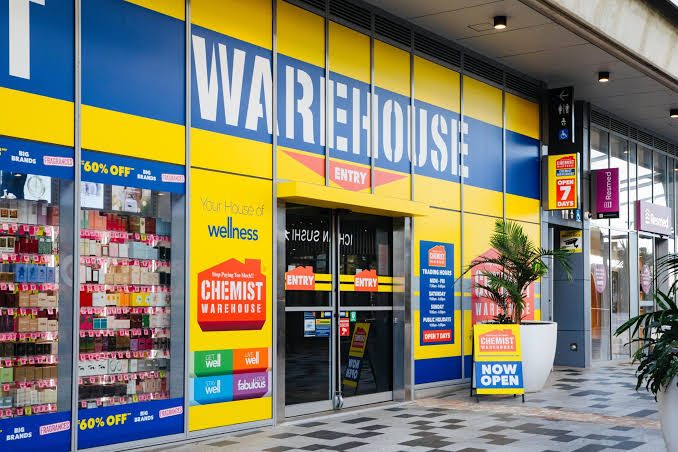
    Chemist Warehouse cut average delivery times for local online pharmacy orders to 56 minutes in July 2026. The chain routed dispatch through 550 physical stores across Australia.

    That turnaround covered roughly 32,000 over-the-counter orders handled under a two-hour service agreement with logistics platform Rendr, an Australia Post subsidiary.

    Operations shifted onto a single dispatch platform after the pharmacy chain previously juggled multiple delivery providers. Dispatch software selects a courier based on the customer’s chosen delivery speed and assigns it directly to store staff. The setup avoids adding dedicated warehouse workers to store payrolls.

    Routing Orders Through 550 Storefronts

    Dispatching directly from shopfronts turns high-street real estate into micro-distribution hubs. More than 15 per cent of Australian retail orders are now fulfilled and delivered within 15 kilometres of the buyer, according to Shippit data. That is an increase of five percentage points over two years.

    Chemist Warehouse uses order density maps from Rendr to identify coverage blind spots across its retail network. Those geographic heat maps feed directly into lease decisions for new retail space and extra fulfillment capacity.

    Physical stores provide an immediate counterweight to pure-play e-commerce rivals that spend heavily on regional depots. Pure-play operators typically run centralized warehouses located far outside metropolitan centers. That adds transit hours to every local parcel.

    Avoiding the Mini-Warehouse Trap

    Fulfillment creates friction if counter staff spend shifts sorting boxes rather than serving walk-in shoppers. Chemist Warehouse avoided dedicated picking shifts by standardizing handoffs into a single digital process.

    Workers hand parcels to assigned couriers through one digital interface instead of managing separate fleet portals. David Brennan, general manager of supply chain transformation at Chemist Warehouse, said the consolidated exit path simplified daily routines.

    “There’s now one exit path for fast delivery. It comes in and says, you’re giving it to this driver, that’s it.”

    The Proximity Race Against Pure Plays

    Speed pits physical shop networks against heavy logistics spending from pure e-commerce players. In North America, Amazon is developing Project Mercury to build more than 1,000 sub-same-day facilities by 2031. It aims to place inventory within 10 miles of 80 per cent of Prime subscribers to counter store-based competitors like Walmart.

    Across Asia-Pacific markets, traditional retailers hold the geographical edge because suburban strips already sit near dense residential corridors. The main risk lies in inventory accuracy. A ship-from-store model fails immediately when an online order claims stock an in-store shopper just put in a physical basket.

    Retailers that fix real-time inventory tracking turn routine floor stock into faster dispatch points than dedicated suburban logistics sheds. Those that fail face cancelled orders and higher labor expenses.

    Consumer Appetite for Paid Speed

    Rapid delivery is driving purchase conversion across Australia, where online retail spending reached 82.6 billion Australian dollars in 2025. Australia Post research shows 73 per cent of shoppers pick online channels over physical visits when delivery is reliable.

    Consumers will also pay for speed when items carry immediate utility. Australia Post found 43 per cent of Australian shoppers are prepared to pay extra for same-day or next-day delivery. That figure climbs to 59 per cent among Gen Z and Millennial buyers.

    Roughly 24 million Australians across major population centers can now access same-day fulfillment. Retailers will test whether that appetite holds up as courier costs rise heading into the peak holiday trading quarter of late 2026.

  • Zuum Adds Strawberry Energy Gum in Ten-Product Expansion Push

    Zuum Adds Strawberry Energy Gum in Ten-Product Expansion Push

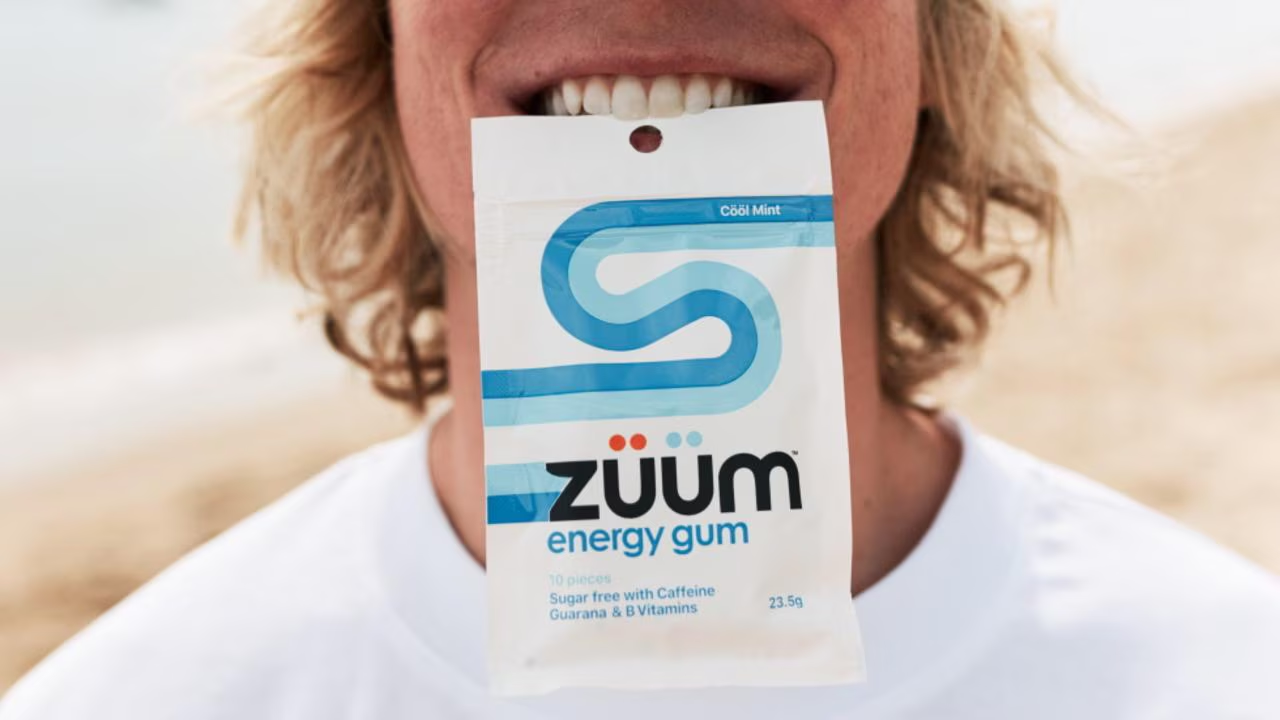
    Australian functional consumer brand Zuum launched an extra-strength strawberry energy gum in September 2026. The release kicks off a planned 10-product rollout across domestic and overseas retail networks.

    The new variant expands the core Performance Energy Gum line. Zuum is targeting wider shelf space in convenience chains, pharmacies and online direct-to-consumer channels.

    Expanding the functional gum lineup

    Cool Mint, Extra Strength Arctic Mint, Spearmint and Watermelon already sit in the range. The strawberry gum sells through Zuum’s website alongside physical retail stockists.

    Functional chewing gums deliver active ingredients like caffeine and vitamins through oral absorption. That format provides faster uptake without liquid volume, giving shoppers an alternative to ready-to-drink energy beverages and traditional confectionery.

    Convenience and pharmacy distribution

    Convenience stores and pharmacy banners serve as the primary distribution ground for impulse functional products across Australia. Checkout placement captures commuters and workers seeking quick alertness fixes.

    For retailers, high-margin functional confectionery delivers strong sales density per square centimetre at front registers. The products challenge conventional mints and sugary gums, which face steady volume pressure from health-conscious consumers.

    Competitive pressure in energy alternatives

    Energy gum competes directly with canned energy drinks, caffeine pouches and functional tablets. While canned drinks dominate total volume, portable formats win on pocket-sized convenience and zero-sugar recipes.

    Survival in functional confectionery requires steady sales velocity after opening promotional campaigns fade. Retail buyers routinely clear counter space of slow-moving stock keeping units.

    Retail rollout timeline

    Zuum established its mainstream retail footprint in 2024 when convenience operator 7-Eleven introduced the gum line to Australian stores. That partnership gave the brand national visibility across high-traffic urban and roadside locations.

    Nine additional products will arrive before the end of the second half of 2026. The company is now negotiating broader listings in domestic pharmacy chains and selected international markets.

  • Sigma Healthcare Profit Jumps 22 per Cent as Annual Sales Top $10.8 Billion

    Sigma Healthcare Profit Jumps 22 per Cent as Annual Sales Top $10.8 Billion

    Sigma Healthcare posted a 22.3 per cent rise in annual net profit to $732.3 million for the year ended June 30, lifted by pharmacy additions and GLP-1 prescription volumes.

    Group revenue advanced 15.5 per cent to $10.8 billion, while normalised earnings before interest and taxes climbed 20.6 per cent to breach $1 billion.

    The results reflect the first full operating cycle since Sigma combined operations with discount chain Chemist Warehouse. Chief Executive Officer Vikesh Ramsunder told investors the business now oversees nearly 1,000 pharmacies worldwide, supported by supply-chain integration across wholesale and retail divisions.

    Chemist Warehouse Drives Domestic Momentum

    Australia generated the bulk of earnings, lifting revenue 14.9 per cent to $10.4 billion and normalised operating profit by 18.3 per cent. Chemist Warehouse added 24 domestic sites to reach 561 stores, generating network sales growth of 15.9 per cent and same-store sales gains of 13.4 per cent.

    Sales of GLP-1 weight-loss medications contributed heavily to turnover across the network. While the high-cost treatments carry lower percentage returns, Sigma maintained its Australian gross margin at 17.6 per cent by expanding front-of-store retail lines, introducing more than 470 private-label products during the financial year.

    For retail pharmacy chains across the Asia-Pacific region, Sigma’s post-merger run shows how high-volume discount models can protect margins even as prescription product mixes shift toward expensive, low-margin therapies. It also demonstrates how domestic retail density provides cash flow stability after walking away from risky international takeovers, including Sigma’s abandoned $14 billion tilt at Britain’s Boots chain.

    Synergies and Franchise Pipeline

    Sigma captured $32.6 million in operational savings during the year as it works toward an annual cost-reduction target of $100 million by the 2029 financial year.

    Wholesale franchise networks Amcal and Discount Drug Stores are also rebuilding footprint after years of store rationalisation. Management has assembled an opening pipeline of 82 stores, scheduled to return both banner groups to net store count growth during the 2027 financial year.

  • US$1 billion in first five minutes of 11.11

    US$1 billion in first five minutes of 11.11

    Alibaba Group says more than US$7 billion (RMB 47.5 billion) of gross merchandise volume (GMV) was settled through Alipay on Alibaba’s China and international retail marketplaces within the first two hours of the 2016 11.11 Global Shopping Festival.

    And more than $1 billion was transacted in the first five minutes – from 12 midnight.

    “Chinese consumers purchased more in the first hour of 11.11 this year than the entire 24 hours in 2013, reflecting the incredible evolution of our global shopping festival,” said Daniel Zhang, Alibaba Group CEO. “This unprecedented level of engagement demonstrates both the consumption power of Chinese consumers and their embrace of online shopping as a lifestyle.”

    In the hours leading up to the official midnight start of November 11, millions of viewers watched the Alibaba Group 11.11 Global Shopping Festival Countdown Gala live online and on mobile devices via Youku Tudou, and the Tmall and Taobao apps. The gala was televised live across China through Zhejiang Satellite TV, as well as in Hong Kong and Macau for the first time.

    “This year, we innovated new ways for consumers watching the live broadcast of our countdown gala. Viewers were able to influence the production of the show in real-time through their mobile phones,” said Chris Tung, chief marketing officer, Alibaba Group. “Consumers in front of their televisions were shaking, tapping, scanning, chatting, browsing and buying with their mobile devices, creating a seamless and truly immersive entertainment experience.”

    VR drives surge

    International think tank Fung Global Retail & Technology predicts sales of $20 billion during the full 24 hours, up an extraordinary 40 per cent over last year’s total of $14.3 billion, thanks in part to the introduction of Buy+, the world’s first-ever end-to-end virtual reality (VR) shopping experience.

    “Buy+ will enable global retailers (even those without a physical presence in China) to offer an engaging, virtual in-store experience to Chinese consumers,” writes Fung Global Retail & Technology MD Deborah Weinswig in Singles’ Day Online Shopping Festival Could Also Benefit Retailers’ Physical Stores, a new report.

    The platform features eight virtual stores: Macy’s, Target, Costco, P&G, Chemist Warehouse, Freedom Foods, Tokyo Otaku Mode and Matsumoto Kiyoshi. Using cardboard VR headsets distributed in October, consumers can virtually walk around Macy’s Herald Square flagship in New York City to find products and, with just a nod of the head, confirm payment to purchase an item they see.

    “One of Alibaba’s strategies for Singles’ Day is to merge gamification with online shopping. The company will leverage its media and entertainment assets to drive increased online consumption,” says Weinswig.

    These include a televised countdown gala event and fashion show that was held last evening. In addition, the company is promoting products on TV screens, allowing viewers to scan QR codes for a real-time purchase.

    The concept has expanded beyond Alibaba, with chief rival JD.com, Gome and Suning also creating promotions. International retailers will target Chinese shoppers, and Chinese retailers target international shoppers. In 2015, Newegg, OTTE New York and Nasty Gal, all launched Singles’ Day promotions.

    “A year ago, Alibaba promised that Singles’ Day will be a true omni-channel event, and this year the company seems dedicated to continue delivering on the promise, armed with more technological innovations that bridge the gap between the virtual and physical worlds,” Weinswig writes.

  • Chemist Warehouse to launch in Malaysia

    Chemist Warehouse to launch in Malaysia

    Australian based CW Retail Asia has entered into a joint venture in Malaysia to roll out a chain of pharmacies under the Chemist Warehouse brand.

    Chemist Warehouse Berjaya Asia will be run by Morning Charm, a company just acquired by Berjaya Corp (BCorp), in partnership with Melbourne-based CW Retail Asia.

    BCorp has taken an 80 per cent equity interest in the venture for RM80,000 (US$19,520).
    “The project will enable the BCorp Group to expand and strengthen its pharmacy distribution and retail businesses under the co-brand names, as well as making its foray into the pharmacy warehousing business sector,” says BCorp.

    In Australia, CW Retail supplies goods and services to pharmacies and operates pharmacy retail chains.

    The two partners in the venture say while the initial focus will be on the Malaysian market they may open stores in other Asian countries in due course, under the Chemist Warehouse brand or another.

    The new company will also supply goods and services to Cosway Pharmacies, which will be re-branded as Berjaya My Chemist pharmacies, and to Tigas Alliance pharmacies. Chemist Warehouse Berjaya Asia and Berjaya My Chemist pharmacies are members of Tigas Alliance, a pharmacy banner group in Malaysia.