Tag: chengdu auto show

  • China August NEV Retail Sales Hit 1.04 Million as Market Share Reaches 65.8%

    China August NEV Retail Sales Hit 1.04 Million as Market Share Reaches 65.8%

    China’s passenger new energy vehicle retail sales will reach approximately 1.04 million units in August, rising 9.4 per cent from July, the China Passenger Car Association said on Friday.

    The projected rebound lifts new energy vehicle retail penetration to a record 65.8 per cent, up from 65.1 per cent the previous month. Total passenger vehicle retail deliveries are expected to reach 1.58 million units for the month, an 8.1 per cent month-on-month rise that still represents a 21.7 per cent drop compared with August 2025.

    Chengdu Auto Show Drives Volume

    Extreme weather and planned summer plant maintenance slowed showroom traffic in early August, pulling average daily retail volume down to 35,000 units during the first week. Deliveries recovered as typhoons cleared coastal provinces and carmakers rolled out new product campaigns ahead of the Chengdu Auto Show. Daily transactions are projected to reach 77,000 units in the final week of August.

    The divergent performance between powertrains widened through the summer. Retail sales of petrol-powered passenger vehicles fell 40.5 per cent year on year in July to 510,000 units, while electrified models fell 3.9 per cent to 951,000 units over the same period.

    Big-Ticket Spending Faces Drag

    Automotive retail remains the heaviest drag on Chinese consumer spending. Total retail sales of consumer goods across China rose 2.6 per cent year on year during the first seven months of 2026, yet automotive retail revenue shrank 13.2 per cent over the same period.

    For retailers and dealership groups across the region, these numbers confirm that volume growth is now entirely hostage to electrification and replacement subsidies. Pure internal combustion inventory has become a liability on dealer balance sheets, forcing legacy showroom networks into aggressive discounting or outright closure as floor space pivots toward plug-in hybrids and battery-electric models.

    Automakers now face the September-October peak buying season with fresh order books opened at Chengdu, where full-month delivery tallies will show whether state trade-in incentives can offset persistent consumer caution.
  • BYD Unveils Third-Gen Tang SUV with 850-Km Range Ahead of Q4 Release

    BYD Unveils Third-Gen Tang SUV with 850-Km Range Ahead of Q4 Release

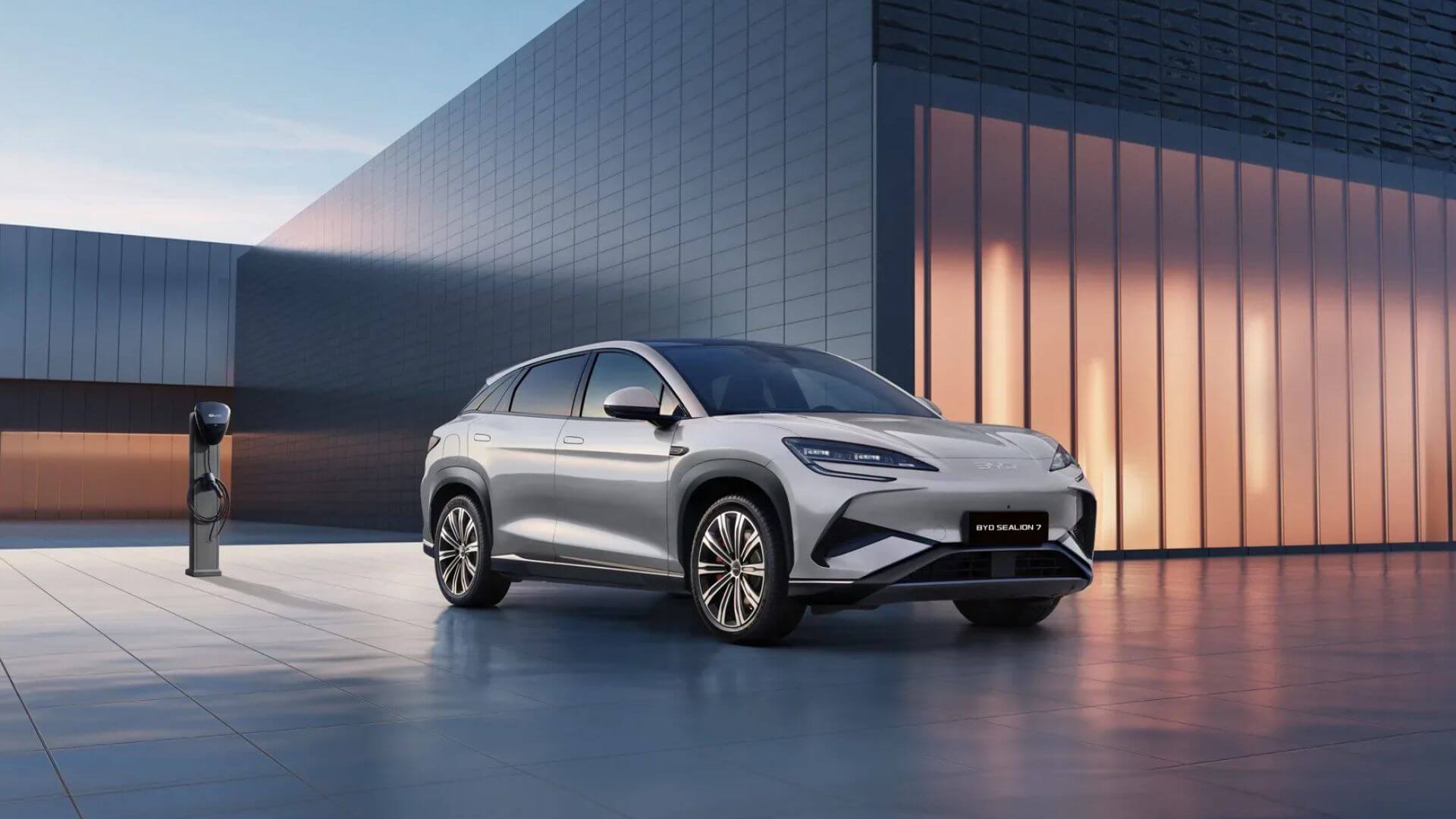
    BYD unveiled its third-generation Tang electric sport utility vehicle at the Chengdu Auto Show on Friday, targeting a commercial release in the fourth quarter. The redesigned five-seat model offers an all-electric range of up to 850 kilometres and charges from 10 to 70 per cent in five minutes.

    Dynasty sales chief Lu Tian presented the vehicle on the opening day of the exhibition. The launch forms the second half of BYD’s dual-flagship Dynasty SUV strategy alongside the larger Da Tang, which reached showrooms in June.

    Battery specs and charging speeds

    The new Tang measures 5,045 mm in length, 1,980 mm in width, and 1,760 mm in height, with a 2,950 mm wheelbase. Power comes from BYD’s second-generation Blade Battery pack, supplied in capacities of 88.682 kWh and 105.792 kWh. These packs deliver CLTC ranges of 730 km, 830 km, and 850 km depending on trim.

    Under normal temperatures, the vehicle reaches a 97 per cent charge within nine minutes. Cold-weather conditions add roughly three minutes to that benchmark. Regulatory filings show a single electric motor variant producing 300 kW, equivalent to 402 horsepower, with a top speed capped at 250 km/h.

    Every variant includes the God’s Eye B driver-assistance suite, which relies on a single LiDAR unit to manage highway and urban navigation alongside automated parking. The chassis rides on the DiSus-A dual-chamber air suspension system, incorporating an active road-preview function that scans surface conditions ahead.

    Rebuilding Dynasty flagship sales

    The overhaul arrives after an extended sales slump for the Tang nameplate. Volume fell sharply through the first half of 2026 in the absence of major product updates, lingering below 7,200 units monthly from March through May before rebounding to 13,535 deliveries in July.

    BYD tested this premium positioning when it launched the full-size Da Tang EV in June at 239,900 yuan ($35,370). That larger 9-series model logged more than 10,000 customer deliveries in its first month. Alongside the Tang debut, BYD opened pre-sales in Chengdu for its Da Han flagship sedan at roughly $36,800, claiming an electric range of 1,008 kilometres.

    Pricing for the third-generation Tang remains unannounced ahead of official showroom deliveries scheduled before the end of the year.

  • Hyundai Opens Pre-Sales for China-Built Ioniq V Sedan from $17,680

    Hyundai Opens Pre-Sales for China-Built Ioniq V Sedan from $17,680

    Beijing Hyundai opened pre-sales for its Ioniq V electric sedan at the Chengdu Auto Show on Friday, pricing the entry model at 119,900 yuan ($17,680). The vehicle leads a planned rollout of 20 electrified models designed to rebuild the South Korean carmaker’s presence in China.

    Buyers can choose between three battery-electric variants ahead of the sedan’s formal showroom launch in September. The base 540 Max starts at 119,900 yuan, the 540 Max+ costs 129,900 yuan, and the top-tier 650 Max+ sells for 139,900 yuan. All three run on an 800-volt high-voltage fast-charging architecture and deliver up to 650 kilometres of range under China Light-Duty Vehicle Test Cycle standards.

    Local Hardware and Chinese Software

    Developed entirely by Hyundai’s China design centre, the five-seat fastback sits on the group’s dedicated E-GMP platform. The sedan measures 4,900 mm long with a 2,900 mm wheelbase, featuring frameless doors and single-motor powertrains rated at either 140 kW or 168 kW. Contemporary Amperex Technology Co. Supplies the lithium iron phosphate battery packs in 53.5 kWh and 66.8 kWh capacities.

    Inside the cabin, the joint venture outsourced key digital systems to domestic tech firms. The dashboard holds a 27-inch 4K display powered by Qualcomm’s Snapdragon 8295 chip, while the operating software integrates artificial intelligence models from Baidu and ByteDance. Driver-assistance software comes via Beijing Hyundai’s partnership with autonomous driving startup Momenta, enabling highway-level assisted navigation.

    The Volume Target for 2030

    Foreign legacy carmakers have spent two years cutting prices and reshaping supply chains after losing market share to domestic manufacturers such as BYD. Rather than importing global variants at uncompetitive price points, Hyundai is shifting vehicle development directly into China and sourcing cheaper local components to defend retail volumes.

    Beijing Hyundai plans to add an extended-range electric version to the Ioniq V line later in the cycle. The company has set a target to sell 500,000 vehicles annually in China by 2030, with plans to export the Chinese-developed sedan to overseas markets later in the production run.