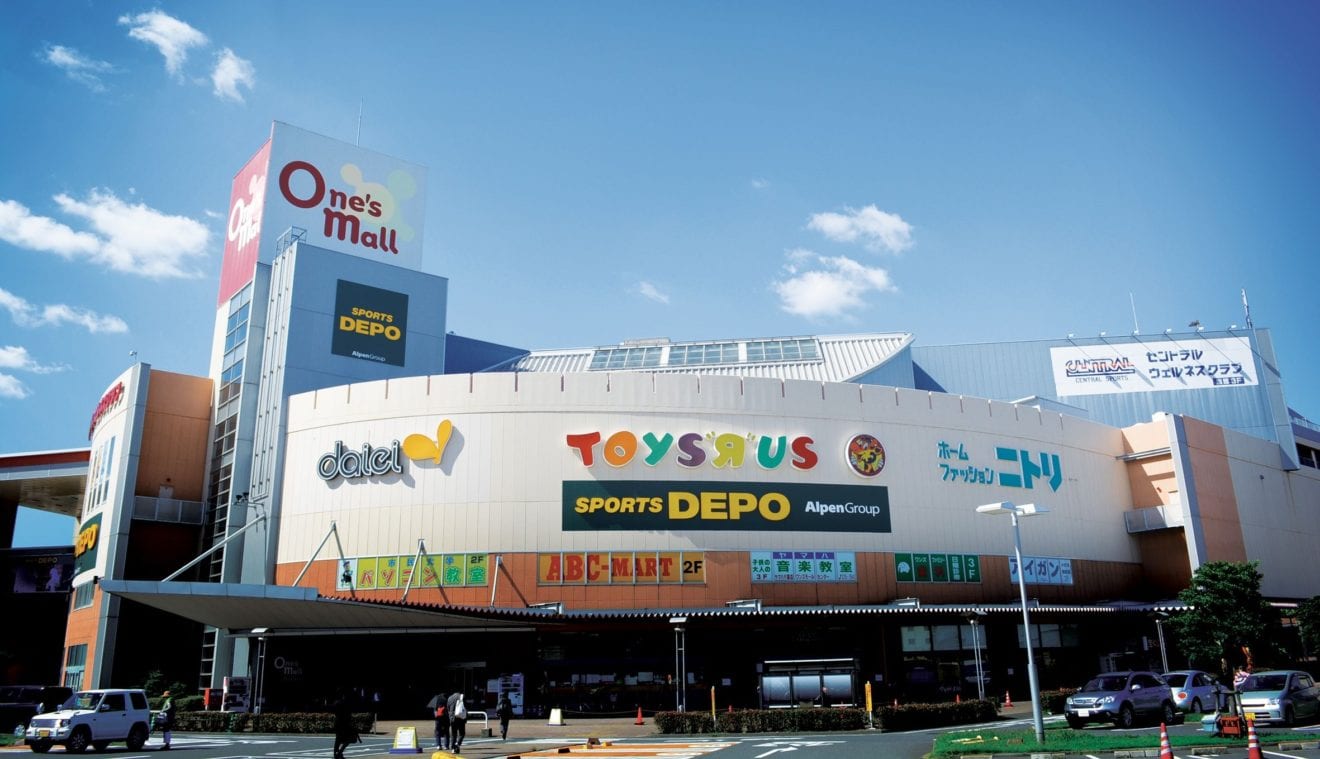
CloudHQ has proposed rebuilding the struggling BigHop Garden Mall Inzai in Greater Tokyo, shrinking its retail footprint to 13,345 square metres to make room for two data centres.
The Washington DC-based developer presented the plan, named Project Asahi, to the Inzai City Council on 29 September, seeking an exemption from local development restrictions near commuter rail stations.
Under the proposal, CloudHQ plans to reduce the 13-hectare property beside Inzai-Makinohara Station on the Hokuso Line into a smaller retail row facing the station, paired with a 6,235-square-metre public park and 8,450 square metres reserved for non-data centre commercial uses and offices. Revenue generated from the server facilities would fund the capital expenditure needed to overhaul the remaining shops.
Cutting shop space to save the asset
BigHop opened in 2007 after construction by Takenaka Corporation, but the asset has suffered from stagnant tenant revenue and looming capital expenditure requirements. CloudHQ told city officials that the mall’s sales have stayed flat, trailing the 3.4 per cent growth recorded across comparable Kanto shopping centres in municipalities with fewer than 150,000 residents during 2025.
Rising expenses for labour, purchasing, and consumables have compressed retailer margins, removing room for rent increases. The developer noted that the mall’s existing rental income cannot cover major equipment renewals scheduled over the next five years. Soundings conducted in 2025 with Japanese trading houses, contractors, institutional asset managers, and foreign developers yielded zero interest in acquiring or backing the site as a standalone shopping destination.
Of the remaining land on the 13-hectare parcel, roughly half will host two data centres and electrical infrastructure, while the other half will be retained for future development. CloudHQ Japan operates the property and aims to finish the phased reconstruction by the mid-2030s.
Station-front opposition and council rules
Securing municipal approval remains the primary hurdle for the project. In August 2025, Inzai’s city council passed a 19-0 resolution barring future data centres from zones immediately surrounding its three railway stations, reserving those plots for civic services, retail outlets, and pedestrian traffic.
Local sentiment against digital infrastructure in station districts runs high. A city consultation held in April 2025 showed that 90.5 per cent of data centre submissions, representing 114 out of 126 responses, opposed server halls near transit hubs. Legal disputes have already surfaced nearby, with ten residents filing a lawsuit in Chiba District Court in March to cancel building clearance for an Inzai Five TMK project backed by Mitsui & Co near Chiba New Town Chuo Station.
To defuse community pushback, CloudHQ pledged to build the public park and civic facilities before constructing the data halls. The developer also offered to provide local school scholarships and technical classes to broaden community benefits beyond municipal property tax receipts.
The shifting economics of suburban retail
Converting underperforming suburban retail into digital infrastructure represents a hard-nosed pivot for operators trapped in low-yielding regional assets. Japanese suburban malls built during the mid-2000s face structural challenges from an ageing population, online commerce, and escalating utility and refurbishment bills that conventional retail leases cannot cover.
Replacing low-margin retail space with long-term server capacity provides a guaranteed cash flow that traditional consumer tenants no longer deliver. However, the model risks creating dead zones around railway nodes if municipal councils allow industrial-scale server blocks to displace foot traffic. For retail landlords across suburban Japan, the Inzai case illustrates how hyperscale compute demand is outbidding conventional retail real estate for grid connections and physical land.
Institutional money in Inzai’s digital hub
The BigHop parcel already accommodates digital infrastructure. Stack Infrastructure previously built a data centre on a former mall parking lot at the southwest corner of the site as part of its 36-megawatt Inzai campus.
Institutional investors continue to funnel capital into Inzai due to its seismic stability, proximity to central Tokyo, and robust electrical and fibre connections. In 2025, Keppel DC REIT and Keppel Ltd acquired a Colt data centre in Inzai leased to Microsoft for 707 million Singapore dollars, followed by a 190 billion yen deal to buy a 90 per cent interest in two facilities from an Equinix and GIC joint venture. Digital Realty brought its campus capacity in the city to nearly 100 megawatts in April, joining operators including Google, AWS, AirTrunk, and STT GDC.
CloudHQ, founded in 2016 by Hossein Fateh and managing over 5 gigawatts globally, previously partnered with ESR on a 2 billion dollar, 130-megawatt campus in Osaka. Public briefing sessions with Inzai residents run through 11 October, setting up the council’s formal review of the zoning exemption.