Tag: chickens

  • Campbell’s Dismisses Executive for False Claims about 3D-Printed Chickens and Offensive Remarks

    Campbell’s Dismisses Executive for False Claims about 3D-Printed Chickens and Offensive Remarks

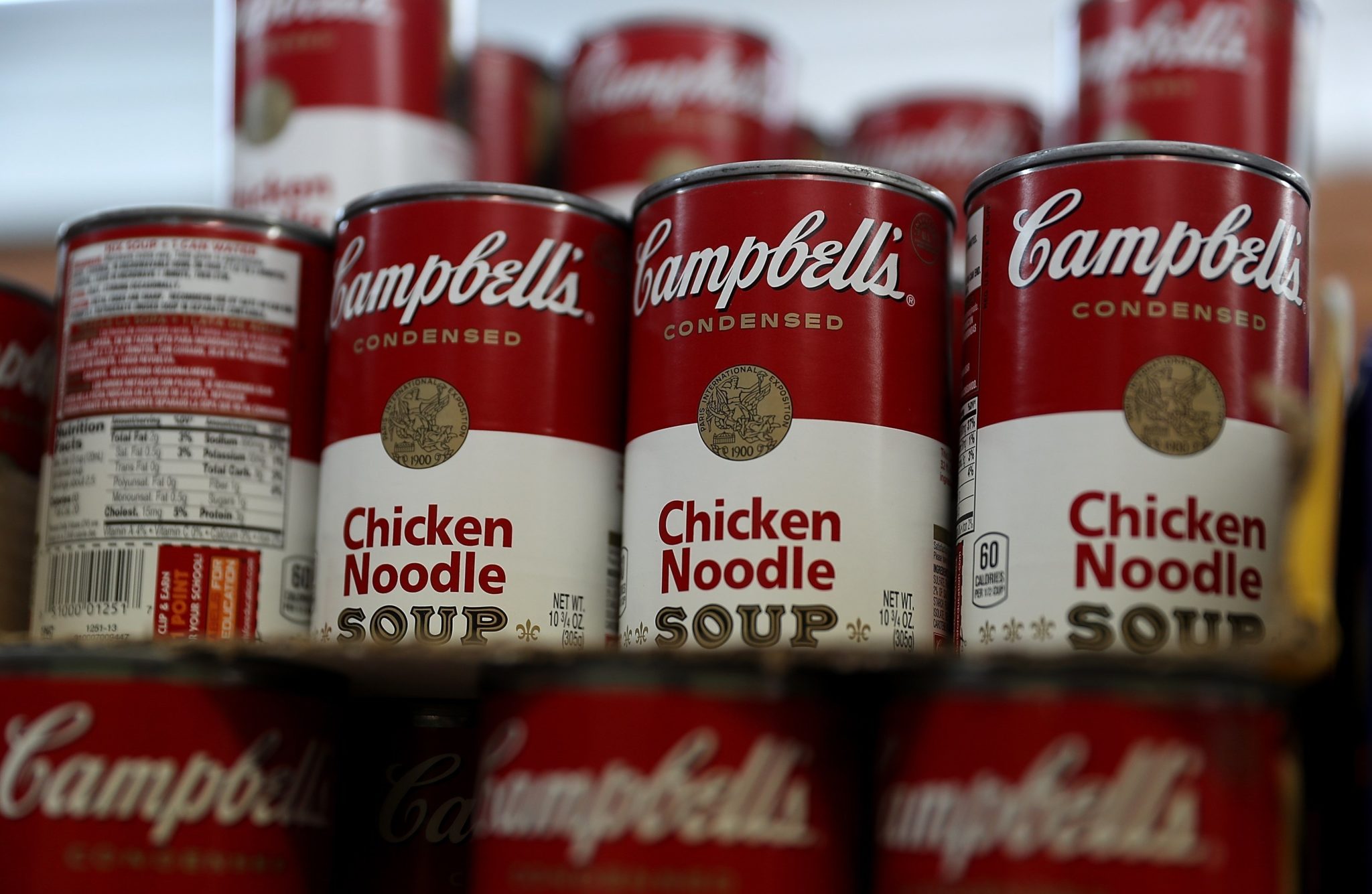
    Campbell’s, a renowned canned soup brand, recently terminated a high-ranking executive following the emergence of a recording in which he made racially insensitive statements and alleged that the company uses 3D-printed chickens. Martin Bally, a vice president in Campbell’s information security department, was the subject of a recent lawsuit filed by former employee Robert Garza, who alleges his termination on January 30 was a consequence of reporting Bally’s offensive comments to a superior.

    Misconduct in Michigan

    The legal action was initiated in Michigan, the home state of both Garza and Bally, though Campbell’s headquarters are situated in Camden, New Jersey.

    Garza reports that he met with Bally in November 2024 to negotiate his salary. During the meeting, which Garza claims to have recorded, Bally allegedly characterized Campbell’s products as highly processed food intended for low-income consumers.

    Bally is also accused of making racially offensive remarks about Indian employees, whom he referred to as inept. Additionally, Garza claims Bally admitted to frequently coming to work under the influence of cannabis edibles.

    Company Reaction

    Campbell’s disclosed on Wednesday that it first became aware of Garza’s lawsuit the previous week. After reviewing snippets of the recorded conversation, the company concluded that the voice likely belonged to Bally, leading to his dismissal on Tuesday.

    Campbell’s issued an apology for the harmful comments, emphasizing that such behavior contradicts the company’s values and culture. The company pledged zero tolerance for any form of offensive language under any circumstances.

    Unhealthy Claims

    In the contentious recording, Bally reportedly criticized Campbell’s products, labeling them as unhealthy and expressing his aversion to consuming 3D-printed chicken.

    In response, Campbell’s defended the quality of its chicken on Wednesday, stating that it sources from trusted U.S. suppliers, is raised without antibiotics, and meets stringent quality standards. The company dismissed Bally’s comments as not just erroneous but ludicrous.

    Repercussions and Response

    Larry Kopp, founder and chairman of a strategic communications and public relations firm, believes Campbell’s should have terminated Bally and reached an agreement with Garza immediately upon learning of the incident. He warned that such damaging recordings should never be made public.

    Garza is pursuing financial compensation from Campbell’s, Bally, and his previous supervisor, J.D. Aupperle. He alleges that he informed Aupperle about his encounter with Bally shortly before his termination.

    Campbell’s confirmed on Wednesday that Aupperle is still employed by the company.

    Questions & Answers

    What are the allegations against Campbell’s executive Martin Bally?
    Bally allegedly made racially offensive remarks and claimed Campbell’s uses 3D-printed chickens. He also reportedly referred to the company’s food as highly processed and geared towards low-income individuals.

    How has Campbell’s responded to the accusations?
    Campbell’s has dismissed Bally from his position. The company has also issued an apology for the offensive comments and affirmed its commitment to a respectful and inclusive work environment.

    What is the objective of Robert Garza’s lawsuit?
    Garza is seeking financial damages from Campbell’s, Bally, and his former manager, J.D. Aupperle. He asserts that his termination resulted from reporting Bally’s inappropriate comments to a supervisor.


  • Jollibee Becomes Brunei’s No.1 Fastfood Chain

    Jollibee Becomes Brunei’s No.1 Fastfood Chain

    Chargé d’ Affaires, a.i Pete Raymond V. Delfin of the Philippine Embassy in Brunei Darussalam met with Jollibee Foods Corporation Assistant Vice President Rodel F. Alcantara, and Jollibee Country Head Christina R. Ward at the Embassy on 10 August 2018.

    Mr. Alcantara and Ms. Ward paid a courtesy call on Chargé d’ Affaires Delfin to share information on the recent activities being undertaken by Jollibee Brunei.

    The two executives discussed the positive business experiences of Jollibee in the country, having become the no. 1 fastfood chain in Brunei. Mr. Alcantara also said Jollibee’s operation in Brunei is currently the strongest among its international operations.

    Chargé d’ Affaires, a.i. Pete Raymond V. Delfin, during his meeting with Jollibee Foods Corporation Assistant Vice President and Market Head Rodel F. Alcantara, and Jollibee County Head Christina R. Ward at the Philippine Embassy in Brunei Darussalam on 10 August 2018.

    Mr. Alcantara delivered an invitation for Embassy officials to grace the opening of the 17th Jollibee store in Brunei in October 2018.

  • Vietnam Poultry industry needed to further develop

    Vietnam Poultry industry needed to further develop

    Vietnam needed to promote the development of it’s poultry industry due to rising demand for eggs and meat in the domestic and global markets. Experts made the comments at a meeting organised by the Ministry of Agriculture and Rural Development (MARD) in Hà Nội on April 12.

    Deputy Minister of Agriculture and Rural Development Phùng Đức Tiến said it was necessary to focus on production to meet quality standards at home and abroad.

    This would create favourable conditions for domestic poultry products to meet hygiene and safety standards in export markets such as Japan, Republic of Korea (RoK) and some ASEAN countries, Tiến said.

    It would also help local businesses expand their production scale and export to potential markets including China and the Philippines, he said.

    However, experts said the industry needed a strategy to increase other processed poultry products including processed chicken and duck and other products processed from eggs.

    They said this year, localities should draw up support policies for farmers, owners and enterprises to invest in poultry development.

    Deputy Head of MARD’s Animal Husbandry Department Nguyễn Văn Trọng said Vietnam held huge potential for poultry production because of domestic high demand with a population of nearly 100 million, excluding export demand.

    According to Trọng, output had increased to 1 million tonnes of meat and 11 billion eggs.

    Current trends in consumption of animal products show that pork accounts for 65 per cent of Vietnamese meals while chicken is just 20 per cent, therefore, the domestic poultry industry needs to enhance chicken farming for domestic consumption and export.

    Nguyễn Quang Hiếu, deputy general director of De Heus Co, Ltd, said to boost exports, the industry should build safe areas free from disease and have mechanisms to protect livestock farms, ensuring quality standards of export markets.

    According to the ministry, joining international organisations as well as bilateral, multilateral and free trade agreements would help domestic poultry production meet domestic consumption and export demands.

    The average consumption for the average person is 89 eggs per year while the figure is 125-340 eggs in Thailand and Indonesia and 404 in Israel.

    In addition, the domestic confectionery and processed food industry was also developing an increasing demand for eggs.

    Global production in 2019 was expected to increase by 3 per cent compared to 2018 to reach 98.4 million tonnes, marking the strongest growth rate over the past five years mainly due to rising demand in China. That was a great opportunity for the nation to promote poultry meat and egg exports, according to the ministry.

    The poultry production industry was applying scientific and technological advances in production to improve quality of products and competitiveness.

    However, there was an imbalance between supply and demand because there were small scale farms with high production costs and risk of disease.

  • Vietnam may export chicken to choosy markets

    Vietnam may export chicken to choosy markets

    Hoang Thanh Van, director of the Ministry of Agriculture and Rural Development’s (MARD) Animal Husbandry Department, said MARD plans to boost trade promotion to export chicken.

    In 2016, Dong Nai provincial authorities sent a delegation of businessmen to Hanoi to work with MARD and agencies on the plan to export chicken to Japan.

    If implemented, this will be the first time Vietnam has exported chicken products through official channels to choosy markets.

    Some enterprises in Dong Nai are following necessary procedures to export chicken to the countries. After negotiations, if Japan agrees to accept Vietnam’s exports, it will take next steps to examine farming conditions in Vietnam and ensure the fulfillment of the two parties’ commitments.

    As the activities are being carried out promptly, Vietnam may see the first consignments of chicken exports in 2017.The Binh Phuoc provincial authorities have also been organizing trade promotion activities in an effort to export chicken, targeting the Japanese, the EU and some Asian markets.

    Exporting Vietnam chicken was also the goal set by MARD in Decision No 4377 released recently.

    Under the decision, the chicken exports would be in two stages. The first stage, from 2016 to 2018, Vietnam would strive to export processed chicken to Japan. The products of at least one Vietnamese enterprise will be shipped to the market in 2017.

    In the second stage, which begins after 2018, Vietnam will export processed meat of some enterprises to other potential markets, including Hong Kong, Singapore, Malaysia, Myanmar and South Korea.

    In the immediate time, if approved by the government, the Department of Animal Health and foreign investors, Vietnam will export the first consignment of processed chicken to Japan. Koyu & Unitek Ltd will be the first company to join the project, while it is completing the building of a processing factory that meets the standards set by the country.

    According to MARD, Vietnam’s livestock and poultry processing industry can produce 500,000-700,000 tons of meat and 8 billion eggs. Despite the high production capacity, only Vietnam’s salted eggs are exported to Hong Kong and Singapore, while the other products are consumed in the domestic market only.

    Van, talking to the local press, was optimistic about the possibility of exporting livestock products and animal feed.

    Vietnam is a big animal feed importer, but it exported 500,000 tons of animal feed in 2016. As for pork, 2016 witnessed a sharp increase of 40 percent in suckling pigs  compared to 2015 to 100,000 tons.