Retail News CRM

Tag: children

  • Iconic Toy Store FAO Schwarz to Open in Beijing

    Iconic Toy Store FAO Schwarz to Open in Beijing

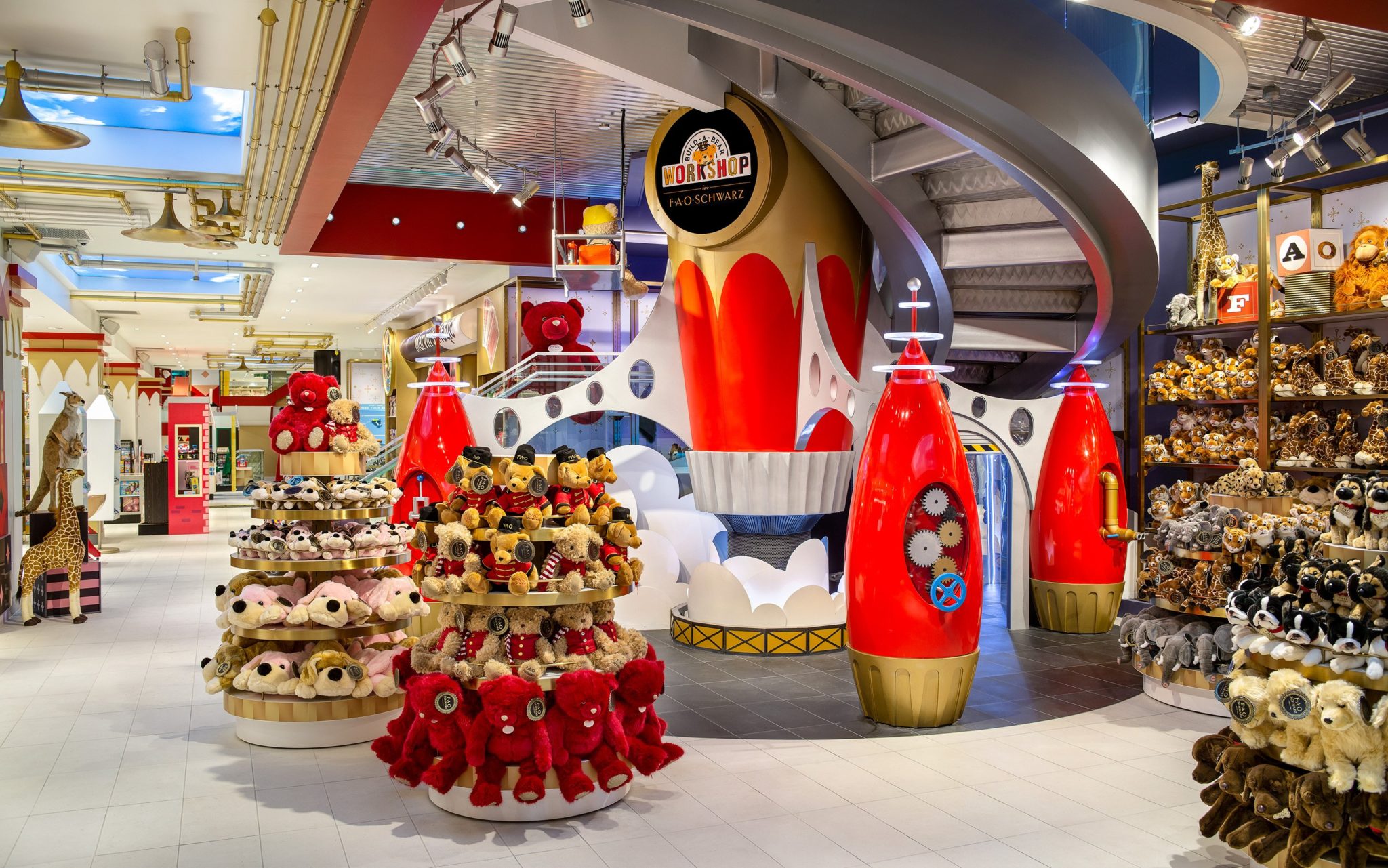
    Heritage toy store brand FAO Schwarz is headed for Beijing after relaunching in New York City. The original store, which featured in Hollywood movies such as Tom Hanks hit “Big”, closed its flagship near Central Park, unable to meet rising rental costs. Its current smaller location under new owners ThreeSixty stands to benefit from significant nostalgia for the old store amongst New Yorkers.

    Beyond plans for China, ThreeSixty intends to open pop-ups in department stores both in the US and abroad.

    It faces the same competition from e-commerce and discount chains like Walmart and Target that toppled toy empire Toys R Us earlier this year.

    Chief merchandising officer David Niggli said the key to the new stores is experience.

    Attractions include magic tricks, certificates to “adopt” a doll and a Build-a-Bear Workshop.

  • Cebu Pacific collects donation for sick children

    Cebu Pacific collects donation for sick children

    Low-cost airline Cebu Pacific strengthens its partnership with the United Nations Children’s Fund to reach millions of undernourished children in the country.

    The endeavor is a part of the global organization’s Change for Good program which accepts contributions from passengers on board flights of partner airlines.

    Proceeds contribute to the UN children’s agency’s First 1,000 Days campaign which provides optimal nutrition, from a mother’s pregnancy to a child’s second year of life.

    Since July 1, 2016, Cebu Pacific began accepting contributions of all currencies from passengers. The contributions are being used to fund nutritional supplements distributed to poor households with pregnant mothers or malnourished children. A portion of the funds also support barangay-level information drives on nutrition in Unicef’s focus areas in Northern Samar, Zamboanga and Maguindanao.

    “We are very pleased with how warmly our passengers are receiving the Change for Good Program. Thank you for sharing in our vision of a better future for our children and in Unicef’s advocacy of uplifting lives through the First 1,000 Days campaign,” says Cebu Pacific president and chief executive Lance Gokongwei.

    “Children have the right to survive and thrive. It is important for all of us to pitch in and lift each other up, so that every Filipino child grows up happy and healthy. Your continued support to UNICEF will help make this happen,” says Unicef Philippines representative Lotta Sylwander.

    Sylwander explains the transformative impact of these small acts of generosity. “The nutrition received by children from the womb to their second birthday is crucial for their physical and intellectual development. If these children are able to grow to their full extent, they perform better in school and eventually get better jobs as adults.” A healthy and productive workforce, Sylwander says, is key to nation-building.

    In the Philippines, around four million Filipino children are “stunted.” These children are undernourished, causing irreversible damage to their health, physical growth and brain development.

    The global program Change for Good targets these children by cashing in donations for life-saving materials and services for vulnerable children in more than 150 countries.

    Cebu Pacific has piloted the program in the East Asia and the Pacific region and focuses its collection efforts exclusively to Unicef Philippines’ First 1000 Days program.

  • Unicef Indonesia Urges Private Sector to Protect Children’s Rights

    Unicef Indonesia Urges Private Sector to Protect Children’s Rights

    “Unicef calls upon all companies to ensure that their operations and other business activities do not harm children. Government policies should support companies in this regard including by making sure that children are protected from possible rights violations by the private sector,” she said.

    Olsson expressed the desire to have comprehensive guidelines for companies on how to respect and support children’s rights in the workplace and marketplace included in Indonesia’s national frameworks and action plans that deal with human rights and business.

    The Ministry of Justice and Human Rights suggested children’s rights should feature more prominently in the government’s National Action Plan on Human Rights (Ranham) and in the Business and Human Rights Action Plan (Ranham Bisnis) currently being developed.

    “One of the key pillars of the UN Guiding Principles on Business and Human Rights highlights the state’s obligation to respect, protect and fulfill human rights. However, other actors, in this case, the business community, also have the responsibility to respect human rights in all its operations and practices,” said Mualimin Abdi, director general for human rights at the Ministry of Justice and Human Rights.

    Nur Kholis, chairman of the National Commission on Human Rights (Komnas Ham), highlighted the key role of the Ranham Bisnis in minimizing possible negative impacts of business operations on human rights and in strengthening private companies’ role in Indonesia’s development.

    Save the Children, the UN Global Compact and Unicef in March 2012 presented the Children’s Rights and Business Principles. Numerous corporations, organized in an Association of Child-Friendly Companies (Apsai), have since assessed their practices regarding their impact on children’s rights.

    “Unicef hopes many more companies will join the initiative and review their operations against the Children’s Rights and Business Principles,” said Olsson, the Unicef representative. “Corporate social responsibility with a focus on child rights that goes beyond philanthropic investment will strengthen companies’ sustainability, reputation and risk management and will ultimately foster a stable, inclusive and sustainable business environment. In the end, it’s in the companies’ own economic interest.”

    “One third of the world’s population are children; they are the future leaders, employees and customers of companies,” added Shinta W. Kamdani, president of the IBCSD. “In striving towards a sustainable business environment this issue should take the center stage of business sustainability. Children’s Rights and Business Principles serve as a tool for companies who are willing to go the extra mile to ensure a viable business future.”

  • Evergreen to open children’s fashion stores

    Evergreen to open children’s fashion stores

    Evergreen International has secured brand rights to greater China for a portfolio of high profile childresnwear brands.

    Until now, a specialist in menswear, Evergreen targets the upper-middle and high-end segments of mainland China’s market.

    Now the group has secured the rights to Roberto Cavalli Junior, Simonetta and Diesel Kid to distribute children’s wear and accessories in mainland China, Hong Kong and Macau.

    It has also signed a preliminary agreement with Rykiel Enfant under Sonia Rykiel regarding the proposed distribution of that brand’s children’s wear and accessories in the same markets.

    Separately, Evergreen has signed a letter of intent with Fendi Kids and is currently evaluating opening Fendi Kids monobrand shops and stores-in-stores in Mainland China.

    Last August, the group opened a Roberto Cavalli Junior store at Ocean Terminal in Hong Kong’s Harbour City. The group plans to open about nine new stores to introduce premium brands of children’s wear and accessories into the first- and second-tier cities of mainland China in the first half of this year.

    The locations will include the shopping malls in Chengdu IFS, Qingdao MixCity, Shenzhen MixCity and Qingdao Hisense Plaza.

    It will also open four retail stores for children’s wear and accessories at the shopping mall of the Galaxy Macau resort in the first half of 2015.

    Evergreen says it will continue to negotiate with shopping centre owners with a view to opening more stores in Hong Kong, Macau and first and second tier cities in the mainland in the second half of 2015.

    Chan Yuk Ming, chairman and executive director of Evergreen, said the company is in discussions with other international premium fashion brands about the retailing and wholesaling of their children’s wear and accessories in Hong Kong, Macau and Mainland China.

    “We believe the group’s new business segment of high-end children’s wear and accessories will further diversify the portfolios of products and brands of its businesses of apparel and accessories, and will leverage the foundation of its existing menswear business, thus will be benefit to the company and its shareholders as a whole.”

    Evergreen currently owns and manages V.E. Delure and Testantin, targeting the markets for high-end business formal and casual men’s wear, the upper-middle fashion casual men’s wear and the high-end children’s wear.

    The group’s strategy is to open self-operated stores in key cities, while penetrating the markets of slower development through distributors. To cope with business expansion and raise operating efficiency, the group has strategically used a combination of self-operated retail stores as well as distributors of varying sizes to cater to different stages of development and target markets for each of its brands.

    As at December 31 2014, the group had 177 self-operated stores and 191 franchised stores in 30 provinces and autonomous regions, covering 171 cities.