Tag: china mall

  • Tenant reshuffles bring good revenue for CapitaLand Retail China

    Tenant reshuffles bring good revenue for CapitaLand Retail China

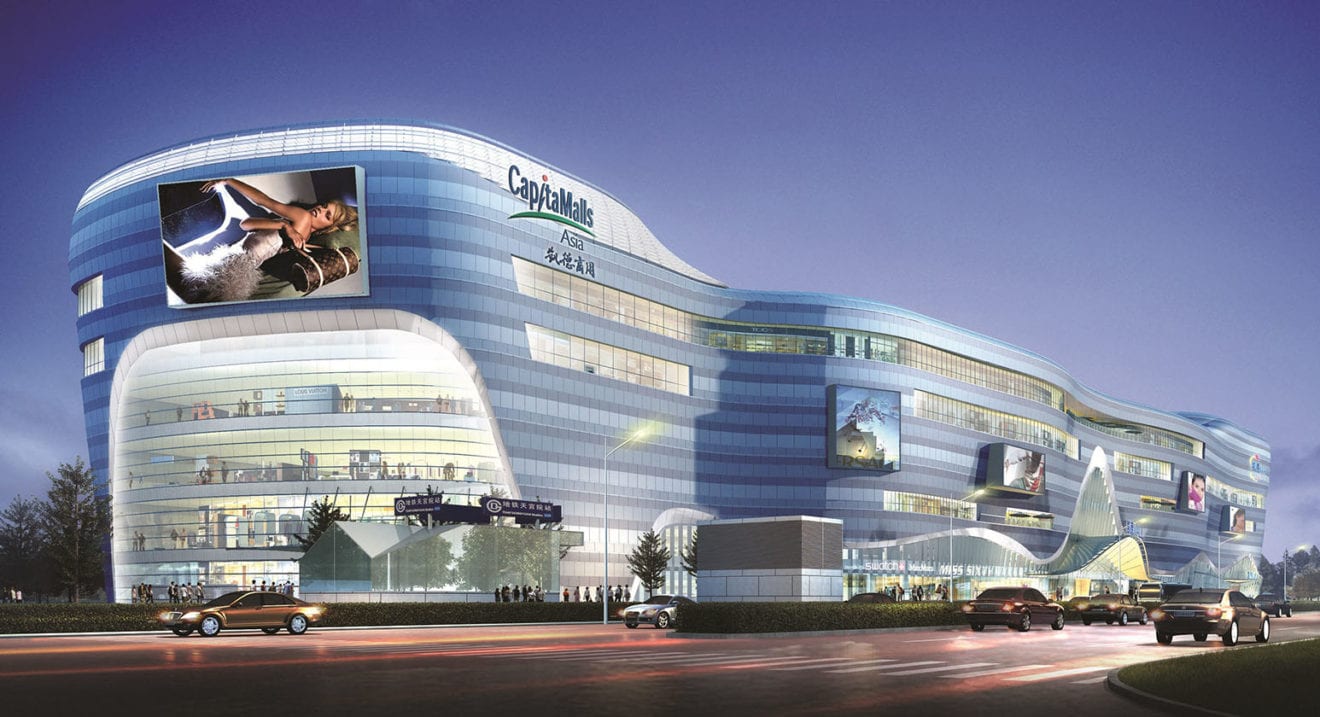
    CapitaLand Retail China boosted its distributable income by 9.4 per cent last year on the back of a new acquisition and improved performance of multi-tenanted malls. CapitaLand Retail China Trust Management (CRCTML), the manager of CapitaLand Retail China Trust (CRCT), reported a distributable income of S$99.7 million (US$73.5 billion) for the year.

    “CRCT delivered a resilient set of results in FY2018 on the back of strong operating performance,” said CRCTML CEO Tan Tze Wooi.

    Portfolio occupancy as at December 31 was 97.5 per cent and rental reversion was 10.9 per cent. Tenants’ sales at its multi-tenanted malls grew by 18.8 per cent year on year, while shopper traffic was up by 19.4 per cent.

    With the addition of Rock Square in the full-year figures for the first time, CRCT’s investment property value rose by 17.8 per cent to RMB13.993 billion (US$2.07 billion) as at the end of the year.

    CRCTML chairman Soh Kim Soon said China’s retail sales rose by 9 per cent last year.

    “China’s more moderate pace of growth is reflective of an economy undergoing transition and its long-term fundamentals remain positive. We are confident that CRCT’s quality family-oriented shopping malls will continue to benefit from China’s growing middle class and policies implemented to stimulate the economy,” he said.

    Highlights of the year included:

      • CapitaMall Wangjing posted a rental reversion of 15.7 per cent after converting 4700sqm of anchor tenant space on Level 4 to specialty stores. The mall’s Level 8 rental income will rise by around 50 per cent after transforming 500sqm of common area into leasable space for coworking operator Ucommune.
      • CapitaMall Xinnan netted 17.9 per cent in rental reversion by reconfiguring its Basement 1 space to accommodate more popular brands.
      • Since acquisition, Rock Square has achieved four consecutive quarters of rental reversions above 20 per cent and a double-digit year-on-year increase in average sales per square metre for specialty stores.

    Wooi said that in order to further optimise the portfolio, CRCT has entered into a bundle deal in Hohhot with unrelated third parties to divest CapitaMall Saihan and acquire a new mall that is double in size and has “a longer balance tenure”.

    “Given the new mall’s higher growth potential, CRCT will be in an even stronger position to tap Hohhot’s promising retail growth. The deal is structured to minimise income disruption as the closure and divestment of CapitaMall Saihan will take place after the new mall is operational in the second half of the 2020 [financial year]. Supported by CRCT’s strong financial position, we will continue to explore suitable acquisition opportunities to grow and rejuvenate our portfolio,” Wooi concluded .
  • ‘World’s saddest bear’ reflects sorry state of China malls sector

    ‘World’s saddest bear’ reflects sorry state of China malls sector

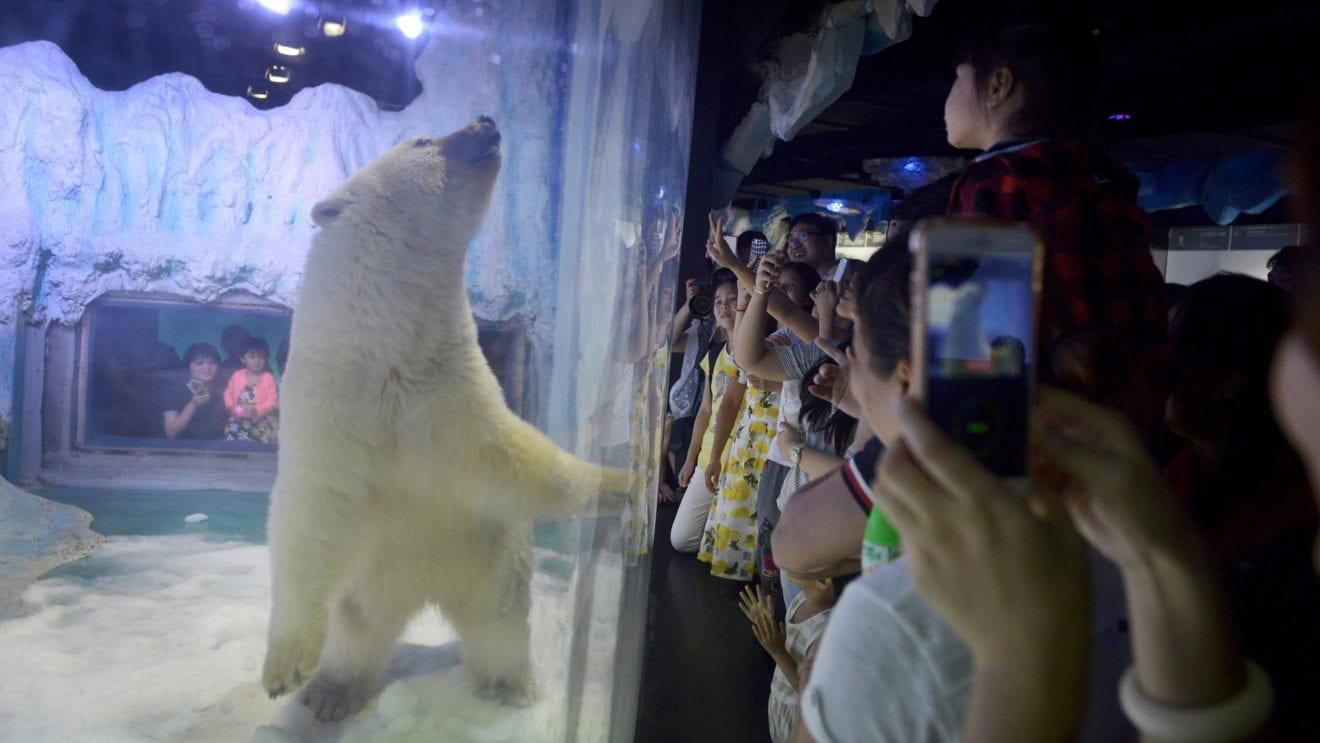
    Pizza, a polar bear notorious in China as being the “world’s saddest”, has been removed from his cramped enclosure and placed in an animal reserve after months of controversy that have highlighted the sorry state of Chinese shopping malls.

    Pizza’s plight was the result of a trend for using animals, entertainment and children’s playgrounds to pull customers into China’s giant shopping centres and department stores, which have been built in their thousands despite the nation’s growing preference for buying online.

    Bricks-and-mortar stores are grappling not just with ever-greater competition from online retailers such as Alibaba and JD.com, they must also contend with an underlying slowdown in the retail sector. Sales growth, which in 2008 reached an annual rate well above 20 per cent, has been falling steadily in recent years and hit 10 per cent in October, according to National Bureau of Statistics data released on Monday.

    Pizza became an internet celebrity in July when a shopper uploaded a photo of the three-year-old bear in an enclosure at the Grandview Mall in the southern city of Guangzhou. The country’s nascent animal rights community launched a rescue campaign and cheered when the Grandview said over the weekend that it would “temporarily” return him to the ocean park in northern China where he was born.

    Other Chinese netizens have outed an elephant used to attract mobile phone buyers to a Suning electronics outlet in Beijing and a “sad tortoise” housed alongside reptiles in grimy tanks in a mall in the northwestern city of Xi’an.

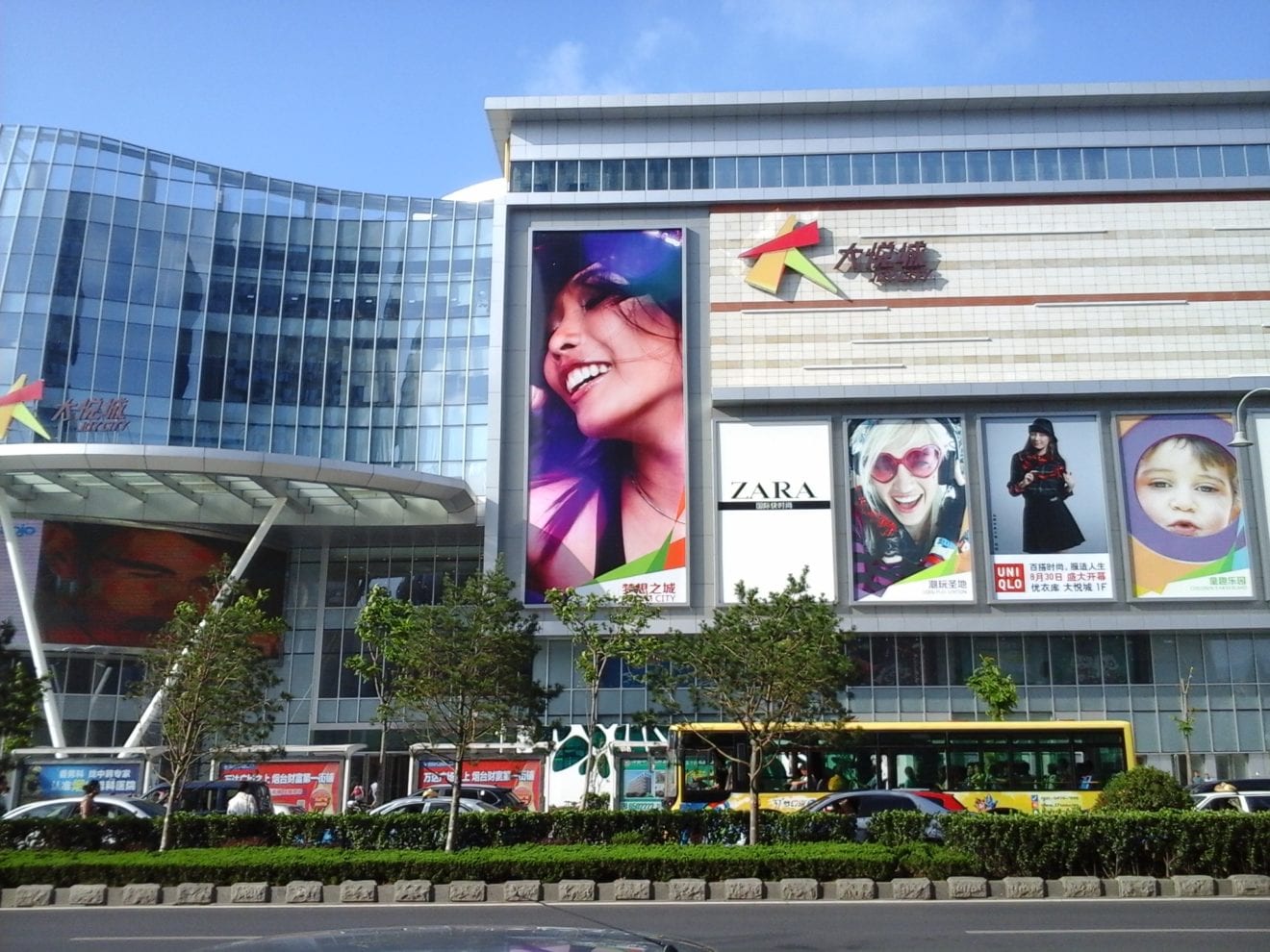
    The use of animals and other attractions comes as malls combat overcapacity, a problem immediately apparent to anyone who has turned up at a dusty, half-vacant shopping centre in China’s provincial cities. The country has an estimated 4,000 malls, more than the US, and plans to reach 7,000 by 2025, according to Mall China, an industry organisation.

    “Foot traffic is dropping dramatically,” said Shaun Rein, founder of Shanghai-based China Market Research Group, describing “a lot of panic” as e-commerce decimates mall sales. “Shops are becoming more choosy. Before, they said: ‘Who cares which mall?’ Now they are looking at the mall’s business and its other attractions.”

    “Malls are starting to bring in a lot more entertainment and a lot more food,” he added. “There is also a big focus on children — playgrounds, learning centres, even museums.”

    Last year 83 shopping malls gave up the fight and closed, according to a blue book on the commercial sector by the Chinese Academy of Social Sciences. They will be joined this year by Marks and Spencer, which announced last week it would close several stores in China in an effort to boost its flagging fortunes.

  • Pleasure Metropolis opens indoor road in China mall

    Pleasure Metropolis opens indoor road in China mall

    Pleasure Metropolis Property has launched China’s first cultural and artistic industry-themed indoor pedestrian road in Tianjin  Pleasure Metropolis’s Cheer Market.

    The road can also be the primary of its sort within the nation to have been situated inside a buying centre. The distinctive and ‘avant-garde fashion’, Cheer Market has been held up as a mannequin that different purchasing malls have been following in recent times in an try and buck the development of homogeneity and the affect of e-commerce in addition to to shoulder the company social duty actively.

    Pleasure Metropolis’s goal clients, aged between 18 and 35, are able to creating and appreciating artworks, together with these designs that are above the mass market’s style. Particularly, Cheer Market caters for the preferences and needs of the ‘yuppies’.

    Positioned as “an artwork road in a purchasing centre”, Cheer Market consists of delivery containers during which entrepreneurs arrange outlets and are free to train their creativity and originality of their inside ornament and design.

    As well as, the low lease and enormous share of revenues loved by the companies in Cheer Market and the place’s distinctive inventive atmosphere have attracted numerous artistic younger individuals to make their marks there. The freewheeling environment has given delivery to such creative zones as “Shen Shou Si” (Temple of Auspicious Animals) and “Secret Publish Workplace” which have turn out to be magnets for patrons.

    “Younger individuals are imbued with many unique concepts, however often can’t put them into follow as they face many various sorts of constraints, together with a scarcity of capital”, stated a graduate who’s a younger entrepreneur.

    “Nevertheless, they will realise their goals in Cheer Market, which is a seedbed for brand spanking new companies began by the younger due to its beneficial circumstances.”

    Tianjin Pleasure Metropolis’s GM Wu Jing says: “A purchasing centre ought to be energetic as an alternative of being mundane.”

    Situated on the fifth flooring of Tianjin Pleasure Metropolis, Cheer Market has now turned what was as soon as an inaccessible quiet nook with a big space into an indoor business road with a robust character and the very best income generated per sq. metre.

    The business property challenge distinguishes itself from Nanluoguxiang (South Lane of Gongs and Drums) of Beijing and Tianzifang, which is an arts and crafts enclave of Shanghai, by recreating outside streets inside a constructing.

    The identify “Cheer Market” was impressed by the youngsters’s e-book Nils Holgersson’s fantastic journey throughout Sweden of the Nobel Prize-winning author Selma Lagerlöf. The novel illustrates the protagonist’s private improvement by means of a collection of fantasy adventures, and evokes individuals with a ardour for all times to be happy to reside out their goals.

    Says Wu: “The importance of Cheer Market lies in its functionality to set off individuals’s want for creativity with freedom. Their hands-on expertise with the fascinating actions on the outlets there result in consumption. Cheer Market will assist appeal to clients to Pleasure Metropolis. It has blazed a path within the industry by bringing outside streets indoor and by providing clients a stimulating buying setting.”

    Pleasure Metropolis Property’s government director and GM Han Shi says Pleasure Metropolis Property aspires to develop into an organization that may thrive for greater than a century, and innovation would be the key to that.” 

    “Pleasure Metropolis is far more than a purchasing centre. It’s a vibrant and stylish place for spreading tradition. Pleasure Metropolis will set the development for the younger individuals’s way of life. It is going to endeavor to realize this goal via fixed innovation and by main the industry in enterprise administration.”

    Hong Kong listed Pleasure Metropolis Property is a business property itemizing firm underneath COFCO Company, enterprise of which overlaying business property, residential property, lodge, tourism property and regional complete improvement.