Tag: china malls

  • High occupancy pays off for CapitaLand China malls

    High occupancy pays off for CapitaLand China malls

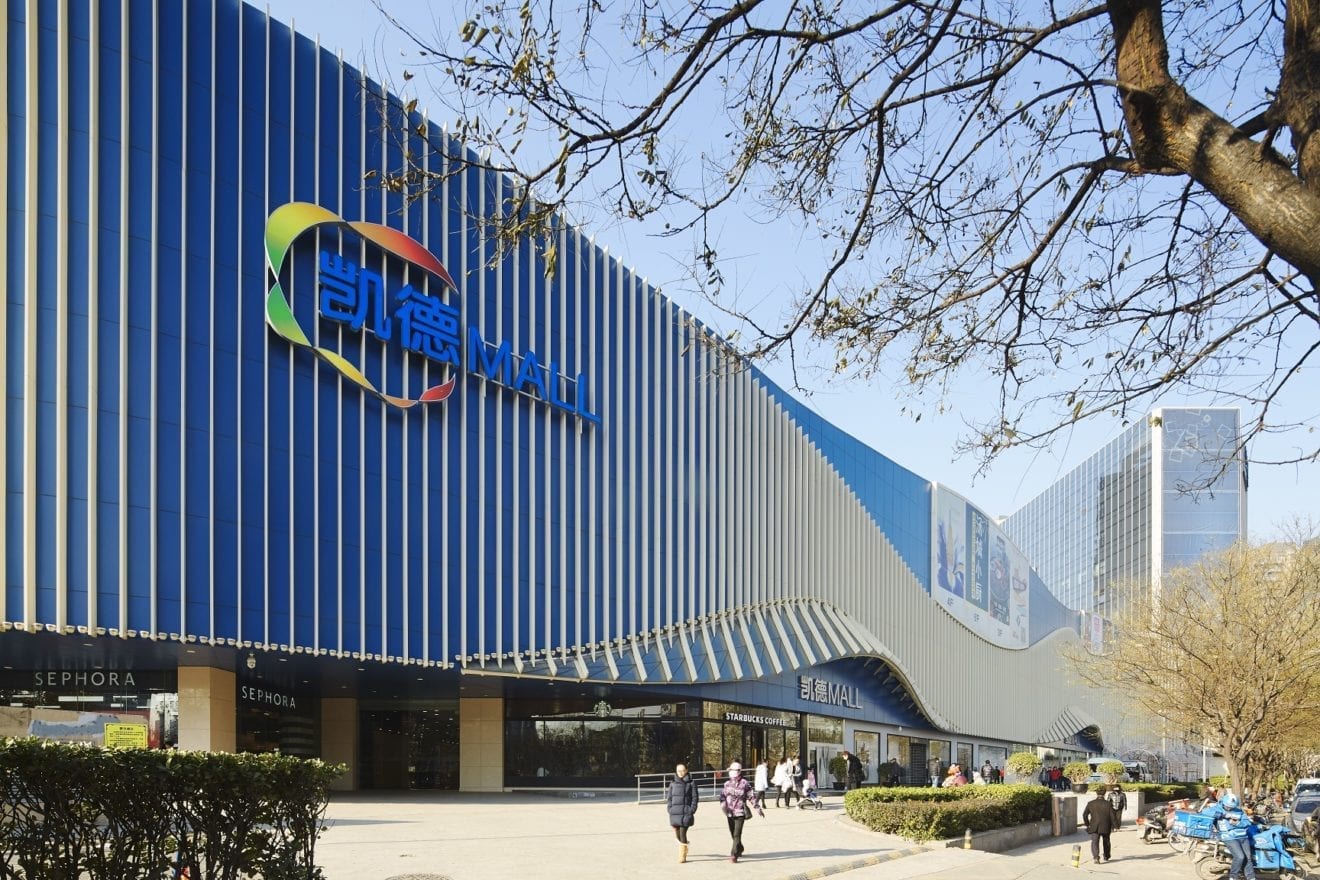
    High occupancy rates of the CapitaLand China malls portfolio helped deliver a 10.5 per cent increase in distributable income in the three months to September. CapitaLand Retail China Trust Management Limited (CRCTML), the manager of CapitaLand Retail China Trust (CRCT), says income reached S$23.6 million this year, compared with $21.4 million the same quarter last year.

    CRCTML CEO Tan Tze Wooi said China’s retail sales rose 9.3 per cent year on year during the first nine months of this year to RMB 27.4 trillion (US$3.93 trillion), while urban disposable income and expenditure per capita grew 7.9 per cent and 6.5 per cent respectively.

    “China is now growing from a larger base and its long-term fundamentals remain strong,” he said. “With our quality portfolio of malls offering holistic lifestyle experiences, CRCT will stand to benefit from China’s improving household income and rising consumer aspirations.”

    During the latest quarter, CRCT achieved a 2.2 per cent increase in net property income to $36.7 million, driven by broad-based rental growth and effective cost management.

    Wooi said the trust’s portfolio achieved an occupancy rate of 97.7 per cent at the end of September and rental reversion was “a robust 12.1 per cent”.

    “Our active asset management strategy with a tailored approach for each mall is progressing well. Rock Square registered a strong positive rental reversion above 20 per cent for the third consecutive quarter by bringing in 25 prominent international and domestic brands, many of which are new-to-market in Haizhu District.

    “To differentiate CapitaMall Qibao’s offerings, we increased its exposure to the resilient learning and education sector by more than three times over the last five years. We also expanded the rooftop playground to host more interactive activities that are popular with children, further enhancing CapitaMall Qibao’s attractiveness to young families.”

    CRCT is the first China shopping mall Real Estate Investment Trust (Reit) in Singapore, with a portfolio of 11 shopping malls: CapitaMall Xizhimen, CapitaMall Wangjing, CapitaMall Grand Canyon, CapitaMall Shuangjing in Beijing; Rock Square in Guangzhou; CapitaMall Xinnan in Chengdu, Sichuan Province; CapitaMall Qibao in Shanghai; CapitaMall Minzhongleyuan in Wuhan, Hubei Province; CapitaMall Erqi in Zhengzhou, Henan Province; CapitaMall Saihan in Hohhot, Inner Mongolia; and CapitaMall Wuhu in Wuhu, Anhui Province.
  • L Catterton makes exit from China mall operator Sasseur

    L Catterton makes exit from China mall operator Sasseur

    International private equity firm L Catterton has substantially divested from Chinese mall operator Sasseur Cayman Holding. The firm has reduced its shareholding from 58.86 per cent to just 1.36 per cent, as part of ongoing efforts to optimise its portfolio. Sasseur Cayman is the sponsor of listed Sasseur Reit.

    L Catterton Asia chairman Ravi Thakran said: “We continue to strongly believe in the long-term growth prospects of Sasseur and the opportunities it offers to investors in terms of exposure to China’s fast-growing outlet mall industry. We will continue to support the company’s growth initiatives as a Sasseur shareholder.”

    In a separate statement, Sasseur said that growth prospects for China’s outlet sector remain solid – projected to expand at approximately 25 per cent annually for the next five years – with the fastest sales growth among the retail segments in China, even outpacing that of e-commerce.

  • Chinese Think Tank Says 1/3rd of Mainland Malls to Close Within 5 Years

    Chinese Think Tank Says 1/3rd of Mainland Malls to Close Within 5 Years

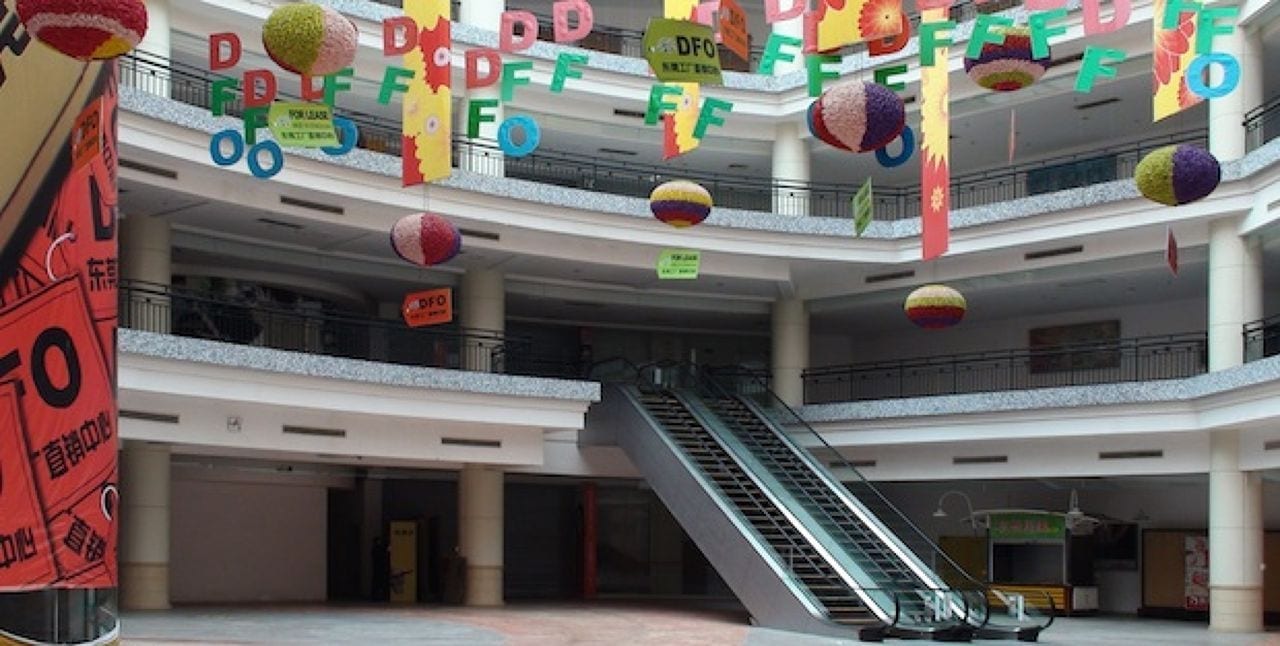
    More bad news for China’s struggling brick and mortar retailers as a recent report from the Chinese Academy of Sciences and Social Sciences Academic Press predicted as many as one-third of all shopping centers in China will close their doors during the next five years.

    With ecommerce heavyweights Alibaba and JD.com dominating the retail sales, some of China’s largest mall operators are already feeling the pinch. Joy City Property and Maoye International posted profit warnings earlier in the year as buyers opt to shop online.

    Change Predicted for All Mainland Retail Centres

    The report by the respected central government think tank predicted change across the board for Chinese shopping centres, foreseeing that, in addition to the malls expected to close, another third will be transformed into experiential shopping centres, while the remaining third will adopt an online to offline (O2O) model that integrates the Internet with physical shopping.

    While two decades ago China had an undersupply of malls, the country has quickly overcome the deficit, with the mainland now home to 4,000 shopping centers — three times the US total. That population of malls is expected to grow to 10,000 by 2025, according to the CASS report. Research from JLL revealed 40 million square metres in new mall space is expected to enter the market between 2015 and 2017.

    Department stores in the country fared still worse than shopping centres, with sales growth contracting 0.7 percent during 2015, according to data from the Fung Business Intelligence Centre.Malaysia-based department store Parkson, which operates 59 outlets in China, announced it was selling assets to offset heavy losses in the country.

    Chinese Shoppers Swap Malls for the Internet

    Jack Ma big mouth

    Jack Ma’s ecommerce empire has been taking a bite out of China’s traditional retail sector

    According to Reuters, Suning, one of China’s largest retail chains, needed 12 months to bring in the same amount of sales that Alibaba’s Tmall website generated in two months. And while the electronics retailer is able to keep the lights on, others have not been so lucky.

    A total of 138 department stores, 262 supermarkets and 9,464 clothing stores closed in China between 2012 and 2015 according to data from the Business Economics Institute under Beijing Technology and Business University. That goes hand-in-hand with findings from the McKinsey Global Institute that showed ecommerce accounted for 20 percent of all clothing purchased and 15 percent of all household goods purchased in 266 cites in China.

    McKinsey predicts ecommerce marketplaces will bring in anywhere from $420 billion to $650 billion in sales by 2020. That is in stark contrast to the slowing sales physical retailers are coping with.

    Data from Fung Business Intelligence Centre showed there was 4.3 percent sales growth last year among China’s top 100 retail chain operators, the lowest total since 2007.

    Physical Stores Not Going Down Without a Fight

    While the mainland’s earth-bound retail sector has been taking a beating, not everyone is ready to give up. China Properties Group, a Shanghai-based developer which owns and operates the Concord City mixed-use project and the World Trade Plaza in Chongqing, took out a full page ad in the New York Times international edition late last year pleading with consumers to boycott online shopping.

    Other retailers are opting for a more modern way to fight back against China’s growing ecommerce sector.

    Of China’s top 100 retail chain operators, 83 currently have their own online stores in 2015. Of this number, 20 also have a mobile shopping app for consumers to use.

    “Physical stores should abandon the old model. They can use online shopping and WeChat to facilitate transactions and provide more convenient service,“ Hong Tao, director of the Business Economics Institute, proclaimed.