Tag: China Resources

  • Another Alibaba major step in China retail

    Another Alibaba major step in China retail

    This week’s Alibaba-Sun Art deal is a major step in the development of a new retail landscape in China, write Wai-chan Chan and Jacques Penhirin of Oliver Wyman.

    This is not a “real estate play” with Alibaba buying 446 grocery stores, but shows how serious Alibaba are in developing the “new retail” model combining the strengths of online and offline retail.

    The first winners from this alliance are likely to be consumers.  Alibaba will use its investment in Sun Art to improve its price, service levels and the range of products available. In addition, expect to see Alibaba add the ability to deliver a wide range of goods from these stores to consumers’ homes in super quick times. Today delivery time is the new battlefield but performance is still highly dependent on physical networks.

    In the context of retail this alliance is more important than Amazon’s acquisition of Whole Foods in the US.  Sun Art is the largest, and one of the most respected grocery players in China, while Alibaba already has a large grocery business, making it an alliance between two leading players in retail.

    Unlocking fresh

    Despite the huge advances in e-commerce in China, fresh food has been one of the areas that has been most difficult to convert to e-commerce.  Freshness is the key driver for consumers in grocery shopping. According to a survey of 1500 consumers Oliver Wyman conducted in August, consumers purchase fresh products 4.9 times per week on average, and ‘fresh’ is the number one criterion in grocery retailer selection regarding range, product quality, and value for money. However, 81 per cent of respondents do not think e-commerce provides good quality fresh products compared with offline hypermarkets.

    As one of the top two hypermarkets receiving the highest rating from consumers on their fresh offering, Sun Art has strong expertise in operating fresh categories, which will greatly unlock Alibaba’s capabilities.

    Ally or die

    It is becoming clearer that the endgame of two eco-systems being established by Alibaba and JD.com is inevitable in the retail landscape of China, which poses pressure on those ‘unallied’ retailers such as China Resources, Carrefour, WuMart, etc. For retailers, capturing traffic through their own e-commerce platform will become even more challenging. Traditional retailers must understand that they are competing with giants with unlimited abilities to invest and the ambition of integrating online and offline retail. O2O orders already contribute 30 per cent of sales of Alibaba’s Hema Fresh Supermarket – it is indeed transforming the economics of the offline shopping cart, which is challenged by the declining like-for-like growth over the past 12 successive quarters.

    Traditional retailers need to choose their battlefield very quickly, but expect compromise on bargaining power and decision-making in the long term.

    Bad news for second-tier brands

    The two ecosystems are not pure retailers anymore but integrated media and branding platforms. It does not leave Consumer Packaged Goods brands much of a choice but to closely coordinate with Alibaba and JD.com and learn their rules. Niche brands which understand both the ecosystem and consumers will take this opportunity to grow, and top-tier brands will continue to flourish if they learn how to effectively partner with Alibaba or JD, to have both parties learn from each other. By comparison, weak brands will suffer because the traditional retail stores they rely on are losing ground. Furthermore, as O2O develops, the terms and conditions will become more transparent within the two ecosystems. Promotional pressure will likely increase, requiring more diligence on the return on investment.

    Despite the prospects for this alliance, Alibaba and Sun Art need to start thinking how to effectively realise its potential. Operationally, there is huge complexity in integrating the two businesses and overcome barriers of management and culture. After all, it is more difficult to manage shoppers than to manage mobile devices.
  • McDonald’s Asia to sell 2800 restaurants

    McDonald’s Asia to sell 2800 restaurants

    McDonald’s Asia is preparing to sell some 2800 restaurants across Asia as it introduces a new business model in its fastest growing major market.

    And Reuters has named frontrunning investors in what looks to be a spin-off business in much the same nature as Yum! Brands is selling off its Chinese KFC, PIzza Hut and Taco Bell operation.

    Early contenders as partners with McDonald’s US include state-backed China Resources and private equity investors Bain Capital, TPG Capital, Baring Private Equity Asia and MBK Partners. China Resources already has street cred in the food sector, operating Pacific Coffee chains in Hong Kong, Macau, Singapore and China.

    McDonald’s is planning to create a new Asian business which would own restaurants as master franchisee, using local market knowledge and capital to expand networks in respective markets.

    Operations in China, Hong Kong, Macau and South Korea would be rolled into the new entity, although it is highly likely separate businesses could be created for each market – one for China, one for Hong Kong-Macau and another for Korea.

    McDonald’s has a stand-alone, listed business in Tokyo which encountered huge market problems several years ago and last year lost US$310 million after a major cull of its network. The company is trying to sell down its stake in that business from 49.99 per cent to 20 per cent.

    Inside Retail Hong Kong expects that McDonald’s Asia would likely be funded by a cashed-up investment partner for about five years before potentially being floated, most likely in Hong Kong.

    A fortnight ago, McDonald’s Chicago-based CEO Steve Easterbrook revealed plans to open 1500 new stores across China, Hong Kong and Korea within five years – 1300 of those in Mainland China. Globally, the company plans for 95 per cent of its restaurants to ultimately be franchised.

    In China’s mainland, McDonald’s already operates some 2200 restaurants – its new target is 3500.

    Easterbrook says strategic partners could “add value and unlock growth potential in key markets” in Asia.

    “This will allow McDonald’s to accelerate our growth and scale faster across diverse markets placing us closer to our customers and the communities we serve,” he said on March 31.

    Reuters quotes sources revealing McDonald’s has engaged Morgan Stanley to run the sale of the restaurants in China, Hong Kong and South Korea, with a formal, public sale process to be launched in mid-May.

    The final business model is subject to negotiations with potential buyers, but McDonald’s expects a one-time franchise payment and ongoing royalties based on sales – the typical industry rate running between 3 per cent and 5 per cent. Capital investment required to roll out new stores would be the responsibility of the franchisee.

    Reuters said McDonald’s declined further comment beyond its March 31 statement from Easterbrook and the private equity companies named, China Resources and Morgan Stanley all also refused to comment.

  • Riverside 66 wins top MIPIM Asia Retail award

    Riverside 66 wins top MIPIM Asia Retail award

    MIPIM Asia, the property leaders’ summit in Asia Pacific, has announced 36 winners in the ninth edition of the annual MIPIM Asia Awards.

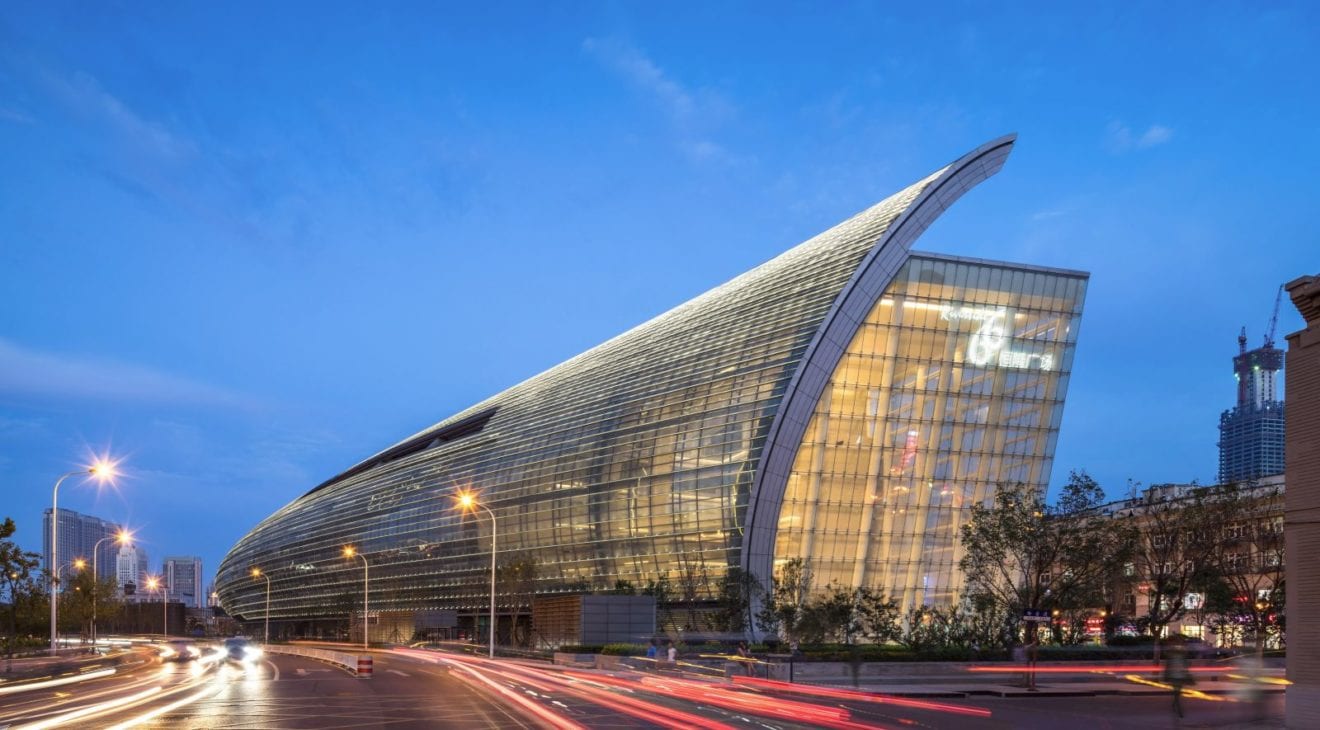
    Chinese mall project Riverside 66 won Gold, the top honour in the Retail category, from The Breeze BSD City in Indonesia and The MixC in Qingdao, China.

    Sunway Putra Mall in Kuala Lumpur, Malaysia, was awarded a bronze in the refurbished buildings category.

    The winners of the MIPIM Asia Awards, which recognise excellence and innovation in real estate development in the Asia Pacific Region, were announced during a gala dinner on with Carrie Lam, chief secretary for administration of the HKSAR Government as guest of honour. The final Gold, Silver and Bronze rankings were awarded to the 36 projects previously announced, which had been selected by an international jury composed of 16 industry experts.

    President of the Jury, Nicholas J. Loup, said the judging was a very competitive process this year with a number of high-quality and interesting projects among the finalists.

    “We are excited to see how several of these projects are changing the urban landscape in Asia Pacific.”

    The winning retail projects, with key consultants listed, are:

    Best Retail Development:

    Riverside 66, Tianjin, China: Gold.

    Architect: Kohn Pedersen Fox Associates PC, P&T Architects (project architect), Benoy (interior designer); Developer: Hang Lung Properties.

    The Breeze BSD City, Tangerang City, Indonesia: Silver.

    Architect: Jerde & Arcadia; Developer: Sinarmas Land; Others: Ketira Engineering Consultants Landscape, Saraswati Flora,  PT. Policipta Multidesain, PT. Total Bangun Persada Tbk, PT Korra Antarbuana, Lumina Group.

    The MixC, Qingdao, China: Bronze.

    Architect: Benoy Ltd, Callison; Developer: China Resources Land Limited.

    Best Refurbished Builing:

    Sunway Putra Mall, Kuala Lumpur, Malaysia: Bronze.

    Architect: SAA Architect; Developer: Sunway REIT; Other: Aedas.

  • Walmart China partner sells out

    Walmart China partner sells out

    Walmart China’s local business partner wants out of its joint venture.

    State-backed China Resources Group has put the minority interests it has in 21 Walmart China stores on the market, seeking US$525 million. Most of the interests equate to about 35 per cent of the respective stores.

    China-based spokesman for Wal-Mart David Fu confirmed the sale in an email to Reuters. He said the firm respected the “investment decision” of its partner.

    “Wal-Mart believes that the transfer of minority interest will not influence Wal-Mart’s operation and development in China,” he said.

    The affected stores are located in various parts of China, including the western Sichuan province and the capital city Beijing.