Tag: china retail

  • Dada-JD Daojia, Carrefour to collaborate online

    Dada-JD Daojia, Carrefour to collaborate online

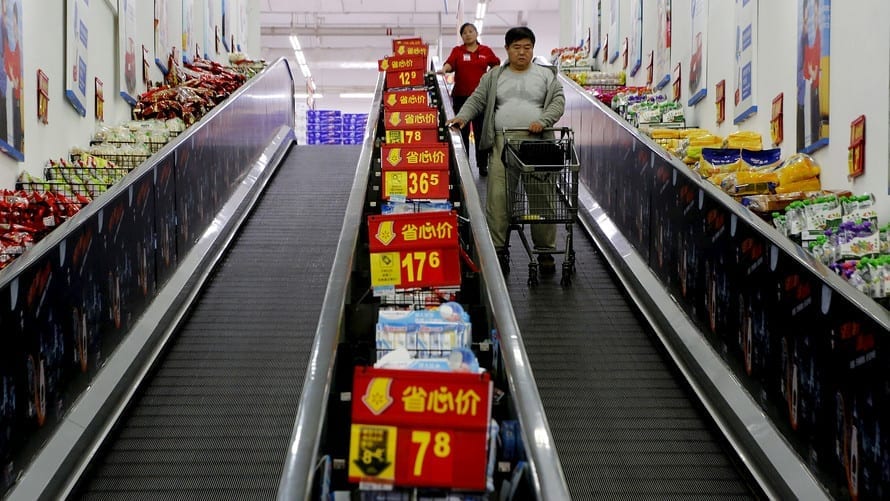
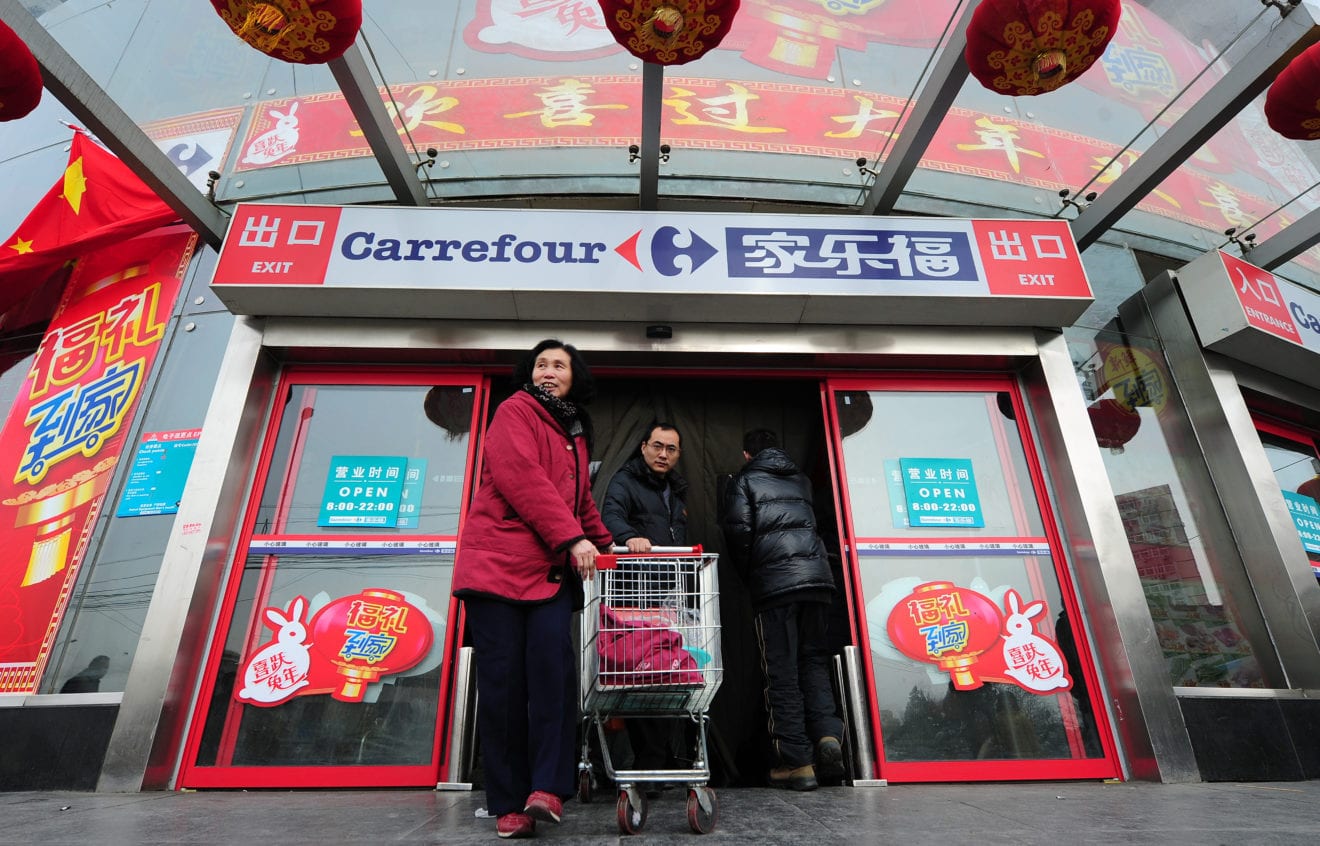
    Chinese online grocery and delivery firm Dada-JD Daojia is partnering with French hypermarket chain Carrefour. The collaboration, which involves listing Carrefour China stores on the Dada-JD platform, has already resulted in a 720 per cent increase in the chain’s online sales compared with the month previous. Some 4000 Carrefour products are available to be traded on the platform.

    So far, 158 Carrefour stores are listed on Dada-JD, with plans being to have 200 listed by the end of the year.

    Dada-JD Daojia offers two distinct services, the “Dada” on-demand logistics platform (which covers 400 major Chinese cities) and the “JD Daojia” e-commerce platform that has more than 50 million users. It has collaborated with Walmart since 2016 as well as other chain supermarkets.

  • New McDonald’s set to expand faster in China

    New McDonald’s set to expand faster in China

    Some 2,000 quick service outlets to open by 2022 in small cities

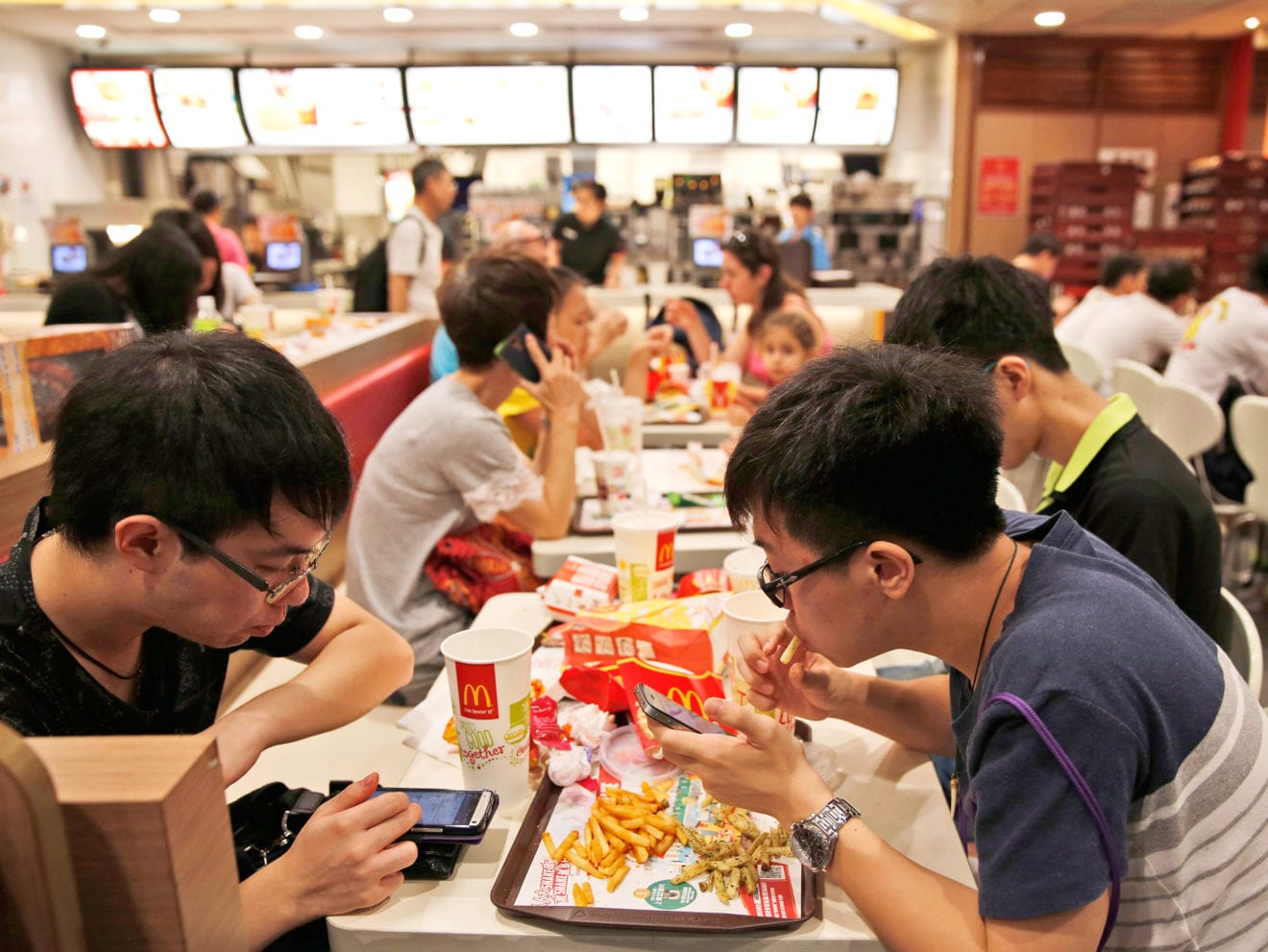
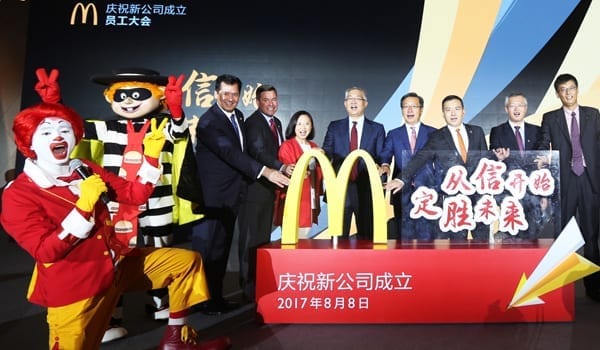
    McDonald’s Corp, the global fast-food chain that has forged a new partnership in China last month, will expand faster by opening 2,000 new restaurants in the next five years.

    They will be set up mostly in third-and fourth-tier cities with a focus on take-aways and digitalized services.

    The company said it will increase its expansion pace from about 250 new outlets this year to 500 per year from 2022 onward.

    It did not disclose other details like the scale of new investments that would ensue.

    The new partnership, jointly established by CITIC Ltd, CITIC Capital, Carlyle Capital and McDonald’s, paid $2.08 billion for the US-based fast food chain’s business in the Chinese mainland and Hong Kong.

    The deal received regulatory approval and was completed on July 31.

    The new company will become McDonald’s largest franchisee outside of the United States.

    CITIC Ltd and CITIC Capital together hold a majority 52 percent stake in the new company, while Carlyle Capital will hold 28 percent, and McDonald’s 20 percent.

    Currently, McDonald’s operates and manages 2,500 restaurants in the Chinese mainland, including 600 franchises, and 240 restaurants in Hong Kong.

    The new company will manage all the 2,000 new restaurants directly.

    Despite McDonald’s global dominance, KFC, owned by Yum China, has bigger presence in the Chinese quick service restaurant. Yum China runs more than 5,000 KFC restaurants in over 1,100 cities and counties.

    KFC’s wide presence in China appears to have bolstered the confidence of McDonald’s investors in the new expansion plan, industry insiders said.

    The new partnership of McDonald’s aims to achieve double-digit sales growth annually in the next five years.

    The goal includes delivery coverage of 3,375 restaurants or over 75 percent of the total.

    “China will soon become our largest market outside of the United States,” said Steve Easterbrook, McDonald’s president and CEO.

    “The mainland and Hong Kong are leading the global system in capturing new consumer trends such as delivery and digitalization and it is driving strong performance and growth momentum.”

    Zhang Yichen, the new chairman of McDonald’s China, said restaurant ownership at the local level will foster entrepreneurial spirit within the company.

    For example, considering the strong demand for takeout food and the population density in China, Zhang emailed Easterbrook regarding the need to develop a customized software system for the Chinese market.

    The latter dispatched McDonald’s global IT team to support the China business. Now, the take away operation in China tops the global chain’s comparable systems across markets.

    Zhang said CITIC has more than 1,400 bank branches in China. Besides, CITIC and Carlyle’s extensive resources and market expertise in real estate, supply chains, retail, consumer goods and technology, coupled with the global quality standards and branding of McDonald’s, will prove to be a winning formula.

    Jason Yu, general manager of Kantar Worldpanel China, a firm that researches shopper behavior, said, “CITIC operates many branches in third-and fourth-tier cities, and they understand the local market, hence will be able to help McDonald’s to choose appropriate sites for new restaurants and also provide useful real estate information.”
  • Chinese consumers crave premium products

    Chinese consumers crave premium products

    Chinese consumers are increasingly craving premium-tier products to underscore their success, says Nielsen China.

    The market research company defines premium-tier products as items that cost at least 20 per cent more than the average price for the category.

    The global information company’s retail sales data, which covers major retail chains, shows that factors on both the supply and demand side are driving the growth of the premium segment in China.

    And in a Nielsen survey, 56 per cent of Chinese said they buy premium products in order to feel successful or show their success to others.

    Also, 48 per cent of consumers said they are willing to pay a premium for electronics, followed by clothing and cosmetics (both 38 per cent).

    Many consumers have greater buying power than ever before, with purchasing power growing from 7 to 9 per cent annually in China.

    “With increasing affluence, consumers are craving products that offer an enhanced, premium experience,” says Nielsen China MD Vishal Bali. “Beyond basic needs and benefits, Chinese consumers are making purchase decisions based on how products make them feel.”

    In its study, 65 per cent of online respondents in China said they will try a new and innovative premium product based on the recommendations of friends and family. Additionally, 60 per cent said  of respondents said they are “very willing” to pay for premium products with high quality and safety standards.

    Electronics favoured

    Chinese consumers are most willing to pay a premium for electronics, says the study. Globally, 42 per cent of consumers say they are willing to pay a premium price for electronics, while in China the number reaches 48 per cent.
    Apart from electronics, 38 per cent of respondents in China said they are willing to pay for a premium offering in clothing and cosmetics. Globally however, 39 per cent are willing to buy premium clothing while only 33 per cent say they would buy a premium offering in cosmetics.

    Other key categories where Chinese consumers are willing to pay a premium include dairy products (37 per cent), cars (32 per cent), oral care (31 per cent) and meat and seafood (30 per cent).

    Status is also a more important consideration for consumers in China compared to the rest of the world, with 54 per cent of respondents saying they buy premium products because these items show other people that they have good taste. Premium products are also regarded as an important indicator of accomplishment, with 56 per cent of Chinese respondents saying they buy premium products because it makes them feel successful or (also 56 per cent) shows other people that they are successful.

    “Emotional motivation is a key factor for Chinese consumers, and we see premium products driving this trend,” says Bali. “Consumers want unique experiences they can share with their friends. They want products that express their individual taste while also projecting a positive image of success and status.”

  • Australian Wine to China

    Australian Wine to China

    Australian wine exporters expect to receive a profit boost from this week, with a further reduction of tariffs to China now in effect.

    China is now Australia’s biggest export market for wine — worth almost half a billion dollars.

    Gemtree vineyards in McLaren Vale, near Adelaide, is confident its 2016 shiraz is a good match for the Chinese market.

    The winery has a Chinese joint venture, and was one of the first to crack the market seven years ago.

    Growth has since stabilised, but from this week exporting to China may be more profitable, with tariffs down to 5.6 per cent.

    The free trade agreement has led to a staged tariff reduction from 14 per cent, hitting zero in 2019.

    “China’s now our biggest market, so this is a great chance to increase our profits,” Tony Battaglene from the Winemakers’ Federation said.

    The Chinese export market grew 50 per cent last year and wine exporter Kandy Xu said her business had also doubled.

    “[In the] beginning we exported about two containers per year, but now from last year we export 15 containers,” she said.

    She said Chinese consumers had developed a wine drinking culture and Australia was now China’s biggest supplier.

    “We’ve got around 24 per cent, 25 per cent of their market ahead of France. We’re now beating the old world at their game so that’s a really good outcome for us,” Mr Battaglene said.

    According to winemakers, about 1.8 million tonnes of grapes were crushed for wine last year in Australia.

  • Why obsessing over GDP is no longer in China’s best interests

    Why obsessing over GDP is no longer in China’s best interests

    China’s leadership has always seen gross domestic product (GDP) numbers as the most important indicator of their ability of govern; thus their whole apparatus does whatever it can, in terms of policies, to make sure a politically acceptable growth rate is achieved.

    With a persistent slowdown, the government has to adjust its target to a maximised but achievable goal. Between 2010 and 2015, the world’s second-largest economy witnessed a steady slowdown, with annual percentage growth rates of 10.5, 9.5, 7.9, 7.8, 7.3 and 6.9, respectively. Averaged annual GDP growth rates between 1989 and 2009 were around 10 per cent.

    Last year, the government set a range of 6.5 per cent to 7 per cent as a growth target, the lowest in decades. As expected, China is on track to meet that 2016 goal after three straight quarters of 6.7 per cent expansion.

    However, such growth was achieved with an expansive fiscal policy, higher government spending, a housing rally, ultra-loose monetary conditions and record bank lending, which have also led to an explosive increase in debt.

    Government spending from January to September 2016 was 12.5 per cent up on the same period a year earlier, while revenues increased by 5.9 per cent. Of the 8.2 per cent overall growth in fixed-asset investment in the period, state firms jumped by 21.1 per cent and private firms rose 2.5 per cent.

    In the previous year, state firms registered a much more moderate 10.9 per cent in fixed-asset investment, year on year, while private investment went up by 10.1 per cent.

    Recent growth has been achieved with the help of record bank lending, which is on pace to top 2015’s record 11.71 trillion yuan (HK$12.2 trillion). Last year, the central bank injected a net 1.5 trillion yuan into money markets through open market operations, many multiples of its net 10 billion yuan injection in 2015.

    The eased monetary policy helped stoke a housing boom that saw prices rise to a historic 12.6 per cent year on year in November and made houses in Chinese cities among the least affordable in the world.

    The state investment-fuelled growth led to alarming combined public and private debt of 260 per cent of GDP by the end of last year, the highest debt-to-GDP ratio in the world. The Bank for International Settlements (BIS) recently warned this was excessive and dangerous. In the first six months of last year, China’s domestic debt ratio rose by an astonishing 28 per cent of GDP.

    Last year the party set a target of 6.5 per cent annual growth for five years through to 2020, in its 13th five-year plan, just to meet the leadership’s promise of doubling the country’s economic size and per capita income from 2010 to 2020, a political symbol of building a “moderately prosperous society”.

    To support such short-term growth, the government had to delay, stall or even hold back some sorely needed reform measures which will help regain long-term growth momentum.

    Realising the challenge of taming asset bubbles, solving rising bad debt and checking unbalanced growth, the leadership recently pledged to shift its focus away from growth towards dealing with risks this year.

    If the leadership makes good on what they claimed – giving market forces a decisive role in the distribution of resources – they should abandon arbitrary growth targets, a remnant a Stalinist command economy.

    China’s economy is going through a critical transition, from manufacturing-oriented and state investment-fuelled expansion to service-centred and consumption-driven growth. What the government should do is push forward reforms that remove the obstacles to such transitions.

  • China retail sales grow 10% on-year in October

    China retail sales grow 10% on-year in October

    China’s retail sales growth rose to 10.0 per cent on-year in October, missing analysts’ forecasts of 10.7 per cent growth — the rate sales grew at the previous month. Thus there was a slowdown in retail sales despite the growth.

    Industrial output rose 6.1 per cent in October from a year earlier, the National Bureau of Statistics said, again below analysts’ estimates of 6.2 per cent.

    The world’s second largest economy has been facing slowing growth of late.

    China is predominantly an export-led economy but with global demand falling, the country needs to re-work its growth strategy. The country has been trying to move towards consumption-led growth but the transition has been bumpy.

    Recent data points to the fact that China’s growth is increasingly dependent on government spending and ballooning debt as private investment hovers around record lows.

    Last week, Alibaba’s Singles’ Day festival posted record sales of $17.73 billion.

    While sales were good, the day-long shopping gala saw slow growth as Chinese shoppers searched for heavier discounts and lower price tags.

    China’s fixed asset investment rose by 8.3 per cent in the first ten months of the year, slightly higher than market expectations.

  • China’s retailer files bid for McDonald’s China operations

    China’s retailer files bid for McDonald’s China operations

    Beijing-based retail giant WuMart has filed a bid to take over McDonald’s operations in both the mainland and Hong Kong, according to a report from Caixin.com.

    Someone familiar with the case revealed that Wumart’s bid is being backed by TPG capital, one of the largest private equity investment firms globally.

    WuMart is said to be one of a number of Chinese-based companies looking to take over the McDonald’s operations.

    A source says other participants who vie for the bid include a consortium joined by investment corporation CITIC Group and Carlyle Group and Beijing Capital Agribusiness Group.

    The case is among a series of similar bids coming after McDonald’s announced earlier this year the sale of their franchise rights for its operations on the Chinese mainland, Hong Kong and South Korea.

    Up till now the participants have declined to comment on the case, according to Caixin.