Retail News CRM

Tag: Chinese New Year

  • Burberry launches online game Ratberry before Chinese New Year

    Burberry launches online game Ratberry before Chinese New Year

    Burberry has launched an online game called Ratberry as part of its 2020 Lunar New Year campaign.

    The game builds on the popularity of B Bounce, the brand’s first online game launched in October last year. In the new game, Ratberry is the central character in a world inspired by the limited-edition Thomas Burberry Monogram motif, in honour of the Chinese Year of the Rat.

    Players bounce Ratberry upwards between platforms, aiming to get as high as possible, collecting gold coins and catching Chinese lanterns along the way.

    Burberry has also released Lunar New Year stickers on WeChat, featuring Ratberry and products from the dedicated Luna New Year capsule collection.

    Burberry has seen a growing appetite for gaming among younger consumers, particularly in China. As interactive digital content is increasingly becoming a source of inspiration, Ratberry is another opportunity for consumers to connect with the Burberry community online.

  • Hong Kong Retail Sales Drop around Chinese New Year

    Hong Kong Retail Sales Drop around Chinese New Year

    Following 21 consecutive months of retail sales growth, Hong Kong retail sales declined in February, according to the latest Mastercard SpendingPulse™ Hong Kong Report. Mastercard SpendingPulse, which measures consumer spending across all payment types, including cash, found that retail sales contracted by 3.2 percent in February compared to last year.

    The drop, compared to last year’s extraordinary growth, is attributed to various factors, such as diminishing consumer confidence and warmer-than-usual winter. In addition, the Chinese New Year celebrations landed in early February this year, causing the majority of New Year purchases to be made in January. The drop in February retail sales was seen across the board, with clothing, grocery, health & beauty, jewelry, and furniture all experiencing a year-on-year decrease.

    However, the low unemployment rate (2.8 percent), the lowest level since February 1998, may help to improve the retail sales performance. Some growth was seen towards the month’s latter half, due to lower comparative statistics from last year’s New Year period.

    “After an impressive 21-month growth trend, we have seen a decline in retail sales in Hong Kong, particularly around Chinese New Year, due to various reasons ranging from the unusually warm winter to consumer confidence,” said Sasha Krstic, executive vice president, Services – Asia Pacific, Mastercard.

    Analyzing local retail performance and spending, the macroeconomic report uses aggregated and anonymous transaction data, along with all other payment forms including cash, to offer insights into consumer spending trends, providing an early overview of market indices to help retailers, investors, card issuers, banks and government agencies in their decision-making processes.

    The Mastercard SpendingPulse™ report is available to subscribers the third week of every month and shares quality insights on consumer spending. The monthly report also includes an overall retail sales and price index, so that subscribers can understand whether spending growth is truly being driven by increased shopping or by inflation or increased promotions.

    SpendingPulse™ is currently available to subscribers in Australia, Brazil, Canada, Hong Kong, Japan, the United Kingdom, and the United States, and is delivered ahead of retail spending figures provided by other sources. It is one of the most quoted reports on macroeconomic trends in the US and is often used as a source of reference by major international news outlets.

  • Deliveroo celebrates the Chinese New Year with elderly people

    Deliveroo celebrates the Chinese New Year with elderly people

    To give back to the Hong Kong community in celebration of the Lunar New Year, Deliveroo collaborated with St. James’ Settlement and restaurant partner LAO ER by Crystal Jade to host a special afternoon event yesterday for elderly people living alone. There are increasing numbers of stay-alone seniors in Hong Kong, who don’t always have the opportunity to enjoy multi-generational gatherings at the New Year.

    Around 50 elderly people joined yesterday’s event on Monday 11 February, which was held at the Central and Western District Elderly Community Centre in Sheung Wan.

    A hot, delicious, free Chinese meal from LAO ER by Crystal Jade was served for everyone to enjoy together. The meal was prepared at Deliveroo’s first Food Market in Sai Ying Pun and delivered hot and fresh to the Centre by two Deliveroo riders.

    Deliveroo is also making a donation of HK$2,000 to the Central and Western District Elderly Community Centre of St. James’ Settlement, to help fund the gifts of the day and make the elderly delighted.

    Brian Lo, General Manager of Deliveroo Hong Kong, said, “With more and more of Hong Kong’s elderly population living on their own, we are proud to support community initiatives bringing happiness and togetherness to stay-alone seniors. Yesterday’s event was a fantastic chance for the elderly to bond with others over a delicious meal, in celebration of the Lunar New Year. The delectable festive Chinese party foods served in the event like fried noodles, dumplings and garlic-tossed cucumber represents just a small selection of the wide range of cuisine available from Deliveroo. Moving forward, Deliveroo remains dedicated to finding even more new and creative ways to give back to all kinds of people in Hong Kong.”

    The event fell on the seventh day of the first Lunar Month, also known as “Renri”. This is an occasion traditionally celebrated in Chinese culture as the birthday of all humans. On this day, it’s customary for people to gather together, show gratitude and ask for blessings.

    Alison Yung, Senior Manager (Continuing Care) of St. James’ Settlement, added, “Serving Hong Kong for 70 years, St. James’ Settlement has observed the rising number of elderly-only households. Having a reunion lunch on Renri is a beloved Chinese New Year tradition, and we have been delighted to work hand-in-hand with Deliveroo to provide a joyful afternoon meal for everyone to celebrate together. In the future, we look forward to more opportunities for fruitful collaboration with community actors like Deliveroo.”

    An active promoter of social responsibility, Deliveroo is committed to progressive initiatives that benefit employees, customers and the Hong Kong community at large.

    In December, for example, Deliveroo offered 100 free meals to domestic workers staying in Hong Kong over the holidays, in recognition of their valuable role for families.

  • China retail earnings up 8.5% during new year holiday – ministry

    China retail earnings up 8.5% during new year holiday – ministry

    China’s retailer and catering enterprises earned over 1 trillion yuan ($148.3 billion) during the Lunar New Year holiday, defying an economic slump to rise 8.5% from last year, the country’s commerce ministry said late on Sunday. The increase was down to the rapid growth in sales of new-year gifts, traditional foods, electronic products and local speciality products over a six-day holiday period ending on Saturday, the Ministry of Commerce said in a notice on its website.

    Domestic tourism during the new year break generated total revenues of 513.9 billion yuan, up 8.2% on the year, with the number of trips rising 7.6% to 415 million, the official Xinhua news agency said on Sunday, citing official data. ($1 = 6.7426 yuan)

  • Retail meets art in HK for Chinese New Year

    Retail meets art in HK for Chinese New Year

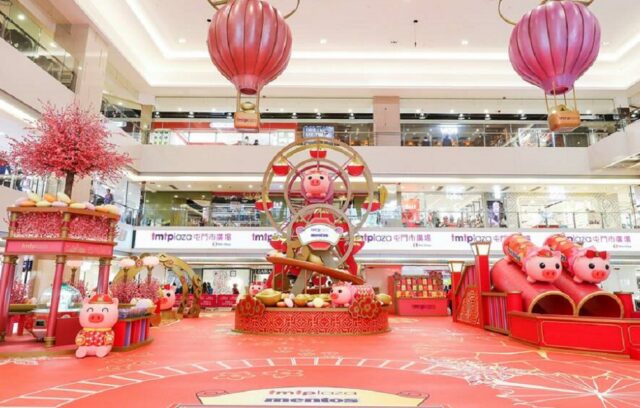
    Next week it Chinese New Year. It officially begins on February 5th, 2019, and ends on February 19th. This year will be the year of the Pig. It is the most important festival for Chinese people, so the city is fully decorated with festive installations. The retail world celebrates it with decorations and promotions. In Hong Kong, all shopping malls have already unveiled their gigantic installations.

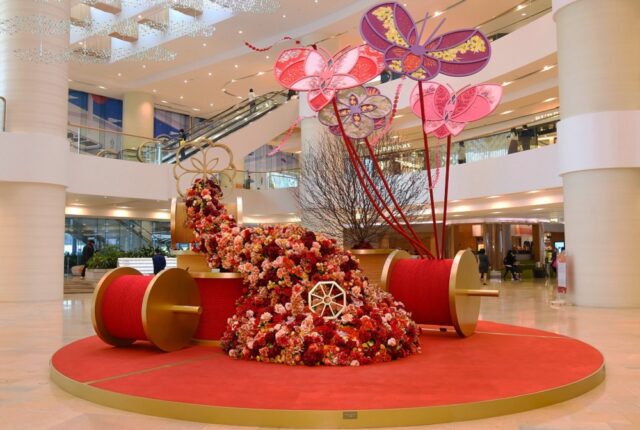
    In the financial heart of the city,  the floral pinwheels have turned IFC into the Garden of Fortune.

    Dedicated to providing memorable and engaging experiences for guests beyond shopping and dining, the Chinese New Year is no exception for IFC mall as it presents The Garden of Fortune, a splendid installation featuring pinwheels to welcome good fortune and embrace new changes along with incorporating floral elements for a contemporary spin.

    From 26 January to 17 February 2019, shoppers can visit the interactive display and enjoy music performances to ring into an auspicious new year.

    Pinwheels have long been a symbol of luck with fascinating roots in Chinese culture. Traditionally associated with welcoming wealth, pinwheels are constructed using a variety of bright colors to greet the god of fortune, which are believed to bring prosperity and blessings to both homes and businesses. Playing on the Chinese tradition that pinwheels attract good luck, The Garden of Fortune is embellished with this auspicious symbol.

    The pinwheels are designed in the shape of peach blossoms, peonies and begonias – flowers that represent prosperity and fortune in Chinese culture – to empower guests with positive vibes as they walk through the Garden of Fortune.

    Upon entering the installation, guests are invited to play an interactive pinwheel game to start the new year with blessings to share and bestow upon friends and loved ones. ifc mall has collaborated with young local calligrapher, Rita Lee, to create downloadable “fai chuns” to share with family and friends after completing the game.

    Lee started learning Chinese calligraphy at the age of 6 and has nurtured her talent with over 20 years of experience. She is known for blending different styles to create art that balances the tradition of Chinese calligraphy with contemporary flair. “I’m excited about this partnership with ifc mall as it allows me to use my craft to extend blessings to all Hong Kongers who visit the Garden of Fortune,” says Lee. “The installation’s fusion of traditional pinwheels with modern floral elements also reflects the same juxtaposition in my style of calligraphy.”

    Pacific Place has built “Where Fortune Takes Flight” to welcome the Chinese New Year 2019. Queenie said that her design ideas come from the traditional Chinese New Year Candy box and chocolate from her childhood. Thus, they became the patterns of the kites, flying in the shopping mall. Queenie used vibrant colors and energetic brush strokes to draw on the kites, symbolizing a colorful and fruitful new year.An exquisite spring garden filled with blossoming flowers and over 60 flying kites, symbolising “Where Fortune Takes Flight”. Exclusively designed by Queenie Law, the kites soar to the highest heights and spread Chinese blessings throughout the mall and into the new year ahead.

    In Tsim Sha Tsui, Harbour City will welcome the Year of the Pig with the “HAPPIG New Year” celebration, featuring a seven-metre tall gigantic “Wishing Treasure Bowl” at Ocean Terminal Forecourt from 25 Jan to 19 Feb 2019.

    The treasure bowl is structured with multiple frames, on which colorful ropes were tied delicately to create geometrical festive patterns from cherry blossoms to gold coins.

    The contemporary design is a stylish take on the Chinese New Year classic, wishing everyone joy and fortune for the Year of the Pig.

    Newly introduced this year is an interactive wishing experience, inviting visitors to win a lucky pouch by taking part in a mini game and donating HK$20 near the“Wishing Treasure Bowl” installation.

    Each lucky pouch contains a Good Fortune Card with predictions for the coming year, and a “Wishing Gold Coin” which can be deposited into “Make a Wish Piggy Bank” for making a wish. The coin will roll through a lucky tunnel connecting the piggy bank to the gigantic “Wishing Treasure Bowl”, bringing fortunate blessings to everyone for the New Year.


  • Chinese New Year brings retail opportunities for UK brands

    Chinese New Year brings retail opportunities for UK brands

    UK plc is an exceptional example of what London Business School expert terms an “attractive market segment”, one which has been curated and matured over a long period of time. Chinese consumers in particular are attracted to British brands, with a high percentage of shoppers in mainland China regarding British goods as “genuine and well made”. UK entrepreneurs and established retailers should leverage the appeal of “Brand Britain”, with a particular focus on Chinese New Year and an anticipated online shopping bonanza in mid-February.
    “It’s axiomatic that consumers are still eager to pay for the best, most trusted brands. However, there’s a rising number of aspirational consumers within the world’s emerging middle class who want to choose brands that have a clear purpose, set of values and meaning,” says John Mullins, Associate Professor of Management Practice at the School.

    “With its history, cultural significance and reputation for quality consumer goods, the UK regularly scores very well in international ‘nation brand’ league tables. Consistently scoring well in tourism, culture, people, exports and governance the UK is a well-rounded marque which is consistently well received by consumers.”

    This perception appears to be particularly strong with Chinese consumers. In a March 2017 Marketing to China editorial, it was acknowledged that in a market “renowned for a fake, cheaper products”, the label of ‘being British’ represents real quality. And in a recent UK Royal Mail survey it was found that within the online arena more than half (55%) of shoppers in China bought items from British brands in a three-month period, spending an average of £104 per month.

    “There is a real appetite for ‘Brand Britain’ with its goods regarded as being well made and genuine,” says Dr Mullins. “Survey after survey appears to indicate that Chinese buyers want to be certain about their purchases and obtaining a genuine article with a trusted and well-respected provenance. The UK shines in this respect.”

    In his book, The New Business Road Test, Dr Mullins asserts the view that whether one is launching a start-up or an investor sure way to mitigate the long odds is to make certain one has identified an attractive market segment. “An attractive market segment where the customers are almost certain to buy what you’ll offer. The UK is a powerful, composite nation brand which has matured over many hundreds of years. It bristles with both appeal to would-be consumers, and opportunity to entrepreneurs.”

    On the online shopping bonanza near Chinese New Year, he commented, “As Jack Ma, the founder of Alibaba, once said, ‘in other countries, e-commerce is a way to shop; in China, it is a lifestyle’. McKinsey reports that 76 percent of China’s urban population will be considered middle class by 2022, but there is already a huge consumer community in China which presents numerous opportunities to promote the UK brand to an already very receptive market.”

  • Zodiac dog, pig go missing for Chinese New Year t-shirt

    Zodiac dog, pig go missing for Chinese New Year t-shirt

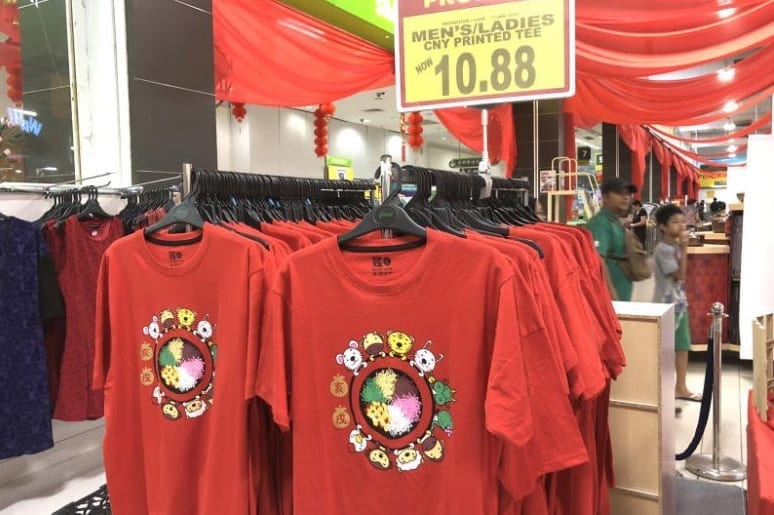
    There may be 12 animals in the Chinese zodiac, but it looks like Giant Hypermarket outlets in Malaysia missed the memo.

    A photo of a festive Chinese New Year t-shirt being sold by the hypermarket chain received flak online from Malaysians because its image of cartoon animals perched around a platter of yu sheng was missing two animals – the pig and the dog, reported Free Malaysia Today.

    Chinese New Year this year, which ushers in the Year of the Dog, falls on Feb 16.

    Instead of a cute cartoon image, the pig and the dog were represented by the Chinese characters “hai” and “xu”.

    People were far from happy about it. In fact, many of them turned snarky.

    Facebook comment by Mynn Liew

    Facebook comment by Magima Raj Pragasam

    Facebook comment by Masihtah Abdul Mutalib

    According to The Straits Times, the T-shirt comes in different sizes and is being sold at a discounted price of RM10.88 ($2.73), down from its original RM15.99.

    But selling it at a discount might not be enough, with many calling for a boycott of the t-shirt altogether.

    Facebook comment by Supachai Phoong

    Facebook comment by Peter Aeria

    Others were simply left speechless.

    Facebook comment by Neelaa Siva

    This is not the first time that the Malaysian authorities have banned or restricted materials containing dogs or pigs – animals considered unclean by the country’s majority Muslims.

    Last February, thousands of paint brushes suspected of containing pig bristles were seized after Malaysian consumers demanded a crackdown.

    In 2016, the Department of Islamic Development of Malaysia (Jakim) even went as far as banning food outlet operators seeking halal certification from using words linked to non-halal references on their menus – and yes, that includes “hot dogs”.

  • Taiwan, South Korea feel pinch as Chinese Lunar New Year tourism slows

    Taiwan, South Korea feel pinch as Chinese Lunar New Year tourism slows

    The weeklong Lunar New Year holiday season has started in China, and surrounding countries and regions are expecting the usual surge in spending by Chinese tourists. This year, however, things may be different.

    According to China’s biggest online travel agency, Shanghai-based Ctrip, the number of Chinese visiting foreign countries during the holiday period this year is expected to level off, at around 6 million, as a weaker yuan has made shopping overseas less advantageous.

    The depreciation of the yuan has slowed the growth in the number of Chinese tourists going abroad. A survey found that prices of tours to Asian destinations from China during the Lunar New Year holiday season rose more than 10% after the yuan fell 6.6% against the U.S. dollar.

    In addition, the popularity of countries and regions whose relations with China have been strained has sharply dropped among Chinese tourists. The hardest hit may be Taiwan and South Korea.

    Taiwan has seen a decline in Chinese tourists since President Tsai Ing-wen, whose party advocates independence for the island, took office last May. Relations between Taipei and Beijing have cooled significantly under Tsai, compared with the eight-year reign of her predecessor, Ma Ying-jeou.

    The number of Chinese tourists visiting Taiwan during all of 2016 fell to 3.51 million from 4.18 million a year earlier, according to the Taiwanese Tourism Bureau.

    “We haven’t been seeing Chinese tourists lining up for visas for Taiwan since mid-2016,” a Taiwanese Tourism Bureau official said. The situation has been improving recently thanks to the approaching Chinese New Year holiday, but “incoming Chinese tourists will still drop substantially from a year ago, for sure,” the official said.

    The decline in tourists participating in group tours has been the most noticeable, compared with visits by self-guided Chinese tourists, according to the bureau.

    Self-guided Chinese travelers tend to go to different places and eat differently, compared with group tourists. Group tourists visit popular spots such as Sun Moon Lake or Alishan, shop more in souvenir stores, and eat group meals, while self-guided tourists like to visit exotic towns such as Jiufen, Shifen and Pingxi. Independent travelers also spend more time in the southern Taiwanese town of Kenting, enjoying beaches and water activities.

    South Korea

    South Korea expects 140,000 Chinese tourists will come to the country during the Lunar New Year holidays, an increase of 4% from a year earlier, according to the Korea Tourism Organization.

    The country used to be one of Chinese tourists’ most popular destinations. During all of last year, 8.1 million Chinese visited South Korea, up 34.8% from 2015. They accounted for 46.8% of foreign visitors to the country. But growth has slowed, reflecting China’s souring relationship with South Korea over the U.S. military’s introduction of the Terminal High Altitude Area Defense missile defense system on the Korean peninsula. Word in the local tourism industry has it that Chinese government officials have instructed travel agencies to reduce the number of visa applications for South Korea.

    The slowing growth in Chinese visitors is worrisome for duty-free shop operators in South Korea. In an attempt to attract Chinese tourists, industry leader Lotte Duty Free has begun giving gifts to all shoppers from greater China at its head store in Seoul if they make purchases worth $1,000 or more.

    At Gimhae International Airport in Busan, the Busan Tourism Organization set up a photo zone where tourists can take a photo with a model dressed in Korean royal apparel. The agency will also host welcoming events at the Busan International Passenger Terminal for Chinese tourists arriving on cruise ships. Interpreters and volunteers will be dispatched to the terminal to help them.

    In a distinct contrast, Malaysia, which has maintained good relations with Beijing, is enjoying a substantial surge in Chinese tourists.

    Thanks to a number of promotions by the Malaysian government, tourist arrivals from China have increased considerably. Between March and December last year, the number reached 2.2 million, compared with 1.2 million during the same period in 2015. That number is expected to increase further as the country looks to draw in more holidaymakers during China’s “golden week” break.

    Alibaba Group has launched Alitrip Malaysia Tourism Pavillion, an e-marketplace offering travel products and services.

    Following in the footsteps of budget carrier AirAsia, Malaysia Airlines has extended its reach further into China’s second- and third-tier cities. The national flag carrier will start nine new routes in 2017, connecting Malaysian cities to destinations including Haikou, Nanjing, Fuzhou, Wuhan, Chengdu and Chongqing. AirAsia is one of the biggest foreign airlines operating in China, offering over 300 weekly flights.

    Retailers in Hong Kong are also feeling the effect of the weaker yuan. Mainland visitors may be back for the Chinese New Year, but their waning spending power is seen as bad news. “Many of them are looking for bargains rather than luxury goods, and shopping for themselves rather than friends and relatives,” said Thomson Cheng Wai-hung, chairman of the Hong Kong Retail Management Association.

    Businesses have mixed views on Chinese New Year sales. Retailers are worried about a falling Chinese yuan that discourages spending. The Hong Kong dollar’s peg to the stronger U.S. dollar will make shopping more expensive for mainlanders. “This is negative for us,” said Cheng. Tourism sector lawmaker Yiu Si-wing expects hotel bookings to be satisfactory, as a recent correction in room rates will partly offset the currency impact for mainland tourists.

    In December, Chinese tourist numbers in Hong Kong reversed months of declines to grow 6.1% from a year earlier, led by a 9% spike in mainland arrivals during the four-day Christmas holiday. But recent official statistics show that their average spending per trip was 7,100 Hong Kong dollars ($915) in the first half of last year, down from HK$9,000 in 2014.

    “Hong Kong’s tourism industry has entered a period of adjustment,” Gregory So Kam-leung, the territory’s secretary for commerce and economic development, said on Jan. 23. He said the territory would roll out 16 food trucks selling local snacks and international cuisine, in addition to an annual night parade at an estimated cost of HK$33 million, to woo visitors during the week of the Chinese festival.
  • Celebrate Chinese New Year with Festive Promotions at  Hong Kong International Airport

    Celebrate Chinese New Year with Festive Promotions at Hong Kong International Airport

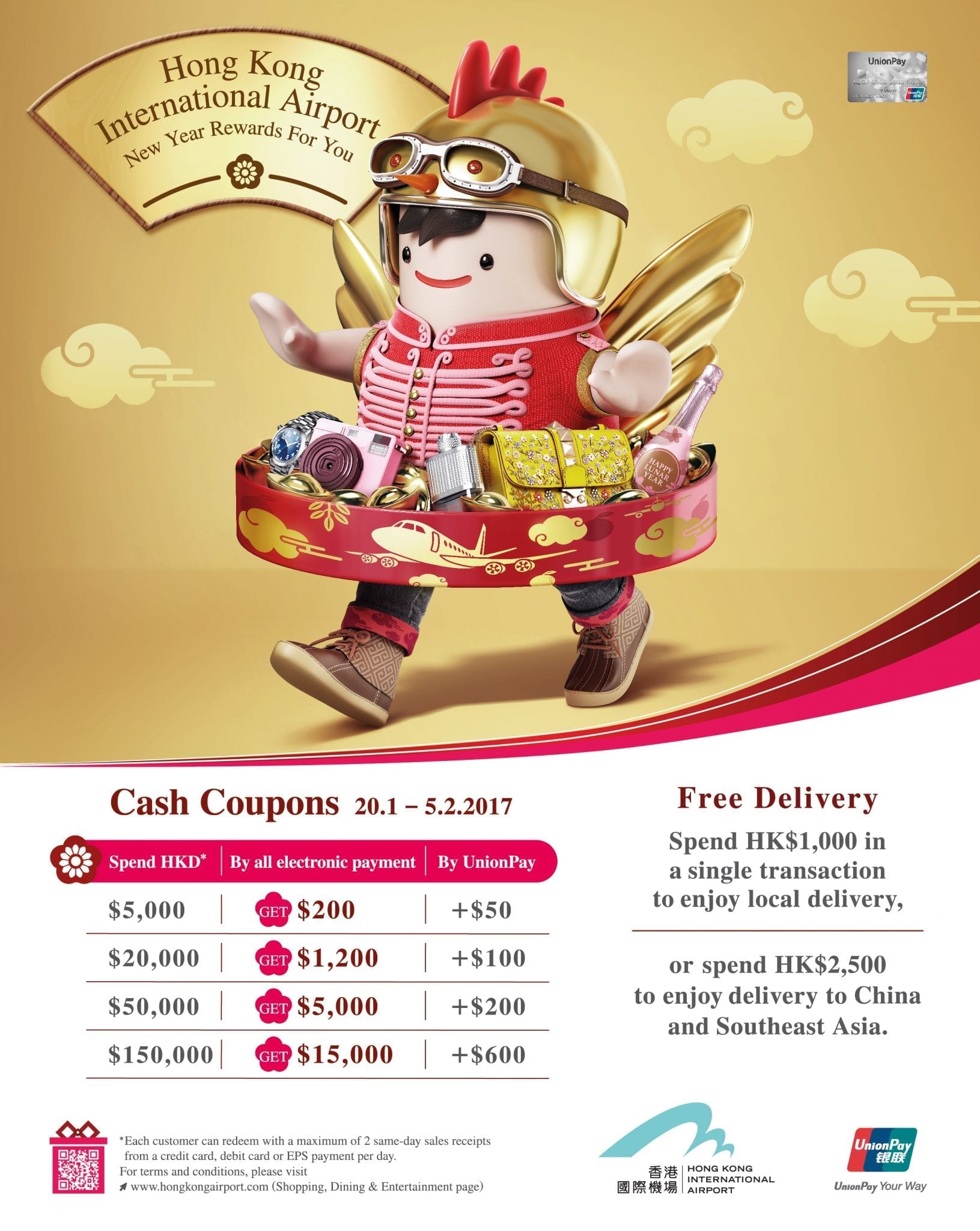
    To welcome the Year of the Rooster, Hong Kong International Airport (HKIA) is launching a series of Chinese New Year promotional activities and offers, including an instant rebate of HKIA cash coupon worth up to HK$15,600.

    Instant Rebate Promotion: From 20 January to 5 February 2017, travellers spending a specific amount by electronic payment at HKIA can redeem cash coupons worth up to HK$15,600. UnionPay cardholders, who make purchases with their cards, can enjoy additional rebates.

    Please refer to the following table for details:

    Spending by Electronic Payments of  

    HKIA Cash Coupons Redemption

    By UnionPay card

    HK$5,000

    HK$200

    Additional HK$50 HKIA Cash Coupon

    HK$20,000

    HK$1,200

    Additional HK$100 HKIA Cash Coupon

    HK$50,000

    HK$5,000

    Additional HK$200 HKIA Cash Coupon

    HK$150,000

    HK$15,000

    Additional HK$600 HKIA Cash Coupon

    Chinese New Year Promotions

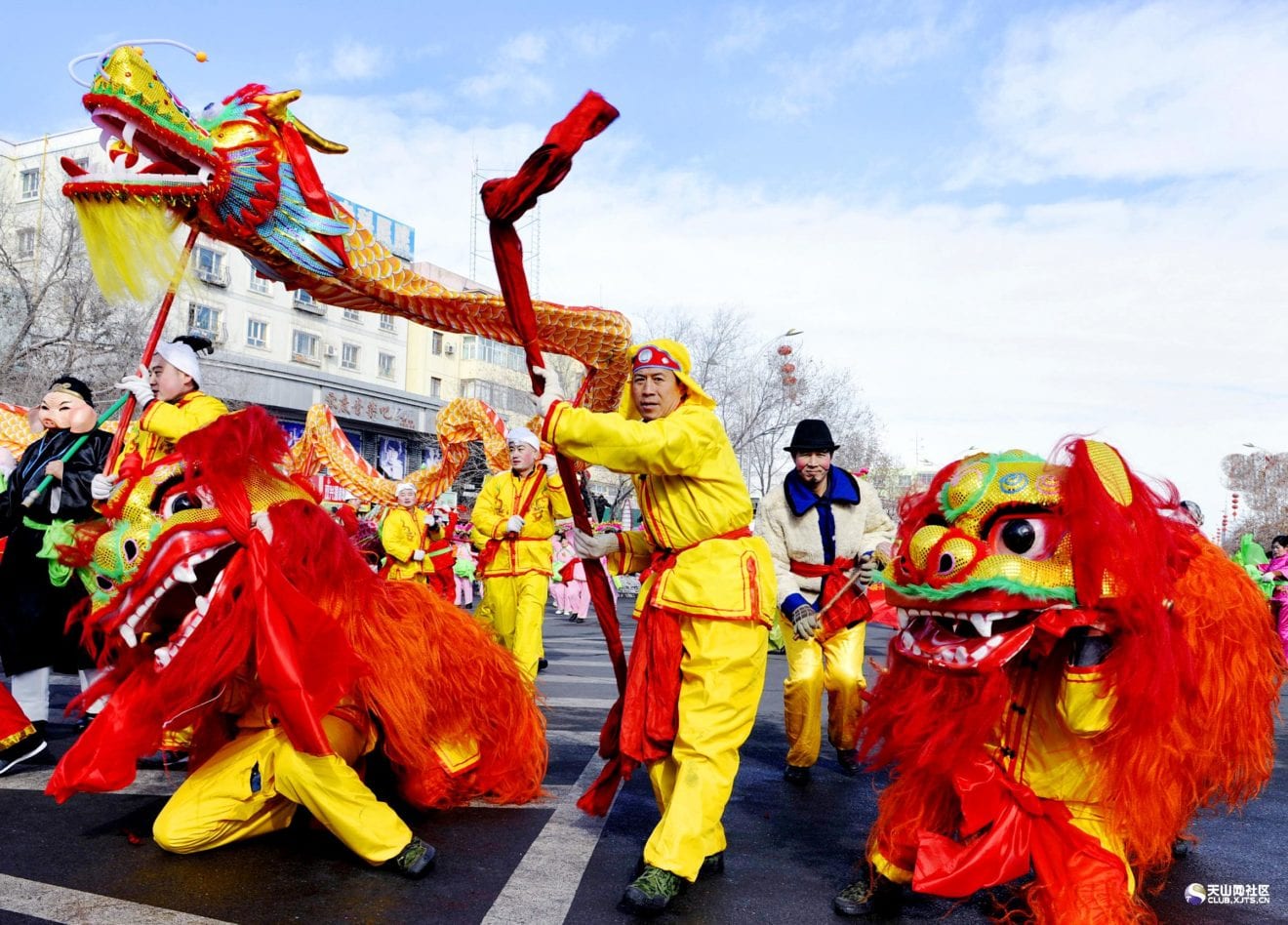
    During Chinese New Year, shoppers can enjoy complimentary gift wrapping services at the Departures East Hall redemption counters in the restricted area (near Tiffany & Co.) and take red packets at redemption counters. To heighten the festive spirit, HKIA’s mascot will tour around the seasonally decorated airport in full Chinese New Year attire to meet and greet travellers and take snapshots with them. In addition, a lion dance extravaganza will be held on 1 February, featuring impressive lion dances and showcasing traditional Chinese culture and tradition.

  • Bleak New Year for Chow Tai Fook

    Bleak New Year for Chow Tai Fook

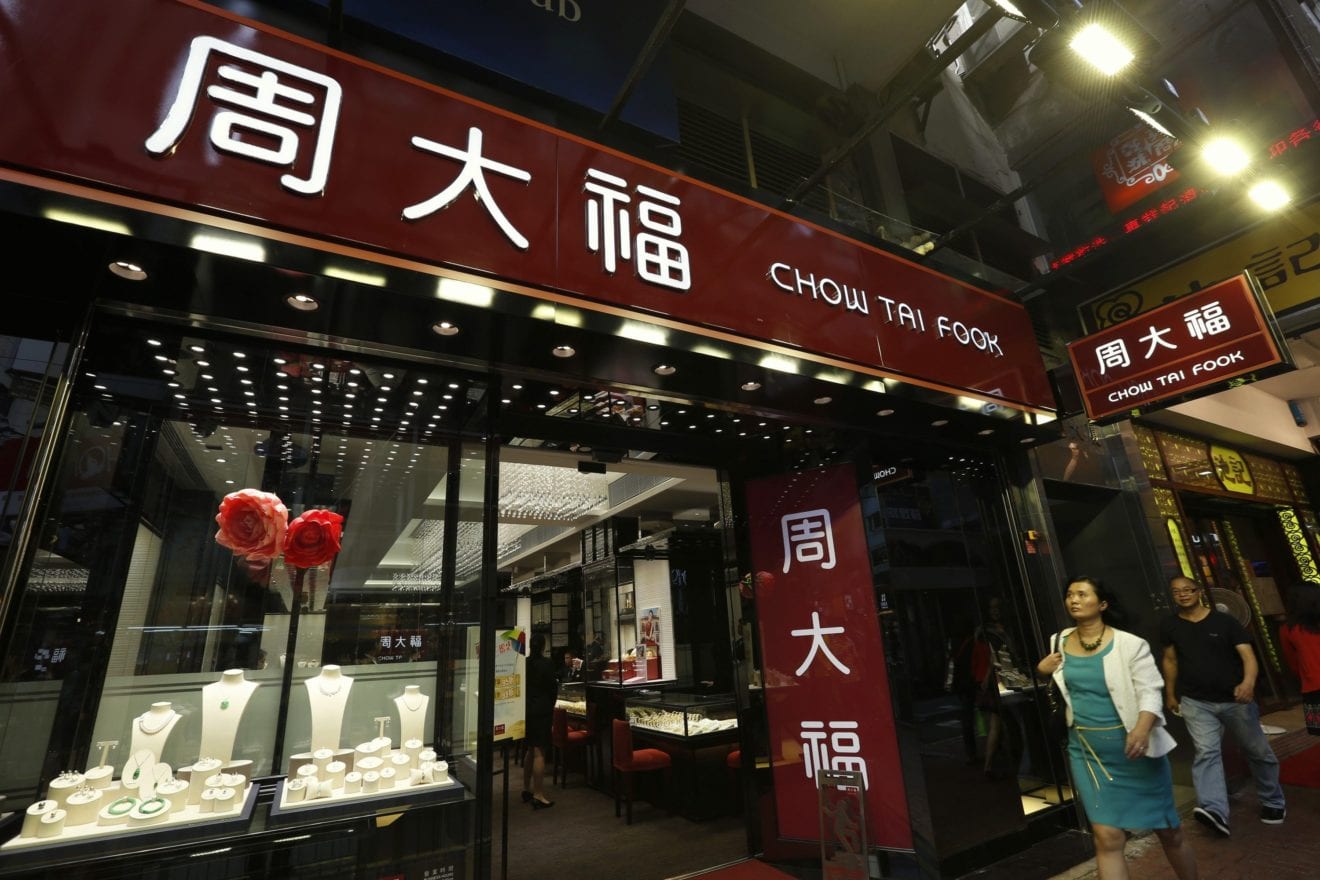
    Chinese New Year sales for the Chow Tai Fook Jewellery Group took a dive in Mainland China, Hong Kong and Macau.

    Unaudited figures for the period, from January 25 to February 14, show the value of retail sales dropped 30 per cent in China and 23 per cent in Hong Kong and Macau – a 29 per cent dip for the group – compared with the previous Chinese New Year.

    Same-store sales dropped 31 per cent in China, 22 per cent in Hong Kong/Macau, and 28 per cent for the group. Same-store sales figures were also broken down into product – gem-set jewellery dropped 30 per cent in China, 3 per cent in Hong Kong/Macau, and 20 per cent for the group, while gold products fell 33 per cent in China, 25 per cent in Hong Kong/Macau, and 31 per cent for the group.

    Chow Tai Fook says the plunge in China was mainly because of more outbound travel from the mainland during the celebration, and a weakening of consumer sentiment for luxury goods because of the economic slowdown and volatility in the stock market.

    It attributes the decrease in Hong Kong and Macau to the drop in mainland tourists to Hong Kong as well as continuing weak retail sentiment in both regions.

    “Management anticipates the retail business environment will continue to be challenging for the fourth quarter and the sales performance will be worse than that of the third quarter,” the company said a statement.

  • Chinese New Year Holiday Retail Sales Spike 11.2%

    Chinese New Year Holiday Retail Sales Spike 11.2%

    China’s retail sales over the Spring Festival holiday rose 11.2 percent from the same vacation period a year earlier, with cinemas posting sharp increases in box-office sales, the country’s Ministry of Commerce said in a statement Saturday.

    Retail sales and restaurant receipts in the world’s second-largest economy totaled about 754 billion yuan ($115 billion) in the week-long holiday period that started Feb. 7, the eve of the Lunar New Year, according to the statement. This year’s growth was similar to the 11 percent increase posted in last year’s holiday period.

    Services for the first time generated more than half of China’s gross domestic product last year, at 50.5 percent. Higher household incomes allow families to embrace a middle-class life as the country’s leaders continue to engineer a shift toward services and consumption, and away from manufacturing and investment. Services generate more jobs per yuan of output than China’s factories, which is crucial as the country adjusts to a slower economic growth rate.

    Box-office sales at China’s cinemas over the first three days of the Lunar New Year surged about 80 percent from a year earlier, to nearly 1.7 billion yuan, the statement said. Total ticket sales over the first three days of this year’s Lunar New Year almost equaled the total for the whole week-long holiday last year, according to the statement.

  • Coach China leads transformation

    Coach China leads transformation

    Coach Inc says its net sales totalled US$1.27 billion for the second fiscal quarter – up 4 per cent year on year, and up 7 per cent on a constant currency basis.

    China was a primary driver of the increase in the three months to December 26, with sales up in the double digits and Japan also performed well for the New York based luxury accessories and lifestyle brands, which also owns Stuart Weitzman.

    Gross margin slipped from 68.9 per cent to 67.4 per cent, but gross profit rose $18 million to $859 million.

    Total Coach China sales rose 2 per cent in dollars and 5 per cent in constant currency with double-digit growth and positive comparable store sales on the Mainland offset in part by continued weakness in Hong Kong and Macau.

    In Japan, sales rose 2 per cent on a constant currency basis, despite a decrease in square footage and consistent with expectations, while dollar sales declined 3 per cent, reflecting the weaker yen.

    “Sales for the remaining directly operated businesses in Asia grew modestly in constant currency but declined in dollars, while Europe remained very strong, growing at a double digit pace in both total and comparable store sales,” the company said in its earnings statement.

    CEO Victor Luis said the result reflects “the most significant progress to date” on the company’s transformation plan despite the difficult retail environment globally.

    “We drove further sequential improvement in our North America bricks and mortar business – led, as expected, by our retail stores, while our outlet store channel also strengthened against a backdrop of lower tourist traffic and a highly promotional environment.

    “Our international businesses posted strong growth on a constant currency basis, highlighted by double-digit increases in Europe, and Mainland China, as well as sales gains in Japan. Overall, our results continue to give us confidence that the cumulative impact of our actions will result in a return to top line growth this fiscal year and positive North American comps by our fourth quarter.

    “We were also excited about Stuart Weitzman’s results during the quarter, which exceeded expectations. Importantly, we are effectively integrating Stuart Weitzman to Coach Inc while continuing to successfully execute the Coach brand transformation,” said Luis.

    “At points of sale, sales in international wholesale locations increased slightly, driven by strong domestic performance offset in large part by relatively weak tourist location results. Net sales into the channel grew significantly from prior year positively impacted by shipment timing to ensure appropriate inventory positions for Chinese New Year,” the company said.

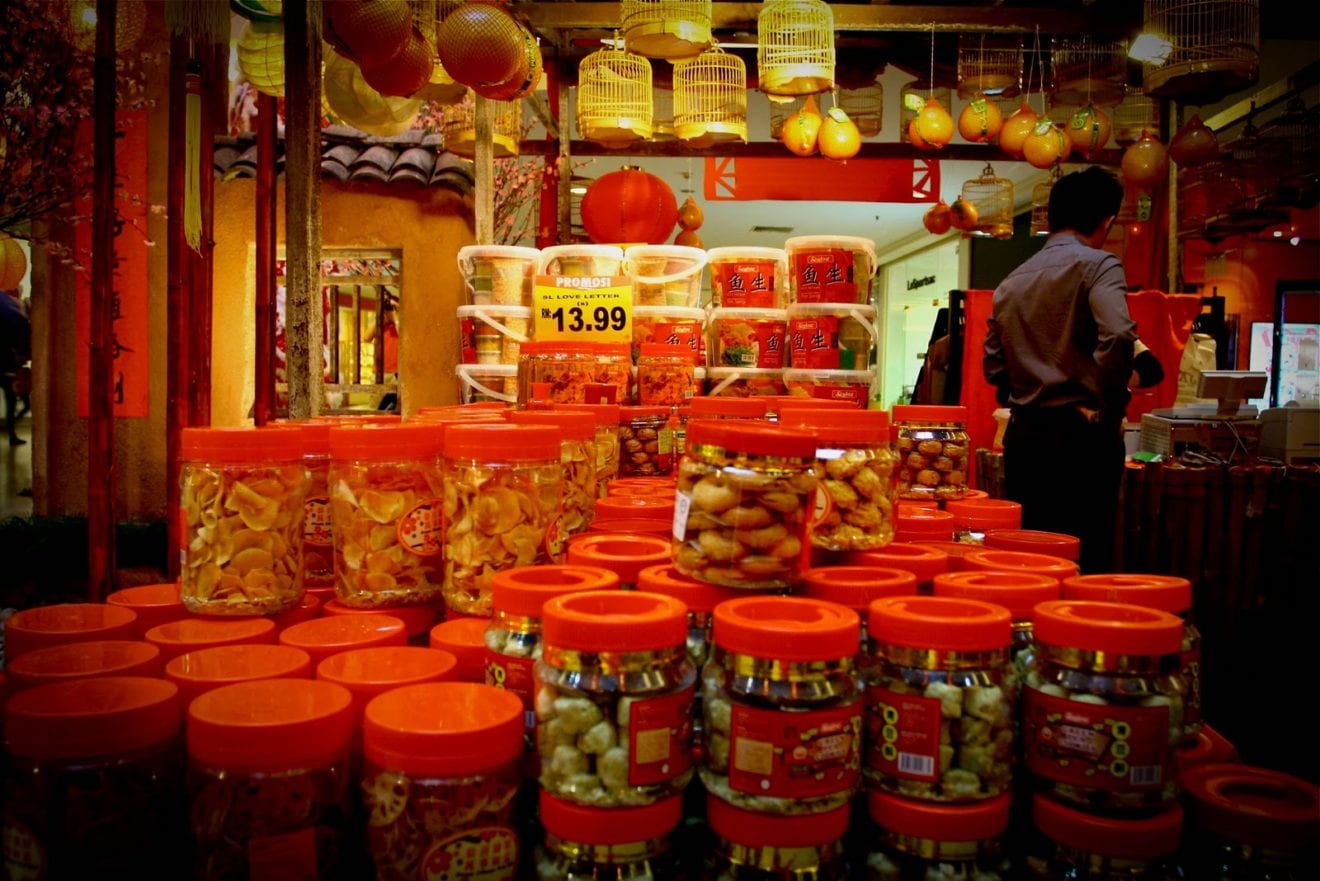
  • Slower sales for Chinese New Year goodies, say Chinatown retailers

    Slower sales for Chinese New Year goodies, say Chinatown retailers

    Food takes centrestage during Chinese New Year, like most festive celebrations. But in the lead up to the occasion this year, retailers selling festive goodies say business is more lacklustre compared to 2015.

    Family-run bak kwa (sliced barbecued pork) stall Bee Kim Heng has seen festive retail sales drop by 10 to 20 per cent compared to last year. Based at People’s Park Food Centre, Bee Kim Heng — which is run by Mr Teo Ah Thin, 81 — has been in operation for almost 50 years.

    “We suspect it’s the economy, (it’s) because of the retrenchments that are going around in the market,” said Mr Damien Teo, who helps his father out during busy periods like Chinese New Year.

    Mr Teo, who is in his 30s, added: “A lot of our business is very dependent on regular customers. Some of the regular customers, for example — in the year before, they’d buy 3kg, maybe 5kg. This year, some of them have cut down in terms of the quantity they buy. They just want to save up a bit, I guess.”

    Similarly, fruit and nut supplier Tian Ran has experienced a 30 per cent drop in sales for the festive period. “A lot of people are browsing and tasting, but fewer are buying. I think it’s due to the bad economic situation,” said a Tian Ran employee, who only wanted to be known as Mr Fang.

    Mr Fang has been selling peanuts and melon seeds — traditional Chinese New Year snacks – for the past eight years. While this year’s takings are poorer than last year, the 40 year-old said he feels things are not as bad as in the aftermath of the 2008 global financial crisis.

    Less than a few hundred metres away, in the annual Chinatown Festive Street Bazaar, employees running a temporary waxed meat stall also opined that buying sentiment is poor.

    “We’re mainly in distribution, but we have set up a stall at this bazaar for many years. This year, sales are down about 30 per cent,” said a stall employee, who only gave his name as Mr Liang.

    The 56-year-old who has been in the business for 30 years, believes that shoppers have held back due to the rainy weather, and a poorer economic climate.


  • Criteo notes eCommerce spike

    Criteo notes eCommerce spike

    In the two weeks leading up to the Chinese New Year, eCommerce sales in Asia grew by 40 per cent with 25 per cent more consumers shopping online.

    Three in 10 transactions were completed on a mobile device, according to performance marketing technology company Criteo in Hong Kong. Its findings are based on an analysis of 174 million online transactions in Hong Kong, Malaysia, Singapore, Taiwan and Vietnam.

    “Because of the traditional practice of wearing new clothes to symbolise a new beginning, consumers are doing a tremendous amount of online shopping two weeks before Chinese New Year,” says Criteo South-east Asia/Hong Kong/India/Taiwan MD Yuko Saito. “Based on 2015 data, sales on mobile devices in particular have hit record numbers.”

    In its eCommerce Industry Outlook 2016, Criteo cites three trends impacting Asian shoppers during the Chinese New Year season…

    Smartphone shopping will keep gaining ground: Smartphones are the first point of internet access or brand interaction for many consumers. In South-east Asia, Hong Kong, India and Taiwan, on aggregate, more than 45 per cent of online transactions are happening on mobile devices, compared to 29 per cent in the second quarter of last year. Indonesia was the highest at 56 per cent, followed by Singapore at 45 per cent.

    Retailers will see a high web influence on their in-store sales: Most consumers are researching online before or while visiting a store. According to Google, 80 per cent of 10 shoppers use a smartphone inside the store to help them with product research and price comparisons. Criteo says retailers can acquire a better view of customer behaviour by connecting with them via branded apps or beacon technology, before matching each customer’s email ID with loyalty programs at in-store POS terminals.

    Instant delivery services will become common: Order fulfilment will be a big focus for retailers this year, with many offering delivery options to match Amazon’s Prime Now service. Both online and “click-and-brick” retailers will be trying this strategy through specialised third-party eCommerce logistics providers. Faster delivery at lower charges will also drive growth of cross-border shopping.

    “During special occasions like Chinese New Year, we observe instances of intensive, last-minute shopping, where consumers take less time to consider a purchase and require products to be delivered on short notice for personal use or gift-giving,” says Saito. “Taking a three pronged approach – engaging consumers on the mobile web or on mobile apps, leveraging consumers’ web-browsing data to deliver personalised in-store and mobile shopping experiences, and investing in instant delivery services will be crucial to increasing sales conversions.”

  • Siam Paragon innovative strategy to bait customer

    Siam Paragon innovative strategy to bait customer

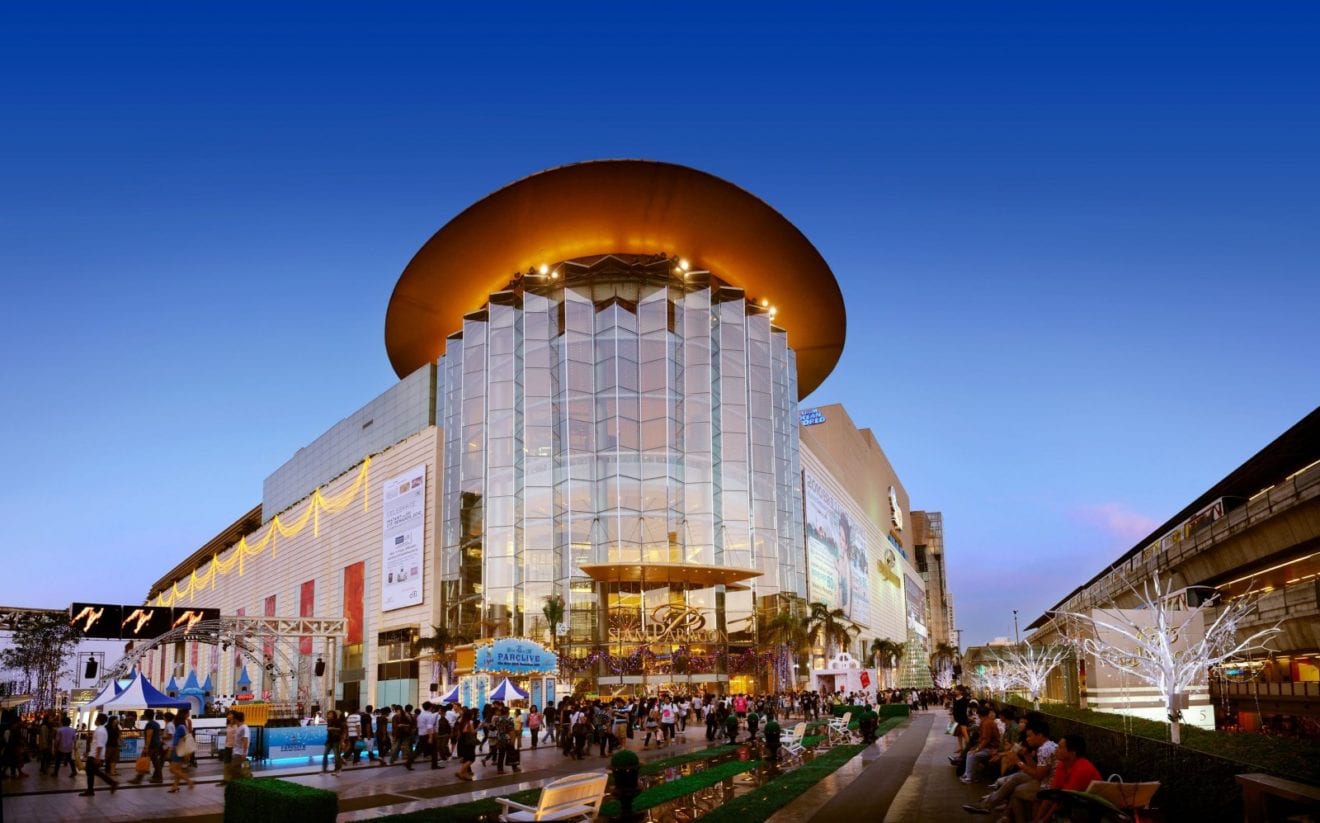
    Discounts of up to 80 per cent and a chance to win prizes – including gold bullion – are key elements in a Chinese New Year campaign at Siam Paragon and Siam Center in Bangkok.

    Running from February 3 to March 13, the Siam Prosperous Chinese New Year 2016 campaign is offering 7.5 million baht ($200,000) in prizes for lucky shoppers. The aim of the event is to attract both locals and international tourists to the two malls, which feature fashion and lifestyle brands.

    A feature of the campaign is a free daily performance of The Magic of Seven Animals of the Gods by Hong Kong performance troupe Lok Chee Fu, at the Parc Paragon events space, where the celebrations will be officially launched on February 4.

    Marketing executive Chanisa Kwewruen of Siam Piwat, which runs the two centres, says the annual festival attracts more tourists each year, especially from China, Hong Kong, Singapore, South Korea and Taiwan.

    Chanisa Kaewruen, Deputy Managin ... am Piwat (center) and model


    “Tourists of Chinese descent comprise nearly 50 per cent of the foreign tourists who visit the two shopping centres.

    “Also, this Chinese New Year marks the first time the ASEAN Economic Community is officially involved.”

    Shoppers will receive a lucky-draw coupon for every 2000 baht they spend. The main prizes at stake include gold bullion worth 1 million baht (one winner), a model of the Royal Barge Suphannahongmade of 99.9 per cent yellow gold by Prima Art (two winners) and eight propitious trees made of 99.9 per cent yellow gold by Prima Art (20 winners). The 24 top spenders of the week will each win a 100,000-baht treatment from The Scarlett Clinic.

    Privileges are also offered for holders of participating credit cards.

    Meanwhile, the Siam Chinese New Year Sale from February 3 to 14 offers discounts of up to 80 per cent on leading brands. Special Siam Ang Pao (also known as Siam red envelopes) are also given away to shoppers from February 6 to 8, enabling them to win gift vouchers and discount cards.

    Ten Siam Paragon customers who spend 300,000 baht on February 8 will each receive a TWG hamper worth 10,000 baht.