Retail News CRM

Tag: chinese tourist

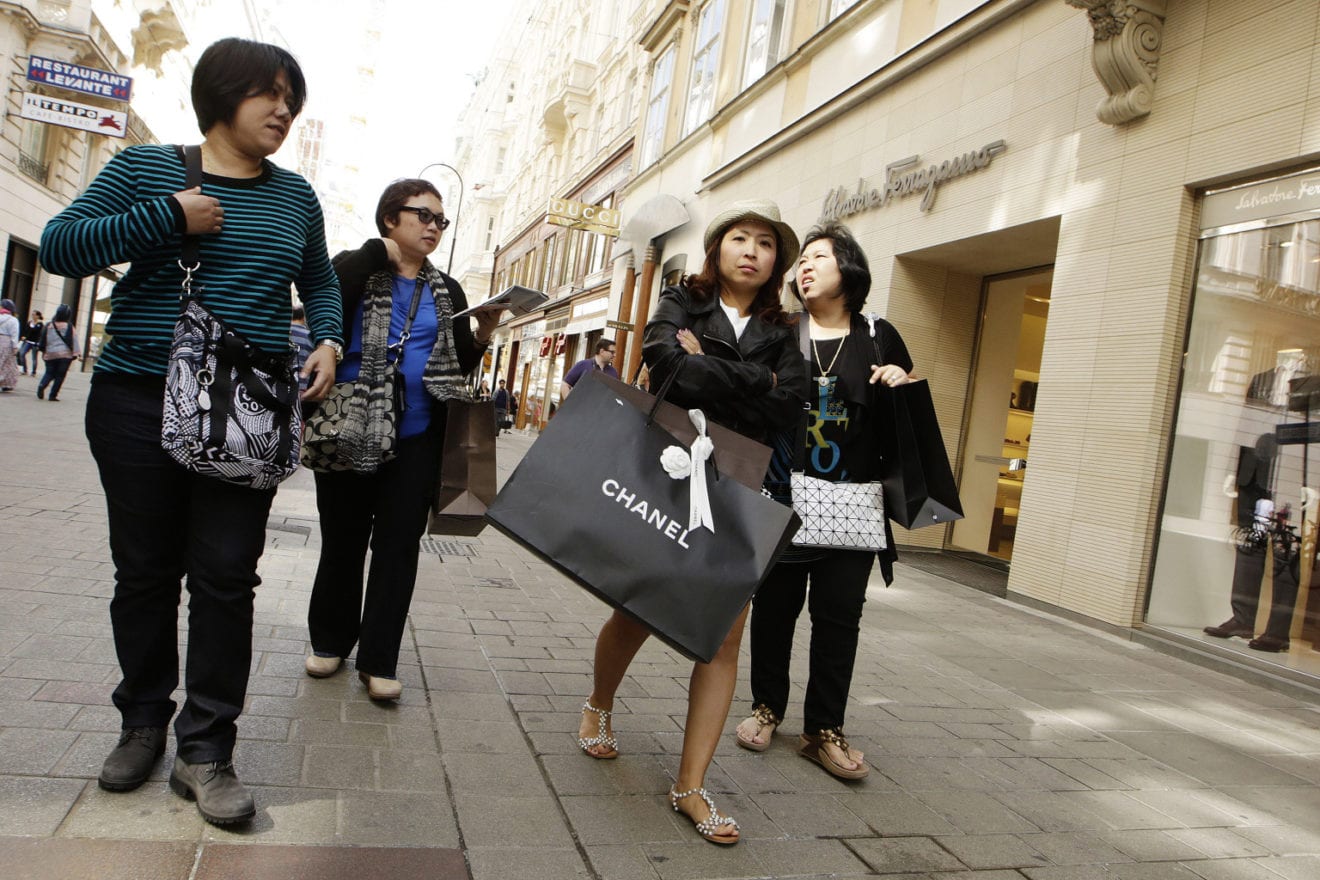
  • Where Chinese tourists go for shopping

    Where Chinese tourists go for shopping

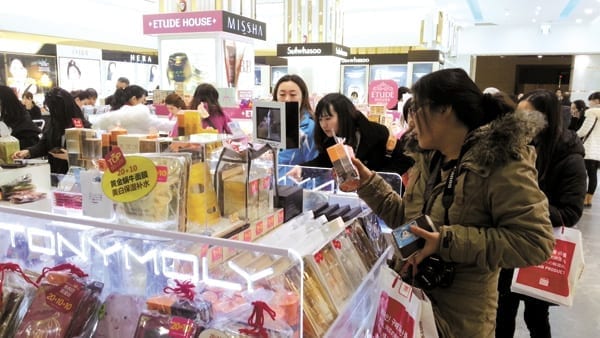
    Hong Kong, Tokyo, Seoul and Singapore were among the hottest shopping destinations for Chinese tourists last year, according to Ctrip. In the latest big-data report from the Chinese travel-services provider, Edinburgh, Singapore and San Francisco were also among the top 10. Last year, nearly 150 million overseas trips were made by Chinese tourists, who collectively spent US$120 billion.

    London was the city that saw the highest per-capita spending by Chinese tourists – more than US$4428 – followed by Paris, Macau, Dubai, Okinawa, Kyoto, Osaka, Nagoya, Hong Kong, Singapore and Fukuoka.

    Europe is still a hot destination for Chinese luxury goods buyers because prices there are much lower than the global average, and a tax-refund system also facilitates sales.

    Despite the recovery of the British pound last year, the UK remained a popular destination for Chinese tourists, said Ctrip.

    Experts noted that Chinese consumers would still be a focus of competition between shopping destinations this year, and many retailers internationally have upgraded their shopping facilities to lure Chinese tourists.

  • Agoda’s top Chinese New Year 2019 travel rankings

    Agoda’s top Chinese New Year 2019 travel rankings

    Bangkok, Tokyo, and Taipei are the top three most popular destinations for Asia-Pacific travellers over the Lunar New Year period in 2019, according to booking data from Agoda. This year, Osaka, slips from the third spot in 2018 to sixth, while Taiwan scoops three of the top ten destinations, with Taipei in third, and Kaohsiung and Taichung in fifth and seventh respectively. Overall, Japan, Taiwan, and Thailand will benefit the most from travellers celebrating the Lunar New Year.

    Travels during the Spring Festival tend to be reserved for family bonding and indulging in food and leisure activities that the whole family can enjoy. It is thus not surprising that most travellers in the region have chosen gourmet and retail paradise in Bangkok, Tokyo, Taipei, Kuala Lumpur and Singapore among their top ten destinations.

    The Lunar New Year is celebrated in many cities across Asia, but Chinese travellers enjoy the longest holiday. With a week to spare, Chinese tourists are spending the new year in cities such as Hong Kong, Tokyo, and Bangkok.

    This year, HongKongers chose to change things up, travelling to Japan, Thailand, and Taiwan over the previously favoured Korea. In fact, Korea dropped out of the top three destinations altogether to settle at the fifth spot. Staycations have also risen in popularity, and Hong Kong has made its way into the top ten this year as well.

    Singaporeans prefer to travel to neighbouring countries for their relatively short Lunar New Year public holidays. For the first time, staycations have emerged as a popular choice for those who prefer staying behind to celebrate the festival.

    Taiwanese are travelling within the region for Chinese New Year, with Kaohsiung rising up to clinch the top position. For the first time in three years, Kyoto has slipped out of the top ten rankings.

    Malaysians continue to favour travelling within the region to celebrate Lunar New Year. In 2019, domestic destinations take up eight out of the top ten destinations. Thailand remains the only overseas destination in the top ten list for Malaysian travellers over the period.

    Indonesians are venturing further afield this year to celebrate the Lunar New Year, with Kuala Lumpur and Tokyo taking up two out of three of its top travel destinations. Japan is rising in popularity, as the region adds Sapporo – with its winter wonderland – into Indonesia’s top ten destinations.

  • The Shilla Duty Free partners with comics strip artists

    The Shilla Duty Free partners with comics strip artists

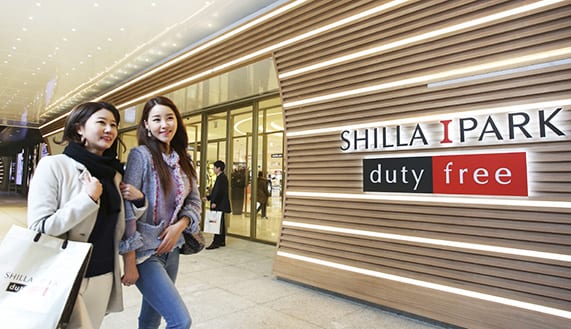
    The Shilla Duty Free is partnering with popular Chinese webtoon artists to boost its appeal to travelling Chinese shoppers. The travel retailer said that this is the first marketing partnership of its kind in the Korean duty free industry. Webtoons have become an increasingly influential media tool to connect closely with consumers, Shilla noted. “Unlike traditional advertisements, webtoons use storytelling that is easily relatable while utilising artists’ existing fandom.”

    The partnership with two webtoon artists, Niu Hong Hong (牛轰轰) and Ruo Guan (弱冠), specifically targets Chinese women in their 20s to 30s – The Shilla Duty Free’s main customer base (as the charts below show, visitors between 21 and 40 made up 57.3 percent of Chinese arrivals in South Korea last year and those between 21 and 30 almost 31 percent).

    Shilla’s stores are being featured in webtoons and the contents promoted through each artist’s social media platforms.

    Real-time comments such as “I would like to shop there”; “I should visit there during my next visit to Korea”; and “I like the store interior” appear on the webtoons.

    Besides introducing The Shilla Duty Free shops, the webtoons also highlight nine local eateries near the retailer’s flagship Seoul Store, showcasing the surrounding area as a local attraction. Since 2016, The Shilla Duty Free has promoted its local communities by introducing nearby restaurants through various channels such as The Shilla Online Duty Free in Chinese and its official Weibo account.

    A spokesperson said, “The partnership with Chinese webtoon artists is a first in the industry. We expect to be able to connect better with Chinese customers. Creative marketing like this will be continued during the peak seasons such as Chinese Lunar New Year, the Mid-Autumn Festival and the National Day of China, to broaden the communication with our customers.”

  • Chinese tourists prefer Australia, Japan and Singapore: Survey

    Chinese tourists prefer Australia, Japan and Singapore: Survey

    Mainland Chinese tourists prefer visiting Australia, Japan and Singapore over Hong Kong, a survey has found, citing a preference for outdoor and nature activities in these places. Consultancy firm Kantar, which polled 300 people from Beijing, Shanghai, Guangzhou and Shenzhen, found that 52 per cent of respondents were interested in Australia as a holiday destination, followed by 40 per cent for Japan, 38 per cent for Singapore, and 35 per cent for Hong Kong.

    Some 22 per cent said they were keen to visit Taiwan, compared to 21 per cent who favoured South Korea, 15 per cent for Indonesia and 9 per cent for India.

    “Urban Chinese holidaymakers are looking for a diversity of experiences – nearly nine in 10 say that having lots to do is either important or very important to them,” stated the report, released last month.

    “The dominance of nature in the minds of urban Chinese leisure travellers may, at face value, present a challenge for retailers, malls, theme parks and other places.”

    The report stated that the trend could be an indication for businesses on potential growth directions.

    Despite Hong Kong not being the top destination for Chinese tourists in the poll, official figures showed visitor arrivals in the city – driven mainly by mainlanders – soared to a record high of 65.1 million last year, up 11.4 per cent from 2017.

    About 51 million tourists from across the border visited the city in 2018, a rise of 14.8 per cent from the previous year.

    But the Tourism Board has admitted that 2019 could be a “bumpy and unpredictable” year. Chinese tourists now see the city as a short-term destination, and they prefer Southeast Asia or Europe for long holidays.

    The board said Chinese tourists also craved “in-depth” travel in Hong Kong rather than the usual hotspots. One of the board’s strategies this year will be to attract mainland and overseas visitors to places such as the Geopark, the Ha Pak Nai mudflat in Yuen Long and Lau Fau Shan.

    The Kantar report also stated: “Hong Kong outperforms Singapore on most factors, but when it comes to perceptions of safety and cleanliness, Singapore dominates all [Asia-Pacific] markets, though it is held back by its lack of nature and outdoor [activities].”

    It acknowledged that Hong Kong had a “relative abundance of natural attractions” compared to the Lion City.

    On preferences for nature and outdoor activities in the eight destinations listed in the survey however, only 22 per cent of respondents indicated an interest in what Hong Kong had to offer, compared to 62 per cent for Australia, 42 per cent for Japan, 32 per cent for Indonesia, 31 per cent for Taiwan and 29 per cent for Singapore.

    In the category of sporting events, only 27 per cent said they were interested in those held in Hong Kong, with 47 per cent for Japan, 43 per cent for Australia, 30 per cent for Singapore, and 28 per cent for South Korea.

    Kantar’s group director, Mike Underhill, suggested that to boost Hong Kong’s attractiveness as a tourism haven, unique sporting events could be held, such as a mountain marathon.

    “I’m not saying it’s an easy thing to do, but if such an event is created, it will [capitalise on] an emerging trend among Chinese tourists to help grow a niche sector, thereby raising the perceived uniqueness of Hong Kong.”

    Jenny Zhang, 29, an accountant from Beijing, is among those for whom Hong Kong does not rate highly as a destination.

    “I would choose other places because I have visited Hong Kong several times already. But if I am in transit here to somewhere else, I would visit the city,” she said. “The world is huge and there are many places I have not been to. I love to see natural attractions and take in the culture of other places.”

    Asked to rank the eight destinations in the survey, Zhang placed Hong Kong in last place. Her top choices were Australia, Japan and Indonesia.

    But Chen Peng, 36, from Tianjin is among those who still enjoy coming to Hong Kong after visiting the city six times. This month, he took his daughter to Disneyland for the first time.

    “My wife loves Japan and so I would choose Japan as my top choice. For me though, Hong Kong is my No 1 choice,” he said.

    “When I come, I mostly go shopping with my wife and meet friends. I would go to Harbour City and Central.”

  • Suntec City Inks Partnership with Alipay To Attract Chinese Tourists

    Suntec City Inks Partnership with Alipay To Attract Chinese Tourists

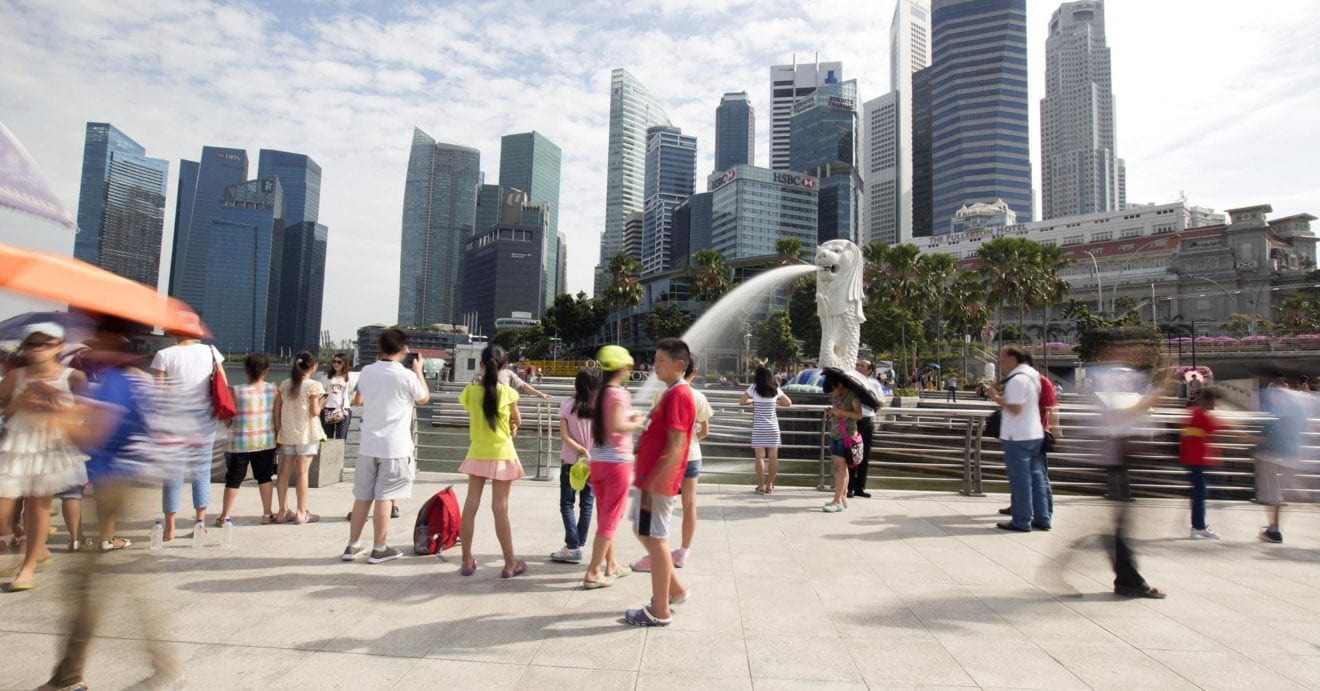
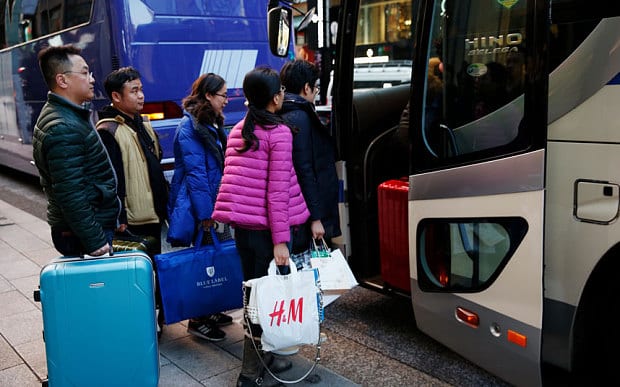
    Suntec City and Alipay are pleased to announce today that they have inked a two-year partnership to launch Alipay touchpoints in Suntec City.

    The two-year partnership between Suntec City, one of Singapore’s largest shopping malls and Alipay, the world’s largest mobile payment and lifestyle platform operated by Ant Financial Services Group, is set to attract more Chinese tourists and enhance their shopping experience at Suntec City.

    Under the partnership, approximately 350 retail establishments in Suntec City will progressively roll out Alipay as a payment option for Chinese tourists. By July 2018, the partners plan to cover 60% of the stores with Alipay touchpoints.

    To enable merchants to leverage on the Alipay platform to engage Chinese tourists, Alipay and its acquirer partners will jointly organize a series of workshops to sign up with Alipay and to promote merchants’ businesses on the Alipay platform. Acquirers also provide hands-on training to merchants to operate the Alipay payment terminal and manage strategic content feature of merchants’ offers. Alipay has also launched a dedicated Suntec City microsite within its app to provide ongoing publicity to Suntec City and its merchants. The current joint marketing campaign with Suntec City on Alipay’s app, from now till Mar 2018, offers a ¥25 F&B voucher and a ¥50 retail voucher which can be used at participating merchants in Suntec City.

    Mr. Chan Kong Leong, Chief Executive Officer of Suntec Real Estate Investment Trust, which owns Suntec City said, “With an extensive range of shopping, dining and entertainment offerings coupled with the iconic Fountain of Wealth as well as being the embarkation point for the Duck & Hippo Tours, Suntec City is a popular destination amongst tourists. We are delighted to partner Alipay to offer our Chinese shoppers a seamless payment system that they are familiar with. This partnership with the market leader in mobile and online payment platforms is a great opportunity for us to elevate engagement with our shoppers in the digital space.”

    “Suntec City is a must-visit shopping destination among Chinese tourists and business delegates who convene at Suntec Singapore for exhibitions, seminars and conferences. We are happy to partner with Suntec City to deploy Alipay touchpoints in the mall for Chinese visitors who are looking for the best of retail and lifestyle offerings and the same seamless shopping experiences that they enjoy at home. At the same time, we are very excited to help merchants in Suntec City connect with Chinese visitors.” said Cherry Huang, General Manager, Cross-border Business for South and Southeast Asia, Alipay.

    According to the Singapore Tourism Board, Singapore received 15.9 million international visitors in the first 11 months of 2017, during which, the number of visitors from China reached close to 3 million, a stellar 13.1% increase from a year ago. This also makes China the single largest contributing country to Singapore’s tourism industry.

  • Finland becomes the first country to offer Chinese travelers a completely cashless experience

    Finland becomes the first country to offer Chinese travelers a completely cashless experience

    Alipay, the world’s largest mobile payment and lifestyle platform, operated by Ant Financial Services Group, today announced that a group of Chinese travelers have concluded the first ever cashless journey to Finland, with all transactions throughout their trip made via their Alipay accounts. From booking flights, making local retail purchases in Helsinki, and dining out, to visiting museums, experiencing recreational activities, and managing transportation, as well as receiving an instant tax refund at the airport, Finland becomes the first country outside China where Alipay users can make all payments with their smartphones, and enjoy their trip without worrying about cash and language barriers, just as they would at home in China.

    To encourage future seamless, cashless journeys, Alipay has also teamed up with Lähitaksi, one of Finland’s major taxi companies. Alipay will be made available on all 1,250 Lähitaksi taxis in Helsinki and the city’s surrounding towns before the Chinese Lunar New Year holidays later this month.

    “More and more Chinese travelers have been asking whether our taxis accept Alipay, which is why we decided to launch this payment method and provide our Chinese passengers a better experience during their time in Helsinki,” said Heidi Säynäjoki, Marketing Manager of LähiTaksi. Since 2017, Alipay has also been made available at the Airport Taxi in Helsinki and in taxis and buses operated by local taxi company Santa Line across Finland’s northernmost region, Lapland.

    The group of eight Chinese tourists who visited Finland were selected from an online social media campaign initiated by Alipay at the end of 2017. The selected group commenced on a 6-day trip, visiting the cities of Rovaniemi and Helsinki in mid-January to experience the cashless journey, flying Finnair and staying in Nova Skyland Hotel in Rovaniemi and IHG’s Holiday Inn Helsinki’s City Centre, leveraging Alipay’s in-app outbound tourism service platform to find nearby merchants, collect coupons and enjoy exclusive offers. All the merchants accept Alipay for online reservation and onsite spending. Finnair became the first airline in the world to accept mobile payments for in-flight purchases when it began accepting Alipay on flights between Helsinki and Shanghai in January 2017.

    Zoe Cai, 28, a housewife and frequent overseas tourist from Guangdong Province, said, “I didn’t expect us to be able to use Alipay almost everywhere in Finland. I brought some cash with me, but the only place I got to use it was in a supermarket in Rovaniemi. At first, we were surprised when so many merchants accepted Alipay, but after this experience, we may be surprised if a merchant doesn’t accept Alipay when we travel next time.”

    Retail shops in popular overseas destinations have benefited from the rise of China’s middle-class over the last decade. An increase in disposal income has led to a greater interest to travel abroad, where Chinese tourists enjoy experiencing different cultures, exotic cuisines and new adventures. Alipay has now become a must-have tool for overseas merchants to provide Chinese tourists with a seamless traveling experience.

    Paavo Virkkunen, Executive Vice President of Finland’s national tourism board Visit Finland, said, “Alipay was first made available in Finland in December 2016. I am glad to see it is widely accepted among Finnish merchants today, and it demonstrates Finland’s commitment to ensure that Chinese visitors leave our country with an unforgettable experience.” Official statistics of Visit Finland show that China is Finland’s fifth largest source of tourist arrivals. ePassi is Alipay’s local partner in providing tailor-made solutions for various types of Finnish merchants to accept Alipay across the country.

    Alipay is focused on upgrading the overseas Chinese travelers’ experience throughout their visit, enabling a cashless journey via mobile payment, thus omitting language and currency barriers. It offers Chinese consumers their most preferred payment method and offers greater convenience during their travels, particularly when making transactions with overseas bricks-and-mortar merchants. Alipay is now accepted by merchants across 38 countries and regions who connect with travelers via the Alipay marketing platform and accept payments in stores and online.

  • Chinese Luxury Travelers Look For These 4 Things in New York City

    Chinese Luxury Travelers Look For These 4 Things in New York City

    What is the quintessential New York experience in the eyes of Chinese luxury travelers? How does it differ between men and women, and for millennials?

    To answer these questions, we spoke with independent tour operators who organize tours of the city for HNWI (high-net-worth individuals) from mainland China. These are the four things they’re looking for.

    1. Fodder for their WeChat 

    Even affluent Chinese travelers like to get a bargain. But in New York City, shopping is often less of a priority because only American brands such as Kate Spade and Tory Burch are cheaper than they can find them elsewhere. Instead, what attracts them most is the experience of shopping in an exclusively NYC style that will impress their friends on WeChat. To accomplish this, they prefer to interact with local people as much as possible.

    “VIP luxury shoppers are regularly invited to stores’ grand openings in China, [so] when they travel abroad, they expect a similar ‘rolling out the red carpet’ kind of experience,” said Serena Huang, founder of YOLO luxury travel, a New York-based boutique travel agency.

    High-end retail stores such as Barneys and Bergdorf Goodman are considered must-visits.

    2. Personal Shopping Assistants

    In order to maximize their time in New York, they expect to shop with the help of a personal assistant and a mandarin-speaking translator.

    A good personal shopper can intuit a client’s style immediately, and knows the equivalent sizing across different brands, making the experience seamlessly efficient. They are also knowledgeable about local fashion trends, and  can offer an expert eye on some more sophisticated luxury goods that travelers won’t come across in China.

    3. Chances for Career and Social Advancement

    According to Huang, Chinese women usually shop for themselves and family, whereas men like to buy business gifts. This different shopping preference reflects the type of events they wish to attend in store.

    In partnership with a third party, usually a financial institution like Morgan Stanley or Wells Fargo, tour operators often collaborate with luxury retailers to host networking events. They bring high-net-worth clients from China, mostly men interested in making career connections with New York-based professionals. In such settings, the store and the goods displayed function as an ice-breaker, and an opportunity to display their purchasing power. It’s a chance to shop their way to the top.

    In contrast, a lot of female travelers’ main ambition is to arrange a meaningful and educational tour for their kids. They want luxury stores to create tailor-made programs to entertain the kids while they shop, such as etiquette classes for mingling with Western elites.

    4. Secret Spots

    For younger affluent Chinese travelers, itineraries are influenced by media and KOLs. They like to visit independent stores around Soho and art galleries in Chelsea during the day, and sip cocktails in a speakeasy in the East Village at night. Local, hidden gems excite them.

    One tour operator told us, for example, that they will take clients to a secret lingerie museum inside the Victoria’s Secret’s store on Fifth Avenue, which opened in May this year. Its latest exhibit features a $3 million angels’ bra, Gigi Hadid’s bodysuit, and Stella Maxwell’s crystal-encrusted one-piece from last year’s Victoria’s Secret Fashion Show in Paris. A lingerie expert will also introduce the fashion show’s history and host a pajama party, where she offers tips on wearing bras the correct way.

    Other experiences on young travelers’ bucket list include Tiffany‘s newly opened Blue Box Cafe, which offers them a chance to channel their inner Audrey Hepburn.

  • Surge in Chinese tourist arrivals continues to boost South Korean duty free

    Surge in Chinese tourist arrivals continues to boost South Korean duty free

    Chinese visitor numbers to South Korea in August climbed by +70.2% year-on-year to 873,771, according to the Korea Tourism Organization. The figures are distorted by the 2015 MERS health crisis which ravaged inbound tourism in 2015, prompting a -32.3% year-on-year fall in arrivals last August. A better base comparison is the +15.2% growth in August 2016 over the same month in 2014, when Chinese arrivals reached 757,683.

    Chinese visitors are critical to South Korea’s travel retail sector (the world’s largest), representing 52.5% of total arrivals in the month.

    For the first eight months of 2016 Chinese arrivals rose by +48.8% year-on-year to 5,608,046.

    The importance of group tourists to the travel retail channel is underlined by the breakdown of Chinese visitor numbers (see table below) with 4,839,309 group travellers arriving in South Korea over the first eight months. Group tourists accounted for 86% of Chinese arrivals. Others (principally free independent travellers) represented just 731,731 arrivals, a 13% share, with business travellers and officials making up the balance.

    Attracting the FIT market is an increasingly important battleground in the fight between retailers to attract big-name luxury brands.

    However, arrivals by ‘others’ fell -7.0% year-on-year in the first eight months, while Chinese group tourist numbers surged +64.1%.

    Japanese arrivals grew -51.7% to 225,456 in August, a 14% share.

    The first eight months of 2016 saw a +23.5% rise in Japanese visitor numbers to 1,451,565, a 12.6% share.

    Korean departures increased by +12.5% in August to 2,064,241; and for the first eight months by +16.8% to 14,780,387.

    Visitor arrivals by gender for August; Source: Korea Tourism Organization

    Visitor arrivals by gender for August; Source: Korea Tourism Organization

    Accumulative visitor arrivals by gender for first eight months; Source: Korea Tourism Organization

    Accumulative visitor arrivals by gender for first eight months; Source: Korea Tourism Organization

    Visitor arrivals by purpose and nationality for August; Source: Korea Tourism Organization

    Visitor arrivals by purpose and nationality for August; Source: Korea Tourism Organization

    Accumulative visitor arrivals by purpose and nationality for first eight months; Source: Korea Tourism Organization

    Accumulative visitor arrivals by purpose and nationality for first eight months; Source: Korea Tourism Organization

    Outbound departures of Korean nationals by gender for the first eight months of 2016; Source: Korea Tourism Organization

    Outbound departures of Korean nationals by gender for the first eight months of 2016; Source: Korea Tourism Organization

    Outbound departures of Korean nationals by age for the first eight months of 2016; Source: Korea Tourism Organization

    Outbound departures of Korean nationals by age for the first eight months of 2016; Source: Korea Tourism Organization

  • Connecting with the traveling Chinese shopper

    Connecting with the traveling Chinese shopper

    By the end of this year, China’s digital travel sales will amount to more than $95 billion, according to eMarketer. That’senough to rival the revenue of Fortune 500 giant Microsoft. By 2020 this figure will have doubled to around $200 billion.

    Retailers and tourism operations globally have been rolling out the red carpet for Chinese shoppers over the past few years. The Australian government introduced a “China 2020” plan in the hopes of bringing $7 billion revenue from Chinese tourist spending.

    In Southeast Asia, the top source of tourism receipts in Singapore and Thailand come from China, as the region remains a top destination due to the historically low prices and geographical proximity.

    With this expected growth, the days of broad-based marketing are over. Competition for the savvy Chinese shopper is more fierce than ever — without personalized and insightful advertising, the shopper would be overwhelmed with companies vying for their attention. Brands that can deliver the best mobile user experience at the heart of their  campaign strategy will be the most trusted among these consumers.

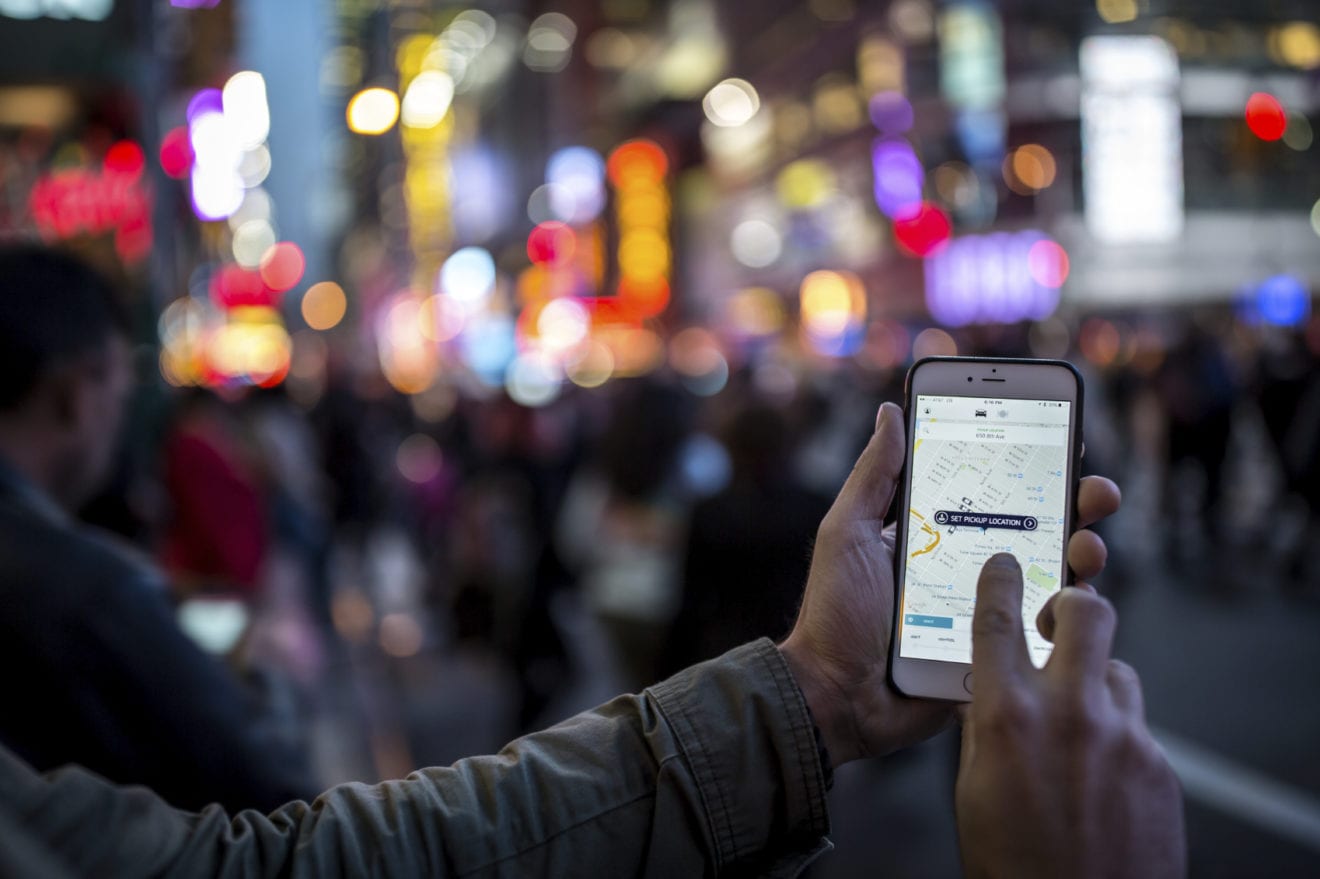
    Mobile-first means user-first Mobile is the most effective channel to reach Chinese shoppers abroad. The IAB reports that 47 percent of Chinese shoppers made purchases with a mobile wallet this year.

    That’s the highest in the world, second only to Norway (42 percent) and the UK (24 percent). The same report reveals APAC has the highest usage of mobile wallet for purchasing products and services of any region in the world.

    To better understand the Chinese consumer, advertisers can analyze their daily habits on their mobile devices. An audience cluster employing real-time and historical data can pinpoint the most receptive users and find the best time to engage them.

    There are many platforms that are more popular in China than other regions—such as WeChat and Weibo — and analyzing this historical data can help isolate the behavior on these devices. Combining real-time data such as device language, network carrier, and operating systems will give a more holistic view of the shopper.

    For example, to profile a Chinese luxury consumer traveling in Singapore, advertisers can identify and group together key indicators, such as the latest iPhone 7 model, connecting through a Chinese mobile carrier and using traditional Chinese language settings.

    Add the potential to pair that with historical location behavioral data identifying them as frequently visiting Singapore, and you can start to build out powerful audience segments. Audience segmentation is becoming increasingly sophisticated and can help advertisers push their branded messages even before the intended customer has departed from China.

    Personalized mobile marketing also allows brands to deliver tailored and timely messages to serve the consumer on their shopping journey. Let’s say, for example, an ideal time to send out an advertisement is in the morning before a shopper heads out of their hotel.

    A helpful campaign indicating the nearest store location and opening hours, combined with a daily coupon, has a higher chance of converting than a non-targeted advertisement.

    With the wealth of mobile data available, advertisers can go one step further and deliver creative campaigns based on device operating system. Most of the time, iPhone ads will lead to a landing page in Safari, and an Android system will take the user into Google Chrome. The ability to tailor each creative format for different user devices can help retailers win over the highly-desired Chinese tourist dollar.

    Brands that want to wow Chinese tourists need to have full visibility of their intended consumers and engage with precise timing to truly encourage purchasing decisions. Given the availability of today’s data, brands that fail to customize their creative message and user experience will only stand to lose out.