Retail News CRM

Tag: chipset

  • Major smartphone chipmaker says new Huawei OS could impact its sales

    Major smartphone chipmaker says new Huawei OS could impact its sales

    The company that manufacturers many of the chips used in smartphones, Taiwan Semiconductor Manufacturing Company (TSMC) is going to be impacted in the short term by the ban that prevents Huawei from sourcing parts and software in the U.S. The company previously had stated that Huawei’s placement on the Commerce Department’s Entity List would not affect it; the company has already announced that it would continue to manufacture chips for Huawei and its HiSilicon unit.

    It appears that TSMC has reevaluated the situation. TSMC Chairman Mark Liu, speaking to reporters today, said that sales of Huawei phones will slow down as consumers decide whether they can live with the phone manufacturer’s Android replacement. As a result, Huawei might need fewer chips to be assembled, which would affect TSMC’s revenue in the short term.

    “It certainly will have some impact in the short term. When there’s no Android system in a smartphone, many people might have doubts on whether the market will accept it.”-Mark Liu, chairman, TSMC

    Liu did add that demand for both 5G smartphones and newer handsets coming to market in the second half of this year will help TSMC stay on track for 2019. The executive says that his company’s outlook remains unchanged for the calendar year. Back in January, Liu said that TSMC’s 2019 revenue would grow 1% to 3% over last year’s figure of $1.03 trillion NT ($32.8 billion USD). Last year, the firm earned net profits of $351.13 billion NT ($11.4 billion USD).

    While Huawei’s in-house HiSilicon unit designs the chips used in Huawei’s high-end phones, the company has lost the support of U.K. chip designer ARM Holdings. This is a big blow to the company as it will need to search for an alternative architecture for its SoCs. Meanwhile, Huawei says that it has stockpiled a year’s worth of chip parts and components.

  • Qualcomm unveils Snapdragon 8 Gen 1, the S22 chipset, with 10 Gigabit 5G

    Qualcomm unveils Snapdragon 8 Gen 1, the S22 chipset, with 10 Gigabit 5G

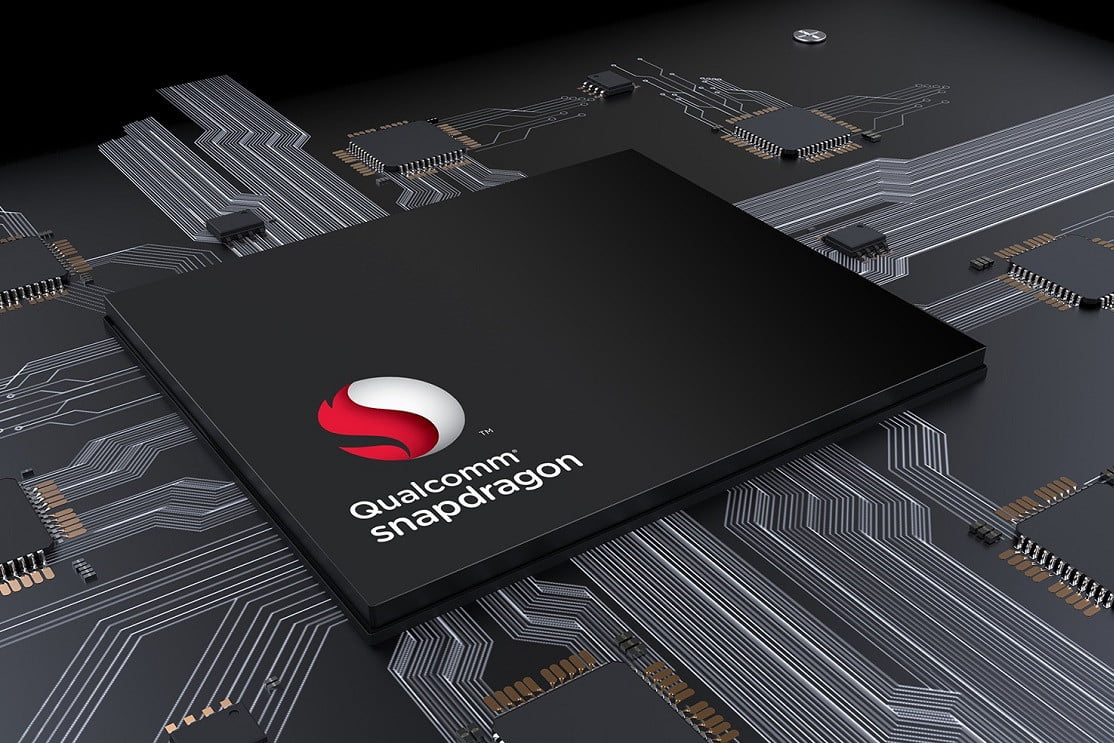
    Qualcomm just took the stage to announce the long-rumored Snapdragon 8 Gen 1 chipset that is going to power a number of Android flagships in the next year or so, including Samsung’s upcoming Galaxy S22 series phones.

    Previously rumored as Snapdragon 898, the processor got a name change, as Qualcomm decided to simplify and streamline how it calls its mobile chipsets. This, and the fact that the team from San Diego is branching out into processors for Microsoft Windows 11 devices, as well as into a gaming platform. We are most interested in mobile applications, however, so here are the most interesting Snapdragon 8 Gen 1 details.

    Here’s a list of the most important new Snapdragon 8 Gen 1 features:

    • Up to 3GHz Kryo CPU with Cortex-X2 cores.
    • 30% faster Adreno GPU with 25% lower power consumption.
    • The world’s first X65 5G modem to reach 10 Gigabit download speeds.
    • First 18-bit image signal processor for mobile.
    • First 8K HDR10+ video capture for mobile.
    • Mega low-light capture snaps 30 images and merges the best parts into one shot.
    • Always-On ISP for fast face unlocking and locking.
    • 7th Gen Qualcomm AI Engine for voice analysis and Leica Leitz Look bokeh filters.
    • Bluetooth Low Energy audio features like broadcasting, stereo recording, and voice back-channel for gaming.
    • First platform with Android Ready Secure Element support, the new standard for digital car keys or drivers’ licenses.
    As for how does the new Snapdragon 8 Gen 1 stacks up against its Snapdragon 888 predecessor and Apple’s A15 monster in the iPhone 13, here’s a quick comparison of their specs and features.
    Snapdragon 8 Gen 1 Snapdragon 888 Exynos 2100 Apple A14
    Production process Samsung 4nm EUV Samsung 5nm EUV Samsung 5nm EUV TSMC 5nm 2nd gen
    Processor cores 1xCortex-X2@3GHz

    [email protected]

    [email protected]

    1x [email protected]

    3x [email protected]

    4x [email protected]

    Exynos [email protected]

    3x [email protected]

    4x [email protected]

    2x [email protected]

    4x [email protected]

    GPU Adreno 730, 30% faster and 20% more frugal Adreno 660 @ 800MHz ARM Mali-G78 Apple custom quad-core (5-core on the iPhone 13 Pro models)
    Modem X65 5G modem (integrated)

    up to 10 Gbps over 5G

    Global iSIM multi-SIM card support

    X60 5G modem (integrated)

    up to 7.5Gbps over 5G, and 3 Gbps download speeds on LTE

    Exynos 5123
    (Category 24)Downloads up to 7.3Gbps (mmWave), 5.1Gbps (sub-6GHz), or 3Gbps (4G LTE), 8xCA

    Uploads: up to 422 Mbps

    Qualcomm X60 5G modem
    AI co-processor 7th Gen Qualcomm AI Engine Hexagon 780 Tri-core NPU, up to 26 TOPS 16-core Neural Engine, up to 15.8 TOPS
    Video encode 8K HDR10+ 8K HDR at 60fps
    4K HDR at 120fps
    8K HDR at 60fps
    4K HDR at 120fps
    4K HDR+ at 120fps
    Features support QHD+ @144Hz or 4K@60Hz display refresh

    Demura and subpixel rendering for OLED uniformity

    First 18-bit ISP, mega low light capture merges 30 images in one shot for brighter, sharper pictures

    Qualcomm FastConnect 6900: Bluetooth 5.2, Wi-fi 6E (up to 3.6GBps)

    QHD+ @144Hz or 4K@60Hz display refresh

    Triple 14-bit Spectra 580 ISP, up to 200MP sensor

    4K computational HDR, low-light capture architecture

    Qualcomm FastConnect 6900: Bluetooth 5.2, Wi-fi 6E (up to 3.6GBps)

    UFS 3.1 storage support for up to 2.9GB/s speeds

    Single-camera up to 200MP

    up to 16 GB DDR5

    Variable 120Hz display refresh rate

    Computational photography

    Cinematic Mode video bokeh

    Machine learning capable of 15.8 trillion operations per second.

    As you can see, Qualcomm isn’t playing around and offers some unique 5G connectivity and other features that Apple will have to catch up with when its next-generation A16 processor hits the iPhone 14 in the fall of 2022. That one is reportedly also being done on the 4nm process, but until then the Snapdragon 8 Gen 1 may stay the undisputed connectivity king for the 5G era..

    We are also very curious to test the new 18-bit ISP and the 8K HDR10+ video capture it brings, not to mention the digital keys and cards or the integrated iSIM multi-SIM functionality. There’s is little doubt that the Galaxy S22 series will be powered by Qualcomm’s new Snapdragon 8 Gen 1, but the chipmaker also lists many other manufacturers lining up for it.
    Black Shark, Honor, iQOO, Motorola, Nubia, OnePlus, OPPO, Realme, Redmi, SHARP, Sony, vivo, Xiaomi, and ZTE are all in the Snapdragon 8 Gen 1 mix, with the first phones powered by the new chipset expected as soon as next month.
  • Details of new upper mid-range Samsung chip emerge

    Details of new upper mid-range Samsung chip emerge

    Samsung appears to be testing a midrange Exynos chipset. Dutch website Galaxy Club has reported the existence of a new chip with the model number S5E8825.

    The Exynos 2100 that fuels the Galaxy S21 is known by the model number S5E9840 and its successor, colloquially being referred to as the Exynos 2200, is apparently the S5E9925.

    Previously, leaker Ice Universe had said that Samsung would release three chips this year: a flagship Exynos 22xx SoC, a mid-tier 12xx processor, and an entry-level 8xx silicone. Judging by the model name, it seems that the newly discovered S5E8825 is a midrange chip that Samsung might call Exynos 1200. It looks like it will slot below the Exynos 2100.

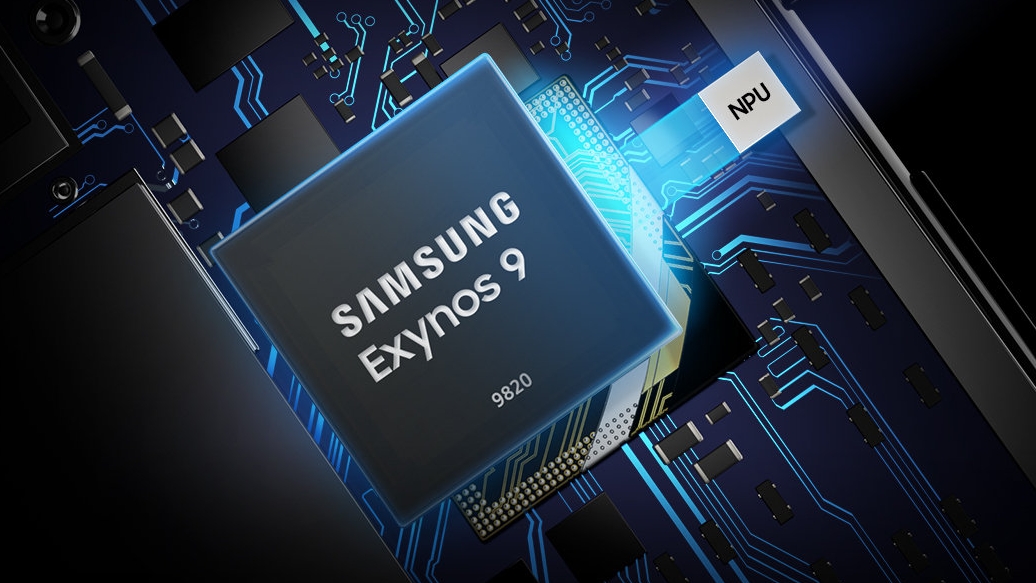
    In the past, it was relatively easy to differentiate between premium and mid-range chips. The Exynos 990, which powered the Galaxy S20 series, was known as the S5E9830, and the Exynos 9820 that underpinned the Galaxy S10 series had the model number S5E9820. Mid-tier Galaxy A50’s Exynos 9610 had the model number S5E9610.

    Starting last year, Samsung stopped using its proprietary Mongoose cores and adopted Arm’s designs instead. That could be why it has slightly changed the model name nomenclature too as the models seem more aligned now.

    The Exynos 1200 will presumably succeed the Exynos 1080 – a 5nm mid-tier chip that was announced late last year. It seems to be in the advanced stages of development as it is allegedly undergoing extensive testing.

    The chip reportedly has a built-in 5G modem and per a separate report, it may come with an AMD GPU. If a recent report that doesn’t come from a verifiable source is to go by, this new processor could use Arm’s Cortex X1 as the main core.

    As good as that sounds, Samsung may not use the Exynos 1200 for its phones and instead sell it to Chinese smartphone makers, as was the case with the Exynos 1080.

  • Intel CEO says chip shortage will continue throughout this year

    Intel CEO says chip shortage will continue throughout this year

    As many of you know, we are in the middle of a chip shortage that has been impacting automobile and consumer electronic manufacturers. Intel CEO Pat Gelsinger sees the shortage continuing throughout the remainder of this year, bottoming out during the second half of 2021 before things start to improve. In fact, the executive doesn’t expect the supply-demand picture to return to normal until 2023.

    Gelsinger said, “I don’t expect the chip industry is back to a healthy supply-demand situation until ’23. For a variety of industries, I think it’s still getting worse before it gets better.” Last month, we told you that the lead time, the time it takes between placing an order for semiconductors and actually receiving them, hit 17 weeks in April; that was the longest lead time recorded by Susquehanna Financial since 2017 and was a big jump compared to the previous year’s 12.53 figure.

    Unlike fabless manufacturers like Apple, Qualcomm, MediaTek, and others, Intel owns its own factories (aka fabs, short for fabrication plants). A company like Apple designs its own chips, but without the means to manufacture them itself, the company turns to the world’s largest contract foundry, Taiwan Semiconductor Manufacturing Company, Limited (TSMC Ltd.) to produce them.

    Gelsinger says that thanks to Intel’s ownership of its fabs, it is more able to keep up with demand for chips than those who are outsourcing production to another foundry. The executive says that demand for chips will continue to be strong over the next 10 years thanks to expected growth in demand for 5G smartphones, AI, and electric vehicles. Intel’s CEO is on the side of those industry executives who see the current demand for chips continuing into the future.

    Other executives don’t believe that the industry can sustain the growth of more than 5% on an annual basis. Broadcom Inc. CEO Hock Tan is one such executive. Even though his firm reported a 15% revenue hike for its latest quarter, Tan says chip production is a mature industry that will revert back to low growth.

    There is no denying though, how important chips are to the global economy. The U.S. leads the way in the sales and design of chips although production is led by Taiwan’s TSMC and South Korea’s Samsung. TSMC will be opening at least one fab in Arizona no later than 2024.

  • Huawei to reportedly build its own chipsets in Wuhan starting next year

    Huawei to reportedly build its own chipsets in Wuhan starting next year

    In May 2019, the U.S., claiming security issues, placed Chinese phone manufacturer Huawei on the entity list. As a result, Huawei was no longer able to access the U.S. supply chain that it had spent over $18 billion on during the previous year, and was even banned from using software developed by Google. Exactly one year later, the U.S. Commerce Department made a change in export rules preventing foundries using American technology from shipping cutting-edge chips to Huawei without a license.

    Since the U.S. export rule change prevented Huawei’s contract foundry TSMC from shipping to the Chinese manufacturer the powerful 5nm Kirin chips that Huawei had designed itself, there had been talk about Huawei manufacturing its own chipsets. Like most major consumer electronics firms including Apple, Huawei farms out its chip designs to contract foundries like TSMC and the latter builds the actual chips using its fabs.

    Prior to the U.S. ban on chip deliveries to Huawei, the latter was TSMC’s second-largest customer behind Apple. Since being placed on the entity list, Huawei has learned to make its own software and hardware to replace parts of the supply chain it can no longer obtain such as the Google licensed version of Android (replaced by Huawei’s HarmonyOS, and Huawei Mobile Services).

    Industry sources are calling for Huawei to turn on the “start” button for its own wafer fab in Wuhan. Production is expected to start in phases beginning in 2022. Huawei’s HiSilicon unit certainly has the capability to design high-powered chips like the 5nm Kirin 9000. Wafers, made from silicon, go through several processes before getting sliced up and packaged to become individual chipsets.

  • Snapdragon 888’s successor may feature Leica technology

    Snapdragon 888’s successor may feature Leica technology

    Qualcomm appears to be gearing up to release a toned-down version of the Snapdragon 888 (SM8350) chip. The news comes from leaker Roland Quandt, who says that unlike the flagship Snapdragon 888, the stripped-down variant will not have an integrated 5G modem.

    The new chip (SM8325) will apparently power budget flagship phones and it is not clear how it would differ from the Snapdragon 870. Since it’s been billed as a lower-specced version of the Snapdragon 888, it’s likely that it will be based on the 5nm process. The SoC might be meant for developing markets where 5G networks have not been rolled out yet.

    Quandt has also learned that Qualcomm has started testing early samples of the Snapdragon 888 successor. The chip is apparently internally known as ‘Waipio’ and its model number is SM8450. It will likely be unveiled towards the end of 2021, as is the norm.

    The company is currently testing samples that are compatible with 12GB of LPDDR5 RAM and 256GB of storage. The next-generation chip’s camera capabilities are also expected to get a major boost and it seems that Qualcomm has teamed up with optics specialist Leica for this purpose. Current testing is apparently centered on a module internally known as “Leica1.”

    The Snapdragon 888 was made by Samsung and the recently announced 5G modems (Snapdragon X62 and Snapdragon X65) are based on the chaebol’s 4nm process. It’s not known if Snapdragon 888’s successor will also be built on a new process node.

    A recent report says that Qualcomm will stick with Samsung’s 5nm tech for this year and go back to TSMC in 2022 for a 4nm flagship SoC.

    Quandt has also revealed the existence of a mid-tier chip. The SM7325 apparently features one core running at 2.7GHz, three cores with clock speeds of 2.4 GHz, and four cores with frequencies up to 1.8 GHz. The test platform supports up to 12GB of LPDDR5 RAM and 256GB of UFS 3.1 storage. The final product may support up to 16GB of RAM.

    A 5nm upper-midrange chip called Snapdragon 775 (SM7350) is also reportedly in the pipeline.

  • Samsung could release three Exynos chips this year

    Samsung could release three Exynos chips this year

    Samsung will unveil three Exynos chips this year, claims leaker Ice Universe. The 2021 lineup presumably includes a flagship SoC (Exynos 22xx), a mid-tier chip (Exynos 12xx), and an entry-level silicone (Exynos 8xx).

    The Exynos 22xx will likely succeed the Exynos 2100 that powers the European version of the Galaxy S21 series. It supposedly has the model number 9925 and it may feature an AMD GPU.

    The Exynos 12xx will apparently replace the Exynos 1080, and it will probably also swap out the Mali GPU for AMD’s graphics.

    The Exynos 8xx is new on the radar, and we wonder if it has anything to do with a chip recently spotted by Galaxy Club.

    The chip bears the model number S5E5515, which is not very telling, thanks to Samsung’s inconsistent naming convention.

    It does not seem to be a high-end SoC as the model number is not in line with recent flagship chips: Galaxy 10’s Exynos 9820 had the number S5E9820, Galaxy S20’s Exynos 990 had S5E9830, and Galaxy S21’s Exynos 2100 has S5E9840.

    S5E5515 is not consistent with recent mid-tier Exynos chips either. The Exynos 1080 is S5E9815, the Exynos 980 is S5E9630, and Exynos 850 is S5E3830.

    The publication has made a wild guess and believes that the S5E5515 is a lower-mid-tier chip that will sit between the Exynos 850 and Exynos 1080. It is also expected to have an integrated 5G modem.

    The SoC could also turn out to be a non-smartphone chip. Samsung is already believed to be working on a new processor for wearables like AR glasses.

  • Qualcomm Snapdragon 875 will be unveiled in December

    Qualcomm Snapdragon 875 will be unveiled in December

    Qualcomm has started sending out invites for a two-day digital event that will kick off on December 1 and although the chipmaker hasn’t confirmed this, it’s a given that the Snapdragon 875 will be unveiled during the Tech Summit.

    Per rumors, the Snapdragon 875 will be Qualcomm’s first SoC to employ the 5nm manufacturing process. It is expected to have one Cortex-X1 core, three Cortex-A78 cores, and four Cortex-A55 cores. The chip will reportedly be manufactured by Samsung.

    We can expect it to be around 20 percent more power-efficient than the Snapdragon 865. Performance could get a 10 percent boost.

    The Snapdragon X60 5G modem will apparently be integrated within the chip.

    It is not clear at the moment if Qualcomm also plans to announce other chips during the event. The company is apparently working on its first 6nm chip dubbed Snapdragon 775G which will succeed the Snapdragon 765G. Another 5nm silicon and an entry-level chip are also in the pipeline reportedly.

    A couple of reports suggest that Snapdragon 875 powered phones will be faster than the iPhone 12. While Android users may rejoice at the prospect, the alleged high price of the chip could prevent some Android manufacturers from equipping their 2021 phones with the SoC.

    For instance, the grapevine has it that only the highest-end Samsung Galaxy S21 model will be powered by the Snapdragon 875, and the rest will either employ an in-house chip or settle for the Snapdragon 865.

  • Apple signs multiple year supply agreements with a major chipmaker

    Apple signs multiple year supply agreements with a major chipmaker

    A filing made by Broadcom with the SEC revealed that Apple has signed two multi-year deals with chipmaker Broadcom that are separate from current agreements with the latter that supply Apple with radio frequency components and modules. Altogether, Apple’s business could generate $15 billion in revenue for Broadcom. In December, Broadcom said that business from Apple represented 25% of its gross in 2018 and 20% last year. In 2019, Apple and Broadcom settled a patent suit which led the two firms to sign a 2019 “statement of work” (SOW) and the just-announced 2020 SOW.
    According to the SEC filing, the parts being purchased by Apple will be used in new products over a three and a half year period. While the SEC 8-K submission did not specify exactly which components Broadcom will supply to Apple, the chipmaker’s Bluetooth and Wi-Fi chips and its Avago branded RF front-end chip are all found inside Apple’s iPhone 11 series.
    With Apple looking to launch 5G enabled iPhone models later this year, it is quite possible that the deals with Broadcom may supply it with 5G components. One analyst, Patrick Moorhead from Moor Insights, says that it is also possible that the deals announced today are for parts related to 4G LTE connectivity. Broadcom is one of Apple’s largest American parts suppliers with J.P. Morgan computing in 2018 that each iPhone contained $10 worth of Broadcom components.
    Broadcom investors fell over each other throwing money at the stock today. During the regular trading session, the shares rose $6.77 or 2.16% to close at $319.65. In after-hours trading, after the news broke, Broadcom soared another $8.33 or 2.61% to
    You might recall that in November 2017, Broadcom offered to buy chipmaker Qualcomm; among other things, the firm designs the Snapdragon line of wireless chipsets and wireless modems. The merger proposal was rejected by Qualcomm and Broadcom then rose the price it was willing to pay for the San Diego based company. But Qualcomm said it still wouldn’t be interested unless the price was hiked to $160 billion.
    Eventually, President Donald Trump put the kibosh on the takeover talk by claiming that a Broadcom acquisition of Qualcomm would put national security at risk. Trump signed an executive order immediately blocking the merger from moving forward. This came about after a March 2018 letter from the U.S. Treasury’s Committee on Foreign Investment in the United States (CFIUS) was sent to two Broadcom lawyers. The letter pointed out that since Broadcom was headquartered in a foreign country, Qualcomm’s assets could be exploited by “third party foreign entities.”
    Looking to keep the deal alive, Broadcom moved up its previous plans to establish itself as a U.S. company registered in Delaware. But before this could ever happen, Trump put the blocked the deal. At the time, an official statement from the president read, “There is credible evidence that leads me to believe that Broadcom Limited, a limited company organized under the laws of Singapore (Broadcom)…through exercising control of Qualcomm Incorporated (Qualcomm), a Delaware corporation, might take action that threatens to impair the national security of the United States.”
    As with many things wireless these days, the scare over national security revolves around the next generation of wireless connectivity, 5G. Qualcomm’s 5G modem chips will be found in the vast majority of 5G handsets in the states and the Trump administration was concerned, like it is with Huawei, about a foreign country gaining access to private information from U.S. citizens and corporations.
    While the president prevented Broadcom from purchasing Qualcomm, it is interesting that nothing is done to prevent Apple from using the company’s components for its 5G phones.
  • Qualcomm has started a price war that will impact prices of 5G phones

    Qualcomm has started a price war that will impact prices of 5G phones

    A report issued by reliable analyst Ming-Chi Kuo says that a price war has begun in the 5G chip industry. Kuo’s note to clients, says that Qualcomm has cut pricing for its mid-range 5G Snapdragon 765 chipset after sales of high-end 5G smartphones fell short of expectations. By cutting the cost of its mid-range 5G chips to manufacturers, Qualcomm is trying to get these firms to produce more affordable 5G handsets to entice the public. The price cuts will also extend to Qualcomm’s low-end chips as well.
    As a result of the price cut, Kuo sees MediaTek facing pricing pressure for its Dimesnity line of 5G chips three to six months earlier than expected. Instead of achieving gross margins of 40% to 50% for its chips as the consensus expects, the analyst sees MediaTek’s margins dropping to less than 30%-35%.
    Qualcomm has reportedly cut the price of the 5G Snapdragon 765 chipset (SD7250) by $25-$30 to $40. MediaTek’s Dimensity 1000 5G chipset costs the company $45-$50 to make and it sells for $60-$70 per chip. As a comparison, Qualcomm’s top-of-the-line Snapdragon 865 Mobile Platform with the Snapdragon X55 5G modem costs $120-$130 and has not had its price cut. The company’s flagship chip outperforms the MediaTek Dimensity 1000 and Qualcomm sees no need to drop the price of its high-end chipset.
    The recently announced MediaTek Dimensity 800 chipset, which supports only the slower sub-6GHz 5G signals, is due to be released in May. This chip, developed for lower-priced 5G handsets, is expected to be sold at a price of $40-$45 per chip and costs MediaTek $30-$35 to make. There might not be that much room for MediaTek to maneuver in response to Qualcomm’s pricing actions.
    The pricing shakeup could cost MediaTek some business. The company’s major 5G chip customers like Oppo, Vivo, and Xiaomi are said to be switching orders for 20 million to 25 million chips from MediaTek to Qualcomm. These components are scheduled to be shipped next month.
    The Snapdragon 765 SoC is equipped with eight Kryo 475 CPU cores running at a clock speed as fast as 2.4GHz. It features an integrated Snapdragon X52 5G modem that supports both mmWave and sub-6GHz 5G signals, and sports the Adreno 620 graphics processor. There is also a Snapdragon 765G for gaming phones that is equipped with an enhanced version of the GPU offering 10% faster graphics rendering compared to the standard Snapdragon 765 chipset.
    The Dimensity 1000 also has an integrated 5G modem and is packed with four performance Cortex-A77 CPU cores running at a clock speed of up to 2.6GHz. Four efficiency Cortex-A55 CPU cores are also included. This SoC is equipped with the ARM Mali-G77 MC9
    Qualcomm’s salvo would have less of an impact on the market if MediaTek’s margins were a little wider. A larger margin would allow the company to take a hit and still thrive. But the Dimensity 1000 brings $10-$25 per chip to MediaTek’s bottom line and the Dimensity 800 garners profits of $5-$15 per chip.
    MediaTek’s Dimensity 1000 and Dimensity are manufactured by TSMC using its 7nm process. The Snapdragon 765/765G will be manufactured by Samsung using its 7nm process. The flagship Snapdragon 865 Mobile Platform is also a 7nm chip, and it also will be produced by TSMC. Qualcomm originally planned to have Samsung’s foundry roll out the Snapdragon 865, but the chipmaker was concerned about allowing Samsung to get a peek under the hood of its top chipset for 2020.
    Chip prices might also run into pressure halfway through this year when TSMC starts producing more powerful and energy-efficient 5nm chips. Among the first to be manufactured will be Apple’s A14 Bionic and Huawei’s next high-end IC expected to be named the Kirin 1020.
  • New chipset announced today will make 5G easier for consumers to afford

    New chipset announced today will make 5G easier for consumers to afford

    Chip designer MediaTek impressed many when it introduced its new flagship Dimesnity 1000 SoC. The chipset includes an integrated 5G modem chip that supports both sub-6GHz and mmWave 5G, and LTE. Additionally, the Dimensity 1000 has four high-performance Cortex-A77 CPU cores running at a clock speed of 2.2GHz and four Cortex-A55 efficiency CPU cores running at 2GHz. ARM’s Mali-G77 MP9 graphics chip is included. The chip is manufactured by TSMC using its 7nm process.
    MediaTek unveiled the Dimesnsity 800, a chipset designed for lower priced 5G handsets. This will help bring the faster 5G data speeds to those who normally wouldn’t be able to afford a device that supports the next generation of wireless connectivity. While the company claims that the integrated 5G modem chip is more efficient when it comes to battery life, there is a catch. The modem on the Dimensity 800 does not support mmWave 5G signals, which deliver the faster 5G data speeds. This means that devices powered by the MediaTek Dimensity 800 SoC can connect in the states with T-Mobile’s nationwide 5G network and AT&T’s consumer 5G network. However, Verizon’s 5G mmWave network is out.
    The Dimensity 800 will feature four Cortex-A76 CPU cores running at a clock speed up to 2GHz and four Cortex-A55 CPU cores also running up to 2GHz. MediaTek says that with four performance cores, demanding gaming applications will launch faster. The chip supports displays carrying a resolution up to FHD+ (1080p) with a refresh rate of up to 90Hz. It will drive a quad-camera setup with a primary sensor up to 64MP and handle camera-based AI, facial detection, automatic noise reduction, and white balance.
    Qualcomm’s Snapdragon 765 Mobile Platform and its gaming enhanced Snapdragon 765G might have only half the number of performance cores as the Dimensity 800 sports, but it does support some higher-spec’d phones. Qualcomm’s chips handle both sub-6GHz and mmWave 5G signals. The Snapdragon 765/765G will be equipped with a pair of Cortex-A76 CPU cores, one running at 2.3GHz, the other at 2.2GHz. Six Cortex-A55 cores running up to 1.8GHz are also included. The component also supports QHD+ resolution displays (1440p), 192MP camera systems and video at 4K.
    MediaTek hopes to have its flagship Dimensity 800 inside devices launching in the first half of this year. TL Lee, the head of MediaTek’s wireless business unit, said, “MediaTek already launched its flagship 5G smartphone solution, the Dimensity 1000, and with the 800 series 5G chipset family, we are bringing 5G to the mid-tier and mass market. Everyone should have access to great technology. The Dimensity 800 Series will power the New Premium segment for 5G, bringing consumers flagship smartphone features and performance at mid-range price points.”
  • Motorola might drop Qualcomm’s chipsets for the Moto G8 Play

    Motorola might drop Qualcomm’s chipsets for the Moto G8 Play

    We don’t expect Motorola to announce a new lineup of mid-range smartphones until next year, but that doesn’t mean the US company is not already working on the Moto G8 series. Even though we’re still far from an official announcement, the first details about Motorola’s plans regarding some of its upcoming phones have already emerged.

    The folks over at XDA Developers report at least one of Motorola’s upcoming smartphones, the Moto G8 Play will no longer come equipped with a Qualcomm processor. Instead, Motorola plans to include either the MediaTek Helio P60 or the MediaTek Helio P70.

    On the bright side, the Moto G8 Play is rumored to pack a much larger 4,000 mAh battery, a 1,000 mAh increase over the current Moto G7 Play model. Also, the smartphone will include either 3 or 4GB RAM and 32 or 64GB of internal memory. Pretty much every part of the phone (memory, battery) seems to have been improved over the current model, although we’re not so sure about the processor.

    Furthermore, depending on the market, the Moto G8 Play will support NFC (Near Field Communication), dual SIM, both, or neither of those. For the time being, Motorola plans to launch the Moto G8 Play in Latin America, Asia Pacific countries, and Europe, so there’s no telling whether or not it will bring it to the US.

  • 2021’s Snapdragon 875 will reportedly be produced by TSMC using its 5nm process

    2021’s Snapdragon 875 will reportedly be produced by TSMC using its 5nm process

    he Qualcomm Snapdragon 865 is expected to be the chip designer’s next top-of-the-line mobile chipset designed for 2020’s high-end handsets. For those unaware, Qualcomm designs its chips but doesn’t own the facilities to manufacture them. For the last two years, it has turned to the world’s largest independent foundry, Taiwan Semiconductor Manufacturing Company (TSMC), to manufacture the Snapdragon 845 and 855 chipsets. Before that, Samsung made the Snapdragon 820 and 835 SoCs.
    Qualcomm is returning to Samsung to produce the Snapdragon 865. The South Korean tech giant will produce the chip using its 7nm EUV process. The 7nm figure relates to the number of transistors that are shoehorned into a chip. The lower that number, the higher the number of transistors that can fit inside a chip; the more transistors in a chip, the more powerful and energy-efficient it is. Moore’s Law, an observation made by Intel co-founder Gordon Moore back in 1965, calls for the number of transistors in integrated circuits (like chips) to double every other year. To show you how far we’ve come, the Texas Instruments OMAP 3430 chip that powered the Motorola DROID back in 2009 was built using the 65nm process!
    The EUV part of 7nm EUV stands for extreme-ultraviolet lithography. This is a technology that uses ultraviolet beams to more precisely mark up the silicon wafers used to create chips with patterns. These patterns determine where the transistors will be placed inside a chip, and when short wave-length beams (like the ones used with EUV) are used to etch these patterns on a wafer, more transistors can be stuffed inside it. Using EUV is expected to provide a performance bump of 20% to 30% and a 30% to 50% improvement in energy consumption for the Snapdragon 865. Those are not numbers to take lightly. The Snapdragon 865 Mobile Platform will probably debut on the Samsung Galaxy S11, which most likely will be unveiled around February 24th when the 2020 MWC show in Barcelona kicks off. The chip was recently spotted on the Geekbench benchmarking site where it produced a multi-core score of 12,496. That compares to the score of 10,946 produced by the Snapdragon 855+ Mobile Platform. The latter is an overclocked version of the Snapdragon 855.
    While 2020’s Snapdragon 865 will be made by Samsung, the report reveals that there will be two different versions of the chipset codenamed Kona and Huracan. Both will support LPDDX5 memory chips (RAM) and the UFS 3.0 flash memory. However, one of them will be integrated with a 5G modem chip and the other one won’t. Last week, Huwaei released a teaser for its upcoming Kirin 990 SoC that will be unveiled on September 6th. The component, expected to power the manufacturer’s next high-end Mate 30 phone line and the foldable Mate X, will also have an integrated 5G modem chip. This removes the need for a separate component and should also lead to improved battery life on devices that employ these chipsets.
    Sina.com says that for 2021’s Snapdragon 875 Mobile Platform, Qualcomm will once again call on TSMC to produce the component. The report adds that the Snapdragon 875 chipset will be manufactured using TSMC’s 5nm process. If that is indeed the case, the chip will sport 171.3 million transistors per square millimeter. Thus, the component should be more powerful and energy-efficient than its predecessor.
    So will Moore’s Law continue to be valid? Last year Samsung revealed a roadmap leading to 3nm production by 2022 and TSMC is also looking for ways to stuff more transistors inside chips. The latter is examining ways to change the packaging of chips and is also looking at stacking transistors vertically instead of side-by-side.
  • Apple spends $1 billion to buy most of Intel’s smartphone modem chip business

    Apple spends $1 billion to buy most of Intel’s smartphone modem chip business

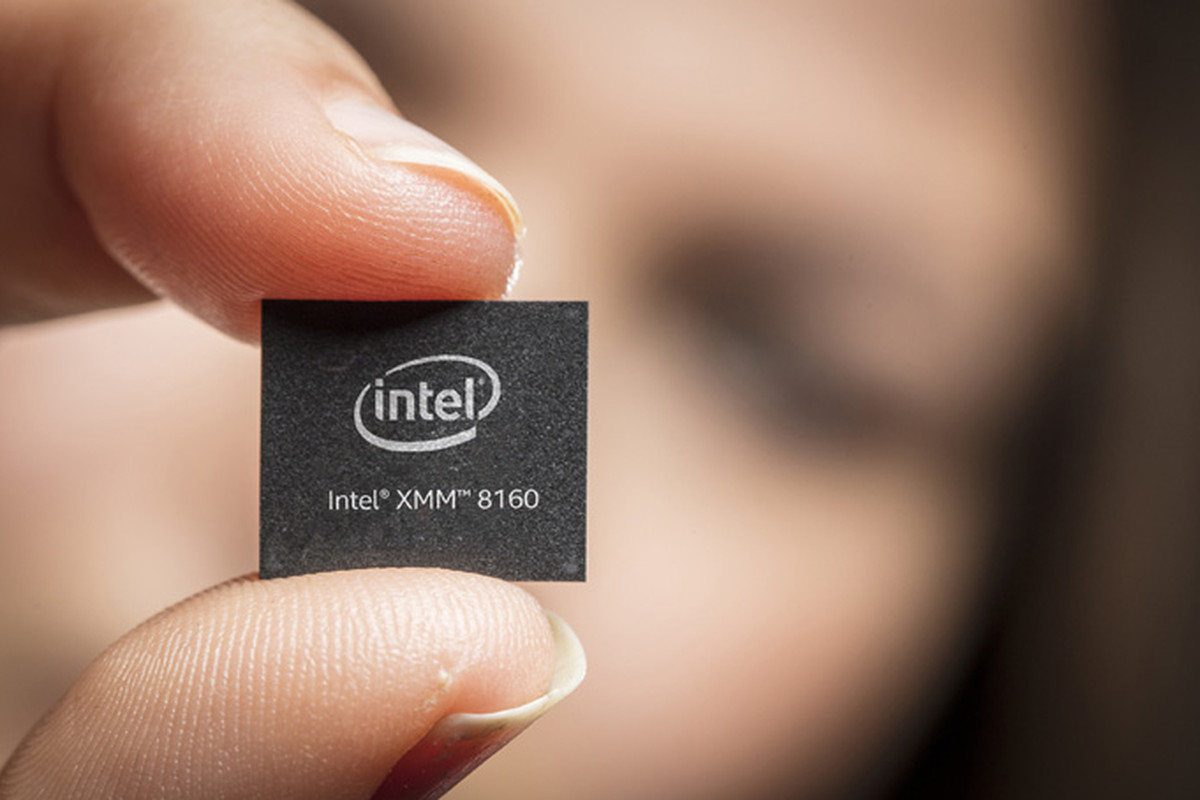
    Apple announced that it has agreed to purchase the majority of Intel’s smartphone modem chip business in a transaction that is being valued at $1 billion. Besides the patents, equipment, and leases that will move from the chipmaker to Apple, 2,200 Intel employees will now work for the iPhone manufacturer. The deal is expected to close in the fourth quarter and goes a long way toward helping Apple design and manufacture its own modem chips. Intel will still have the right to produce modem chips for PCs, IoT and self-driving cars.

    The 2018 iPhones all exclusively use Intel’s 4G LTE modem chips and Intel was originally slated to deliver a 5G modem chip to Apple in time for use with the 2020 iPhones. But a settlement between Apple and Qualcomm announced last April allowed both companies to bury the hatchet and end a feud that had kept Apple from sourcing Qualcomm’s 5G modem chips. Apple paid an undisclosed amount of money to Qualcomm, rumored to be $4.5 billion, in exchange for a six-year licensing pact (with an option for two additional years) and a multi-year chip supply agreement. So starting next year we should see a Qualcomm 5G modem chip inside the iPhone models that support the next generation of wireless connectivity. Based on the early rumors, that would be the 5.4-inch iPhone 12 and 6.7-inch iPhone 12 Max.

    Even though Intel said that it would ship its 5G modem chip in time for use inside the 2020 iPhones, it appeared that Apple didn’t fully trust Intel’s design. In February, there was talk about Apple designing its own 5G modem chip and it shifted around personnel in an effort to get the ball rolling on this project. All that Apple seemingly needed was a reliable supplier to get it from 2020 to 2022 or 2023 when the first Apple-designed 5G modem chip could start rolling off the assembly lines. That might have been the impetus behind Apple’s settlement with Qualcomm.
    But with the purchase of the majority of Intel’s smartphone modem chip business, Apple will soon be able to control its own destiny in terms of obtaining this key component. The 2019 iPhones will continue to use Intel’s 4G LTE modem chips; these units will ship before Apple and Intel close on the transaction.
    The bottom line is that even with this purchase, there is still a good chance that Apple relies on Qualcomm to supply it with 5G modem chips for the next few years. But this deal has to make the brass in Cupertino feel relieved. Things were looking desperate at times for Apple. Back in January, during the FTC v. Qualcomm trial, Apple supply chain executive Tony Blevins admitted that the company had talks with Samsung and MediaTek about working out a supply agreement for 5G modem chips.
    The $1 billion price paid by Apple makes this deal one of the most expensive purchases in Apple’s history. The most amount of money that Apple has paid to buy a company is the $3 billion it shelled out for Beats Audio back in 2014.
  • Qualcomm and Intel comply with the White House ban

    Qualcomm and Intel comply with the White House ban

    As if the maker of the world’s most popular mobile operating system cutting you off wasn’t unpleasant enough for Huawei, US chip makers will also be forced to do so, or risk the wrath of the current White House administration.

    Qualcomm, the maker of all things Snapdragon and 4G/5G modems, as well as Broadcom, a supplier of Wi-fi and other connectivity chips, will also have to deal with the administration’s thinly veiled restrictions for doing business with precisely Huawei.

    Intel is in the mix, too, just when Huawei laptops started getting glowing tech reviews for their design, battery longevity, and value-for-money configurations. Infineon, the German modem maker that Intel bought in 2011, has also received marching orders to cut supply to Huawei effective immediately.

    Needless to say, Huawei makes its own mobile processors and has a 5G connectivity modem already in retail devices, so it wouldn’t be as worried about US chip makers shunning its business. Moreover, it has apparently anticipated the chip ban and stockpiled a three-month supply, but Google’s move is potentially much more devastating as it will be hard to find a replacement.

    Not of the Android system per se, as Huawei has been working on an alternative for a while now, but for the apps it launches. On the plus side, excellent phones like the P30 Pro may become much cheaper now. Morbid humor, but Google isn’t cutting Huawei off completely until Android Q rolls in. That is a few short months from now, though, so it will be interesting to follow China’s reaction to this hostile US attitude and Huawei’s ban as collateral damage in the larger trade war between the two nations.