Retail News CRM

Tag: Christian Dior

  • Christian Dior postpones show in Hong Kong indefinitely

    Christian Dior postpones show in Hong Kong indefinitely

    French fashion label Christian Dior has postponed its planned mega fashion show in Hong Kong due to be held in March, the government said on Monday, without giving a reason for the decision.

    The event was widely anticipated by many in the luxury sector after a high profile show from Louis Vuitton helmed by singer Pharrell Williams last November, which was an attempt to put the Chinese city back on the luxury map and attract wealthy spenders.

    Dior did not immediately respond to Reuters requests for comment on why it postponed the show.

    “We have just received notification from the organiser that the event will be postponed. In fact, postponements of large-scale events often happen. We continue to welcome large-scale events to be held in Hong Kong,” the government said in an email.

    Hong Kong’s luxury retailers are adapting to fewer wealthy Chinese shoppers visiting the city and a shift towards tourists flocking to Instagram-coveted spots in trendy districts rather than splashing out on pricey branded gear.

    Before the pandemic, the Chinese special administrative region had bucked global trends of declining demand for multi-brand department stores and ultra-luxury brands largely due to its attractiveness to high-spending mainland visitors.

    But the rise of competing shopping hubs like China’s Hainan island, changing consumer preferences and a rise in online shopping have fundamentally changed demand for luxury goods in Hong Kong and are starting to reshape the city’s visitor economy, according to industry experts.

  • Some luxury brands thriving in Korea despite pandemic

    Some luxury brands thriving in Korea despite pandemic

    Expensive luxury brands are racking up strong sales in South Korea, despite the coronavirus outbreak.

    Consumers, denied overseas travel, have resorted to spending on luxury goods instead, gaining popularity among the MZ Generation (millennials and Generation Z) in particular.

    The Financial Supervisory Service reported that Christian Dior Couture Korea Co, the South Korean branch of French luxury brand Christian Dior, generated operating profits of 104.7 billion won (US$93.6 million) last year, 2.4 times more than the previous year.

    The company reported 328.5 billion won in sales and 77.7 billion won in net income, up by 75.8 percent and 253.4 percent, respectively.

    Moncler Korea, the operator of the puffer jacket brand Moncler, generated 31.7 billion won in operating profits and 23.1 billion won in net income last year, up by 57.4 percent and 59 percent from the previous year.

    The Ministry of Trade, Industry, and Energy reported that last year’s luxury sales at major department stores jumped by more than 15 percent from the previous year.

    Out of all products sold at department stores, only products from famous foreign brands and household goods saw a rise in sales.

    There are other high-end brands, however, that failed to demonstrate better performance.

    Ferragamo Korea, the South Korean branch for the luxury shoes brand Salvatore Ferragamo, reported 4.5 billion won in operating profits last year, a drop of more than 50 percent from the previous year.

    The company generated 105.6 billion won in sales and 3.5 billion won in net income, dropping by 29.7 percent and 56.9 percent.

  • Record results for LVMH in 2018

    Record results for LVMH in 2018

    The world’s largest luxury retailer LVMH shrugged off broader market pessimism overnight reporting record revenue of €46.8 billion last year, up 10 per cent over 2017. Excluding the closure of the unprofitable Hong Kong airport duty-free business in December 2017, the group’s organic growth was 12 per cent. Every business division delivered what the company described as “excellent performances”.

    Group profit rose a staggering 21 per cent to €10 billion with operating margin reaching 21.4 per cent, an increase of 1.9 percentage points.

    “LVMH had another record year, both in terms of revenue and results,” said chairman and CEO Bernard Arnault. “The desirability of our brands, the creativity and quality of our products, the unique experience offered to our customers, and the talent and the commitment of our teams are the group’s strengths and have once again made the difference.”

    Arnault said this year the company would continue to innovate and target investments combining tradition and modernity.

    “In an environment that remains uncertain, we can count on the appeal of our brands and the agility of our teams to strengthen, once again, our leadership in the universe of high-quality products.”

    The company’s flagship Louis Vuitton business was a standout for the group, contributing much of the 15 per cent organic sales growth of the fashion and leather goods business division where profit from recurring operations was up 21 per cent.

    “Christian Dior had an excellent first full year within LVMH thanks to the creativity of Maria Grazia Chiuri for the women’s collections and to the arrival of Kim Jones, the new artistic director of Dior Homme,” the company said in its earnings statement.

    “Fendi and Loro Piana continued to assert their know-how throughout their collections. Celine entered a new and ambitious stage of its development with the arrival of Hedi Slimane as artistic, creative and image director of the brand.”

    Givenchy, Loewe and Kenzo “progressed well” while the other brands, Berluti and Rimowa continued to gain momentum.

    Watches and jewellery profit soars

    LVMH’s watches and jewellery business recorded organic revenue growth of 12 per cent – and a stunning 37 per cent increase in profit from recurring operations.

    “Bulgari performed very well and gained market share. Its iconic jewellery and watchmaking lines Serpenti, Diva’s Dream, B.Zero1, Lvcea and Octo grew strongly.”

    Chaumet’s growth was driven by the success of the Liens and Joséphine collections, particularly in Asia.

    In the watchmaking sector, Tag Heuer continued to expand its range and Hublot enjoyed strong growth, partly due to high visibility as the FIFA World Cup official timekeeper.

    DFS returns to profit

    A return to profitability for the travel-retail business DFS after it exited its Hong Kong airport concessions at the end of 2017 was a highlight of LVMH’s ‘selective retailing’ business unit last year. The business group achieved a 12 per cent improvement in organic revenue growth (excluding the airport business from the 2017 base comparison) and a 29 per cent improvement in profit.

    “DFS progressed strongly thanks to a particularly good performance in Hong Kong and Macau. The recently opened Gallerias in Cambodia and Italy also grew rapidly,” said LVMH.

    Sephora enjoyed unspecified growth in sales and market share, with strong online sales growth in Asia and North America. About 100 new stores opened worldwide, including the new Nanjing Road store in Shanghai and the first Sephora-branded stores in Russia.

    Scents of success

    The perfumes and cosmetics business division achieved organic revenue growth of 14 per cent, driven by the performance of its flagship brands, with profit from recurring operations up 13 per cent.

    “Parfums Christian Dior experienced remarkable growth and increased its market share in all regions of the world. The launch of its new perfume Joy and the exceptional worldwide success of Sauvage and the other iconic perfumes J’adore and Miss Dior are behind the strong growth of the Maison,” said LVMH.

    “Makeup and skincare also grew rapidly. Guerlain progressed well, driven in particular by the success of Abeille Royale in skincare and Rouge G in makeup. Benefit strengthened its leading position in the eyebrow segment and Parfums Givenchy accelerated its performance, thanks in particular to makeup and its new perfume L’interdit. Fresh and Fenty Beauty by Rihanna continued their exceptional growth.”

    Strong spirits

    The wines and spirits business group achieved organic revenue growth of 5 per cent and profit from recurring operations also increased by 5 per cent.

    “The business group reaffirmed its leadership position by pursuing its value strategy and balanced geographic development.”

    The Hennessy business enjoyed “strong momentum” in Mainland China, LVMH said.
  • Strong growth for LVMH Moet Hennessy Louis Vuitton

    Strong growth for LVMH Moet Hennessy Louis Vuitton

    LVMH Moet Hennessy Louis Vuitton boosted revenues by 10 per cent to €33.1 billion in the first nine months of this year.

    Organic sales grew 11 per cent compared to the same period last year and by 13 per cent after excluding the impact of the closed DFS concessions at Hong Kong International Airport at the end of the year. Every geographic market performed well, the company said. Third quarter revenue was up 10 per cent.

    The wines & spirits business group recorded organic revenue growth of 7 per cent during the first nine months, with Champagne volumes stable and Hennessy cognac volumes increased by 4 per cent, led by the US and Chinese markets.

    The fashion & leather goods business group achieved organic revenue growth of 14 per cent and 20 per cent reported, with the flagship Louis Vuitton brand the standout performer.

    “Ready-to-wear and shoes, in particular, experienced strong momentum with an excellent reception of the last two fashion shows of womenswear and menswear,” the company said in a statement.  “A new communication for Louis Vuitton perfumes was unveiled, marking the launch of the brand’s latest perfume creation. Christian Dior, consolidated since the second half of last year, enjoyed an excellent performance.

    Celine made progress and began a new chapter in its history with the first runway show of Hedi Slimane, which was a great success and created enormous resonance. Fendi and Loro Piana continued to grow. The other brands continued to strengthen,” the company said.

    LVMH Moet Hennessy Louis Vuitton’s perfumes & cosmetics business group recorded organic revenue growth of 14 per cent, driven in particular by the performance of its star brands Christian Dior, Guerlain and Givenchy.

    The watches & jewellery business group achieved organic revenue growth of 14 per cent, with Bulgari delivering “an excellent performance and gaining market share”.

    The selective retailing business group achieved organic revenue growth of 8 per cent in the first nine months of 2018, and 14 per cent excluding the airport concession closures in Hong Kong.

    Sephora’s organic revenue growth was strong, particularly in North America and Asia. The expansion and renovation of its distribution network is continuing with a new store concept in China and the first Sephora-branded store in Russia.

    “DFS performed well, especially in Hong Kong and Macao. The recent openings of T Galleria in Cambodia and Italy progressed well.”

    The company said that in an “uncertain geopolitical and monetary context, LVMH will continue to be vigilant” in the months ahead.

  • A Dior Saddle Bag Campaign Video is Perceived Tacky in China

    A Dior Saddle Bag Campaign Video is Perceived Tacky in China

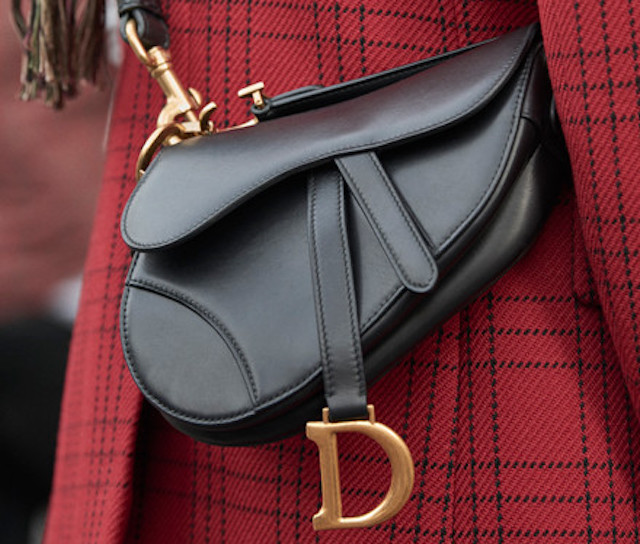
    French luxury retailer Christian Dior has suffered a PR setback in China with the relaunch of its Saddle Bag, one of the brand’s most iconic items.

    Timed to coincide with a global influencer campaign, the launch was marred by a poorly-received advertisement that many Chinese netizens felt made the product – which retails for about US$2650–$6000 – look cheap.

    “Is Dior serious? The shooting angle and lighting of the video is absolutely kitsch, and it makes the bag look so cheap,” one person wrote on social media after seeing the video. Another, named “kaichequBBQ” made fun of it, writing “I thought this lady will teach us how to find discounts and coupons to buy it.”

    A spokesperson for Dior China said that the video was an outside production, saying “This is not a part of the official ad campaign for the Saddle Bag in China, but footage of how fashion influencer Elle Lee presents the bag. Elle Lee, as a winner of the Miss Hong Kong Pageant (last year), is active in the fashion circle and maintains a good relationship with Dior China.”

    The Saddle Bag first debuted in 1999, and was relaunched globally on July 19.

  • LVMH hits up record revenue in 2017

    LVMH hits up record revenue in 2017

    It has been another record year for luxury products group LVMH Moet Hennessy Louis Vuitton.

    Revenue increased by 13 per cent year on year to reach €42.6 billion (US$52.9 billion), while organic revenue growth was 12 per cent.

    All business groups recorded double-digit organic growth with the exception of wines and spirits, where second-half growth was hit by supply constraints.

    Profit from recurring operations reached €8.2 billion, up 18 per cent. Operating margin reached 19.5 per cent, while the group share of net profit was €5.1 billion, growth of 29 per cent.

    Describing the performance as “excellent”, LVMH chairman/CEO Bernard Arnault says the record year was partly because of a buoyant environment but above all a result of the creative strength of the group’s brands “and their ability to constantly reinvent themselves”.

    Key highlights of last year listed by the group include:

    ● Record revenue and profit from recurring operations.

    ● Growth in Asia, Europe and the US.

    ● The success of both iconic and new products at Louis Vuitton, “whose profitability remains at an exceptional level”.

    ● The acquisition of Christian Dior Couture.

    ● Growth at Fendi and Loro Piana.

    ● The first year of integration of Rimowa luggage.

    ● Strong momentum at Parfums Christian Dior, driven by product innovation.

    ● An excellent year for Bulgari and good progress at Hublot and Tag Heuer.

    ● Growth at Sephora.

    ● Free cashflow of €4.7 billion, up 20 per cent.

    “Significant” growth in China helped Hennessy cognac volumes grow by 8 per cent, with 7.5 million cases shipped despite the second-half supply constraints.

    In fashion and leather goods, key events of the year were products arising from collaborations with artist Jeff Koons as well as the Supreme brand, the launch of the brand’s first smartwatch and the inauguration of the Maison Louis Vuitton Vendome in Paris.

    There was rapid growth in Asia for the perfumes and cosmetics segment, and growth was particularly strong in Asia for Bulgari. Asia again shone in the selective retailing group with Sephora continuing to gain market share.

    LVMH says the year was a positive turning point for DFS, with new stores in Cambodia and Italy continuing to grow sales.

    Despite unfavourable currencies and geopolitical uncertainties, LVMH says it is well equipped to continue its growth momentum across all business groups this year.

  • Wines and spirits contribution to LVMH luxury business

    Wines and spirits contribution to LVMH luxury business

    It has been a bubbly nine months for the LVMH luxury business – with the exception of its wines and spirits division, which was hampered by supply constraints.

    Revenue grew by 14 per cent for the period to reach €30.1 billion (US$35.4 billion).

    With organic revenue growth of 12 per cent, the third quarter continues the trend for the year, says the group. The revenue increase was despite a negative currency impact of 5 per cent and a positive structural impact of 7 per cent, reflecting the integration of Christian Dior Couture.

    All business groups recorded double-digit organic growth, with the exception of wines and spirits where growth was 8 per cent. Champagne volumes were up 4 per cent, with particularly strong demand in Europe and Japan. Hennessy cognac had a volume increase of 9 per cent despite a third-quarter decline related to limited supply.

    LVMH’s selective retailing business group had organic revenue growth of 12 per cent. Online sales grew at a steady pace, and DFS had sustained growth, particularly in Hong Kong and Macau. The T Galleria store in Cambodia has also developed well, says the group.

    Organic growth of 14 per cent was recorded by the fashion and leather goods business group. It attributes this to innovation, such as the launch of Louis Vuitton’s first smartwatch.

    “The qualitative development of the distribution network continues, as illustrated by the opening of the Maison Louis Vuitton Vendome in Paris, which brings together under one roof all the savoir-faire of the maison,” says the group.

    Highlights during the period included Fendi opening stores in the US and Rimowa being consolidated. Donna Karan was sold at the end of last year.

    There was also 14 per organic growth in perfumes and cosmetics. Perfumes benefitted from the launch of the eau de parfum Miss Dior. Guerlain rolled out Mon Guerlain fragrance internationally, and Fenty Beauty by Rihanna had an “exceptional” start.

    Watches and jewellery had 13 per cent organic revenue growth, with Bulgari achieving “a remarkable performance” with the rapid growth of its signature jewellery collections Serpenti, Diva and B.Zero1.

  • Ginza Six opening with 241 outlets

    Ginza Six opening with 241 outlets

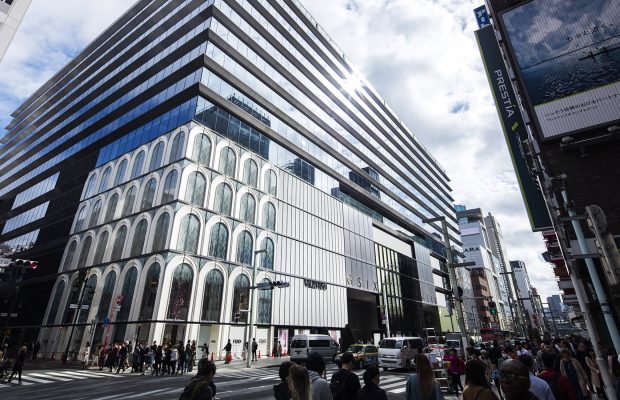
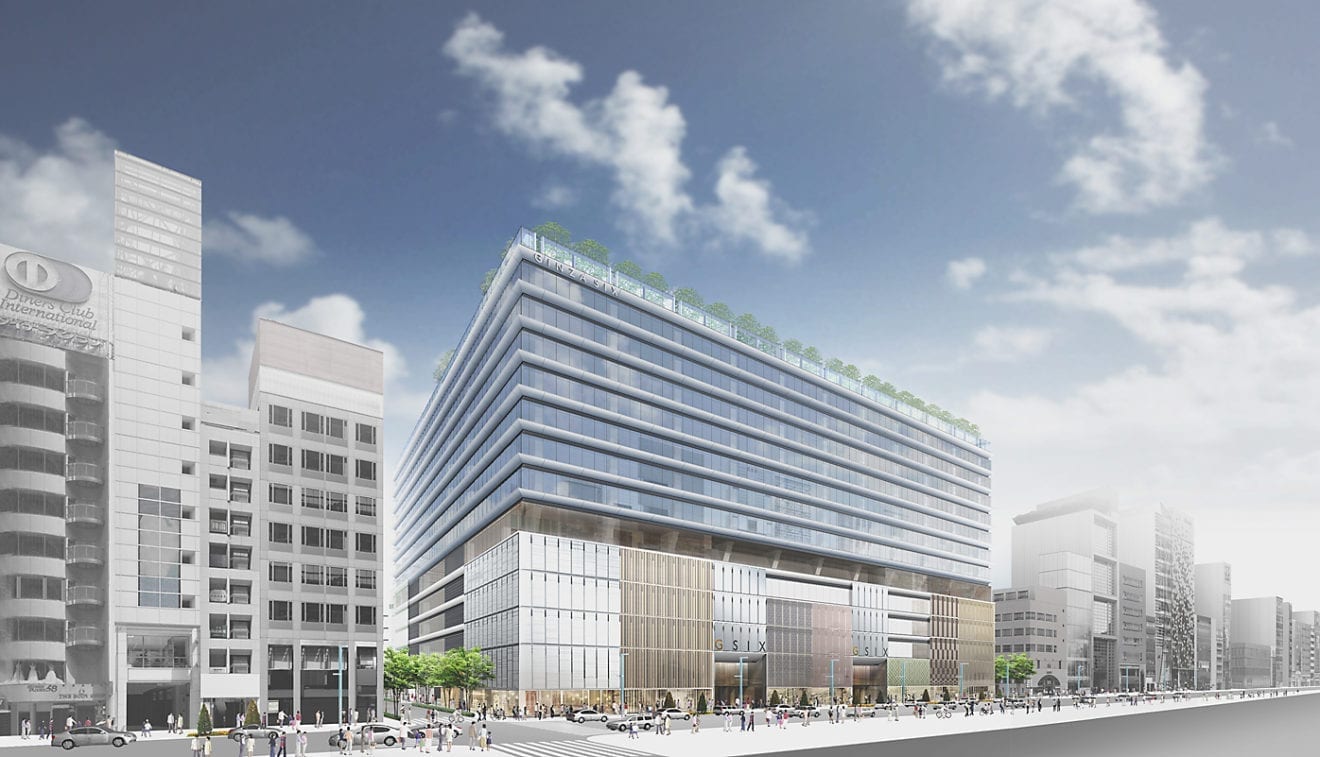
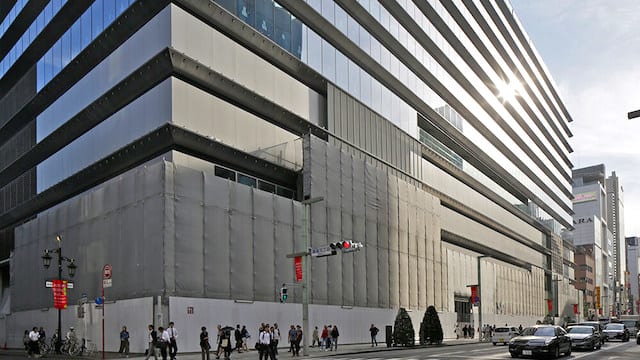
    Ginza Six, one of the largest commercial complexes in Tokyo’s Ginza district, will open tomorrow.

    At Ginza’s 6-chome block, the retail venture was jointly developed at a cost of about ¥86 billion (US$12.4 billion) by companies including J. Front Retailing, which runs the Daimaru and Matsuzakaya department stores, and Mori Building.

    Ginza Six has about 47,000 sqm of sales space – larger than the neighbouring Ginza Mitsukoshi and Matsuya Ginza department stores. With its open ceiling structure, the complex has 241 retail outlets, mainly overseas luxury brands including Christian Dior and Fendi.

    French luxury house Saint Laurent will have its second flagship store for Tokyo across three floors at Ginza Six.

    Ginza Six inside

    Its 17m backlit black marble facade comprises 18 noren panels (traditional fabric dividers) laminated with low-reflective glass. The store will feature pret-a-porter, accessories, shoes, sunglasses and jewellery for women and men.

    Ginza Six’s owners are estimating it will draw 20 million customers and earn ¥60 billion in sales annually.

    It occupies the site that was home for 90 years to Matsuzakaya Ginza, as well as other stores. Rather than buying and selling goods like a department store, Ginza Six runs on the rent from the outlets. “The same business model used in the past can’t be applied forever,” says J. Front Retailing president Ryoichi Yamamoto.

    Other retail developments in the area also mainly house outlets, such as Tokyu Plaza Ginza and Marronnier Gate Ginza, a renovation of Printemps Ginza that opened in March.

    Ginza Six will attract foreign tourists as well as trigger consumption, says Mori Building president Shingo Tsuji. “This is one of the largest redevelopment projects in the history of Ginza. It will be a new symbol of Ginza.”

    Attractions at the development include a noh theatre and a rooftop garden.

  • LVMH sales soar as shoppers return to luxury

    LVMH sales soar as shoppers return to luxury

    LVMH sales surged 15 per cent in the latest quarter to €9.88 billion (US$10.477 billion).

    That was nearly €400 million more than analysts had been expecting, with the result driven across all of the luxury group’s business units.

    Fashion and leather goods, which account for more than half the company’s turnover, rose 15 per cent during the quarter. That compares with static growth the same quarter last year. Fendi and Louis Vuitton were singled out by analysts as strong performers, with Celine, Kenzo, Loewe and Berluti also showing progress.

    LVMH’s leather and fashion brands also include Dior, Emilio Pucci, Fendi, Givenchy, Louis Vuitton, Marc Jacobs, Moynat, Rimowa and Thomas Pink.

    ‘Selective retailing’,  the group’s second-largest division, had been dragged down by DFS in prior quarters, offsetting a strong performance by Sephora cosmetics chain, observed Deborah Aitken, an analyst with Bloomberg Intelligence. But the latest quarter it showed improvement of 11 per cent. Sephora continued to gain market share globally and recorded double-digit revenue and profit growth for the quarter.

    “This could be an important turnaround,” said Aitken.

    Liquor – including brands such as Cape Mentelle, Chandon, Cloudy Bay, Dom Pérignon, Glenmorangie, Hennessy, Krug, Moët & Chandon and Veuve Clicquot – was the second best performing sector, up 13 per cent organically. Hennessy was a star performer.

    Sales of watches and jewellery also rebounded, rising 11 per cent. Bulgari continued to gain market share and Tag Heuer successfully launched its new Connected Modular 45 watch.

    And the perfume and cosmetics business grew sales by 12 per cent.

    Fung Global Retail observed that Parfums Christian Dior reported good growth and Guerlain launched a new women’s fragrance called Mon Guerlain during the quarter. Parfums Givenchy benefited from the success of lipstick lines, which saw rapid development in Asia. In addition, the Kat Von D brand launched exclusively in January 2017 at Sephora in France.

    Managing expectations

    While the company was clearly pleased with its results it did warn shareholders to keep their expectations modest, pointing out the growth had come against a 2016 quarter when the industry was struggling with Paris terror attacks. It said such levels of growth should not be expected for the full year.

    LVMH shares rose to a record in Paris after the results were announced.

    The LVMH figures will set the standard for a raft of luxury retail earnings due to be released in the coming days. Prada reports results today and Kering, parent of Gucci, on April 25.

  • Ginza Six mall on track for April launch

    Ginza Six mall on track for April launch

    Tokyo’s Ginza district is gearing up for the opening of its biggest shopping centre, Ginza Six mall.

    It occupies the site of the former Matsuzakaya Ginza department store, which closed in June 2013.

    Ginza Six mall has a total floor area of about 150,000 sqm over 19 floors. Its commercial offering takes up the second of six basement levels through to the sixth level above ground, as well as part of the 13th floor.

    Six high-end fashion brands, including Christian Dior, will fill units facing the main road, while the sixth floor will house Tsutaya Books and a food court.

    Aiming to attract the growing number of tourists visiting Japan, the mall plans to offer a tourist information centre on the ground floor containing an outlet of convenience store Lawson, which will sell souvenirs. There will also be a tourist bus terminal outside.

    From the seventh floor upward will be office space, with about 6000 sqm on each level, the largest floor area of its kind in Tokyo. Already 60 per cent of the office spaces are reserved, and up to 3000 people are expected to work in the offices.

    Ginza Six’s exterior design is inspired by “hisashi” canopies and “noren” store curtains, and the complex is scheduled to open on April 20.

  • LVMH will expand to eyewear business

    LVMH will expand to eyewear business

    Luxury brand group LVMH is thinking about taking its eyewear business in-house.

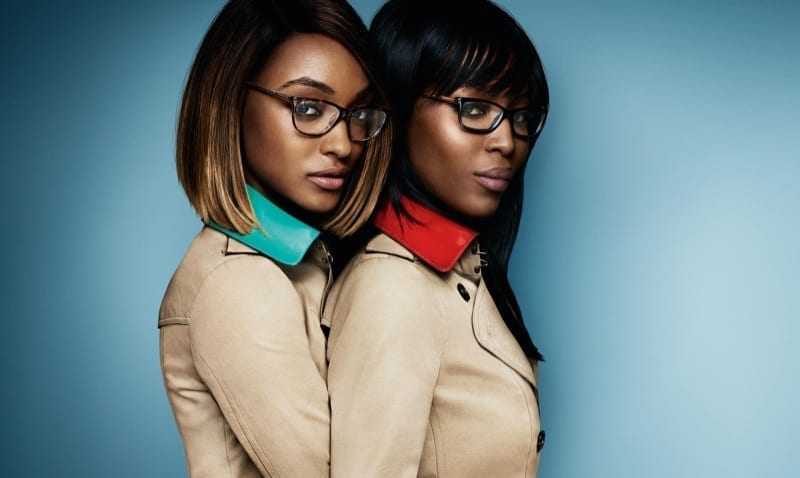
    This could be a further blow for Italian eyewear group Safilo, which lost the Armani licence in 2013 and those for the Kering Group labels (Alexander McQueen, Bottega Veneta, Gucci and Saint Laurent) at the end of 2014, reports CPP-Luxury.com.

    Italian investment bank Mediobanca has published a report about Safilo, owned by Dutch investment fund Hal, focussing on its announcement that its licence agreement with Celine has been terminated while its contract with Christian Dior has been extended until 2020. The licence for Celine’s eyeglass collections – the LVMH label joined Safilo’s portfolio in 2012 – ends on December 31.

    While the licence agreement for the design, production and distribution of eyeglasses and sunglasses for Dior and Dior Homme, also part of LVMH’s galaxy, has been extended until the end of 2020, Mediobanca says the extension is for three years only, not for seven years as was the case for the previous contract, renewed in September 2010.

    The bank’s analysts noted that the standard renewable licence contract is for five years.

    “We believe markets are much more volatile than in the past, and renegotiating contracts on a more frequent basis may be to the advantage of both parties,” says the bank. “But we think this could also signal a change in LVMH’s approach as the group has the financial strength to internalise its eyewear business, as Kering did a few years ago.”

    LVMH has been managing the eyewear collections for its leading brand, Louis Vuitton, internally for several years.

    Mediobanca estimates the sales for Celine and Dior eyeglasses collections are worth respectively €40 million (US$41 million) and €200 million. As well as these, there are the sales for the eyewear lines of Fendi, Givenchy and Marc Jacobs, all licensed to Safilo. Altogether, LVMH brands are worth €350 million in annual revenue for the eyewear group, equivalent to nearly 30 per cent of its total revenue, which Mediobanca pegs at €1.2 billion.

    The bank report also highlighted the Safilo portfolio’s “marked reliance on one single client”, plus the weakness of its own brands.

  • Labels lining up at new Macau resorts

    Labels lining up at new Macau resorts

    As Macau resorts swing the spotlight from gaming to shopping, designer labels are lining up to open their first stores in the former Portuguese colony.

    Established brands have already led the way, and the opening of two major resorts has introduced a broad choice of new retail space.

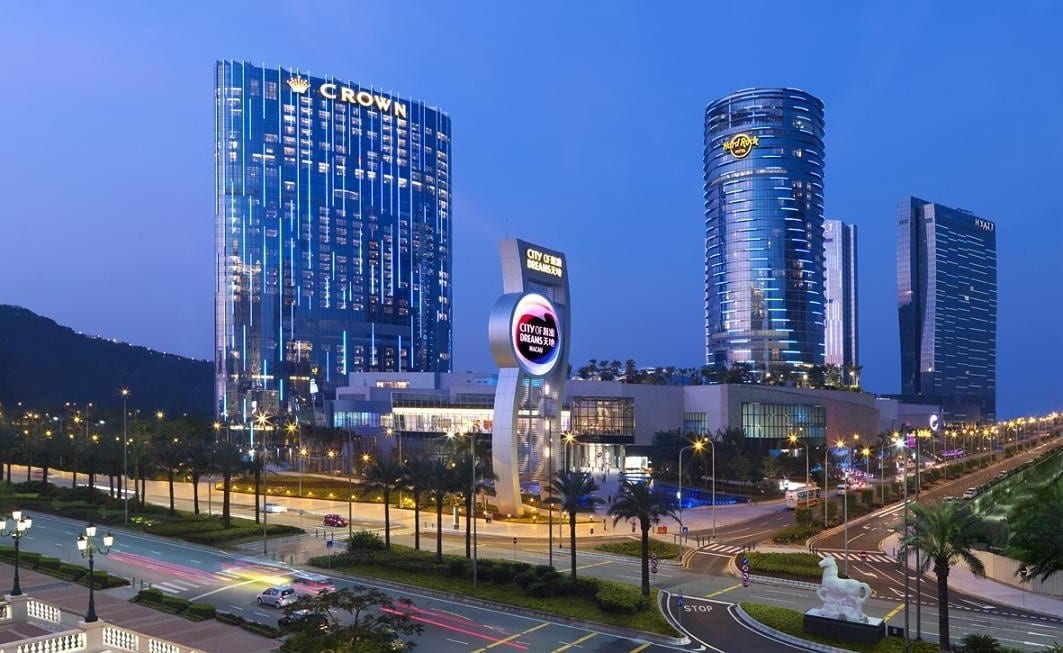
    Both the US$4.2 billion Wynn Cotai Palace and the new $2.7 billion Parisian Macao offer 18,580 and 28,000 sqm respectively of luxury retail space – together, more than 200 shops. However, established integrated resorts are also benefiting from the retail boom, with Swiss watchmaker Omega opening a corporate boutique in Studio City Macau and Paris designer Christian Dior launching its first boutiquein City of Dreams Macau.

    The all-new Wynn Cotai Palace is welcoming luxury brands such as Chanel, Chopard and Hermes, while watchmaker Franck Muller is launching the Vanguard Wynn Palace Boutique Exclusive, its third opening in the city. A new boutique inside Wynn Palace is also the third Macau outlet for luxury watch brand Panerai.

    Cotai Strip’s newest resort, The Parisian Macao, has set up the Shoppes at Parisian with more than 150 luxury and lifestyle retail boutiques. The shops are housed in different precincts named after some of the most stylish streets and arcades of Paris, including the Champs-Élysées. The fashion on offer includes a mix of both Parisian brands and couture new to Macau, including labels like Antonia, Garel Paris, Herzo, Isabelle Langlois, Sonia Rykiel and Temptation.

    To mark the opening of the Shoppes at Parisian, The Parisian Macao is hosting an exclusive designer runway show, Front Row, tomorrow evening. It will showcase crystal looks from Swarovski plus styles from selected retailers. Celebrity guests include China’s first fashion model Xiao Wen, the current face of Marc Jacobs.

    There will also be runway shows on September 15 and 16, plus other launch events.

  • New way to sell bags for Christian Dior

    New way to sell bags for Christian Dior

    Christian Dior China has become the first luxury brand to sell top-end bags on messaging and social network WeChat.

    With an eye on Chinese Valentine’s Day (Qixi) on August 9, it offered its limited-edition Lady Dior bag on the platform this week. It was to be available until today, but sold out on Tuesday.

    As a special extra, consumers were able to drag online pictures of decorations on to the bag, so it could be tailored for their preferences.

    Buyers could pay through WeChat for the bag, priced at 28,000 yuan (US$4210).

    Other luxury brands, including Cartier, Longchamp and Montblanc have already launched online sales platforms on WeChat, providing special services and discounts.

    For the first half of this year, Dior’s net profits fell 30.2 per cent to €74 million ($82.8 million).

  • Global duty free retailing to hit US$98 billion

    Global duty free retailing to hit US$98 billion

    Global duty-free retailing is expected to reach nearly US$98 billion in revenue by 2019, according to a new study by global technology research and advisory company Technavio.

    With the expansion of low-cost airlines, many middle-class travellers are taking inexpensive holidays, a trend that has helped the Asia Pacific and Middle East emerge as the fastest-growing regions for duty-free retail marketing, says Technavio analyst Vijay Sarathi.

    He says China, India, Indonesia, South Korea and Sri Lanka were among some of the most-desired inexpensive destinations in 2014.

    “During the same period, it is estimated that international tourist inflow in APAC increased to almost 263 million travellers, and it has largely helped the market grow until 2019.”

    Just released in London, Technavio’s report, Global Duty-Free Retailing Market 2015-2019, provides an in-depth analysis of market growth in terms of revenue and emerging market trends.

    By products, the global duty-free retailing market for 2014 comprised fashion accessories and hard luxury (32.1 per cent), perfume and cosmetics (29.21 per cent), wines and spirits (16.02 per cent), tobacco (12.43 cent), and confectionery and fine food (10.25 per cent), says the report.
    It says the fashion, accessories and hard luxury segment was valued at close to $20.81 billion, with the most in-demand products including precious jewellery, briefcases, handbags and shoes. The more popular brands include Armani, Burberry, Fossil, Gucci and Michael Kors.
    Technavio researchers say Chinese travellers emerged as the largest consumers of luxury brands last year, contributing nearly 25 per cent of global revenue.
    The perfumes and cosmetics segment is one of the fastest-growing categories in the global duty-free retailing market. APAC and the Middle East are the key regions for this category, with some of the top-selling brands including Chanel, Christian Dior, Estee Lauder and Guerlain.

    With close to 21.5 per cent of revenue share in the category, L’Oreal created a division especially for duty-free stores in 2013, describing the division as “the sixth continent”. In 2014, L’Oréal launched theVichy and Kerastase brands in the duty-free retail segment in Asia, and also launched the Three-Minute Beauty program to engage with potential luxury product buyers at airports.
    The liquor category is expected to grow to $13.47 billion in 2019. In 2014, Diageo opened two Johnnie Walker Houses in duty-free shops in India and Taiwan.

  • Christian Dior opens its largest boutique in China

    Christian Dior opens its largest boutique in China

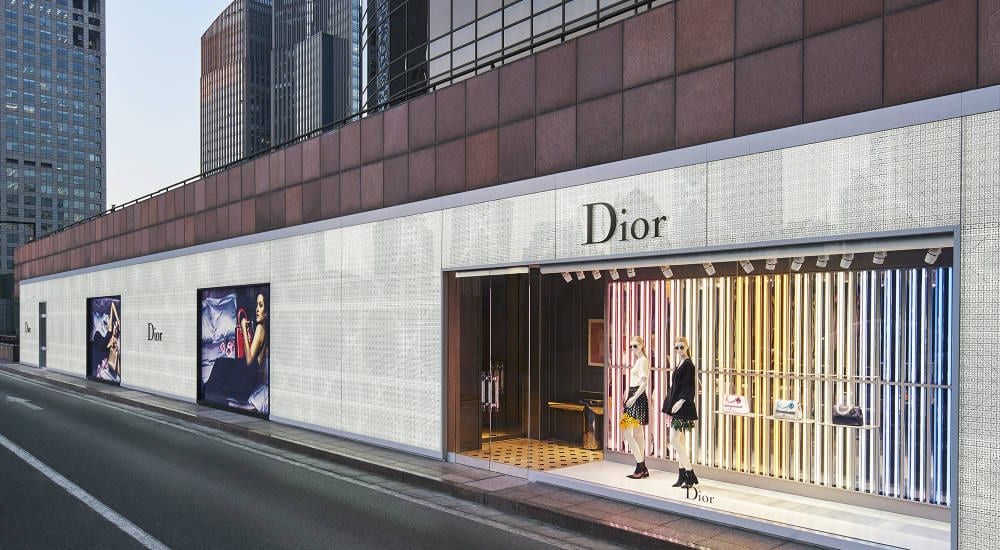
    Designed by American architect Peter Marino, the two-level store reflects the timeless elegance of Dior, with a double-layer glass façade that emulates the iconic “cannage” motif of the couture house. Inside, the refined atmosphere is enhanced by wall art and designer pieces, part of a curated selection of a dozen contemporary art pieces.

    To celebrate the opening of the Dior Beijing China World flagship, the House presented its Spring-Summer 2016 collection at a runway show in a sumptuous blue-hued setting at the Phoenix Center. The show was attended by Christian Dior Couture CEO Sydney Toledano and A-list Chinese celebrities and artists.

    Christian Dior opens its largest boutique in China