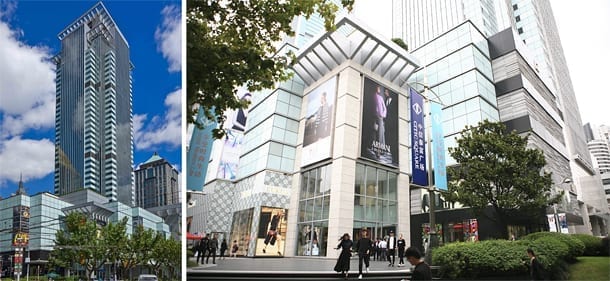
Tag: CITIC Square

  • Lotte jumps into Shanghai retail

    Lotte jumps into Shanghai retail

    Lotte Department Store has signed on to a joint venture with Citic Group, a state-owned Chinese company, to operate a shopping mall in Shanghai and to build three more in the region between 2017 and 2019, the Korean company announced Monday.

    The joint venture will operate the already-existing Citic Square Mall in the bustling commercial district of Jing’an on West Nanjing Road. The mall is currently run by Citic Group, and Lotte’s participation in the joint venture with the Chinese company will allow the Korean retail giant to step foot into the Shanghai market without having to navigate through China’s byzantine business regulations.

    Lotte will hold approximately 49 percent of the joint venture’s shares and will focus on operations, while Citic Group will help with property development.
    The partnership was first offered by Citic Group, which makes 60 trillion won ($52.6 billion) in annual sales from financial services, energy and property development. “In China, companies in property development have started to launch businesses in retail because they already have the land to build new facilities,” a Lotte Department Store spokesman said.

    Although Citic Group is an influential company in China, it lacks expertise in retail, as it wasn’t the group’s main business in the past. Competition is also tough, as Shanghai is currently home to over 50 department stores and 80 shopping malls.

    Lotte Department Store, on the other hand, already has five branches across China and has experience with merchandising, store design and employee training in the country. Sales at Lotte’s five department stores rose 28 percent last year from the previous year.

    The Korean retail giant said it plans to use the partnership to create more opportunities for Korean brands to enter Shanghai. Consumers in the metropolis have shown particularly high interest in Korean popular culture, making it a good starting point for Korean fashion companies looking to set foot in China.

    “We believe the partnership with Citic Group will strengthen our stance in the Chinese market,” Lotte Department Store CEO Lee Won-jun said. “Our plan is to use this opportunity to help other domestic companies with potential to expand to China as well.”
     

  • Furla Shanghai flagship opens

    Furla Shanghai flagship opens

    Italian leather goods brand Furla China has launched its first flagship store in Shanghai as part of a move to expand its presence on the mainland.

    The new Furla Shanghai store is in Citic Square in Nanjing West Rd. As the first duplex design store on the mainland, the flagship has two levels covering 300 sqm, and features women’s and men’s leather collections and accessories, as well as items exclusive to the store.

    A feature of the flagship is its 234 sqm LED facade – a first for Furla.

    Founded in Bologna in 1927, Furla has a strict made-in-Italy policy for its leather goods. The company had more than 30 per cent growth and strong retail expansion across all regions last year, resulting in 339 million euros (US$377 million) in sales.

    Fulra Shanghai 2

    In China, the brand has been bucking trends, growing its market sales by more than 60 per cent in the first quarter of this year.

    Furla president Giovanna Furlanetto says the opening of the Citic Square flagship marks an important step in the company’s dynamic expansion strategy in China.

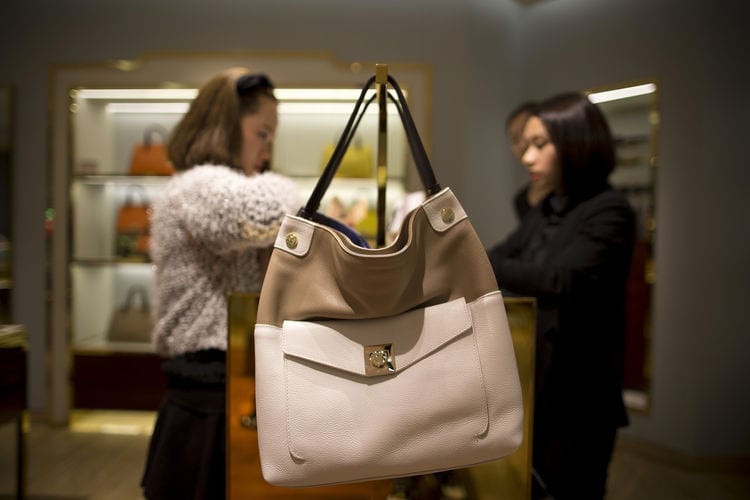
    A highlight of the opening was the Furla “Made for You” service, with Chinese actress Jiang Shuying designing her own bag, carrying a “Made by Jiang Shuying” tag. The bag was auctioned with the proceeds going to the China Women’s Development Foundation (CWDF), which supports women’s rights and career development.

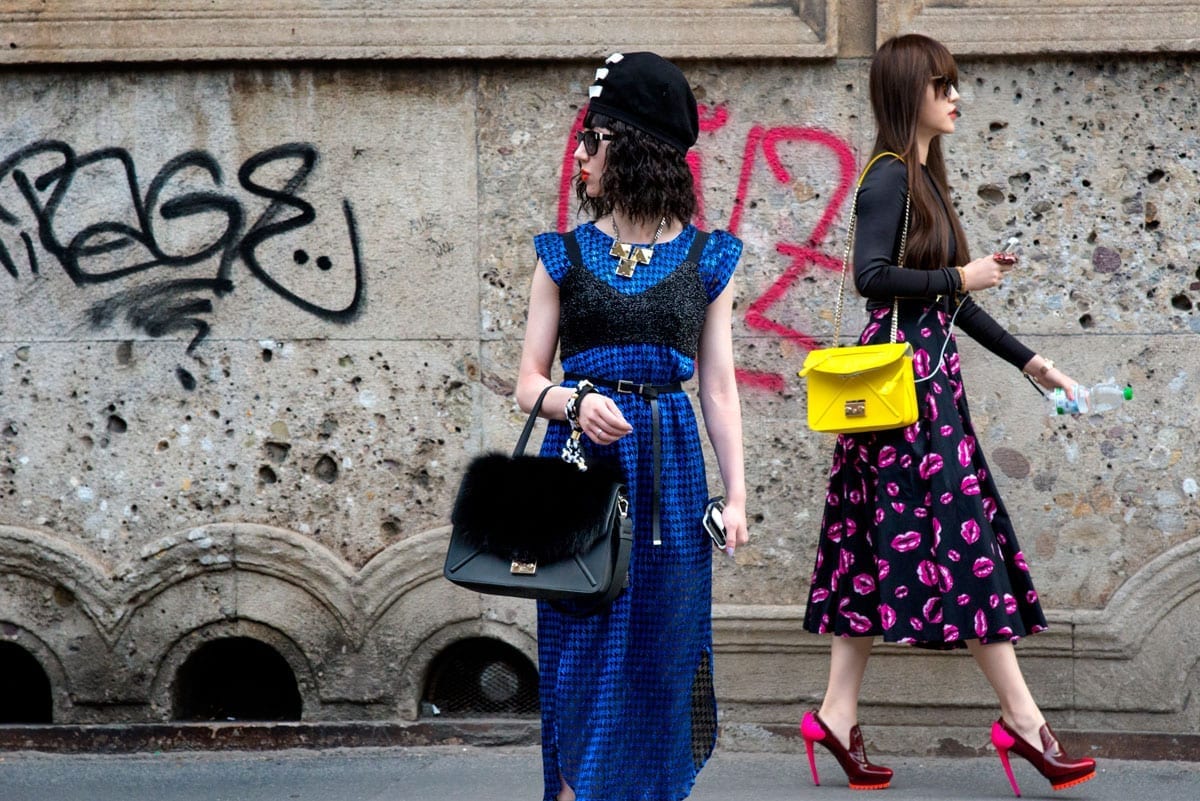
    As well as Shuying, fashion bloggers Elle Lee, Liu Xiao, Peter Xu and Toni attended the opening event, which also featured the launch of Furla’s limited-edition Metropolis bag, which has the themes “Hello Shanghai”, “Love Shanghai” and “Kiss Shanghai”. It has heart-shaped patterns and comes in red, black and pink.

    Furla has a presence in 100 countries with 400 single-brand shops on international shopping streets, a distribution network with more than 1000 points of sale, and growing channels in travel retail and eCommerce.


  • Furla Stays Focused on China Expansion While Luxury Scales Back

    Furla Stays Focused on China Expansion While Luxury Scales Back

    If there’s one clear example of “accessible luxury” making strides in China’s retail industry, it’s Furla. The Italian fashion house has been in the midst of a rapid evolution, going from being known globally as a playful, youthful handbag brand to capturing China’s growing middle class with a new lifestyle-centric range of products. They’re doing something right—Furla, which recently announced it will go public in 2017, posted a 126 percent global sales increase in the past five years up to 2015, the highest since its founding in 1927. Sales were up 30 percent at 339 million euros and net profit was up 41 percent last year from 2014. China sales grew 75 percent in the same five-year period, and outgoing CEO Eraldo Poletto, who will be leaving in June for Ferragamo, says he expects China to soon become Furla’s main market.

    To capitalize on this opportunity, Furla has major plans for China in 2016. Currently, there are 44 Furla boutiques in 18 cities in China, including two new flagship openings in Hong Kong and Macau last year, but the focus for the next couple of years is expansion in “fast-developing” first- and second-tier cities in the mainland, such as Chengdu, Hangzhou, Chongqing, Shenyang, and Tianjin. Of particular note, the company is preparing to reveal its flagship store in Shanghai CITIC Square this month. Creating an e-commerce platform in China is another huge priority for the company before the year ends.

    Still, Poletto says Furla is keeping in mind the need to remain exclusive in order to remain appealing to their customer in China. Tighter household budgets may be making affordable luxury more appealing to middle-class consumers, but according Poletto, the key to Furla’s success is more complicated than the brand’s price point.

    “The definition of luxury is not to be expensive, but to be unique,” he says. “Over-expansion violates this rule, this is why many brands currently are facing difficulties and have to downsize their boutique quantity.”

    Furla’s impressive performance for 2015 was also driven by the company’s new product categories, and it’s their delivery of these as part of an Italian lifestyle brand that helps them “be successful and outstanding in the worldwide downturn,” Poletto says. This year, Furla introduced a menswear collection and women’s shoes, and continued its eyewear collaboration with De Rigo. Furla is also now partnering with Ratti for textiles, and Morellato for watches, as part of a well-rounded lifestyle selection with the modern Chinese consumer in mind that “brings Furla to a new era.”

    “The Chinese customer will always be our first priority in all global projects,” Poletto says. “We consider China to be the biggest market in the next five years, so what we’re doing now is finding an easier and more comfortable way for the Chinese customer to experience the typical Italian lifestyle, which is one of the most high-quality ways of life.”

    A screenshot of Furla's global online game for customizing a Metropolis bag.

    A screenshot of Furla’s global online game for customizing a Metropolis bag.

    Furla is also catering to the Chinese consumers’ interest in acquiring bespoke goods. It will soon be offering a made-to-order service at Shanghai CITIC Square, where customers can design their “exclusive Furla dream bag.” Already, Furla fans around the world can choose from a colorfully designed selection of leather covers to dress up their bag in tune with their personality, but now, in China, customers can also customize the stitching, edges, hardware, and custom tags on the Metropolis or the IT BAG Artesia—still at accessible price points, although this varies depending on the materials. In keeping with their Italy-focused philosophy, Chinese consumers get their bags in 12 weeks—they’re made in Italy, after all.