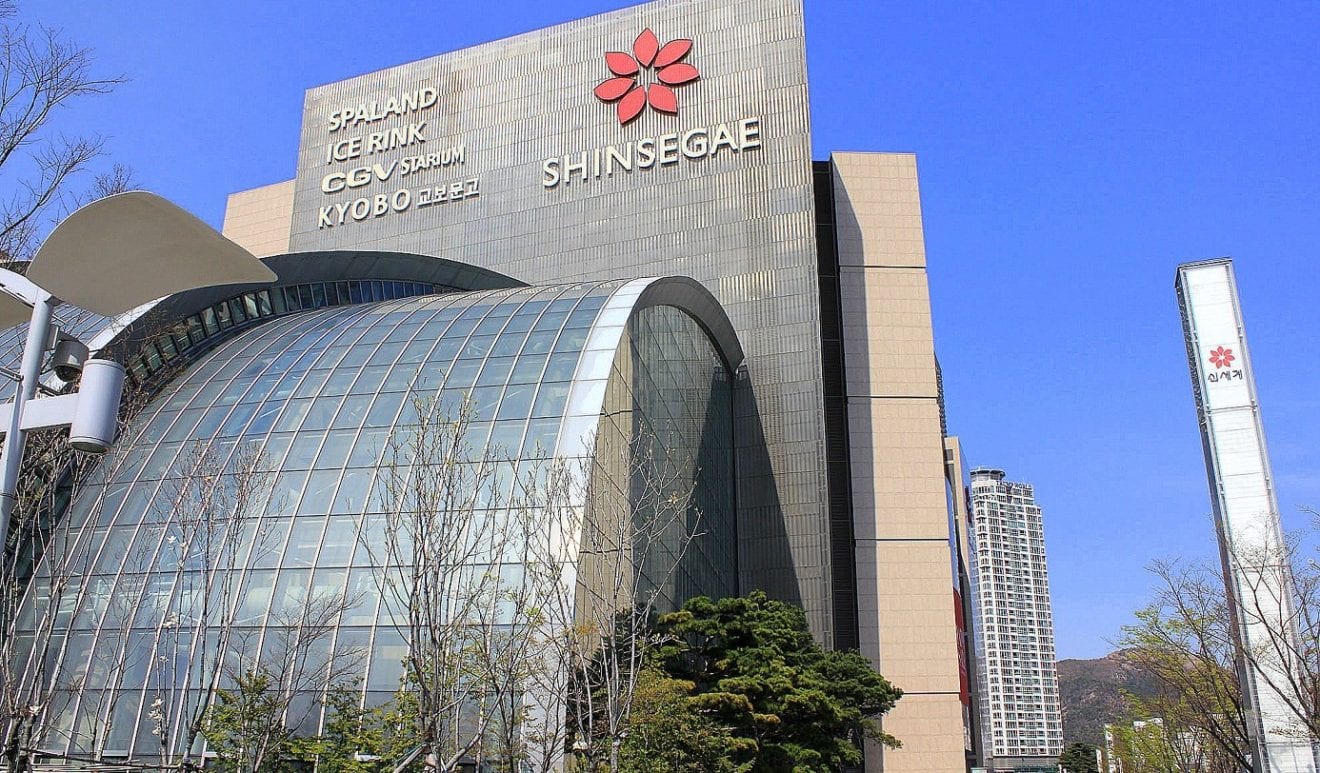
In late October, Shinsegae announced an agreement to acquire Lotte Department Store’s Centum City branch in Busan after foreign tourist spending in the metropolitan area surpassed 1 trillion won ($745 million) through September.
The transaction gives Shinsegae control of two contiguous commercial plots in the coastal Haeundae district. The group intends to absorb its direct competitor’s declining asset into a broader mixed-use complex anchored by its existing flagship development.
Shinsegae Centum City generates more than 2 trillion won in annual gross merchandise value, ranking as the top-selling department store outside the capital region. In contrast, annual revenue at Lotte’s adjacent branch contracted from a historical peak exceeding 300 billion won to approximately 130 billion won by 2023. Shinsegae plans to physically integrate both structures with its neighbouring mall and a vacant parcel designated for luxury hospitality, office space and private residences under the unified moniker Shinsegae Town.
Lotte Reallocates Capital Across Busan Network
Lotte is using the proceeds from the Centum City disposal to fund asset renovations across its four remaining stores in the city. Capital will flow directly into its Seomyeon flagship and Lotte Mall Dongbusan, both of which generated rising turnover over the past year. Lotte Department Store is designating its Gwangbok branch in the historic downtown core for incoming international travellers, while assigning its Dongnae outlet to domestic neighbourhood shoppers.
The Seomyeon flagship recorded 1.2 trillion won in sales last year, supported by an influx of overseas diners. Food and beverage expenditure by foreign visitors at the branch surged 120 percent year on year between January and October.
Retail traffic across regional South Korea is diverging sharply from historical domestic patterns. In the first nine months of the year, passenger arrivals at regional airports expanded 37 percent to roughly 3.24 million, according to data from Korea Airports Corp. Inbound passenger growth at gateway airports serving the capital area reached 17.3 percent over the same period. By late October, national foreign visitor arrivals had already eclipsed the annual record set in 2025.
Specialty Chains Build Regional Destination Stores
Specialty chains are deploying independent capital programs outside Seoul to capture this traffic directly at arrival points. Health and beauty operator CJ Olive Young allocated 123.8 billion won this year to open or refit 43 large-format stores outside the capital region. In Busan, the chain opened a fish market-themed outlet in Millac-dong, merchandising cosmetics and food in display crates, while expanding its Nampo-dong location into its largest store outside the Seoul metropolitan area.
Olive Young expanded into heritage tourism corridors as well, opening a store in Gyeongju last month featuring a traditional hanok tiled roof and site-specific merchandise. Domestic eyewear label Blue Elephant mirrored that layout, adding a hanok-style storefront in Gyeongju in July alongside new locations in Busan and Jeju Island.
Apparel platform Musinsa is tracking similar geographic shifts through its physical footprint. Foreign card transactions at its Seomyeon store in Busan reached approximately 30 percent of total sales, representing an 11 percentage point increase from a year earlier. Across the company’s eight regional stores outside greater Seoul, combined sales rose roughly 44 percent over the same period. Following the launch of a Musinsa Standard store in Changwon last month, 10 of its 44 standard offline stores now operate outside the capital region.
Consolidation Shifts Landlord use Outside Seoul
For department store operators and commercial landlords, Shinsegae’s acquisition of a competing asset directly next door changes the competitive balance in southern South Korea. Rather than fighting a war of attrition for luxury concessions against an adjacent landlord, Shinsegae eliminates duplicate operating costs and absorbs Lotte’s footprint to expand tenant floorplates. RetailNews Asia sees this as a defensive consolidation: prime brand principals increasingly demand massive, unified destination spaces before committing flagship boutique allocations outside Seoul.
Lotte’s counter-strategy carries operational execution risks. Distributing capital across four dispersed properties requires four distinct tenant mixes to prevent internal cannibalisation between Seomyeon, Dongbusan, Gwangbok and Dongnae. If international tour groups fail to sustain foot traffic at the older downtown Gwangbok location, Lotte risks holding depreciating square footage while Shinsegae monopolises the coastal luxury trade at Haeundae.
Earlier Footprint Steps Lead to Haeundae Showdown
The Busan consolidation follows a multi-year contest between the two retail groups in Seoul’s central tourist district. In Myeong-dong, Shinsegae linked surrounding properties to its flagship to build a dedicated campus for high-spending overseas shoppers, while Lotte renovated its main town store with youth-oriented cultural installations.
The regional pivot accelerated after Musinsa demonstrated the commercial viability of tier-two retail streets. The fashion platform launched its first non-capital Standard store in Daegu in 2023, converting digital audience data into physical street traffic before expanding into Changwon.
Attention now turns to municipal planning reviews for the physical bridge linking the two Centum City buildings, and to Olive Young’s remaining fourth-quarter store launches, which will determine how much of its 123.8 billion won regional capital budget translates into active selling space before the year closes.